 YardMate


Evergreen Clematis
Clematis armandii
Medium · Some experienceAbout Evergreen Clematis
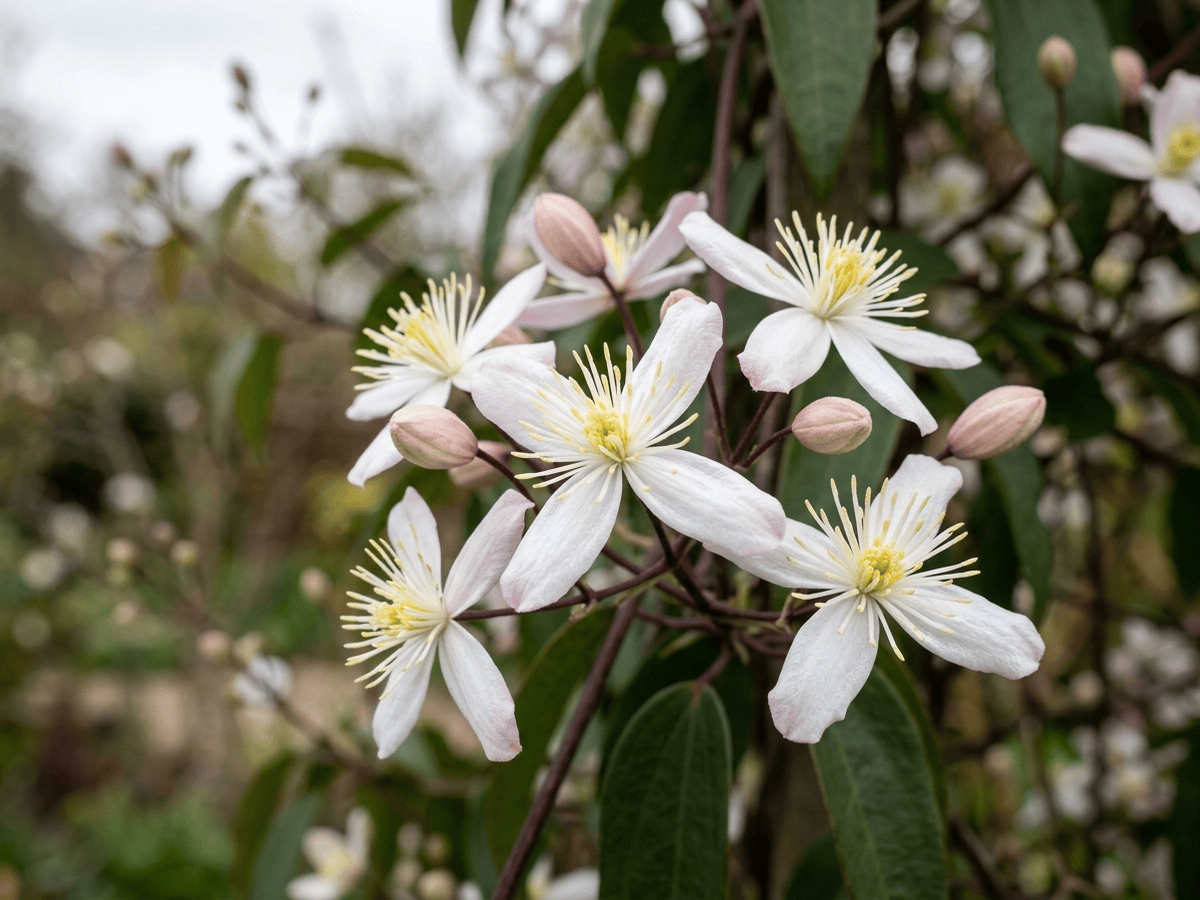
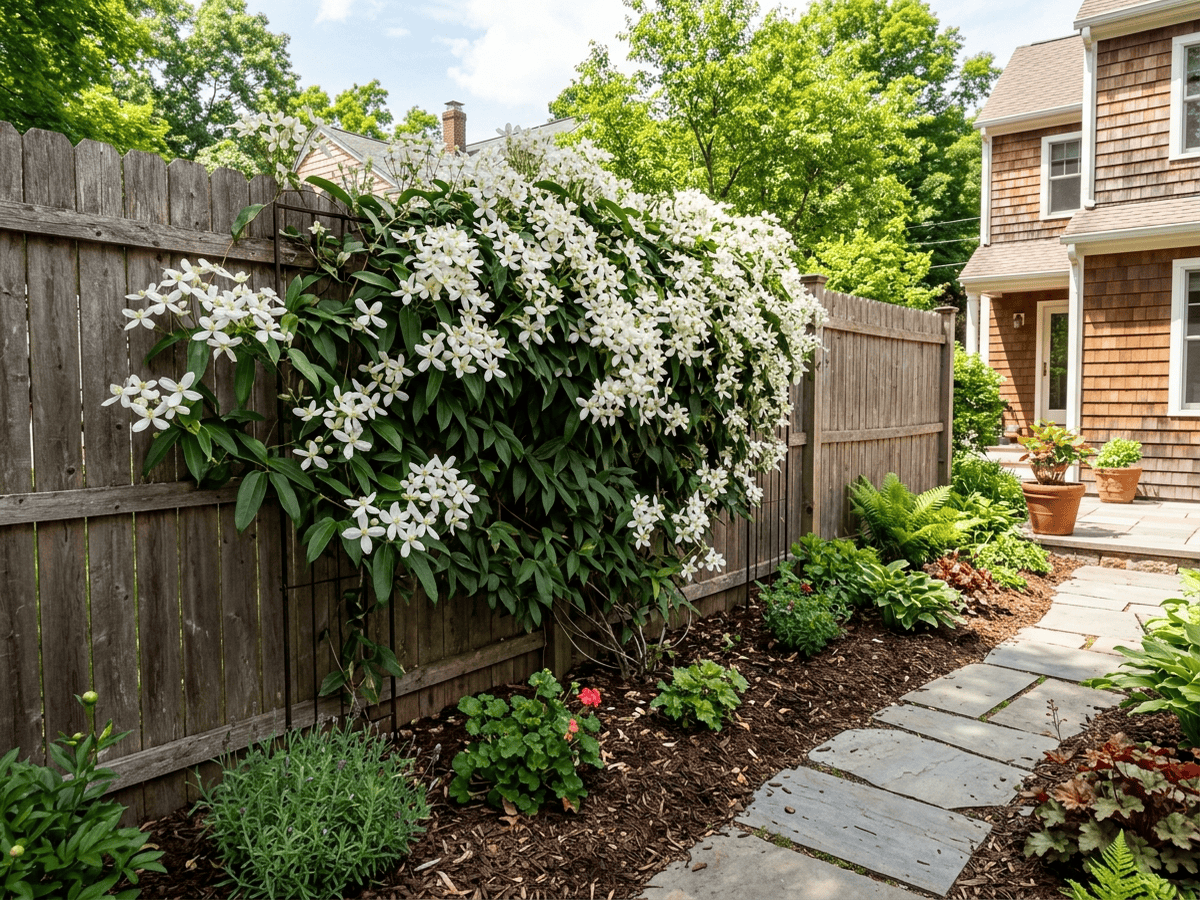
Armand Clematis is a vigorous evergreen climber reaching 15-25 feet, producing abundant clusters of fragrant starry white flowers in early spring against glossy leathery dark green leaves. Native to central and western China, it is one of the few evergreen clematis and a showstopping vine for Southern and Pacific coast US gardens. A single plant in full bloom can perfume an entire garden.
- Fragrant
- Climbing
- Evergreen
How to care for Evergreen Clematis
Watering
- Springevery 5 days
- Summerevery 3 days
- Fallevery 7 days
- Winterevery 14 days
Soil · Well-draining
- Top dressingPine bark mulch10%
- Main mixPotting soil + perlite 2:170%
- DrainageLECA / gravel20%
Never skip the drainage layer — standing water is the top cause of root rot.
FERTILIZER
Balanced Feed 14-14-14
An even feed covers all three needs at once, keeping leaves, roots and blooms moving together with nothing pushed out of balance.
- Nitrogen · Leaves
- Phosphorus · Roots + Blooms
- Potassium · Strength
- Springevery 30 days
- Summerevery 45 days
At a Glance
- NativeEast Asia
- Height15–25 ft (4.6–7.6 m)
- Spread6–10 ft (1.8–3 m)
- Flower colorWhite, Pink
- Foliage colorDark-green, Green
- SoilLoamy, Well-drained
- LocationsYard
Bloom time
BLOOM CYCLE
Peak bloom
Mar–Apr
Fragrant white star flowers March to April
Fragrance
STRONG FRAGRANCE
The flowers have a powerful sweet vanilla-almond fragrance.
Toxicity
Humans Moderate · Pets Moderate
protoanemonin and anemonin
Moderate
- Leaf
- Sap
- Ingestion
- Contact
EXPOSURE Eating leaves and sap. Touching leaves and sap.
EFFECT Oral irritation, blistering, GI upset from protoanemonin.
NOTE Documented concern for humans: Oral irritation, blistering, GI upset from protoanemonin.
Moderate
- Leaf
- Stem
- Ingestion
EXPOSURE Eating leaves and stems.
EFFECT Oral irritation, vomiting, diarrhea.
NOTE ASPCA lists Clematis as toxic to dogs, cats, and horses.
Moderate
- Leaf
- Stem
- Ingestion
EXPOSURE Eating leaves and stems.
EFFECT Oral irritation, vomiting, diarrhea.
NOTE ASPCA lists Clematis as toxic to dogs, cats, and horses.
Educational information, not medical or veterinary advice. If exposure is suspected, contact a doctor or veterinarian.
DISTRIBUTION


- Native
- East Asia
History

Clematis armandii occurs naturally in central and southern China (Sichuan, Yunnan, Hubei, Guizhou, Guangxi) and northern Myanmar. French botanist Adrien René Franchet formally described the species in 1885, honoring Père Armand David (1826-1900), the pioneering French Lazarist missionary and naturalist who collected extensively in China and for whom the Pere David's deer, giant panda (David first documented it for Western science), and numerous plants are named. Ernest Henry Wilson introduced the species to British gardens in 1900.
Unlike most clematis, which are deciduous, C. armandii is evergreen with thick, leathery, lanceolate dark green leaves on vigorous vines to 6-10 meters. In March-April it produces masses of 4-6 cm pure white star-shaped flowers with a powerful sweet vanilla-almond fragrance that can perfume an entire garden.
Hardy only to about zone 7, it is a signature vine of mild-winter garden regions—the Pacific Northwest, Atlantic coast of Britain, Mediterranean Europe, and milder Southeast US. Cultivars 'Apple Blossom' (pink-flushed), 'Snowdrift', and 'Little White Charm' are popular.
Symbolism & meaning
What It Symbolizes
Evergreen Clematis carries the signature spring perfume of early gardens, its almond-scented white blooms drifting on the first warm breezes. Paired with exuberance, it covers fences and pergolas in such dense flower that a structure can vanish beneath it. It is a vine for those who want spring announced not in whispers but in cascading, fragrant proclamations.
- Spring perfume — signature scent of early spring gardens
- Exuberance — covers large structures in dense bloom
Where the Name Comes From
The common name highlights its green coloring. 'Armandii' honors Armand David (1826-1900), discoverer of many Chinese plants including the giant panda.
Uses & Fun Facts
- Almond-scented white flower clusters perfume early spring gardens
- Evergreen vine drapes pergolas and walls with leathery foliage
Related plants
More Clematis plants
 Alpine ClematisClematis alpina
 Himalayan ClematisClematis montana
 Autumn ClematisClematis terniflora
 Virgin's-BowerClematis virginiana
Plants with similar care
 Mexican AbeliaAbelia floribunda
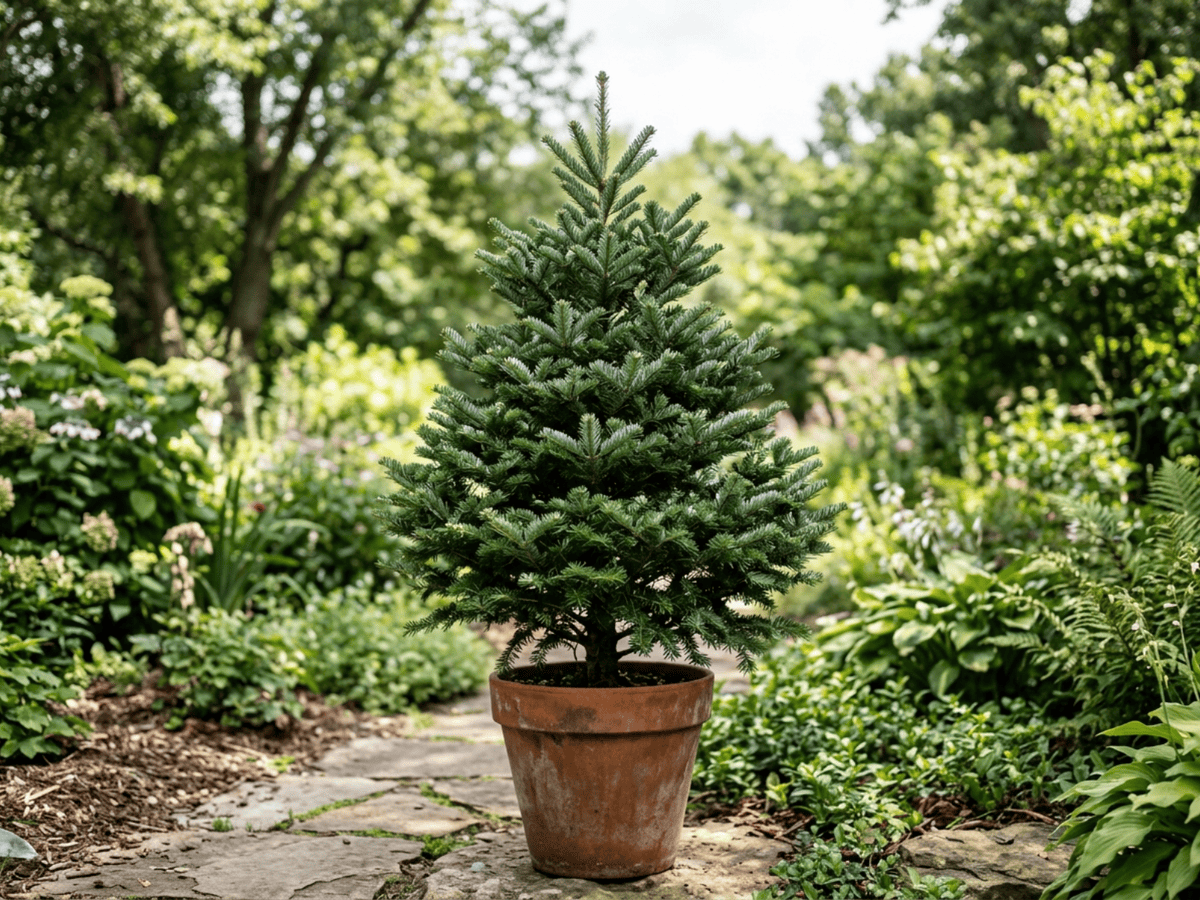 Fraser FirAbies fraseri
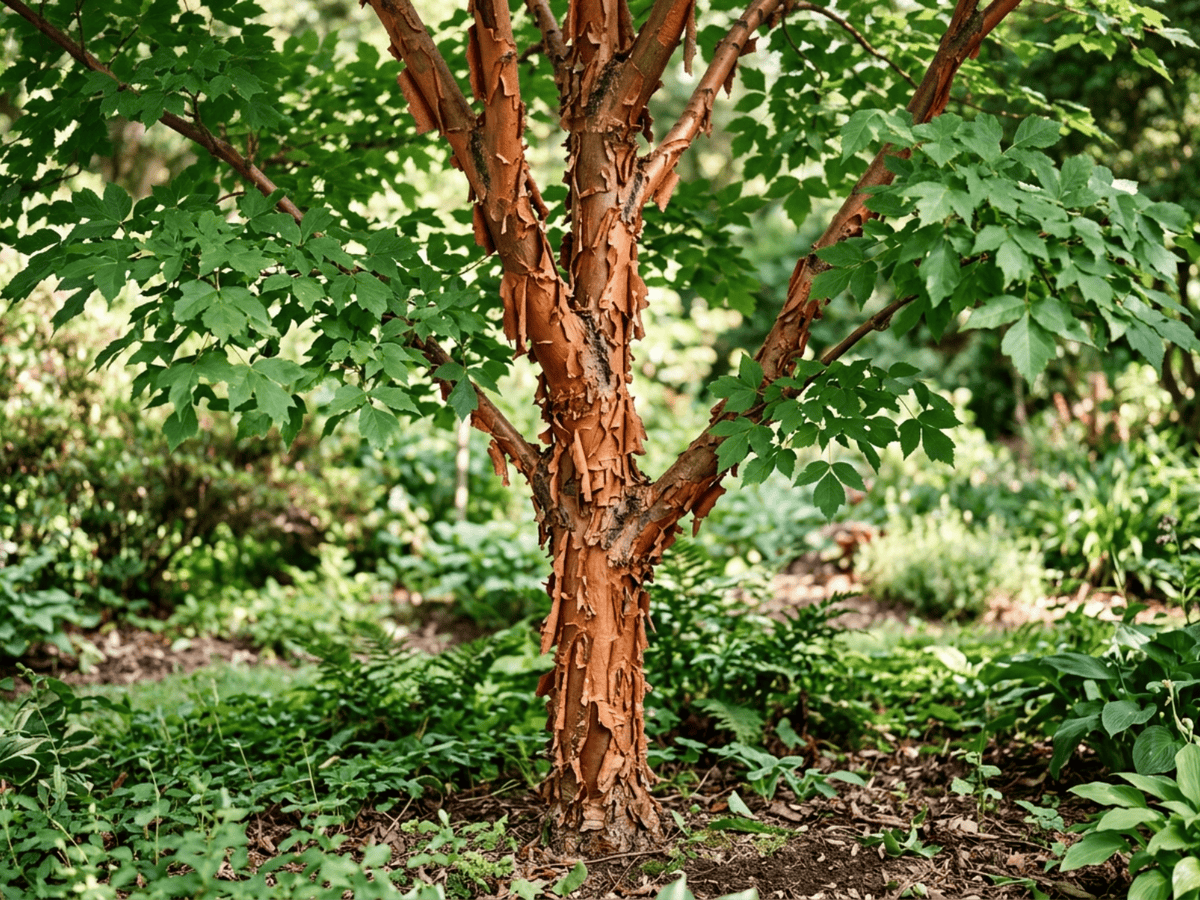 Paperbark MapleAcer griseum
 Sugar MapleAcer saccharum
Frequently asked questions
How often should I water Evergreen Clematis?
In summer, water about every 3 days; in winter, about every 14 days. Adjust for heat, pot size and drainage.
How much light does Evergreen Clematis need?
Full sun: 6+ hrs direct. Watch the leaves — scorching or stretching means the light needs adjusting.
Is Evergreen Clematis toxic to cats or dogs?
Pets Moderate (Dogs Moderate · Cats Moderate) Educational information, not medical or veterinary advice. If exposure is suspected, contact a doctor or veterinarian.
Is Evergreen Clematis easy to grow?
It is moderately demanding: a good choice once you have a little experience.
When does Evergreen Clematis bloom?
It typically blooms Mar–Apr in the Northern Hemisphere.
YardMate
Identify any plant in seconds
Snap a photo — YardMate names the plant, diagnoses problems, and reminds you when to water.
Download on the App Store