 YardMate
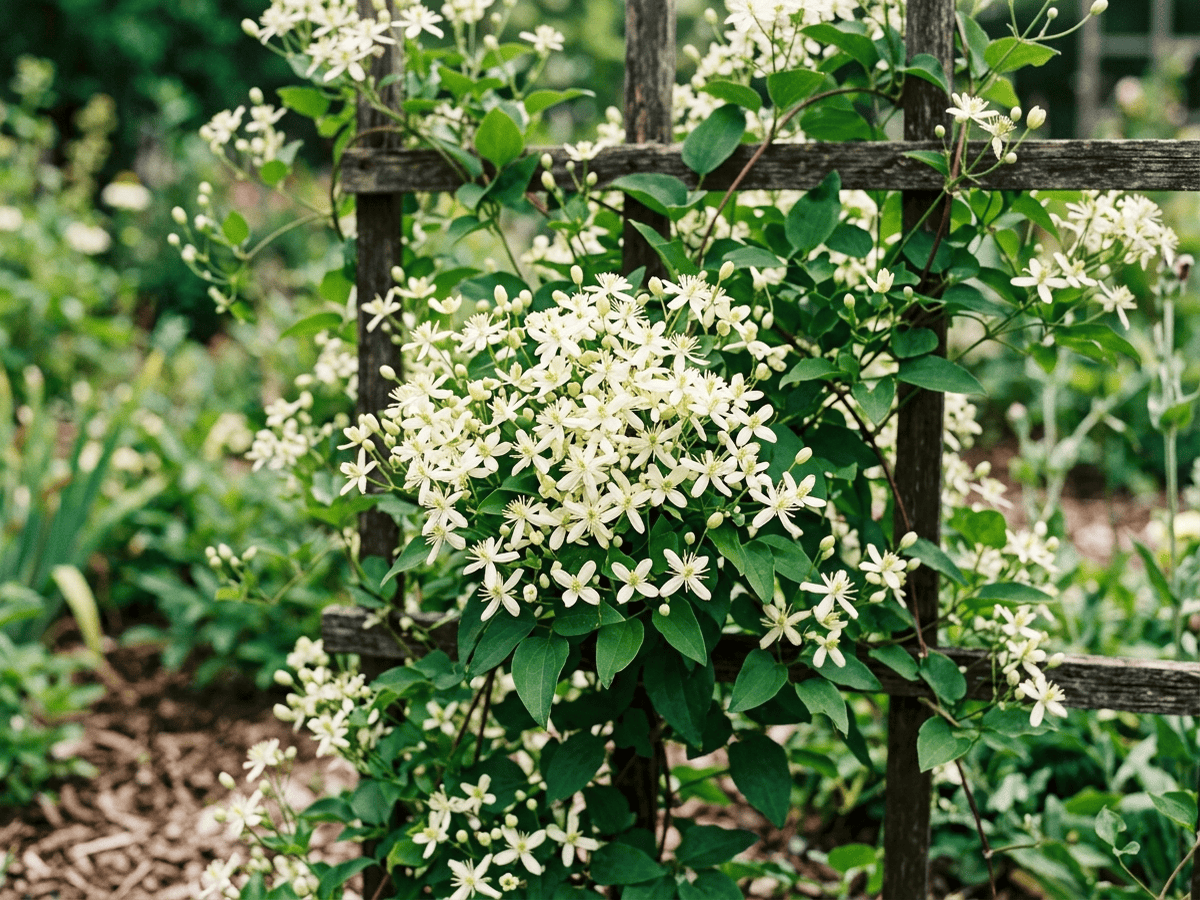


Autumn Clematis
Clematis terniflora
Easy · Beginner friendlyAbout Autumn Clematis
Sweet Autumn Clematis is a vigorous deciduous climber reaching 15-30 feet that covers itself in small fragrant creamy-white flowers in late summer and early fall, creating drifts of starry blooms over fences and trellises. The honey-almond fragrance attracts pollinators while feathery seed heads extend the display into winter. Self-seeds easily and is considered invasive in parts of the eastern US, so cultivars with sterile seeds are preferred.
- Fragrant
- Climbing
- Pollinator-friendly
How to care for Autumn Clematis
Watering
- Springevery 7 days
- Summerevery 5 days
- Fallevery 10 days
- Winterevery 21 days
Soil · Well-draining
- Top dressingPine bark mulch10%
- Main mixPotting soil + perlite 2:170%
- DrainageLECA / gravel20%
Never skip the drainage layer — standing water is the top cause of root rot.
FERTILIZER
Balanced Feed 14-14-14
An even feed covers all three needs at once, keeping leaves, roots and blooms moving together with nothing pushed out of balance.
- Nitrogen · Leaves
- Phosphorus · Roots + Blooms
- Potassium · Strength
- Springevery 30 days
- Summerevery 45 days
At a Glance
- NativeEast Asia
- Height15–30 ft (4.6–9.1 m)
- Spread6–10 ft (1.8–3 m)
- Flower colorWhite, Cream
- Foliage colorGreen
- Fruit colorWhite
- SoilLoamy, Well-drained, Neutral
- LocationsYard
Bloom time
BLOOM CYCLE
Peak bloom
Aug–Oct
Fragrant cream star flowers August to October
Fragrance
STRONG FRAGRANCE
Powerful sweet honey-vanilla fragrance in autumn.
Toxicity
Humans Moderate · Pets Moderate
protoanemonin and anemonin
Moderate
- Leaf
- Sap
- Ingestion
- Contact
EXPOSURE Eating leaves and sap. Touching leaves and sap.
EFFECT Blistering, GI upset from protoanemonin.
NOTE Documented concern for humans: Blistering, GI upset from protoanemonin.
Moderate
- Leaf
- Stem
- Ingestion
EXPOSURE Eating leaves and stems.
EFFECT Vomiting, diarrhea.
NOTE ASPCA toxic.
Moderate
- Leaf
- Stem
- Ingestion
EXPOSURE Eating leaves and stems.
EFFECT Vomiting, diarrhea.
NOTE ASPCA toxic.
Educational information, not medical or veterinary advice. If exposure is suspected, contact a doctor or veterinarian.
DISTRIBUTION

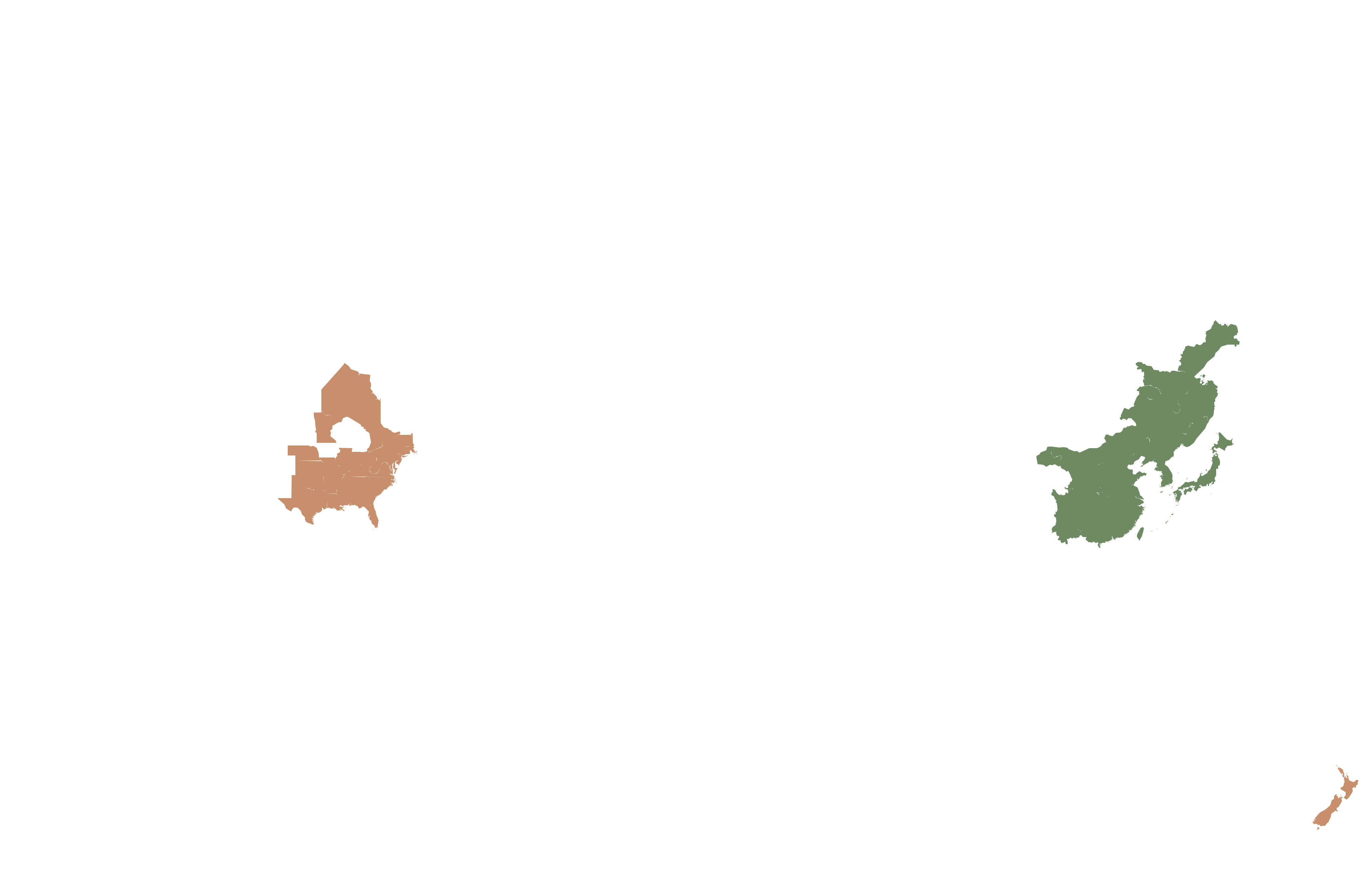
- Native
- Introduced
- East Asia
History

Clematis terniflora occurs naturally in Japan, Korea, Taiwan, and eastern China. Swiss botanist Augustin Pyramus de Candolle described the species in 1818. The epithet terniflora means three-flowered in reference to groups of three flowers on side branches.
The species was long confused with the similar-looking C. paniculata (a New Zealand native, now Clematis paniculata J.F.Gmel.) and C. maximowicziana, and American gardens mostly grow true C. terniflora. It is an enormously vigorous deciduous vine to 10+ meters, producing in late August-September a spectacular smother of creamy-white four-petaled star-shaped flowers 2-3 cm across, densely packed and emitting a powerful honey-vanilla scent.
Silvery fluffy seedheads follow, attractive well into winter. Introduced to North America in the 19th century, the species has thrived beyond anticipation and is now classified as invasive across the eastern US (especially Pennsylvania to Georgia), smothering native vegetation along roadsides and forest edges. Native alternatives include the less-vigorous Clematis virginiana (virgin's bower). Introduced from Japan to the US in the 1860s, it became a favorite Victorian garden vine for fall bloom. Listed as invasive in parts of the Mid-Atlantic and Southeast US where it escapes to cover native vegetation. Gardeners are encouraged to deadhead before seeds ripen.
Symbolism & meaning
What It Symbolizes
Autumn Clematis crowns late-season gardens with autumn abundance, smothering fences and trellises in clouds of small, vanilla-scented white stars. As blooms fade, silvery feathered seed clusters take their place — a quiet symbol of release, drifting on autumn winds toward whatever next year will become. Few vines say goodbye so beautifully.
- Autumn abundance — crowns late-season gardens with perfume
- Release — seed clouds drift on autumn winds
Where the Name Comes From
'Terniflora' means three-flowered, referring to clustered blossoms.
Uses & Fun Facts
- Hawthorn-scented white blooms perfume late-summer gardens
- Massed flowers attract bees, wasps, and small butterflies
- Vigorous twining vine smothers fences, arbors, and pergolas
Related plants
More Clematis plants
 Alpine ClematisClematis alpina
 Evergreen ClematisClematis armandii
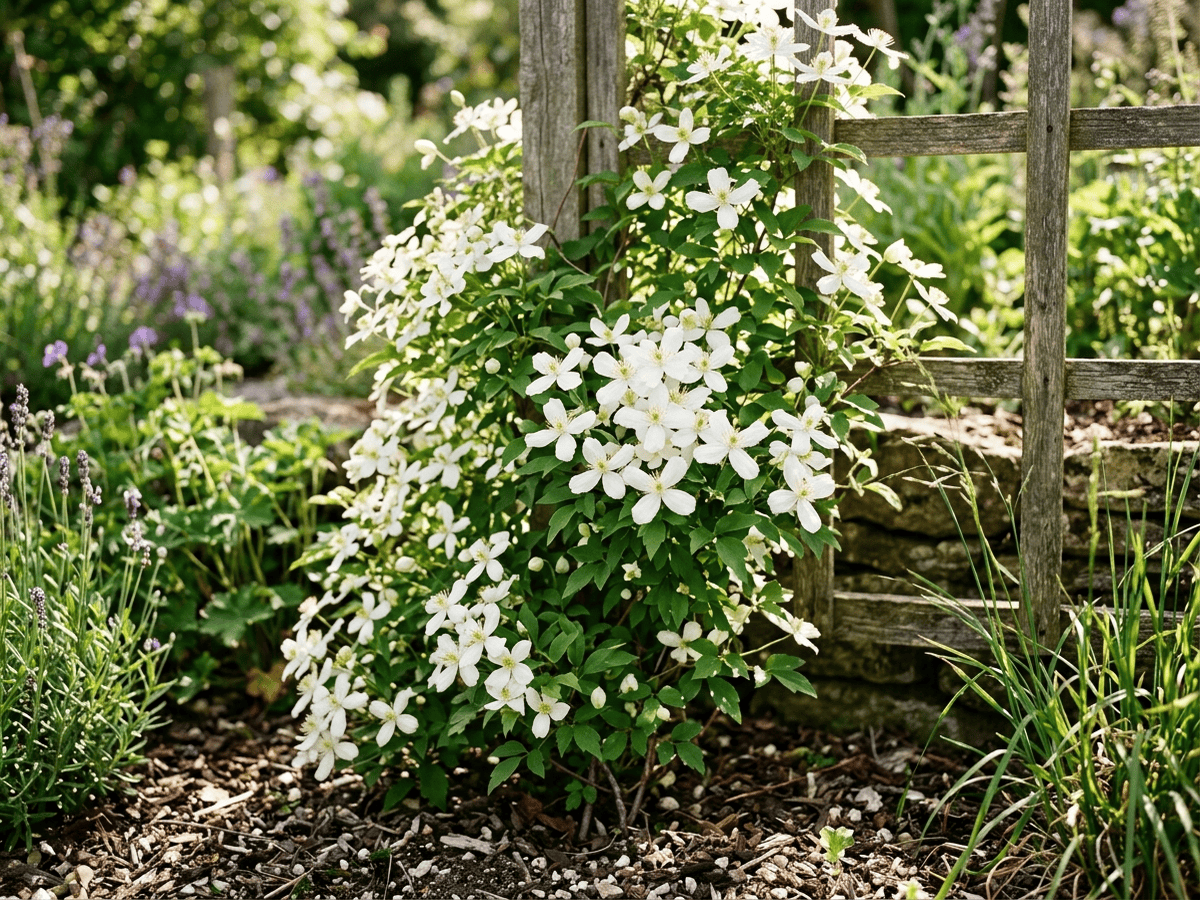 Himalayan ClematisClematis montana
 Virgin's-BowerClematis virginiana
Plants with similar care
 Chinese AbeliaAbelia chinensis
 Fragrant AbeliaAbelia mosanensis
 Large-Flowered AbeliaAbelia uniflora
 Glossy AbeliaAbelia x grandiflora
Frequently asked questions
How often should I water Autumn Clematis?
In summer, water about every 5 days; in winter, about every 21 days. Adjust for heat, pot size and drainage.
How much light does Autumn Clematis need?
Full sun: 6+ hrs direct. Watch the leaves — scorching or stretching means the light needs adjusting.
Is Autumn Clematis toxic to cats or dogs?
Pets Moderate (Dogs Moderate · Cats Moderate) Educational information, not medical or veterinary advice. If exposure is suspected, contact a doctor or veterinarian.
Is Autumn Clematis easy to grow?
Yes — it is considered an easy, beginner-friendly plant.
When does Autumn Clematis bloom?
It typically blooms Aug–Oct in the Northern Hemisphere.
YardMate
Identify any plant in seconds
Snap a photo — YardMate names the plant, diagnoses problems, and reminds you when to water.
Download on the App Store