 YardMate


Italian Clematis
Clematis viticella
Easy · Beginner friendlyAbout Italian Clematis
Clematis viticella, the Italian clematis, produces an abundance of small to medium-sized, nodding flowers in shades of purple, blue, pink, red, and white from midsummer into autumn. Native to southern Europe and western Asia, it is valued for its resistance to clematis wilt — the devastating fungal disease that plagues large-flowered hybrids. Growing 3–4 meters, it can be hard-pruned to the ground each spring (Group 3 pruning), making it the easiest clematis to maintain. Popular cultivars include 'Étoile Violette' and 'Polish Spirit.'
- Climbing
- Long-blooming
How to care for Italian Clematis
Watering
- Springevery 5 days
- Summerevery 3 days
- Fallevery 7 days
- Winterevery 21 days
Soil · Well-draining
- Top dressingPine bark mulch10%
- Main mixPotting soil + perlite 2:170%
- DrainageLECA / gravel20%
Never skip the drainage layer — standing water is the top cause of root rot.
FERTILIZER
Balanced Feed 14-14-14
An even feed covers all three needs at once, keeping leaves, roots and blooms moving together with nothing pushed out of balance.
- Nitrogen · Leaves
- Phosphorus · Roots + Blooms
- Potassium · Strength
- Springevery 30 days
- Summerevery 30 days
At a Glance
- NativeMediterranean, Europe, Western Asia
- Height10–15 ft (3–4.6 m)
- Spread3–6 ft (0.9–1.8 m)
- Flower colorPurple, Red, Pink, White
- Foliage colorGreen
- SoilLoamy, Well-drained, Alkaline
- LocationsYard
Bloom time
BLOOM CYCLE
Peak bloom
Jul–Nov
Midsummer to autumn bloom; prune hard in spring; resistant to clematis wilt
Fragrance
NO FRAGRANCE
No notable fragrance.
Toxicity
Humans Moderate · Pets Moderate
protoanemonin
Moderate
- All
- Contact
- Ingestion
EXPOSURE Touching any part of the plant. Eating any part of the plant.
EFFECT Skin/mouth irritation from protoanemonin.
NOTE Documented concern for humans: Skin/mouth irritation from protoanemonin.
Moderate
- All
- Ingestion
EXPOSURE Eating any part of the plant.
EFFECT Drooling, vomiting, diarrhea.
NOTE ASPCA lists Clematis as toxic to dogs, cats, horses.
Moderate
- All
- Ingestion
EXPOSURE Eating any part of the plant.
EFFECT Drooling, vomiting, diarrhea.
NOTE ASPCA lists Clematis as toxic to dogs, cats, horses.
Educational information, not medical or veterinary advice. If exposure is suspected, contact a doctor or veterinarian.
DISTRIBUTION


- Native
- Introduced
- Mediterranean
- Europe
- Western Asia
History

Clematis viticella is native to southern and southeastern Europe including Italy, the Balkans, and Turkey. It was introduced to British horticulture around 1569 by John Gerard, the herbalist, from Italy — one of the earliest exotic clematis species grown in England, predating the Victorian hybridization boom by nearly three centuries. Its ability to flower prolifically in late summer on new growth means it tolerates aggressive pruning, and it rarely succumbs to Phoma clematidina ("clematis wilt"), the disease that devastates large-flowered C. lanuginosa hybrids.
Modern breeding by Raymond Evison, Brother Stefan Franczak (a Polish Jesuit who bred prolifically in the 1960s-90s), and Wim Snoeijer has produced a range of disease-resistant cultivars including "Étoile Violette," "Polish Spirit," and the Boulevard series. C. viticella parentage is now considered essential to any reliable garden clematis. Clematis viticella has been cultivated in European gardens since the 1500s — it was one of the first clematis species to reach England, documented in 1569.
Italian Renaissance gardens featured it on pergolas and walls. When clematis wilt devastated large-flowered hybrids in the 20th century, viticella cultivars became the saviors of clematis gardening — their natural wilt resistance made them reliable alternatives. The famous partnership of clematis climbing through roses was popularized by Christopher Lloyd at Great Dixter garden in England, and viticella types are ideal for this because their hard annual pruning doesn't damage the host rose.
Symbolism & meaning
What It Symbolizes
Italian Clematis is artistry climbing. Its nodding violet bells thread through trellises and old roses with the deliberate rhythm of a Renaissance vine motif. Beloved in European gardens for centuries, it turns vertical space into composition, rewriting a wall or pergola one elegant flower at a time.
- Artistry — Its elegant flowers threading through garden structures represent creative expression
Where the Name Comes From
Clematis from Greek 'klema.' Viticella means 'small vine,' a diminutive of Latin 'vitis' (vine).
Uses & Fun Facts
- Twines through trellises, obelisks, and rose companions
- Wilt-resistant nodding flowers cover supports midsummer to autumn
Related plants
More Clematis plants
 Alpine ClematisClematis alpina
 Evergreen ClematisClematis armandii
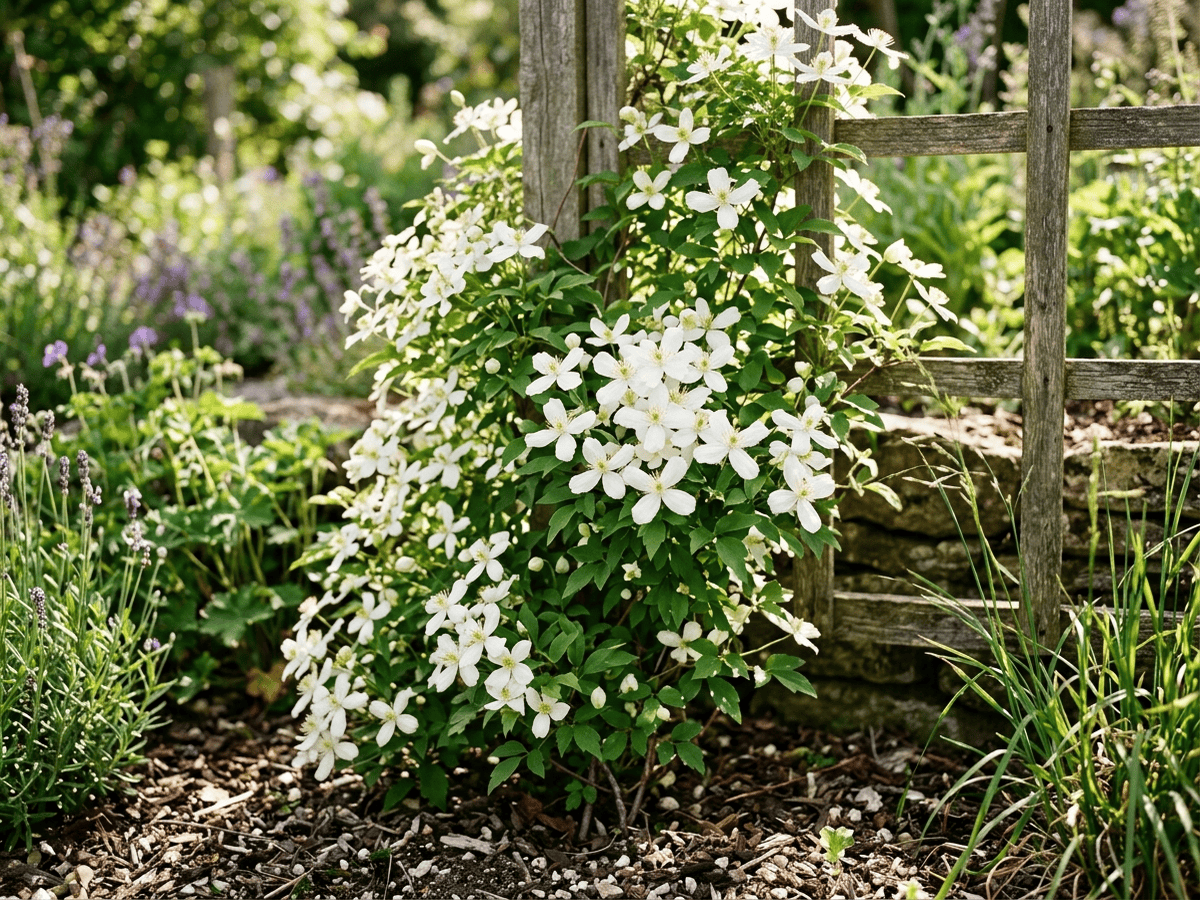 Himalayan ClematisClematis montana
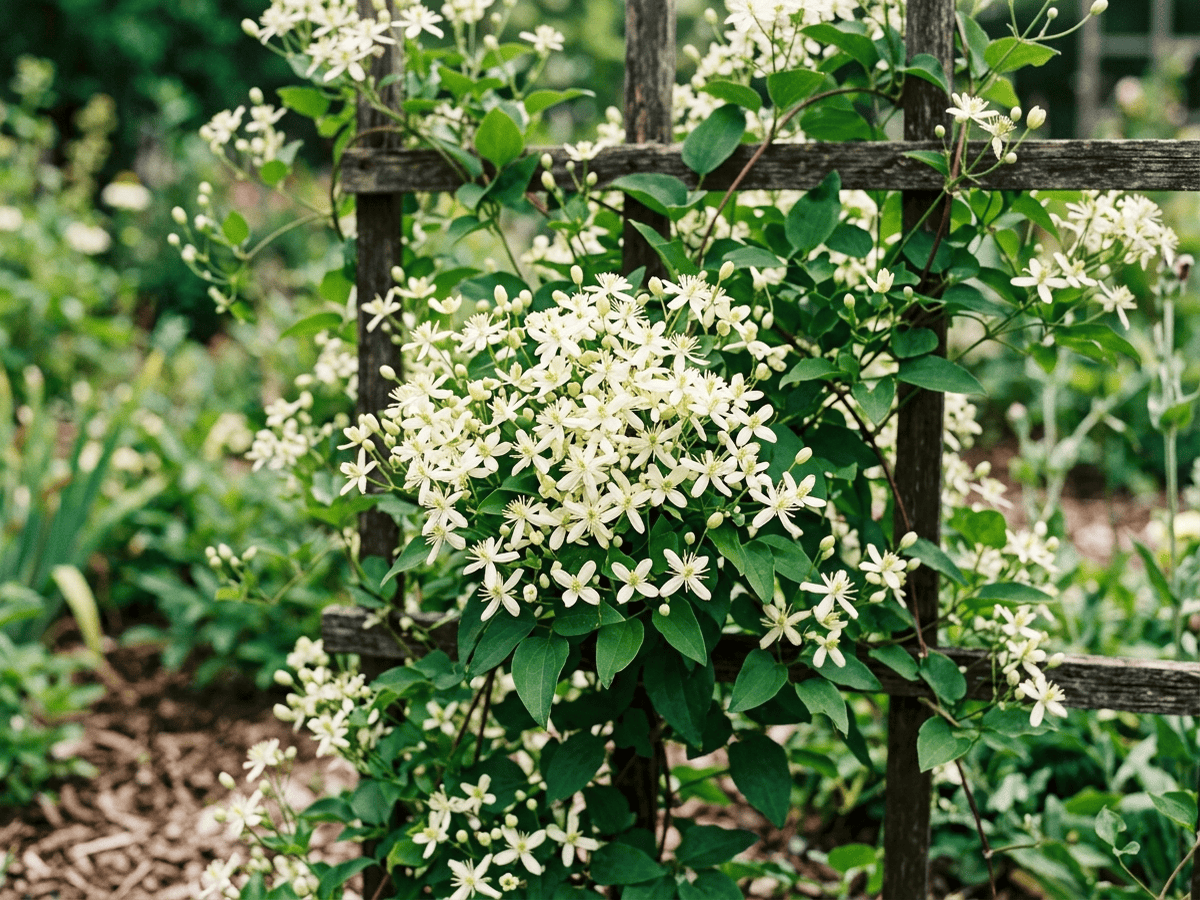 Autumn ClematisClematis terniflora
Plants with similar care
 Chinese AbeliaAbelia chinensis
 Fragrant AbeliaAbelia mosanensis
 Large-Flowered AbeliaAbelia uniflora
 Glossy AbeliaAbelia x grandiflora
Frequently asked questions
How often should I water Italian Clematis?
In summer, water about every 3 days; in winter, about every 21 days. Adjust for heat, pot size and drainage.
How much light does Italian Clematis need?
Full sun: 6+ hrs direct. Watch the leaves — scorching or stretching means the light needs adjusting.
Is Italian Clematis toxic to cats or dogs?
Pets Moderate (Dogs Moderate · Cats Moderate) Educational information, not medical or veterinary advice. If exposure is suspected, contact a doctor or veterinarian.
Is Italian Clematis easy to grow?
Yes — it is considered an easy, beginner-friendly plant.
When does Italian Clematis bloom?
It typically blooms Jul–Nov in the Northern Hemisphere.
YardMate
Identify any plant in seconds
Snap a photo — YardMate names the plant, diagnoses problems, and reminds you when to water.
Download on the App Store