 YardMate

Giant Dogwood
Cornus controversa
Medium · Some experienceAbout Giant Dogwood
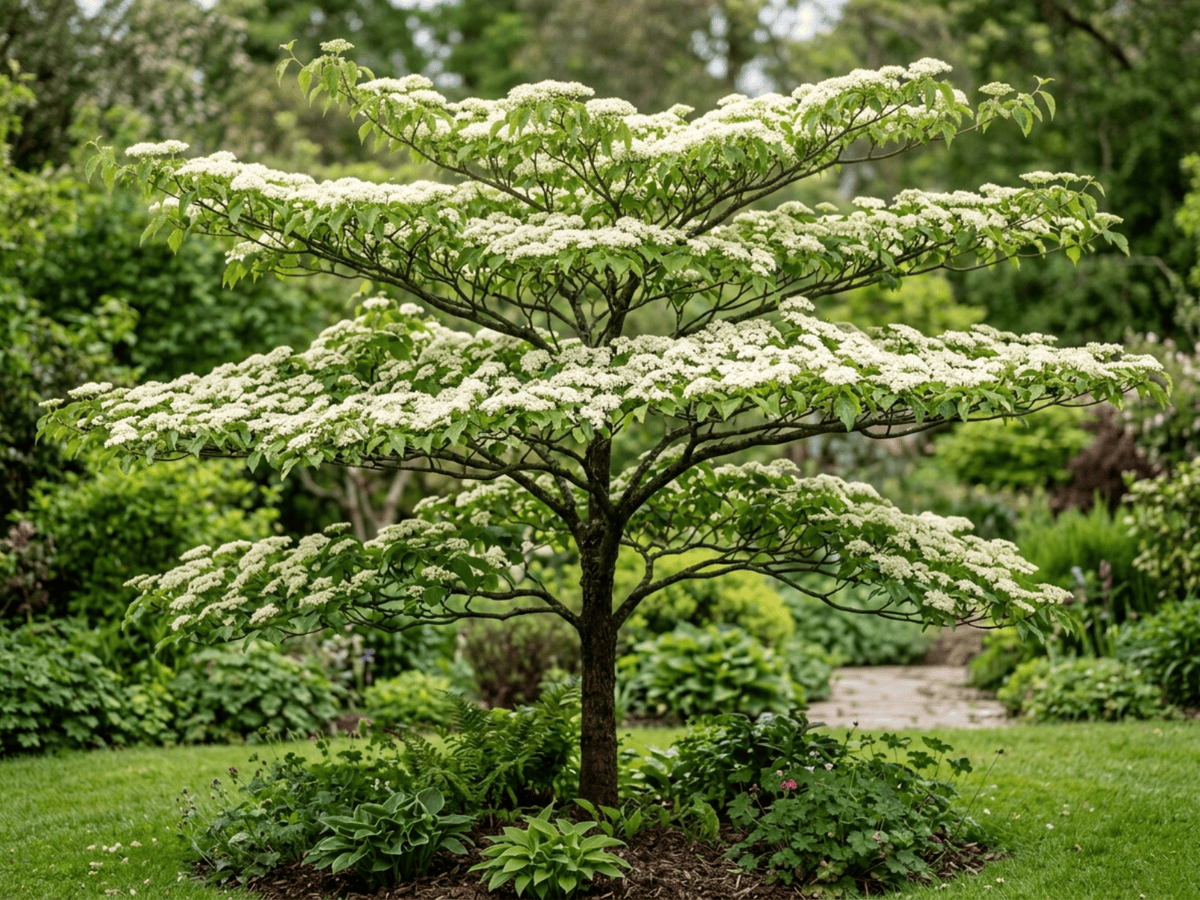
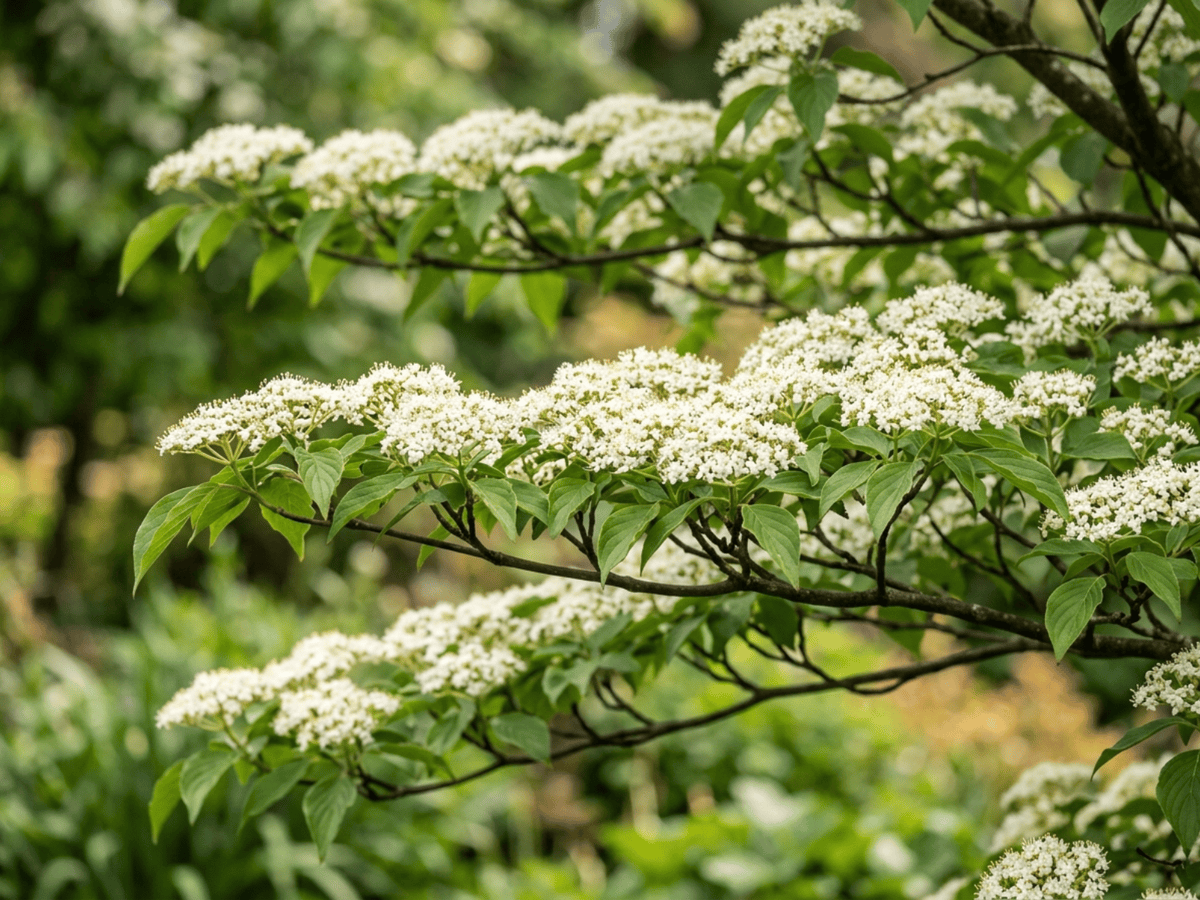
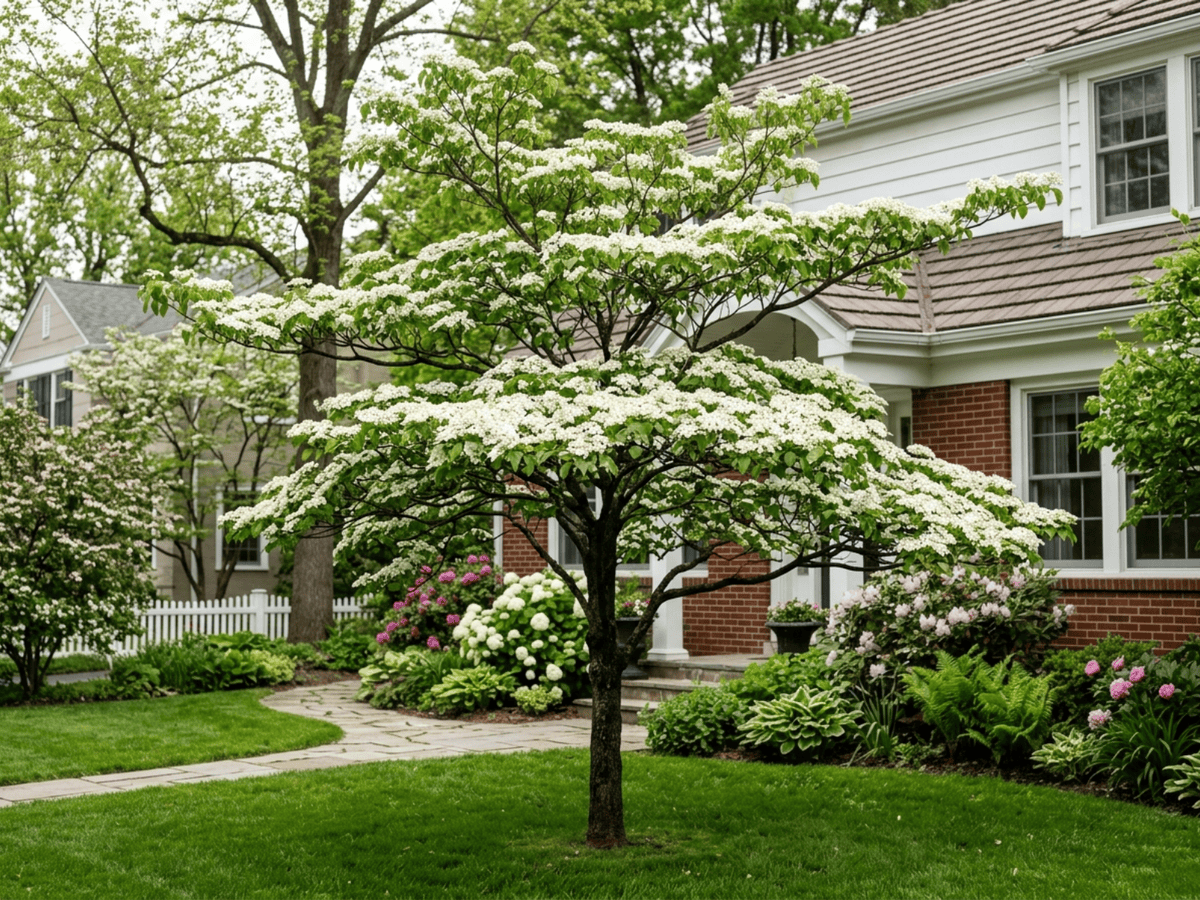
Giant Dogwood or Wedding Cake Tree is a majestic Asian dogwood reaching 30-50 feet tall with strikingly tiered horizontal branches, creating a wedding-cake silhouette. Producing flat clusters of small creamy-white flowers in early summer followed by blue-black berries, it is especially stunning in the variegated form 'Variegata' with white-edged leaves. Hardy in USDA zones 5-8 and an iconic specimen tree in American botanical gardens.
- Architectural
- Pollinator-friendly
- Wildlife-friendly
How to care for Giant Dogwood
Watering
- Springevery 7 days
- Summerevery 5 days
- Fallevery 10 days
- Winterpause watering
Soil · Well-draining
- Top dressingPine bark mulch10%
- Main mixPotting soil + perlite 2:170%
- DrainageLECA / gravel20%
Never skip the drainage layer — standing water is the top cause of root rot.
FERTILIZER
Balanced Feed 14-14-14
An even feed covers all three needs at once, keeping leaves, roots and blooms moving together with nothing pushed out of balance.
- Nitrogen · Leaves
- Phosphorus · Roots + Blooms
- Potassium · Strength
- Springevery 60 days
- Summerevery 60 days
At a Glance
- NativeEast Asia, South Asia
- Height30–50 ft (9.1–15.2 m)
- Spread25–40 ft (7.6–12.2 m)
- Flower colorWhite, Cream
- Foliage colorGreen, Variegated
- Fruit colorBlack, Blue
- SoilLoamy, Well-drained, Moisture-retentive
- LocationsYard
Bloom time
BLOOM CYCLE
Peak bloom
May–Jun
Creamy-white clusters May to June
Fragrance
LIGHT FRAGRANCE
The flowers have a mild scent.
Toxicity
No toxicity has been reported for this plant. Still, it is wise to keep pets from chewing on any houseplant.
Educational information, not medical or veterinary advice. If exposure is suspected, contact a doctor or veterinarian.
DISTRIBUTION


- Native
- East Asia
- South Asia
History
Cornus controversa grows naturally across China, Japan, Korea, and the Himalayas as a medium to large tree. English botanist William Botting Hemsley formally described it in 1909 after the species had been known in Chinese gardens for centuries. Its most celebrated characteristic is its strongly horizontal tiered branching habit creating the illusion of a tiered wedding cake—hence the English common name.
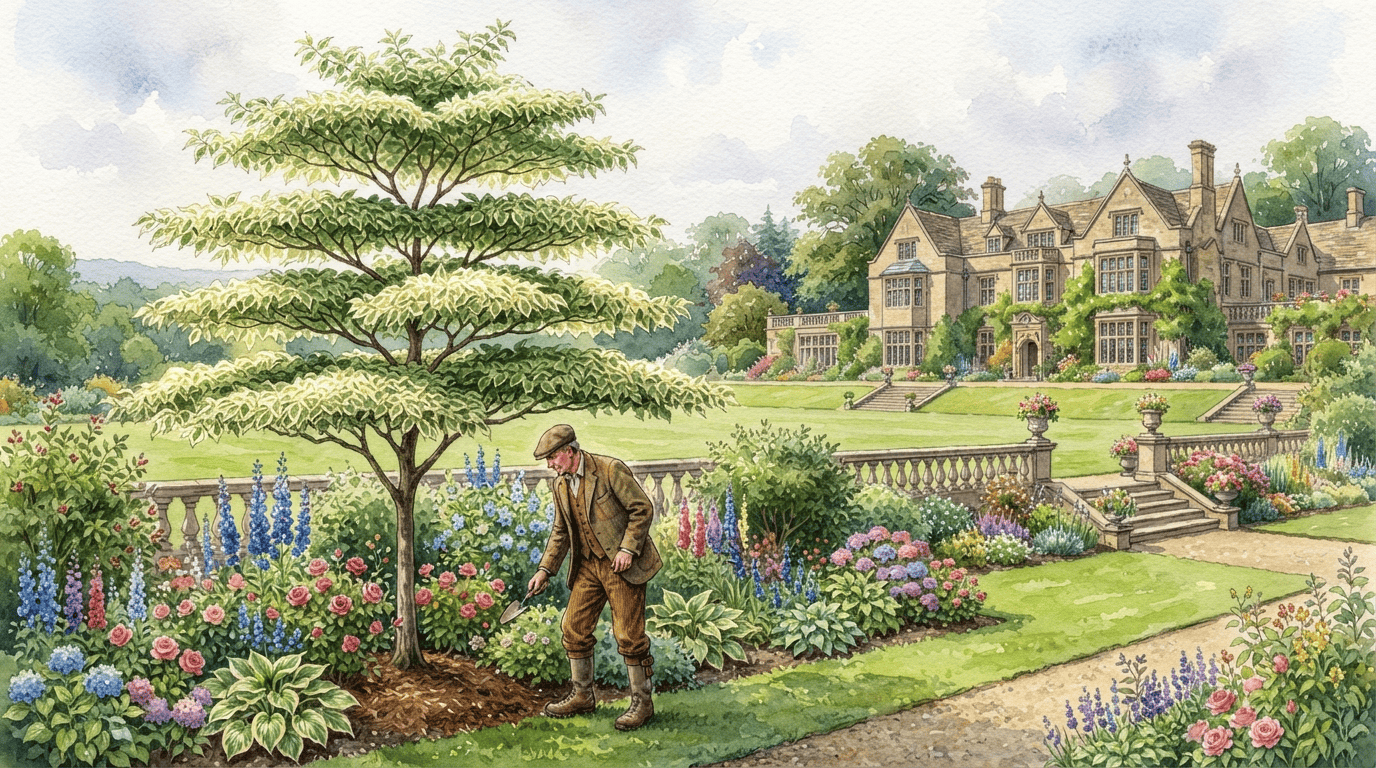
The variegated cultivar 'Variegata' with creamy-white leaf margins, introduced by Veitch Nurseries of Exeter in the late 19th century, became legendary among specimen trees in English gardens. Plant hunters including Ernest Wilson collected additional material from Chinese forests. The species also features in Japanese garden tradition as mizuki, valued for elegant architecture and late-spring white flower clusters on the tiered branches.
The variegated form 'Variegata' was discovered in a Kyoto garden and introduced to the West in 1890. One of the most coveted specimen trees in American horticulture, its wedding-cake tiered form beloved by garden designers. Commands high prices as a grafted specimen.
Symbolism & meaning
What It Symbolizes
Giant Dogwood expresses grace through architecture, its tiered horizontal branches stacked one atop another like a slowly rising celebration. In bloom, the layers fill with white lacecap flowers, earning its old nickname of wedding-cake tree. To stand beneath one is to be present at a quiet, perennial ceremony — joy structured into wood.
- Grace — elegant tiered branching
- Celebration — wedding cake-like form
Where the Name Comes From
'Controversa' refers to botanical debate over whether it differs from C. alternifolia.
Uses & Fun Facts
- Tiered horizontal branches create iconic wedding-cake silhouette
- Creamy flat flower clusters draw early-summer pollinators
- Blue-black summer berries feed birds in Asian dogwood gardens
Related plants
More Cornus plants
 Alternate-Leaved DogwoodCornus alternifolia
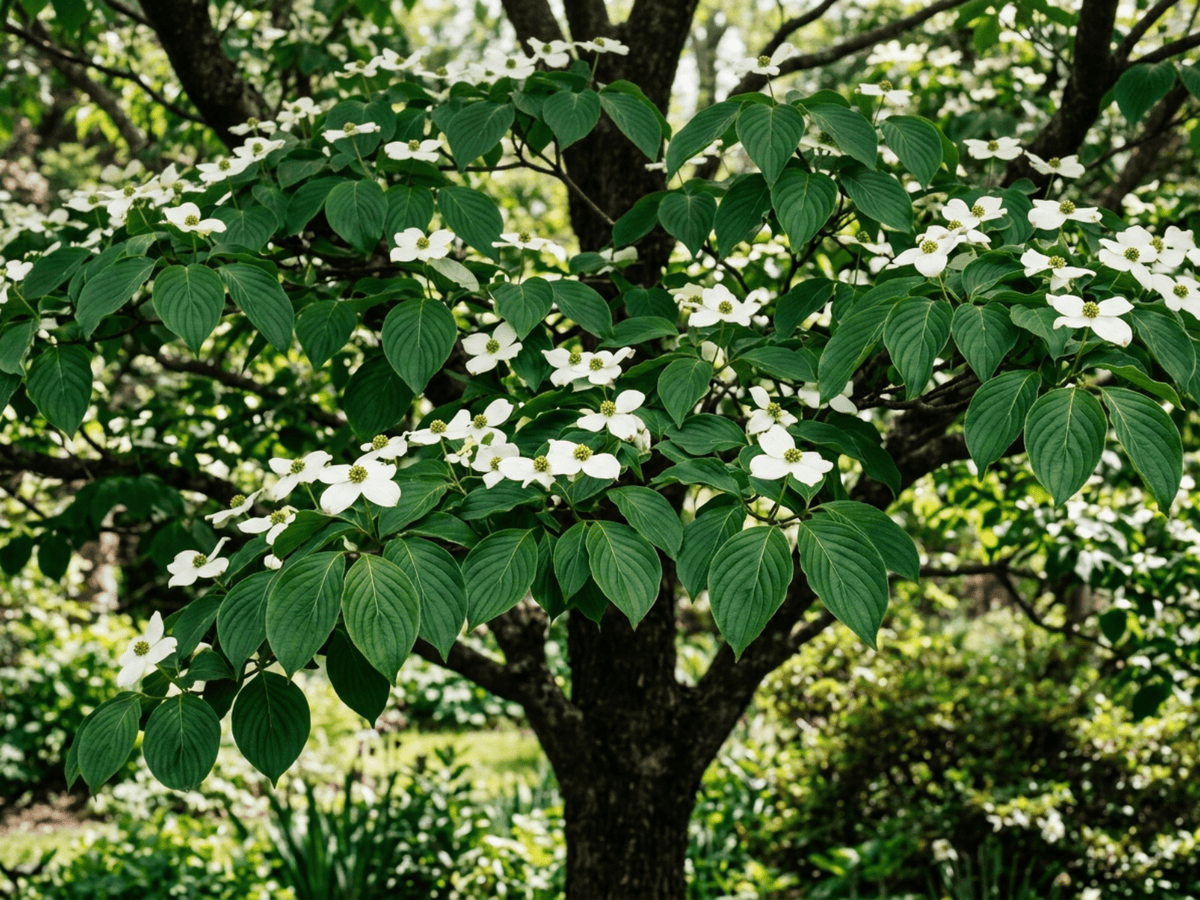 Flowering DogwoodCornus florida
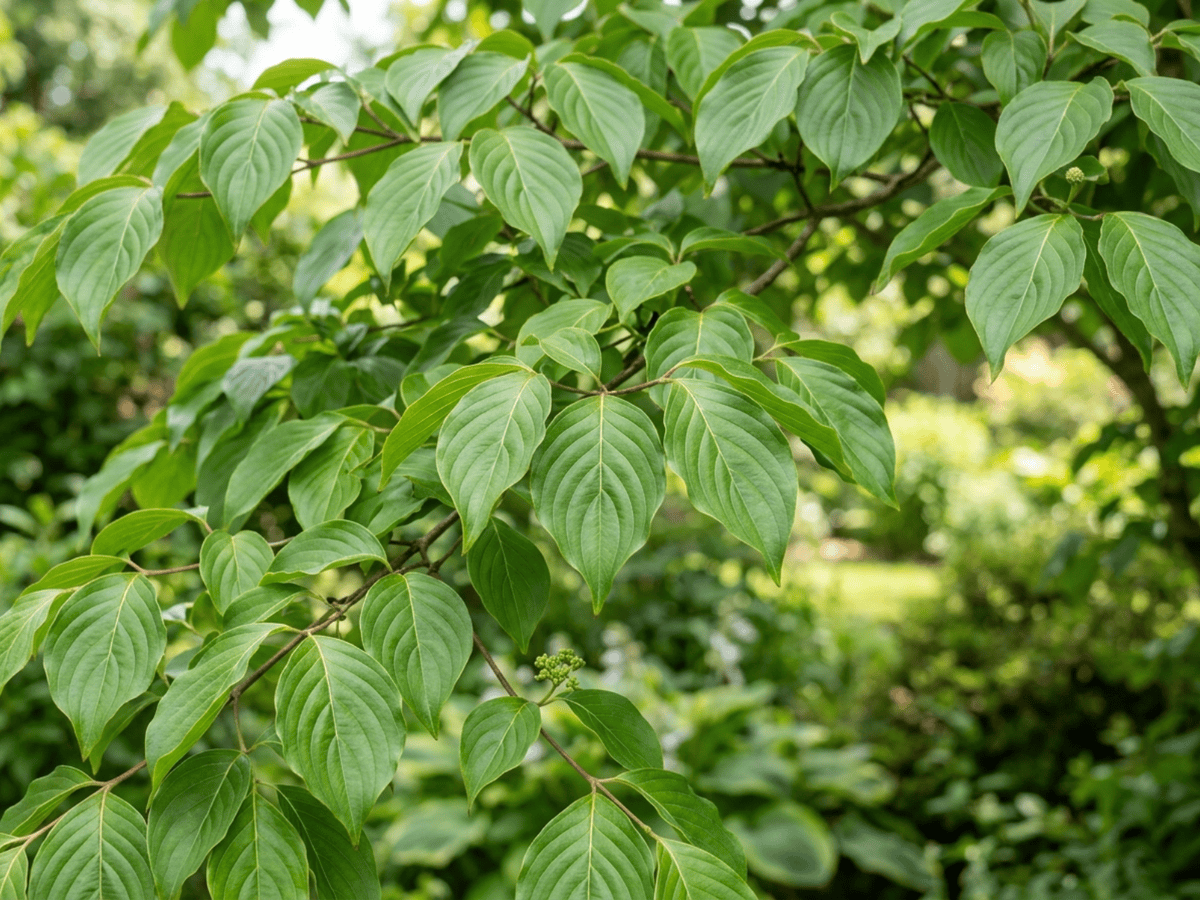 Kousa DogwoodCornus kousa
 Cornelian CherryCornus mas
Plants with similar care
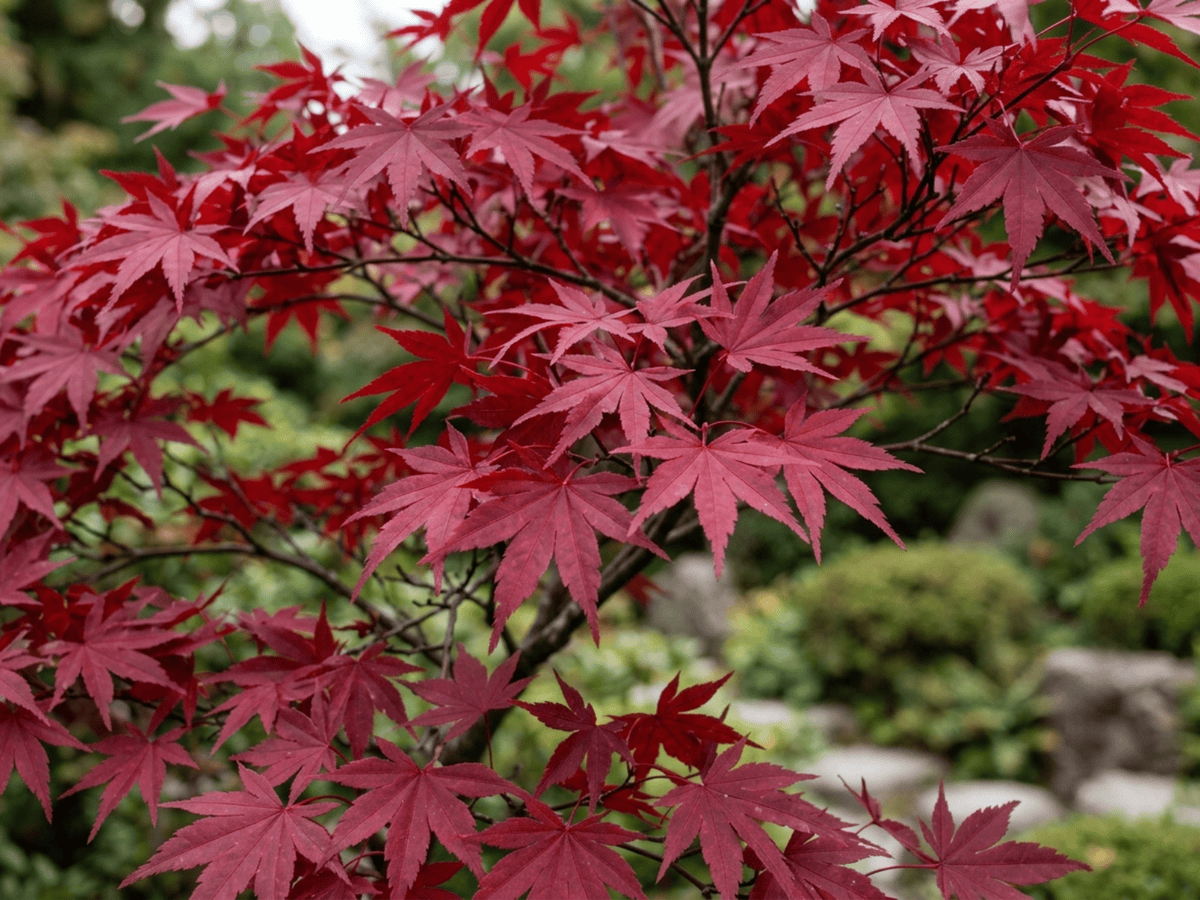 Japanese MapleAcer palmatum
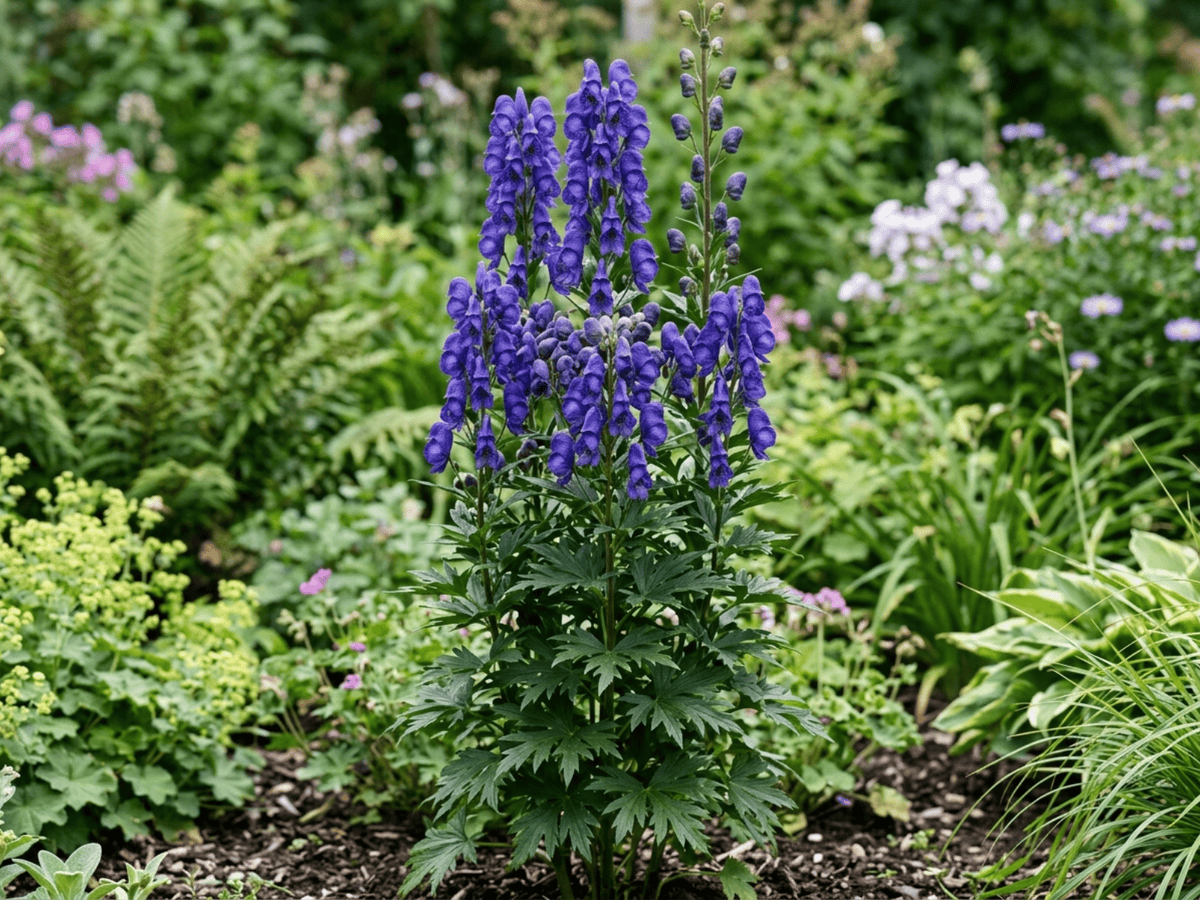 Azure MonkshoodAconitum carmichaelii
 Florida HobblebushAgarista populifolia
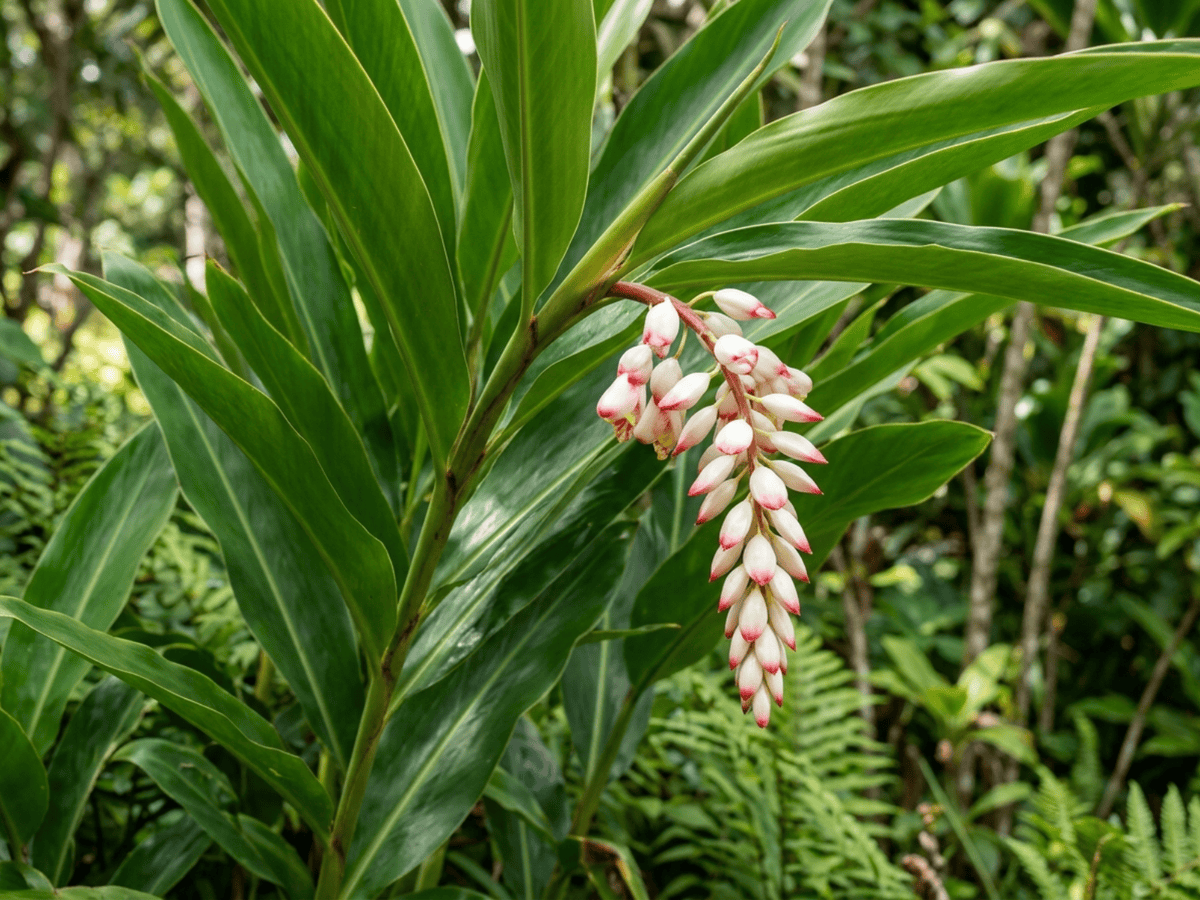 Shell GingerAlpinia zerumbet
Frequently asked questions
How often should I water Giant Dogwood?
Water about every 7 days during the growing season, and always let excess water drain away.
How much light does Giant Dogwood need?
Part shade: 2–4 hrs direct. Watch the leaves — scorching or stretching means the light needs adjusting.
Is Giant Dogwood toxic to cats or dogs?
No toxicity has been reported for this plant. Still, it is wise to keep pets from chewing on any houseplant. Educational information, not medical or veterinary advice. If exposure is suspected, contact a doctor or veterinarian.
Is Giant Dogwood easy to grow?
It is moderately demanding: a good choice once you have a little experience.
When does Giant Dogwood bloom?
It typically blooms May–Jun in the Northern Hemisphere.
YardMate
Identify any plant in seconds
Snap a photo — YardMate names the plant, diagnoses problems, and reminds you when to water.
Download on the App Store