 YardMate


Purple Nutsedge
Cyperus rotundus
Easy · Beginner friendlyAbout Purple Nutsedge
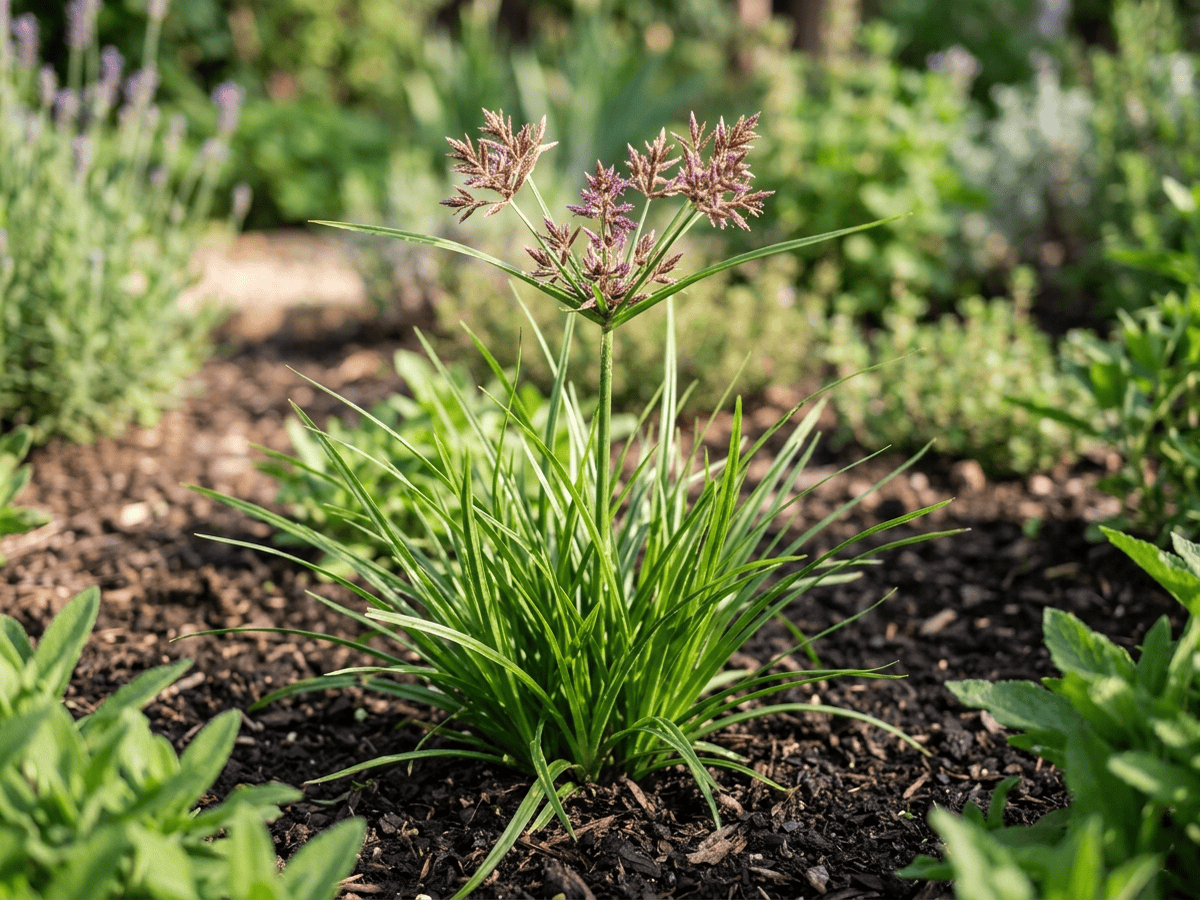
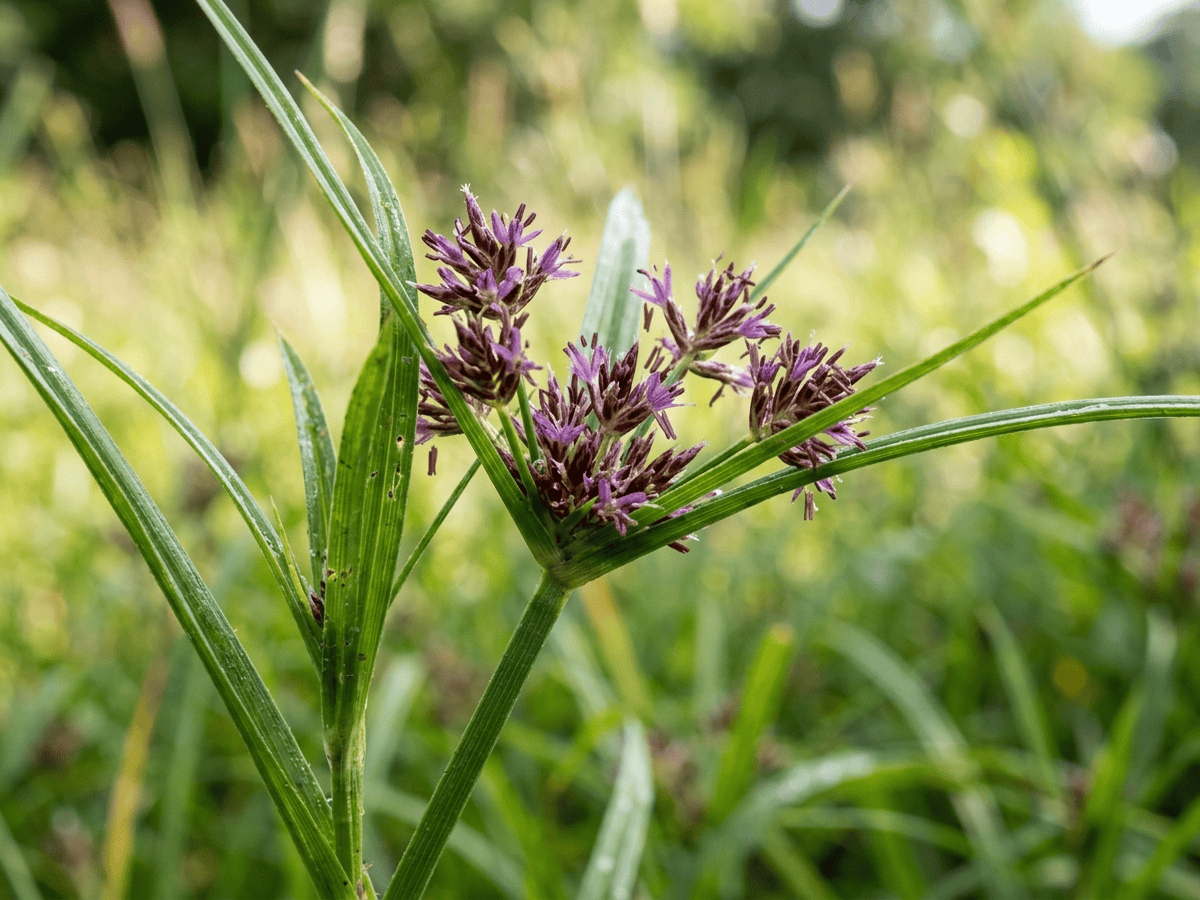
Purple Nutsedge is considered the world's worst weed by weed scientists, a tropical African and Asian sedge naturalized throughout the warm US from the Carolinas to California. Grows from a chain of small hard tubers connecting underground, forming triangular-stemmed grass-like plants with purple-brown seed clusters. Nearly impossible to eradicate because each tuber resprouts multiple times and the chains extend deep into soil.
- Medicinal
- Heat-tolerant
How to care for Purple Nutsedge
Watering
- Springevery 7 days
- Summerevery 5 days
- Fallevery 10 days
- Winterevery 14 days
Soil · Well-draining
- Top dressingPine bark mulch10%
- Main mixPotting soil + perlite 2:170%
- DrainageLECA / gravel20%
Never skip the drainage layer — standing water is the top cause of root rot.
FERTILIZER
This plant needs little to no feeding.
At a Glance
- NativeAfrica, Mediterranean, South Asia
- Height0.5–1.5 ft (0.2–0.5 m)
- Spread1–2 ft (0.3–0.6 m)
- Flower colorPurple
- Foliage colorGreen
- Fruit colorBrown
- SoilMoisture-retentive, Loamy
- LocationsYard
Bloom time
BLOOM CYCLE
Peak bloom
Jun–Sep
Purple-brown radiating seed clusters late summer
Fragrance
MODERATE FRAGRANCE
Tubers aromatic, earthy-camphor scented; leaves faintly grassy.
Toxicity
No toxicity has been reported for this plant. Still, it is wise to keep pets from chewing on any houseplant.
Educational information, not medical or veterinary advice. If exposure is suspected, contact a doctor or veterinarian.
DISTRIBUTION


- Native
- Introduced
- Africa
- Mediterranean
- South Asia
History

Cyperus rotundus has a probable origin in tropical Africa, southern Europe, and South Asia, but has spread through at least 92 countries across all continents except Antarctica, earning its rank as 'the world's worst weed' in Holm et al.'s 1977 review of agricultural weeds. Linnaeus described it in Species Plantarum (1753). Its underground tuber network is virtually impossible to eradicate — each plant produces up to 40,000 tubers per square meter in a season, and fragments as small as a centimeter regenerate.
Yet its aromatic tubers are a cornerstone of traditional Ayurvedic and Chinese medicine: the Chinese 'Xiang Fu Zi' is a primary qi-regulating herb for menstrual irregularity, listed in the Shennong Bencao Jing (c.200 CE). Modern pharmacology has identified cyperene, cyperol, and other sesquiterpenes with anti-inflammatory activity.
A major agricultural pest in the warm-climate US, especially in the South. Used in Chinese medicine for over 2,000 years as xiang fu for menstrual and digestive complaints.
Symbolism & meaning
What It Symbolizes
Purple Nutsedge has been called one of agriculture's most stubborn weeds, and its symbolism comes from that underground persistence. Tubers, rhizomes, and wiry leaves make it almost impossible to persuade out of a bed. Yet its edible and aromatic history complicates the verdict: a troublesome plant with a long human shadow.
- Stubborn invasion — called the world's worst weed by agronomists
- Ancient medicine — over 2,000 years in Chinese herbal medicine
Where the Name Comes From
'rotundus' from Latin means round, for the small rounded tubers distinguishing from the more oblong tubers of yellow nutsedge.
Uses & Fun Facts
- Tubers (xiang fu) central to Chinese and Ayurvedic medicine
- Tubers yield aromatic essential oil for perfumery
Related plants
More Cyperus plants
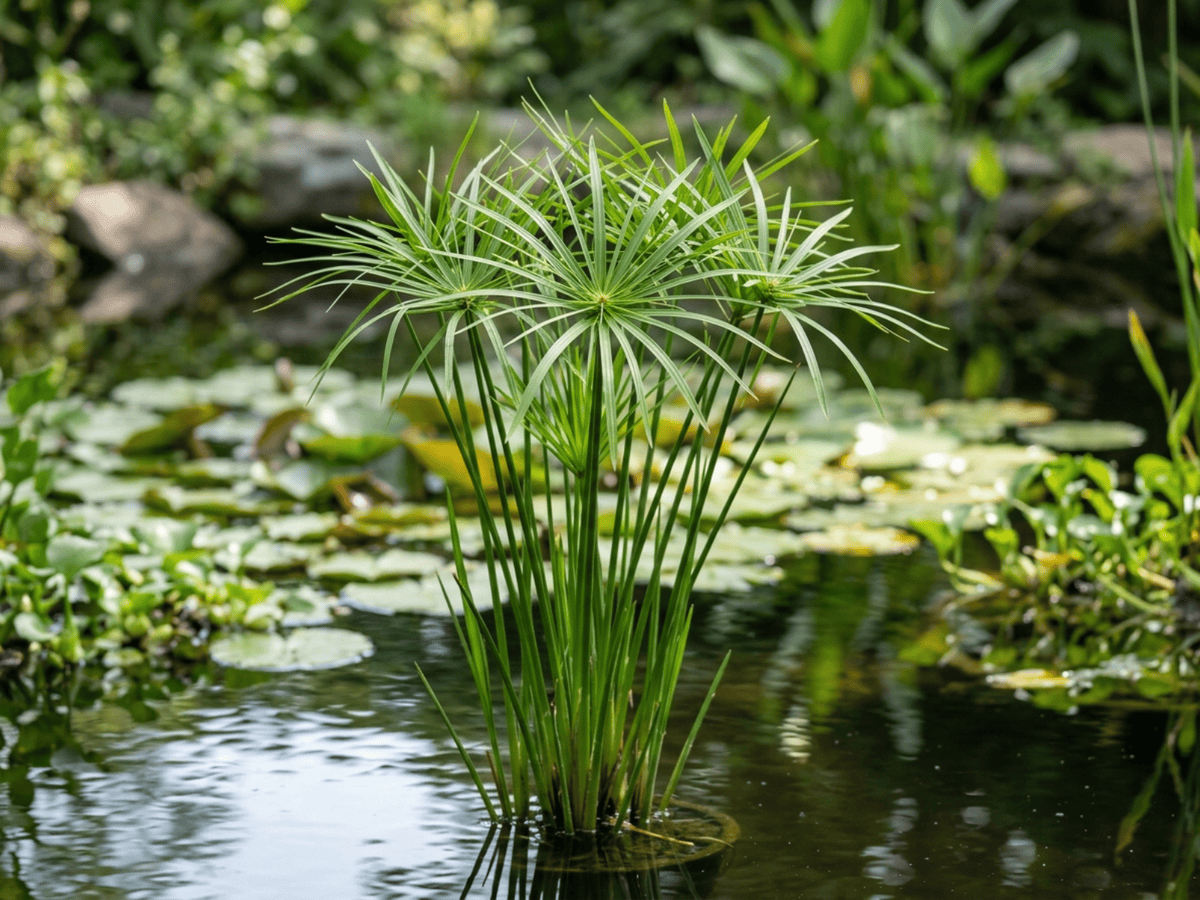 Umbrella PapyrusCyperus alternifolius
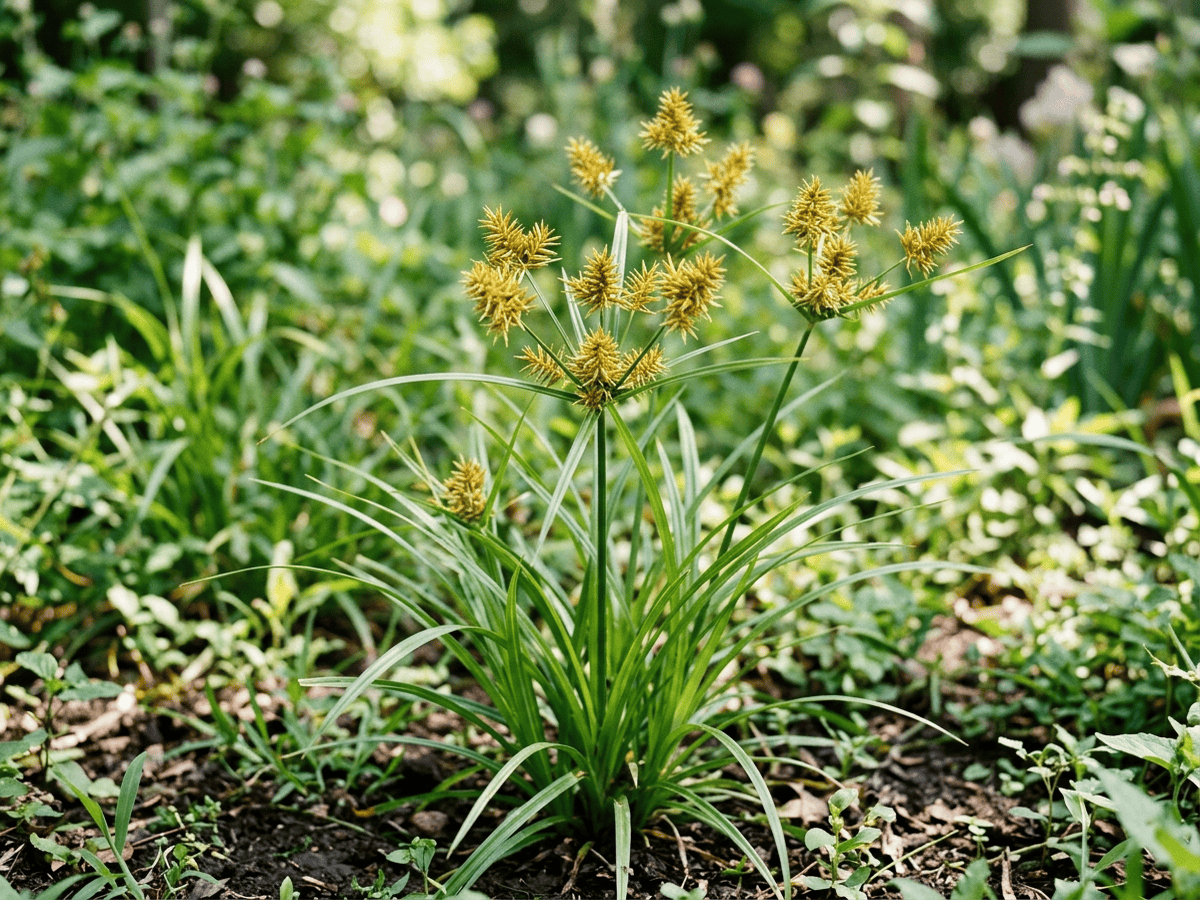 Yellow NutsedgeCyperus esculentus
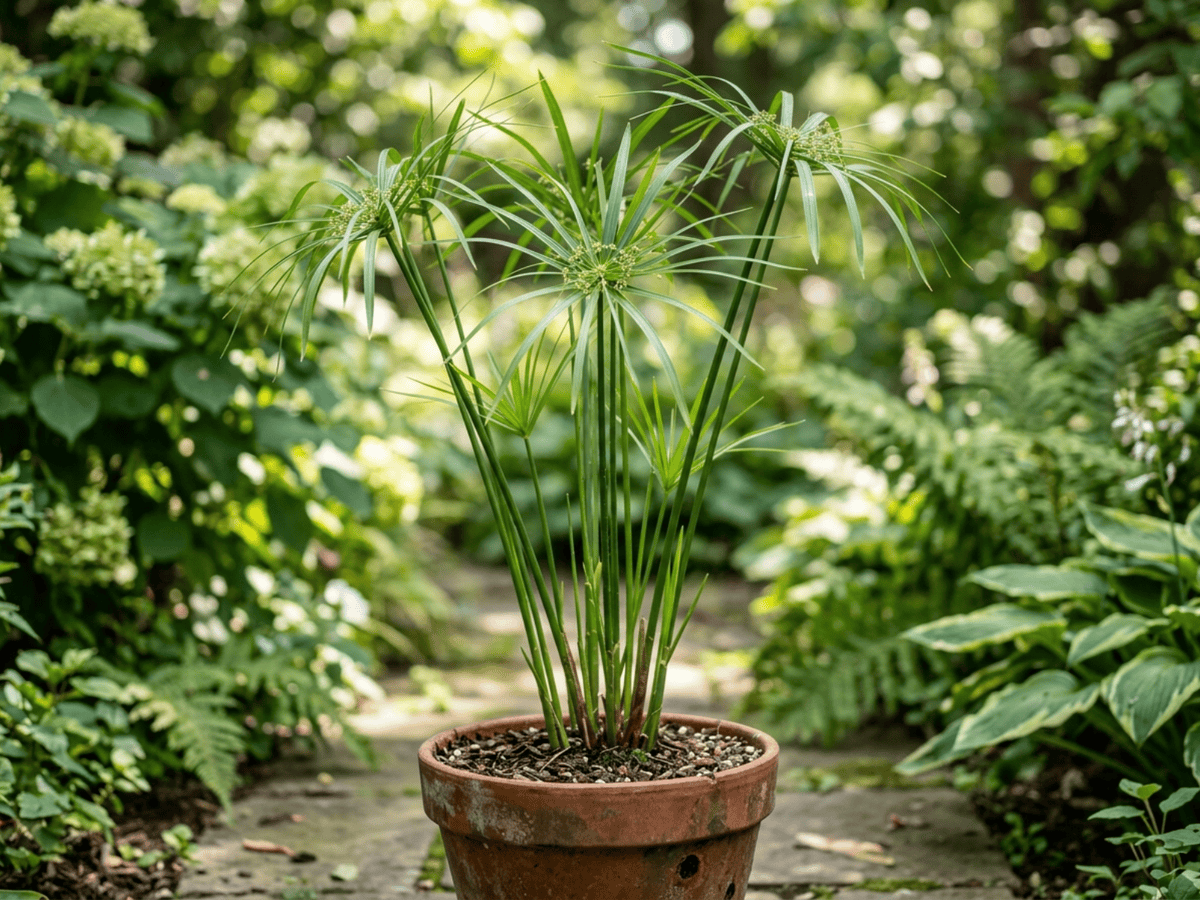 FlatsedgeCyperus involucratus
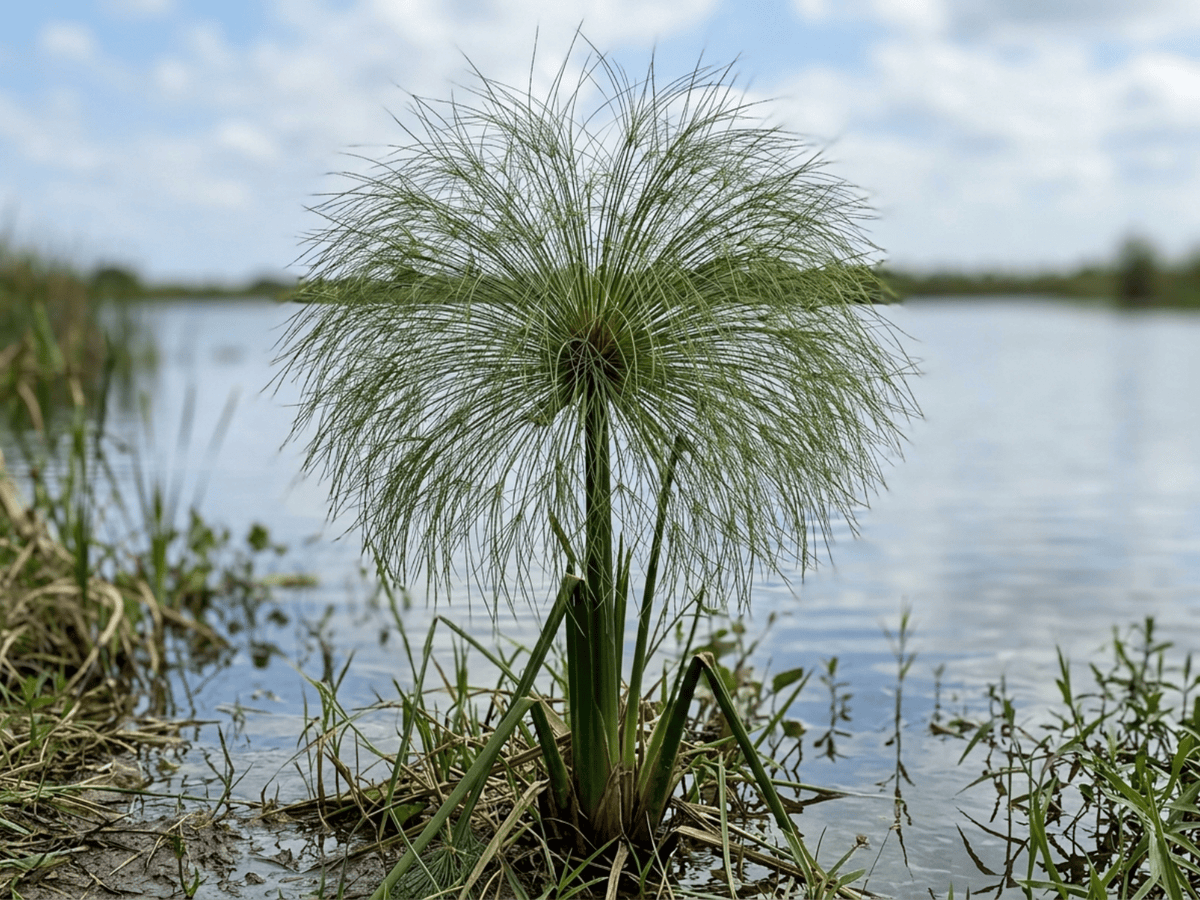 Papyrus SedgeCyperus papyrus
Plants with similar care
 Chinese AbeliaAbelia chinensis
 Fragrant AbeliaAbelia mosanensis
 Large-Flowered AbeliaAbelia uniflora
 Glossy AbeliaAbelia x grandiflora
Frequently asked questions
How often should I water Purple Nutsedge?
In summer, water about every 5 days; in winter, about every 14 days. Adjust for heat, pot size and drainage.
How much light does Purple Nutsedge need?
Full sun: 6+ hrs direct. Watch the leaves — scorching or stretching means the light needs adjusting.
Is Purple Nutsedge toxic to cats or dogs?
No toxicity has been reported for this plant. Still, it is wise to keep pets from chewing on any houseplant. Educational information, not medical or veterinary advice. If exposure is suspected, contact a doctor or veterinarian.
Is Purple Nutsedge easy to grow?
Yes — it is considered an easy, beginner-friendly plant.
When does Purple Nutsedge bloom?
It typically blooms Jun–Sep in the Northern Hemisphere.
YardMate
Identify any plant in seconds
Snap a photo — YardMate names the plant, diagnoses problems, and reminds you when to water.
Download on the App Store