 YardMate


Red Dahlia
Dahlia coccinea
Easy · Beginner friendlyAbout Red Dahlia
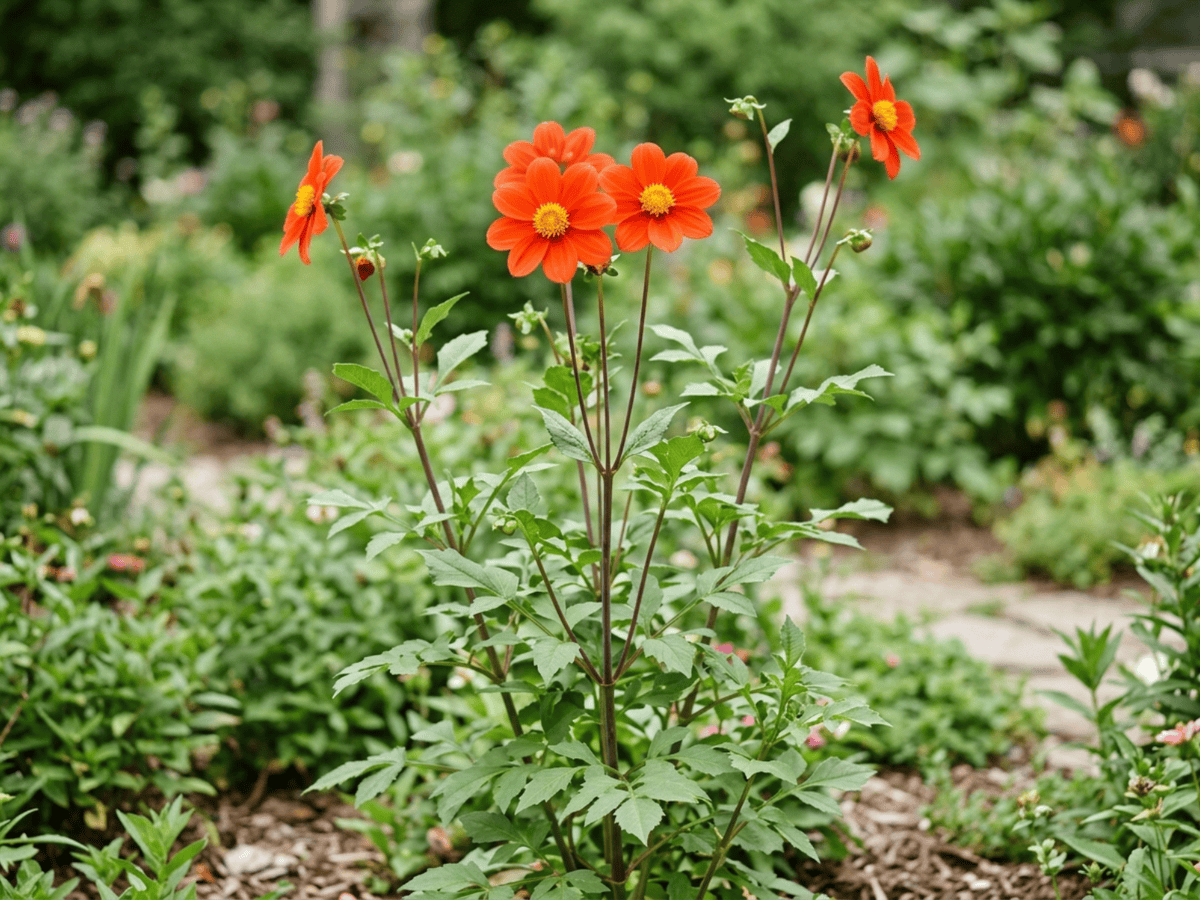
Scarlet Dahlia is the wild species dahlia of Mexico and Central America that helped found the modern dahlia empire, bearing simple open-faced single flowers in brilliant scarlet, orange, or yellow atop tall branching stems. Growing 3-6 feet tall and blooming from midsummer to frost, it attracts pollinators far more effectively than most showy double hybrids and has enjoyed a renaissance in ecological American garden design.
- Cut-flower
- Long-blooming
- Pollinator-friendly
How to care for Red Dahlia
Watering
- Springevery 4 days
- Summerevery 3 days
- Fallevery 5 days
- Winterpause watering
Soil · Well-draining
- Main mixLoam + coarse sand 3:175%
- DrainageGravel25%
Sharp drainage matters most — bulbs rot in wet soil while dormant.
FERTILIZER
Balanced Feed 14-14-14
An even feed covers all three needs at once, keeping leaves, roots and blooms moving together with nothing pushed out of balance.
- Nitrogen · Leaves
- Phosphorus · Roots + Blooms
- Potassium · Strength
- Springevery 21 days
- Summerevery 21 days
At a Glance
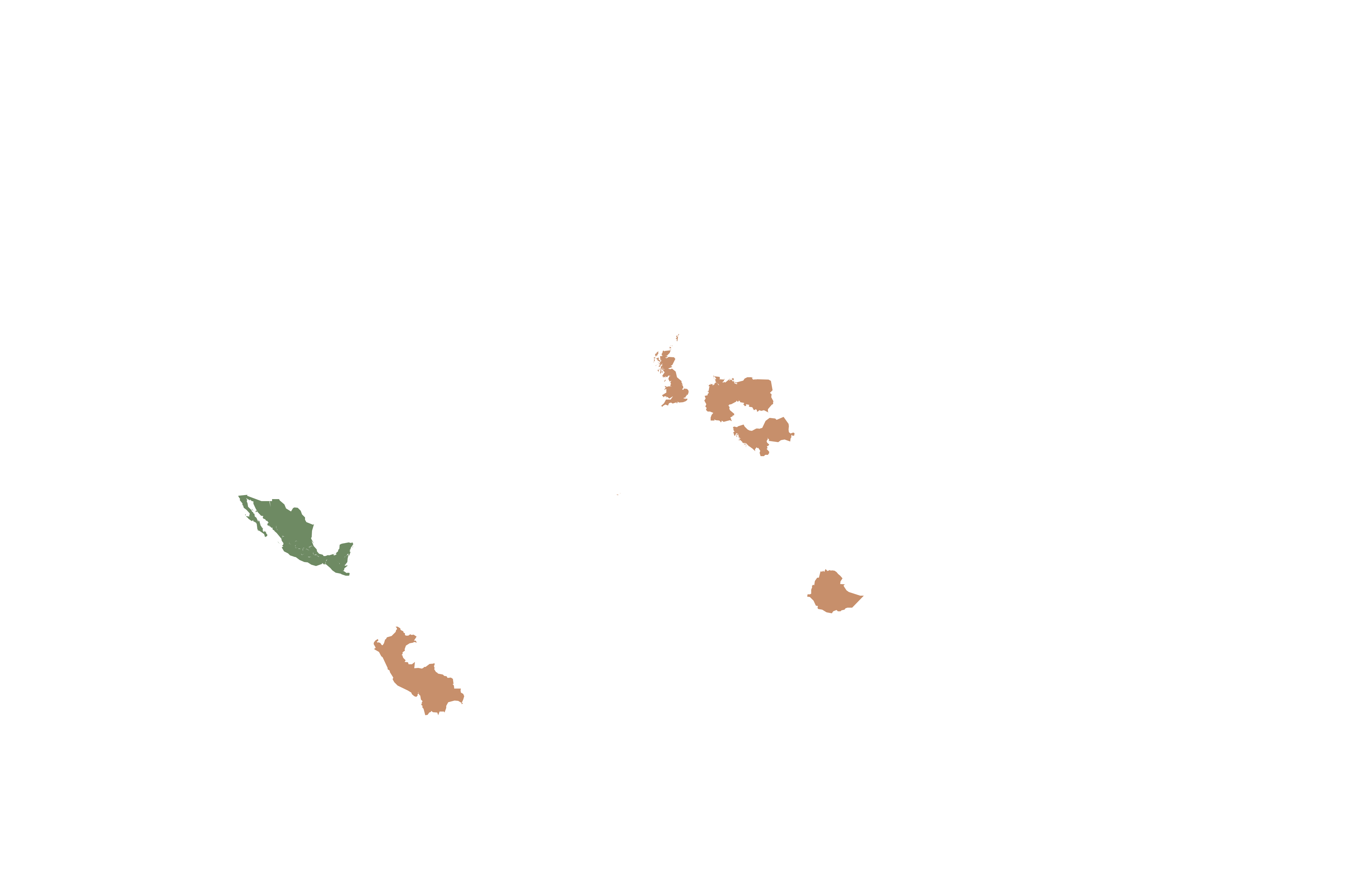
- NativeCentral America
- Height3–6 ft (0.9–1.8 m)
- Spread1–2 ft (0.3–0.6 m)
- Flower colorRed, Orange, Yellow
- Foliage colorGreen
- SoilLoamy, Well-drained, Rich
- LocationsYard
Bloom time
BLOOM CYCLE
Peak bloom
Jul–Oct
Scarlet, orange, or yellow single flowers July to October
Toxicity
Pets Slight
Unknown toxic principle
Not reported
EXPOSURE No exposure route is reported.
EFFECT No toxic effect is reported.
NOTE No human toxicity is reported in this catalog; avoid eating ornamental plants unless confirmed edible.
Slight
- All
- Ingestion
EXPOSURE Eating any part of the plant.
EFFECT Mild vomiting and dermatitis.
NOTE ASPCA: mildly toxic to pets; tubers historically eaten by Aztecs.
Slight
- All
- Ingestion
EXPOSURE Eating any part of the plant.
EFFECT Mild vomiting and dermatitis.
NOTE ASPCA: mildly toxic to pets; tubers historically eaten by Aztecs.
Educational information, not medical or veterinary advice. If exposure is suspected, contact a doctor or veterinarian.
DISTRIBUTION

- Native
- Introduced
- Central America
History
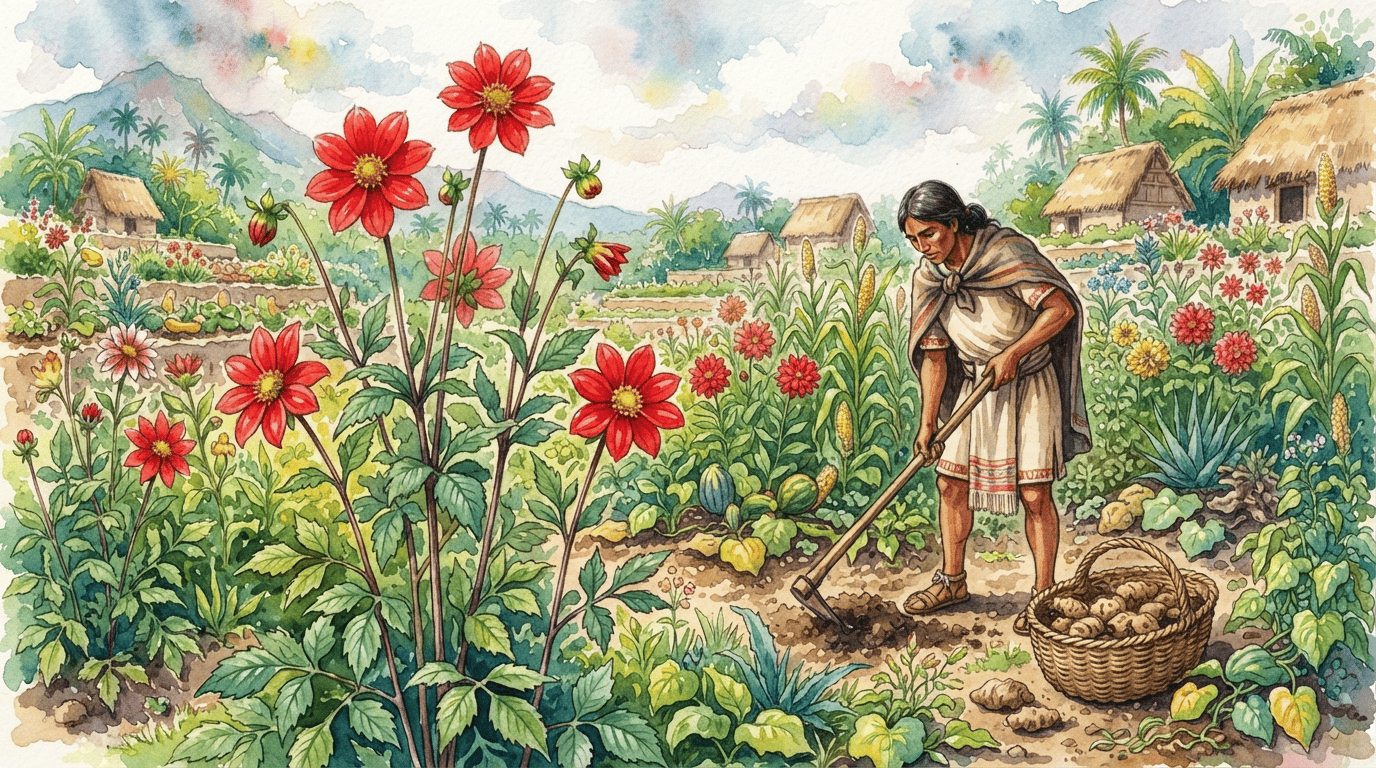
Dahlia coccinea is native to the volcanic highlands of Mexico and Guatemala. The Aztecs cultivated dahlias—known as acocoxochitl—in pre-Columbian times for ceremonial, culinary, and medicinal uses. Spanish physician Francisco Hernández documented them in the 1570s.
Seeds reached Europe in 1789 when Madrid's Royal Botanical Garden received specimens from the Sessé and Mociño Mexican expedition; Antonio José Cavanilles formally named the genus Dahlia honoring Swedish botanist Anders Dahl. D. coccinea, a single-flowered red species, crossed naturally and deliberately with D. pinnata to produce the explosion of garden dahlia cultivars starting in the 1810s-20s. Today's 50,000+ named dahlia cultivars trace ancestry to a handful of Mexican species including this one.
It remains grown as a tall single-flowered species dahlia for naturalistic plantings. One of three wild dahlia species that are parents of all 57,000+ modern dahlia cultivars. Grown by the Aztecs (who called them 'cocoxochitl') for food, medicine, and ornament. The Bishop's Children series honors the classic single-flowered wild form.
Symbolism & meaning
What It Symbolizes
Red Dahlia is elegance in its oldest form — the simple, single-flowered ancestor of every blousy modern dahlia, its open scarlet face still welcoming bees and butterflies the way its ancestors did in Aztec gardens. It carries deep heritage as the wild Mexican species from which all the modern frills descend. To grow its is to keep company with the original from which a thousand cultivars have wandered.
- Elegance — simple pollinator-friendly beauty
- Heritage — ancestral form of all modern dahlias
Where the Name Comes From
Dahlia honors Anders Dahl (1751–1789), Swedish botanist; 'coccinea' means 'scarlet'.
Uses & Fun Facts
- Single scarlet daisies on long stems for summer arrangements
- Open-faced flowers feed bees and butterflies through frost
- Wild Mexican parent species for tall sunny borders
Related plants
More Dahlia plants
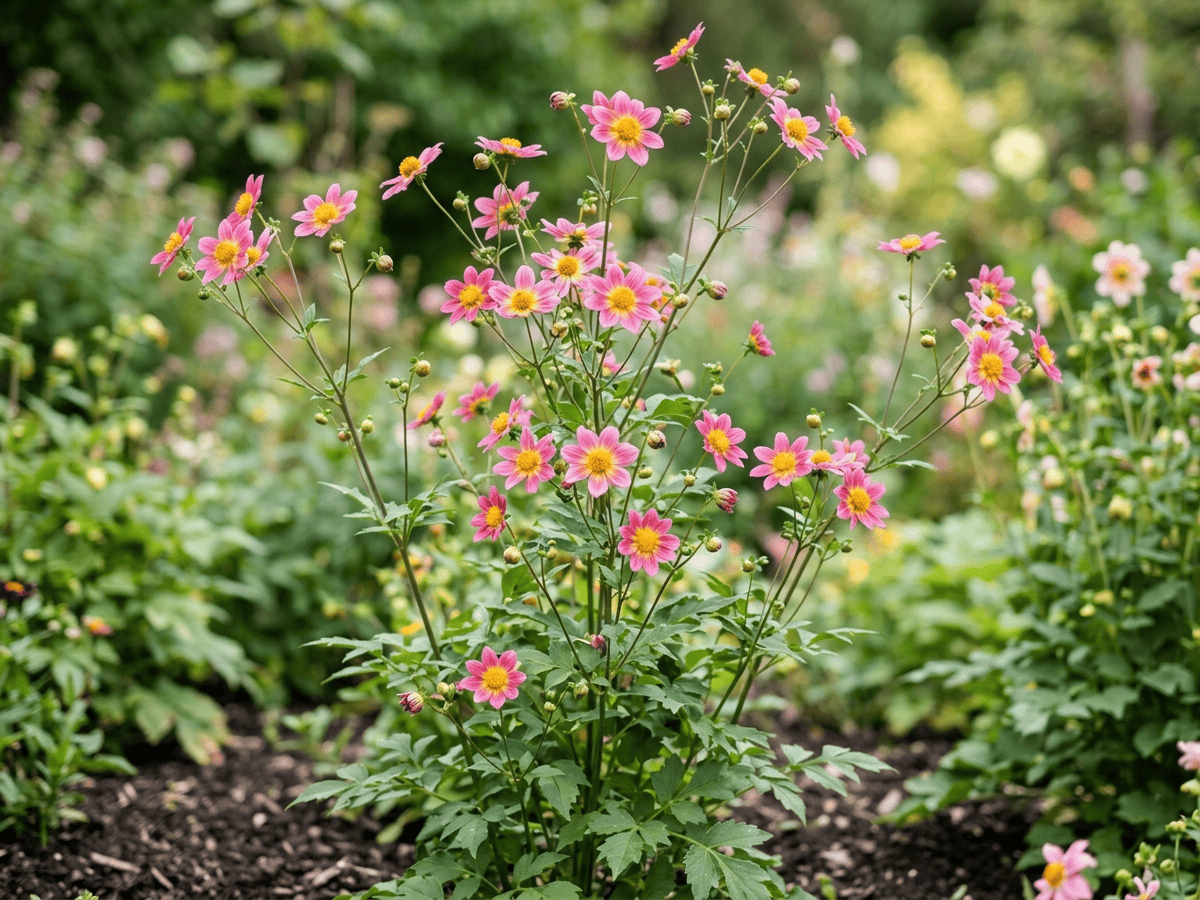 Dahlia australisDahlia australis
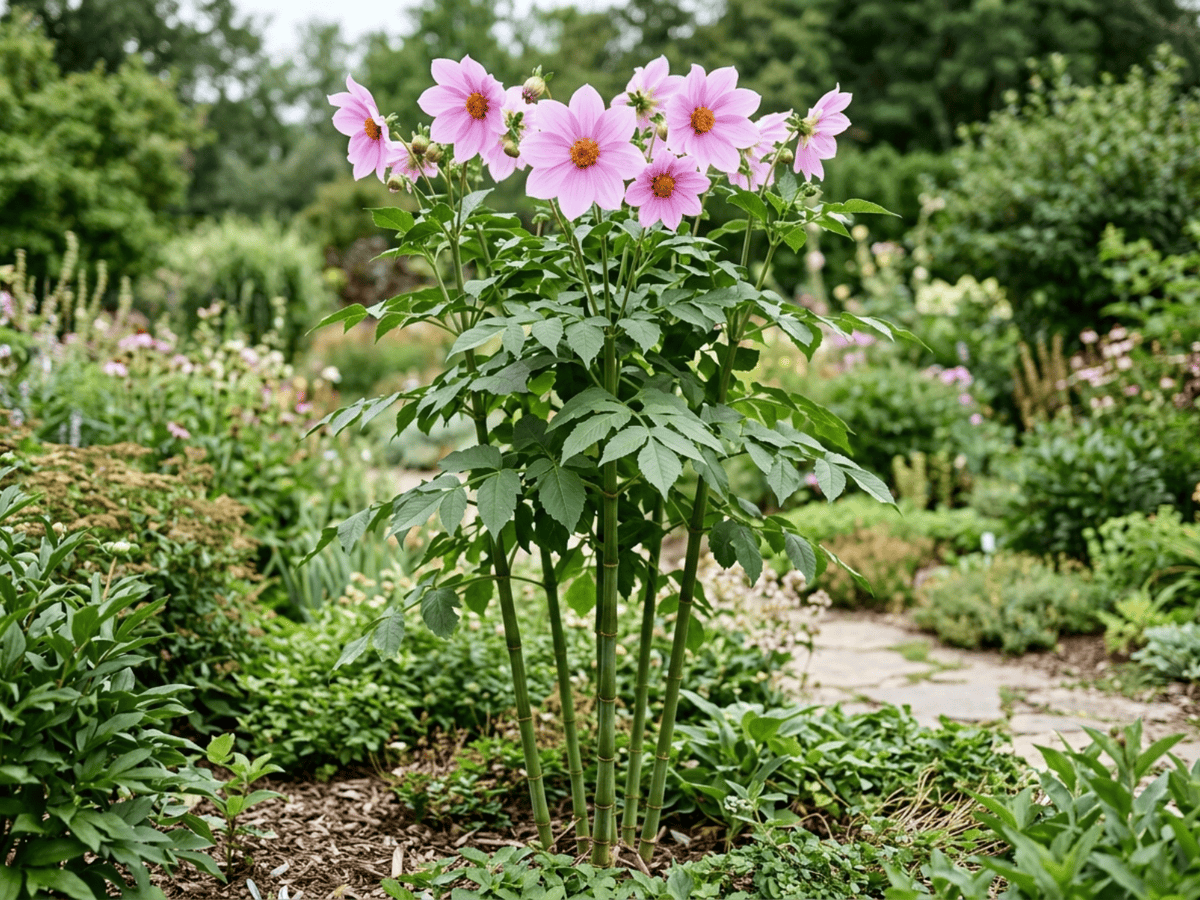 Tree DahliaDahlia imperialis
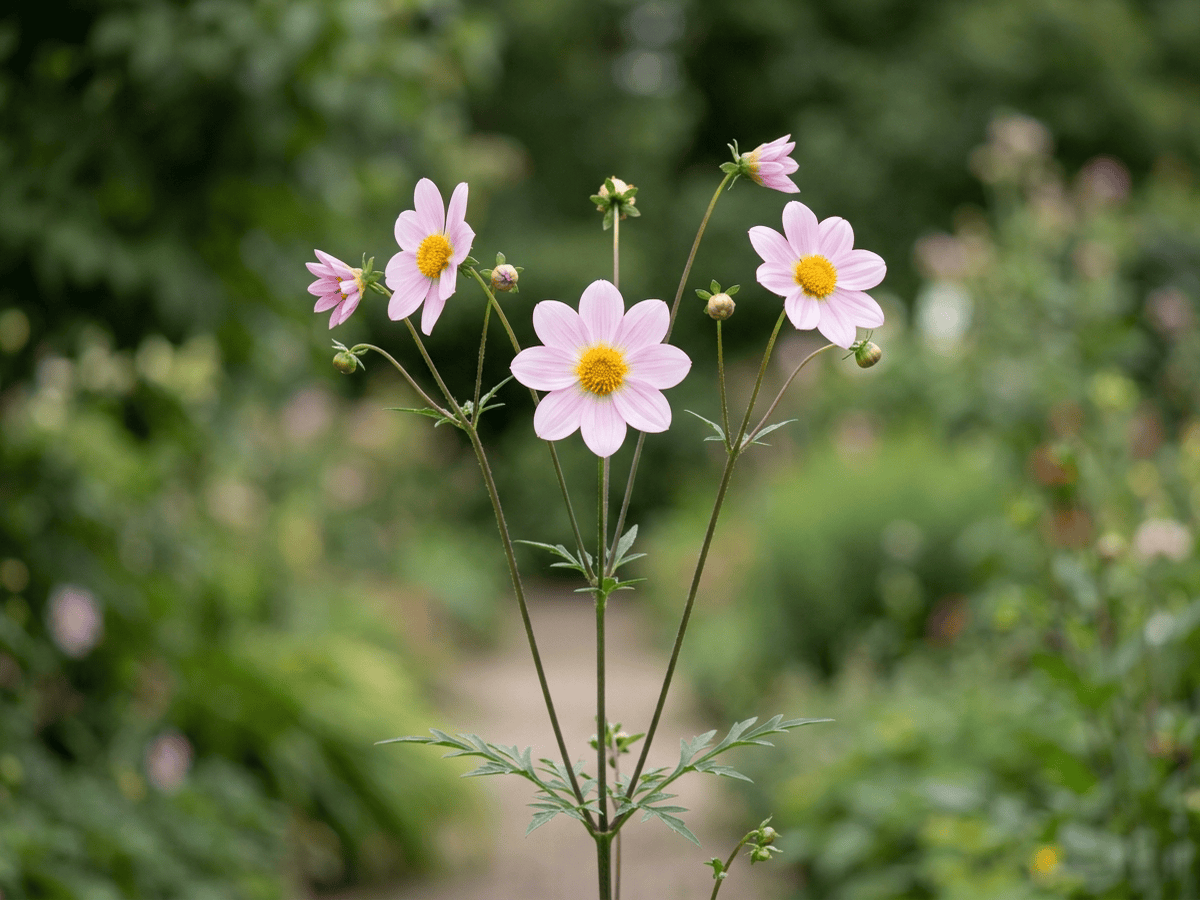 Bedding DahliaDahlia merckii
 Garden DahliaDahlia pinnata
Plants with similar care
 Chinese AbeliaAbelia chinensis
 Fragrant AbeliaAbelia mosanensis
 Large-Flowered AbeliaAbelia uniflora
 Glossy AbeliaAbelia x grandiflora
Frequently asked questions
How often should I water Red Dahlia?
Water about every 4 days during the growing season, and always let excess water drain away.
How much light does Red Dahlia need?
Full sun: 6+ hrs direct. Watch the leaves — scorching or stretching means the light needs adjusting.
Is Red Dahlia toxic to cats or dogs?
Pets Slight (Dogs Slight · Cats Slight) Educational information, not medical or veterinary advice. If exposure is suspected, contact a doctor or veterinarian.
Is Red Dahlia easy to grow?
Yes — it is considered an easy, beginner-friendly plant.
When does Red Dahlia bloom?
It typically blooms Jul–Oct in the Northern Hemisphere.
YardMate
Identify any plant in seconds
Snap a photo — YardMate names the plant, diagnoses problems, and reminds you when to water.
Download on the App Store