 YardMate
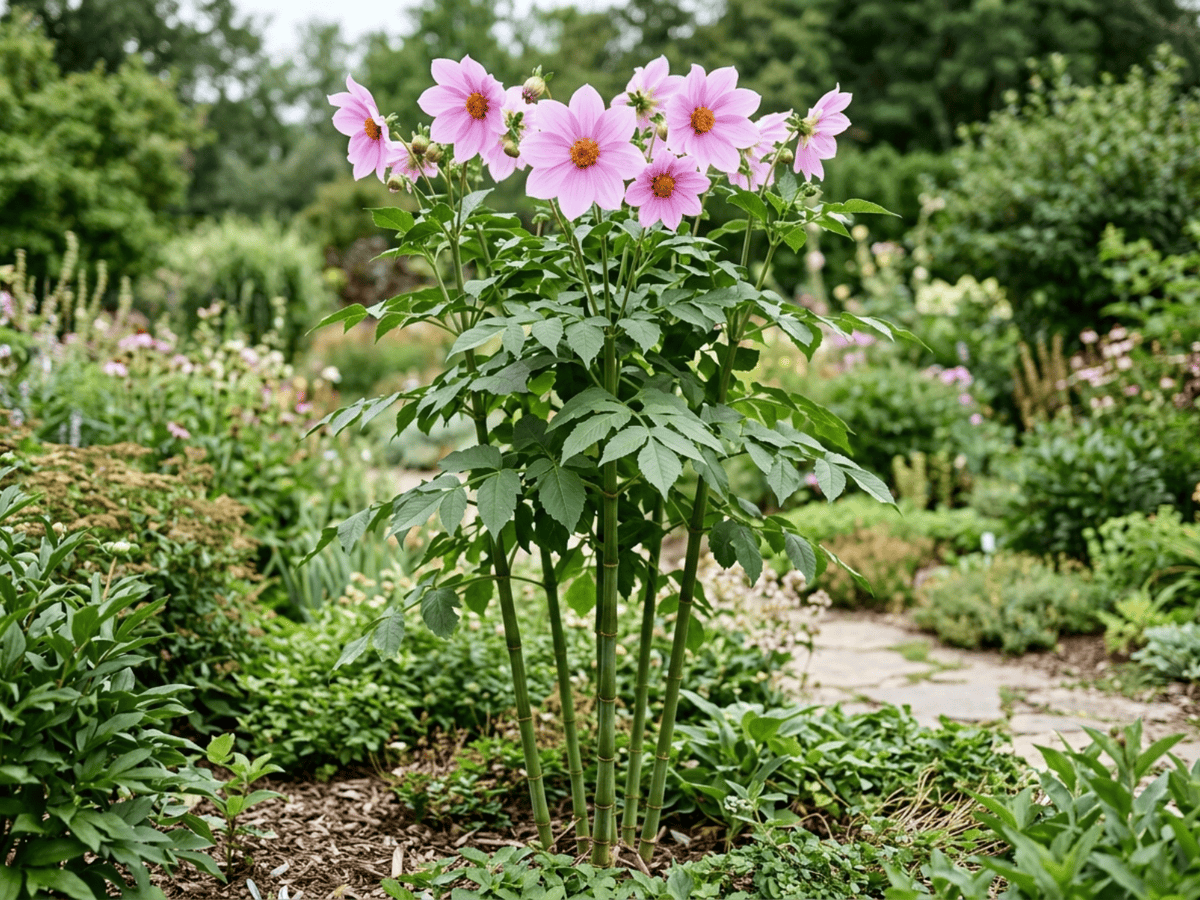


Tree Dahlia
Dahlia imperialis
Medium · Some experienceAbout Tree Dahlia
Tree Dahlia is a giant perennial dahlia native to Mexico and Central America, sending up hollow bamboo-like stems 10-20 feet tall topped with nodding sprays of pink or lavender daisy-like flowers in late autumn. A spectacular architectural specimen for frost-free American gardens (USDA 8-11), especially popular in coastal California and the Southeast. Dies to the ground after frost but resprouts vigorously.
- Architectural
- Pollinator-friendly
How to care for Tree Dahlia
Watering
- Springevery 4 days
- Summerevery 3 days
- Fallevery 5 days
- Winterpause watering
Soil · Well-draining
- Main mixLoam + coarse sand 3:175%
- DrainageGravel25%
Sharp drainage matters most — bulbs rot in wet soil while dormant.
FERTILIZER
Balanced Feed 14-14-14
An even feed covers all three needs at once, keeping leaves, roots and blooms moving together with nothing pushed out of balance.
- Nitrogen · Leaves
- Phosphorus · Roots + Blooms
- Potassium · Strength
- Springevery 21 days
- Summerevery 21 days
At a Glance
- NativeCentral America
- Height15–25 ft (4.6–7.6 m)
- Spread4–8 ft (1.2–2.4 m)
- Flower colorPink, Purple, White
- Foliage colorGreen
- SoilWell-drained, Loamy, Rich
- LocationsYard
Bloom time
BLOOM CYCLE
Peak bloom
Nov–Dec
Pink or lavender sprays November to December
Toxicity
Pets Slight
Unknown toxic principle
Not reported
EXPOSURE No exposure route is reported.
EFFECT No toxic effect is reported.
NOTE No human toxicity is reported in this catalog; avoid eating ornamental plants unless confirmed edible.
Slight
- All
- Ingestion
EXPOSURE Eating any part of the plant.
EFFECT Mild vomiting.
NOTE ASPCA: mildly toxic to pets.
Slight
- All
- Ingestion
EXPOSURE Eating any part of the plant.
EFFECT Mild vomiting.
NOTE ASPCA: mildly toxic to pets.
Educational information, not medical or veterinary advice. If exposure is suspected, contact a doctor or veterinarian.
DISTRIBUTION


- Native
- Introduced
- Central America
History

Dahlia imperialis is a remarkable arborescent dahlia growing to 20 feet tall in its native montane forests of Mexico, Guatemala, Honduras, and Colombia. German-Dutch botanist Franz Julius Ferdinand Meyen described it in 1839, though living plants did not reach European cultivation until around 1863 through French horticulturists. The species develops thick bamboo-like canes from tuberous roots and only flowers in late autumn as day-length shortens, making it challenging outside USDA zones 9-11 where frost kills the canes before blooming.
In suitable climates including coastal California, the Bay Area, and the southern US, it creates spectacular late-season displays of pendant lavender-pink flowers. Indigenous peoples used the hollow canes as water conduits, and the stout stems can be rooted to propagate new plants.
Iconic in Golden Gate Park and many coastal California gardens where its autumn bloom spectacle is legendary. A signature plant of subtropical American landscape design, often paired with tropical foliage and late perennials.
Symbolism & meaning
What It Symbolizes
The Tree Dahlia is Grandeur on a stem — bamboo-thick stalks lifting lavender flowers fifteen feet into the autumn sky. Its heritage reaches back to Aztec gardens, where dahlias were grown long before the European world knew them. Each bloom is a tall, late-season echo of an older botanical empire.
- Grandeur — towering architectural stature
- Heritage — historical Aztec cultivation
Where the Name Comes From
'Imperialis' means 'imperial', reflecting the regal scale of the plant.
Uses & Fun Facts
- Tree dahlia towers above garden with late-autumn pink flowers
- Bamboo-like canes topped by huge nodding blossoms
- Dramatic stems for large-scale fall arrangements
Related plants
More Dahlia plants
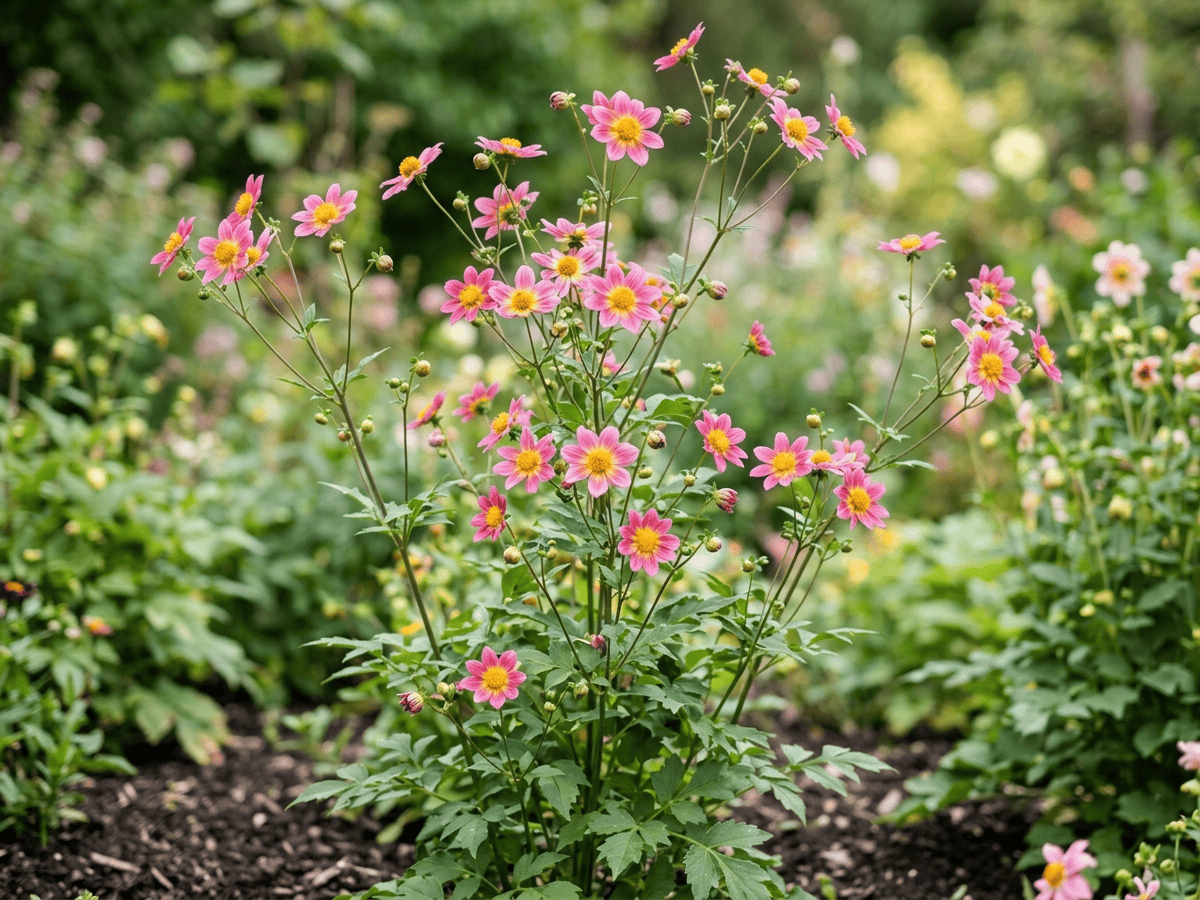 Dahlia australisDahlia australis
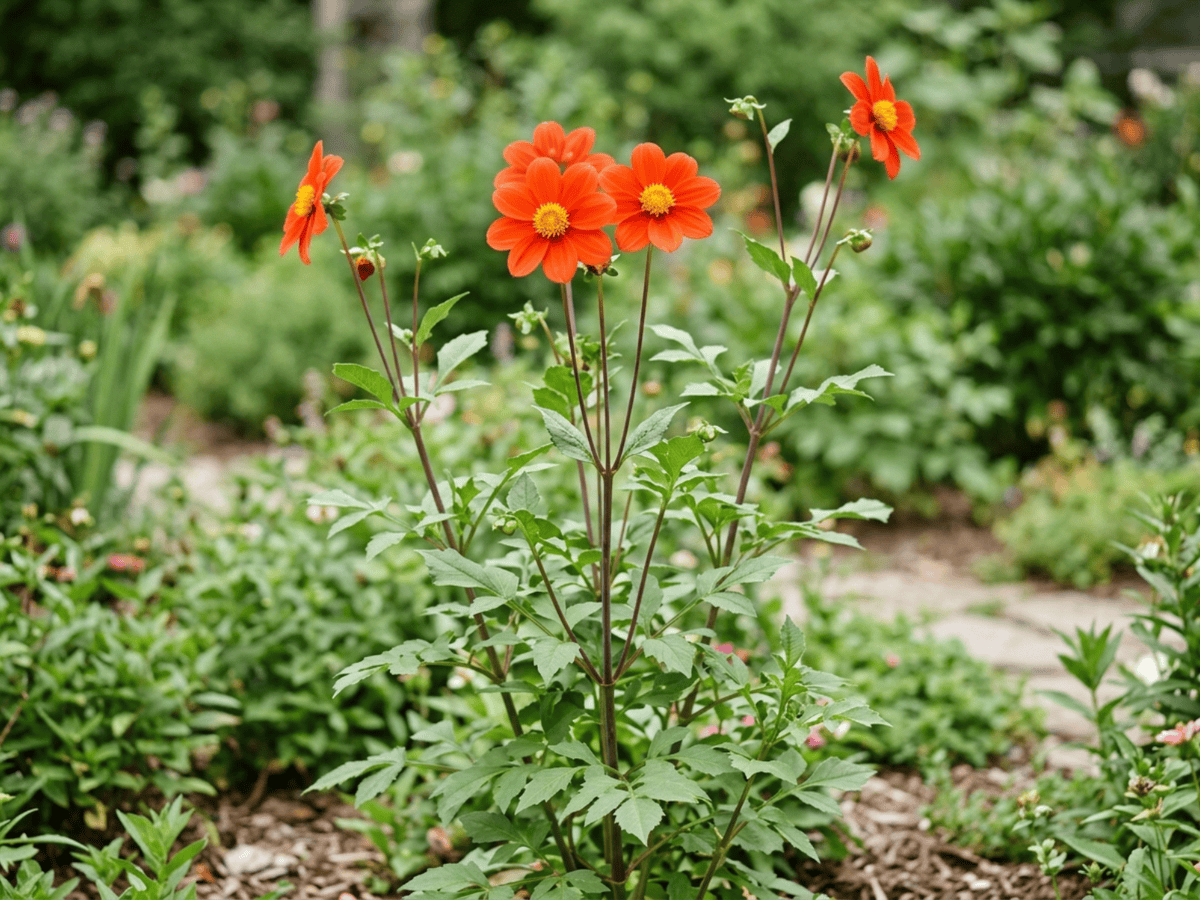 Red DahliaDahlia coccinea
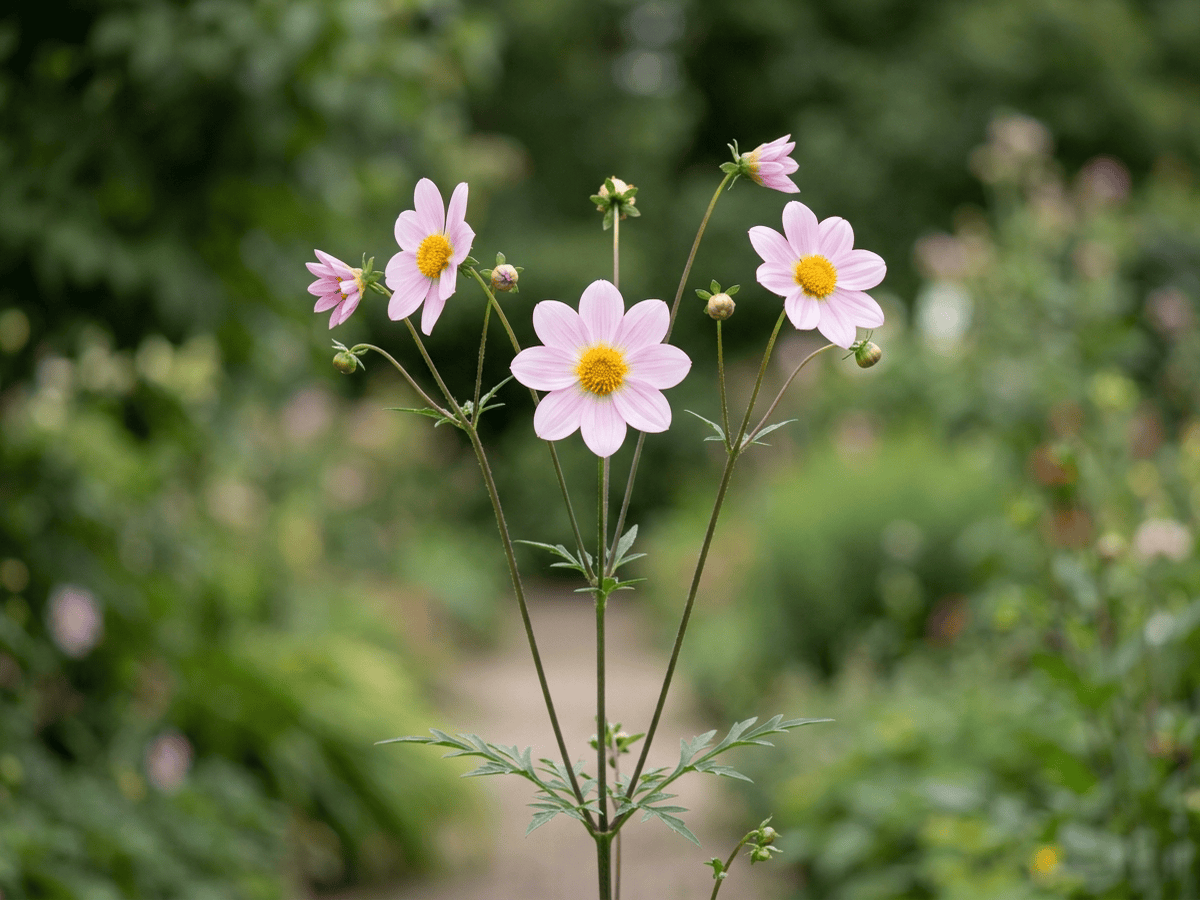 Bedding DahliaDahlia merckii
 Garden DahliaDahlia pinnata
Plants with similar care
 Mexican AbeliaAbelia floribunda
 Fraser FirAbies fraseri
 Paperbark MapleAcer griseum
 Sugar MapleAcer saccharum
Frequently asked questions
How often should I water Tree Dahlia?
Water about every 4 days during the growing season, and always let excess water drain away.
How much light does Tree Dahlia need?
Full sun: 6+ hrs direct. Watch the leaves — scorching or stretching means the light needs adjusting.
Is Tree Dahlia toxic to cats or dogs?
Pets Slight (Dogs Slight · Cats Slight) Educational information, not medical or veterinary advice. If exposure is suspected, contact a doctor or veterinarian.
Is Tree Dahlia easy to grow?
It is moderately demanding: a good choice once you have a little experience.
When does Tree Dahlia bloom?
It typically blooms Nov–Dec in the Northern Hemisphere.
YardMate
Identify any plant in seconds
Snap a photo — YardMate names the plant, diagnoses problems, and reminds you when to water.
Download on the App Store