 YardMate

Deutzia
Deutzia crenata
Easy · Beginner friendlyAbout Deutzia
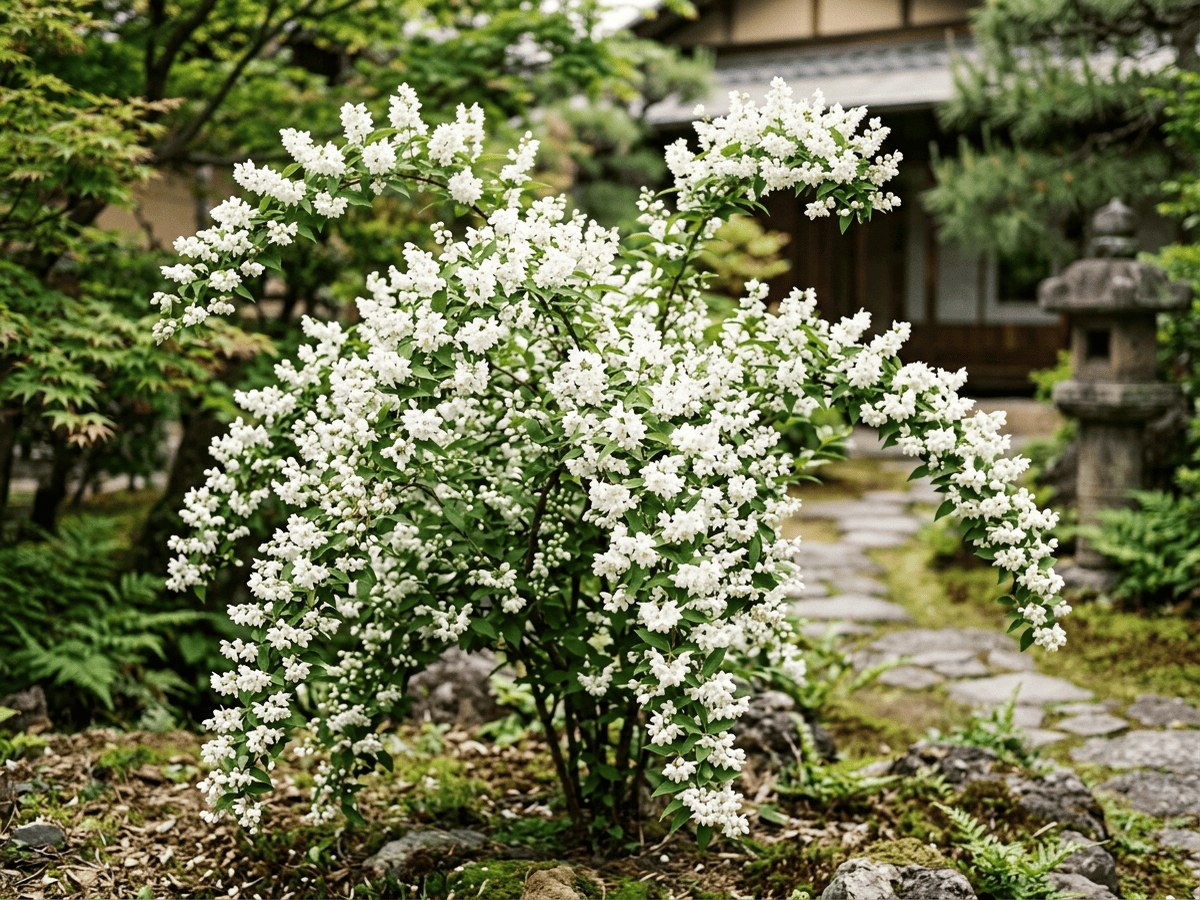
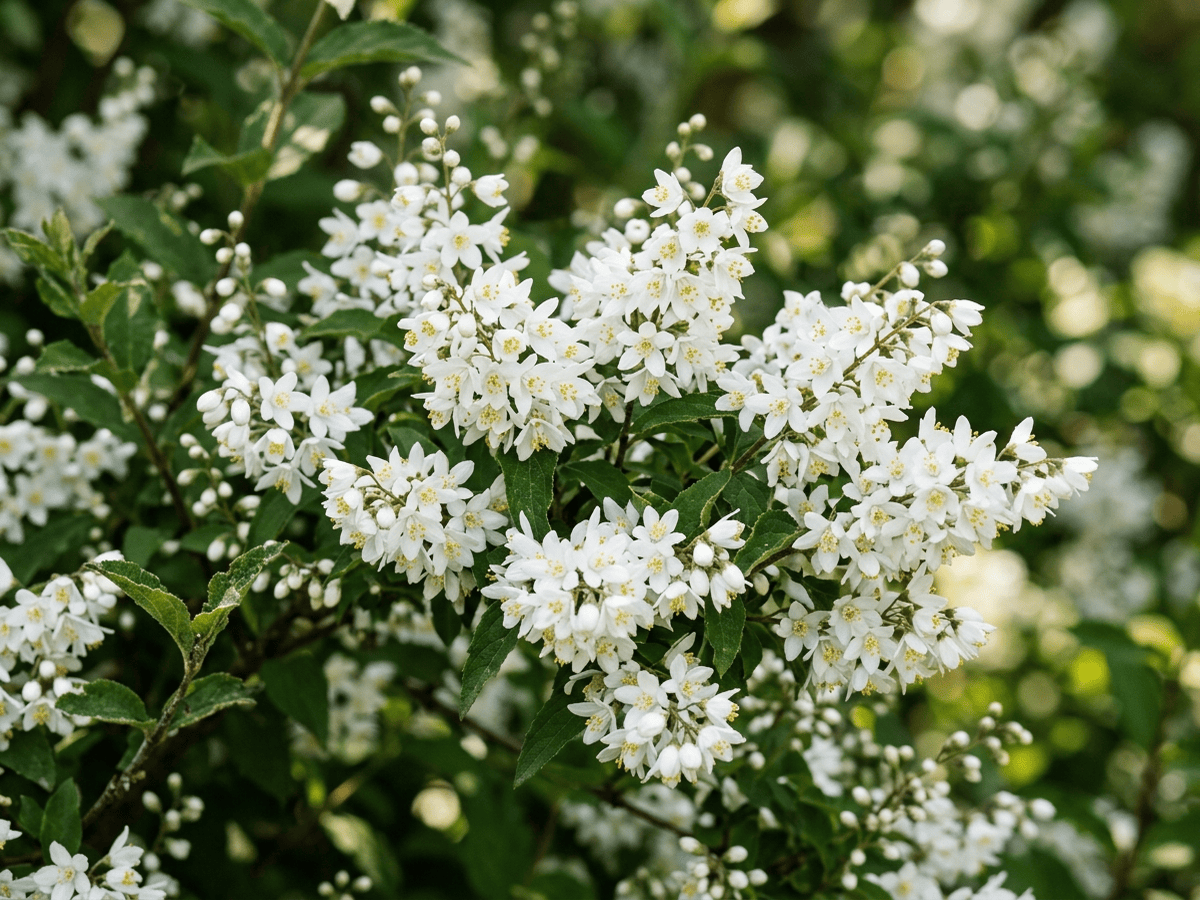
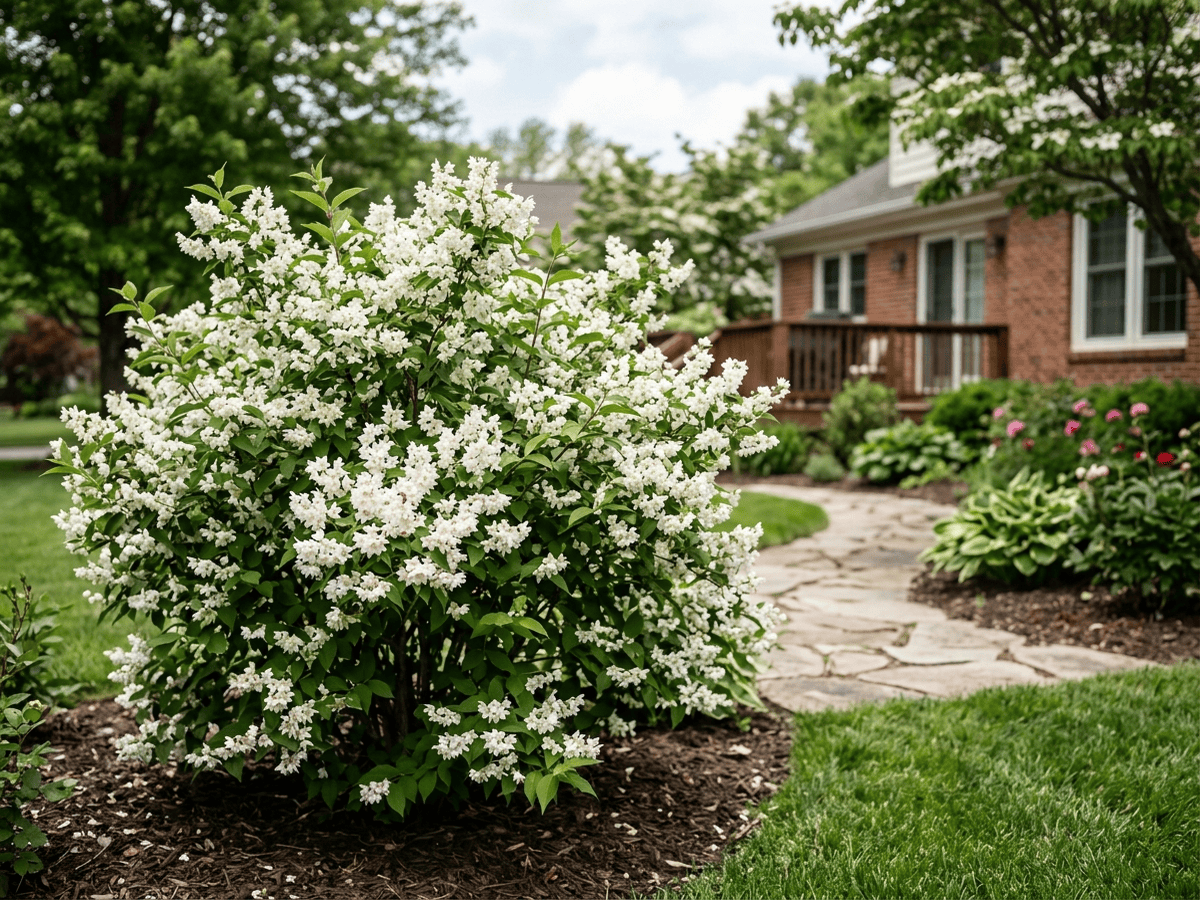
Fuzzy Deutzia or Japanese Snow Flower is a vigorous Japanese deciduous shrub growing 6 to 10 feet tall with arching stems densely covered in white star-shaped flowers in early summer. The 'Nikko' cultivar is a widely planted dwarf form only 2 to 3 feet tall used as a groundcover. A classic Japanese-garden shrub in American collections, with the common double-flowered 'Pride of Rochester' a signature American heirloom.
- Deer-resistant
- Pollinator-friendly
How to care for Deutzia
Watering
- Springevery 5 days
- Summerevery 3 days
- Fallevery 7 days
- Winterevery 14 days
Soil · Rich & loamy
- Top dressingBark mulch15%
- Main mixRich loam + compost 3:170%
- DrainageGravel15%
Use fully finished compost — fresh compost burns roots.
FERTILIZER
Balanced Feed 14-14-14
An even feed covers all three needs at once, keeping leaves, roots and blooms moving together with nothing pushed out of balance.
- Nitrogen · Leaves
- Phosphorus · Roots + Blooms
- Potassium · Strength
- Springevery 45 days
- Summerevery 60 days
At a Glance
- NativeEast Asia
- Height4–8 ft (1.2–2.4 m)
- Spread4–8 ft (1.2–2.4 m)
- Flower colorWhite, Pink
- Foliage colorGreen
- SoilLoamy, Well-drained, Neutral
- LocationsYard
Bloom time
BLOOM CYCLE
Peak bloom
May–Aug
Star-shaped white flowers cover arching stems in early summer
Fragrance
LIGHT FRAGRANCE
The flowers have a very lightly sweet-scented scent.
Toxicity
No toxicity has been reported for this plant. Still, it is wise to keep pets from chewing on any houseplant.
Educational information, not medical or veterinary advice. If exposure is suspected, contact a doctor or veterinarian.
DISTRIBUTION


- Native
- Introduced
- East Asia
History
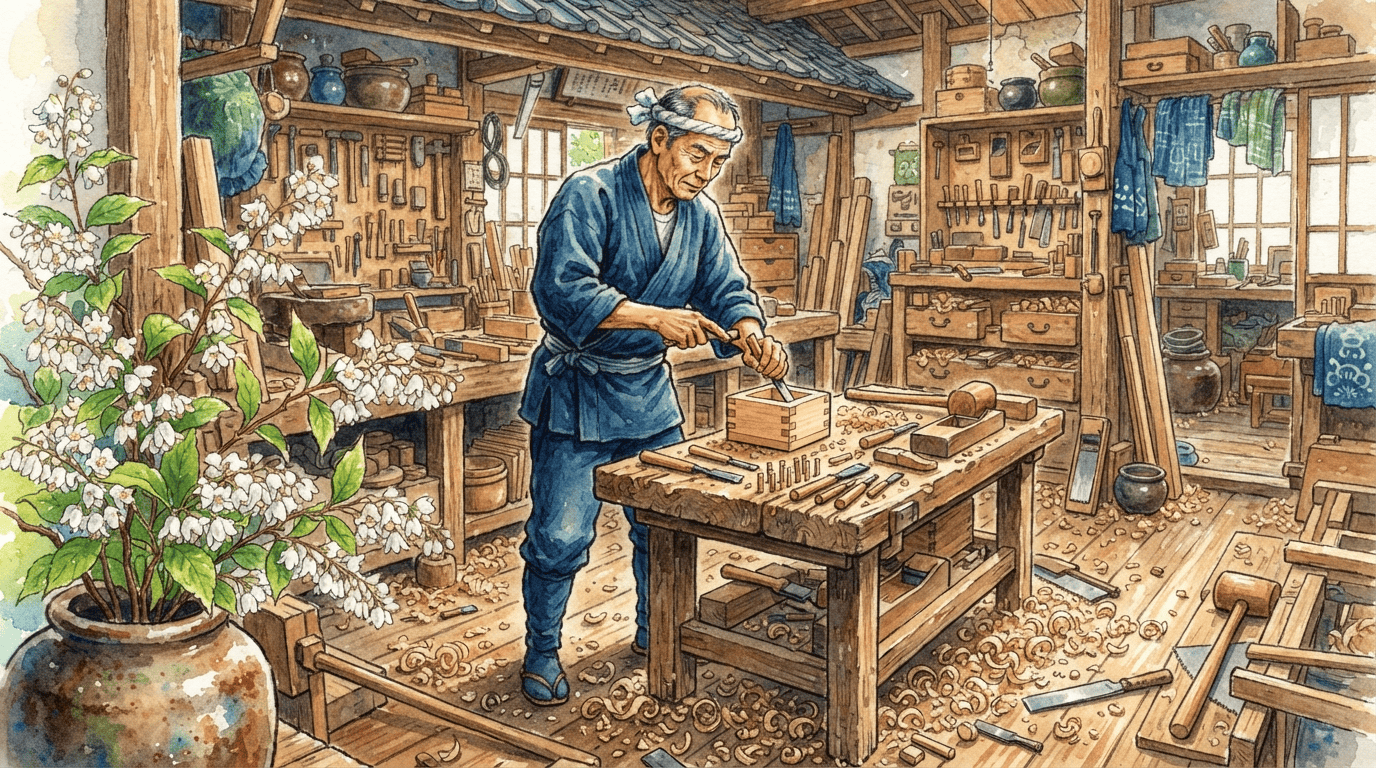
Deutzia crenata grows wild across Japan on mountain slopes and thickets. It has been cultivated for a millennium in Japan under the name utsugi, referenced in the 8th-century poetry anthology Man'yōshū. The hard, pale wood was traditionally used for dowel pegs, charcoal, tobacco pipes, and fine joinery including the wooden masu used to measure sake and rice.
Siebold and Zuccarini described the species in 1835 from Siebold's Nagasaki collections. It became naturalized in English gardens through the 19th century but was largely replaced by the showier double-flowered cultivar 'Pride of Rochester', selected by Ellwanger & Barry Nursery of Rochester, NY around 1881. The compact cultivar 'Nikko' is widely used as a groundcover in modern American landscapes.
Native to Japan and China, introduced to Western gardens around 1860. The 'Pride of Rochester' double-flowered cultivar, named for Rochester, New York nurseries of the late 1800s, became a signature heirloom shrub across American cottage and estate gardens. The 'Nikko' dwarf form introduced by US National Arboretum in 1976 is now a popular modern groundcover.
Symbolism & meaning
What It Symbolizes
The Deutzia suggests timeless purity, its pristine white blooms tumbling along arched stems in showers that resemble falling snow. The cultivar 'Pride of Rochester' carried this shrub deep into nineteenth-century American gardens, an emblem of civic horticultural pride. Few flowering shrubs carry their heritage so quietly while still delivering, every late spring, an unbroken cascade of clean white blossom.
- Timeless purity — pure white blooms like falling snow
- Rochester heritage — 'Pride of Rochester' in American history
Where the Name Comes From
'crenata' from Latin means scalloped, for the crenate leaf margins.
Uses & Fun Facts
- Deutzia flowers nourish foraging bees and pollinators
- Deutzia spreads as low groundcover on banks and slopes
- Arching spring sprays give small gardens a light flowering screen
Related plants
More Deutzia plants
 Slender DeutziaDeutzia gracilis
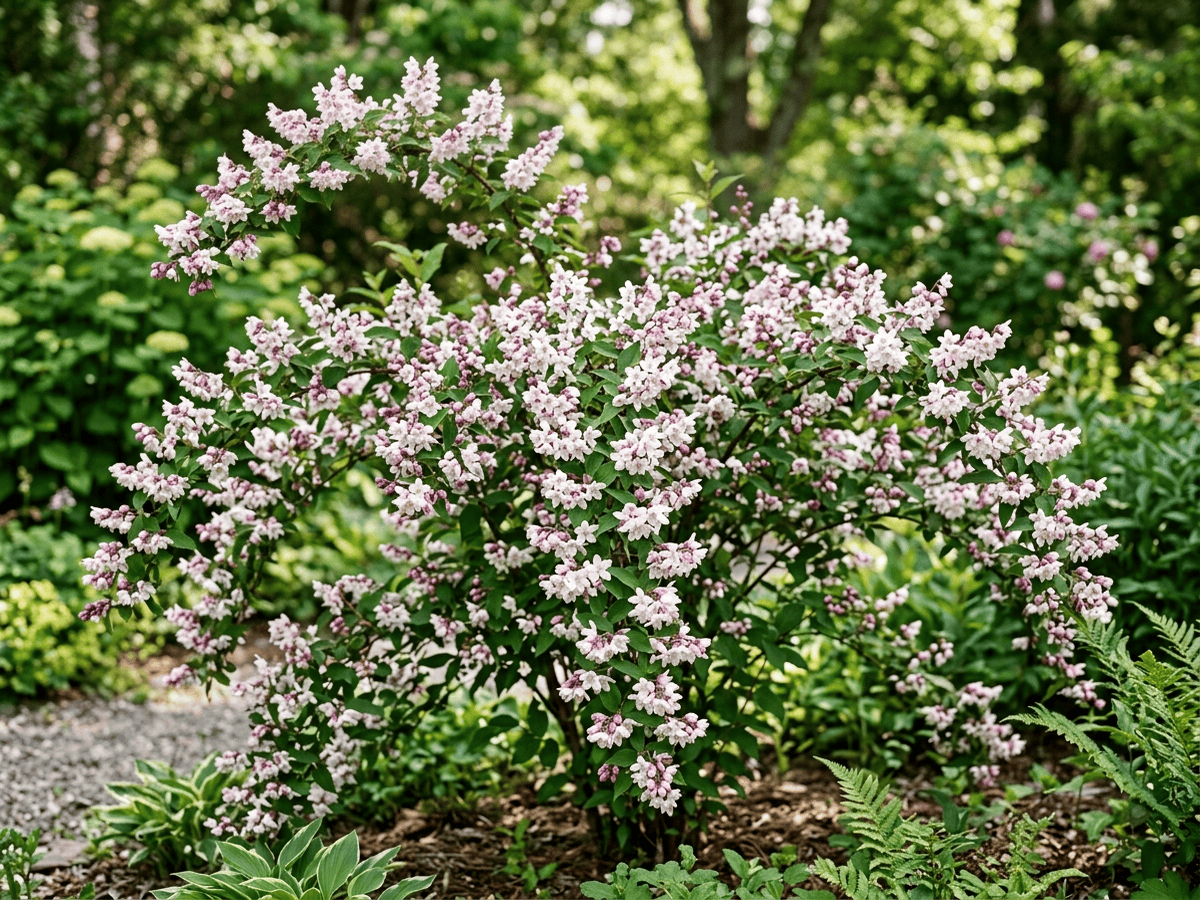 Deutzia purpurascensDeutzia purpurascens
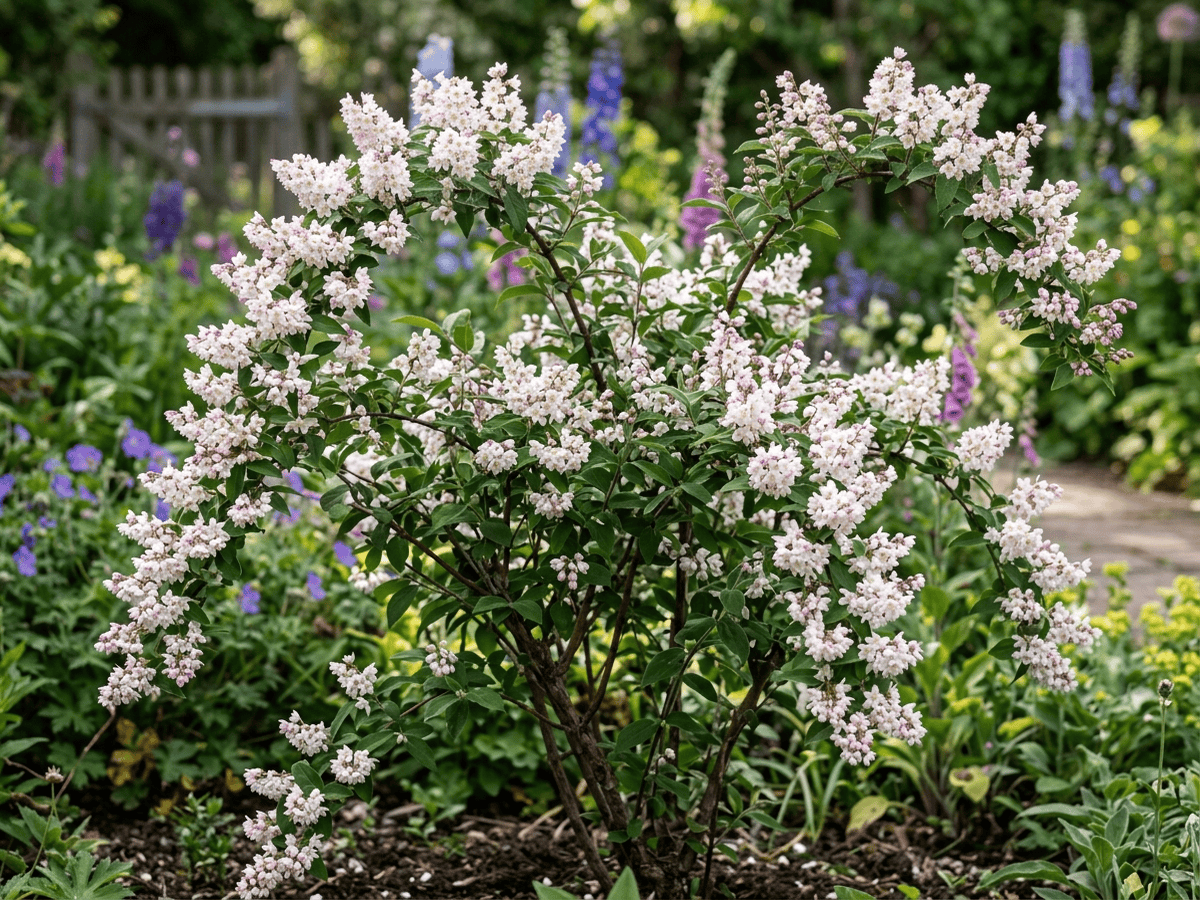 DeutziaDeutzia scabra
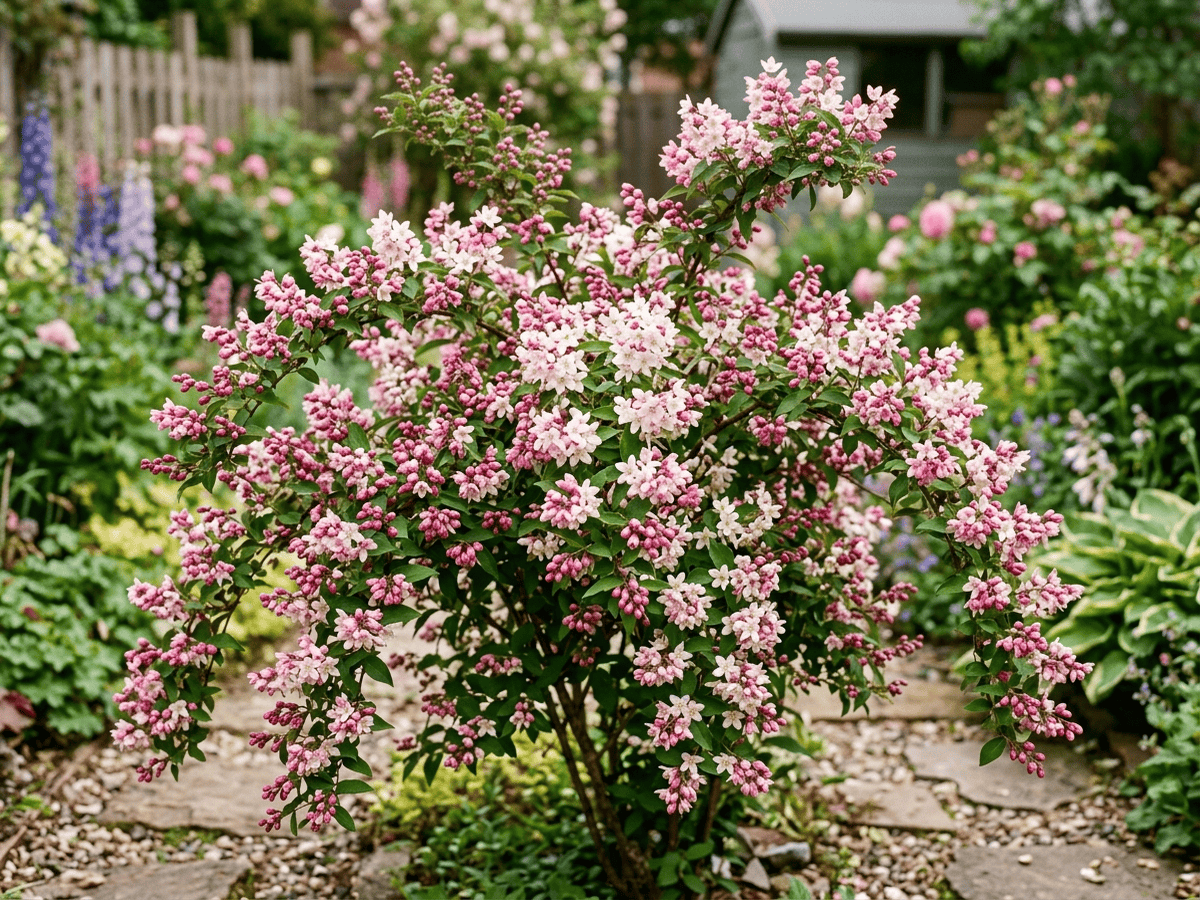 Deutzia x hybridaDeutzia x hybrida
Plants with similar care
 Chinese AbeliaAbelia chinensis
 Fragrant AbeliaAbelia mosanensis
 Large-Flowered AbeliaAbelia uniflora
 Glossy AbeliaAbelia x grandiflora
Frequently asked questions
How often should I water Deutzia?
In summer, water about every 3 days; in winter, about every 14 days. Adjust for heat, pot size and drainage.
How much light does Deutzia need?
Full sun: 6+ hrs direct. Watch the leaves — scorching or stretching means the light needs adjusting.
Is Deutzia toxic to cats or dogs?
No toxicity has been reported for this plant. Still, it is wise to keep pets from chewing on any houseplant. Educational information, not medical or veterinary advice. If exposure is suspected, contact a doctor or veterinarian.
Is Deutzia easy to grow?
Yes — it is considered an easy, beginner-friendly plant.
When does Deutzia bloom?
It typically blooms May–Aug in the Northern Hemisphere.
YardMate
Identify any plant in seconds
Snap a photo — YardMate names the plant, diagnoses problems, and reminds you when to water.
Download on the App Store