 YardMate
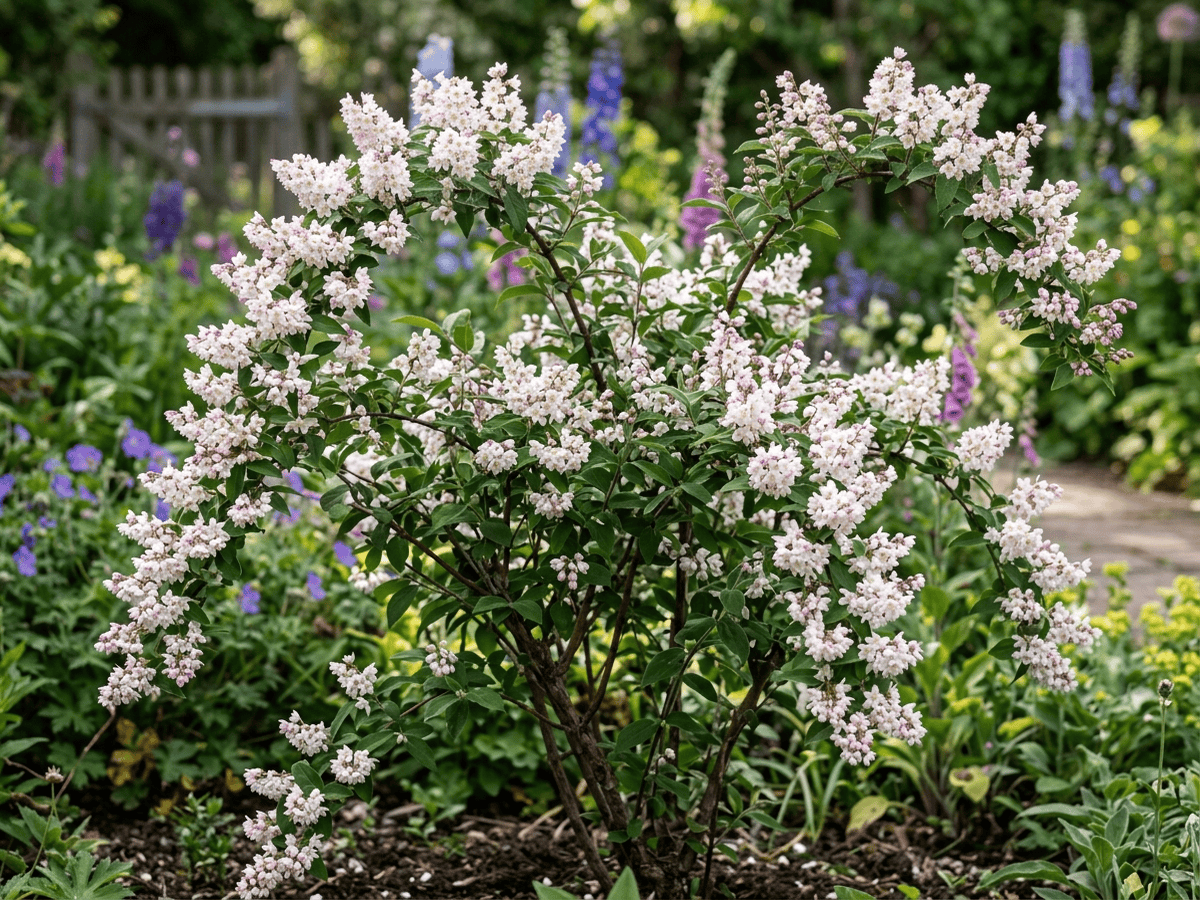


Deutzia
Deutzia scabra
Easy · Beginner friendlyAbout Deutzia
Fuzzy Deutzia is a vigorous deciduous shrub from Japan, growing 6-10 feet tall with upright arching branches smothered in panicles of white or pink-tinged double flowers in late spring. The rough-textured leaves feel sandpaper-like to the touch. Exfoliating brown bark on mature stems provides winter interest. An old-fashioned cottage garden favorite, it was one of the most popular flowering shrubs in Victorian-era American gardens and remains valued for its reliability and profuse bloom.
- Low-maintenance
- Cold-hardy
How to care for Deutzia
Watering
- Springevery 7 days
- Summerevery 5 days
- Fallevery 10 days
- Winterevery 21 days
Soil · Rich & loamy
- Top dressingBark mulch15%
- Main mixRich loam + compost 3:170%
- DrainageGravel15%
Use fully finished compost — fresh compost burns roots.
FERTILIZER
Balanced Feed 14-14-14
An even feed covers all three needs at once, keeping leaves, roots and blooms moving together with nothing pushed out of balance.
- Nitrogen · Leaves
- Phosphorus · Roots + Blooms
- Potassium · Strength
- Springevery 30 days
At a Glance
- NativeEast Asia
- Height6–10 ft (1.8–3 m)
- Spread4–8 ft (1.2–2.4 m)
- Flower colorWhite, Pink
- Foliage colorGreen
- SoilLoamy, Well-drained
- LocationsYard
Bloom time
BLOOM CYCLE
Peak bloom
May–Jun
White or pink double flower panicles May to June
Fragrance
LIGHT FRAGRANCE
The flowers have a mild sweet scent.
Toxicity
No toxicity has been reported for this plant. Still, it is wise to keep pets from chewing on any houseplant.
Educational information, not medical or veterinary advice. If exposure is suspected, contact a doctor or veterinarian.
DISTRIBUTION


- Native
- Introduced
- East Asia
History

Deutzia scabra is native to Japan, China, and Korea. Thunberg described it in 1780, naming the genus for his Dutch patron Johann van der Deutz, while the epithet scabra means rough, a reference to the sandpaper-like leaves. In Japan those rough leaves were used for polishing wood and lacquerware, making the shrub useful as well as ornamental.
It grows taller and bolder than slender deutzia, with arching stems and panicles of white to pink-tinged bell flowers in early summer. Introduced to Europe through Thunberg's accounts and later through Siebold's plant introductions, it became a cornerstone of Victorian and Edwardian shrub borders. Double forms such as 'Pride of Rochester' and 'Candidissima' made it especially popular around old homes and heritage gardens. The exfoliating bark on older stems adds a quieter winter reward after the flower show has passed.
Symbolism & meaning
What It Symbolizes
Deutzia carries remembrance, a Victorian-era favorite that recalls the gardens of grandmothers and great-grandmothers across both sides of the Atlantic. Each spring it disappears beneath an abundance of small white bell-shaped flowers, smothered as if powdered with snow. To plant it now is a small act of horticultural memory, keeping an old fashion gently in bloom.
- Remembrance — a Victorian-era favorite recalling gardens of the past
- Abundance — smothered in flowers every spring
Where the Name Comes From
'Deutzia' honors Johann van der Deutz (1743–1788), Dutch patron of botany; 'scabra' means 'rough' in Latin, referring to the sandpaper-textured leaves.
Uses & Fun Facts
- Arching cane growth trimmed into informal flowering hedges
- White bell-flower sprays cover the shrub in late spring
- Star-shaped white flowers visited by bees and hoverflies
Related plants
More Deutzia plants
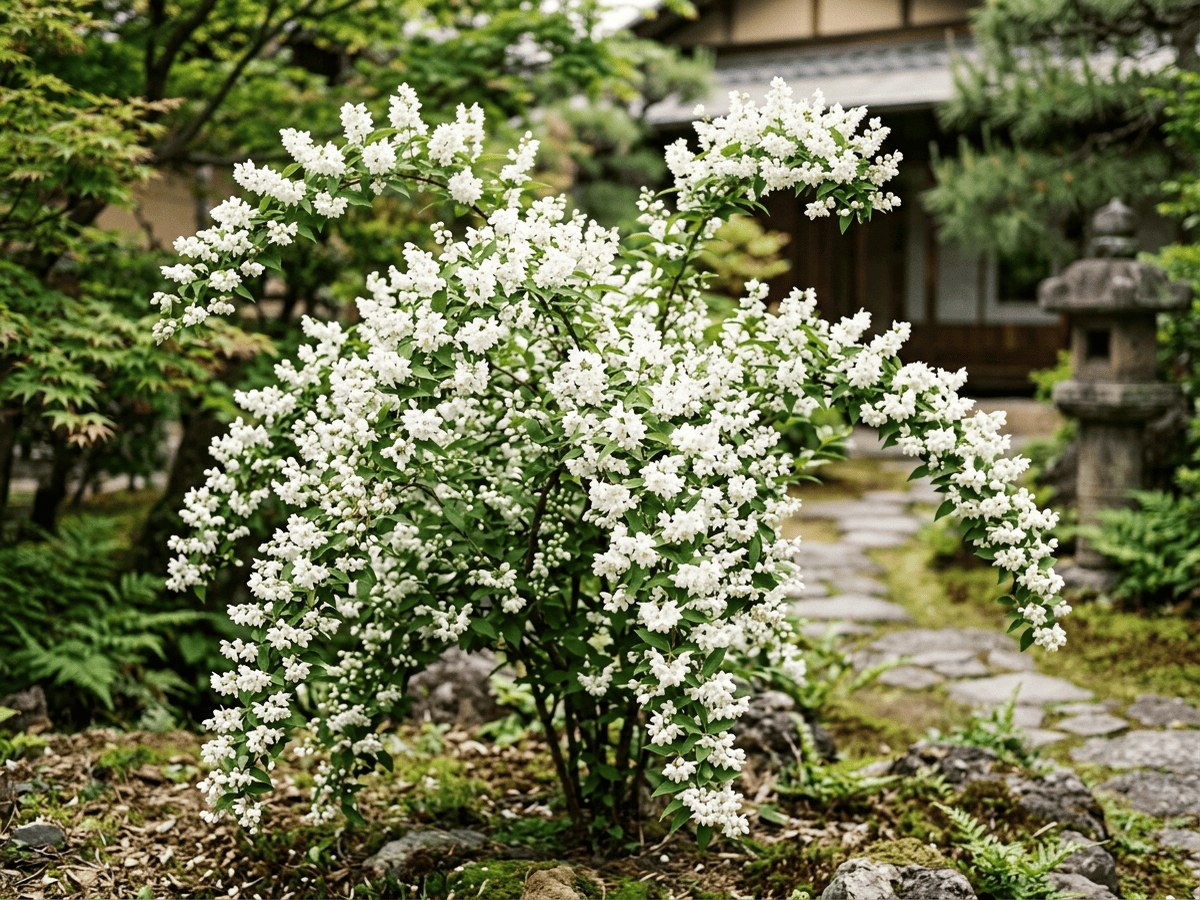 DeutziaDeutzia crenata
 Slender DeutziaDeutzia gracilis
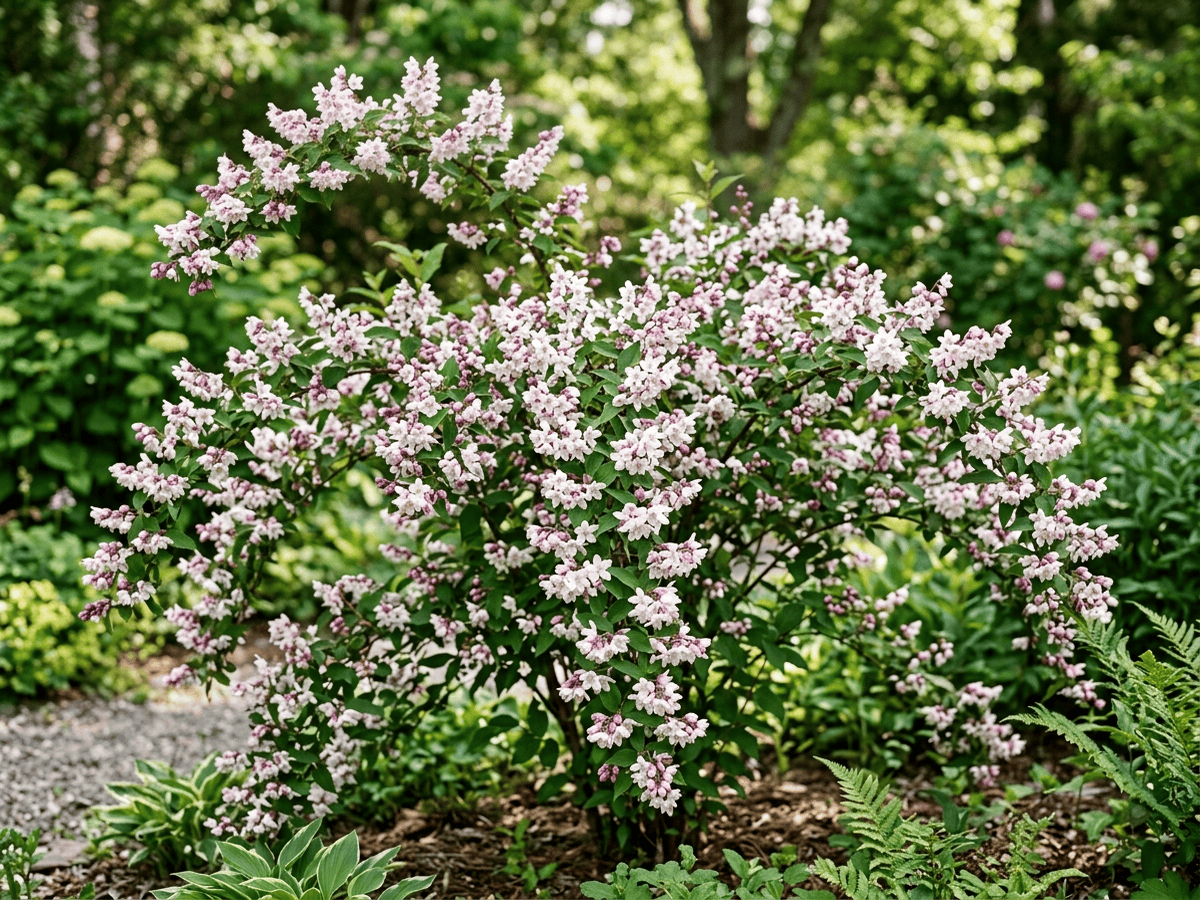 Deutzia purpurascensDeutzia purpurascens
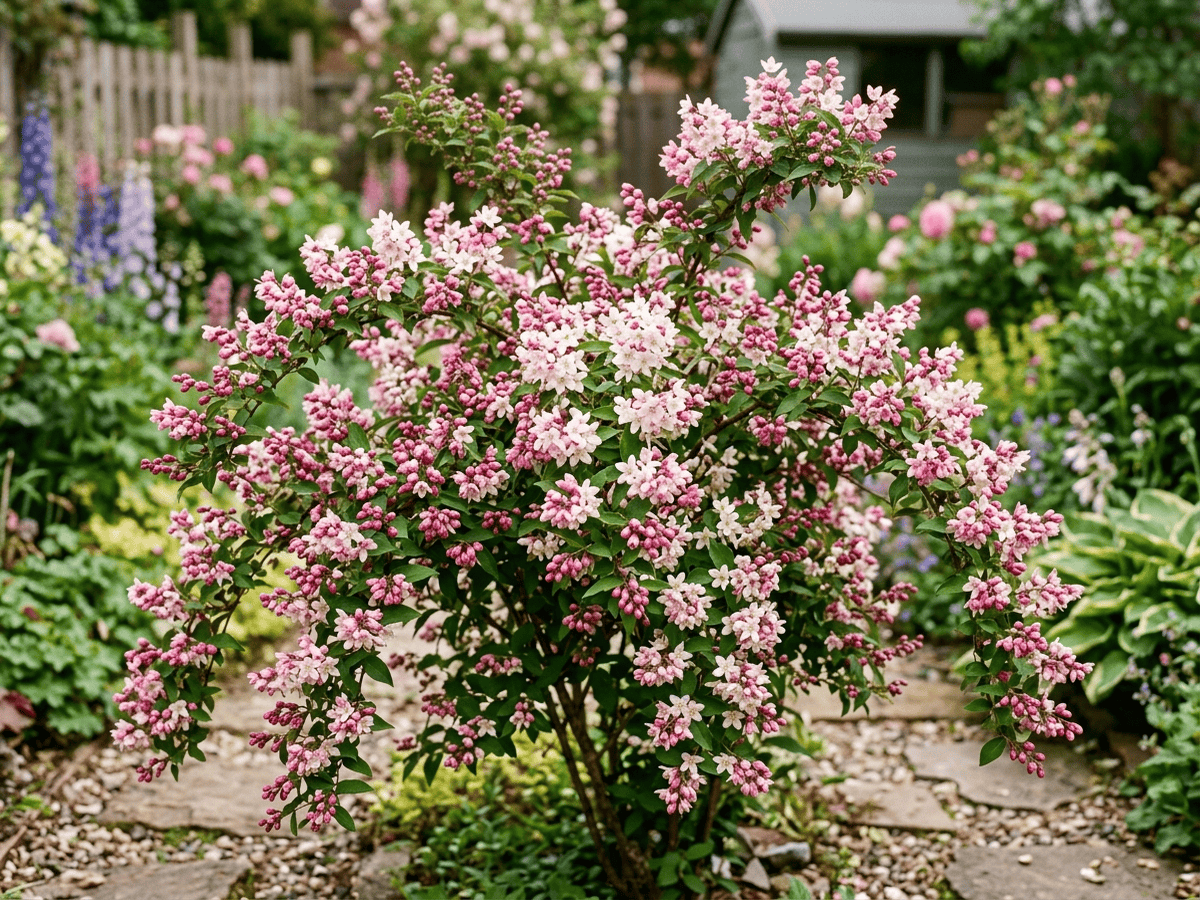 Deutzia x hybridaDeutzia x hybrida
Plants with similar care
 Chinese AbeliaAbelia chinensis
 Fragrant AbeliaAbelia mosanensis
 Large-Flowered AbeliaAbelia uniflora
 Glossy AbeliaAbelia x grandiflora
Frequently asked questions
How often should I water Deutzia?
In summer, water about every 5 days; in winter, about every 21 days. Adjust for heat, pot size and drainage.
How much light does Deutzia need?
Full sun: 6+ hrs direct. Watch the leaves — scorching or stretching means the light needs adjusting.
Is Deutzia toxic to cats or dogs?
No toxicity has been reported for this plant. Still, it is wise to keep pets from chewing on any houseplant. Educational information, not medical or veterinary advice. If exposure is suspected, contact a doctor or veterinarian.
Is Deutzia easy to grow?
Yes — it is considered an easy, beginner-friendly plant.
When does Deutzia bloom?
It typically blooms May–Jun in the Northern Hemisphere.
YardMate
Identify any plant in seconds
Snap a photo — YardMate names the plant, diagnoses problems, and reminds you when to water.
Download on the App Store