 YardMate

Sweet-William
Dianthus barbatus
Easy · Beginner friendlyAbout Sweet-William
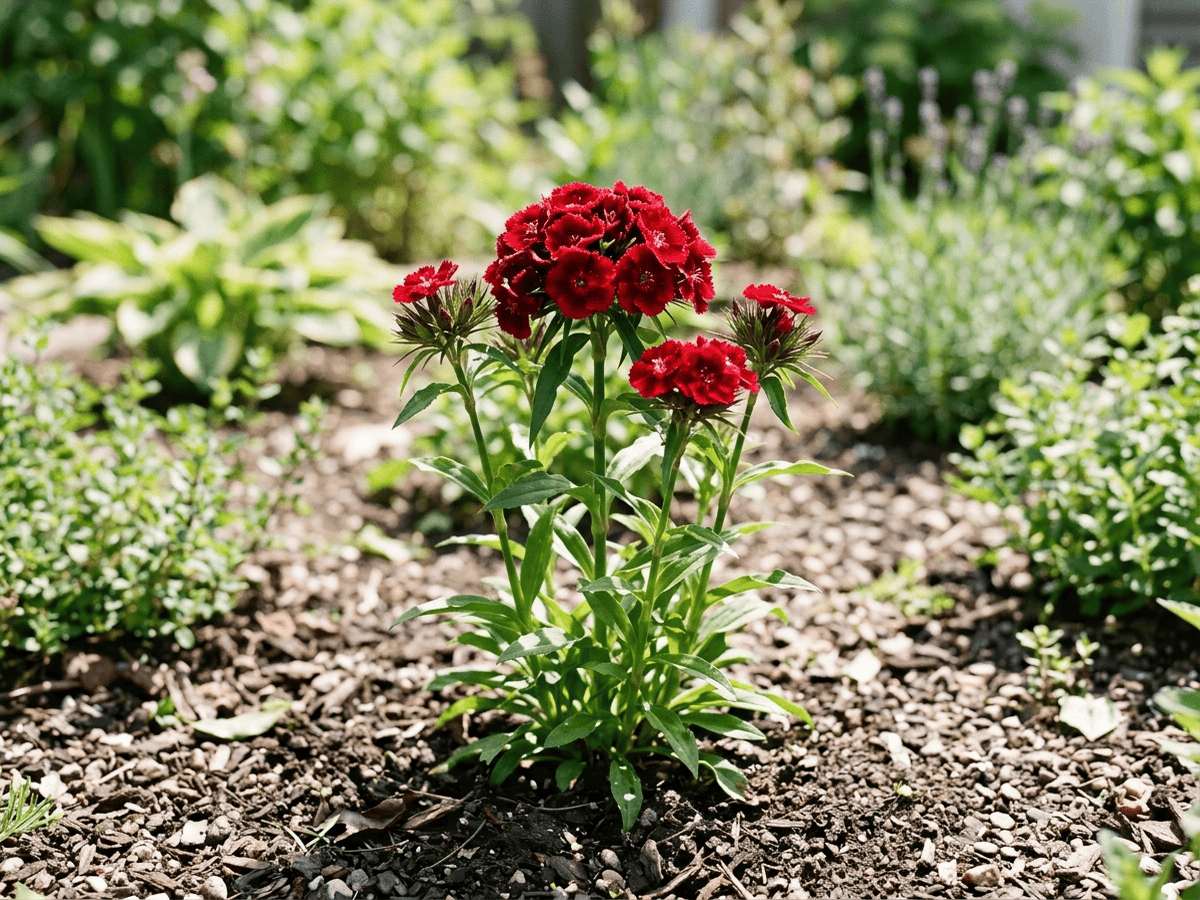
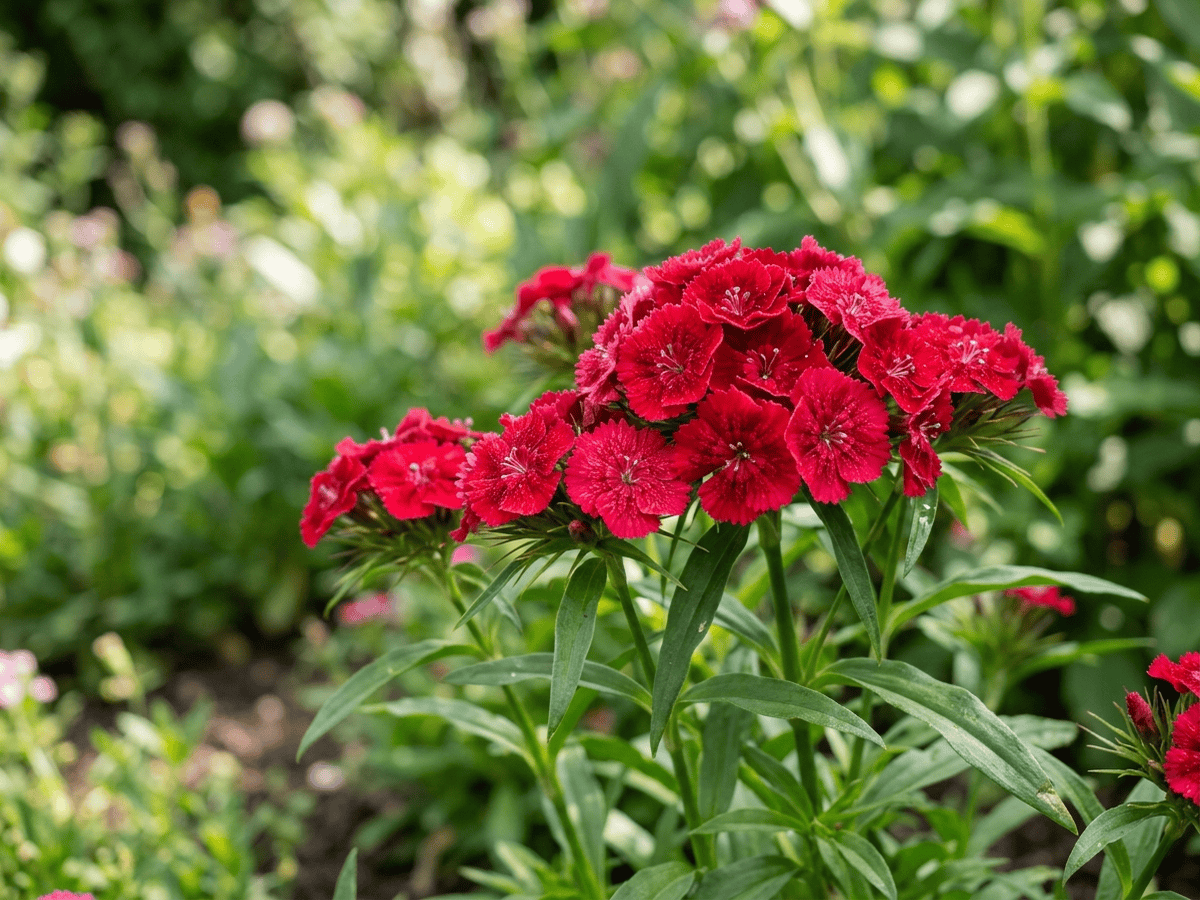
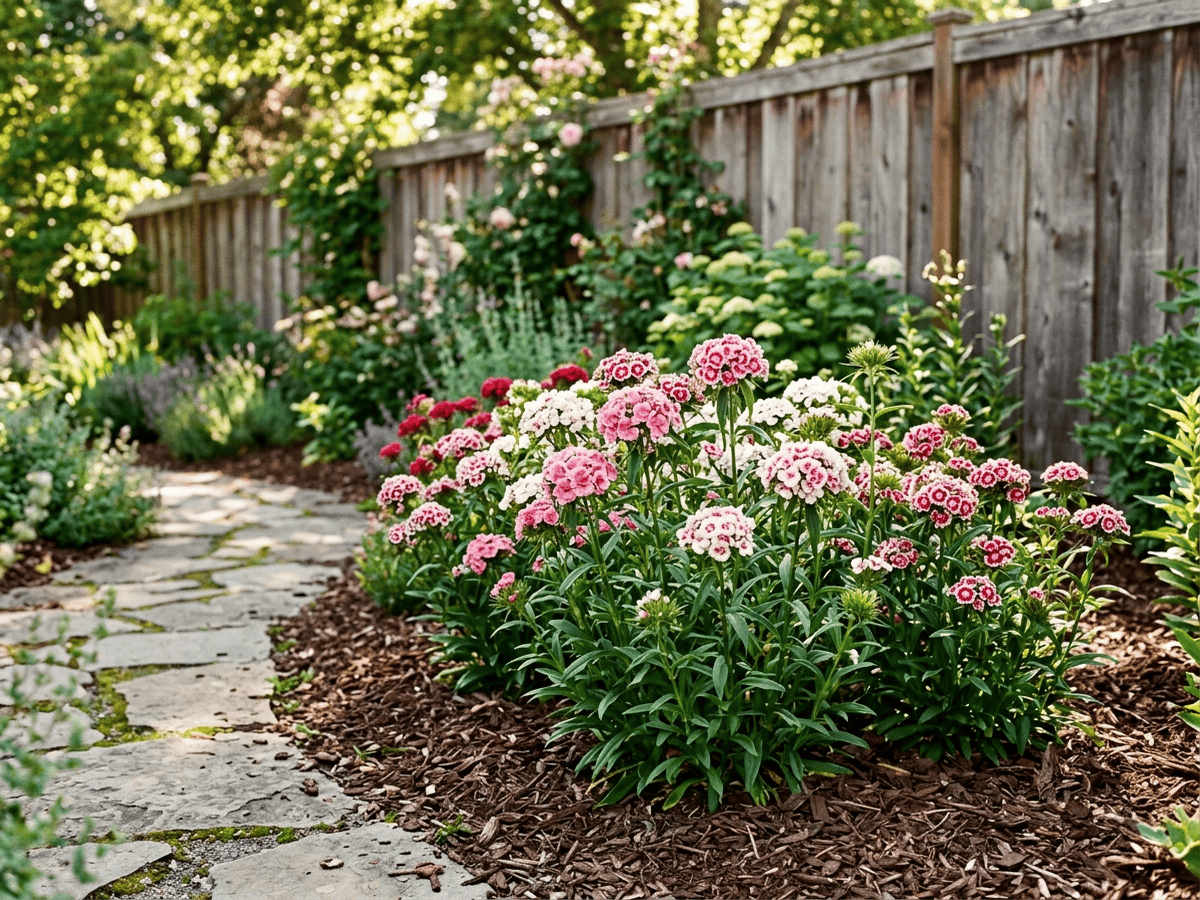
Dianthus barbatus, sweet William, produces dense, rounded clusters of small, flat flowers in rich reds, pinks, whites, and bicolors, often with intricate 'eye' patterns. Each flower cluster can contain 30+ individual florets. Native to southern Europe, it is a short-lived perennial or biennial that self-seeds reliably. The flowers have a mild clove-like fragrance. It blooms in late spring to early summer, filling the gap between spring bulbs and summer perennials. The name 'barbatus' means bearded, referring to the fringed bracts beneath each flower cluster.
- Fragrant
How to care for Sweet-William
Watering
- Springevery 7 days
- Summerevery 5 days
- Fallevery 10 days
- Winterevery 14 days
Soil · Rich & well-draining
- Top dressingCompost10%
- Main mixPotting soil + compost 3:180%
- DrainageGravel10%
Top up the compost layer each season.
FERTILIZER
Balanced Feed 14-14-14
An even feed covers all three needs at once, keeping leaves, roots and blooms moving together with nothing pushed out of balance.
- Nitrogen · Leaves
- Phosphorus · Roots + Blooms
- Potassium · Strength
- Springevery 30 days
- Summerevery 30 days
At a Glance
- NativeMediterranean
- Height1–2 ft (0.3–0.6 m)
- Spread0.5–1 ft (0.2–0.3 m)
- Flower colorRed, Pink, Purple
- Foliage colorGreen
- SoilLoamy, Well-drained, Alkaline
- LocationsYard
Bloom time
BLOOM CYCLE
Peak bloom
May
Dense clusters late spring; self-seeds for perennial presence; deadhead to prolong bloom
Fragrance
MODERATE FRAGRANCE
Spicy clove fragrance, strongest in bright sun.
Toxicity
Humans Slight · Pets Slight
triterpenoid saponins
Slight
- Leaf
- Stem
- Flower
- Sap
- Contact
- Ingestion
EXPOSURE Touching leaves, stems, flowers, and sap. Eating leaves, stems, flowers, and sap.
EFFECT Mild dermatitis and mild GI upset if eaten.
NOTE Documented concern for humans: Mild dermatitis and mild GI upset if eaten.
Slight
- Leaf
- Stem
- Flower
- Ingestion
EXPOSURE Eating leaves, stems, and flowers.
EFFECT Mild GI upset, dermatitis from sap and per Dianthus genus ASPCA listing.
NOTE Dianthus species are mildly toxic/irritating to dogs and cats per ASPCA; NC State also flags poisonous characteristics. Effects are usually mild dermatitis or GI upset.
Slight
- Leaf
- Stem
- Flower
- Ingestion
EXPOSURE Eating leaves, stems, and flowers.
EFFECT Mild GI upset, dermatitis from sap and per Dianthus genus ASPCA listing.
NOTE Dianthus species are mildly toxic/irritating to dogs and cats per ASPCA; NC State also flags poisonous characteristics. Effects are usually mild dermatitis or GI upset.
Educational information, not medical or veterinary advice. If exposure is suspected, contact a doctor or veterinarian.
DISTRIBUTION


- Native
- Introduced
- Mediterranean
History

Dianthus barbatus is native to the mountains of southern Europe, particularly the Pyrenees, Carpathians, and Balkans, and has been a favored cottage garden biennial in Britain and northern Europe since at least the 16th century. The origin of the English name 'Sweet William' is genuinely uncertain and debated: candidates include William the Conqueror, the medieval saint William of York, William Shakespeare (whose birthplace region still celebrates it), and King William III (William of Orange). In Scotland the equivalent traditional name is notably less flattering ('Stinking Billy') and commemorates the despised Duke of Cumberland.
In modern wedding flower culture it became particularly associated with Prince William and Catherine Middleton's 2011 royal wedding, where it was included in the bride's bouquet as a pun on the groom's name. Mildly toxic to pets.
The most romantic theory links it to the 18th-century Jacobite hero 'Sweet William' (the Duke of Cumberland) or his enemy 'Stinking Billy.' Thomas Tusser included it in his 1557 gardening guide 'Five Hundred Points of Good Husbandry,' making it one of the earliest documented English garden flowers. The Green Thumb series and Amazon series of modern cultivars bloom the first year from seed, overcoming the traditional biennial wait.
Symbolism & meaning
What It Symbolizes
Sweet William can symbolize gallantry, its clustered velvet flowers named for legendary Williams — variously Conqueror, Saint, or Shakespeare's prince — all standing for chivalry and noble courage. A staple of cottage gardens since the sixteenth century, it remains a traditional flower to give a young man, or to lay on his memorial. It is the bloom of the honorable heart.
- Gallantry — Named for legendary Williams, representing chivalry and noble courage
Where the Name Comes From
The name Sweet-William describes its sweet scent or flavor. Dianthus from Greek 'flower of the gods.' Barbatus means 'bearded,' for the hairy bracts beneath the flower clusters.
Uses & Fun Facts
- Dense bicolor flower clusters anchor cottage cutting-garden bouquets
- Spicy clove-scented blooms perfume warm summer borders
- Petals scattered on salads and desserts as edible garnish
Related plants
More Dianthus plants
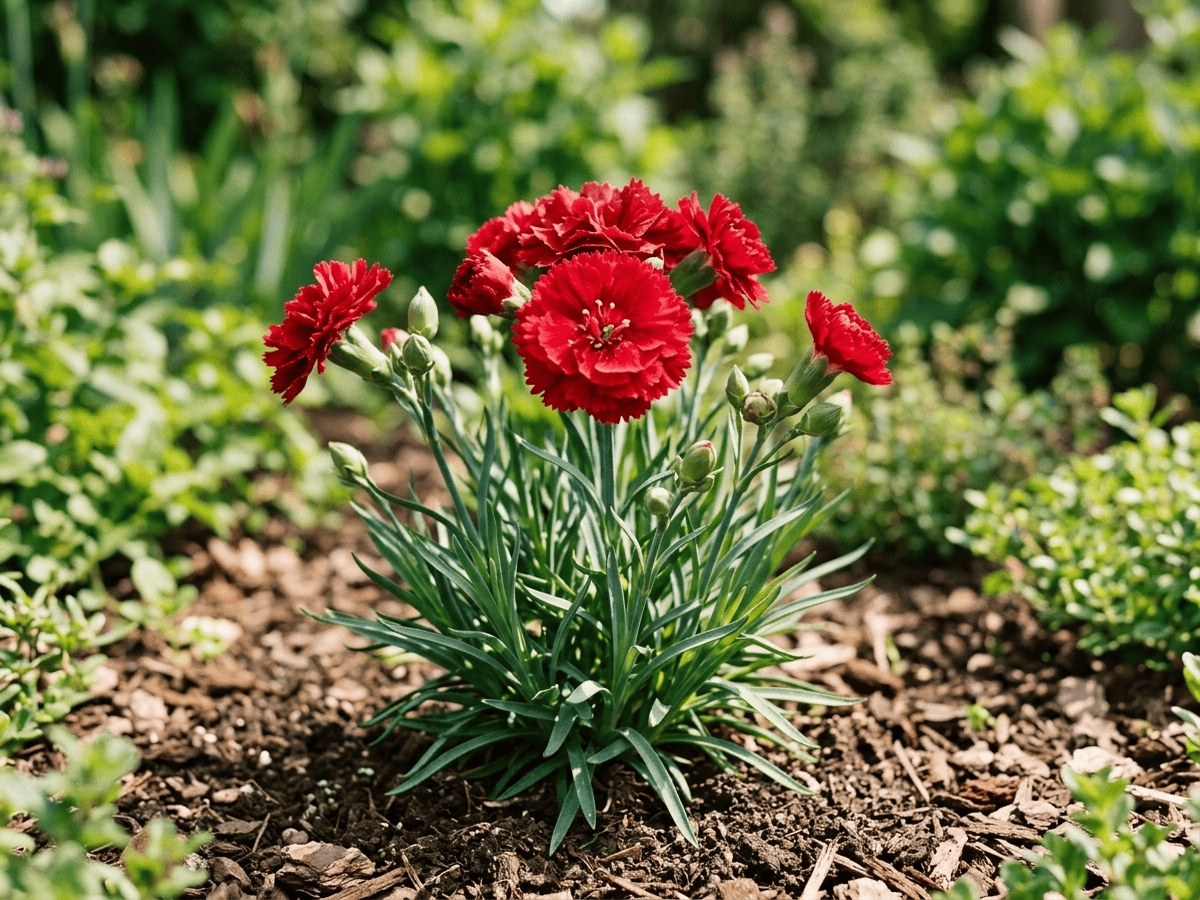 Clove PinkDianthus caryophyllus
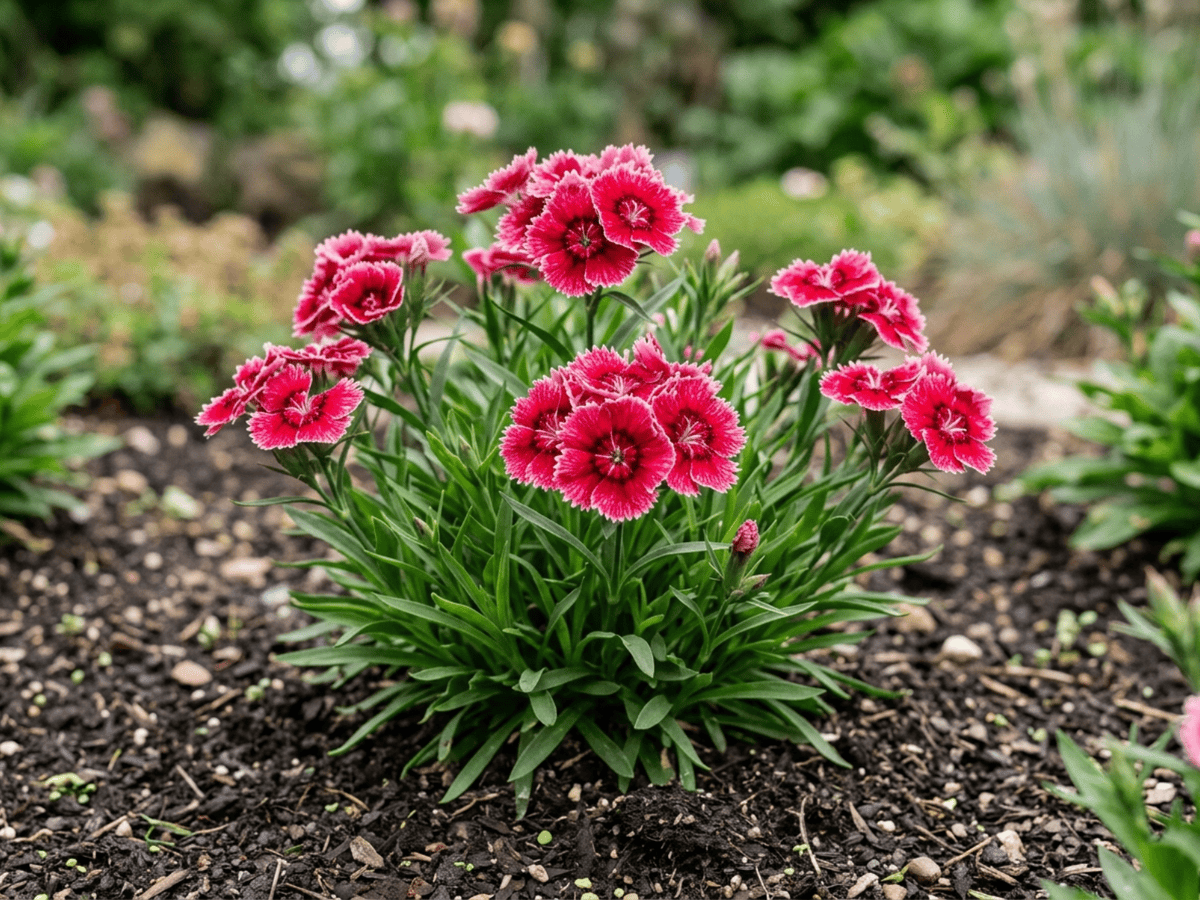 Chinese-PinkDianthus chinensis
 Maiden PinkDianthus deltoides
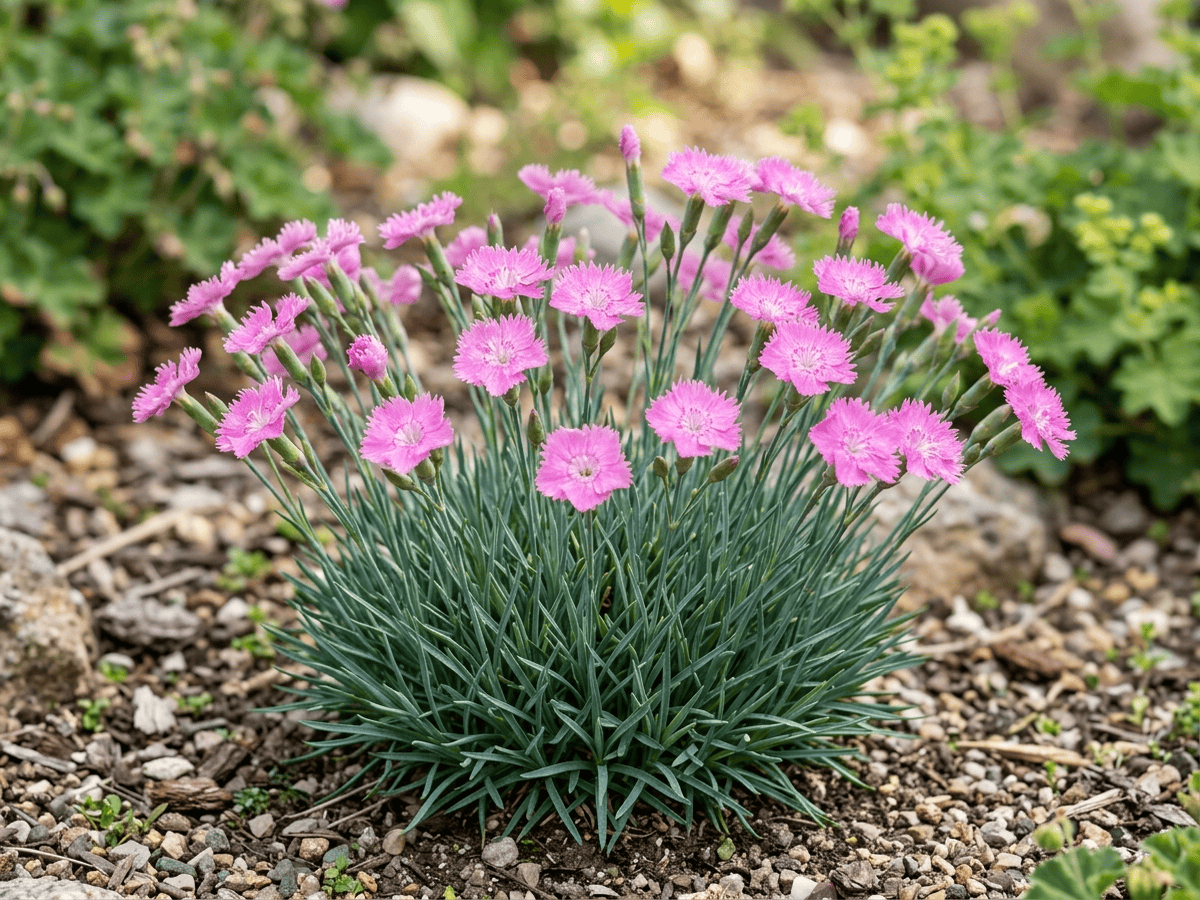 Cheddar PinkDianthus gratianopolitanus
Plants with similar care
 Chinese AbeliaAbelia chinensis
 Fragrant AbeliaAbelia mosanensis
 Large-Flowered AbeliaAbelia uniflora
 Glossy AbeliaAbelia x grandiflora
Frequently asked questions
How often should I water Sweet-William?
In summer, water about every 5 days; in winter, about every 14 days. Adjust for heat, pot size and drainage.
How much light does Sweet-William need?
Full sun: 6+ hrs direct. Watch the leaves — scorching or stretching means the light needs adjusting.
Is Sweet-William toxic to cats or dogs?
Pets Slight (Dogs Slight · Cats Slight) Educational information, not medical or veterinary advice. If exposure is suspected, contact a doctor or veterinarian.
Is Sweet-William easy to grow?
Yes — it is considered an easy, beginner-friendly plant.
When does Sweet-William bloom?
It typically blooms May in the Northern Hemisphere.
YardMate
Identify any plant in seconds
Snap a photo — YardMate names the plant, diagnoses problems, and reminds you when to water.
Download on the App Store