 YardMate



Maiden Pink
Dianthus deltoides
Easy · Beginner friendlyAbout Maiden Pink
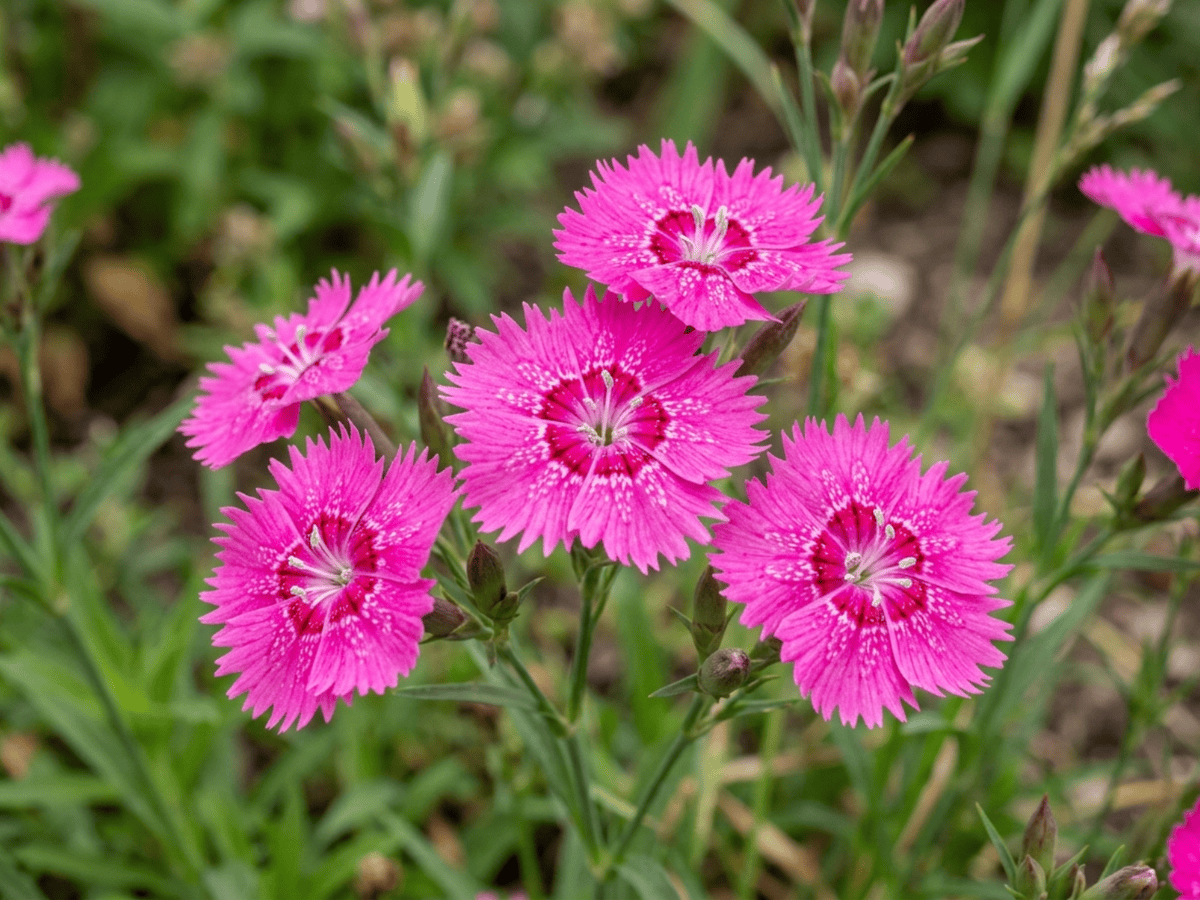
Maiden Pink is a mat-forming hardy perennial native to Europe, producing dense carpets of slender green leaves covered in small, five-petaled bright pink or white flowers in late spring. Reaching only 4–8 inches tall, it spreads 12–18 inches wide, making it a superb groundcover between pavers, in rock gardens, or tumbling over walls. Hardy to USDA zone 3 and widely naturalized in parts of the northeastern US, it offers one of the earliest and most vivid displays of pink in the perennial garden.
- Drought-tolerant
- Cold-hardy
- Groundcover
- Pollinator-friendly
How to care for Maiden Pink
Watering
- Springevery 5 days
- Summerevery 4 days
- Fallevery 10 days
- Winterevery 30 days
Soil · Well-draining
- Top dressingPine bark mulch10%
- Main mixPotting soil + perlite 2:170%
- DrainageLECA / gravel20%
Never skip the drainage layer — standing water is the top cause of root rot.
FERTILIZER
- Springevery 45 days
- Fallevery 45 days
At a Glance
- NativeEurope, Western Asia
- Height0.5–1 ft (0.2–0.3 m)
- Spread1–1.5 ft (0.3–0.5 m)
- Flower colorPink, Purple, Red, White
- Foliage colorGreen
- SoilLoamy, Well-drained, Alkaline
- LocationsYard · Balcony
Bloom time
BLOOM CYCLE
Peak bloom
May–Jun
Bright pink flowers late spring to early summer
Fragrance
LIGHT FRAGRANCE
Very faint scent, much less pronounced than cottage pink.
Toxicity
Humans Slight · Pets Slight
saponins
Slight
- Leaf
- Stem
- Flower
- Sap
- Contact
- Ingestion
EXPOSURE Touching leaves, stems, flowers, and sap. Eating leaves, stems, flowers, and sap.
EFFECT Mild dermatitis and mild GI upset if eaten.
NOTE Documented concern for humans: Mild dermatitis and mild GI upset if eaten.
Slight
- All
- Ingestion
EXPOSURE Eating any part of the plant.
EFFECT Mild GI upset.
NOTE Dianthus species are mildly toxic/irritating to dogs and cats per ASPCA; NC State also flags poisonous characteristics. Effects are usually mild dermatitis or GI upset.
Slight
- All
- Ingestion
EXPOSURE Eating any part of the plant.
EFFECT Same as dogs.
NOTE Dianthus species are mildly toxic/irritating to dogs and cats per ASPCA; NC State also flags poisonous characteristics. Effects are usually mild dermatitis or GI upset.
Educational information, not medical or veterinary advice. If exposure is suspected, contact a doctor or veterinarian.
DISTRIBUTION

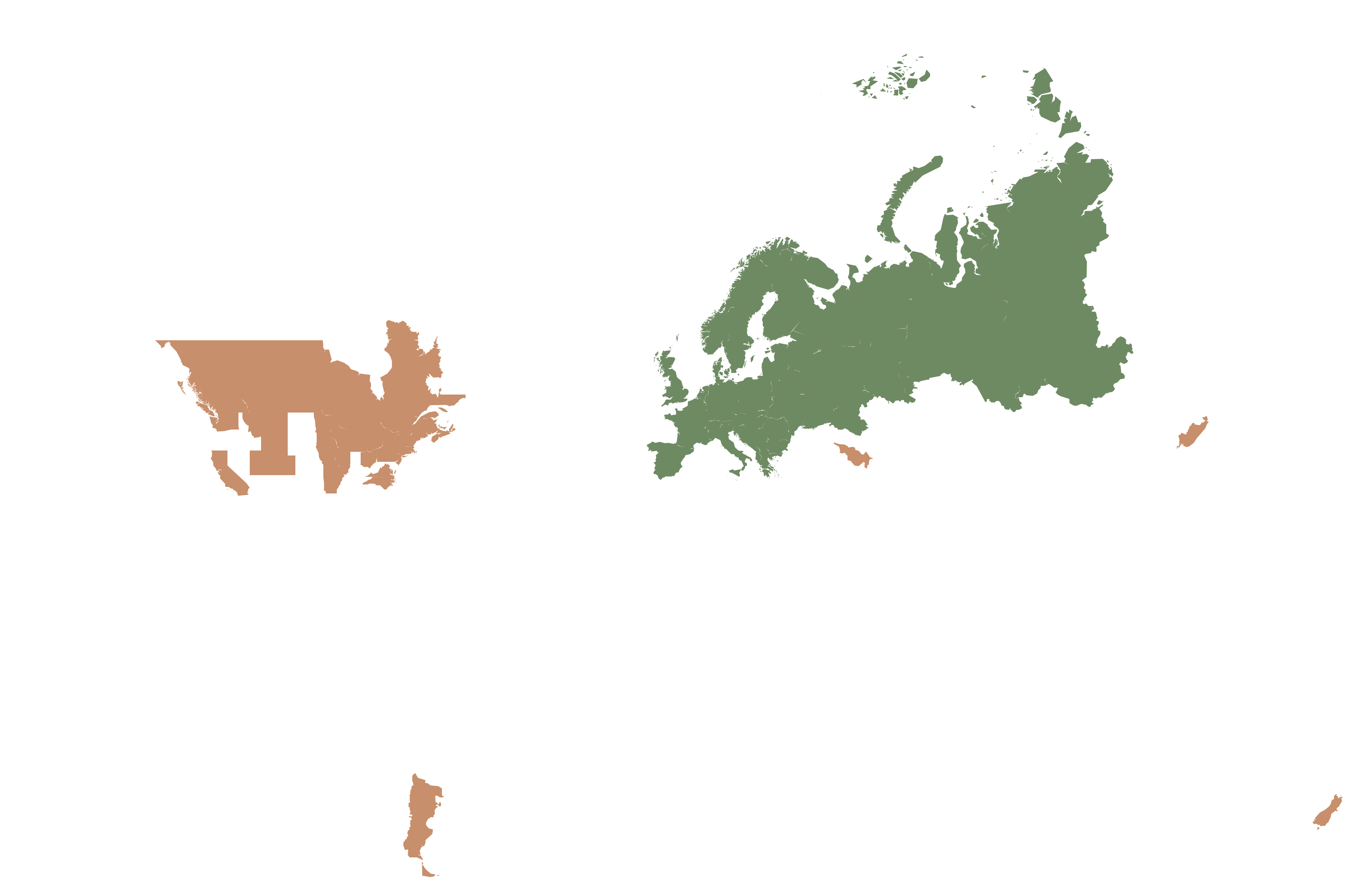
- Native
- Introduced
- Europe
- Western Asia
History
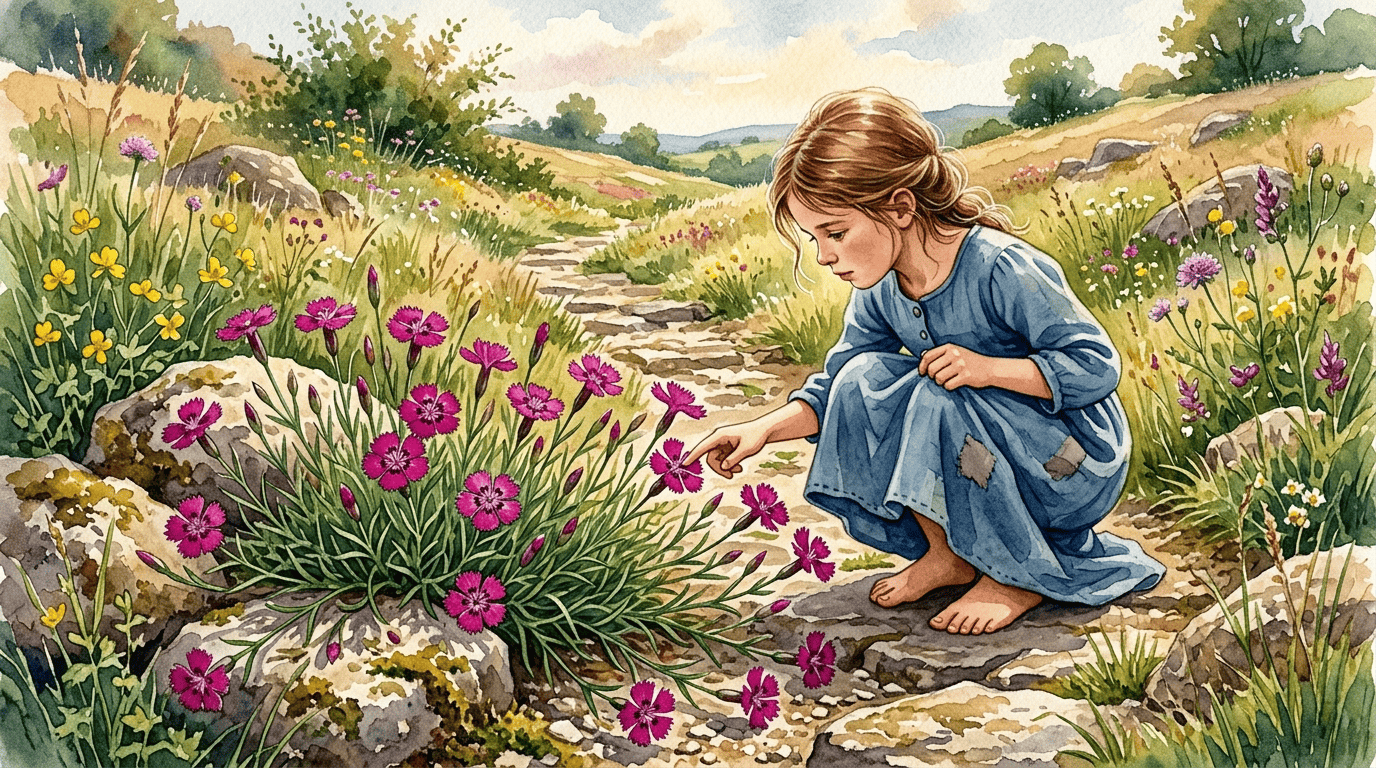
Dianthus deltoides is native across most of Europe — from the British Isles and Iberia east through central and eastern Europe into Russia and western Asia — growing in dry grasslands, open woodland, and rocky slopes. The species epithet "deltoides" refers to the triangular (delta-shaped) dark markings at the base of each petal, visible in the typical wild form. It is a low mat-forming perennial 15-25 cm tall with narrow grassy dark-green leaves and masses of small single five-petaled flowers 1.5-2 cm across produced through late spring and summer — the wild type is typically deep magenta-pink, with cultivated selections extending through pure white, pale pink, coral, deep red, and almost-black crimson.
Its spreading creeping habit (sending out rooted runners that form dense mats over time) and prolific small-flower display make it one of the most useful dianthus species for rock gardens, stepping-stone pathway edges, fronts of sunny perennial borders, and informal lawn-edge planting. Popular cultivars include "Flashing Light" (deep crimson), "Brilliant" (vivid magenta), "Albus" (pure white), "Arctic Fire" (white with red center), and "Zing Rose."
Unlike the heavily-scented cottage pink D. plumarius, D. deltoides has little fragrance, and the flowers are correspondingly smaller and simpler — its horticultural role is mass display and groundcover rather than cut flower or fragrance. Introduced to North America in the 18th century, maiden pink has naturalized along roadsides and in meadows in New England and the Great Lakes region.
Symbolism & meaning
What It Symbolizes
Maiden Pink wears the meaning of pure affection through its delicate rose-pink blossoms scattered like small kisses across a sunny mat of foliage. Its other meaning is youth, for the dianthus has long been associated with maidens in old English flower lore, blooming with the freshness of an early summer morning. In the cottage garden, maiden pink is the modest valentine of the rockery, a flower whose innocence depends on staying small and unforced rather than grand.
- Pure affection — delicate pink blossoms evoke innocent love
- Youth — traditionally associated with maidens
Where the Name Comes From
The common name highlights its pink coloring. Genus means 'flower of the gods'; 'deltoides' refers to the tiny triangular (delta-shaped) mark at the petal base.
Uses & Fun Facts
- Tiny pink stars attract butterflies and small bees
- Maiden pinks form low evergreen mats in rock gardens
Related plants
More Dianthus plants
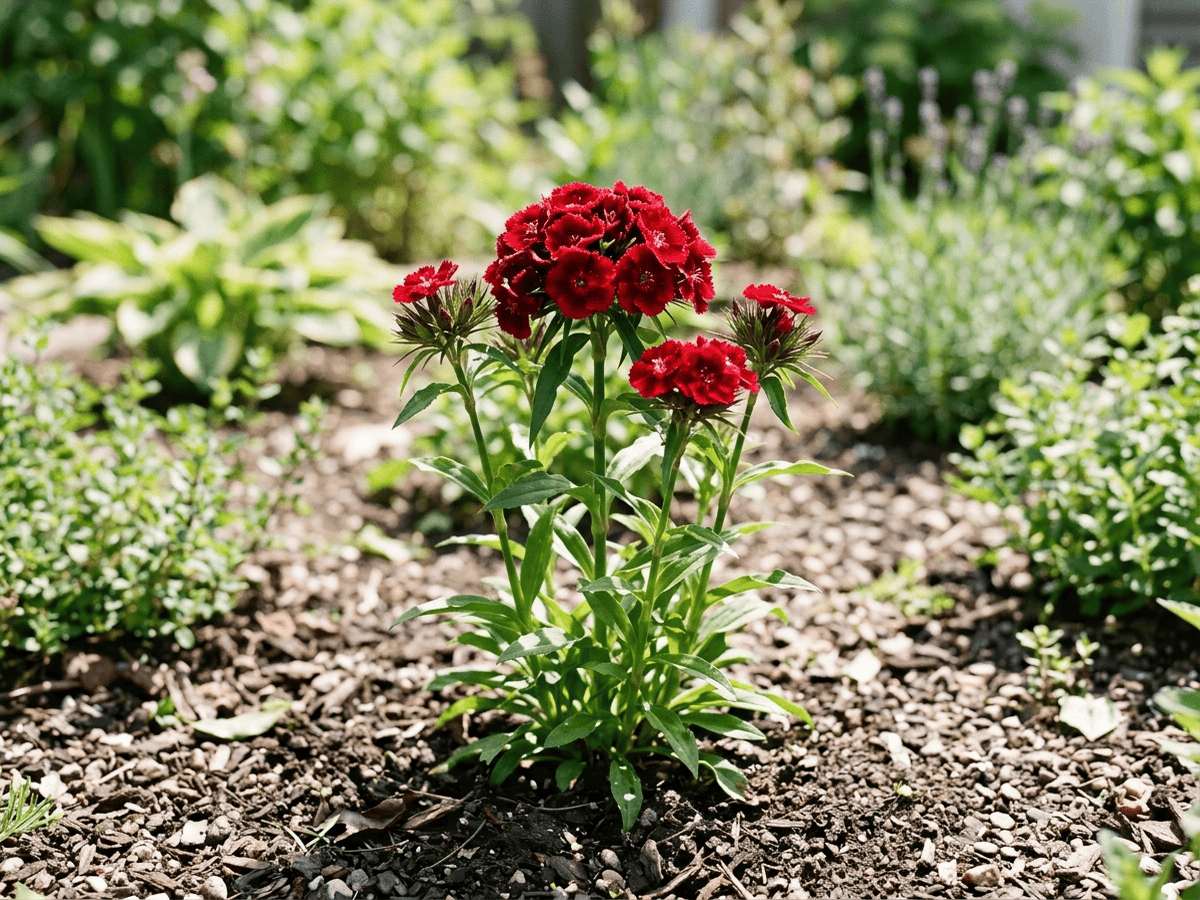 Sweet-WilliamDianthus barbatus
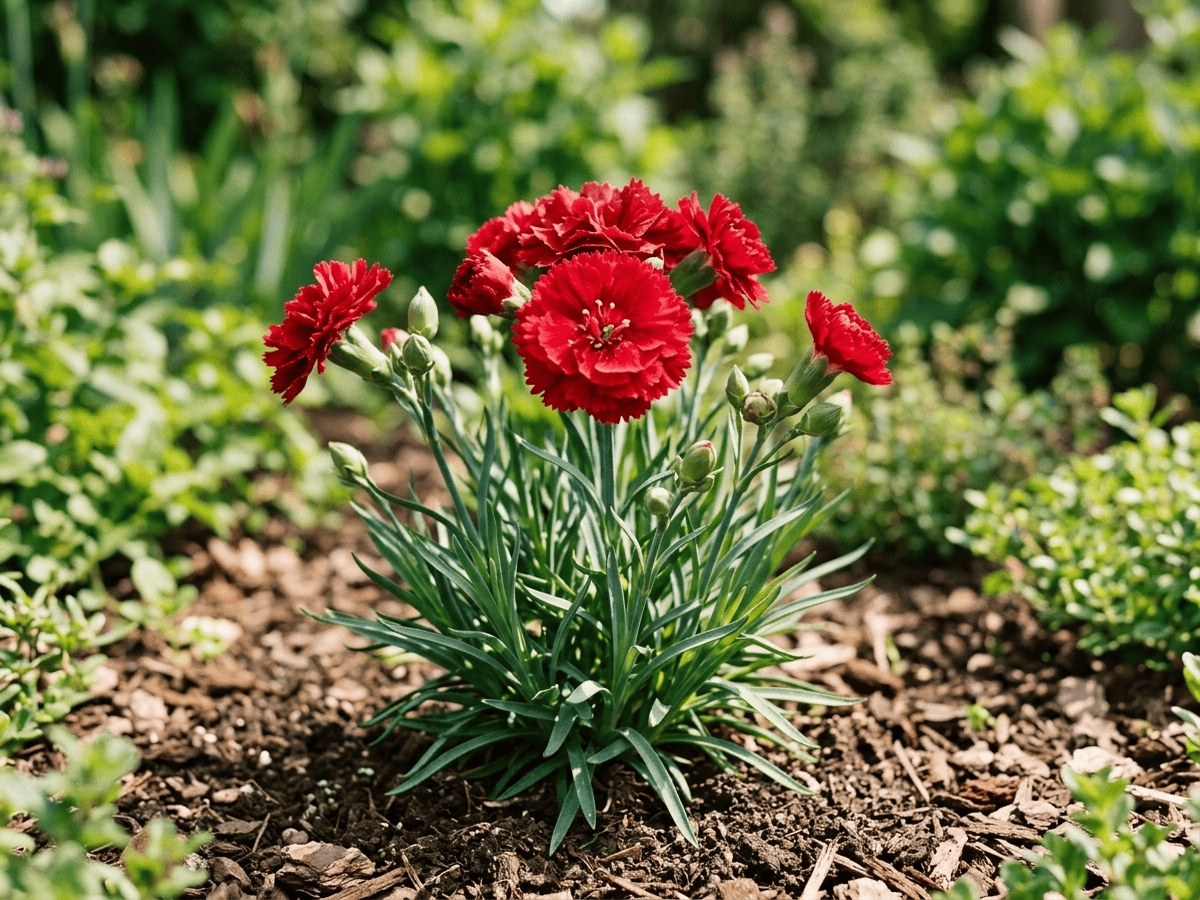 Clove PinkDianthus caryophyllus
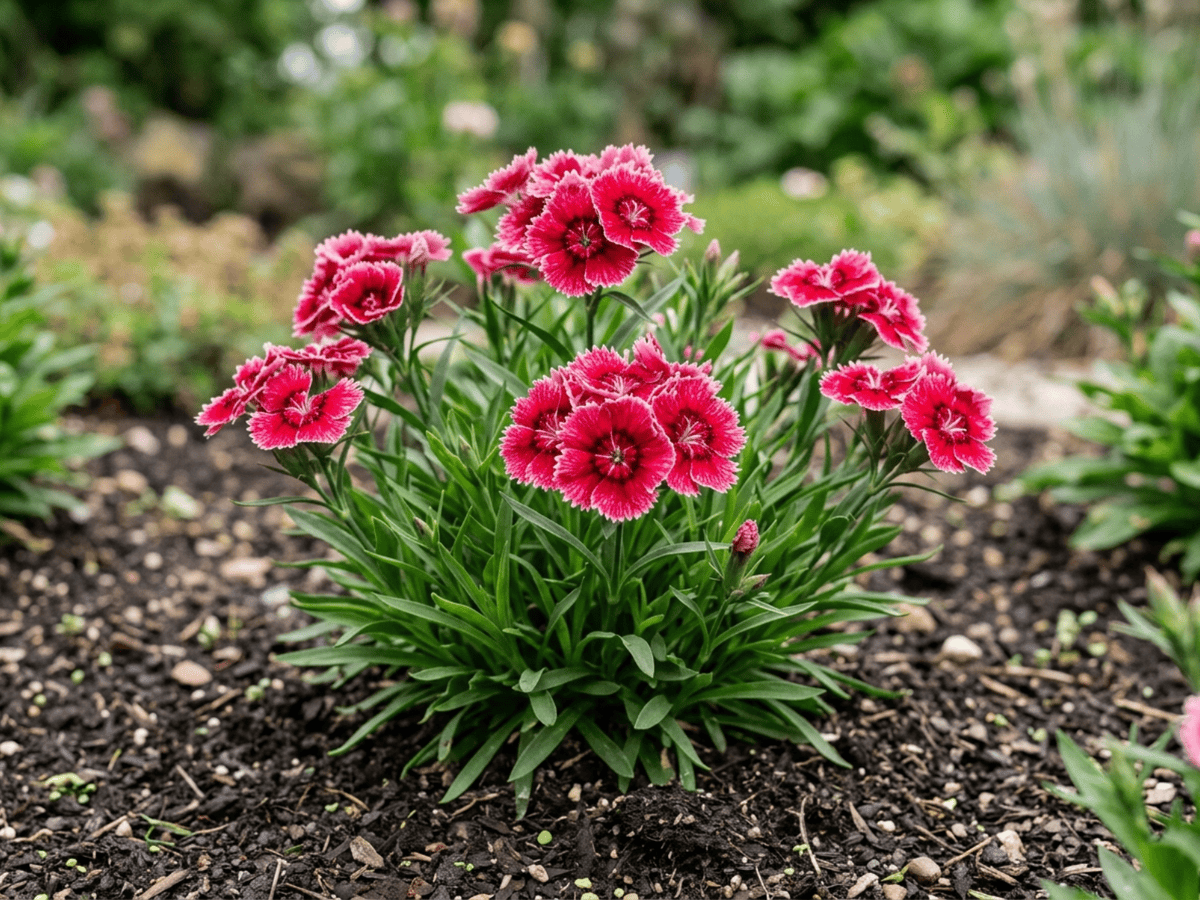 Chinese-PinkDianthus chinensis
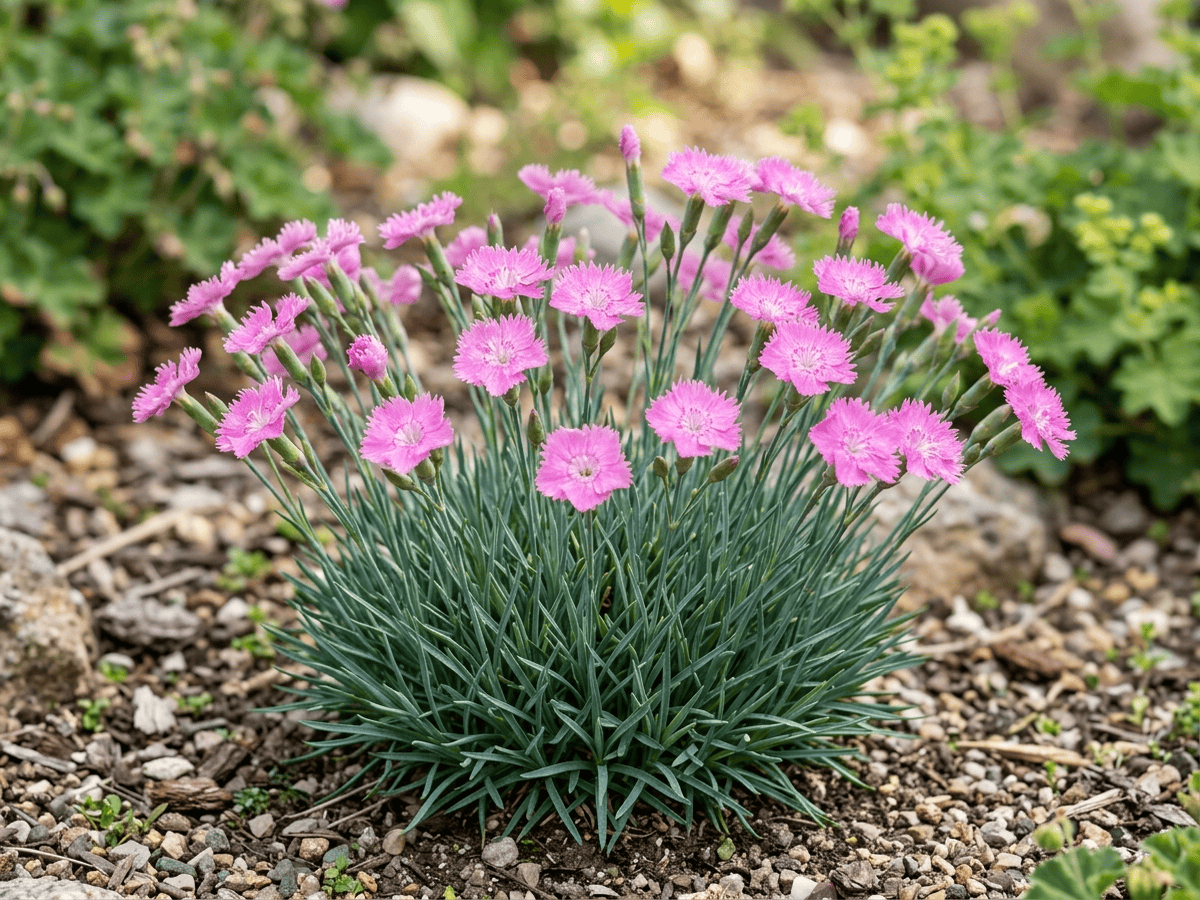 Cheddar PinkDianthus gratianopolitanus
Plants with similar care
 Chinese AbeliaAbelia chinensis
 Fragrant AbeliaAbelia mosanensis
 Large-Flowered AbeliaAbelia uniflora
 Glossy AbeliaAbelia x grandiflora
Frequently asked questions
How often should I water Maiden Pink?
In summer, water about every 4 days; in winter, about every 30 days. Adjust for heat, pot size and drainage.
How much light does Maiden Pink need?
Full sun: 6+ hrs direct. Watch the leaves — scorching or stretching means the light needs adjusting.
Is Maiden Pink toxic to cats or dogs?
Pets Slight (Dogs Slight · Cats Slight) Educational information, not medical or veterinary advice. If exposure is suspected, contact a doctor or veterinarian.
Is Maiden Pink easy to grow?
Yes — it is considered an easy, beginner-friendly plant.
When does Maiden Pink bloom?
It typically blooms May–Jun in the Northern Hemisphere.
YardMate
Identify any plant in seconds
Snap a photo — YardMate names the plant, diagnoses problems, and reminds you when to water.
Download on the App Store