 YardMate
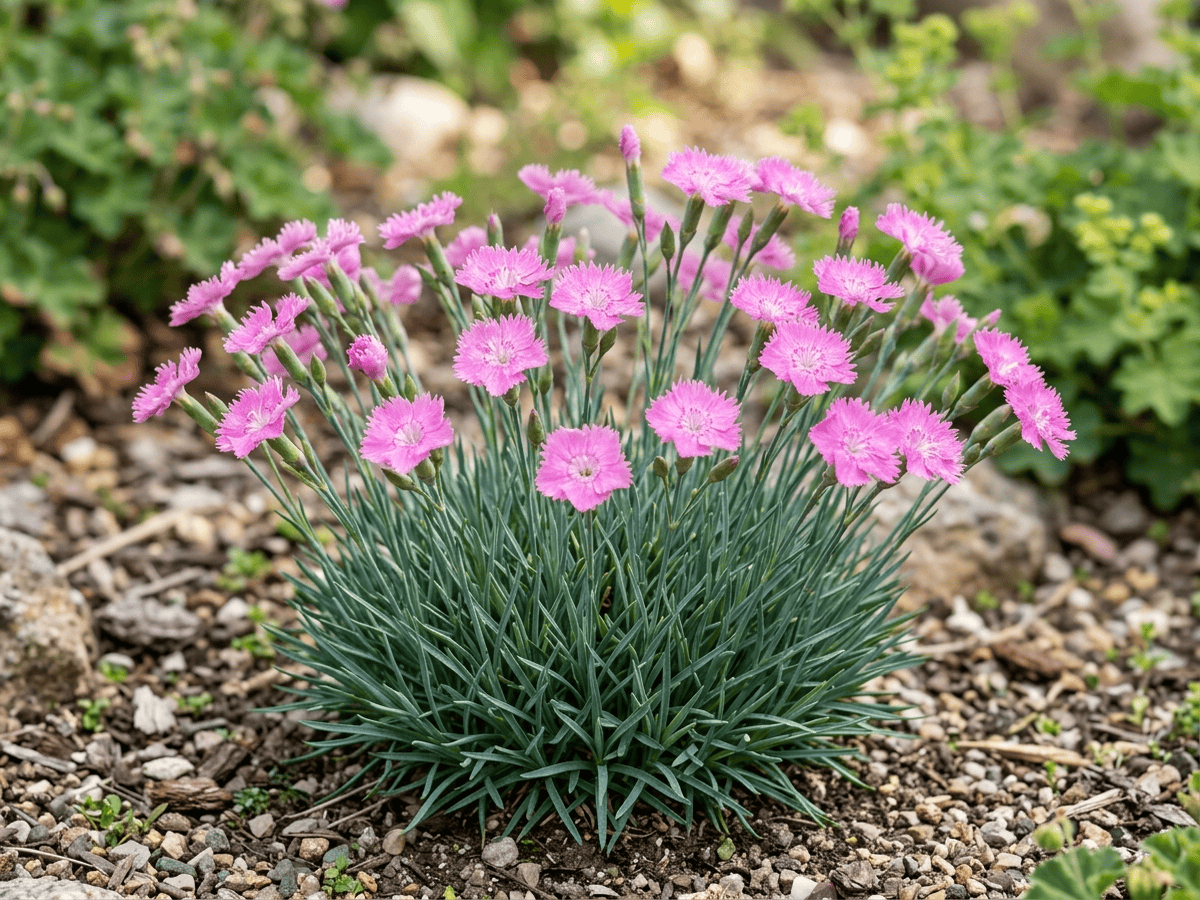


Cheddar Pink
Dianthus gratianopolitanus
Easy · Beginner friendlyAbout Cheddar Pink
Cheddar Pink is a European alpine perennial forming dense mats of blue-gray needle-like foliage topped with fragrant 1-inch pink flowers in late spring and early summer. Growing only 4 to 6 inches tall and spreading 12 to 18 inches, it thrives in rock gardens, dry walls, and xeric borders. Named for the Cheddar Gorge in England where it grows wild.
- Fragrant
- Drought-tolerant
- Deer-resistant
- Evergreen
How to care for Cheddar Pink
Watering
- Springevery 7 days
- Summerevery 10 days
- Fallevery 14 days
- Winterevery 21 days
Soil · Well-draining
- Top dressingPine bark mulch10%
- Main mixPotting soil + perlite 2:170%
- DrainageLECA / gravel20%
Never skip the drainage layer — standing water is the top cause of root rot.
FERTILIZER
- Springevery 60 days
- Fallevery 60 days
At a Glance
- NativeEurope
- Height0.5–1 ft (0.2–0.3 m)
- Spread1–1.5 ft (0.3–0.5 m)
- Flower colorPink, Red
- Foliage colorBlue-green, Green
- SoilLoamy, Well-drained, Alkaline
- LocationsYard
Bloom time
BLOOM CYCLE
Peak bloom
May–Jun
Fragrant pink flowers May to June
Fragrance
STRONG FRAGRANCE
Intense clove and cinnamon spice fragrance.
Toxicity
Humans Slight · Pets Slight
triterpenoid saponins
Slight
- Leaf
- Stem
- Flower
- Sap
- Contact
- Ingestion
EXPOSURE Touching leaves, stems, flowers, and sap. Eating leaves, stems, flowers, and sap.
EFFECT Mild dermatitis and mild GI upset if eaten.
NOTE Documented concern for humans: Mild dermatitis and mild GI upset if eaten.
Slight
- Leaf
- Ingestion
EXPOSURE Eating leaves.
EFFECT ASPCA-listed Dianthus: mild GI upset, vomiting, diarrhea, dermatitis.
NOTE Dianthus species are mildly toxic/irritating to dogs and cats per ASPCA; NC State also flags poisonous characteristics. Effects are usually mild dermatitis or GI upset.
Slight
- Leaf
- Ingestion
EXPOSURE Eating leaves.
EFFECT ASPCA-listed Dianthus: mild GI upset, vomiting, diarrhea, dermatitis.
NOTE Dianthus species are mildly toxic/irritating to dogs and cats per ASPCA; NC State also flags poisonous characteristics. Effects are usually mild dermatitis or GI upset.
Educational information, not medical or veterinary advice. If exposure is suspected, contact a doctor or veterinarian.
DISTRIBUTION


- Native
- Europe
History

Dianthus gratianopolitanus, the Cheddar pink, is a mat-forming alpine perennial native to limestone cliffs and rocky slopes from the Cheddar Gorge of Somerset, England, east through France, Belgium, Germany, Poland, and into Ukraine. The epithet gratianopolitanus honors Gratianopolis, the Roman name for Grenoble, France. Swiss botanist Caspar Wulfen described it in 1786.
At Cheddar Gorge the English population clings to sheer cliffs and is strictly protected, making uprooting a criminal offense. Garden cultivars including the heirloom Tiny Rubies, Firewitch, Bath's Pink, and Feuerhexe offer compact silver-blue mats covered in fragrant pink to crimson fringed flowers in late spring. The plant is a cornerstone of rock gardens, wall crevice plantings, and edgings in temperate climates worldwide. Introduced to American gardens by colonists and now standard in US rock gardens.
Symbolism & meaning
What It Symbolizes
Cheddar pink shows the boldness to thrive where almost nothing else will — its tufts cling to limestone crevices in the Cheddar Gorge, an alpine grace that turned a vertical cliff into a perfumed garden. Each small flower releases the spicy clove fragrance characteristic of the carnation tribe, sweet enough to scent an entire path. Hardness of habitat and softness of perfume meet in a single defiant bloom.
- Alpine grace — thrives in rocky crevices
- Clove fragrance — spicy sweet carnation perfume
Where the Name Comes From
The common name highlights its pink coloring. 'gratianopolitanus' refers to Grenoble, France (ancient Gratianopolis), where the species was first documented.
Uses & Fun Facts
- Clove-scented pink flowers float above blue-gray mat foliage
- Tight evergreen cushion ideal for sunny rock gardens and walls
- Single forms attract butterflies and long-tongued bees
Related plants
More Dianthus plants
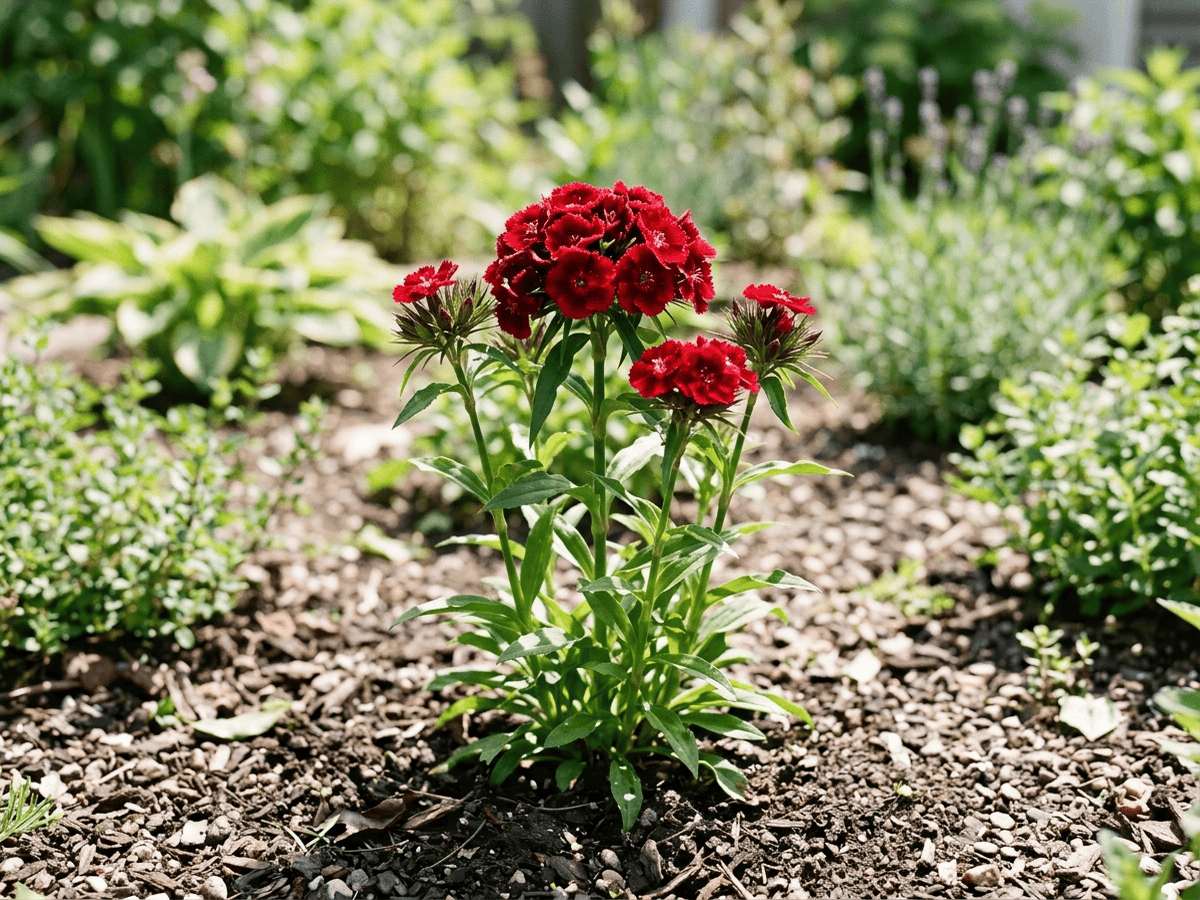 Sweet-WilliamDianthus barbatus
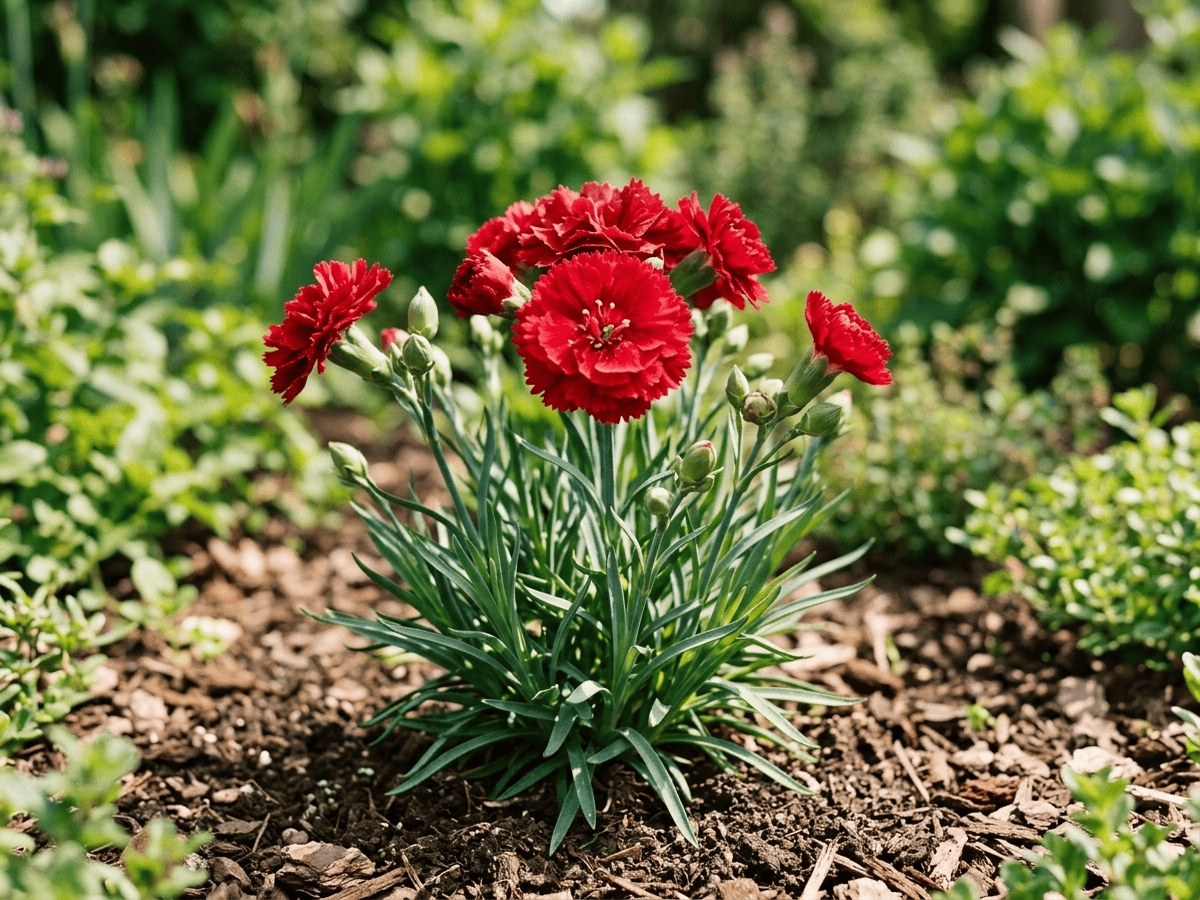 Clove PinkDianthus caryophyllus
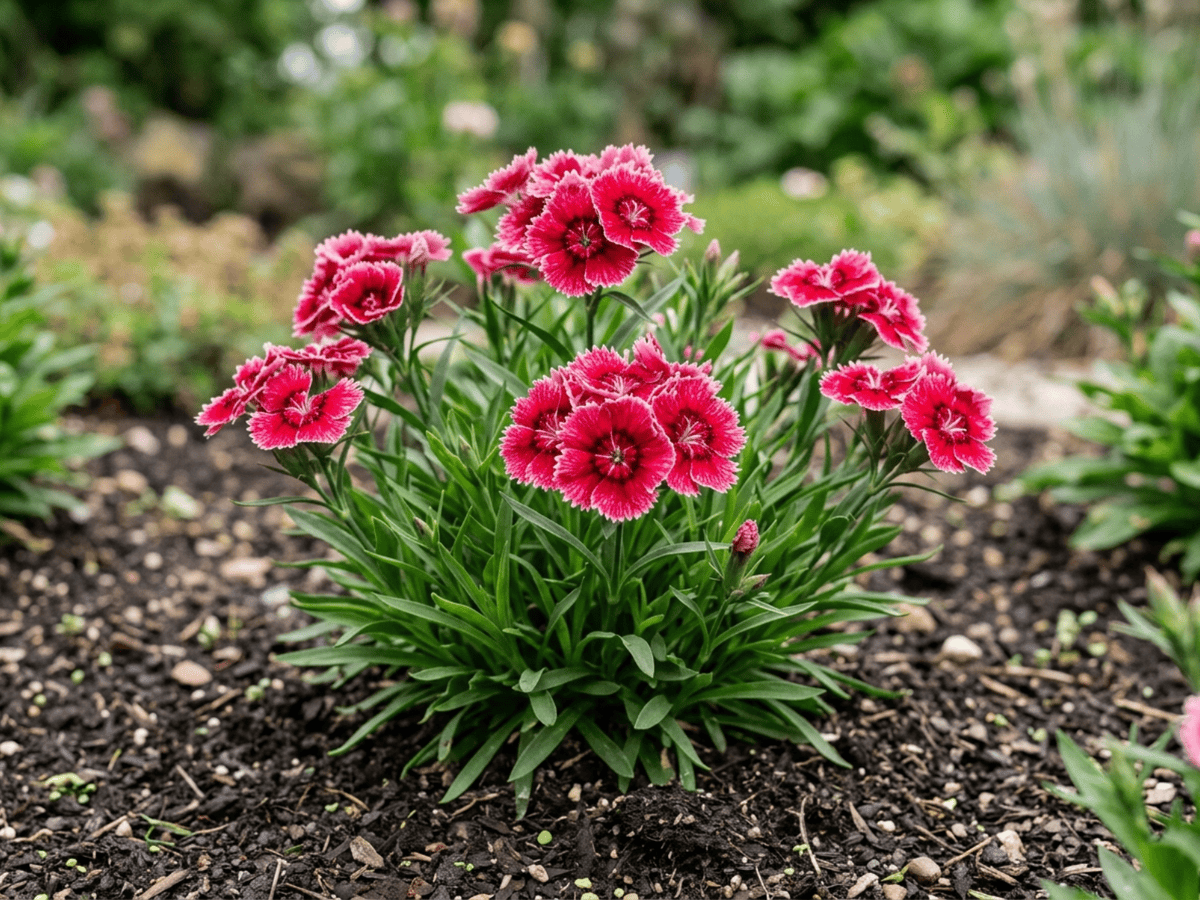 Chinese-PinkDianthus chinensis
 Maiden PinkDianthus deltoides
Plants with similar care
 Chinese AbeliaAbelia chinensis
 Fragrant AbeliaAbelia mosanensis
 Large-Flowered AbeliaAbelia uniflora
 Glossy AbeliaAbelia x grandiflora
Frequently asked questions
How often should I water Cheddar Pink?
In summer, water about every 10 days; in winter, about every 21 days. Adjust for heat, pot size and drainage.
How much light does Cheddar Pink need?
Full sun: 6+ hrs direct. Watch the leaves — scorching or stretching means the light needs adjusting.
Is Cheddar Pink toxic to cats or dogs?
Pets Slight (Dogs Slight · Cats Slight) Educational information, not medical or veterinary advice. If exposure is suspected, contact a doctor or veterinarian.
Is Cheddar Pink easy to grow?
Yes — it is considered an easy, beginner-friendly plant.
When does Cheddar Pink bloom?
It typically blooms May–Jun in the Northern Hemisphere.
YardMate
Identify any plant in seconds
Snap a photo — YardMate names the plant, diagnoses problems, and reminds you when to water.
Download on the App Store