 YardMate
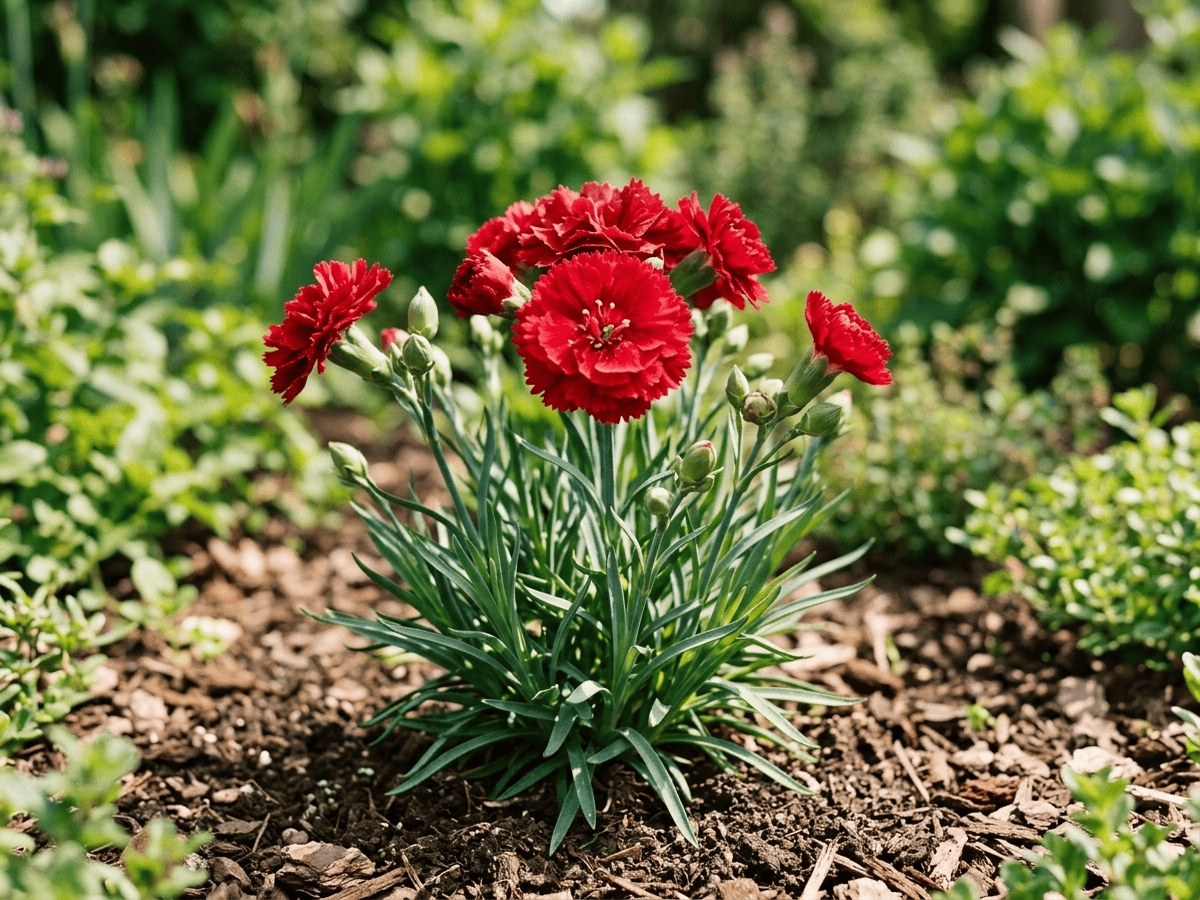


Clove Pink
Dianthus caryophyllus
Easy · Beginner friendlyAbout Clove Pink
Dianthus caryophyllus, the carnation, is one of the world's most commercially important flowers — over 3 billion stems are produced annually. The ruffled, clove-scented flowers come in nearly every color, with reds, pinks, and whites being most traditional. Native to the Mediterranean, carnations have been cultivated for over 2,000 years and were among the first flowers to be commercially cultivated. Modern spray carnations produce multiple smaller blooms per stem, while standard carnations have one large flower. They are one of the longest-lasting cut flowers, surviving 2–3 weeks in a vase.
- Fragrant
- Cut-flower
How to care for Clove Pink
Watering
- Springevery 7 days
- Summerevery 5 days
- Fallevery 10 days
- Winterevery 14 days
Soil · Rich & well-draining
- Top dressingCompost10%
- Main mixPotting soil + compost 3:180%
- DrainageGravel10%
Top up the compost layer each season.
FERTILIZER
Balanced Feed 14-14-14
An even feed covers all three needs at once, keeping leaves, roots and blooms moving together with nothing pushed out of balance.
- Nitrogen · Leaves
- Phosphorus · Roots + Blooms
- Potassium · Strength
- Springevery 30 days
- Summerevery 30 days
At a Glance
- NativeMediterranean
- Height1–2 ft (0.3–0.6 m)
- Spread0.5–1 ft (0.2–0.3 m)
- Flower colorRed, Pink, White, Yellow
- Foliage colorGreen
- SoilWell-drained, Loamy, Alkaline
- LocationsYard · Balcony
Bloom time
BLOOM CYCLE
Peak bloom
Jun–Aug
Clove-scented ruffled blooms; deadhead for continuous flowering; pinch for bushier growth
Fragrance
MODERATE FRAGRANCE
Classic spicy clove fragrance; most commercial cut-flower cultivars have been bred for vase life at the expense of scent, but traditional cottage forms are strongly fragrant.
Toxicity
Pets Slight
triterpenoid saponins and unidentified irritants
Not reported
EXPOSURE No exposure route is reported.
EFFECT Petals are edible in small amounts and historically used in flavoring 'sops-in-wine' in medieval English cuisine.
NOTE No toxicity is reported for humans in this catalog; this is not evidence that the plant is edible or harmless.
Slight
- Leaf
- Stem
- Flower
- Ingestion
EXPOSURE Eating leaves, stems, and flowers.
EFFECT Mild GI upset, dermatitis from sap and per ASPCA.
NOTE Mild toxicity only.
Slight
- Leaf
- Stem
- Flower
- Ingestion
EXPOSURE Eating leaves, stems, and flowers.
EFFECT Mild GI upset, dermatitis from sap and per ASPCA.
NOTE Mild toxicity only.
Educational information, not medical or veterinary advice. If exposure is suspected, contact a doctor or veterinarian.
DISTRIBUTION


- Native
- Introduced
- Mediterranean
History

Dianthus caryophyllus is native to the Mediterranean, though its exact wild origin is uncertain due to over 2,000 years of continuous cultivation. Ancient Greek and Roman writers including Theophrastus and Pliny described it, and the English common name 'carnation' may derive from 'coronation' (used in ceremonial garlands) or 'incarnatio' (pink flesh-colored). It became a defining symbol of European labor and political movements in the 20th century: red carnations have been worn by socialists and workers' parties on May Day since the late 19th century, and Portugal's 1974 bloodless 'Carnation Revolution' that ended the Estado Novo dictatorship is named after the flower soldiers placed in their rifle barrels instead of bullets.
Global commercial production is centered in Colombia and Kenya, with the species being one of the top three cut flowers by volume. Mildly toxic to pets. Carnations are among the most symbolically loaded flowers.
In Christianity, they supposedly first appeared from the Virgin Mary's tears. Pink carnations are the official flower of Mother's Day, established by Anna Jarvis in 1908 — she chose them because they were her mother's favorite. Colombia produces 70% of the world's carnations, with production centered in the savanna around Bogotá at 2,600 meters elevation — the perfect cool climate. The first genetically engineered blue carnation was created by Suntory in Japan using petunia genes.
Symbolism & meaning
What It Symbolizes
The Clove Pink, ancestor of the modern carnation, has long meant Fascination in the Victorian language of flowers — admiration tinged with deep enchantment. Its layered, clove-scented petals reward close attention, releasing fragrance in waves the longer you linger. Each bloom is a quiet exchange: notice me, and I will give you more than you expected.
- Fascination — Its layered complexity and enduring popularity represent deep admiration and distinction
Where the Name Comes From
Dianthus from Greek 'dios' (divine) and 'anthos' (flower) — 'flower of the gods.' Caryophyllus means 'clove-scented,' from the spice clove resemblance.
Uses & Fun Facts
- Clove-scented blooms perfume cottage gardens and bouquets
- Classic florist carnation valued for vase longevity
- Petals used to flavor syrups, sugar, and desserts
Related plants
More Dianthus plants
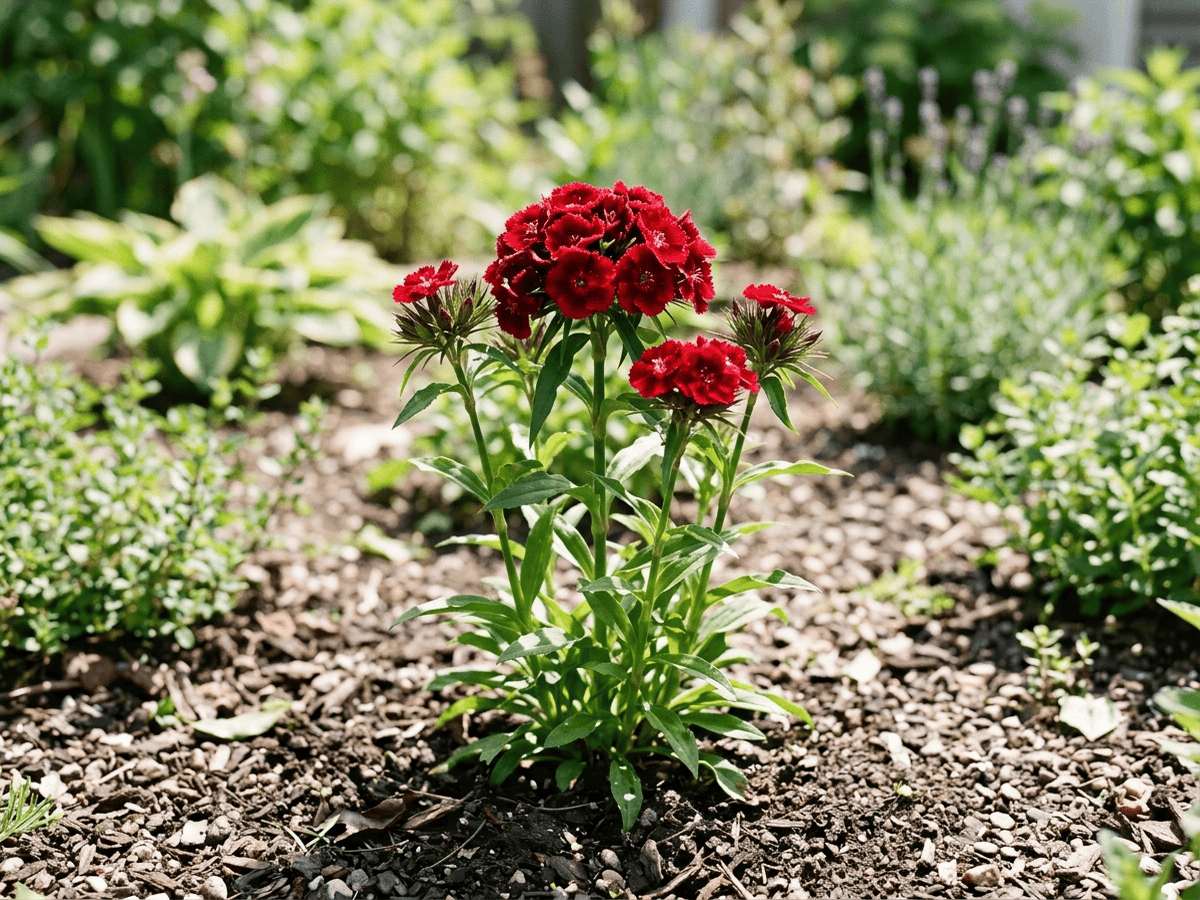 Sweet-WilliamDianthus barbatus
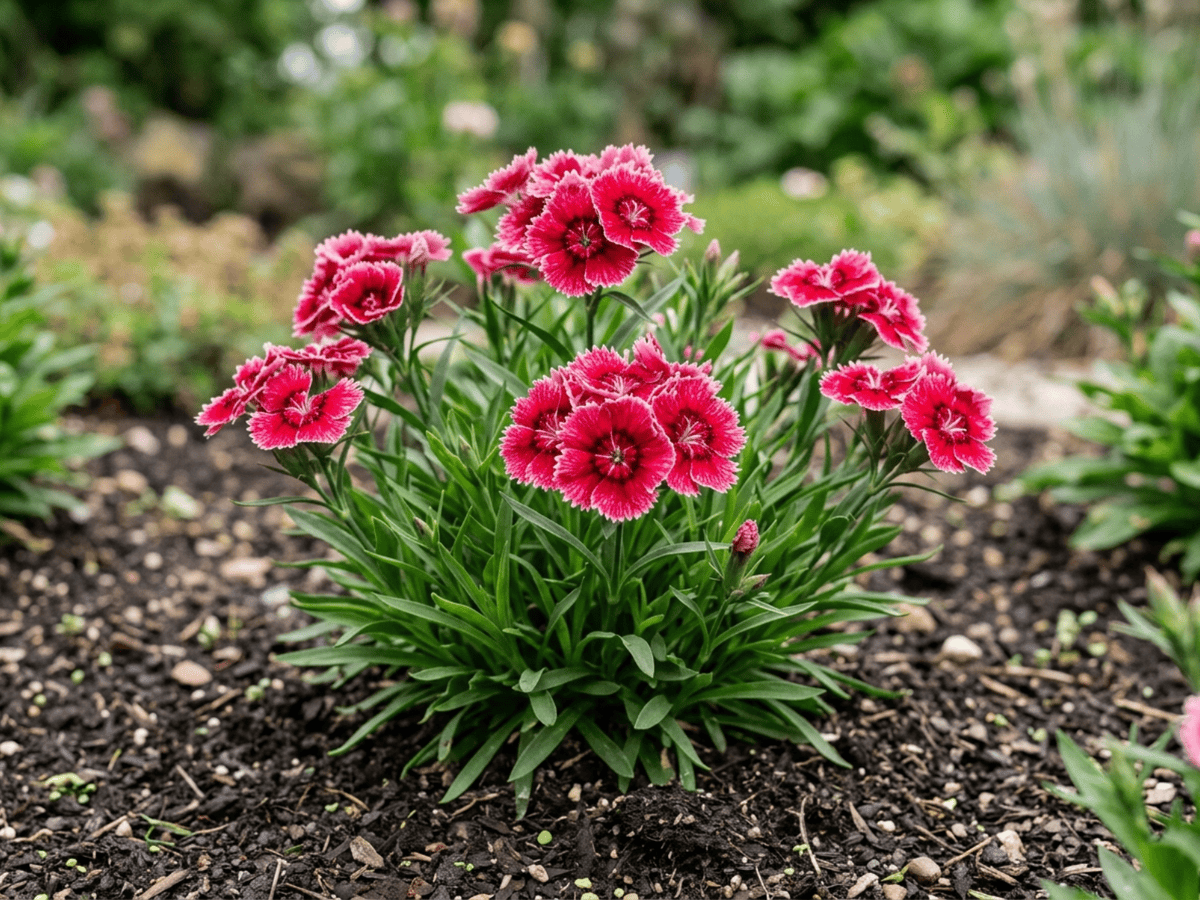 Chinese-PinkDianthus chinensis
 Maiden PinkDianthus deltoides
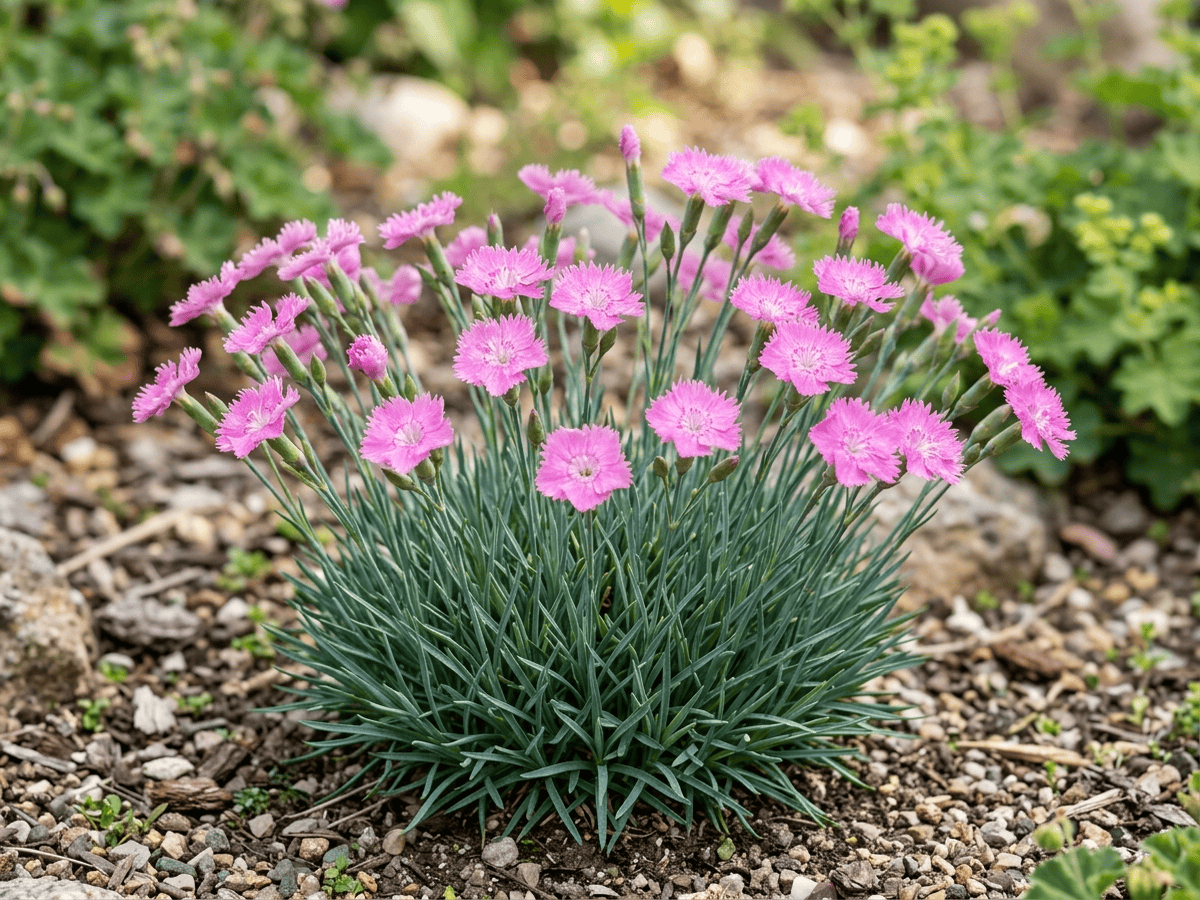 Cheddar PinkDianthus gratianopolitanus
Plants with similar care
 Chinese AbeliaAbelia chinensis
 Fragrant AbeliaAbelia mosanensis
 Large-Flowered AbeliaAbelia uniflora
 Glossy AbeliaAbelia x grandiflora
Frequently asked questions
How often should I water Clove Pink?
In summer, water about every 5 days; in winter, about every 14 days. Adjust for heat, pot size and drainage.
How much light does Clove Pink need?
Full sun: 6+ hrs direct. Watch the leaves — scorching or stretching means the light needs adjusting.
Is Clove Pink toxic to cats or dogs?
Pets Slight (Dogs Slight · Cats Slight) Educational information, not medical or veterinary advice. If exposure is suspected, contact a doctor or veterinarian.
Is Clove Pink easy to grow?
Yes — it is considered an easy, beginner-friendly plant.
When does Clove Pink bloom?
It typically blooms Jun–Aug in the Northern Hemisphere.
YardMate
Identify any plant in seconds
Snap a photo — YardMate names the plant, diagnoses problems, and reminds you when to water.
Download on the App Store