 YardMate


Garden Pink
Dianthus plumarius
Easy · Beginner friendlyAbout Garden Pink
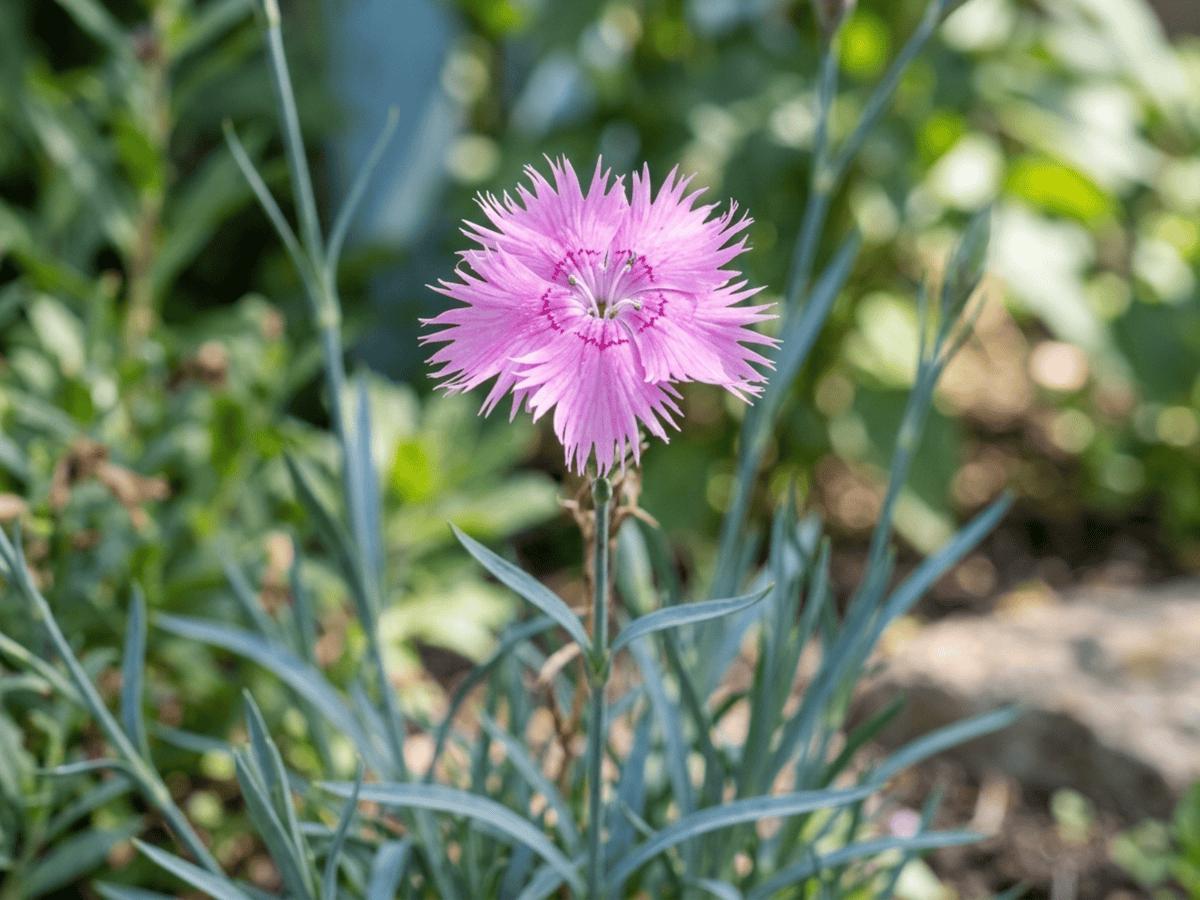
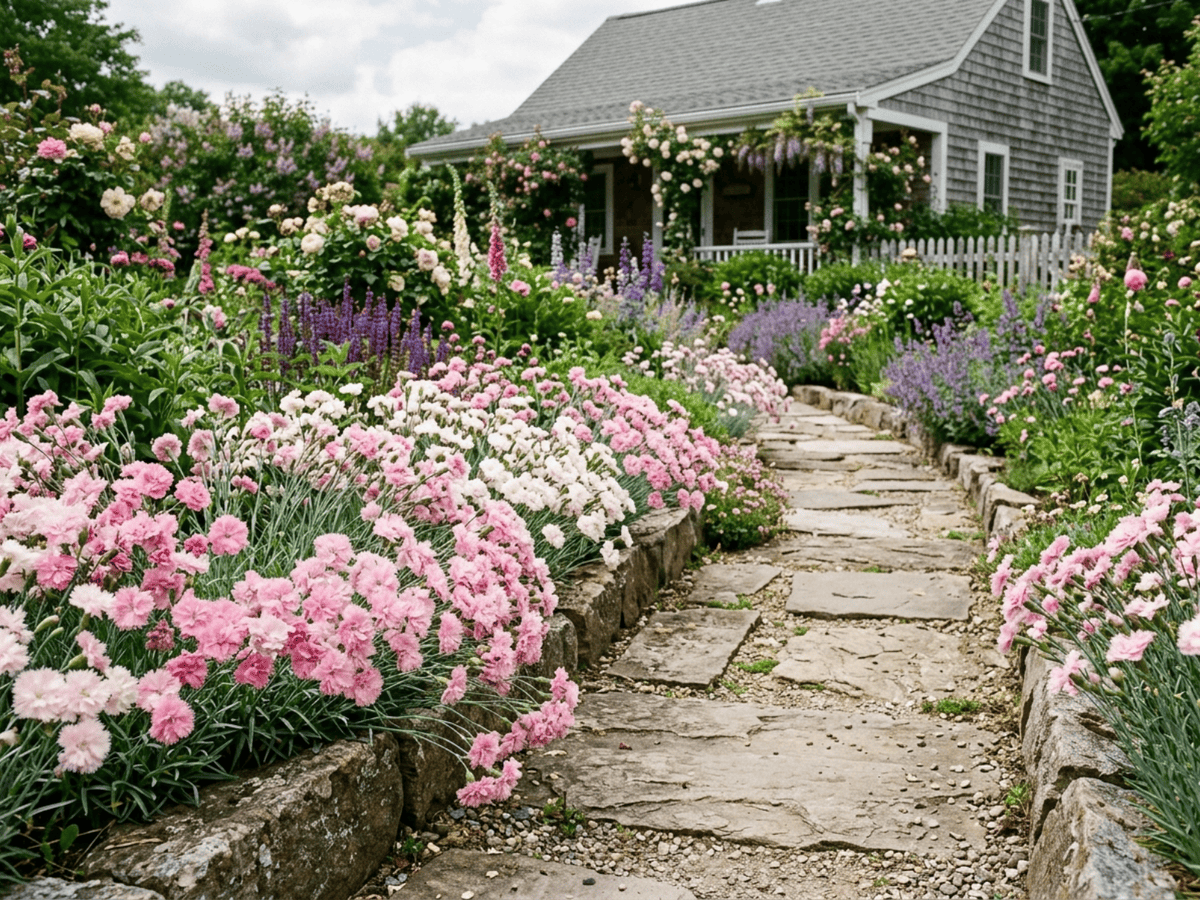
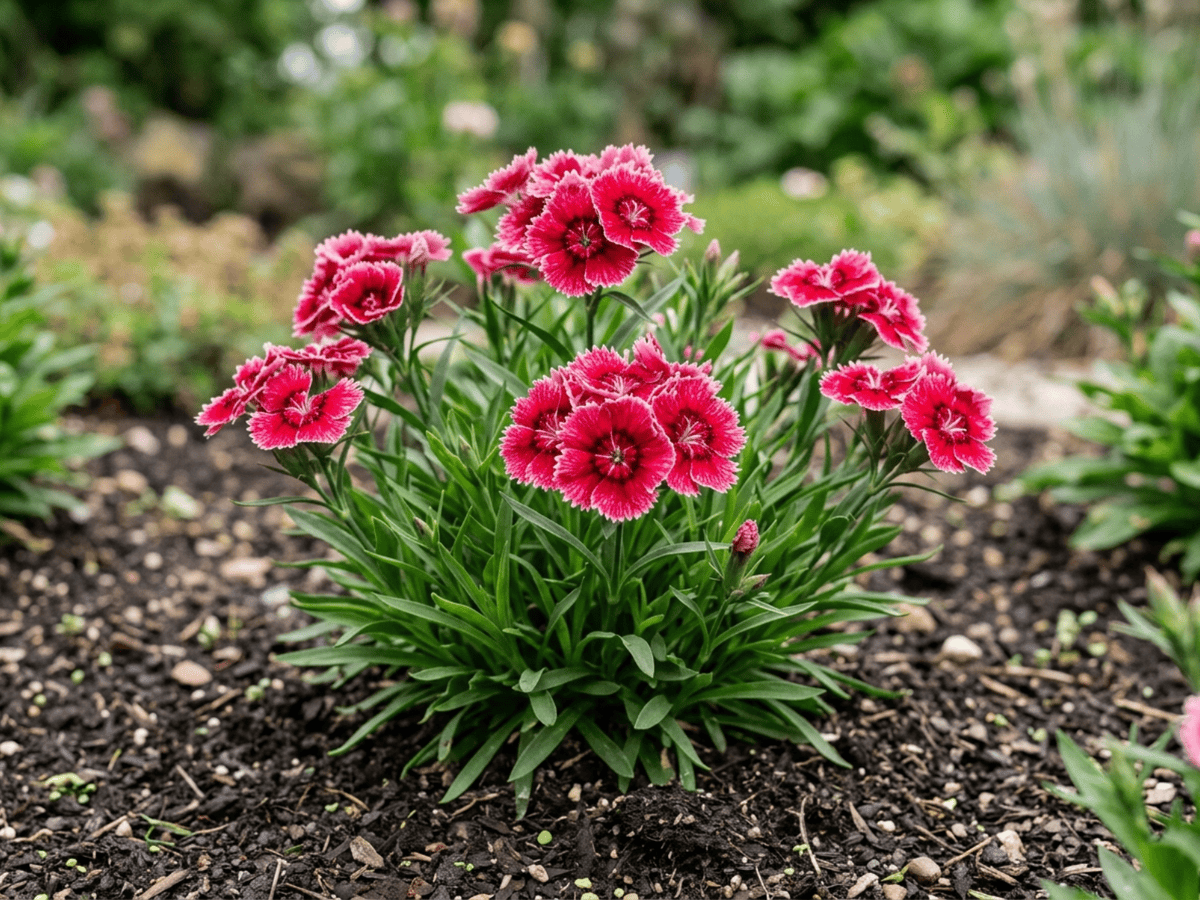
Cottage Pink is an old-fashioned hardy perennial forming dense mats of silvery blue-green grass-like foliage, with intensely clove-scented single or double flowers in pink, white, and rose. Native to central Europe and long cultivated in English and American cottage gardens, it is exceptionally hardy across USDA zones 3–9 and prefers sharp drainage and alkaline soils. A classic edging plant for stone paths, rock gardens, and herb gardens, it has been grown in North America since colonial times.
- Fragrant
- Cold-hardy
- Deer-resistant
How to care for Garden Pink
Watering
- Springevery 5 days
- Summerevery 4 days
- Fallevery 10 days
- Winterevery 30 days
Soil · Well-draining
- Top dressingPine bark mulch10%
- Main mixPotting soil + perlite 2:170%
- DrainageLECA / gravel20%
Never skip the drainage layer — standing water is the top cause of root rot.
FERTILIZER
Balanced Feed 14-14-14
An even feed covers all three needs at once, keeping leaves, roots and blooms moving together with nothing pushed out of balance.
- Nitrogen · Leaves
- Phosphorus · Roots + Blooms
- Potassium · Strength
- Springevery 45 days
- Fallevery 45 days
At a Glance
- NativeEurope
- Height0.5–1.5 ft (0.2–0.5 m)
- Spread1–1.5 ft (0.3–0.5 m)
- Flower colorPink, White, Red, Coral
- Foliage colorBlue-green, Green
- SoilWell-drained, Alkaline, Sandy
- LocationsYard · Balcony
Bloom time
BLOOM CYCLE
Peak bloom
Mar–Aug
Clove-scented flowers late spring to early summer
Fragrance
STRONG FRAGRANCE
Powerful sweet spicy clove fragrance — one of the defining scents of the English cottage garden.
Toxicity
Pets Slight
saponins
Not reported
EXPOSURE No exposure route is reported.
EFFECT Flowers edible and petals traditionally used to flavor wine and vinegar.
NOTE No human toxicity is reported in this catalog; avoid eating ornamental plants unless confirmed edible.
Slight
- All
- Ingestion
EXPOSURE Eating any part of the plant.
EFFECT Mild GI upset.
NOTE ASPCA lists Dianthus as mildly toxic to dogs and cats; edible flowers are safe for humans.
Slight
- All
- Ingestion
EXPOSURE Eating any part of the plant.
EFFECT Same as dogs.
NOTE ASPCA lists Dianthus as mildly toxic to dogs and cats; edible flowers are safe for humans.
Educational information, not medical or veterinary advice. If exposure is suspected, contact a doctor or veterinarian.
DISTRIBUTION


- Native
- Introduced
- Europe
History

Dianthus plumarius is native to central and eastern Europe — from the eastern Alps and Carpathian Mountains east across Hungary, Romania, and into western Ukraine — growing on limestone rocky slopes, cliffs, and open grasslands. The species epithet "plumarius" means "feathered," referring to the deeply-fringed feathery petal edges. It has been cultivated in English and northern European cottage gardens since at least Tudor times (16th century) and became the foundational species of the traditional English garden "pink" — a cottage-garden plant class distinct from the more formal carnation (D. caryophyllus) but closely related.
Many heritage cottage-pink cultivars have been grown continuously for centuries: "Sops-in-Wine" (a medieval cultivar used to flavor wine with clove-scented petals, recorded from the 14th-15th centuries and possibly still in cultivation in a few specialist gardens), "Fenbow's Nutmeg Clove" (said to have been cultivated continuously since approximately 1500), "Dad's Favorite" (traditional laced pink), and the famous "Mrs. Sinkins" (introduced 1868 by John Sinkins, master of Slough workhouse in Buckinghamshire, and named for his wife — a pure-white spicy-clove-scented flower that remains widely available in nurseries). Colonial American gardeners brought cottage pinks across the Atlantic in the 17th century; they appear on 18th-century plant lists from Williamsburg and Monticello.
The 'Allwoodii' hybrid strain, developed in early 20th-century England, produced reliable reblooming cultivars still mainstays of American perennial gardens. Modern breeding has produced many newer cottage-pink cultivars, but the genuinely old heritage varieties are preserved by organizations including the British National Collection of Old Pinks and specialist breeders like Allwoods Nurseries of Sussex (established 1910).
Symbolism & meaning
What It Symbolizes
The Garden Pink makes visible boldness, its strong clove-like fragrance and bright color long taken as emblems of courage. Yet it also carries the older Victorian meaning of maternal love, the pink dianthus traditionally offered as a token of a mother's devotion. It is a flower in two registers: brave and tender, fragrant in both.
- Boldness — strong scent and bright color symbolize courage
- Maternal love — traditional pink flower meaning
Where the Name Comes From
The common name highlights its pink coloring. Genus from Greek 'flower of the gods'; 'plumarius' means 'feathered', referring to the fringed petals.
Uses & Fun Facts
- Clove-scented fringed pink blooms perfume cottage edging
- Blue-gray mats and clove-pink flowers for sunny edges
- Spicy fringed pinks long-lasting in small posies
Related plants
More Dianthus plants
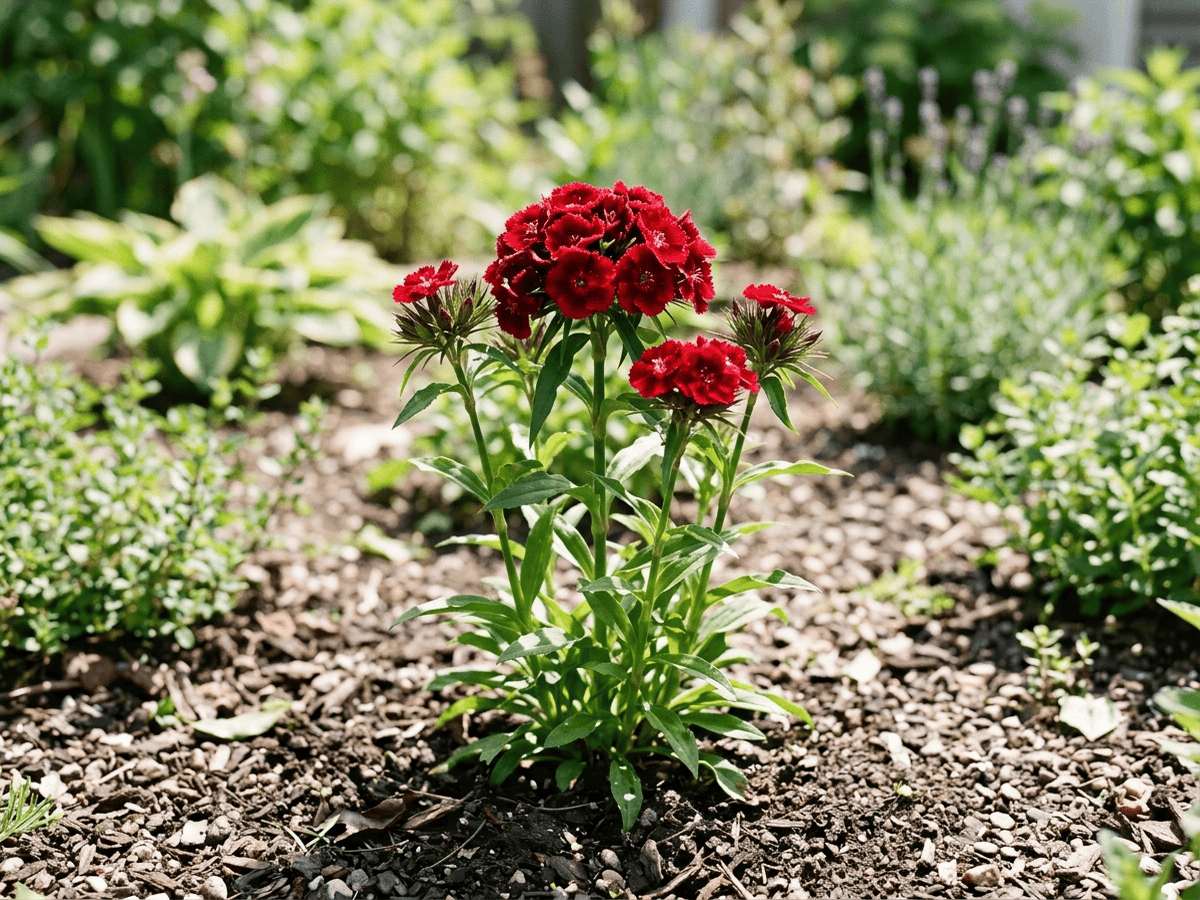 Sweet-WilliamDianthus barbatus
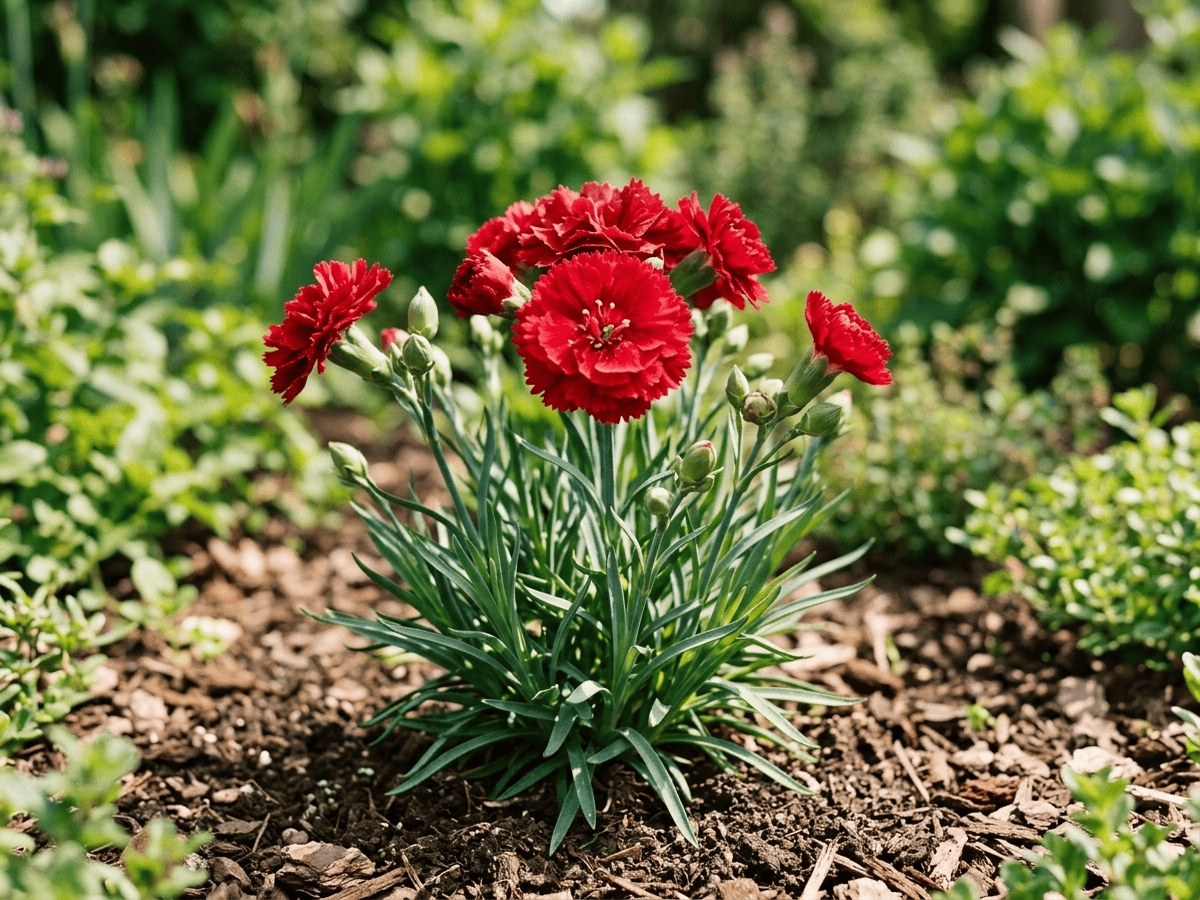 Clove PinkDianthus caryophyllus
 Chinese-PinkDianthus chinensis
 Maiden PinkDianthus deltoides
Plants with similar care
 Chinese AbeliaAbelia chinensis
 Fragrant AbeliaAbelia mosanensis
 Large-Flowered AbeliaAbelia uniflora
 Glossy AbeliaAbelia x grandiflora
Frequently asked questions
How often should I water Garden Pink?
In summer, water about every 4 days; in winter, about every 30 days. Adjust for heat, pot size and drainage.
How much light does Garden Pink need?
Full sun: 6+ hrs direct. Watch the leaves — scorching or stretching means the light needs adjusting.
Is Garden Pink toxic to cats or dogs?
Pets Slight (Dogs Slight · Cats Slight) Educational information, not medical or veterinary advice. If exposure is suspected, contact a doctor or veterinarian.
Is Garden Pink easy to grow?
Yes — it is considered an easy, beginner-friendly plant.
When does Garden Pink bloom?
It typically blooms Mar–Aug in the Northern Hemisphere.
YardMate
Identify any plant in seconds
Snap a photo — YardMate names the plant, diagnoses problems, and reminds you when to water.
Download on the App Store