 YardMate


Ghost Echeveria
Echeveria lilacina
Medium · Some experienceAbout Ghost Echeveria
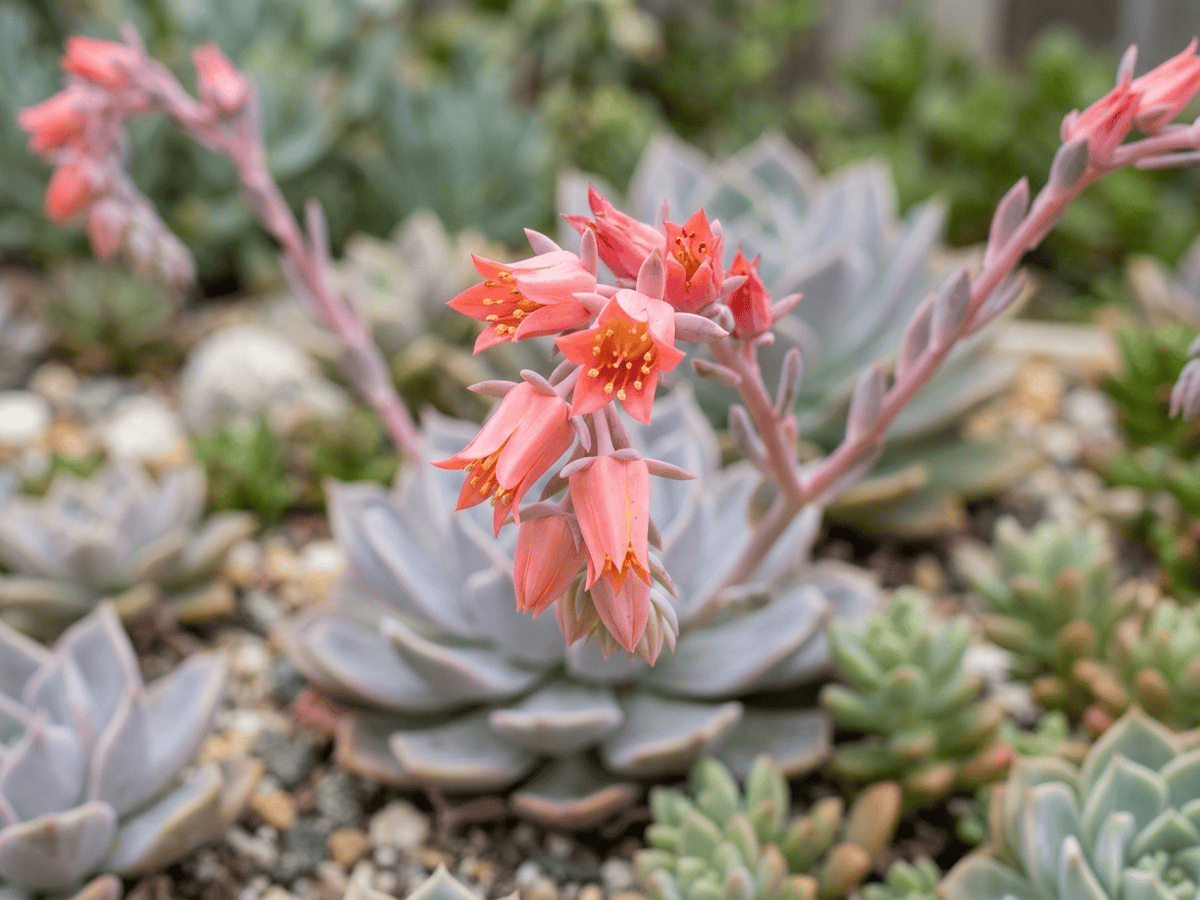
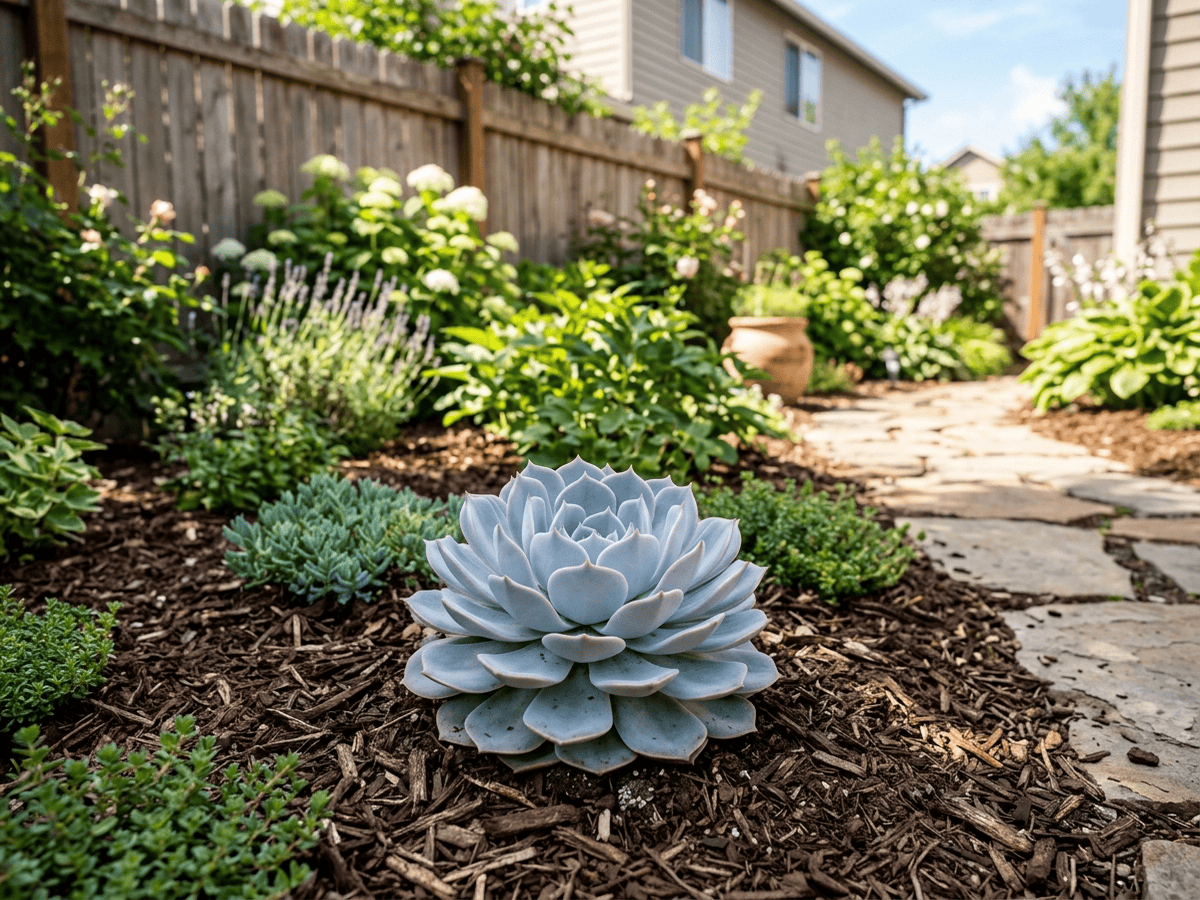
Echeveria lilacina, the ghost echeveria, is a stunning Mexican succulent forming perfect rosettes of pale lavender-grey leaves with a powdery, ghostly bloom. Each rosette grows to about 15 cm across with thick, spoon-shaped leaves that glow ethereally in morning or evening light. Native to Nuevo León, Mexico, it produces coral-pink bell flowers on arching stems in spring. It is one of the most photogenic succulents, extremely popular on social media. Full sun intensifies the lilac coloring. It requires excellent drainage and protection from winter rain.
- Drought-tolerant
- Compact
How to care for Ghost Echeveria
Watering
- Springevery 14 days
- Summerevery 10 days
- Fallevery 21 days
- Winterevery 30 days
Soil · Fast-draining
- Main mixSand + pumice + soil 1:1:150%
- DrainagePumice / gravel50%
Keep grit at half the mix or more — this soil is meant to dry out fast.
FERTILIZER
Cactus & Succulent Feed 2-7-7
Hold the nitrogen back and growth stays compact instead of soft and stretched. Phosphorus and potassium carry the roots and the flowering.
- Nitrogen · Leaves
- Phosphorus · Roots + Blooms
- Potassium · Strength
- Springevery 60 days
- Summerevery 60 days
At a Glance
- NativeNorth America
- Height0.5–1 ft (0.2–0.3 m)
- Spread0.5–1 ft (0.2–0.3 m)
- Flower colorPink, Coral
- Foliage colorPurple, Red, Silver
- SoilSandy, Well-drained
- LocationsIndoor · Balcony
Bloom time
BLOOM CYCLE
Peak bloom
Mar–May
Coral-pink bells on arching stems in spring; ghostly lavender rosette
Fragrance
NO FRAGRANCE
No notable fragrance.
Toxicity
Pets Safe
None reported
Not reported
EXPOSURE No exposure route is reported.
EFFECT No significant toxicity.
NOTE No human toxicity is reported in this catalog; avoid eating ornamental plants unless confirmed edible.
Safe
EXPOSURE No exposure route is reported.
EFFECT Not listed as toxic by ASPCA.
NOTE Listed as non-toxic for dogs; avoid eating ornamental plants unless confirmed edible.
Safe
EXPOSURE No exposure route is reported.
EFFECT Not listed as toxic by ASPCA.
NOTE Listed as non-toxic for cats; avoid eating ornamental plants unless confirmed edible.
Educational information, not medical or veterinary advice. If exposure is suspected, contact a doctor or veterinarian.
DISTRIBUTION


- Native
- North America
History

Echeveria lilacina was first collected near Galeana in Nuevo León, northeastern Mexico, and formally described by Mexican botanists Jorge Meyrán and Walther in 1958. It grows on limestone cliffs and open hillsides at 1,500-2,000 meters, forming chalky-powdered rosettes that protect against intense UV and desiccation. The thick farinose coating (a natural wax bloom) gives it the ghostly pink-lavender coloration that inspired its common name.
Historically obscure in horticulture, it gained commercial prominence through Japanese, Korean, and later Chinese succulent nurseries in the 2000s and 2010s, and it became one of the defining species of the Instagram-era succulent boom. The Korean succulent industry in particular built large export operations around hybridizing E. lilacina with other species to produce colorful "Korean hybrid" echeverias that command premium prices globally. Echeveria lilacina was first described in 1929 from specimens found in the mountains of Nuevo León, Mexico, at about 1,500 meters elevation.
The powdery epicuticular wax (farina) that gives it the ghost-like appearance serves as natural sunscreen, reflecting UV radiation and reducing water loss. Touching the leaves removes this wax permanently, leaving fingerprints — experienced collectors handle it only by the lower leaves or pot. lilacina as a parent in hybrid programs, creating crosses like 'Lola' (lilacina × derenbergii) that are among the most commercially successful designer succulents in the world.
Symbolism & meaning
What It Symbolizes
The Ghost Echeveria embodies mystery, its pale lilac rosettes glowing as if lit from within by something otherworldly. Cool to the touch and dusted with a fine powdery bloom, it seems to hover between the living and the spectral on its desert ledges. To grow this echeveria is to keep a small, ghostly presence on the windowsill — the allure of the unknown made compact and serene.
- Mystery — Its ghostly, ethereal glow represents the allure of the unknown
Where the Name Comes From
Echeveria for Atanasio Echeverría, Mexican botanical artist. Lilacina means 'lilac-colored.'
Uses & Fun Facts
- Pastel rosettes color up in sun for succulent bowls and rockeries
- Pale rosettes anchor dry bowls, windowsills, and succulent arrangements
- Symmetrical rosettes mix easily with other pastel succulents
Related plants
More Echeveria plants
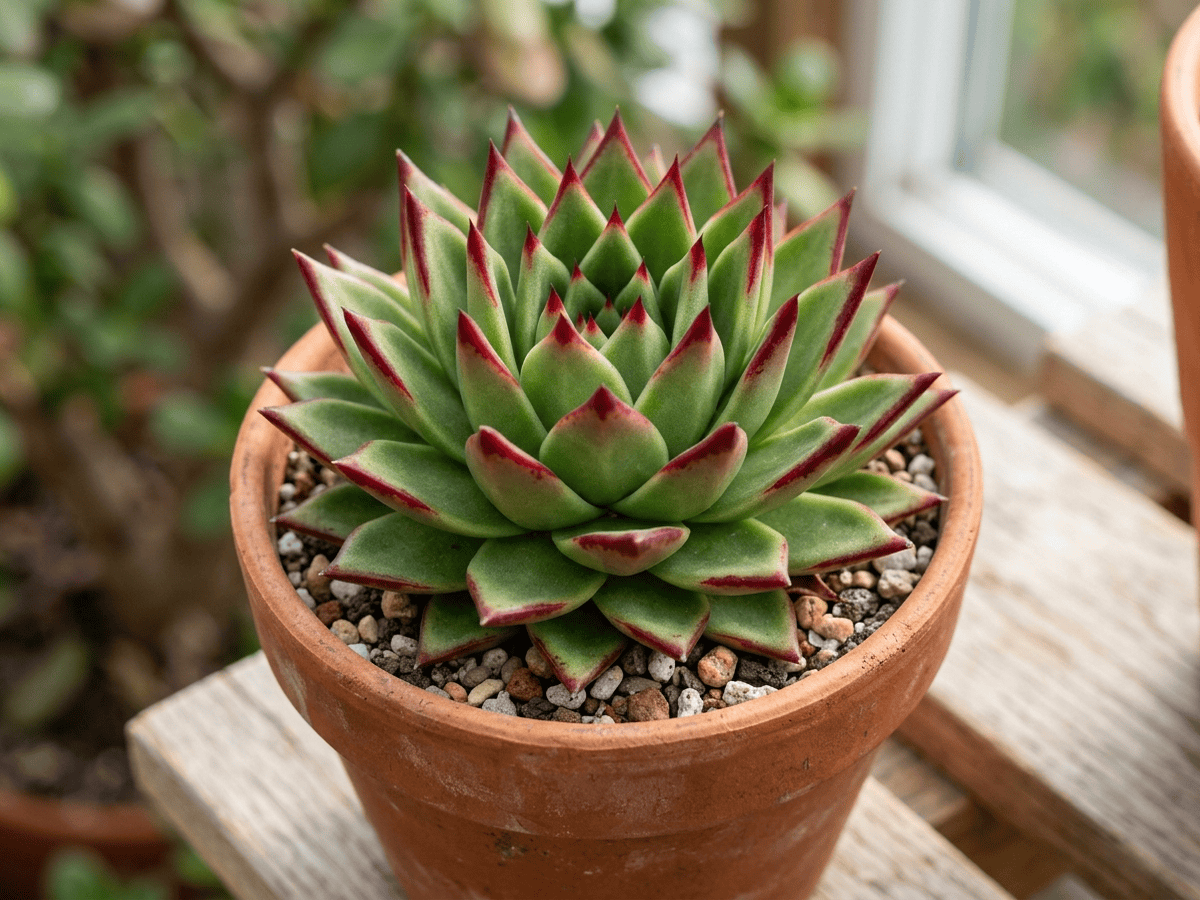 LipstickEcheveria agavoides
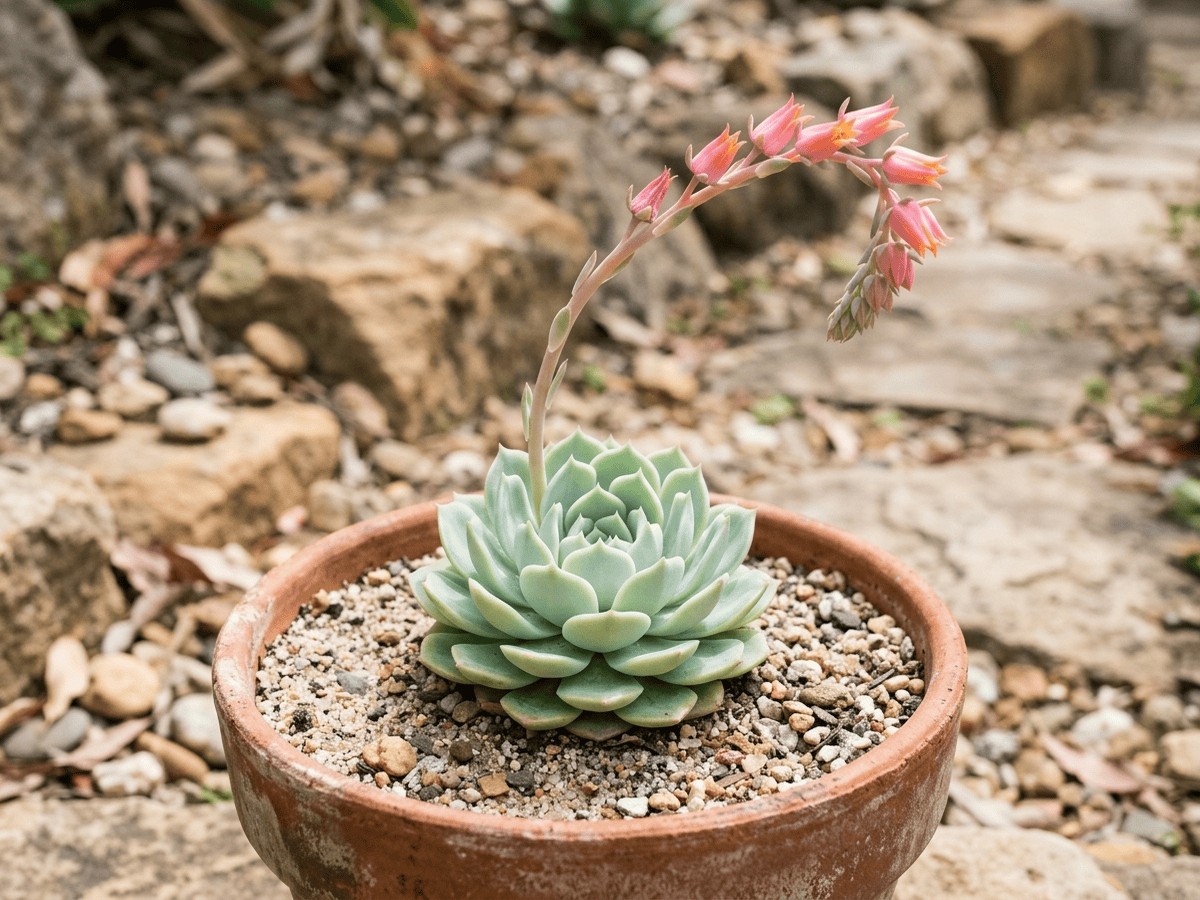 Mexican SnowballEcheveria elegans
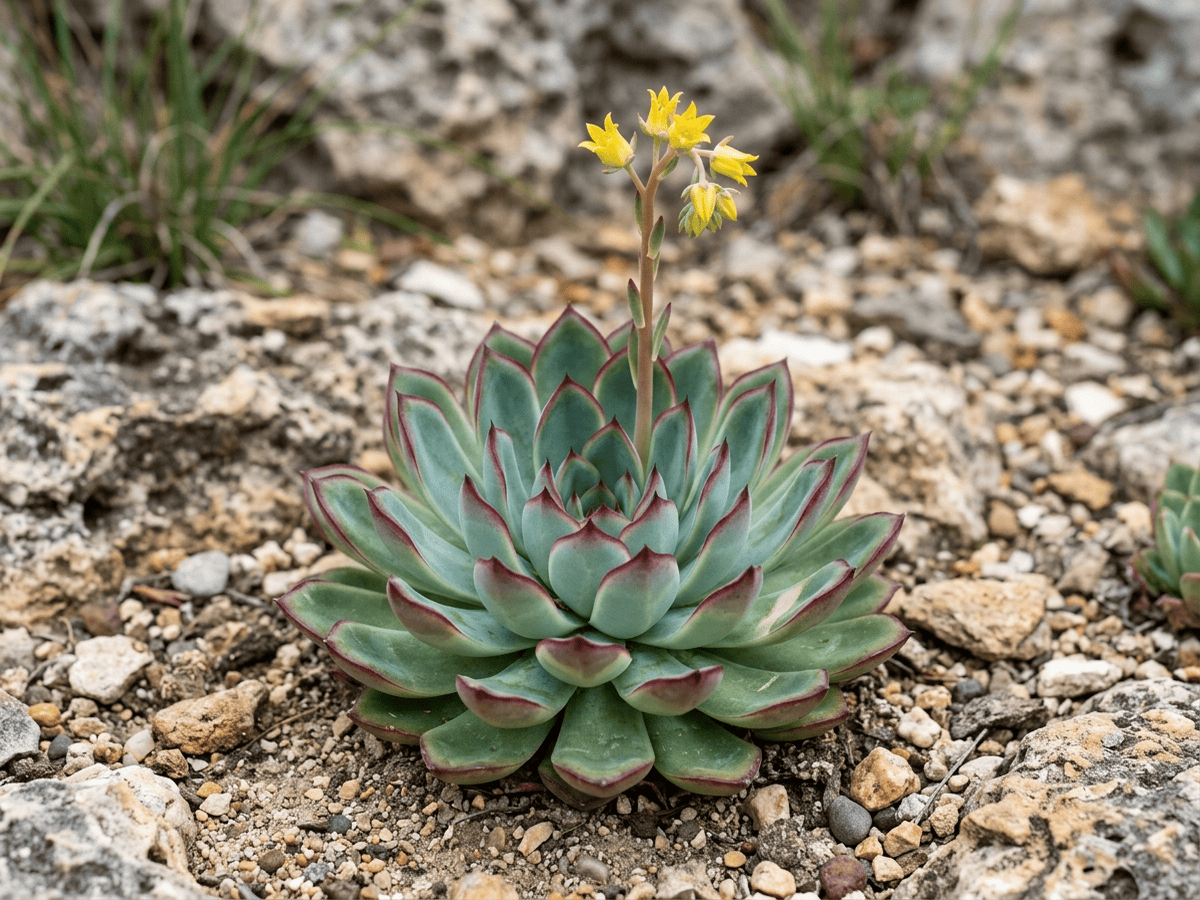 Pulido's EcheveriaEcheveria pulidonis
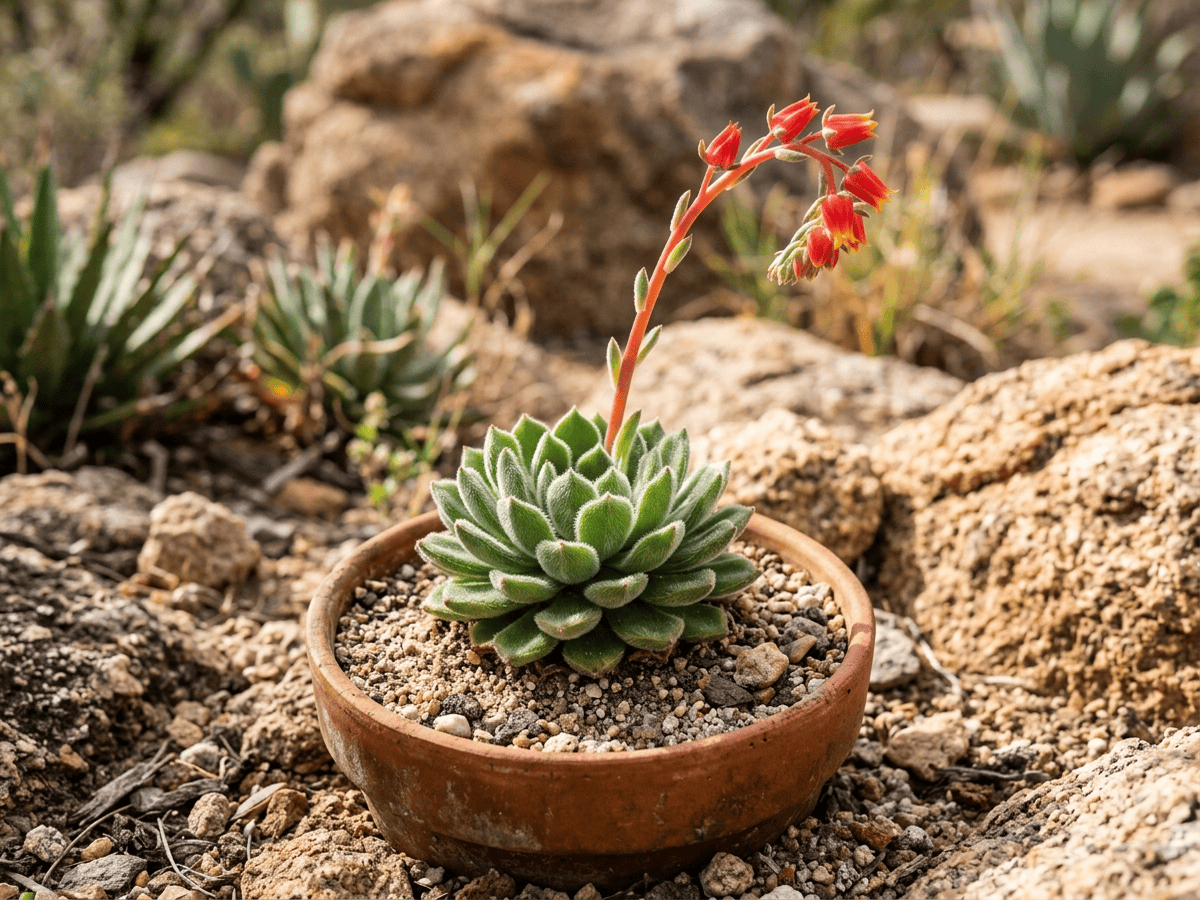 Mexican FirecrackerEcheveria setosa
Plants with similar care
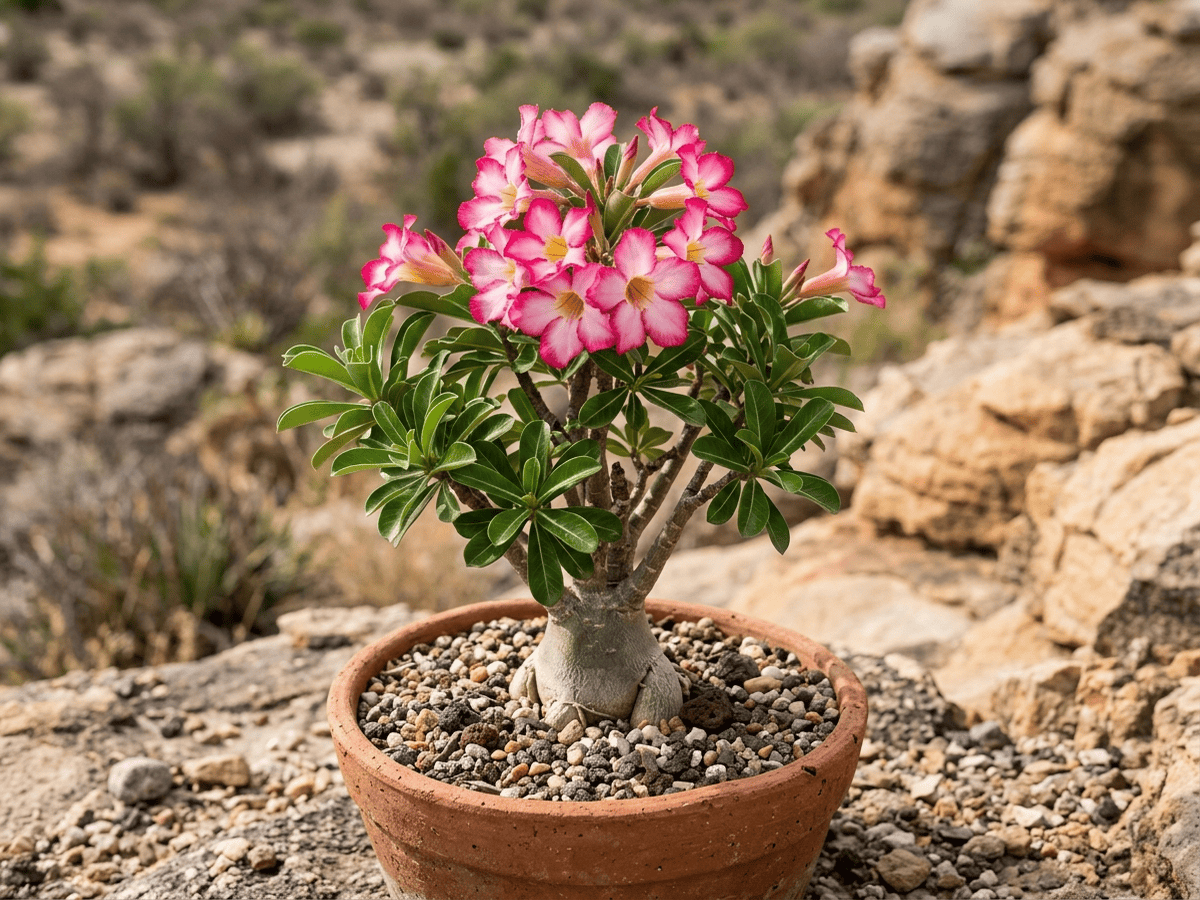 Desert RoseAdenium obesum
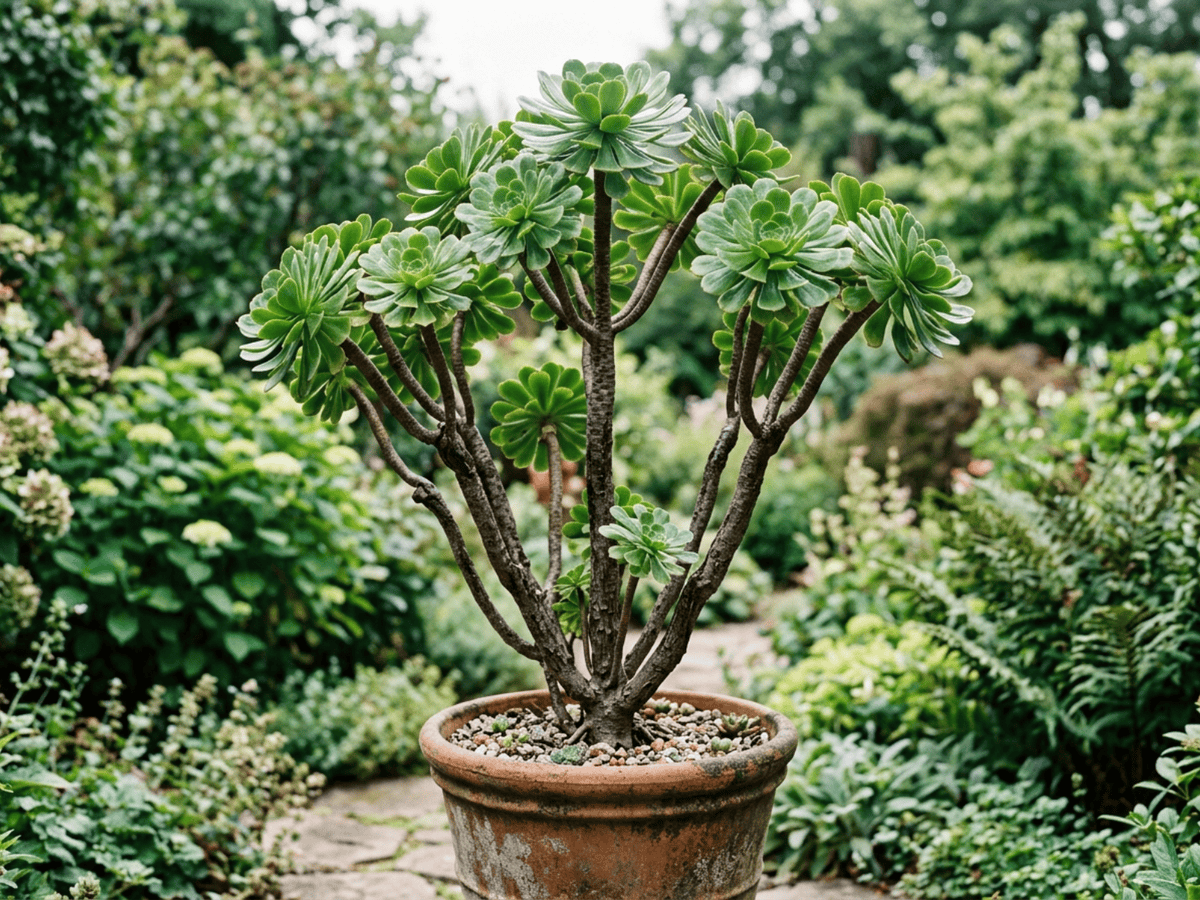 Tree AeoniumAeonium arboreum
 Queen Victoria AgaveAgave victoriae-reginae
 Lemon VerbenaAloysia citriodora
Frequently asked questions
How often should I water Ghost Echeveria?
In summer, water about every 10 days; in winter, about every 30 days. Adjust for heat, pot size and drainage.
How much light does Ghost Echeveria need?
Full sun: 6+ hrs direct. Watch the leaves — scorching or stretching means the light needs adjusting.
Is Ghost Echeveria toxic to cats or dogs?
Pets Safe (Dogs Safe · Cats Safe) Educational information, not medical or veterinary advice. If exposure is suspected, contact a doctor or veterinarian.
Is Ghost Echeveria easy to grow?
It is moderately demanding: a good choice once you have a little experience.
Can Ghost Echeveria be grown indoors?
Yes, it adapts well to indoor growing given the right light.
When does Ghost Echeveria bloom?
It typically blooms Mar–May in the Northern Hemisphere.
YardMate
Identify any plant in seconds
Snap a photo — YardMate names the plant, diagnoses problems, and reminds you when to water.
Download on the App Store