 YardMate


Mexican Firecracker
Echeveria setosa
Easy · Beginner friendlyAbout Mexican Firecracker
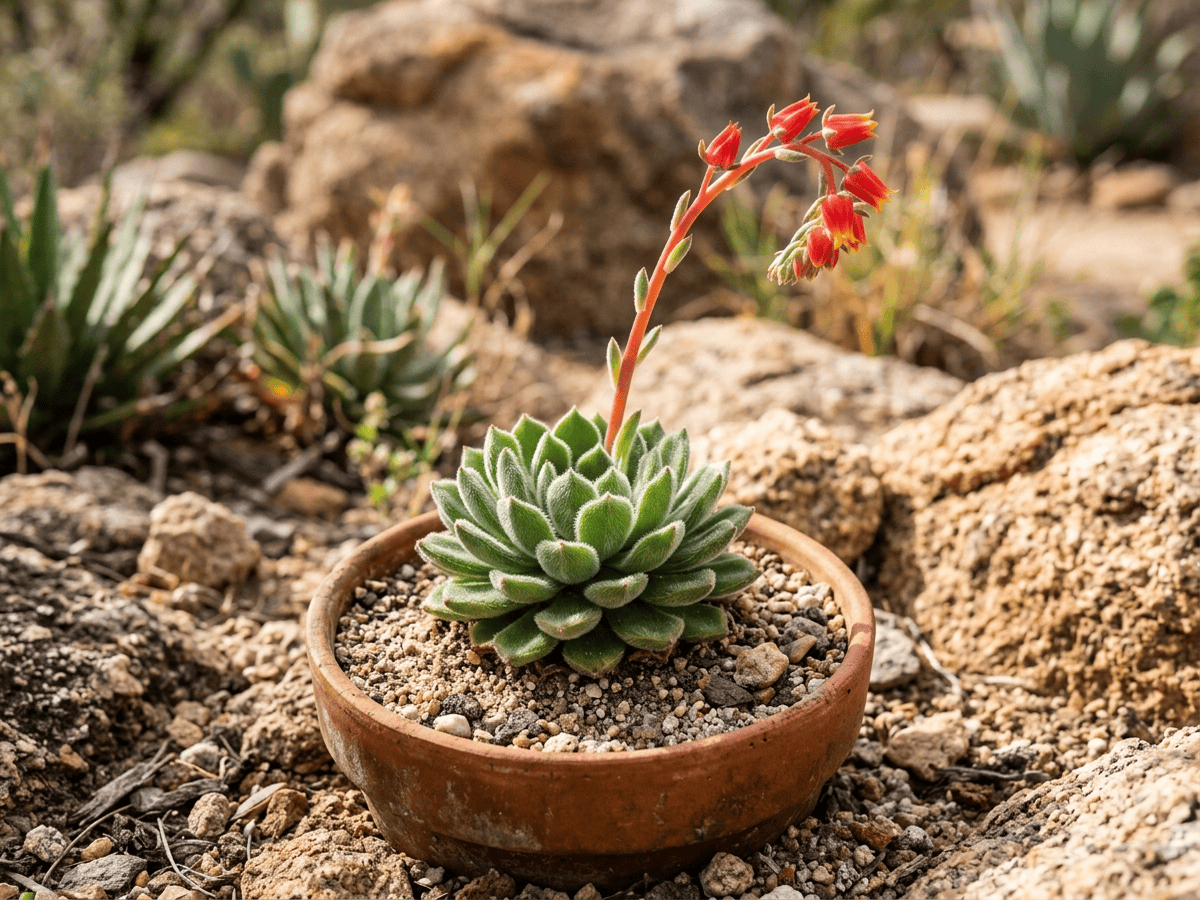
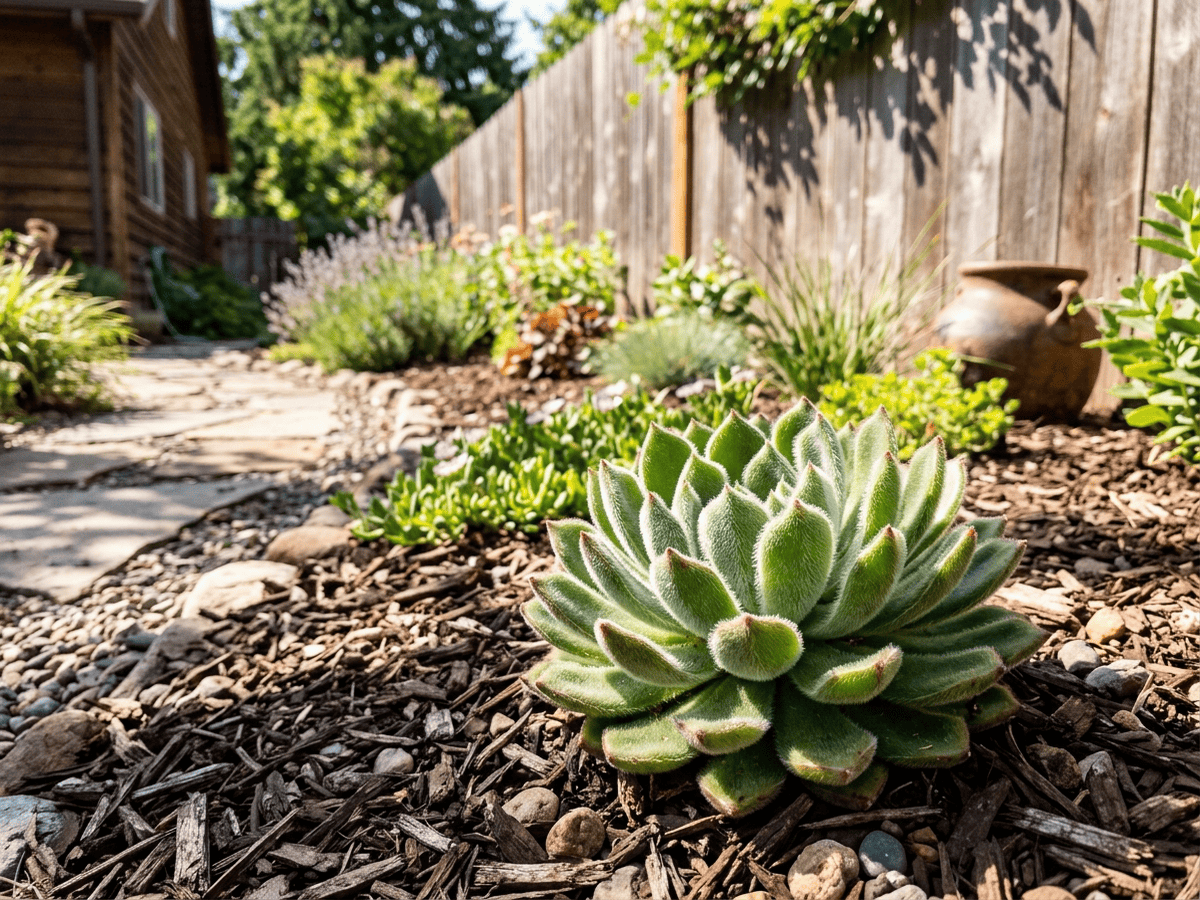
Echeveria setosa, the Mexican firecracker, is a fuzzy Echeveria covered in soft white hairs (trichomes) that give it a velvety appearance. The rosettes grow 10–15 cm across with dense, spoon-shaped leaves. In spring, it produces dramatic flower stalks with red-and-yellow urn-shaped flowers — 'firecrackers' — that attract hummingbirds. Native to Puebla and Oaxaca, Mexico, the fuzzy covering serves as sun protection and insulation against cold mountain nights. It is more cold-tolerant than most Echeverias and handles humidity better due to the hair's moisture-wicking properties.
- Drought-tolerant
How to care for Mexican Firecracker
Watering
- Springevery 14 days
- Summerevery 10 days
- Fallevery 21 days
- Winterevery 30 days
Soil · Fast-draining
- Main mixSand + pumice + soil 1:1:150%
- DrainagePumice / gravel50%
Keep grit at half the mix or more — this soil is meant to dry out fast.
FERTILIZER
Cactus & Succulent Feed 2-7-7
Hold the nitrogen back and growth stays compact instead of soft and stretched. Phosphorus and potassium carry the roots and the flowering.
- Nitrogen · Leaves
- Phosphorus · Roots + Blooms
- Potassium · Strength
- Springevery 60 days
- Summerevery 60 days
At a Glance
- NativeNorth America
- Height0.5–1 ft (0.2–0.3 m)
- Spread0.5–1 ft (0.2–0.3 m)
- Flower colorRed, Orange, Yellow
- Foliage colorGreen
- SoilSandy, Well-drained
- LocationsIndoor · Balcony
Bloom time
BLOOM CYCLE
Peak bloom
Jun–Aug
Red-and-yellow firecracker flowers on tall stalks; fuzzy leaves — avoid getting water on foliage
Fragrance
NO FRAGRANCE
No notable fragrance.
Toxicity
Pets Safe
None reported
Not reported
EXPOSURE No exposure route is reported.
EFFECT No significant toxicity.
NOTE No human toxicity is reported in this catalog; avoid eating ornamental plants unless confirmed edible.
Safe
EXPOSURE No exposure route is reported.
EFFECT Not listed as toxic.
NOTE Listed as non-toxic for dogs; avoid eating ornamental plants unless confirmed edible.
Safe
EXPOSURE No exposure route is reported.
EFFECT Not listed as toxic.
NOTE Listed as non-toxic for cats; avoid eating ornamental plants unless confirmed edible.
Educational information, not medical or veterinary advice. If exposure is suspected, contact a doctor or veterinarian.
DISTRIBUTION


- Native
- North America
History
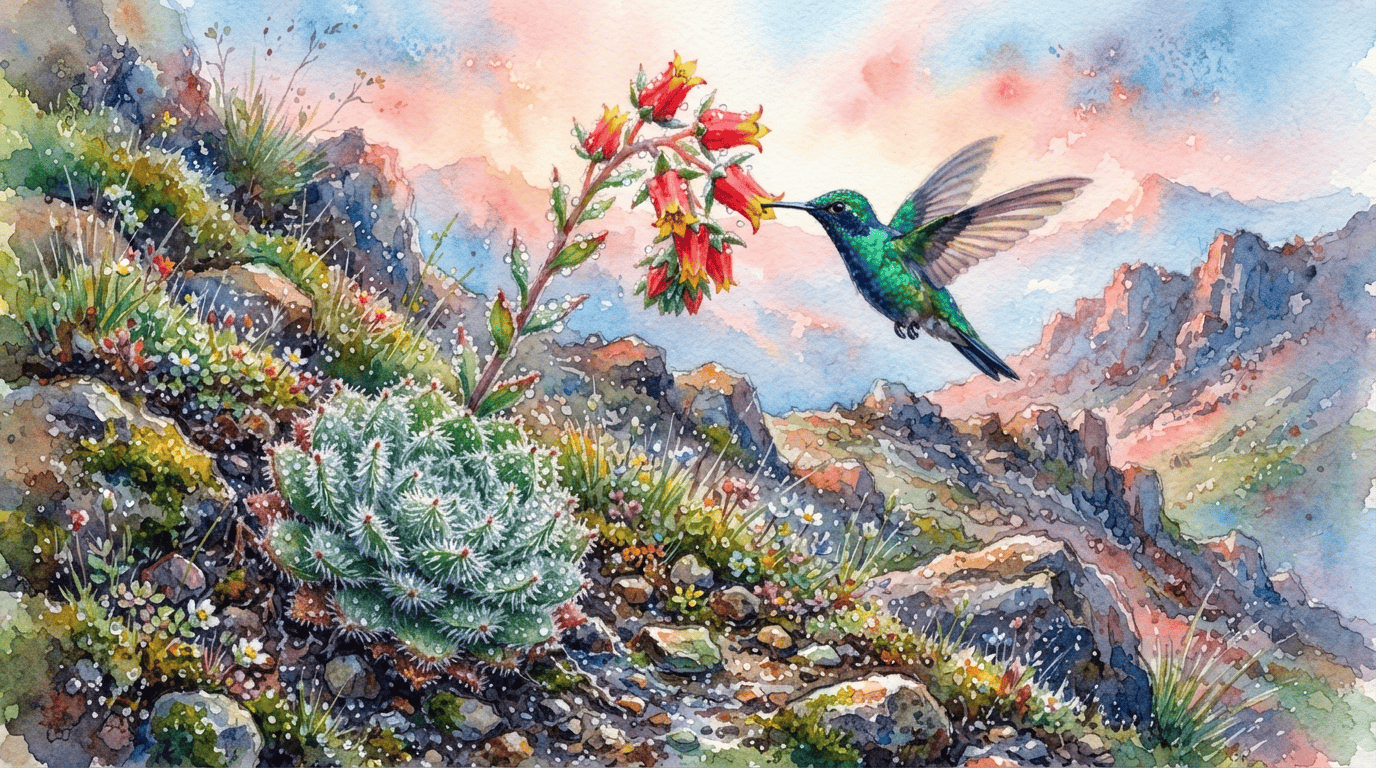
Echeveria setosa is native to high elevations of Puebla and Veracruz in Mexico, growing around 2,000-3,000 meters. It was described by Rose and Purpus in 1910, and the species name setosa means bristly, referring to the dense white hairs that cover the rosette. Those hairs are more than decoration: they reduce intense mountain sunlight, trap a still layer of air against cold nights, catch dew, and slow water loss.
The plant's red-orange tubular flowers with yellow tips are adapted to hummingbird pollination. Its compact fuzzy rosettes made it a collector favorite and a parent of hybrids such as 'Set-Oliver'. Compared with many echeverias, it tolerates brief light frost, a trait that reflects its highland origin and expands its usefulness in warm temperate gardens.
Symbolism & meaning
What It Symbolizes
Mexican Firecracker evokes protection, its dense covering of fine white hairs forming a soft armor that shields its against the harsh sun of central Mexico. It marks the gentle kind of self-care, the boundary that is not a wall but a fuzzy mantle. It is often read as a flower of soft defenses, a reminder that protecting oneself need not mean hardening, only learning to wear one's own quiet covering.
- Protection — Its fuzzy armor represents self-care and natural shielding
Where the Name Comes From
The name Mexican Firecracker points to Mexico. Echeveria for Atanasio Echeverría. Setosa means 'bristly' or 'hairy,' for the dense trichome covering.
Uses & Fun Facts
- Fuzzy white-haired rosette for windowsill pots
- Velvety succulent accent in rock gardens and arrangements
Related plants
More Echeveria plants
 LipstickEcheveria agavoides
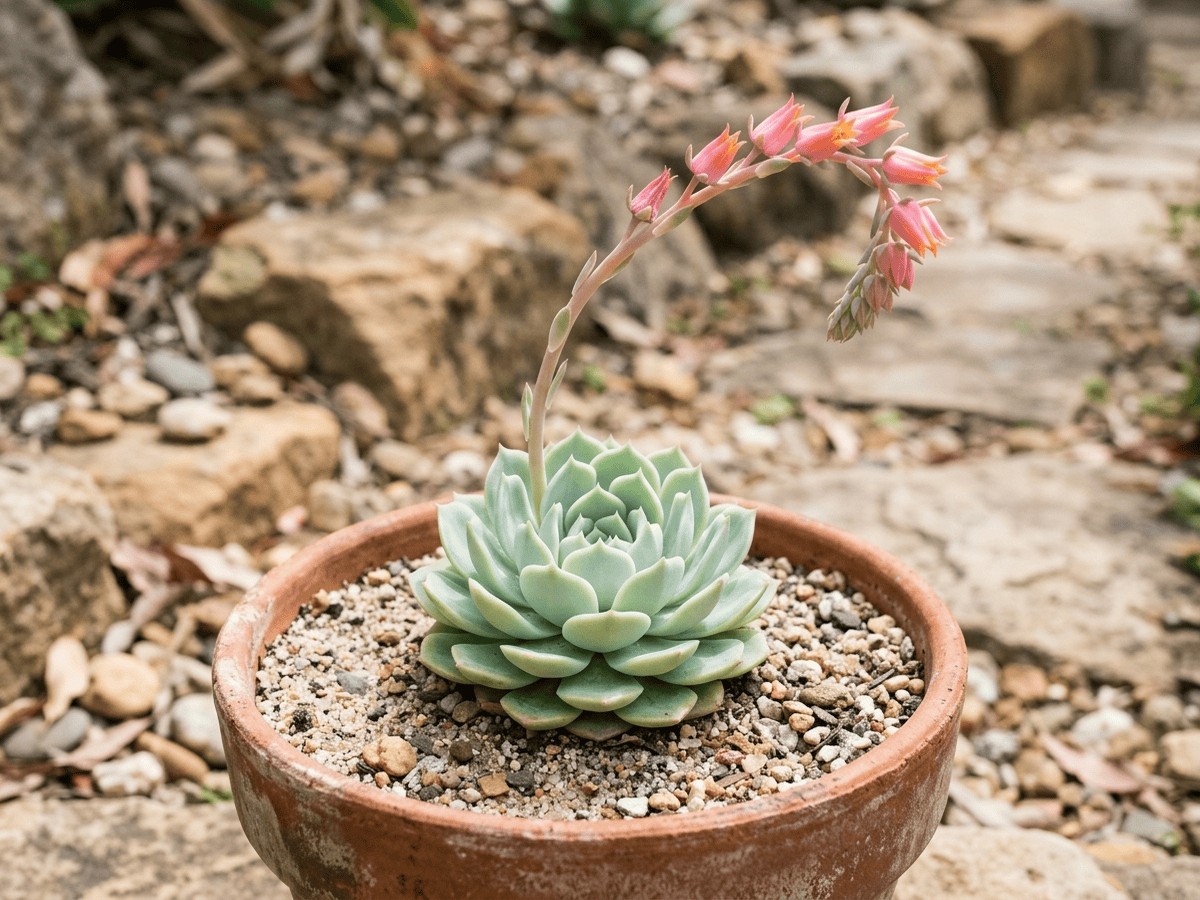 Mexican SnowballEcheveria elegans
 Ghost EcheveriaEcheveria lilacina
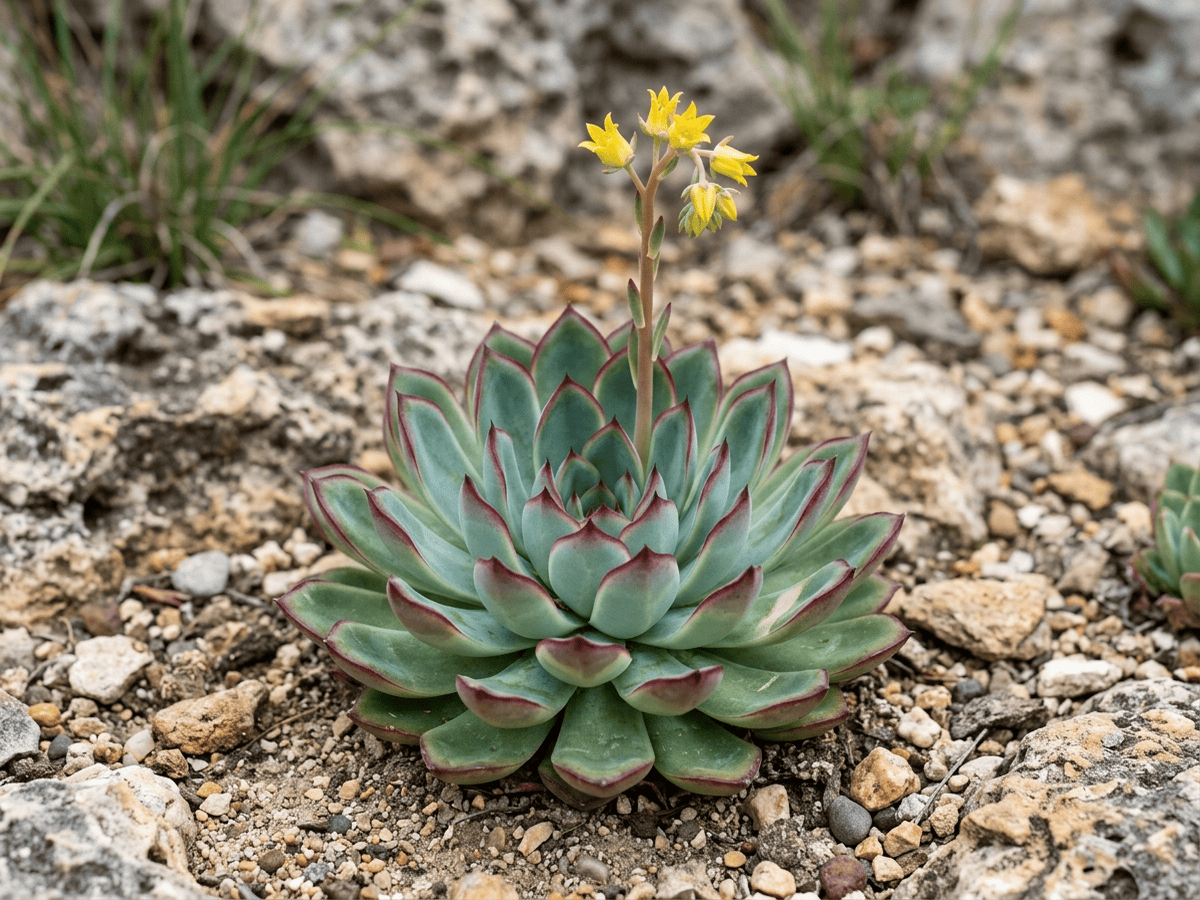 Pulido's EcheveriaEcheveria pulidonis
Plants with similar care
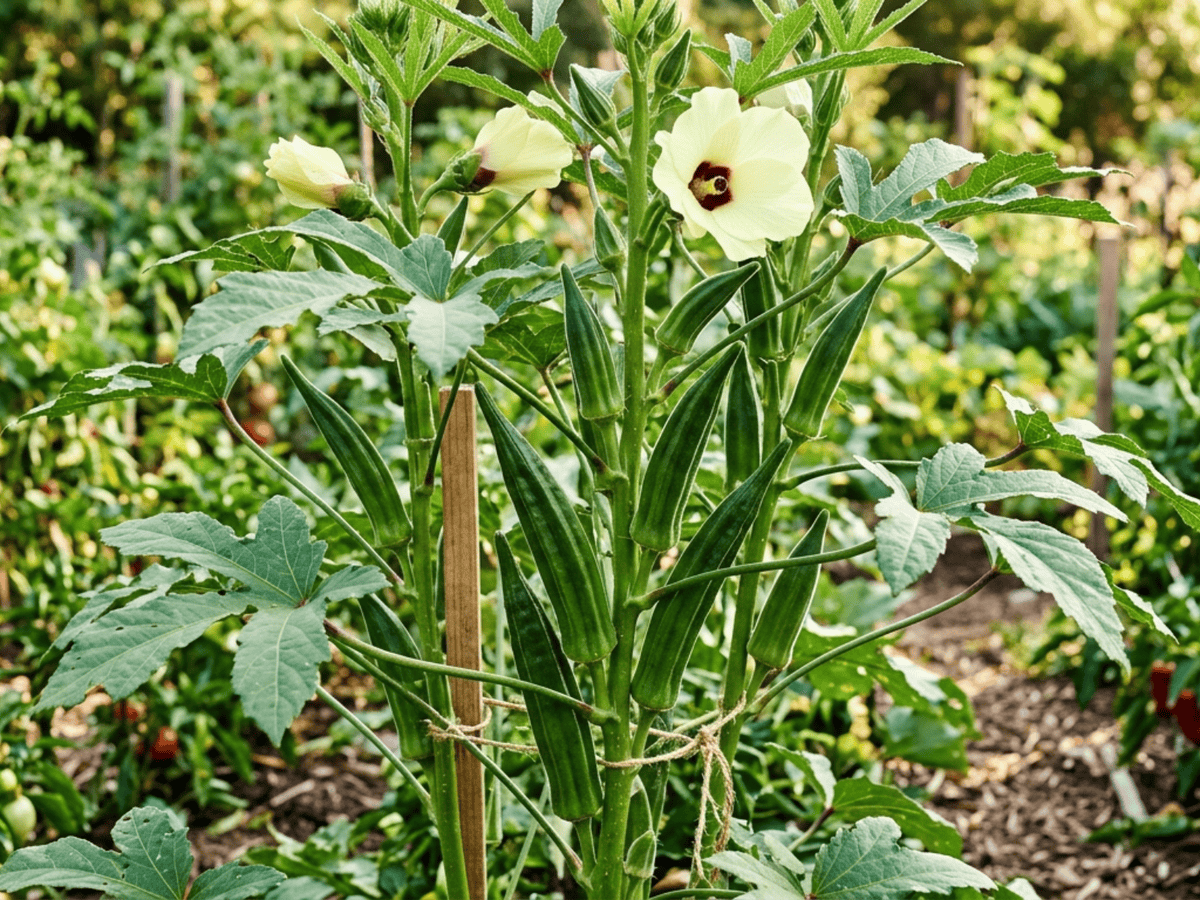 OkraAbelmoschus esculentus
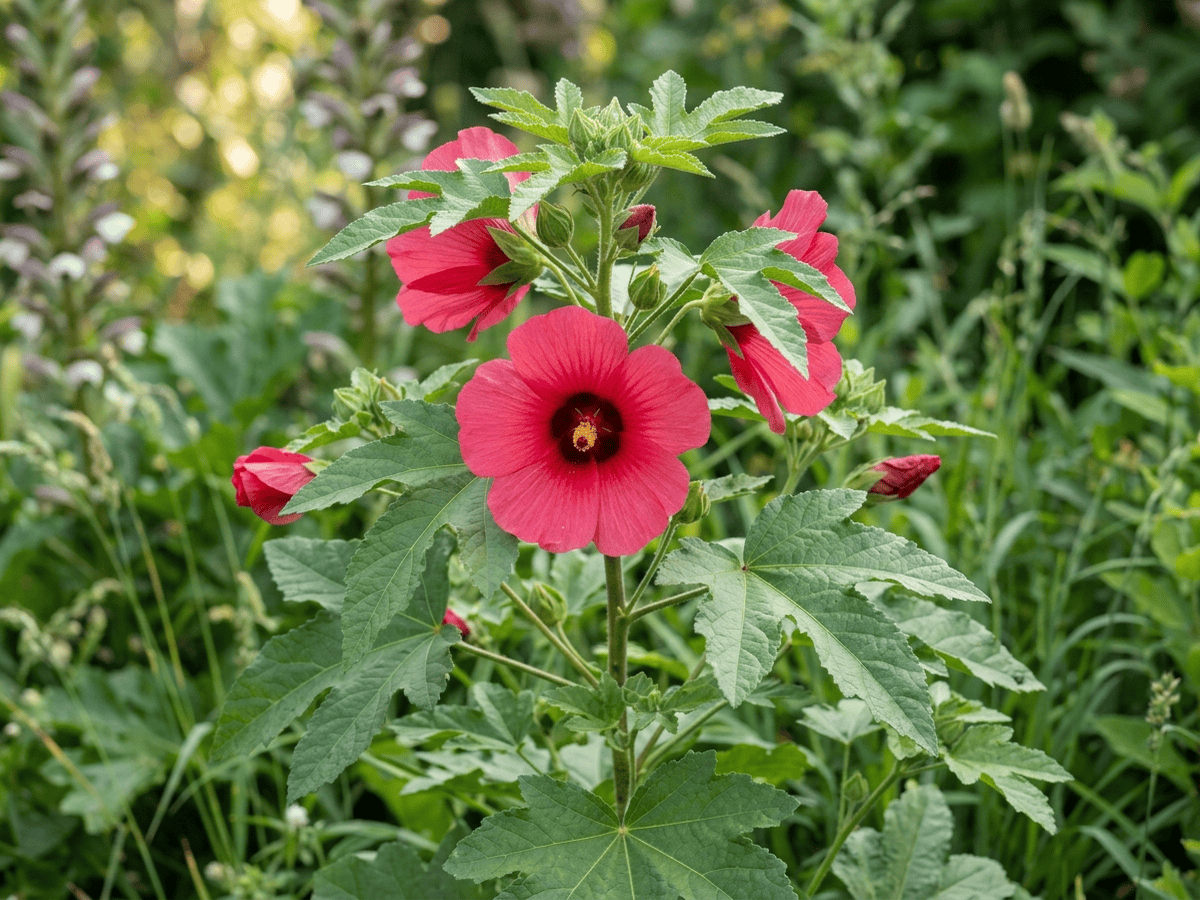 MuskseedAbelmoschus moschatus
 Black AeoniumAeonium arboreum 'Zwartkop'
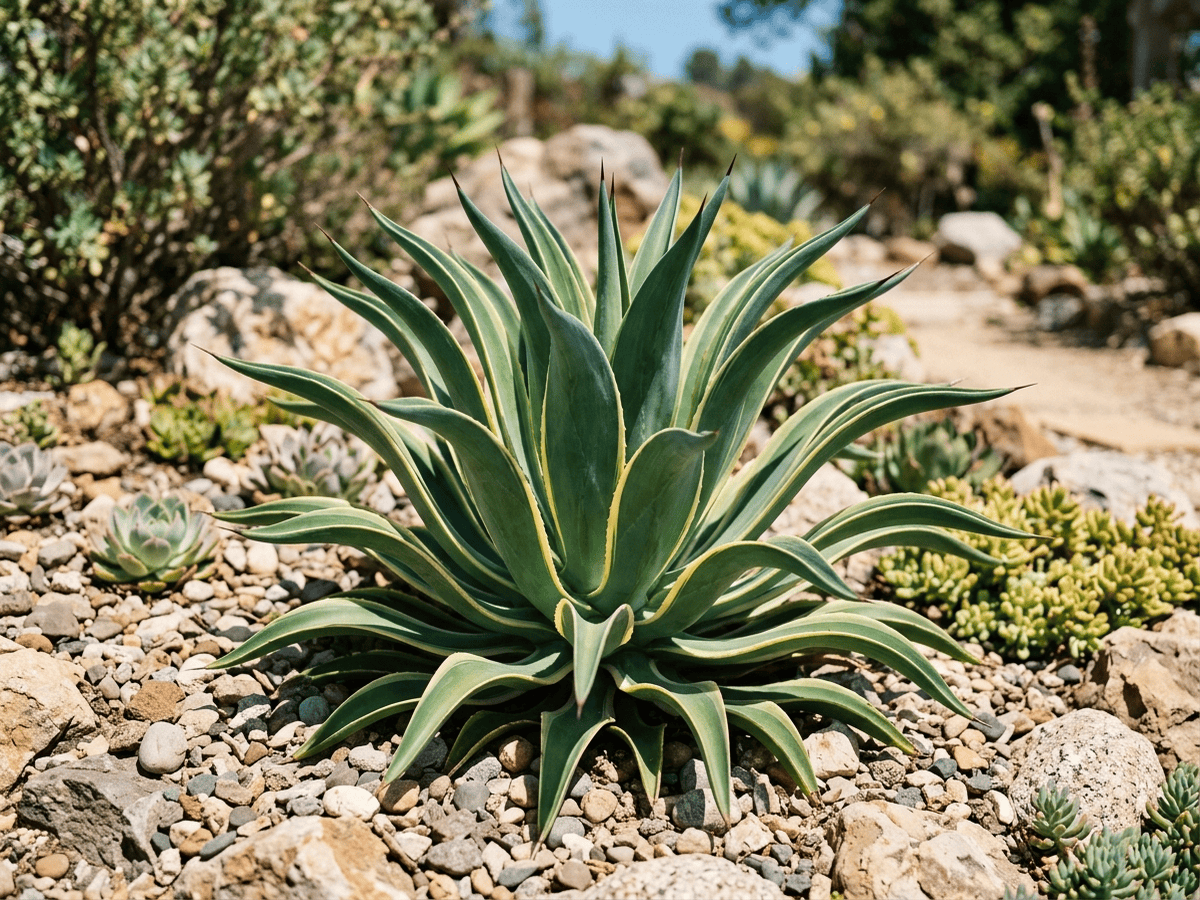 Smooth AgaveAgave desmettiana
Frequently asked questions
How often should I water Mexican Firecracker?
In summer, water about every 10 days; in winter, about every 30 days. Adjust for heat, pot size and drainage.
How much light does Mexican Firecracker need?
Full sun: 6+ hrs direct. Watch the leaves — scorching or stretching means the light needs adjusting.
Is Mexican Firecracker toxic to cats or dogs?
Pets Safe (Dogs Safe · Cats Safe) Educational information, not medical or veterinary advice. If exposure is suspected, contact a doctor or veterinarian.
Is Mexican Firecracker easy to grow?
Yes — it is considered an easy, beginner-friendly plant.
Can Mexican Firecracker be grown indoors?
Yes, it adapts well to indoor growing given the right light.
When does Mexican Firecracker bloom?
It typically blooms Jun–Aug in the Northern Hemisphere.
YardMate
Identify any plant in seconds
Snap a photo — YardMate names the plant, diagnoses problems, and reminds you when to water.
Download on the App Store