 YardMate


Myrtle Dahoon
Ilex myrtifolia
Easy · Beginner friendlyAbout Myrtle Dahoon
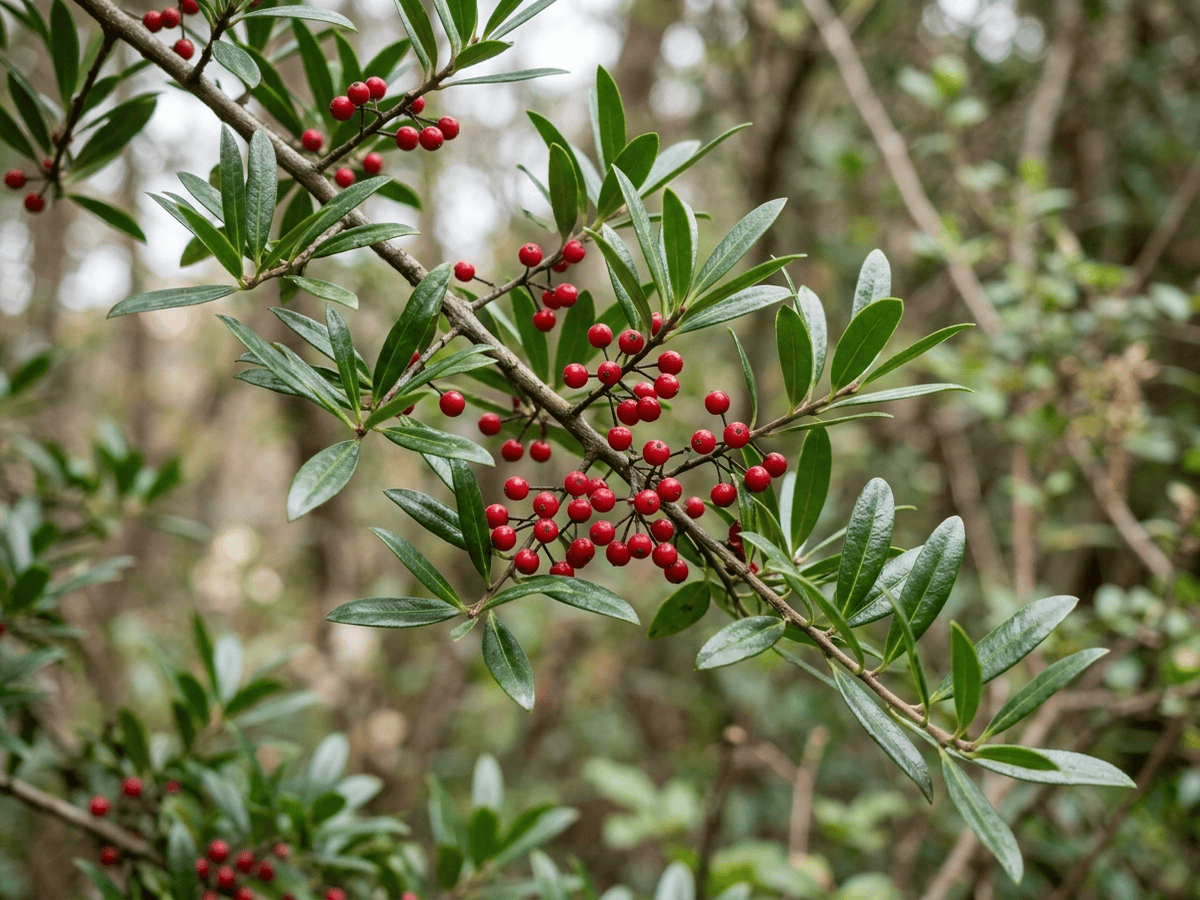
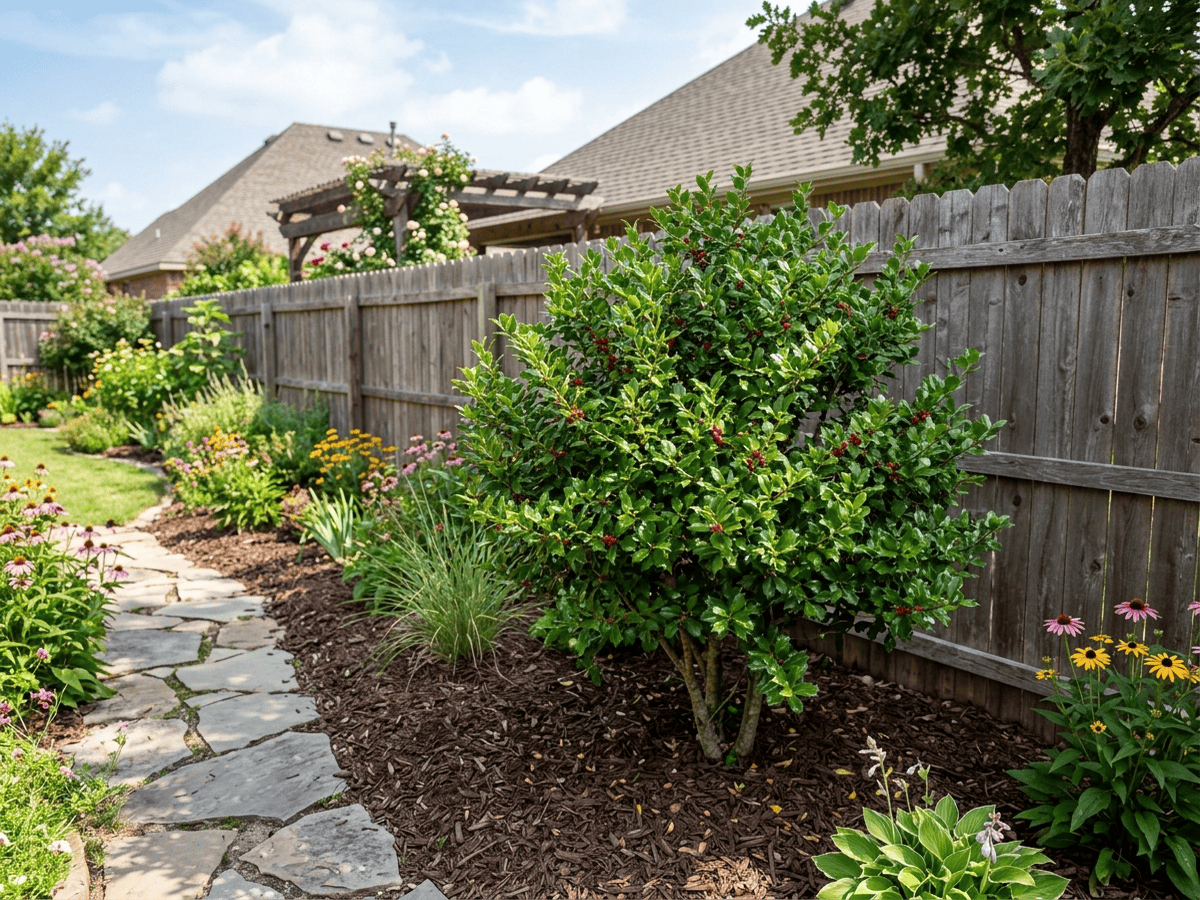
Myrtle Holly is a Southeastern American native evergreen shrub or small tree reaching 15-25 feet, with fine narrow myrtle-like dark-green leaves and brilliant red berries on female plants in fall and winter. Native to wet pine flatwoods and pond margins from the Carolinas to Texas, it has refined upright form and small leaves perfect for fine-textured Southern landscape design. Increasingly used as a refined native alternative to common boxwood and Japanese hollies.
- Evergreen
- Native
How to care for Myrtle Dahoon
Watering
- Springevery 7 days
- Summerevery 5 days
- Fallevery 10 days
- Winterevery 14 days
Soil · Acidic · pH 4.5–6
- Top dressingPine needle mulch10%
- Main mixAcid-lover mix + peat 3:175%
- DrainageGravel15%
Never add lime or wood ash — it cancels out the acidity.
FERTILIZER
- Springevery 90 days
At a Glance
- NativeNorth America
- Height15–30 ft (4.6–9.1 m)
- Spread8–15 ft (2.4–4.6 m)
- Flower colorWhite, Cream
- Foliage colorGreen
- Fruit colorRed
- SoilLoamy, Acidic, Moisture-retentive
- LocationsYard
Bloom time
BLOOM CYCLE
Peak bloom
Mar–May
Small inconspicuous white flowers in spring
Toxicity
Humans Slight · Pets Moderate
saponins and ilicin
Slight
- Fruit
- Ingestion
EXPOSURE Eating fruit.
EFFECT Berries cause nausea, vomiting, and diarrhea if eaten.
NOTE Documented concern for humans: Berries cause nausea, vomiting, and diarrhea if eaten.
Moderate
- Fruit
- Leaf
- Ingestion
EXPOSURE Eating fruit and leaves.
EFFECT ASPCA: vomiting, diarrhea, depression in Ilex species.
NOTE ASPCA-listed Ilex species; berries are toxic to humans and pets.
Moderate
- Fruit
- Leaf
- Ingestion
EXPOSURE Eating fruit and leaves.
EFFECT ASPCA: vomiting, diarrhea, depression in Ilex species.
NOTE ASPCA-listed Ilex species; berries are toxic to humans and pets.
Educational information, not medical or veterinary advice. If exposure is suspected, contact a doctor or veterinarian.
DISTRIBUTION


- Native
- North America
History

Ilex myrtifolia, the myrtle-leaf holly or myrtle dahoon, is native to the southeastern United States coastal plain from North Carolina to Louisiana, growing in pond cypress savannas, bay forests, and other seasonally flooded sites. Early botanists including Thomas Walter described it in Flora Caroliniana in 1788. Indigenous Muscogee and other southeastern nations used related hollies to brew the caffeinated black drink, though this species was not the primary source.
Because of its narrow glossy leaves and tolerance of wet soils, the plant has been selected for ornamental use since the mid-20th century, with cultivars such as Lowei featured by southern nurseries. It provides winter food for songbirds and remains an important component of regional restoration plantings.
Native to wet pine flatwoods, cypress swamp margins, and floodplains across the Southeastern Coastal Plain from Virginia to Texas. Long an unappreciated native, it has gained popularity in modern Southeastern landscape design as a refined native evergreen alternative to more commonly planted exotic shrubs.
Symbolism & meaning
What It Symbolizes
Myrtle Dahoon is refinement in evergreen form, its small narrow leaves giving the southeastern wetland a fine texture rare among hollies. As an iconic plant of pocosin bogs and Carolina blackwater swamps, it carries the heritage of a vanishing American ecosystem. It is the holly of low country, quiet and elegant, the proof that native plants can be every bit as polished as imported ones.
- Refinement — fine-textured native evergreen
- Heritage — evergreen holly rooted in coastal wetlands and wet flatwoods
Where the Name Comes From
'Ilex' is the classical Latin name for holly; 'myrtifolia' means myrtle-leaved.
Uses & Fun Facts
- Fine-textured evergreen for refined Southern privacy screens
- Red winter berries feed mockingbirds and overwintering thrushes
- Native holly for wet pine flatwood landscape plantings
Related plants
More Ilex plants
 European HollyIlex aquifolium
 Chinese HollyIlex cornuta
 Japanese HollyIlex crenata
 American HollyIlex opaca
Plants with similar care
 Chinese AbeliaAbelia chinensis
 Fragrant AbeliaAbelia mosanensis
 Large-Flowered AbeliaAbelia uniflora
 Glossy AbeliaAbelia x grandiflora
Frequently asked questions
How often should I water Myrtle Dahoon?
In summer, water about every 5 days; in winter, about every 14 days. Adjust for heat, pot size and drainage.
How much light does Myrtle Dahoon need?
Full sun: 6+ hrs direct. Watch the leaves — scorching or stretching means the light needs adjusting.
Is Myrtle Dahoon toxic to cats or dogs?
Pets Moderate (Dogs Moderate · Cats Moderate) Educational information, not medical or veterinary advice. If exposure is suspected, contact a doctor or veterinarian.
Is Myrtle Dahoon easy to grow?
Yes — it is considered an easy, beginner-friendly plant.
When does Myrtle Dahoon bloom?
It typically blooms Mar–May in the Northern Hemisphere.
YardMate
Identify any plant in seconds
Snap a photo — YardMate names the plant, diagnoses problems, and reminds you when to water.
Download on the App Store