 YardMate


Blue Holly
Ilex x meserveae
Easy · Beginner friendlyAbout Blue Holly
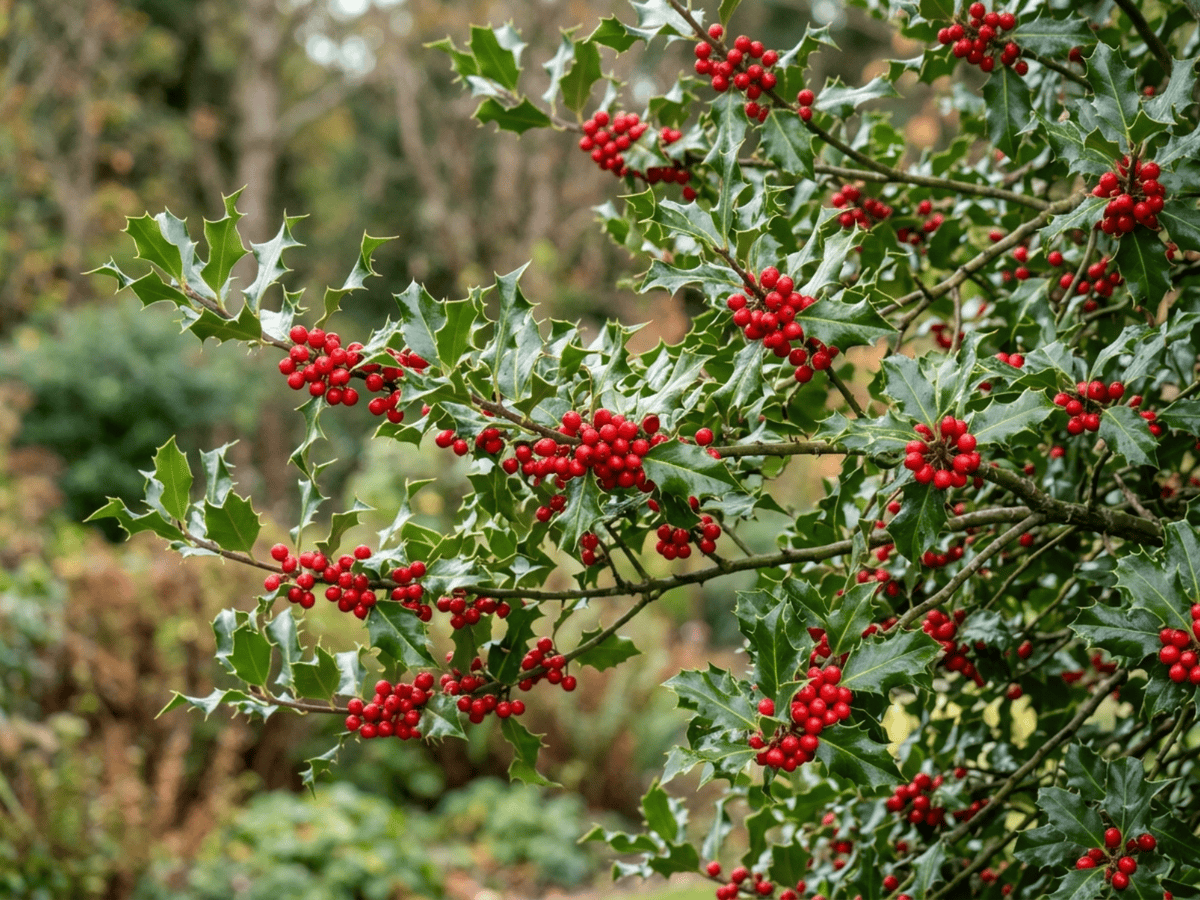
Blue Holly or Meserve Holly is a group of hybrid evergreen hollies growing 6-10 feet tall, created by crossing I. aquifolium with I. rugosa. They feature attractive blue-green spiny leaves on purple stems with bright red berries in winter. Significantly hardier than English holly, they thrive to Zone 5 and brought the classic holly look to northern American gardens. Female cultivars require a male pollinator for berry production. 'Blue Princess' and 'Blue Prince' are the most popular pair.
- Cold-hardy
- Evergreen
- Wildlife-friendly
How to care for Blue Holly
Watering
- Springevery 7 days
- Summerevery 5 days
- Fallevery 10 days
- Winterevery 21 days
Soil · Acidic · pH 4.5–6
- Top dressingPine needle mulch10%
- Main mixAcid-lover mix + peat 3:175%
- DrainageGravel15%
Never add lime or wood ash — it cancels out the acidity.
FERTILIZER
Acid-Loving Feed 4-3-4
One bag does both jobs. An acid feed carries the usual nitrogen, phosphorus and potassium, plus the sulfur and iron that keep the soil sour enough for the roots to take them up at all.
- Nitrogen · Leaves
- Phosphorus · Roots + Blooms
- Potassium · Strength
- Springevery 30 days
At a Glance
- Height6–12 ft (1.8–3.7 m)
- Spread6–10 ft (1.8–3 m)
- Flower colorWhite
- Foliage colorDark-green, Blue-green
- Fruit colorRed
- SoilLoamy, Well-drained, Acidic
- LocationsYard
Bloom time
BLOOM CYCLE
Peak bloom
Mar–May
Inconspicuous white flowers in spring; needs male/female for berries
Fragrance
LIGHT FRAGRANCE
Mild sweet scent from male flowers.
Toxicity
Humans Moderate · Pets Moderate
saponins, theobromine, and caffeine (trace)
Moderate
- Fruit
- Leaf
- Ingestion
EXPOSURE Eating fruit and leaves.
EFFECT Nausea, vomiting, diarrhea from saponins; 20+ berries potentially dangerous.
NOTE Documented concern for humans: Nausea, vomiting, diarrhea from saponins; 20+ berries potentially dangerous.
Moderate
- Fruit
- Leaf
- Ingestion
EXPOSURE Eating fruit and leaves.
EFFECT Vomiting, diarrhea, lethargy.
NOTE ASPCA lists Ilex as toxic to dogs, cats, horses. Children should not eat berries; a few cause GI upset.
Moderate
- Fruit
- Leaf
- Ingestion
EXPOSURE Eating fruit and leaves.
EFFECT Vomiting, diarrhea, lethargy.
NOTE ASPCA lists Ilex as toxic to dogs, cats, horses. Children should not eat berries; a few cause GI upset.
Educational information, not medical or veterinary advice. If exposure is suspected, contact a doctor or veterinarian.
History

Ilex x meserveae is the collective name for a series of hybrid hollies bred beginning in the 1950s by amateur plant breeder Kathleen K. Meserve at her home on Long Island, New York. Frustrated by the cold intolerance of beautiful English holly (I. aquifolium), which could not survive the harsh New York winters, Meserve began crossing it with the ultra-hardy Asian Prostrate holly (I. rugosa) from Japan and Sakhalin. Between 1958 and 1964 she produced the first blue-foliaged hardy hollies, which she named the blue hollies: 'Blue Boy' and 'Blue Girl' (male and female, 1964), followed by improved 'Blue Prince' and 'Blue Princess' (1972), 'Blue Stallion' and 'Blue Maid'.
Formal recognition came when Shiu-ying Hu described the hybrid as I. x meserveae in 1980. The Blue Princess × Blue Prince pairing is now one of the most widely planted holly combinations in the northeastern US, producing dark blue-green foliage, red berries, and reliable winter hardiness to zone 5.
Meserve later also produced the red-berried China Boy/Girl and China Series. Created in the 1950s by Kathleen Meserve, an amateur gardener on Long Island, New York, who crossed English holly with the cold-hardy Japanese I. rugosa in her backyard.
Symbolism & meaning
What It Symbolizes
Ilex × meserveae can symbolize protection through its spiny evergreen leaves, a botanical hedge against intruders both real and symbolic. Another layer is innovation, for it was created by Kathleen Meserve, a passionate amateur gardener breeding hardy hollies in its Long Island backyard. To plant a Meserve holly is to admire a plant that joins ancient holly symbolism with a strikingly modern story of a woman whose home garden quietly changed the trade.
- Protection — spiny evergreen leaves ward off intruders
- Innovation — created by a passionate amateur gardener in its backyard
Where the Name Comes From
'Meserveae' honors Kathleen Meserve (1906–1999), the Long Island home gardener who bred these groundbreaking holly hybrids.
Uses & Fun Facts
- Red winter berries feed thrushes and waxwings
- Spiny blue holly trims into formal evergreen screens
- Glossy blue-green foliage with bright winter berries
- Berried branches cut for holiday decorations
Related plants
More Ilex plants
 European HollyIlex aquifolium
 Chinese HollyIlex cornuta
 Japanese HollyIlex crenata
 Myrtle DahoonIlex myrtifolia
Plants with similar care
 Chinese AbeliaAbelia chinensis
 Fragrant AbeliaAbelia mosanensis
 Large-Flowered AbeliaAbelia uniflora
 Glossy AbeliaAbelia x grandiflora
Frequently asked questions
How often should I water Blue Holly?
In summer, water about every 5 days; in winter, about every 21 days. Adjust for heat, pot size and drainage.
How much light does Blue Holly need?
Full sun: 6+ hrs direct. Watch the leaves — scorching or stretching means the light needs adjusting.
Is Blue Holly toxic to cats or dogs?
Pets Moderate (Dogs Moderate · Cats Moderate) Educational information, not medical or veterinary advice. If exposure is suspected, contact a doctor or veterinarian.
Is Blue Holly easy to grow?
Yes — it is considered an easy, beginner-friendly plant.
When does Blue Holly bloom?
It typically blooms Mar–May in the Northern Hemisphere.
YardMate
Identify any plant in seconds
Snap a photo — YardMate names the plant, diagnoses problems, and reminds you when to water.
Download on the App Store