 YardMate
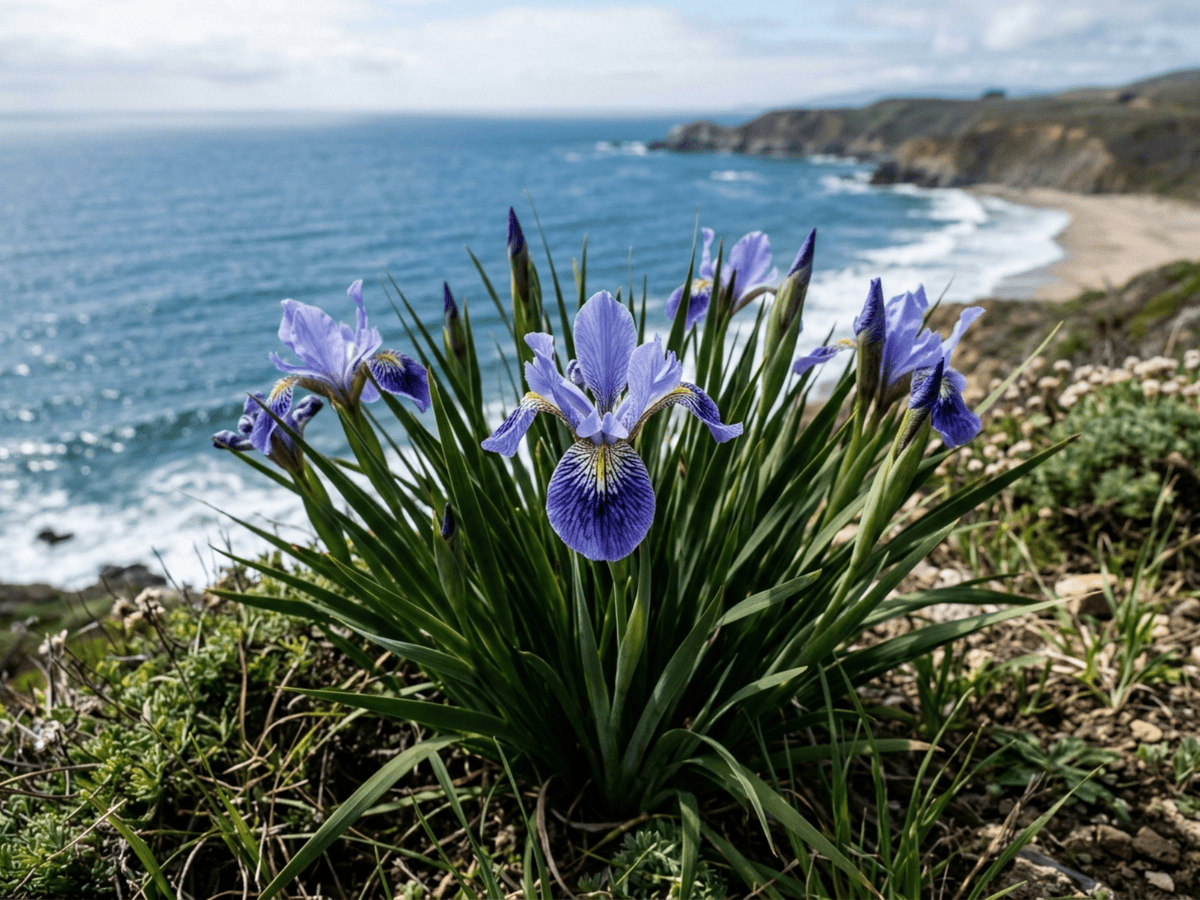
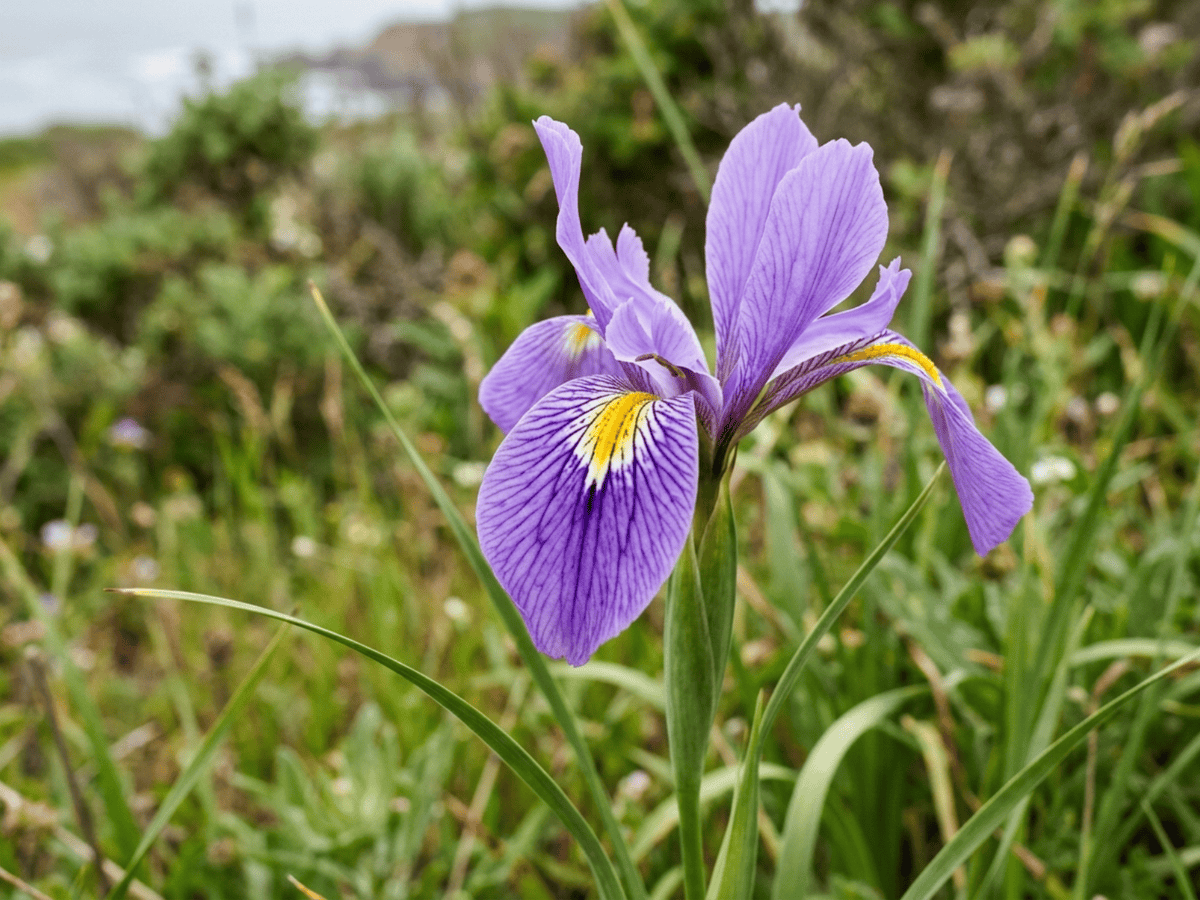

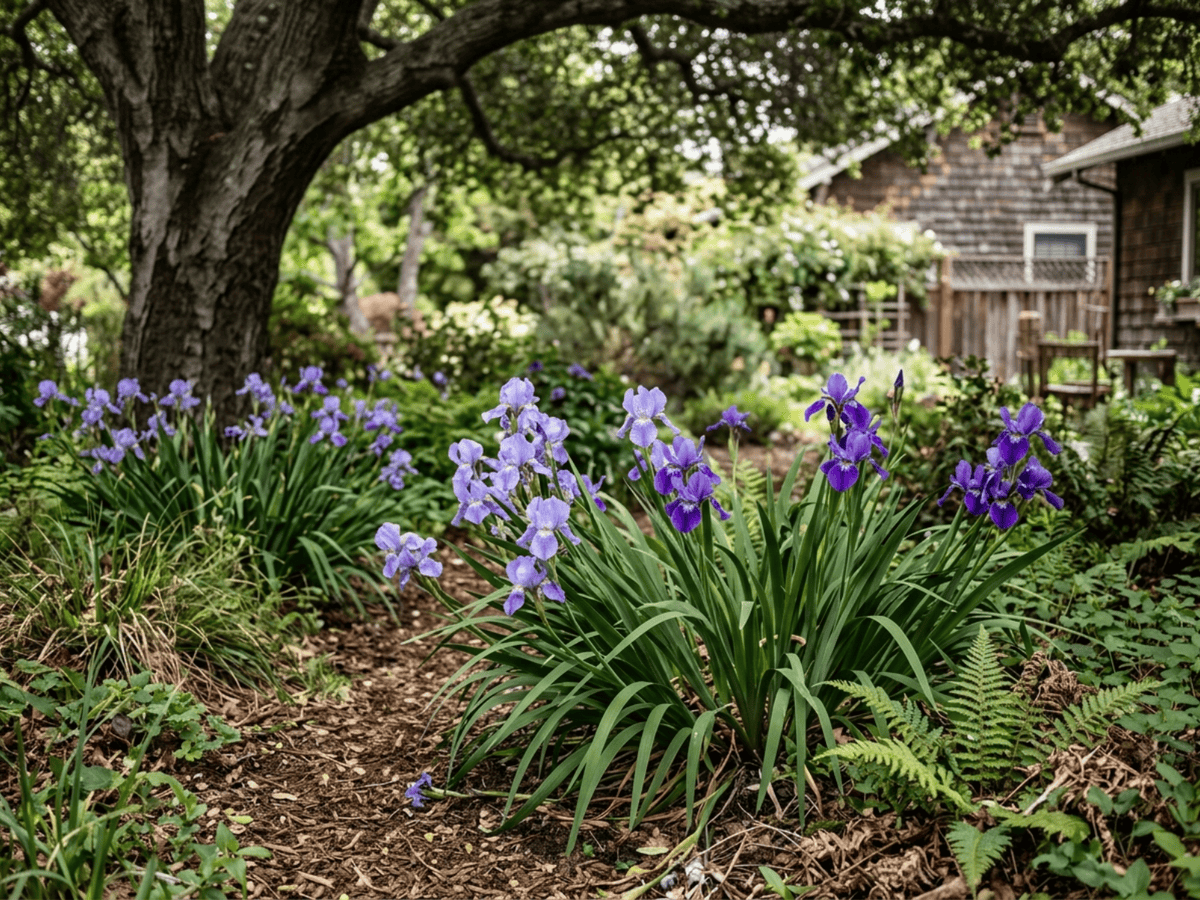
Douglas Iris
Iris douglasiana
Easy · Beginner friendlyAbout Douglas Iris
Douglas Iris is a tough evergreen California coastal native iris forming clumps 8-24 inches tall with dark glossy green leaves and broad flowers in shades of lavender, purple, cream, and white. Native to coastal bluffs and grassy hillsides from Santa Barbara to Oregon, it is among the most garden-worthy native irises, blooming reliably from late winter to spring. The Pacific Coast Iris hybrids derived partly from this species are among the most popular iris cultivars for California gardens.
- Drought-tolerant
- Evergreen
- Native
- Pollinator-friendly
How to care for Douglas Iris
Watering
- Springevery 10 days
- Summerevery 14 days
- Fallevery 14 days
- Winterevery 30 days
Soil · Well-draining
- Top dressingPine bark mulch10%
- Main mixPotting soil + perlite 2:170%
- DrainageLECA / gravel20%
Never skip the drainage layer — standing water is the top cause of root rot.
FERTILIZER
Balanced Feed 14-14-14
An even feed covers all three needs at once, keeping leaves, roots and blooms moving together with nothing pushed out of balance.
- Nitrogen · Leaves
- Phosphorus · Roots + Blooms
- Potassium · Strength
This plant needs little to no feeding.
At a Glance
- NativeNorth America
- Height1–2 ft (0.3–0.6 m)
- Spread1–2 ft (0.3–0.6 m)
- Flower colorPurple, White, Cream
- Foliage colorGreen
- SoilLoamy, Well-drained, Acidic
- LocationsYard
Bloom time
BLOOM CYCLE
Peak bloom
Feb–Apr
Lavender to deep purple flowers February to April
Fragrance
LIGHT FRAGRANCE
The flowers have a light delicate scent.
Toxicity
Humans Moderate · Pets Moderate
iridin
Moderate
- All
- Ingestion
- Contact
EXPOSURE Eating any part of the plant. Touching any part of the plant.
EFFECT Iridin glycosides: GI upset, skin irritation.
NOTE Documented concern for humans: Iridin glycosides: GI upset, skin irritation.
Moderate
- All
- Ingestion
EXPOSURE Eating any part of the plant.
EFFECT Vomiting, drooling, GI upset.
NOTE ASPCA lists iris as toxic to dogs, cats, and horses.
Moderate
- All
- Ingestion
EXPOSURE Eating any part of the plant.
EFFECT Same as dogs.
NOTE ASPCA lists iris as toxic to dogs, cats, and horses.
Educational information, not medical or veterinary advice. If exposure is suspected, contact a doctor or veterinarian.
DISTRIBUTION


- Native
- North America
History

Iris douglasiana is native to coastal grasslands, bluffs, and open coniferous forest edges from northern Santa Barbara County north through the California coast and into southwestern Oregon as far north as Coos Bay. It was named for Scottish plant explorer David Douglas (1799-1834), who collected extensively in the Pacific Northwest in the 1820s-1830s. It is a clump-forming evergreen iris 30-60 cm tall with narrow sword-shaped dark-green leaves and, in late spring, produces on 30-45 cm stems 1-3 large 8-10 cm flat-faced typical iris flowers. Wild flower color is extraordinarily variable across the species' geographic range, with different coastal populations producing flowers in essentially all iris colors — pure white, cream, pale yellow, pink, lavender, deep-purple, royal-blue, and every combination and gradient — a range of wild color variation unusual in the iris genus.
This color variability has made I. douglasiana one of the foundational parents of the "Pacific Coast Hybrid" (PCH) iris group, one of the most important horticultural iris breeding programs, which crosses the California-native I. douglasiana, I. innominata, I. munzii, I. macrosiphon, and I. tenax (all Pacific Coast "Californicae" section irises) to produce a vast range of garden cultivars with spectacular flower colors and patterns not present in other iris groups. Major PCH breeders include Lee Lenz, Marjorie Brummitt, Richard Richards, and Debby Cole. Hardy approximately to USDA zone 8.
Named for David Douglas (1799–1834), Scottish botanist who explored the Pacific Coast and sent back hundreds of plant specimens to British gardens, introducing many California plants to cultivation. Douglas Iris formed the foundation of the Pacific Coast Iris hybrid series, which now encompasses thousands of cultivars beloved by iris enthusiasts worldwide.
Symbolism & meaning
What It Symbolizes
Douglas Iris expresses faith, drawing on the long iris tradition of trust and valor that runs from ancient Greece through medieval heraldry. Beyond symbolism, it carries heritage — a California native that links the state's wild flora to world horticulture through countless garden hybrids. A coastal iris that says, quietly, that local plants belong on the international stage.
- Faith — iris traditionally symbolizes trust and valor
- Heritage — links California's flora to world horticulture
Where the Name Comes From
Genus 'Iris' from Greek goddess of the rainbow; 'douglasiana' honors David Douglas, pioneering Pacific Coast botanist.
Uses & Fun Facts
- Showy falls visited by native bumblebees seeking nectar
- California native iris naturalizes on coastal bluffs and oak woodlands
Related plants
More Iris plants
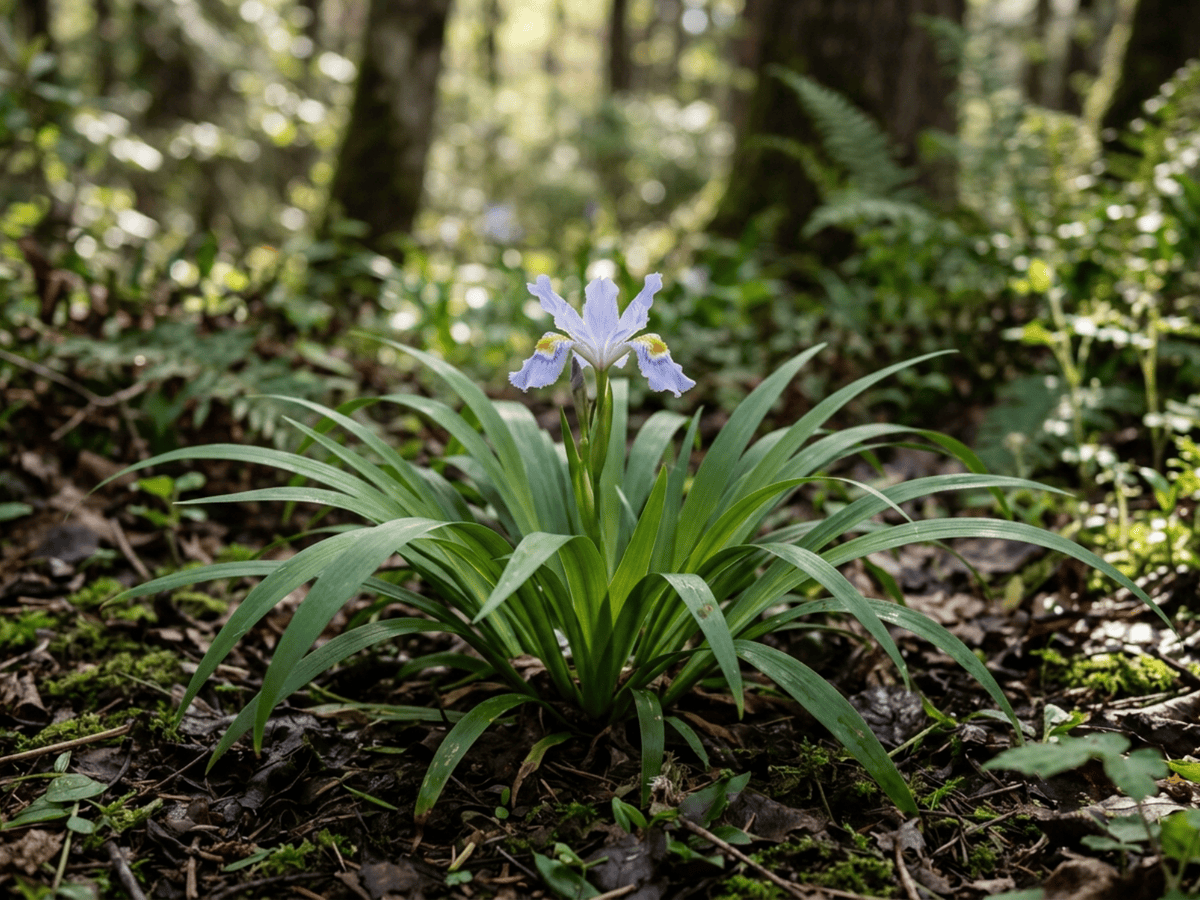 Dwarf Crested IrisIris cristata
 Japanese IrisIris ensata
 Bearded IrisIris germanica
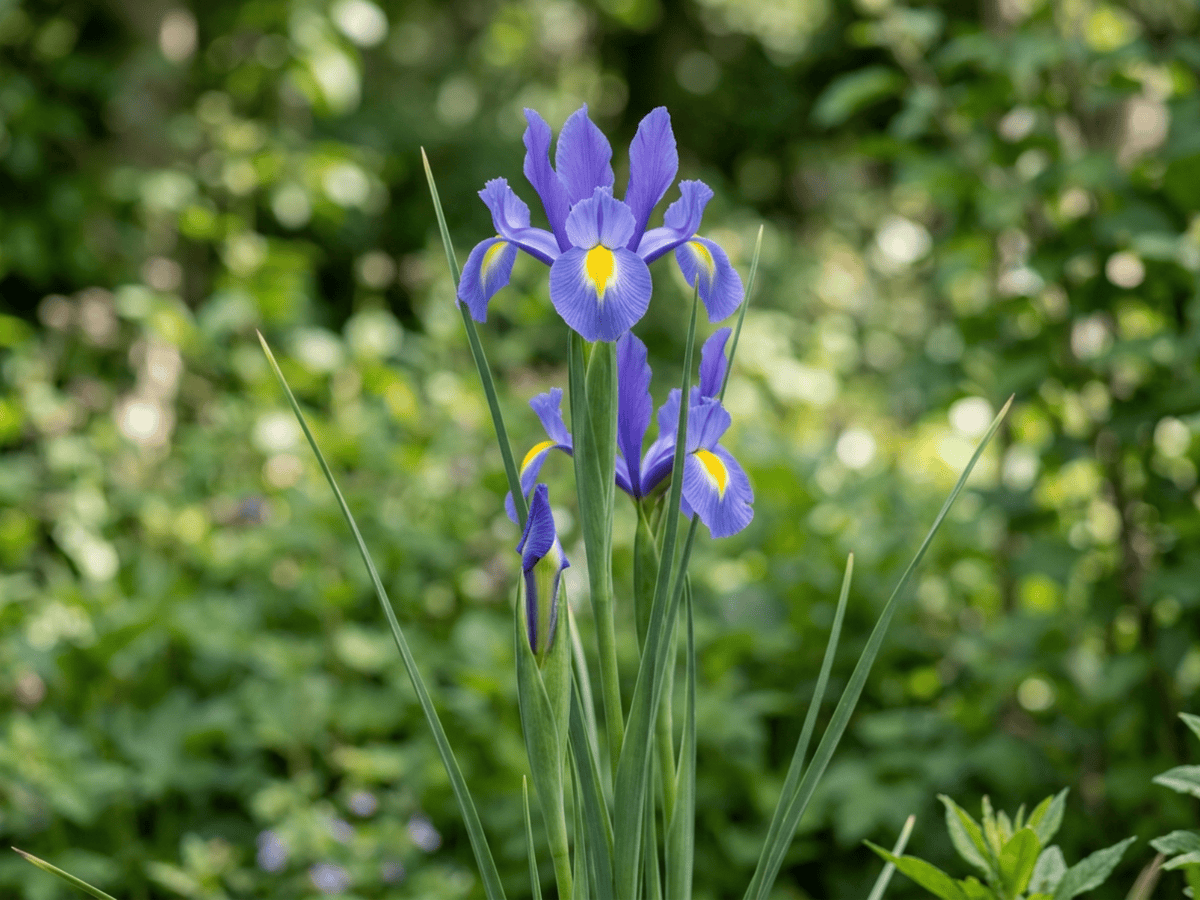 Dutch IrisIris hollandica
Plants with similar care
 Chinese AbeliaAbelia chinensis
 Fragrant AbeliaAbelia mosanensis
 Large-Flowered AbeliaAbelia uniflora
 Glossy AbeliaAbelia x grandiflora
Frequently asked questions
How often should I water Douglas Iris?
In summer, water about every 14 days; in winter, about every 30 days. Adjust for heat, pot size and drainage.
How much light does Douglas Iris need?
Full sun: 6+ hrs direct. Watch the leaves — scorching or stretching means the light needs adjusting.
Is Douglas Iris toxic to cats or dogs?
Pets Moderate (Dogs Moderate · Cats Moderate) Educational information, not medical or veterinary advice. If exposure is suspected, contact a doctor or veterinarian.
Is Douglas Iris easy to grow?
Yes — it is considered an easy, beginner-friendly plant.
When does Douglas Iris bloom?
It typically blooms Feb–Apr in the Northern Hemisphere.
YardMate
Identify any plant in seconds
Snap a photo — YardMate names the plant, diagnoses problems, and reminds you when to water.
Download on the App Store