 YardMate


Bearded Iris
Iris germanica
Easy · Beginner friendlyAbout Bearded Iris
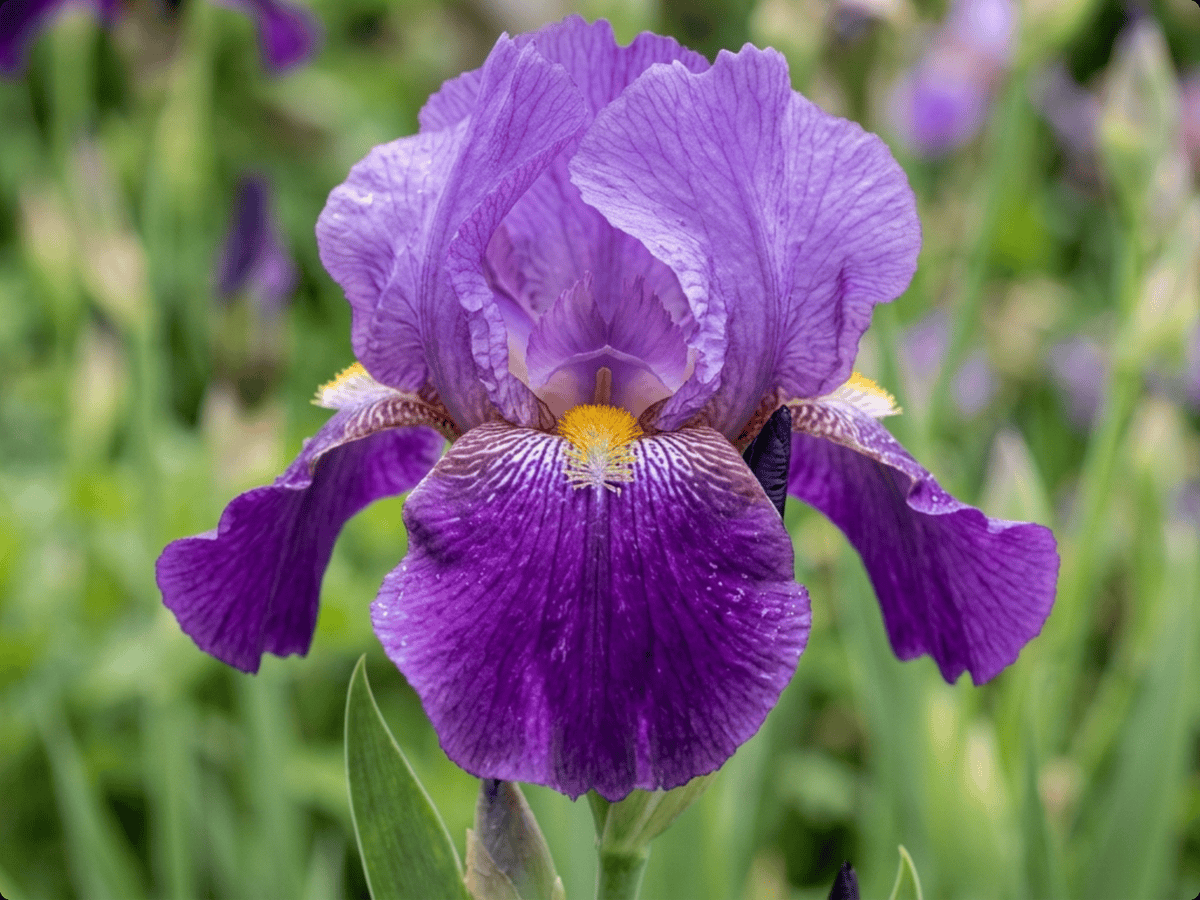
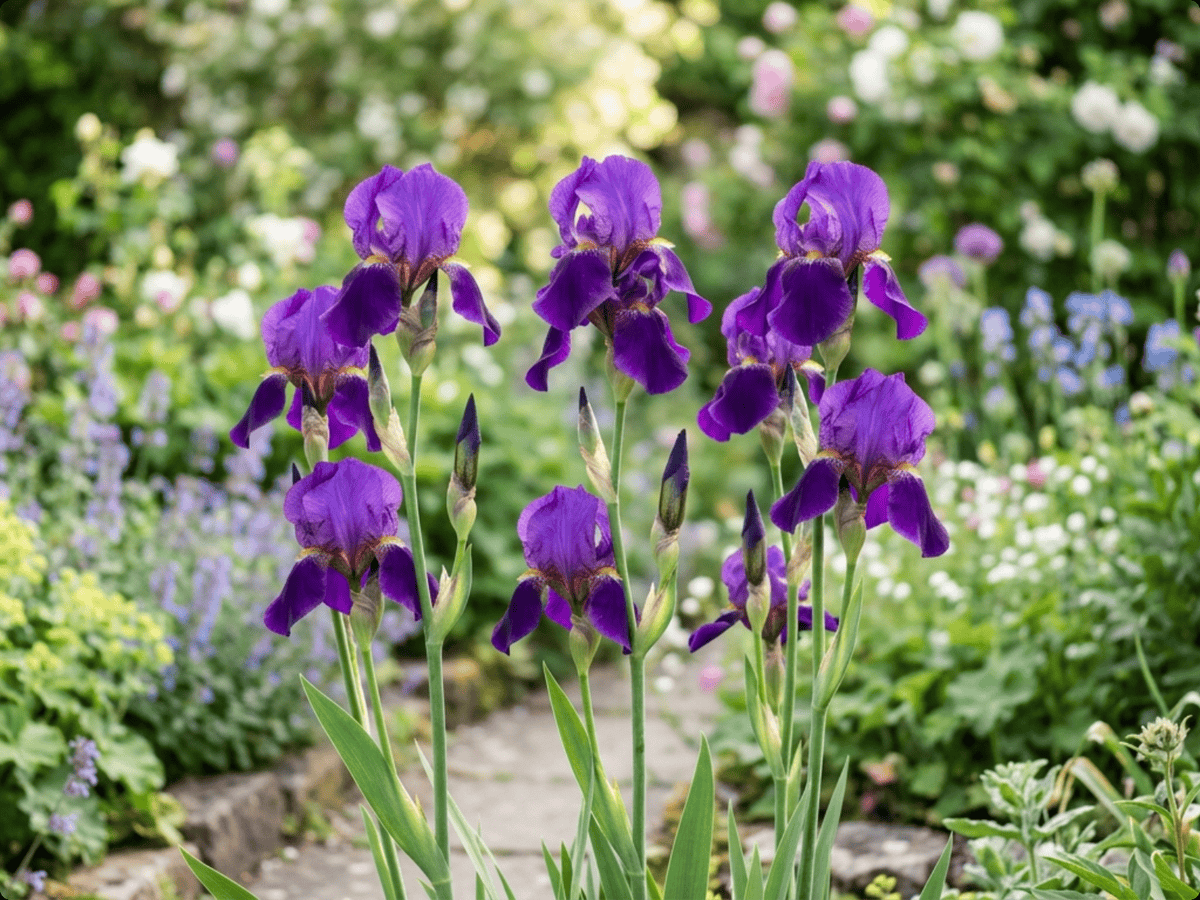
Iris germanica, the tall bearded iris, produces spectacular flowers with three upright 'standard' petals and three drooping 'fall' petals, decorated with fuzzy 'beards.' The flowers come in an enormous range of colors and patterns — from pure white through every shade of blue, purple, pink, orange, yellow, and near-black, often with contrasting falls and standards. Growing from thick rhizomes, they bloom in late spring and can reach 90 cm tall. Over 30,000 cultivars are registered. The iris is named after the Greek goddess of the rainbow, and the flower lives up to the name.
- Fragrant
- Cut-flower
- Drought-tolerant
How to care for Bearded Iris
Watering
- Springevery 7 days
- Summerevery 10 days
- Fallevery 14 days
- Winterevery 21 days
Soil · Well-draining
- Top dressingPine bark mulch10%
- Main mixPotting soil + perlite 2:170%
- DrainageLECA / gravel20%
Never skip the drainage layer — standing water is the top cause of root rot.
FERTILIZER
Balanced Feed 14-14-14
An even feed covers all three needs at once, keeping leaves, roots and blooms moving together with nothing pushed out of balance.
- Nitrogen · Leaves
- Phosphorus · Roots + Blooms
- Potassium · Strength
- Springevery 30 days
- Summerevery 30 days
At a Glance
- NativeMediterranean
- Height2–3 ft (0.6–0.9 m)
- Spread1–2 ft (0.3–0.6 m)
- Flower colorPurple, Blue, White, Yellow
- Foliage colorGreen
- SoilLoamy, Well-drained, Neutral
- LocationsYard
Bloom time
BLOOM CYCLE
Peak bloom
May
Late spring bloomer; plant rhizomes partially exposed; divide every 3–4 years
Fragrance
MODERATE FRAGRANCE
Flowers carry a sweet grape or orange-like scent; aged dried rhizome develops the iconic violet-like orris fragrance used in perfumery.
Toxicity
Humans Slight · Pets Moderate
irisin, iridin, and triterpene glycosides
Slight
- Root
- Contact
- Ingestion
EXPOSURE Touching roots. Eating roots.
EFFECT Skin irritation from handling cut rhizomes and gI upset if eaten.
NOTE Toxicity concentrated in the rhizome; processed orris root used in perfumery is safe when handled properly.
Moderate
- Root
- Ingestion
EXPOSURE Eating roots.
EFFECT Vomiting, drooling, diarrhea, skin irritation from sap, rhizome most dangerous, and per ASPCA.
NOTE Toxicity concentrated in the rhizome; processed orris root used in perfumery is safe when handled properly.
Moderate
- Root
- Ingestion
EXPOSURE Eating roots.
EFFECT Vomiting, drooling, diarrhea, skin irritation from sap, rhizome most dangerous, and per ASPCA.
NOTE Toxicity concentrated in the rhizome; processed orris root used in perfumery is safe when handled properly.
Educational information, not medical or veterinary advice. If exposure is suspected, contact a doctor or veterinarian.
DISTRIBUTION


- Native
- Introduced
- Mediterranean
History
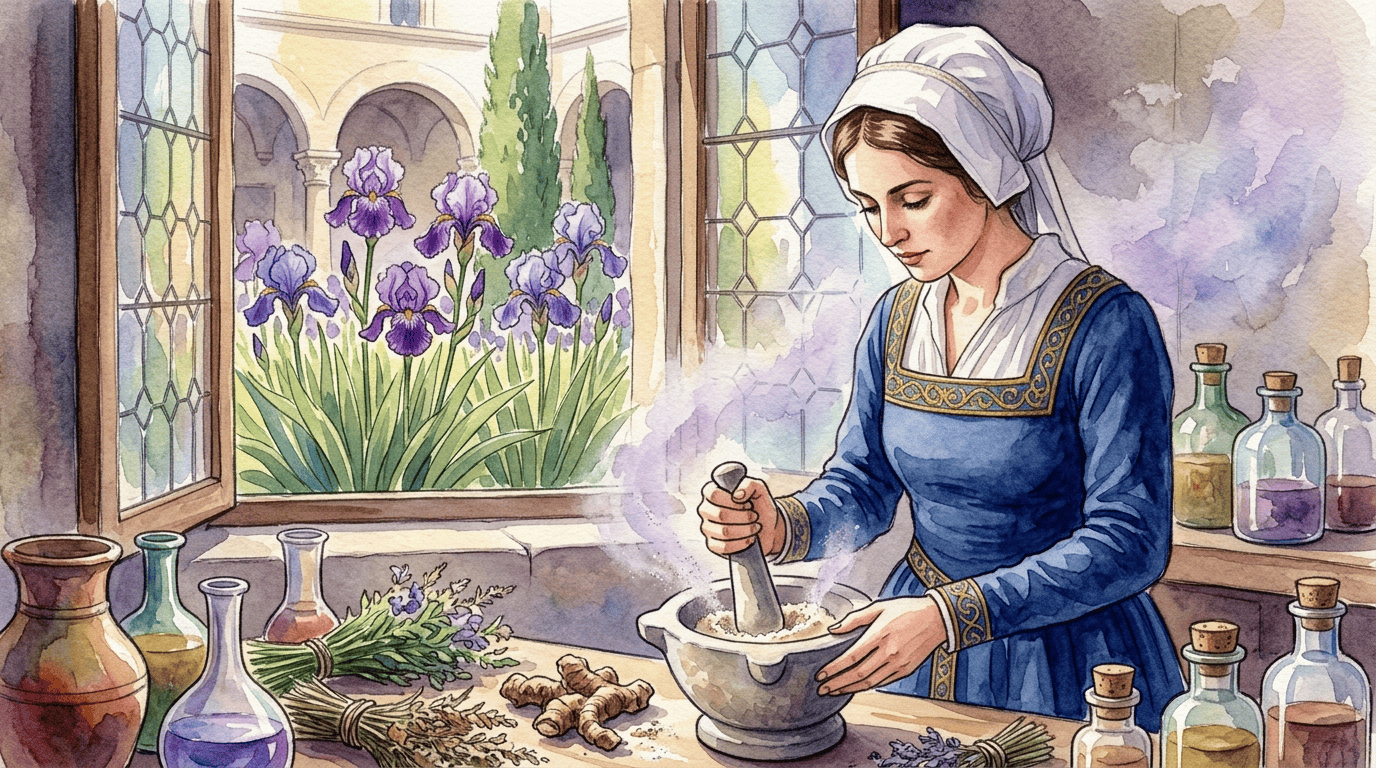
Iris germanica is not a true wild species but a complex ancient hybrid cultigen of Mediterranean Europe, its exact parental history obscure. It is the classic 'tall bearded iris' of cottage gardens, and is the iris behind the French fleur-de-lis heraldic symbol, adopted by the French kings from the 12th century. Its rhizomes are the source of 'orris root' (iris root powder), which when dried and aged for several years develops a violet-like fragrance used as a base-note fixative in traditional perfumery — and still used at ruinous cost in luxury perfumes today; aged orris butter is one of the most expensive natural perfumery materials on earth.
Modern iris breeding began in earnest in France around 1830 (Lemon, Vilmorin), expanded dramatically in early 20th-century US breeding, and has produced over 60,000 registered cultivars. Moderately toxic to pets due to rhizome irritants. The iris has been a symbol of royalty since ancient Egypt, where it appeared in temple carvings 3,500 years ago.
The French fleur-de-lis — symbol of French monarchy since the 5th century — is widely believed to represent an iris, not a lily. King Louis VII adopted it during the Second Crusade. 5 uses it. Florence, Italy, built a perfume industry around orris root from I. pallida and I. germanica, with the iris becoming the city's emblem on its coat of arms.
Symbolism & meaning
What It Symbolizes
The Bearded Iris has meant faith since pharaonic Egypt, where it was carved into temple walls for the journey to the afterlife, and later became the fleur-de-lis of French royalty and the messenger of the goddess Iris itself. Its three upright standards have stood for wisdom, valor, and faith on countless heraldic shields. It is the flower that empires and religions have chosen to mean: trust the path.
- Faith — Associated with royalty and heaven since ancient Egypt, representing trust and wisdom
Where the Name Comes From
Iris from the Greek goddess of the rainbow, for the flower's color range. Germanica means 'of Germany,' though it originated in the Mediterranean.
Uses & Fun Facts
- Orris root from rhizomes prized as classic perfume fixative
- Tall ruffled blooms in vast color range fill spring vases
- Drought-tolerant rhizomatous perennial for sunny mixed borders
Related plants
More Iris plants
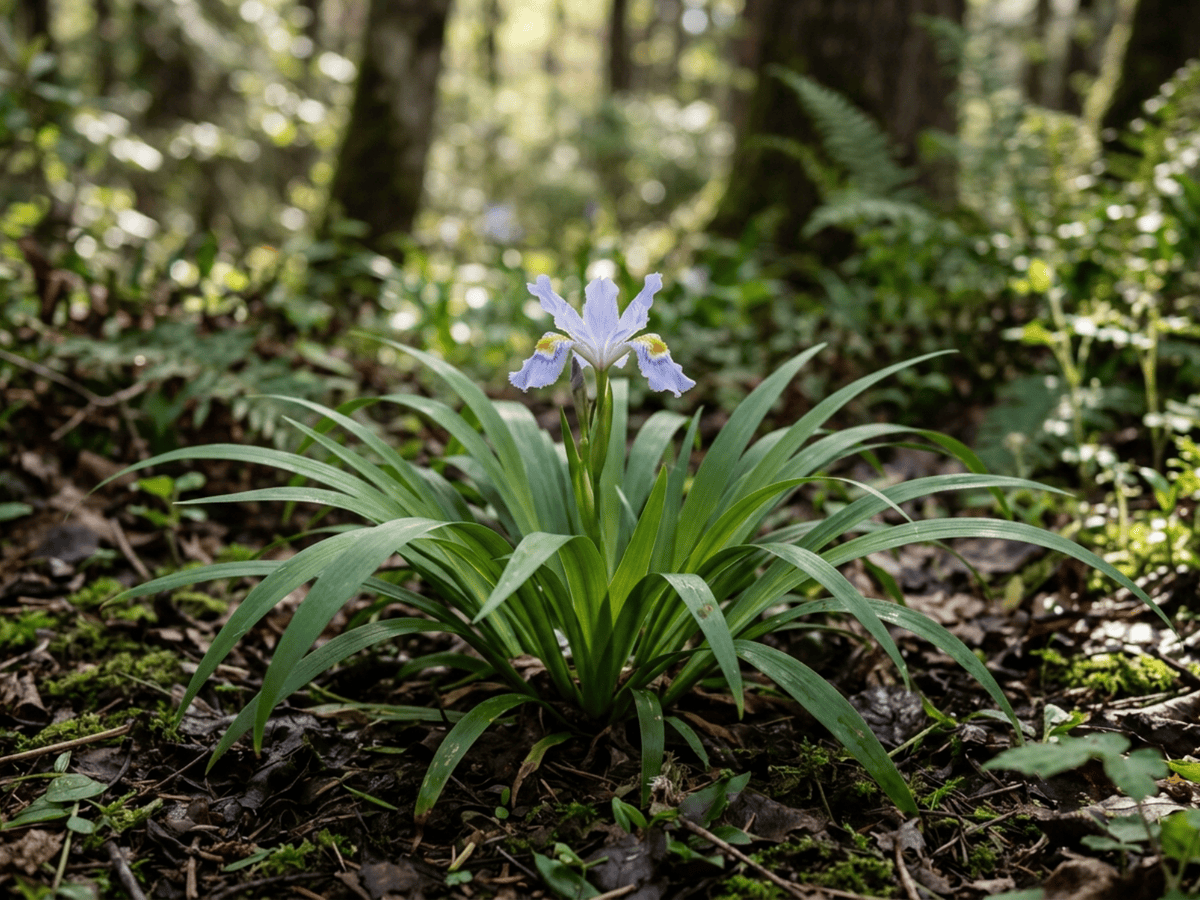 Dwarf Crested IrisIris cristata
 Douglas IrisIris douglasiana
 Japanese IrisIris ensata
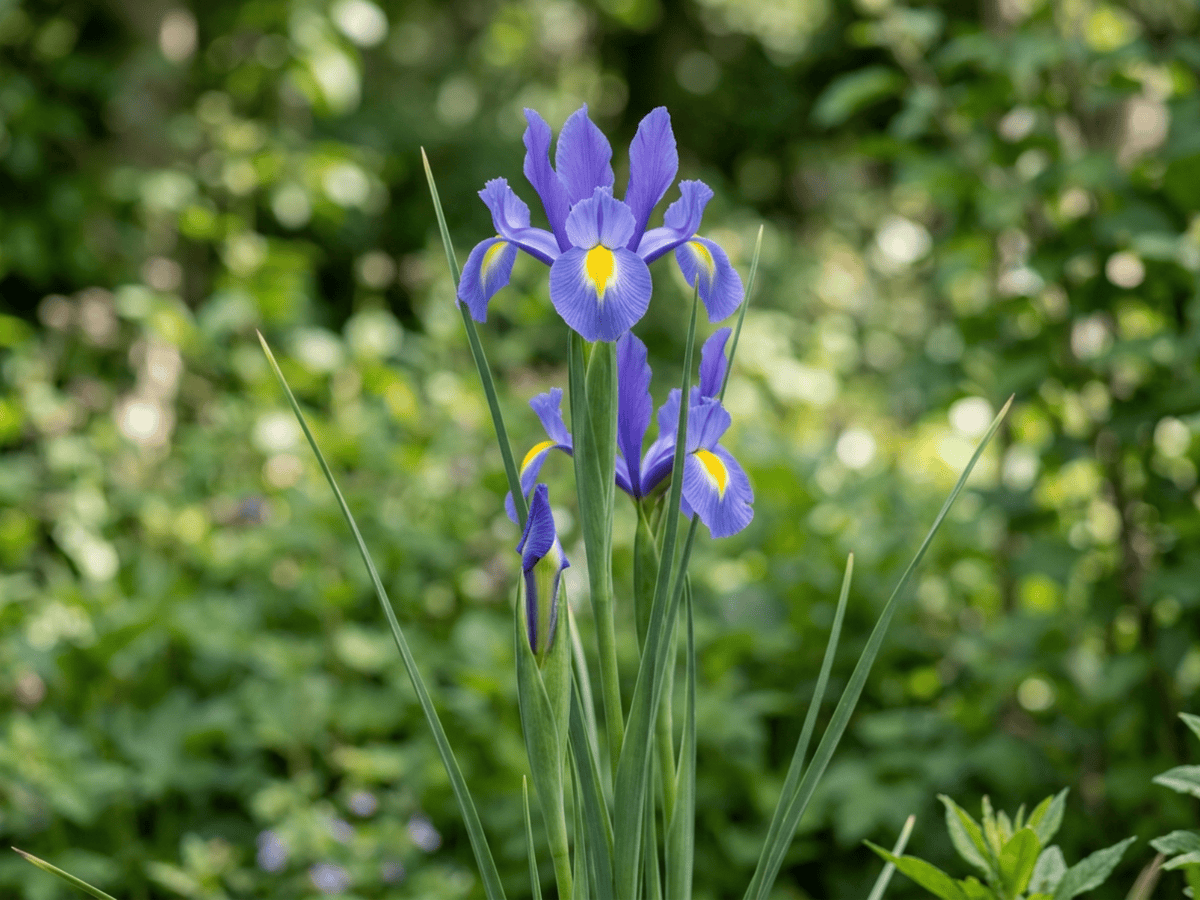 Dutch IrisIris hollandica
Plants with similar care
 Chinese AbeliaAbelia chinensis
 Fragrant AbeliaAbelia mosanensis
 Large-Flowered AbeliaAbelia uniflora
 Glossy AbeliaAbelia x grandiflora
Frequently asked questions
How often should I water Bearded Iris?
In summer, water about every 10 days; in winter, about every 21 days. Adjust for heat, pot size and drainage.
How much light does Bearded Iris need?
Full sun: 6+ hrs direct. Watch the leaves — scorching or stretching means the light needs adjusting.
Is Bearded Iris toxic to cats or dogs?
Pets Moderate (Dogs Moderate · Cats Moderate) Educational information, not medical or veterinary advice. If exposure is suspected, contact a doctor or veterinarian.
Is Bearded Iris easy to grow?
Yes — it is considered an easy, beginner-friendly plant.
When does Bearded Iris bloom?
It typically blooms May in the Northern Hemisphere.
YardMate
Identify any plant in seconds
Snap a photo — YardMate names the plant, diagnoses problems, and reminds you when to water.
Download on the App Store