 YardMate


Yellow Iris
Iris pseudacorus
Easy · Beginner friendlyAbout Yellow Iris
Iris pseudacorus, the yellow flag iris, is a vigorous aquatic perennial native to Europe, western Asia, and northwest Africa. It produces bright golden-yellow flowers with distinctive brown veining on the falls, blooming in late spring to early summer above sword-shaped blue-green foliage that reaches 90 to 150 cm tall. The plant naturally colonizes the margins of ponds, lakes, rivers, and wetlands, where its dense rhizome network stabilizes banks and filters water pollutants. However, outside its native range — particularly in North America, Australia, and New Zealand — yellow flag iris has become a serious invasive species, spreading aggressively through waterways by both rhizome fragments and floating seeds. In many US states it is listed as a noxious weed, and its sale is restricted or banned. The plant forms impenetrable monocultures that displace native wetland vegetation, clog waterways, and reduce habitat for fish and wildlife. Despite its invasive potential, it remains culturally significant as the inspiration for the French fleur-de-lis. All parts are toxic and can cause severe skin irritation.
- Pollinator-friendly
- Cold-hardy
- Long-blooming
- Architectural
How to care for Yellow Iris
Watering
- Springevery 1 days
- Summerevery 1 days
- Fallevery 1 days
- Winterevery 1 days
Soil · Bog-wet
- WaterStanding water above soil20%
- SoilHeavy pond soil80%
No drainage layer — keep water standing above the soil.
FERTILIZER
- Springevery 30 days
- Summerevery 30 days
At a Glance
- NativeEurope, Western Asia, Africa
- Height3–5 ft (0.9–1.5 m)
- Spread1.5–2.5 ft (0.5–0.8 m)
- Flower colorYellow
- Foliage colorGreen, Variegated
- SoilMoisture-retentive, Loamy
- LocationsYard
Bloom time
BLOOM CYCLE
Peak bloom
May–Jun
WARNING: Invasive in North America — check local regulations before planting; deadhead aggressively to prevent seed spread
Fragrance
LIGHT FRAGRANCE
The flowers have a light delicate scent.
Toxicity
Humans Moderate · Pets Moderate
iridin and irisin
Moderate
- All
- Ingestion
- Contact
EXPOSURE Eating any part of the plant. Touching any part of the plant.
EFFECT Contains irritating glycosides and gI upset if eaten, skin irritation from sap.
NOTE Documented concern for humans: Contains irritating glycosides and gI upset if eaten, skin irritation from sap.
Moderate
- All
- Ingestion
EXPOSURE Eating any part of the plant.
EFFECT Vomiting, drooling, GI upset.
NOTE ASPCA lists iris as toxic to dogs, cats, and horses.
Moderate
- All
- Ingestion
EXPOSURE Eating any part of the plant.
EFFECT Same as dogs.
NOTE ASPCA lists iris as toxic to dogs, cats, and horses.
Educational information, not medical or veterinary advice. If exposure is suspected, contact a doctor or veterinarian.
DISTRIBUTION

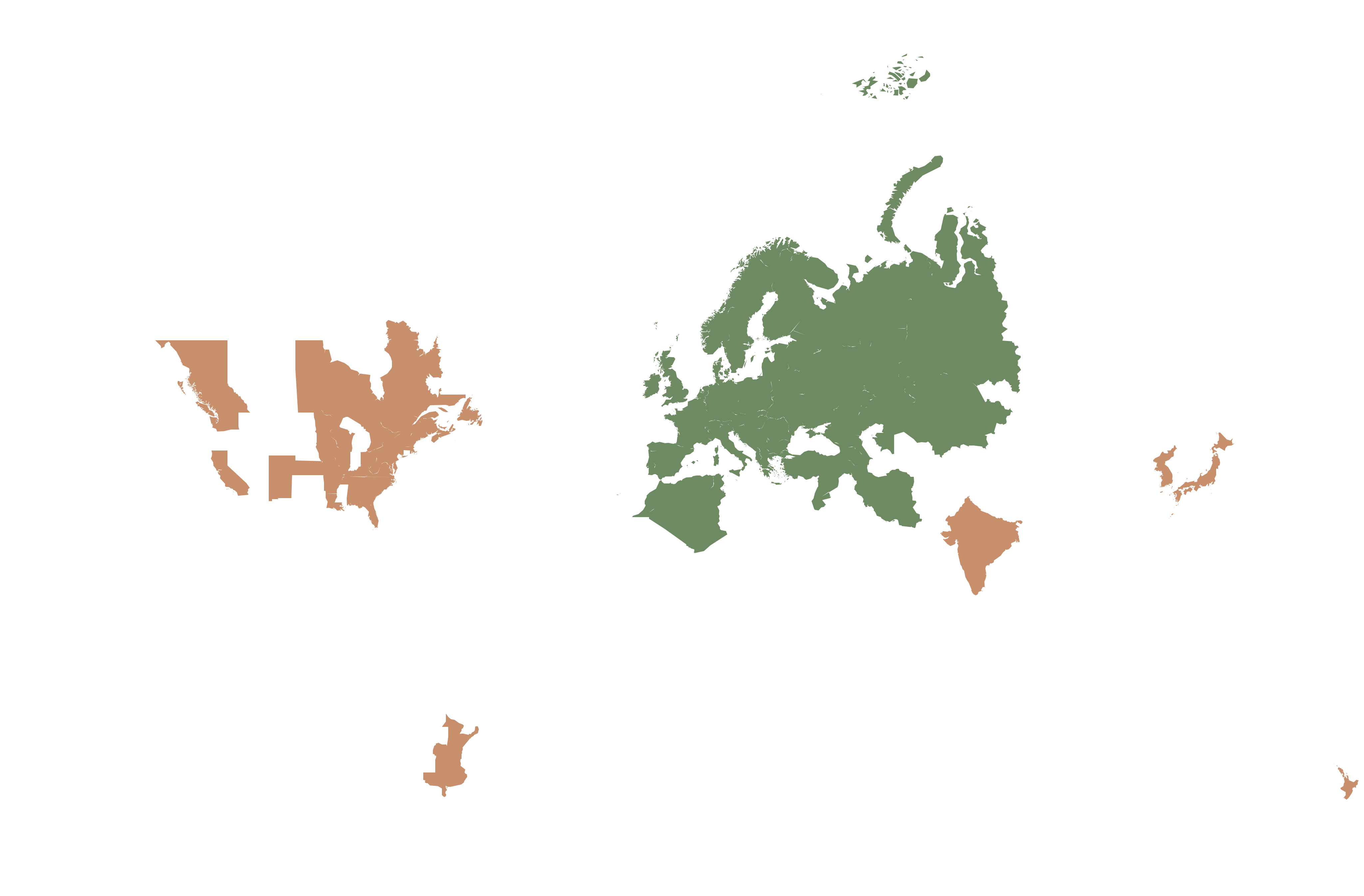
- Native
- Introduced
- Europe
- Western Asia
- Africa
History
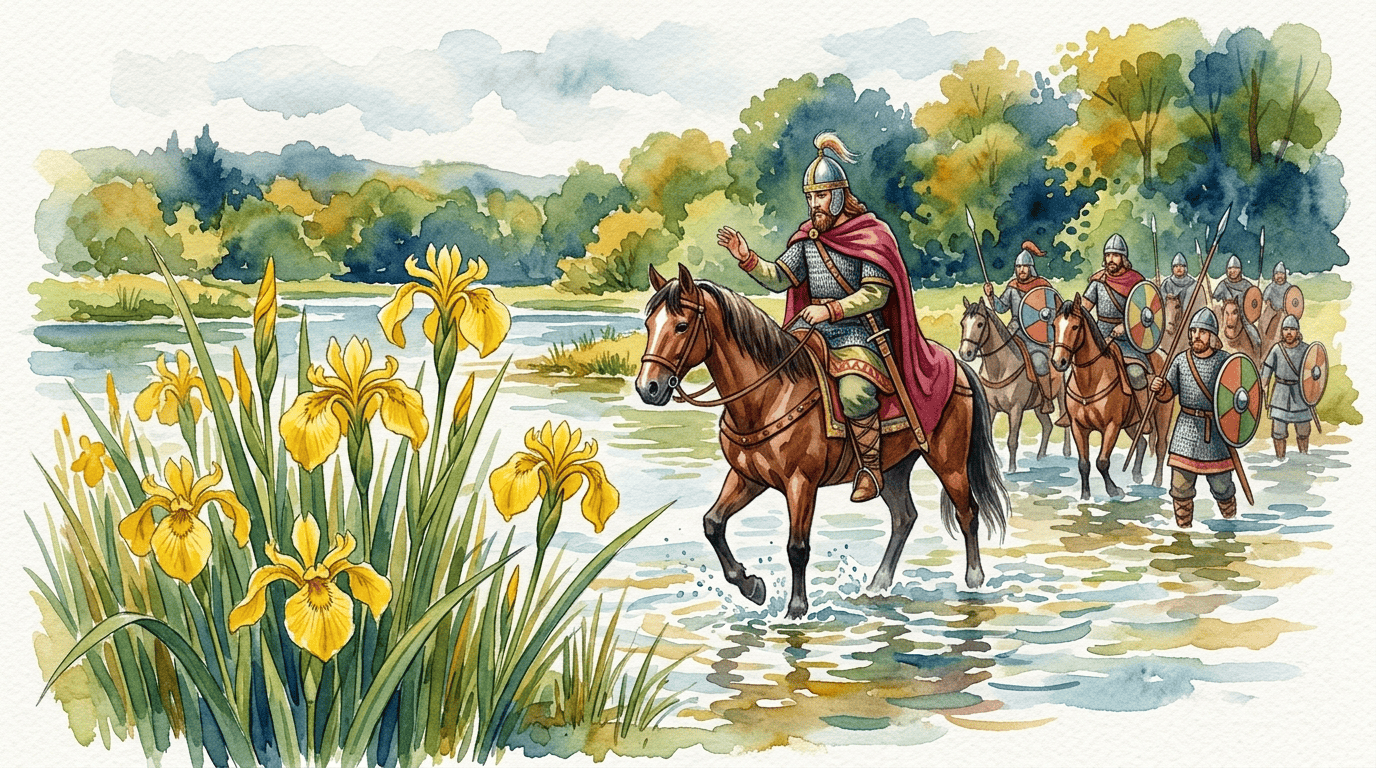
Iris pseudacorus is native to Europe, western Asia, and North Africa, growing in wet ditches, stream margins, pond edges, and marshes. It is one of the most robust of the European iris species, with 1-1.5 meter upright flower stems producing bright yellow irises with three large drooping falls marked by darker veining. The plant holds a famous but contested place in European heraldic tradition as the possible original of the "fleur-de-lys" (lily flower) symbol associated with French royalty: legend holds that in the 6th century, Frankish king Clovis I was pursued by Gothic enemies and was able to cross the Loire River safely after observing a patch of I. pseudacorus growing in a shallow place in the water; Clovis subsequently adopted the iris as his royal emblem, which evolved into the stylized fleur-de-lys adopted by his descendants and later the Capetian and Valois kings of France.
(Some heraldic historians dispute this, proposing instead Iris germanica or pure stylization as the origin.) Yellow flag has been widely planted worldwide in water gardens as an ornamental, but has become one of the most serious invasive aquatic plants of North American and Australian wetlands — the US federal government and multiple states classify it as a noxious invasive, and many jurisdictions prohibit its sale.
It outcompetes native cattails and sedges, alters wetland hydrology, and forms monoculture stands.
Symbolism & meaning
What It Symbolizes
The yellow iris is often read as a flower of royalty, the wild ancestor of the fleur-de-lis — that stylized iris stamped on French shields and standards from the twelfth century onward, emblem of kings. Its three petals were read by medieval heralds as faith, wisdom, and valor in battle. To see it blooming in a wet ditch is to glimpse the wild original of every coronation banner.
- Royalty — Inspired the fleur-de-lis, the enduring emblem of French monarchy and nobility
- Valor — The three petals of the fleur-de-lis represent faith, wisdom, and courage in battle
Where the Name Comes From
Iris is the Greek goddess of the rainbow, for the genus's wide color range. Pseudacorus means 'false acorus,' comparing its foliage to sweet flag (Acorus calamus).
Uses & Fun Facts
- Tall yellow flag iris brightens pond margins and rain gardens
- Said to be the original fleur-de-lis of French heraldry
Related plants
More Iris plants
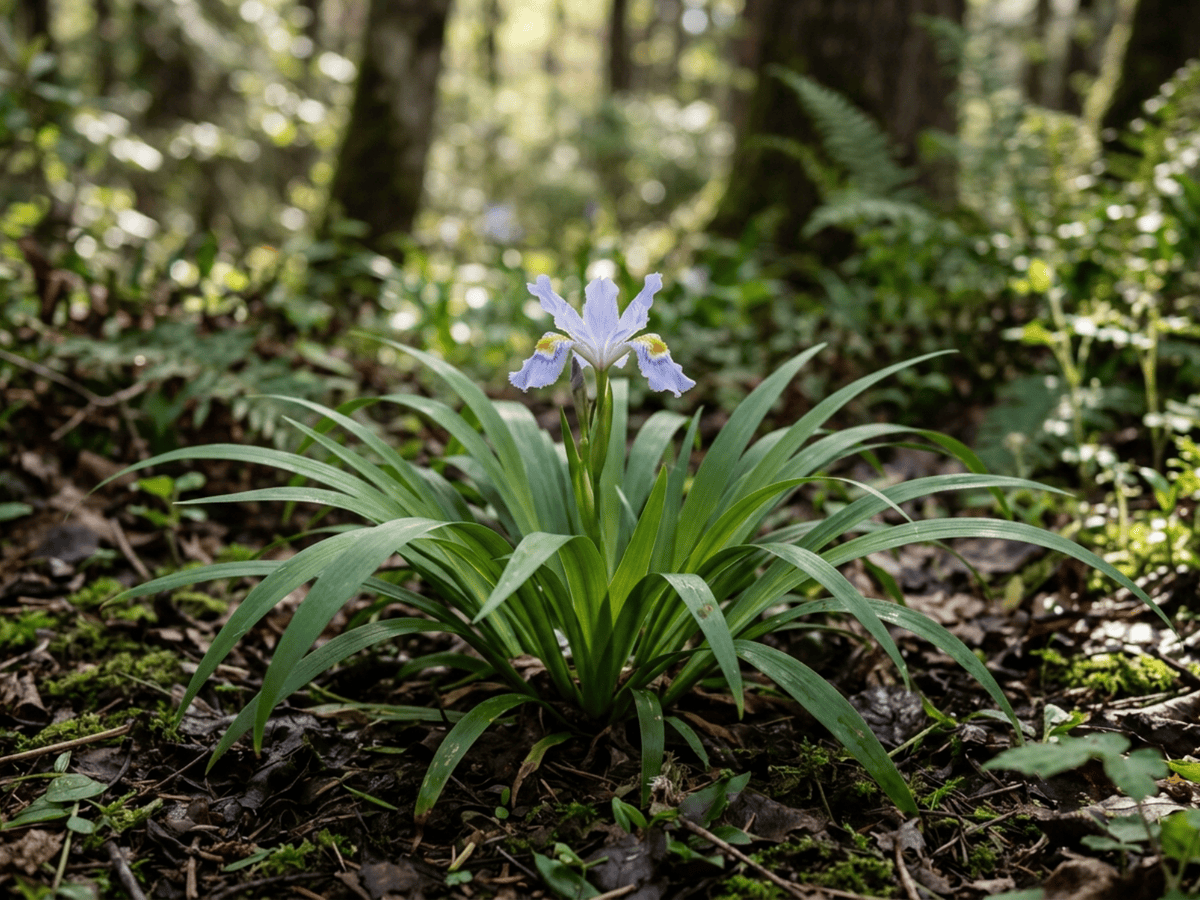 Dwarf Crested IrisIris cristata
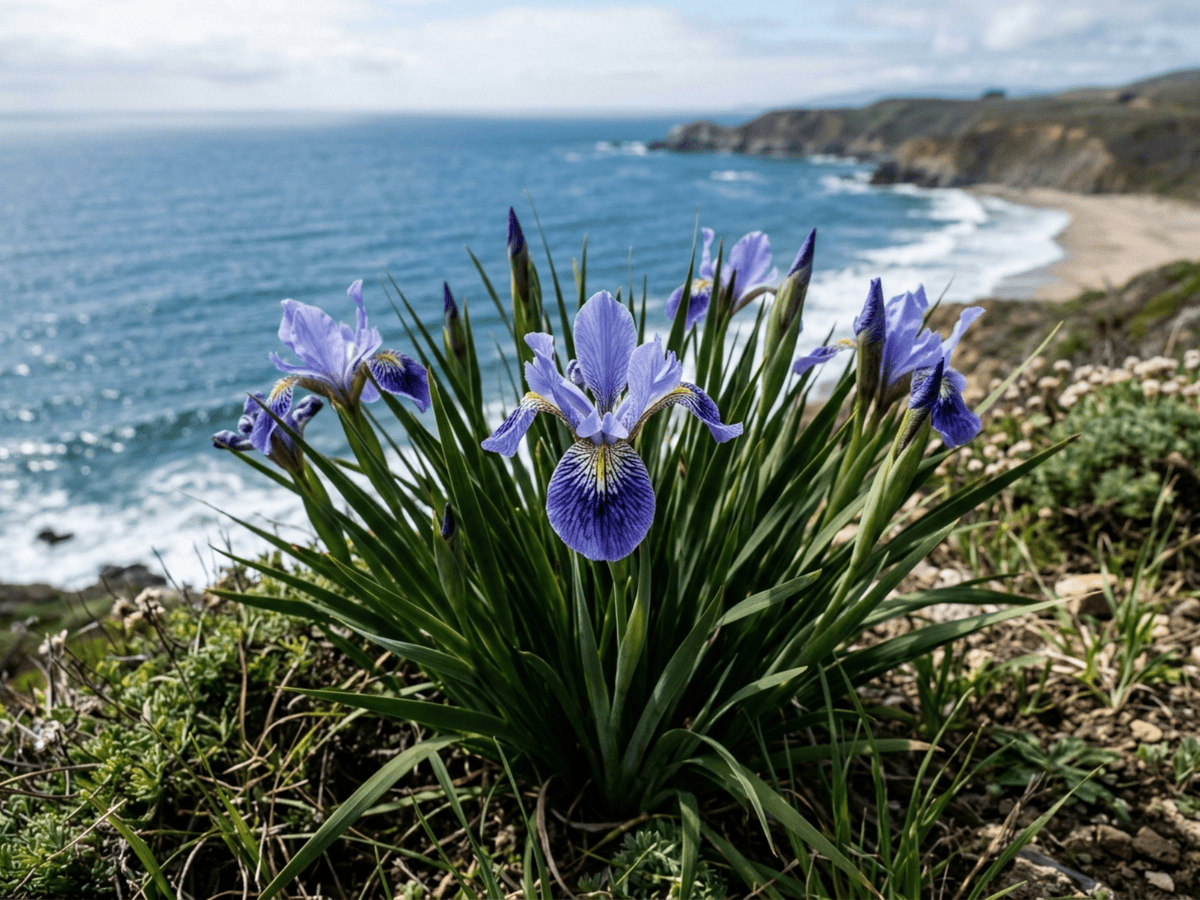 Douglas IrisIris douglasiana
 Japanese IrisIris ensata
 Bearded IrisIris germanica
Plants with similar care
 Chinese AbeliaAbelia chinensis
 Fragrant AbeliaAbelia mosanensis
 Large-Flowered AbeliaAbelia uniflora
 Glossy AbeliaAbelia x grandiflora
Frequently asked questions
How often should I water Yellow Iris?
In summer, water about every 1 days; in winter, about every 1 days. Adjust for heat, pot size and drainage.
How much light does Yellow Iris need?
Full sun: 6+ hrs direct. Watch the leaves — scorching or stretching means the light needs adjusting.
Is Yellow Iris toxic to cats or dogs?
Pets Moderate (Dogs Moderate · Cats Moderate) Educational information, not medical or veterinary advice. If exposure is suspected, contact a doctor or veterinarian.
Is Yellow Iris easy to grow?
Yes — it is considered an easy, beginner-friendly plant.
When does Yellow Iris bloom?
It typically blooms May–Jun in the Northern Hemisphere.
YardMate
Identify any plant in seconds
Snap a photo — YardMate names the plant, diagnoses problems, and reminds you when to water.
Download on the App Store