 YardMate


Flaky Juniper
Juniperus squamata
Easy · Beginner friendlyAbout Flaky Juniper
Flaky Juniper is a low-growing coniferous shrub native to the Himalayas and central China, reaching 2-6 feet tall and wide depending on cultivar, featuring distinctive awl-shaped needle-like foliage in striking silvery-blue to steel-blue. The cultivar 'Blue Star' is one of the most popular dwarf conifers in American gardens for rock gardens, foundations, and blue-foliage plantings. Drought-tolerant and utterly reliable.
- Drought-tolerant
- Evergreen
- Compact
How to care for Flaky Juniper
Watering
- Springevery 14 days
- Summerevery 10 days
- Fallevery 21 days
- Winterevery 30 days
Soil · Well-draining
- Top dressingPine bark mulch10%
- Main mixPotting soil + perlite 2:170%
- DrainageLECA / gravel20%
Never skip the drainage layer — standing water is the top cause of root rot.
FERTILIZER
- Springevery 60 days
At a Glance
- NativeSouth Asia, East Asia
- Height4–12 ft (1.2–3.7 m)
- Spread4–15 ft (1.2–4.6 m)
- Flower colorYellow, Green
- Foliage colorBlue-green, Silver, Green
- Fruit colorBlack, Blue
- SoilLoamy, Well-drained, Sandy
- LocationsYard
Bloom time
BLOOM CYCLE
Inconspicuous
Fragrance
MODERATE FRAGRANCE
The foliage has a resinous juniper scent.
Toxicity
Humans Slight · Pets Slight
thujone and cedrol
Slight
- Leaf
- Fruit
- Ingestion
EXPOSURE Eating leaves and fruit.
EFFECT GI upset from essential oils.
NOTE Juniper essential oils cause mild GI upset.
Slight
- Fruit
- Leaf
- Ingestion
EXPOSURE Eating fruit and leaves.
EFFECT Vomiting, diarrhea.
NOTE Juniper essential oils cause mild GI upset.
Slight
- Fruit
- Leaf
- Ingestion
EXPOSURE Eating fruit and leaves.
EFFECT Vomiting, diarrhea.
NOTE Juniper essential oils cause mild GI upset.
Educational information, not medical or veterinary advice. If exposure is suspected, contact a doctor or veterinarian.
DISTRIBUTION


- Native
- Introduced
- South Asia
- East Asia
History
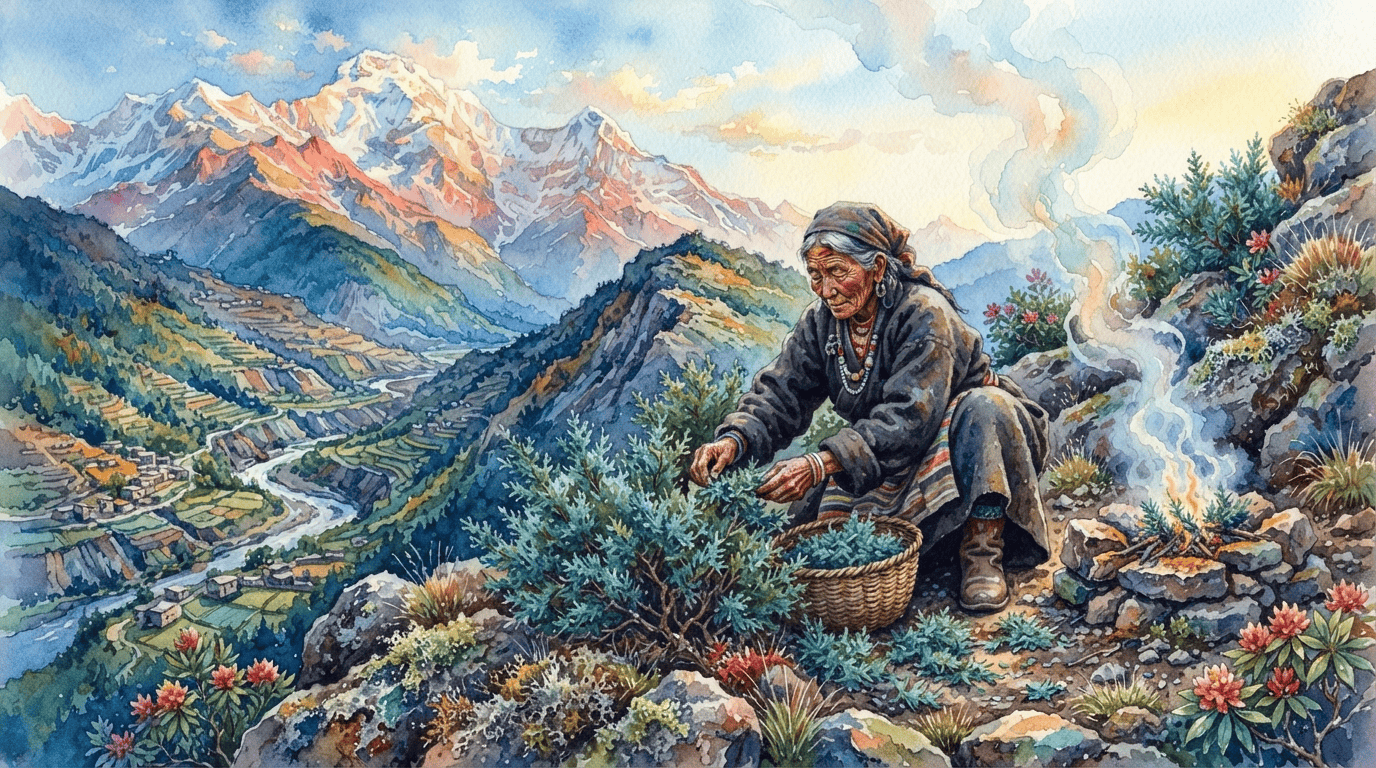
Juniperus squamata occurs naturally across the Himalayas—from Afghanistan through Pakistan, India, Nepal, Bhutan, and southwestern China—and into Taiwan, typically at elevations of 1600-4500 meters on exposed mountain slopes and rocky ridges. Scottish botanist David Don described the species in 1824 from material collected in Nepal by Francis Buchanan-Hamilton, the epithet squamata meaning scaly for the persistent dead leaves clinging to the older branches. The species varies considerably in habit from prostrate to small upright tree.
In 1914 the German collector Frank N. Meyer—for whom the Meyer lemon is named—sent back a bushy semi-upright form from northwestern China that became the cultivar 'Meyeri', admired for intensely blue-green foliage. In the mid-20th century 'Blue Star'—a compact slow-growing sport of 'Meyeri'—was introduced from the Netherlands and has since become one of the most widely planted dwarf conifers globally, treasured for its star-shaped needle clusters and steel-blue coloring.
In its native Himalayan range, traditional healers used the aromatic foliage as incense and medicine.
Symbolism & meaning
What It Symbolizes
Flaky Juniper offers serenity in steely blue, its dense foliage bringing rock-garden calm to spaces that need quieting. As one of the premier dwarf blue conifers it also carries compactness — a small evergreen that stays small, a rare honesty among landscape plants. It is the stillpoint in a busy bed, the cool blue cushion against which other colors come to rest.
- Serenity — calm blue foliage for rock gardens
- Compactness — premier dwarf blue conifer
Where the Name Comes From
'Squamata' means 'scaly', though this species uniquely has awl-shaped needles even in maturity.
Uses & Fun Facts
- Steel-blue dwarf conifer for foundation and rock gardens
- Compact 'Blue Star' habit suits patio troughs and bonsai
Related plants
More Juniperus plants
 Chinese JuniperJuniperus chinensis
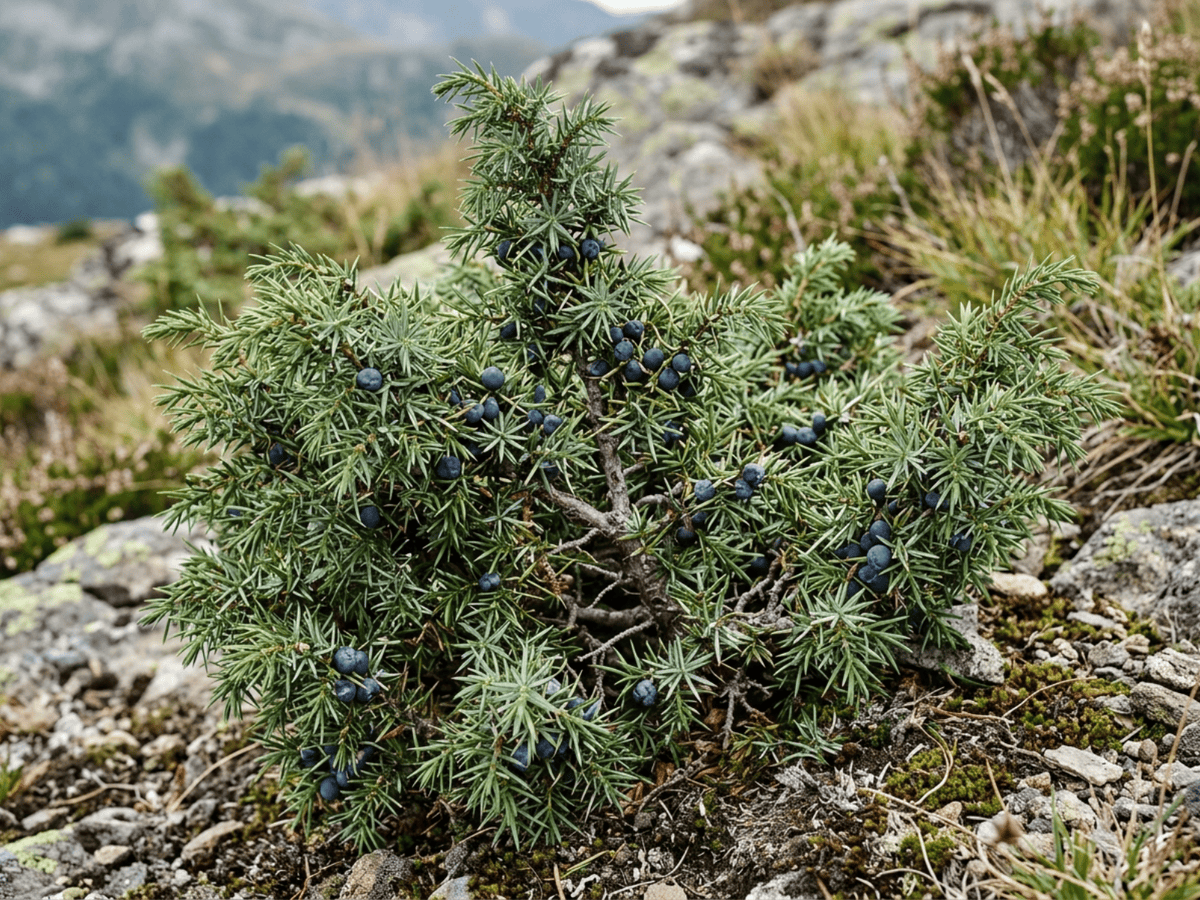 Common JuniperJuniperus communis
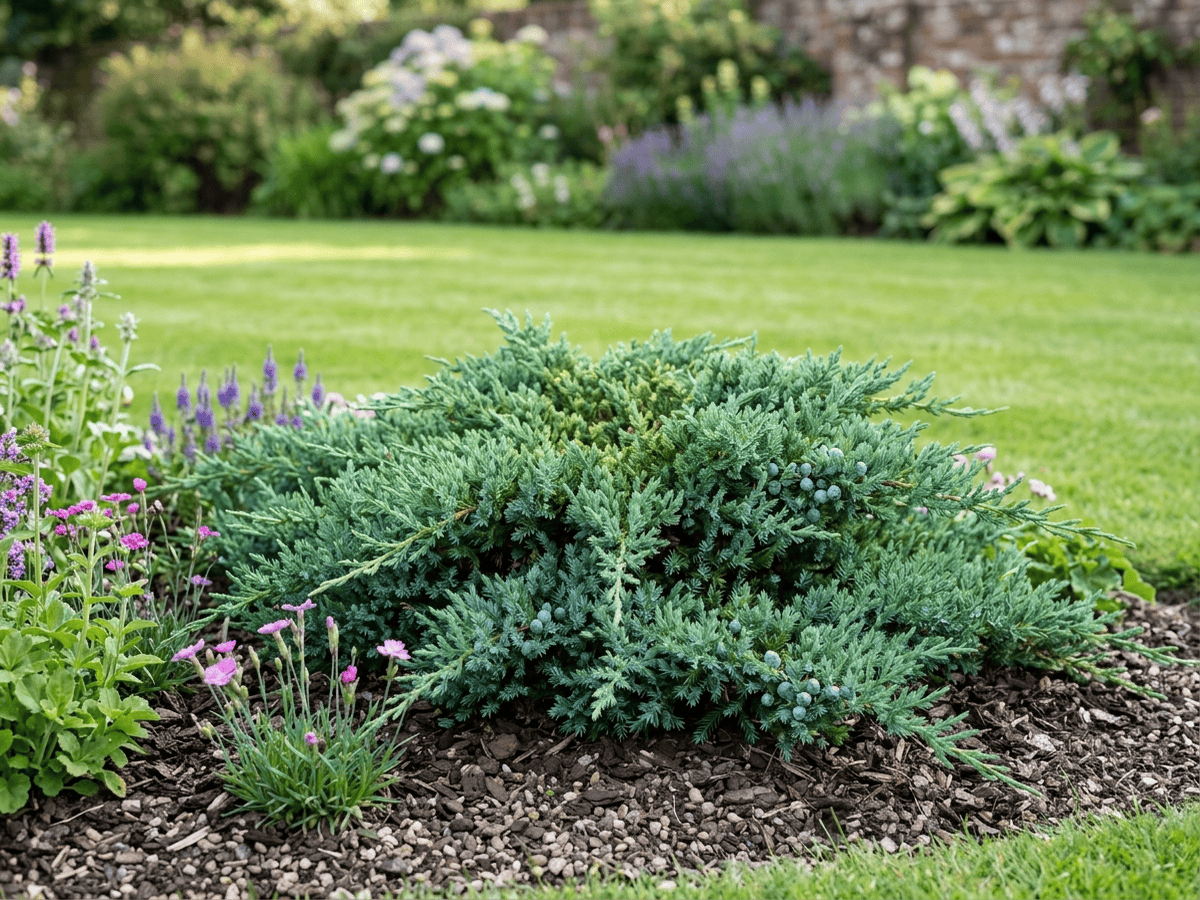 Shore JuniperJuniperus conferta
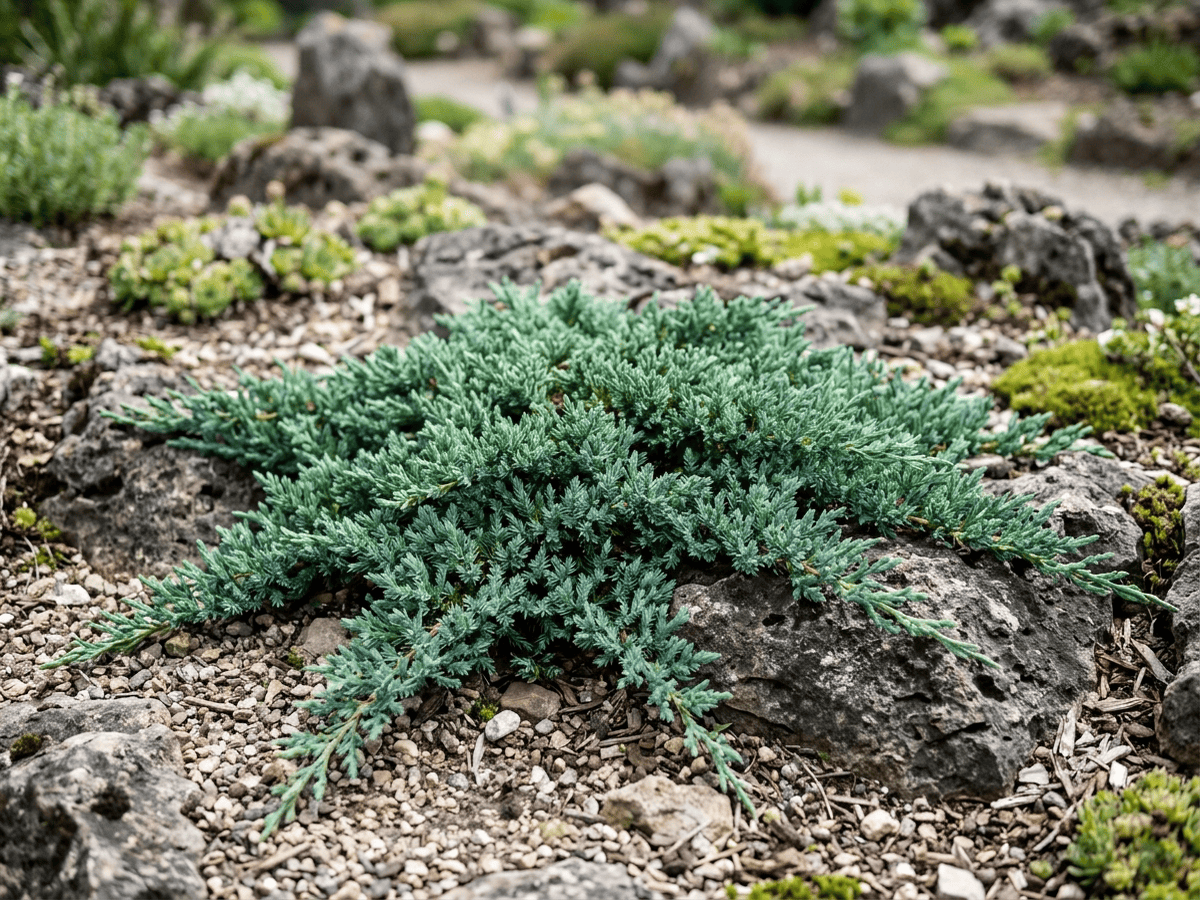 Creeping JuniperJuniperus horizontalis
Plants with similar care
 Chinese AbeliaAbelia chinensis
 Fragrant AbeliaAbelia mosanensis
 Large-Flowered AbeliaAbelia uniflora
 Glossy AbeliaAbelia x grandiflora
Frequently asked questions
How often should I water Flaky Juniper?
In summer, water about every 10 days; in winter, about every 30 days. Adjust for heat, pot size and drainage.
How much light does Flaky Juniper need?
Full sun: 6+ hrs direct. Watch the leaves — scorching or stretching means the light needs adjusting.
Is Flaky Juniper toxic to cats or dogs?
Pets Slight (Dogs Slight · Cats Slight) Educational information, not medical or veterinary advice. If exposure is suspected, contact a doctor or veterinarian.
Is Flaky Juniper easy to grow?
Yes — it is considered an easy, beginner-friendly plant.
YardMate
Identify any plant in seconds
Snap a photo — YardMate names the plant, diagnoses problems, and reminds you when to water.
Download on the App Store