 YardMate


Calabash
Lagenaria siceraria
Easy · Beginner friendlyAbout Calabash
Bottle Gourd or Calabash is an Old World vining annual reaching 15-30 feet, producing large white flowers that open at night and a wide variety of distinctive shaped gourds—bottle, dipper, snake, and giant—that dry to a hard woody shell used for utensils, instruments, and crafts. Edible only when very young; mature gourds are inedible but valued globally for craft uses. Grown in American gardens for both culinary and craft purposes.
- Edible
- Climbing
How to care for Calabash
Watering
- Springevery 3 days
- Summerevery 3 days
- Fallevery 7 days
- Winterpause watering
Soil · Rich & well-draining
- Top dressingCompost10%
- Main mixPotting soil + compost 3:180%
- DrainageGravel10%
Top up the compost layer each season.
FERTILIZER
Balanced Feed 14-14-14
An even feed covers all three needs at once, keeping leaves, roots and blooms moving together with nothing pushed out of balance.
- Nitrogen · Leaves
- Phosphorus · Roots + Blooms
- Potassium · Strength
- Springevery 30 days
- Summerevery 30 days
At a Glance
- NativeAfrica
- Height10–30 ft (3–9.1 m)
- Spread6–12 ft (1.8–3.7 m)
- Flower colorWhite
- Foliage colorGreen
- Fruit colorGreen
- SoilLoamy, Rich, Well-drained
- LocationsYard
Bloom time
BLOOM CYCLE
Peak bloom
Jun–Aug
Large white flowers open at night in summer
Fragrance
MODERATE FRAGRANCE
Night-blooming flowers have musky fragrance.
Toxicity
Humans Moderate · Pets Moderate
cucurbitacins (in bitter fruits)
Moderate
- Mature fruit
- Bitter fruit
- Ingestion
EXPOSURE Eating mature fruit and bitter fruit.
EFFECT Severe gastrointestinal distress.
NOTE Bitter fruits contain cucurbitacins that cause severe toxicity—fatalities reported. Sweet culinary varieties safe when young.
Moderate
- Bitter fruit
- Ingestion
EXPOSURE Eating bitter fruit.
EFFECT Vomiting and diarrhea.
NOTE Bitter fruits contain cucurbitacins that cause severe toxicity—fatalities reported. Sweet culinary varieties safe when young.
Moderate
- Bitter fruit
- Ingestion
EXPOSURE Eating bitter fruit.
EFFECT Vomiting and diarrhea.
NOTE Bitter fruits contain cucurbitacins that cause severe toxicity—fatalities reported. Sweet culinary varieties safe when young.
Educational information, not medical or veterinary advice. If exposure is suspected, contact a doctor or veterinarian.
DISTRIBUTION

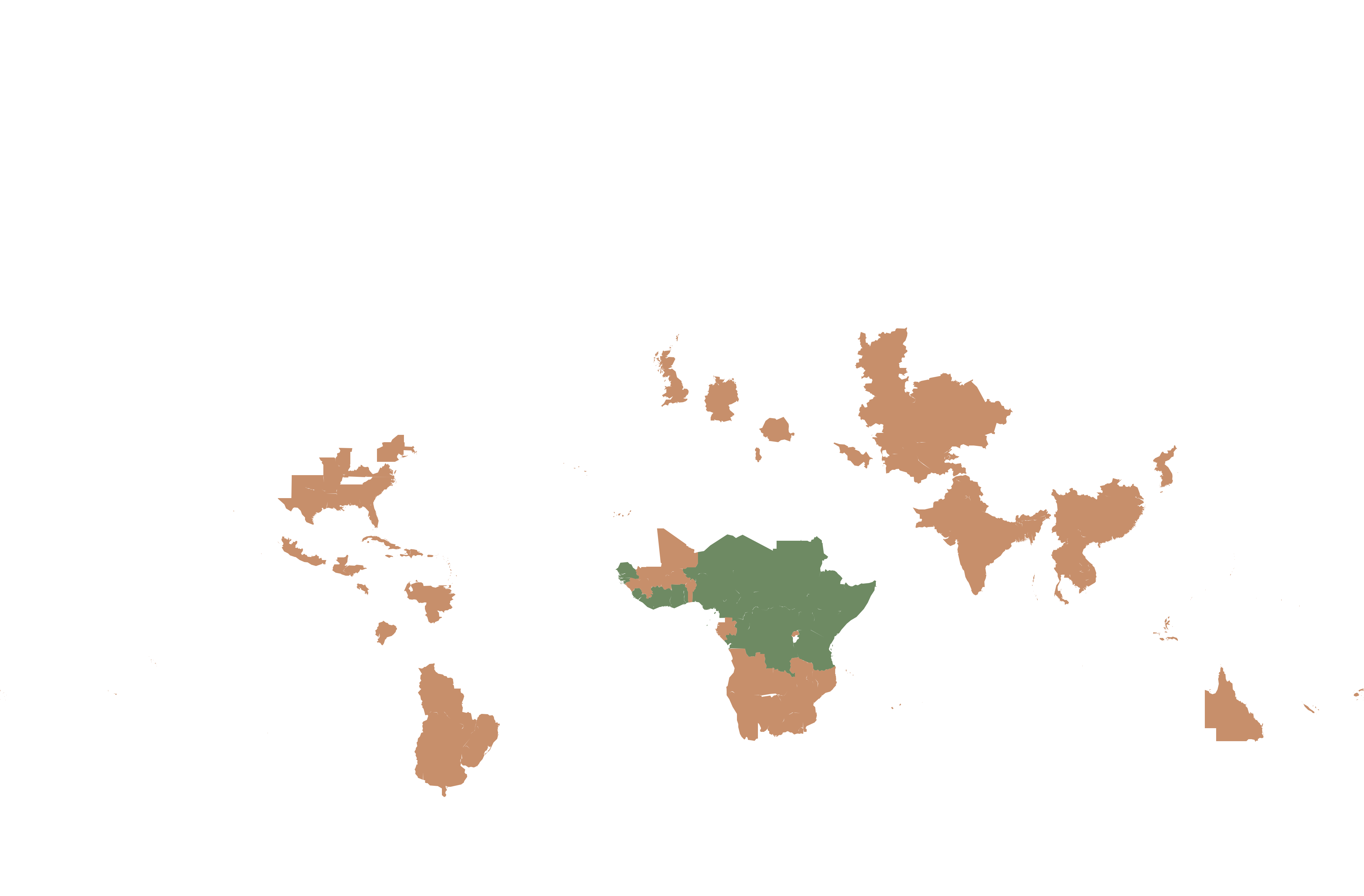
- Native
- Introduced
- Africa
History
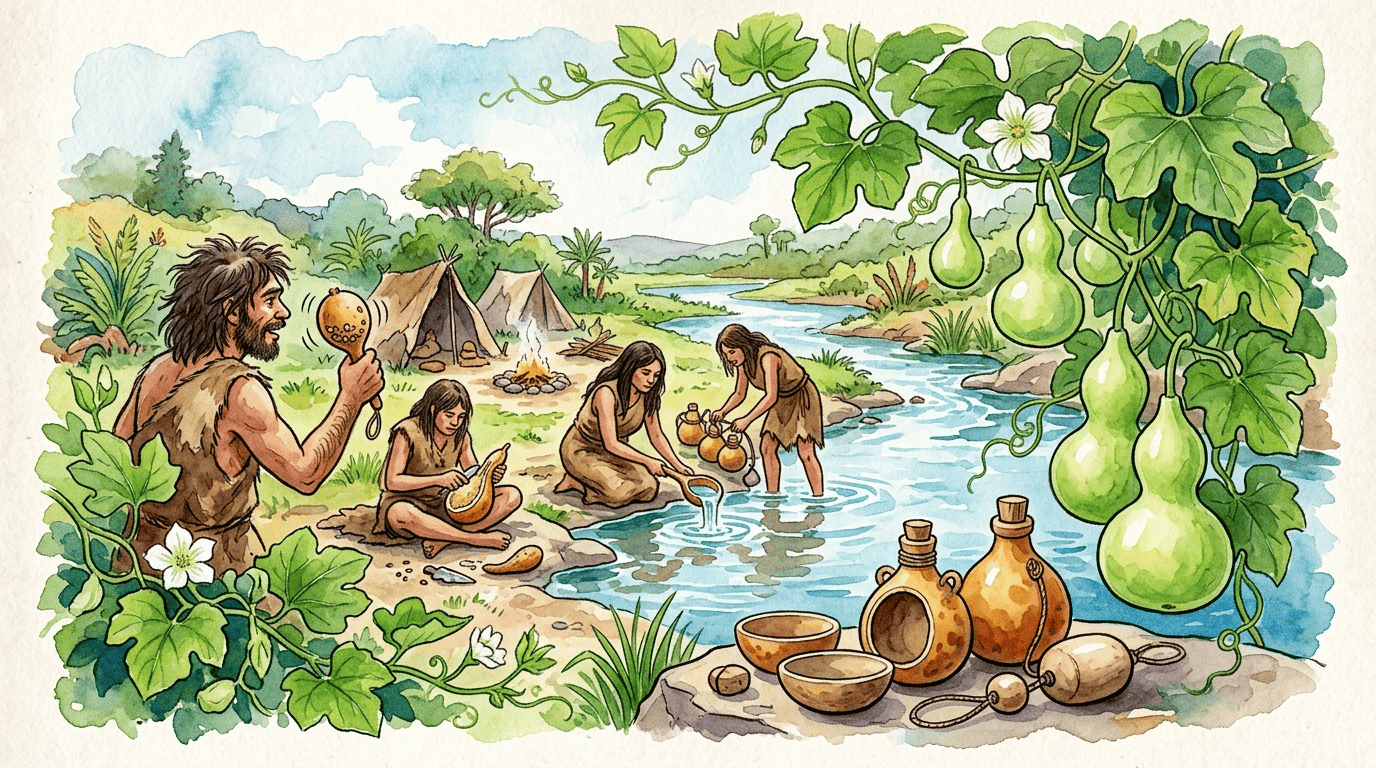
Lagenaria siceraria, commonly called bottle gourd, calabash, or white-flowered gourd, is an annual vining cucurbit in the family Cucurbitaceae with an exceptionally deep and globally-distributed archaeological record—ancient remains from as early as 10,000-13,000 BCE have been found in both the Americas (Peru, Mexico) and the Old World (Africa, Asia), making it arguably the earliest domesticated plant. Chilean-Italian naturalist Juan Ignacio Molina described it as Cucurbita siceraria in 1782; American botanist Paul Carpenter Standley transferred it to Lagenaria in 1930. Genetic studies (Erickson et al.
2005; Kistler et al. 2014) suggest the species originated in Africa, with seeds dispersing by ocean currents to the Americas where populations of wild bottle gourds existed before human arrival.
Humans domesticated the species independently on multiple continents, valuing not the bitter flesh but the hard waterproof shells used as canteens, bottles, bowls, floats, musical instruments (didgeridoos, maracas, sitar bodies), ceremonial objects, and bird houses since the Paleolithic. Still used as gourd craft material worldwide; young green fruits eaten as vegetable in Asia.
Symbolism & meaning
What It Symbolizes
The Calabash can symbolize utility — perhaps humanity's oldest container plant, dried gourds serving as bowls, bottles, and instruments long before pottery. Its heritage spans 10,000 years and almost every continent, one of the rare crops that crossed oceans before agriculture had names. To grow it is to handle a piece of deep human history, still working as it always has.
- Utility — humanity's oldest container and instrument plant
- Heritage — 10,000-year-old global cultural connection
Where the Name Comes From
'Lagenaria' from Latin 'lagena' (flask); 'siceraria' refers to its use for drink containers.
Uses & Fun Facts
- Young bottle gourds eaten as vegetable in Asian and African cuisines
- Vigorous vines train up sturdy trellises and arbors
- Dried hard-shelled gourds carved into bowls, dippers, and instruments
- Among humanity's oldest cultivated plants used as containers worldwide
Related plants
Plants with similar care
 Chinese AbeliaAbelia chinensis
 Fragrant AbeliaAbelia mosanensis
 Large-Flowered AbeliaAbelia uniflora
 Glossy AbeliaAbelia x grandiflora
Frequently asked questions
How often should I water Calabash?
Water about every 3 days during the growing season, and always let excess water drain away.
How much light does Calabash need?
Full sun: 6+ hrs direct. Watch the leaves — scorching or stretching means the light needs adjusting.
Is Calabash toxic to cats or dogs?
Pets Moderate (Dogs Moderate · Cats Moderate) Educational information, not medical or veterinary advice. If exposure is suspected, contact a doctor or veterinarian.
Is Calabash easy to grow?
Yes — it is considered an easy, beginner-friendly plant.
When does Calabash bloom?
It typically blooms Jun–Aug in the Northern Hemisphere.
YardMate
Identify any plant in seconds
Snap a photo — YardMate names the plant, diagnoses problems, and reminds you when to water.
Download on the App Store