 YardMate


Lovage
Levisticum officinale
Easy · Beginner friendlyAbout Lovage
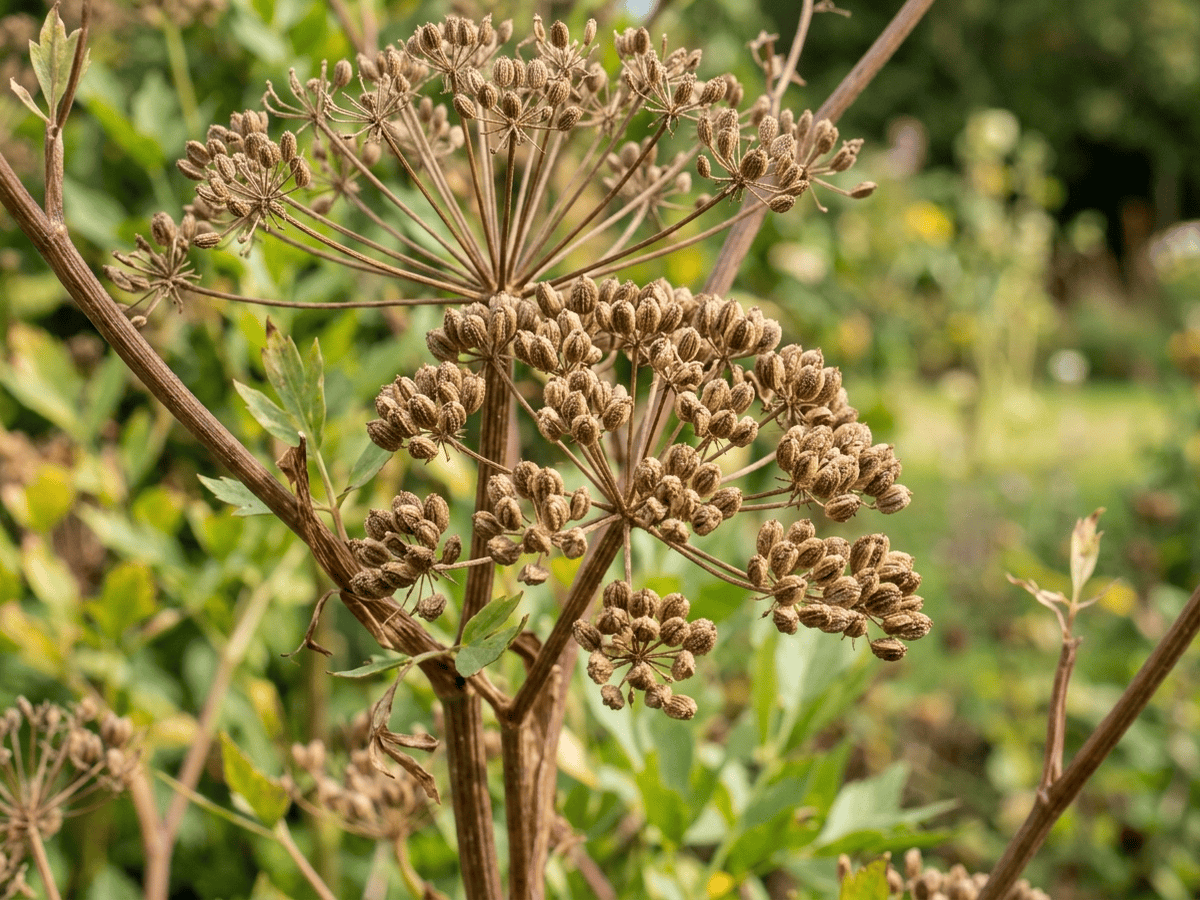
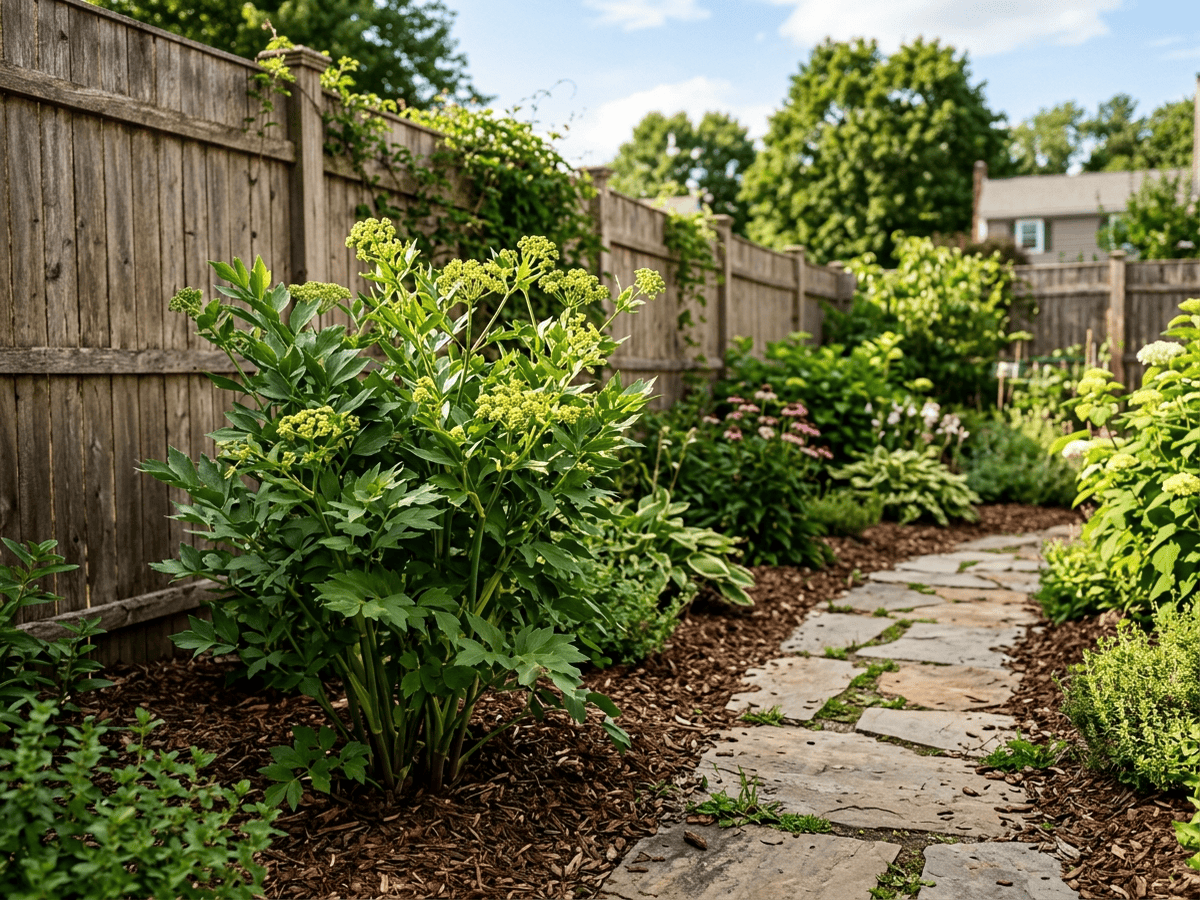
Levisticum officinale, or lovage, is a tall, robust perennial herb in the Apiaceae family native to southern Europe and southwestern Asia. It can reach an impressive 2 m in height, with large, glossy, dark green compound leaves that resemble celery on a grand scale. Tiny yellow-green flowers appear in flat umbels in midsummer, attracting a range of beneficial insects.
Lovage is remarkably hardy (USDA zones 3–9) and long-lived, with individual plants persisting for fifteen years or more. It prefers deep, fertile, moist soil in full sun to partial shade. The entire plant is strongly aromatic with a complex celery-like flavour, and virtually every part is edible—leaves in salads and soups, stems candied or used as straws, roots grated as a spice, and seeds in baking.
Despite its culinary versatility, lovage is underused in modern gardens. In medieval Europe it was a kitchen essential, and the plant appears in Charlemagne's list of mandatory monastery herbs (Capitulare de Villis, 812 AD). The root was employed medicinally as a diuretic and digestive tonic. Lovage makes an excellent structural herb at the back of a border, and a single plant provides enough material for a family's cooking needs throughout the growing season.
- Edible
- Fragrant
- Cold-hardy
- Pollinator-friendly
How to care for Lovage
Watering
- Springevery 3 days
- Summerevery 2 days
- Fallevery 4 days
- Winterevery 7 days
Soil · Rich & well-draining
- Top dressingCompost10%
- Main mixPotting soil + compost 3:180%
- DrainageGravel10%
Top up the compost layer each season.
FERTILIZER
Balanced Feed 14-14-14
An even feed covers all three needs at once, keeping leaves, roots and blooms moving together with nothing pushed out of balance.
- Nitrogen · Leaves
- Phosphorus · Roots + Blooms
- Potassium · Strength
- Springevery 21 days
- Summerevery 21 days
- Fallevery 30 days
At a Glance
- NativeEurope, Western Asia
- Height4–7 ft (1.2–2.1 m)
- Spread2–3 ft (0.6–0.9 m)
- Flower colorYellow, Green
- Foliage colorGreen
- SoilLoamy, Moisture-retentive, Rich
- LocationsYard
Bloom time
BLOOM CYCLE
Peak bloom
Jun–Jul
Remove flower stems to prolong leaf harvest, or let a few bloom for seeds and pollinators.
Fragrance
STRONG FRAGRANCE
The foliage has an intense celery-yeast-curry aroma.
Toxicity
Humans Slight · Pets Slight
furanocoumarins and phthalides
Slight
- Sap
- Leaf
- Contact
EXPOSURE Touching sap and leaves.
EFFECT Fresh sap can cause photosensitive dermatitis in sensitive individuals (phototoxic furanocoumarins).
NOTE Culinary use safe; wear gloves when handling fresh plant in sun to avoid phytophotodermatitis.
Slight
- All
- Ingestion
EXPOSURE Eating any part of the plant.
EFFECT Mild GI upset.
NOTE Culinary use safe; wear gloves when handling fresh plant in sun to avoid phytophotodermatitis.
Slight
- All
- Ingestion
EXPOSURE Eating any part of the plant.
EFFECT Mild GI upset.
NOTE Culinary use safe; wear gloves when handling fresh plant in sun to avoid phytophotodermatitis.
Educational information, not medical or veterinary advice. If exposure is suspected, contact a doctor or veterinarian.
DISTRIBUTION

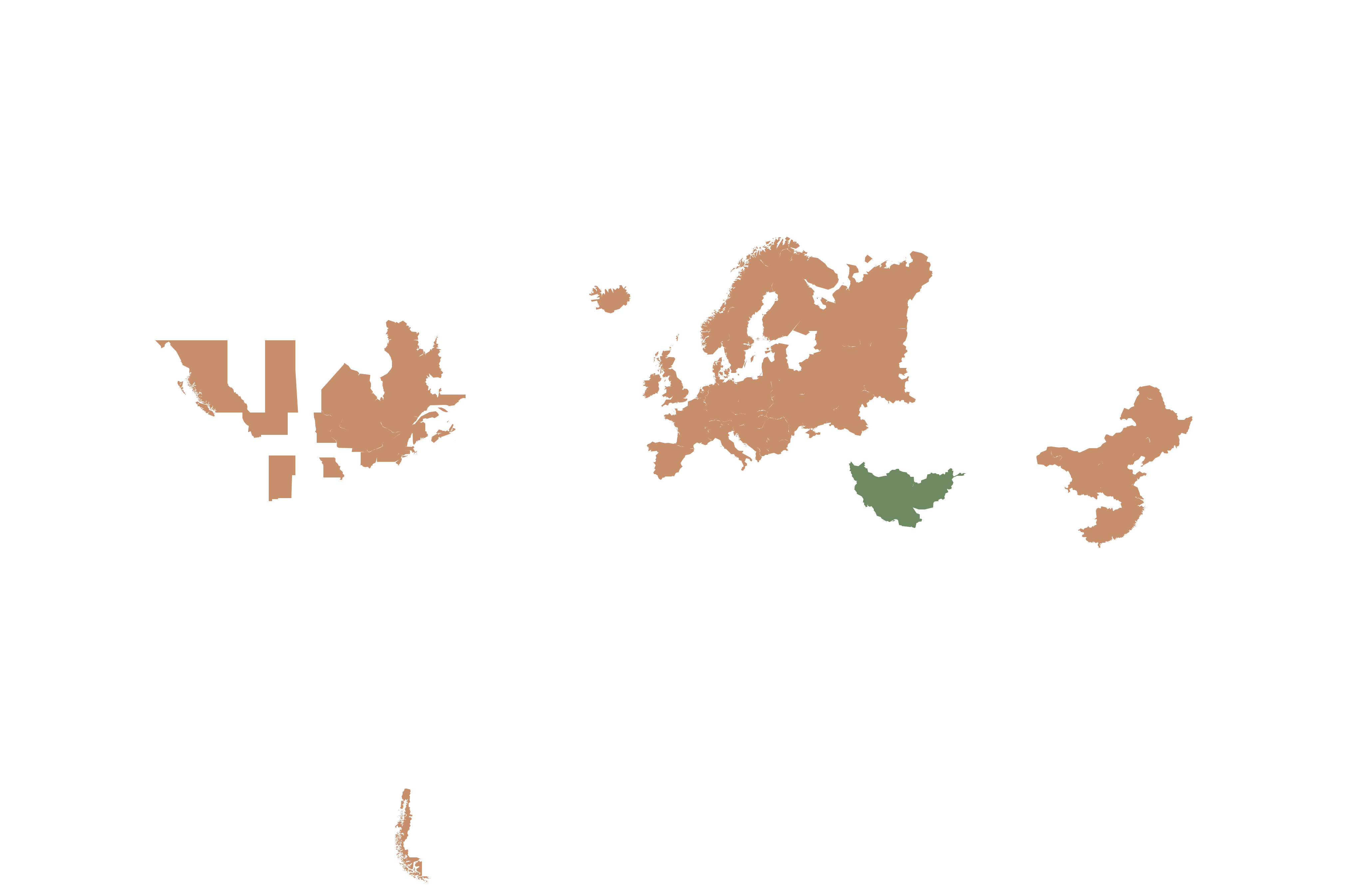
- Native
- Introduced
- Europe
- Western Asia
History
Levisticum officinale is native to the Balkans, Iran, and southeast Europe, and has been cultivated across Europe since classical Roman times. Charlemagne's 8th-century Capitulare de villis required lovage on imperial estates. The name derives from Latin "Ligusticum" (originally meaning "from Liguria" in northwest Italy).
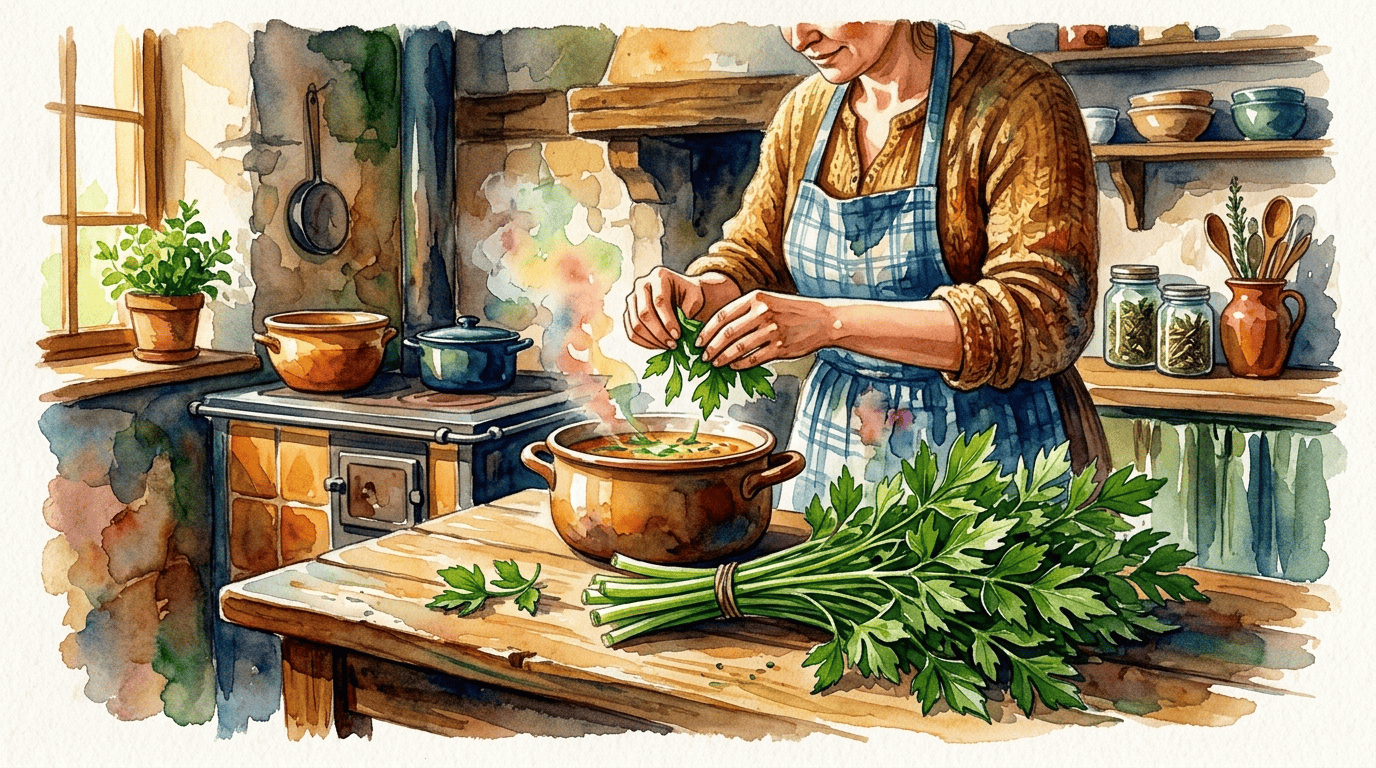
All parts have an intense celery-yeast-curry aroma that has traditionally been used to flavor soups, stews, stocks, and liqueurs throughout central, eastern, and northern Europe. It remains central to traditional Romanian, Polish, German, and Slovenian cuisines, often called "lubczyk" or "liebstöckel." The Swiss seasoning Maggi, introduced in 1886, has a flavor so reminiscent of lovage that in German-speaking countries the plant is often called "Maggikraut" (Maggi herb) — although Maggi seasoning itself contains no actual lovage. The root is used in traditional European herbal medicine and to flavor certain British herb liqueurs.
Symbolism & meaning
What It Symbolizes
Lovage can symbolize devotion, drawn from an old folk tradition that held a sprig added to bathwater would attract a faithful lover. Another layer is vitality, expressed in the plant's vigorous growth and astonishing taproot, sending celery-like flavor into the kitchen for decades from a single crown. In the medieval physic garden, lovage was both kitchen herb and quiet love charm, blending hospitality, health and old domestic magic into one tall, exuberant plant.
- Devotion — Folk tradition held that lovage in bathwater attracted love, making it a symbol of faithful devotion
- Vitality — Its vigorous growth and deep roots represent enduring life force
Where the Name Comes From
Levisticum is a Latin corruption of 'ligusticum' (of Liguria); 'officinale' marks it as a recognized pharmacy herb. English 'lovage' may trace through Old French 'livesche'.
Uses & Fun Facts
- Lovage leaves and stalks add celery flavor to soups
- Roots historically used as digestive folk remedy
- Foliage releases warm celery-like aroma when crushed
- Yellow umbels attract beneficial wasps and hoverflies
Related plants
Plants with similar care
 Chinese AbeliaAbelia chinensis
 Fragrant AbeliaAbelia mosanensis
 Large-Flowered AbeliaAbelia uniflora
 Glossy AbeliaAbelia x grandiflora
Frequently asked questions
How often should I water Lovage?
In summer, water about every 2 days; in winter, about every 7 days. Adjust for heat, pot size and drainage.
How much light does Lovage need?
Full sun: 6+ hrs direct. Watch the leaves — scorching or stretching means the light needs adjusting.
Is Lovage toxic to cats or dogs?
Pets Slight (Dogs Slight · Cats Slight) Educational information, not medical or veterinary advice. If exposure is suspected, contact a doctor or veterinarian.
Is Lovage easy to grow?
Yes — it is considered an easy, beginner-friendly plant.
When does Lovage bloom?
It typically blooms Jun–Jul in the Northern Hemisphere.
YardMate
Identify any plant in seconds
Snap a photo — YardMate names the plant, diagnoses problems, and reminds you when to water.
Download on the App Store