 YardMate
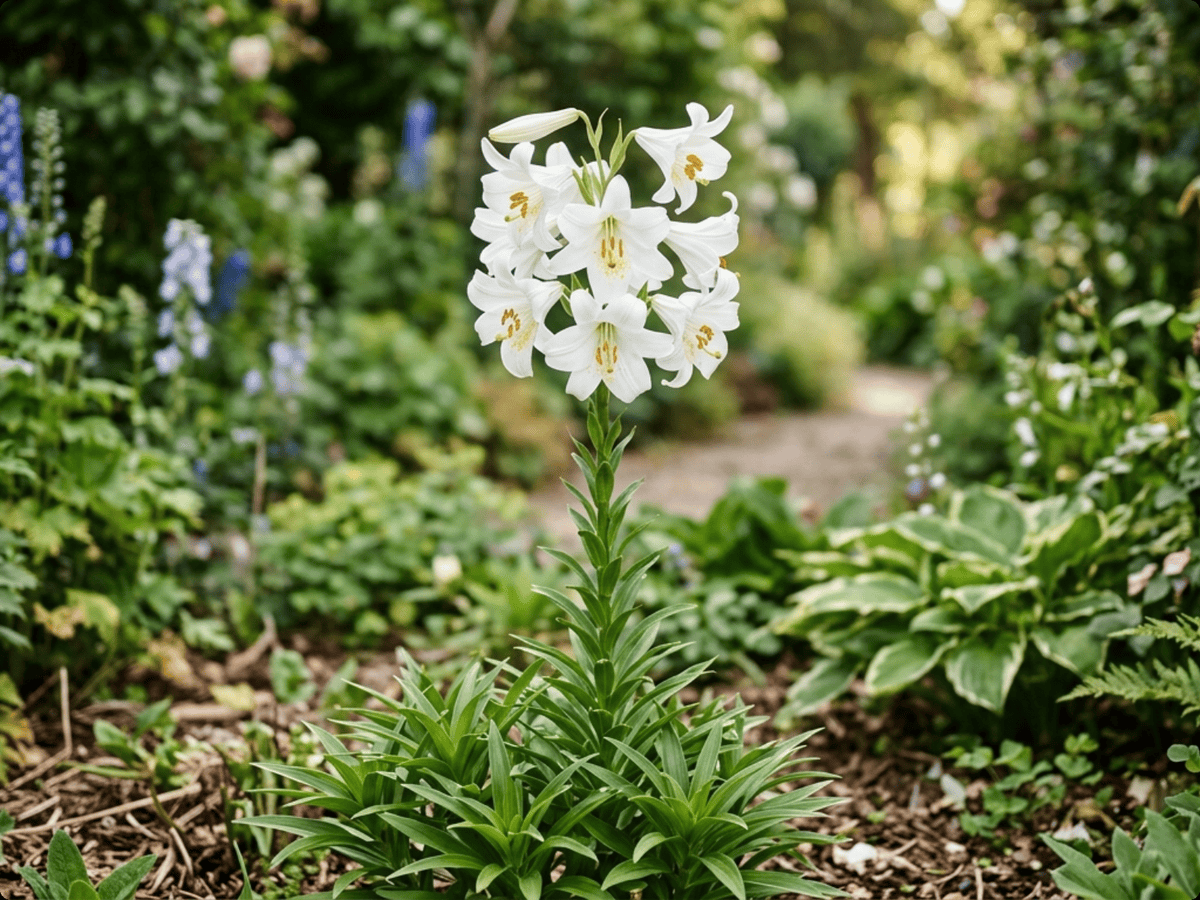


Madonna Lily
Lilium candidum
Medium · Some experienceAbout Madonna Lily
Lilium candidum, the Madonna lily, is one of the oldest cultivated flowers, grown for over 3,500 years. Its pure white, sweetly fragrant, trumpet-shaped flowers have been a symbol of purity in Western art and religion since ancient Minoan civilization. Unlike most lilies, it produces a rosette of basal leaves in autumn that persists through winter, and the bulb should be planted shallowly, barely covered. Native to the eastern Mediterranean, it blooms in early summer. It requires excellent drainage and resents being disturbed — established clumps should not be divided.
- Fragrant
- Cut-flower
How to care for Madonna Lily
Watering
- Springevery 7 days
- Summerevery 5 days
- Fallevery 10 days
- Winterevery 21 days
Soil · Well-draining
- Main mixLoam + coarse sand 3:175%
- DrainageGravel25%
Sharp drainage matters most — bulbs rot in wet soil while dormant.
FERTILIZER
Balanced Feed 14-14-14
An even feed covers all three needs at once, keeping leaves, roots and blooms moving together with nothing pushed out of balance.
- Nitrogen · Leaves
- Phosphorus · Roots + Blooms
- Potassium · Strength
- Springevery 30 days
- Summerevery 30 days
At a Glance
- NativeMediterranean, Europe
- Height3–5 ft (0.9–1.5 m)
- Spread0.5–1 ft (0.2–0.3 m)
- Flower colorWhite
- Foliage colorGreen
- SoilLoamy, Well-drained, Alkaline
- LocationsYard
Bloom time
BLOOM CYCLE
Peak bloom
Jun–Jul
Plant bulbs shallowly in late summer; don't disturb established clumps
Fragrance
STRONG FRAGRANCE
Heavy sweet fragrance, strongest at dusk.
Toxicity
Pets Severe
unidentified nephrotoxin (cat-specific)
Not reported
EXPOSURE No exposure route is reported.
EFFECT Bulb has been used medicinally in traditional Mediterranean practice and pollen stains skin.
NOTE No toxicity is reported for humans in this catalog; this is not evidence that the plant is edible or harmless.
Slight
- Flower
- Leaf
- Ingestion
EXPOSURE Eating flowers and leaves.
EFFECT Mild GI upset and not lethal in dogs.
NOTE All true Lilium species lethal to cats.
Severe
- Flower
- Leaf
- Stem
- Root
- Ingestion
EXPOSURE Eating flowers, leaves, stems, and roots.
EFFECT Fatal acute kidney failure and pollen alone can kill. Emergency veterinary care required.
NOTE All true Lilium species lethal to cats.
Educational information, not medical or veterinary advice. If exposure is suspected, contact a doctor or veterinarian.
DISTRIBUTION


- Native
- Introduced
- Mediterranean
- Europe
History

Lilium candidum is native to the eastern Mediterranean — Greece, Lebanon, Turkey, and the Levant — and has been cultivated continuously for over 3,500 years, making it among the very oldest cultivated flowers. Minoan frescoes at Amnisos on Crete (c. 1600 BCE) depict it in sacred procession scenes; Assyrian and Phoenician temples used it in ritual; Roman physicians described it as a medicine. Medieval Christian iconography adopted it as the flower of the Virgin Mary and the archangel Gabriel — 'Madonna Lily' — and it appears in countless Annunciation paintings from the 14th through 17th centuries.
Crusaders brought it from the Holy Land to European monastery gardens, where it naturalized in cottage gardens across the continent. As with all Lilium, lethally toxic to cats.
The Madonna lily appears in Minoan frescoes from 1580 BC on Crete, making it one of the earliest depicted flowers. It was sacred to the Greek goddess Hera and later became the preeminent symbol of the Virgin Mary in Christian art — virtually every Renaissance Annunciation painting shows Gabriel holding Madonna lilies.
Symbolism & meaning
What It Symbolizes
The Madonna Lily can symbolize purity, the oldest symbol of virginal innocence in Western art, depicted on Minoan frescoes and in Annunciation paintings for more than three thousand years. In Christian iconography it is the flower offered to the Virgin Mary, a snow-white trumpet that cannot easily be replaced by any other species. To grow candidum is to keep a strand of religious and artistic memory in the garden, a flower whose meaning was settled long before our modern flower lore began.
- Purity — The oldest symbol of virginal purity in Western art, depicted for 3,500+ years
Where the Name Comes From
The name Madonna Lily describes its lily-like flowers. Lilium from Latin. Candidum means 'shining white,' referring to the pure white petals.
Uses & Fun Facts
- Madonna lily emits classic heady summer perfume
- Symbol of purity in Christian and ancient art
- Pure white trumpet lilies cut for arrangements
- Scented blooms attract hawk moths at dusk
Related plants
More Lilium plants
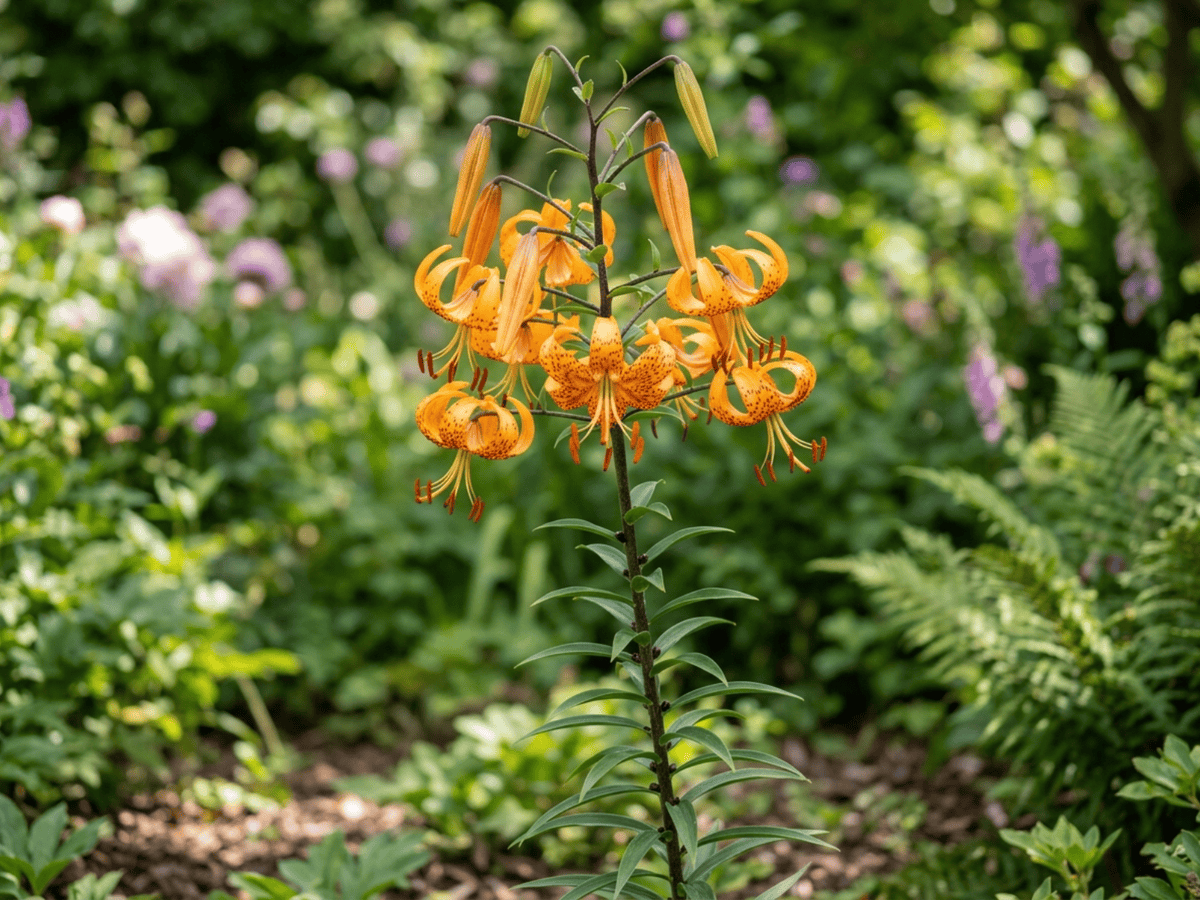 Henry's LilyLilium henryi
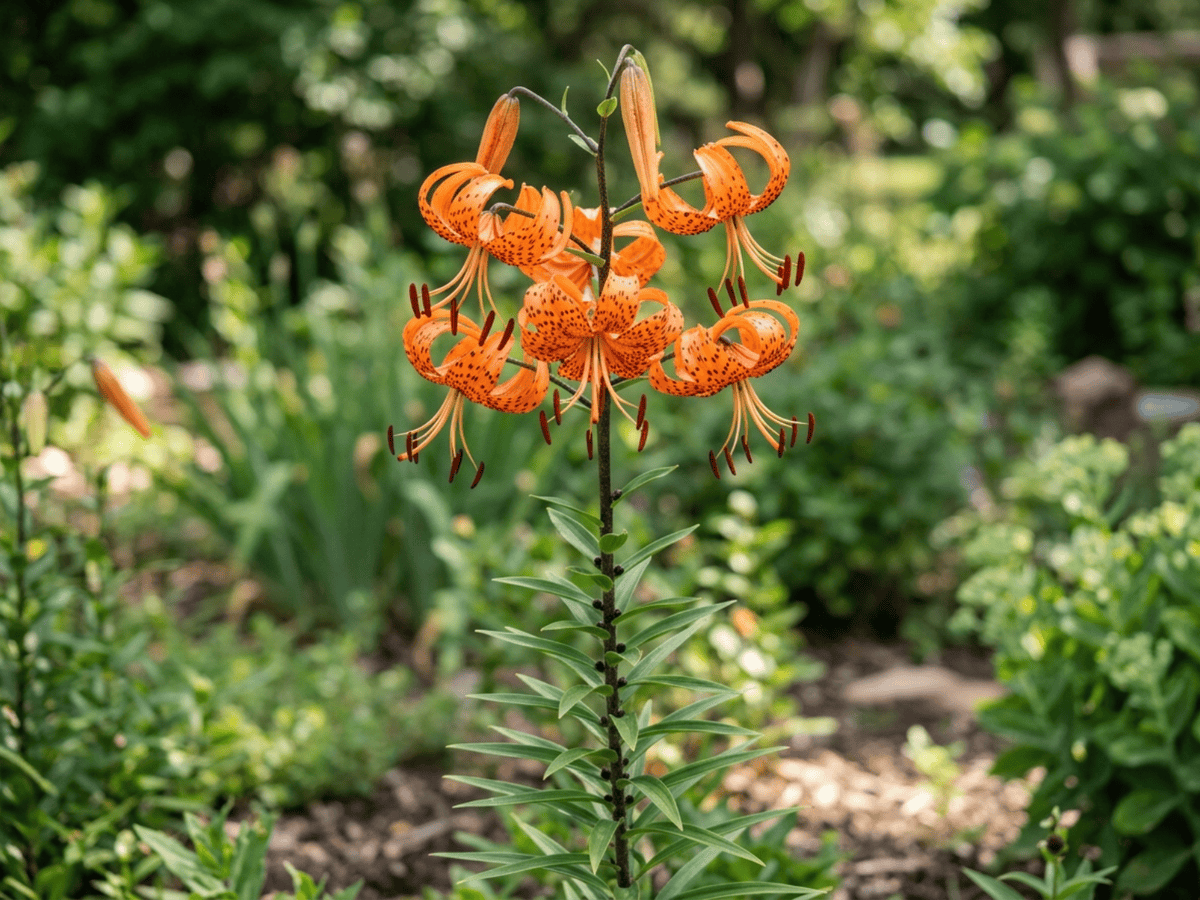 Tiger LilyLilium lancifolium
 Easter LilyLilium longiflorum
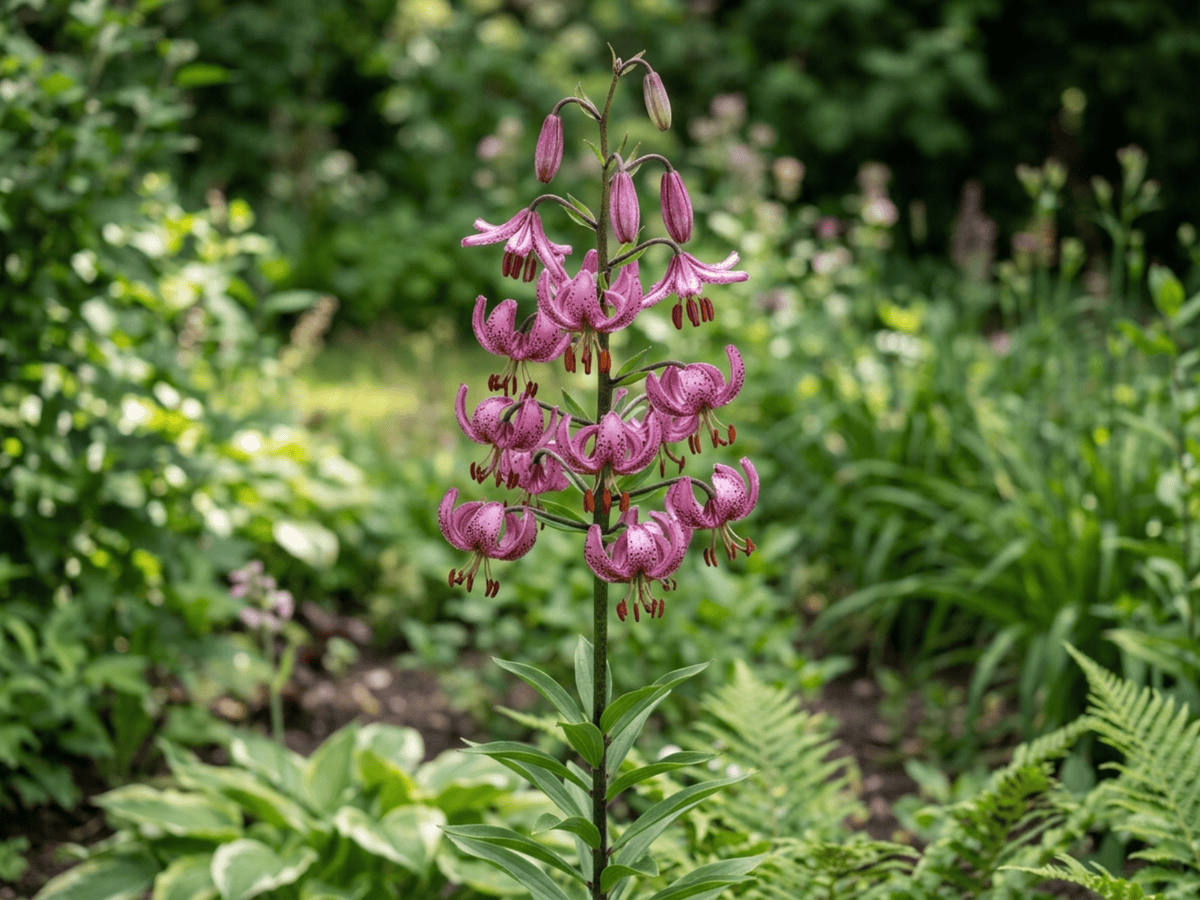 Martagon LilyLilium martagon
Plants with similar care
 Mexican AbeliaAbelia floribunda
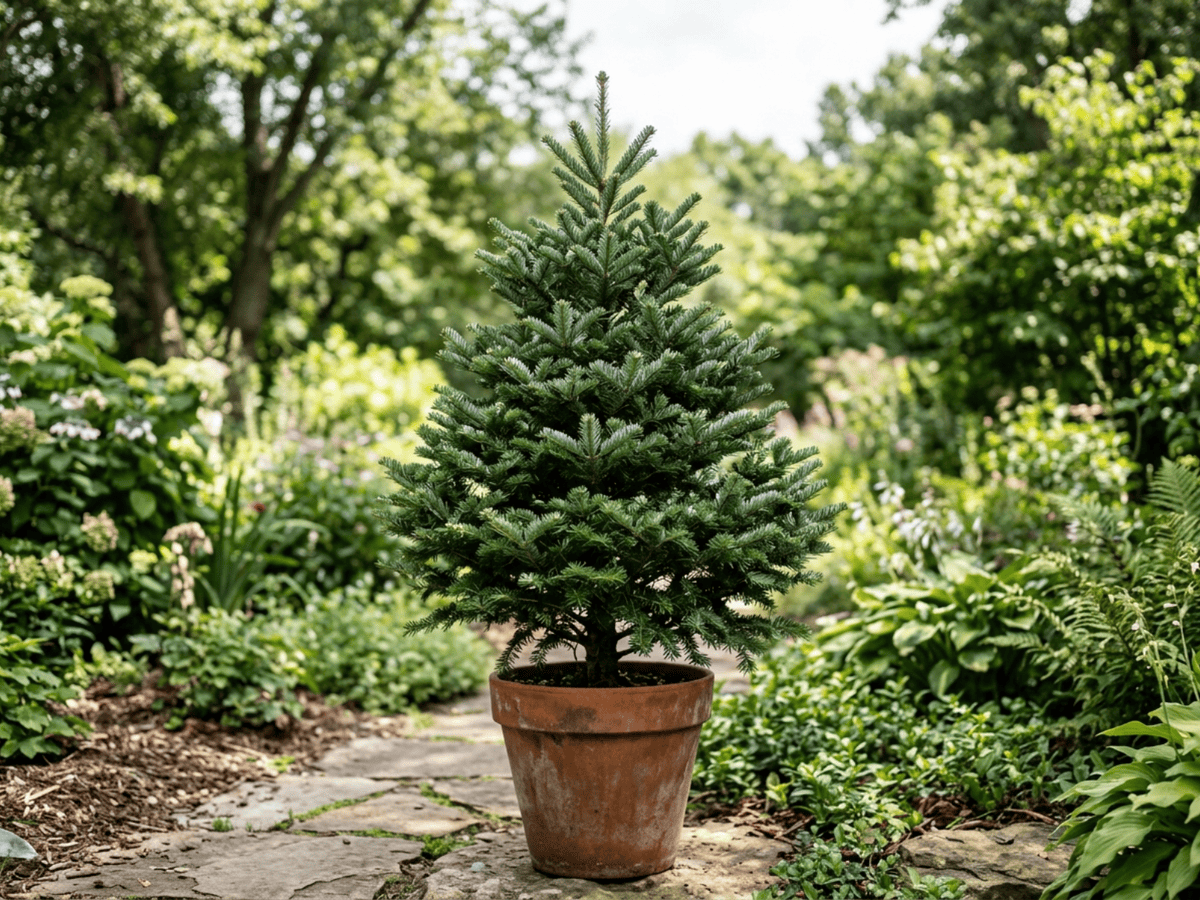 Fraser FirAbies fraseri
 Paperbark MapleAcer griseum
 Sugar MapleAcer saccharum
Frequently asked questions
How often should I water Madonna Lily?
In summer, water about every 5 days; in winter, about every 21 days. Adjust for heat, pot size and drainage.
How much light does Madonna Lily need?
Full sun: 6+ hrs direct. Watch the leaves — scorching or stretching means the light needs adjusting.
Is Madonna Lily toxic to cats or dogs?
Pets Severe (Dogs Slight · Cats Severe) Educational information, not medical or veterinary advice. If exposure is suspected, contact a doctor or veterinarian.
Is Madonna Lily easy to grow?
It is moderately demanding: a good choice once you have a little experience.
When does Madonna Lily bloom?
It typically blooms Jun–Jul in the Northern Hemisphere.
YardMate
Identify any plant in seconds
Snap a photo — YardMate names the plant, diagnoses problems, and reminds you when to water.
Download on the App Store