 YardMate



Tiger Lily
Lilium lancifolium
Easy · Beginner friendlyAbout Tiger Lily
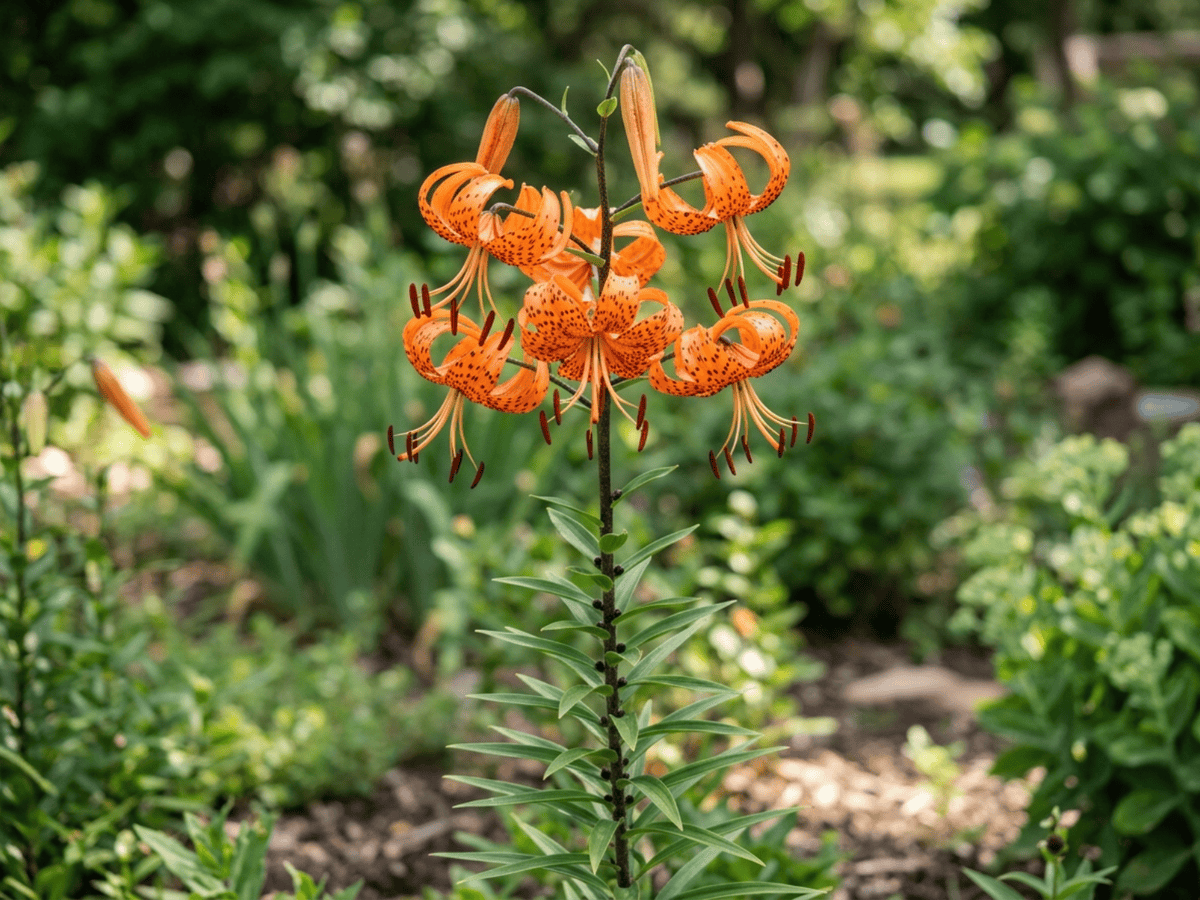
Tiger Lily is a vigorous East Asian species lily producing tall stems topped with many nodding orange flowers densely spotted with black, featuring strongly recurved petals. Reaching 3-5 feet tall, it blooms in mid to late summer and forms small dark bulbils in leaf axils that drop to create colonies. Extremely cold-hardy (USDA 3-9) and disease-resistant, it is a foolproof classic for American cottage borders and naturalized meadows.
- Cold-hardy
- Pollinator-friendly
How to care for Tiger Lily
Watering
- Springevery 5 days
- Summerevery 4 days
- Fallevery 7 days
- Winterpause watering
Soil · Well-draining
- Main mixLoam + coarse sand 3:175%
- DrainageGravel25%
Sharp drainage matters most — bulbs rot in wet soil while dormant.
FERTILIZER
Balanced Feed 14-14-14
An even feed covers all three needs at once, keeping leaves, roots and blooms moving together with nothing pushed out of balance.
- Nitrogen · Leaves
- Phosphorus · Roots + Blooms
- Potassium · Strength
- Springevery 30 days
- Summerevery 30 days
At a Glance
- NativeEast Asia
- Height3–5 ft (0.9–1.5 m)
- Spread1–1.5 ft (0.3–0.5 m)
- Flower colorOrange, Red
- Foliage colorGreen
- SoilLoamy, Well-drained, Acidic
- LocationsYard
Bloom time
BLOOM CYCLE
Peak bloom
Jul–Aug
Orange black-spotted flowers July to August
Fragrance
LIGHT FRAGRANCE
The flowers have a mild scent.
Toxicity
Humans Slight · Cats Toxic
unidentified nephrotoxin
Slight
- All
- Ingestion
EXPOSURE Eating any part of the plant.
EFFECT Mild GI.
NOTE Documented concern for humans: Mild GI.
Safe
EXPOSURE No exposure route is reported.
EFFECT No toxic effect is reported.
NOTE Listed as non-toxic for dogs; avoid eating ornamental plants unless confirmed edible.
Toxic
- All
- Ingestion
EXPOSURE Eating any part of the plant.
EFFECT Acute kidney failure, vomiting, and death.
NOTE True lilies are dangerous to cats, but ASPCA/NC State list these Lilium species as non-toxic to dogs. Keep cat warning high; dog exposure is usually not a toxicological concern.
Educational information, not medical or veterinary advice. If exposure is suspected, contact a doctor or veterinarian.
DISTRIBUTION


- Native
- Introduced
- East Asia
History

Lilium lancifolium (syn. L. tigrinum) is native to China, Korea, and Japan. The species has been cultivated for over 1500 years in East Asia for its edible starchy bulbs, which remain a common ingredient in Chinese cuisine and traditional medicine (bai he). Scottish plant collector William Kerr sent bulbs from Canton to Kew Gardens in 1804, and the species rapidly naturalized in American and European gardens as the classic orange-spotted tiger lily.
It propagates easily through bulbils formed in leaf axils, which contributed to its wide distribution but also made it a vector for lily mosaic virus, which it tolerates but which can devastate susceptible hybrids. Modern gardeners often grow newer virus-free tetraploid cultivars.
It is the floral symbol of Japan. A true pass-along plant in America—heirloom specimens in old farmhouse gardens often trace back generations. Can spread latent virus to other lilies, so should be grown separately.
Symbolism & meaning
What It Symbolizes
The Tiger Lily suggests wealth in Chinese tradition, its fiery orange blooms heavy with spotted abundance and good fortune. Often passed from grandmother to granddaughter through small bulbils, it carries the deeper meaning of heritage — a flower that travels through generations rather than catalogs. To plant tiger lilies is to keep a family memory in the soil, abundance and inheritance flowering together each summer.
- Wealth — Chinese symbol of abundance and good fortune
- Heritage — heirloom passed through generations
Where the Name Comes From
The name Tiger Lily describes its lily-like flowers. 'Lancifolium' means 'lance-leaved', referring to the long narrow leaves.
Uses & Fun Facts
- Tiger Lily flowers nourish foraging bees and pollinators
- Bold orange lilies rise well from deep pots and sunny border pockets
Related plants
More Lilium plants
 Madonna LilyLilium candidum
 Henry's LilyLilium henryi
 Easter LilyLilium longiflorum
 Martagon LilyLilium martagon
Plants with similar care
 Chinese AbeliaAbelia chinensis
 Fragrant AbeliaAbelia mosanensis
 Large-Flowered AbeliaAbelia uniflora
 Glossy AbeliaAbelia x grandiflora
Frequently asked questions
How often should I water Tiger Lily?
Water about every 5 days during the growing season, and always let excess water drain away.
How much light does Tiger Lily need?
Full sun: 6+ hrs direct. Watch the leaves — scorching or stretching means the light needs adjusting.
Is Tiger Lily toxic to cats or dogs?
Pets Toxic (Dogs Safe · Cats Toxic) Educational information, not medical or veterinary advice. If exposure is suspected, contact a doctor or veterinarian.
Is Tiger Lily easy to grow?
Yes — it is considered an easy, beginner-friendly plant.
When does Tiger Lily bloom?
It typically blooms Jul–Aug in the Northern Hemisphere.
YardMate
Identify any plant in seconds
Snap a photo — YardMate names the plant, diagnoses problems, and reminds you when to water.
Download on the App Store