 YardMate
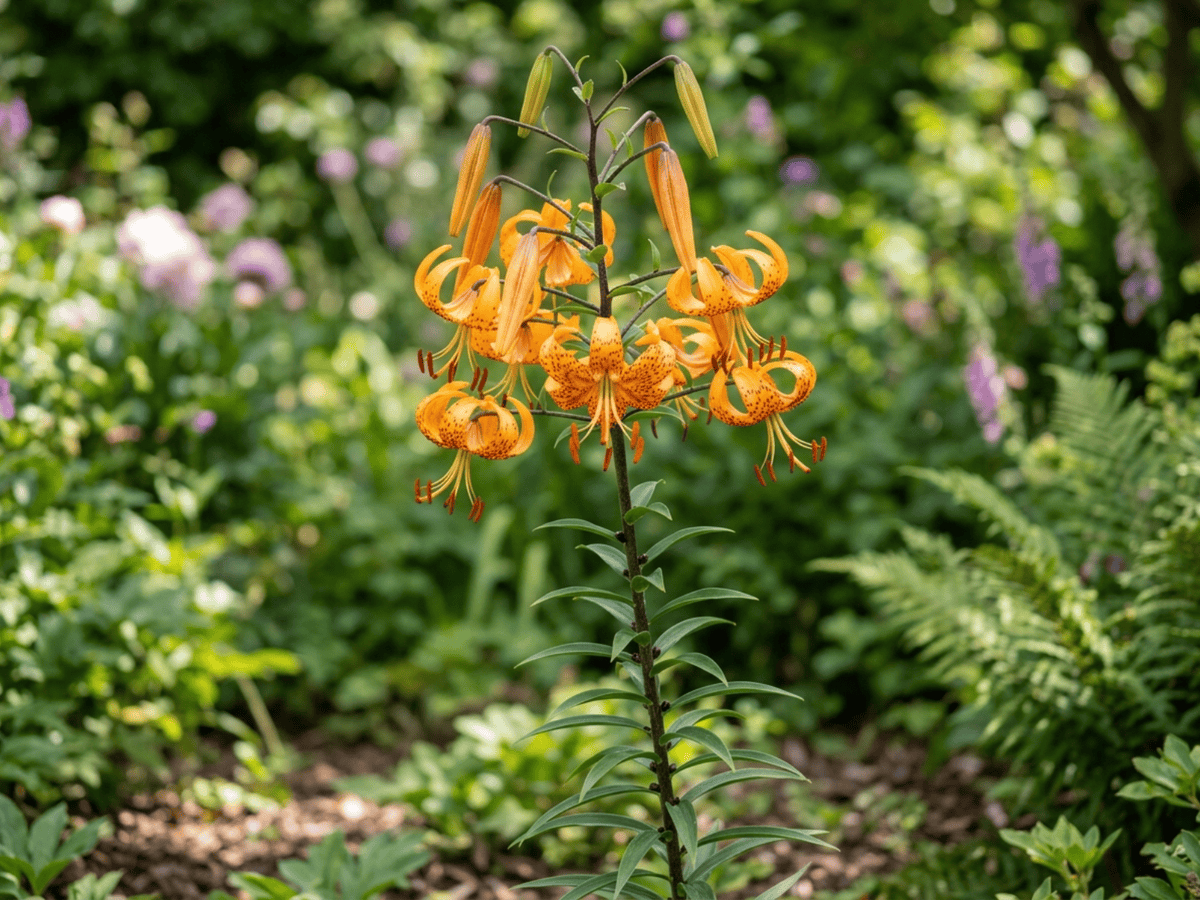


Henry's Lily
Lilium henryi
Easy · Beginner friendlyAbout Henry's Lily
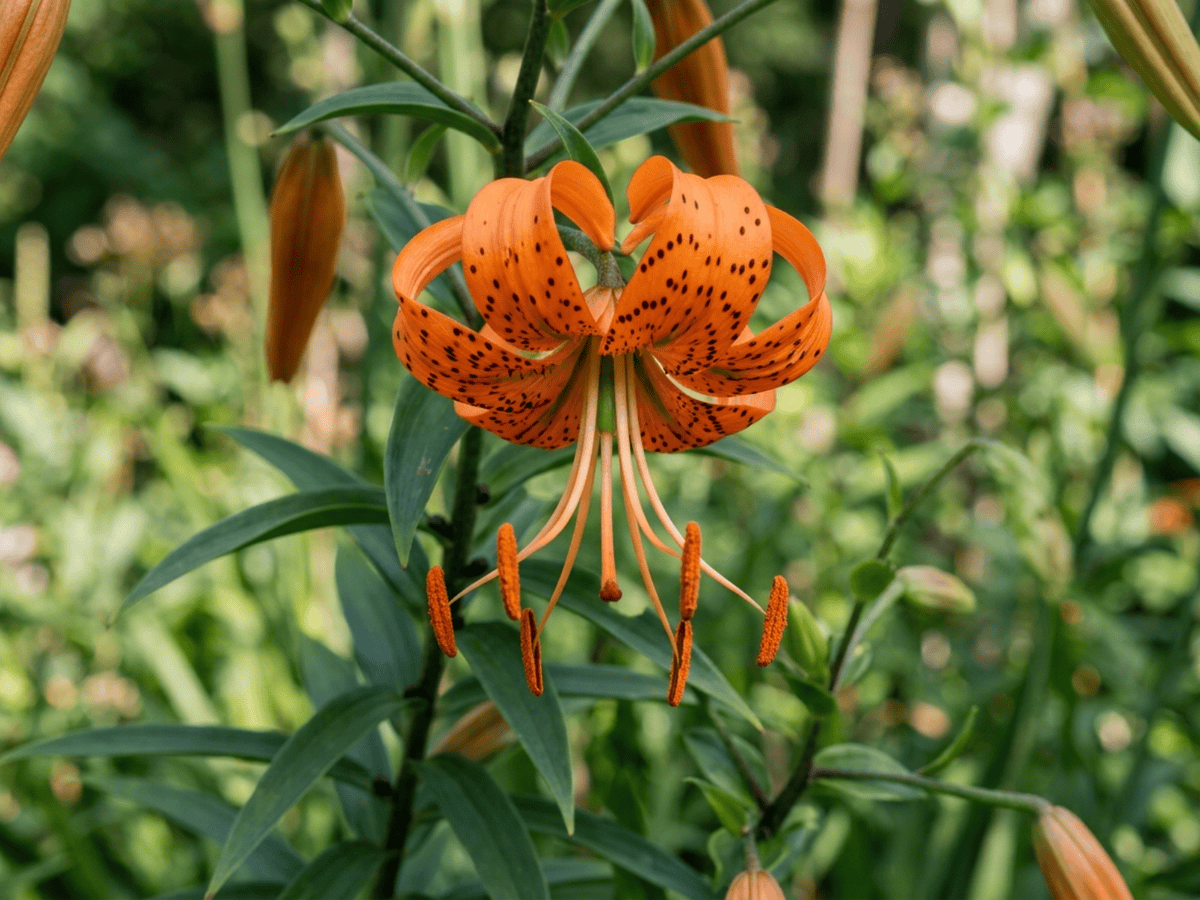
Henry's Lily is a tall vigorous Chinese species lily producing arching stems up to 8 feet topped with dozens of nodding bright orange recurved flowers in late summer. Discovered by Augustine Henry in 1888 in the Yangtze gorges, it is exceptionally tolerant of alkaline soil (unusual for lilies) and extremely disease-resistant. Hardy in USDA zones 4-8 and a showstopping parent of countless modern lily hybrids in American gardens.
- Cold-hardy
- Pollinator-friendly
How to care for Henry's Lily
Watering
- Springevery 5 days
- Summerevery 4 days
- Fallevery 7 days
- Winterpause watering
Soil · Well-draining
- Main mixLoam + coarse sand 3:175%
- DrainageGravel25%
Sharp drainage matters most — bulbs rot in wet soil while dormant.
FERTILIZER
Balanced Feed 14-14-14
An even feed covers all three needs at once, keeping leaves, roots and blooms moving together with nothing pushed out of balance.
- Nitrogen · Leaves
- Phosphorus · Roots + Blooms
- Potassium · Strength
- Springevery 30 days
- Summerevery 30 days
At a Glance
- NativeEast Asia
- Height4–8 ft (1.2–2.4 m)
- Spread1–1.5 ft (0.3–0.5 m)
- Flower colorOrange, Yellow
- Foliage colorGreen
- SoilLoamy, Well-drained
- LocationsYard
Bloom time
BLOOM CYCLE
Peak bloom
Aug–Sep
Bright orange recurved flowers August to September
Fragrance
LIGHT FRAGRANCE
The flowers have a mild scent.
Toxicity
Humans Slight · Pets Toxic
unidentified nephrotoxin
Slight
- All
- Ingestion
EXPOSURE Eating any part of the plant.
EFFECT Mild GI.
NOTE Documented concern for humans: Mild GI.
Slight
- All
- Ingestion
EXPOSURE Eating any part of the plant.
EFFECT Mild vomiting.
NOTE ASPCA: severely nephrotoxic to cats.
Toxic
- All
- Ingestion
EXPOSURE Eating any part of the plant.
EFFECT Acute kidney failure and death.
NOTE ASPCA: severely nephrotoxic to cats.
Educational information, not medical or veterinary advice. If exposure is suspected, contact a doctor or veterinarian.
DISTRIBUTION


- Native
- East Asia
History
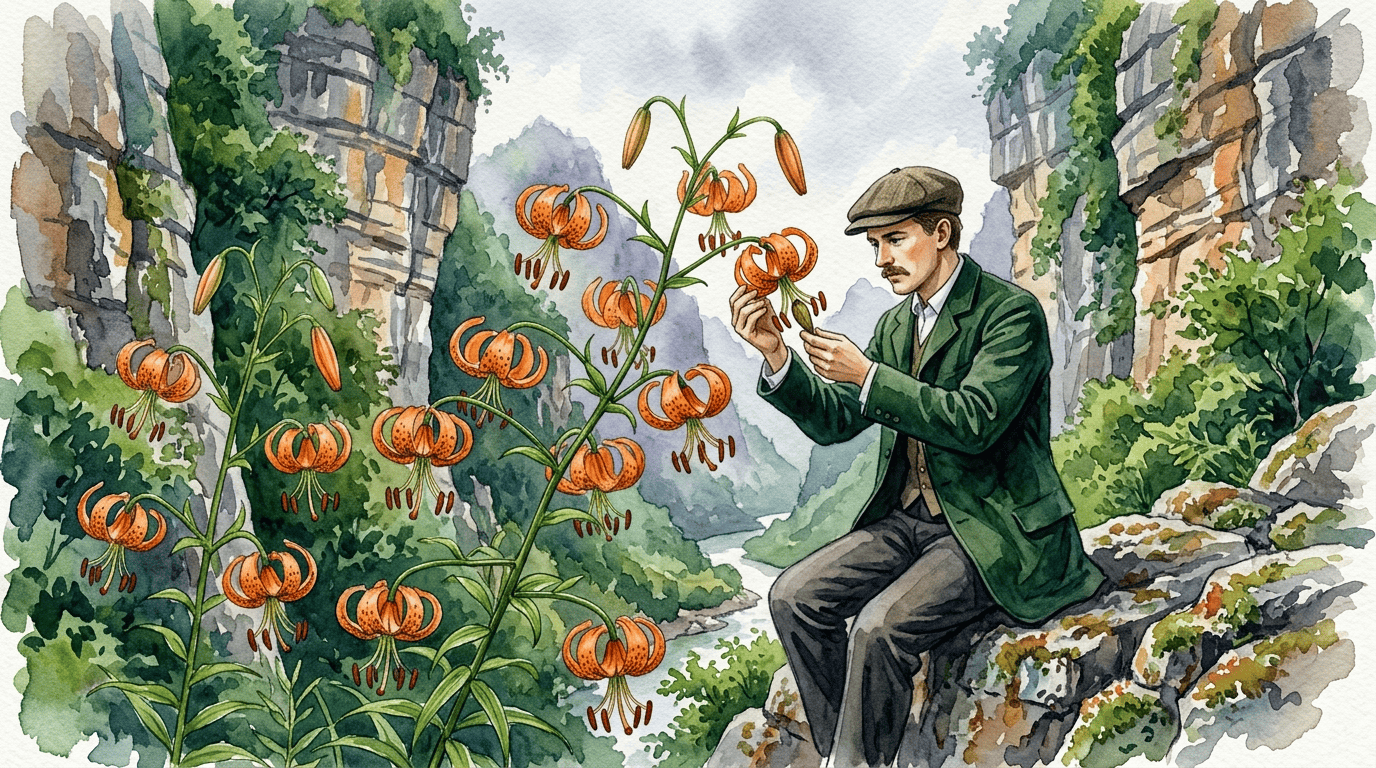
Lilium henryi grows naturally in limestone gorges of Hubei and Guizhou provinces in central China. Irish plantsman Augustine Henry, working as a medical officer for the Imperial Maritime Customs Service, collected specimens in 1888. The species reached Kew Gardens and was formally described by John Gilbert Baker in 1888.
Compared to most lilies, L. henryi shows remarkable tolerance of alkaline soils, shade, and virus diseases. American Lily Society founder Jan de Graaff and later breeder Judith McRae used it extensively in the 1960s-80s as a parent for the Aurelian Hybrid group—crosses of Asian trumpet lilies yielding taller more vigorous plants.
It is also a principal parent of the Orienpet (OT) hybrid group crossing Oriental and Trumpet lilies that revolutionized commercial lily production in the 2000s. Discovered in central China by Irish plantsman Augustine Henry and introduced by E.H. Wilson in 1900. Exceptionally long-lived and pest-resistant, often thriving for 20+ years in the same spot.
Symbolism & meaning
What It Symbolizes
Henry's lily is perseverance among bulbs — long-lived, resilient, and remarkably forgiving where many lilies sulk. Its heritage is monumental in horticulture: Augustine Henry's late-19th-century Chinese collections gave breeders the genetic foundation for the modern Asiatic, oriental, and trumpet hybrids that fill summer gardens worldwide. Behind countless flashy cultivars stands this graceful, freckled orange original.
- Perseverance — long-lived and resilient
- Heritage — breeding foundation of modern lilies
Where the Name Comes From
The name Henry's Lily describes its lily-like flowers. 'Henryi' honors Augustine Henry (1857–1930), Irish plant collector in China.
Uses & Fun Facts
- Recurved orange Turk's-cap flowers attract swallowtail butterflies
- Tall arching stems serve as late-summer border focal point
- Long-stemmed lily blooms prized for tall floral arrangements
Related plants
More Lilium plants
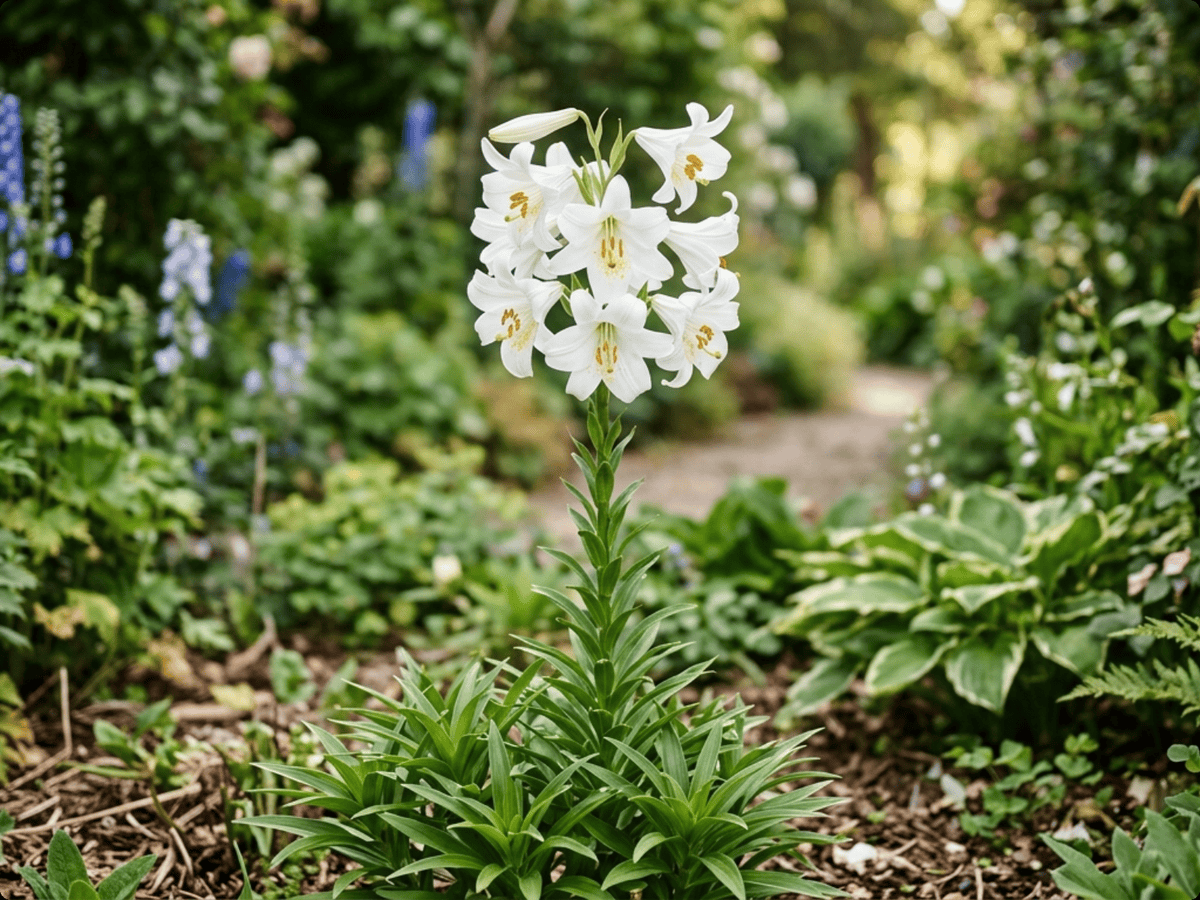 Madonna LilyLilium candidum
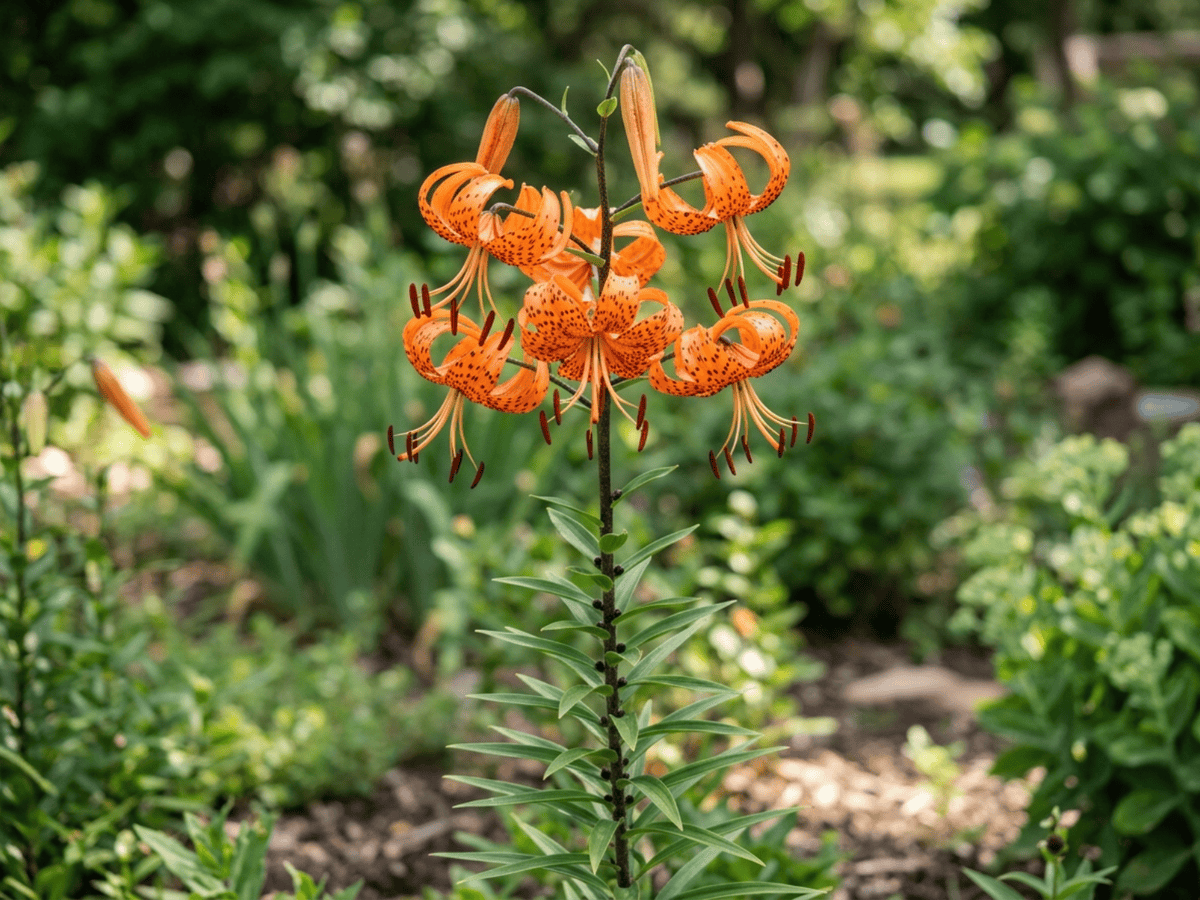 Tiger LilyLilium lancifolium
 Easter LilyLilium longiflorum
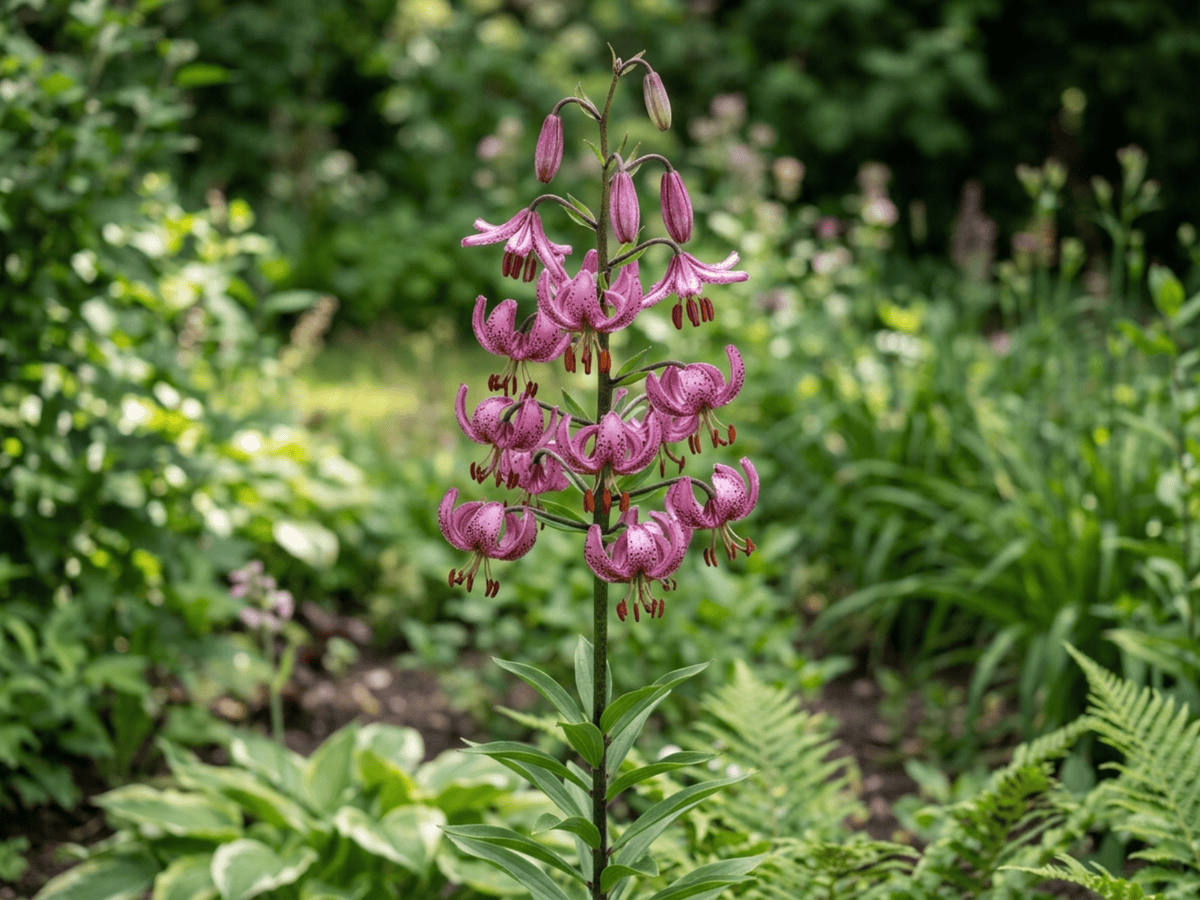 Martagon LilyLilium martagon
Plants with similar care
 Chinese AbeliaAbelia chinensis
 Fragrant AbeliaAbelia mosanensis
 Large-Flowered AbeliaAbelia uniflora
 Glossy AbeliaAbelia x grandiflora
Frequently asked questions
How often should I water Henry's Lily?
Water about every 5 days during the growing season, and always let excess water drain away.
How much light does Henry's Lily need?
Full sun: 6+ hrs direct. Watch the leaves — scorching or stretching means the light needs adjusting.
Is Henry's Lily toxic to cats or dogs?
Pets Toxic (Dogs Slight · Cats Toxic) Educational information, not medical or veterinary advice. If exposure is suspected, contact a doctor or veterinarian.
Is Henry's Lily easy to grow?
Yes — it is considered an easy, beginner-friendly plant.
When does Henry's Lily bloom?
It typically blooms Aug–Sep in the Northern Hemisphere.
YardMate
Identify any plant in seconds
Snap a photo — YardMate names the plant, diagnoses problems, and reminds you when to water.
Download on the App Store