 YardMate


Star Magnolia
Magnolia stellata
Easy · Beginner friendlyAbout Star Magnolia
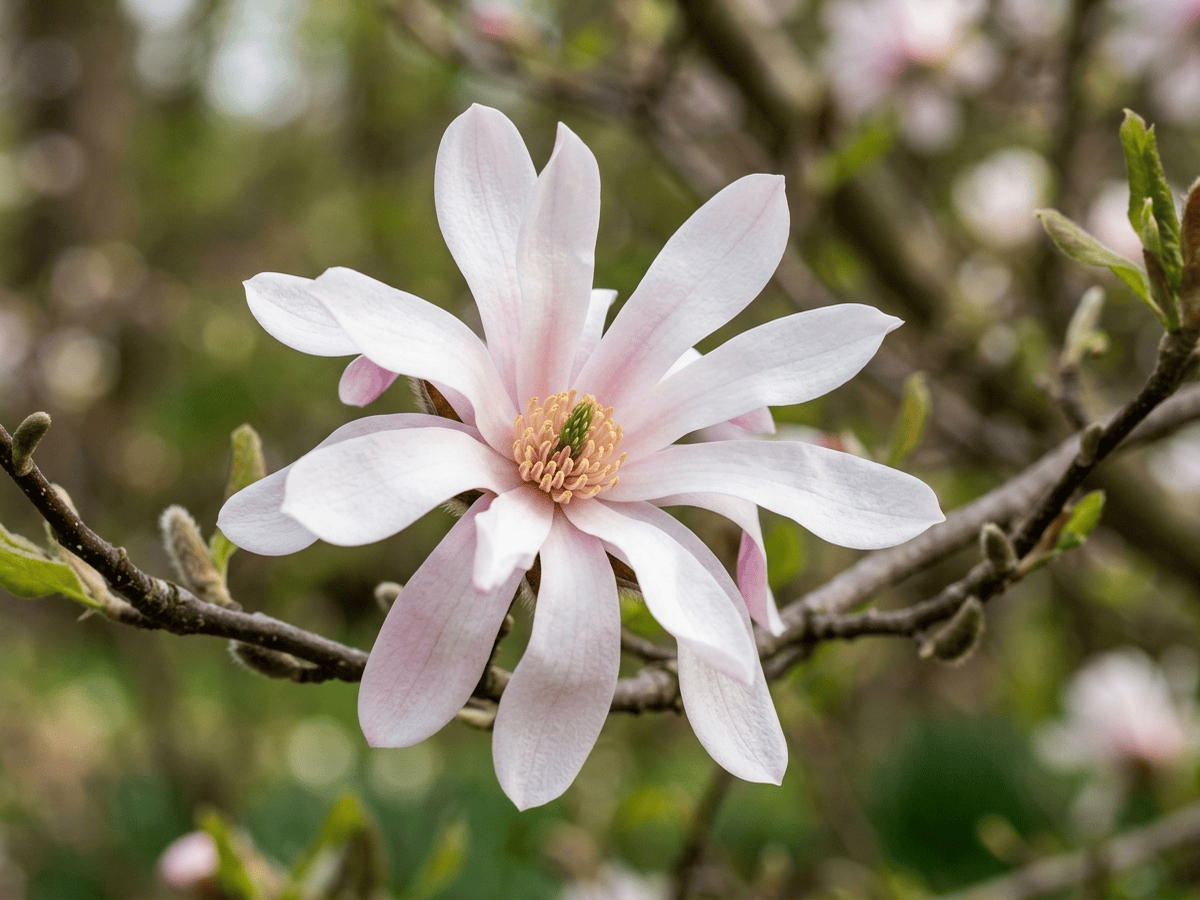
Magnolia stellata, the star magnolia, is a compact deciduous shrub or small tree in the Magnoliaceae family native to Japan. Growing only 3–5 m tall, it is one of the earliest-blooming magnolias, producing abundant star-shaped white flowers with 12–18 narrow, strap-like petals on bare branches in late winter to early spring. The delicate blooms create a magical, ethereal display.
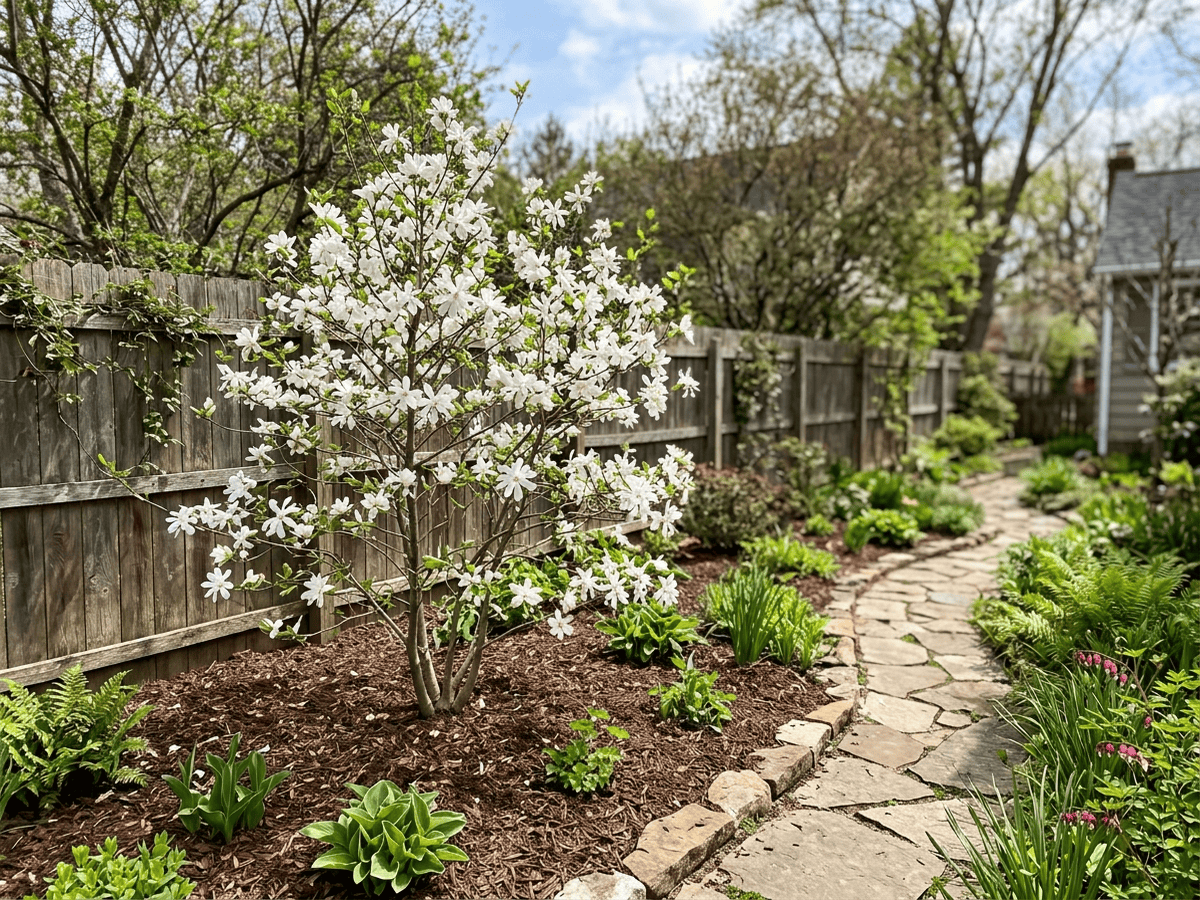
Star magnolia thrives in USDA zones 4–8 in moist, well-drained, slightly acidic soil and full sun to light shade. Its compact size makes it perfect for small gardens, foundation plantings, and containers. The primary risk is late spring frost damaging the early flowers—site it in a spot that warms slowly to delay bloom. 'Royal Star' is a popular cultivar with pink buds opening to white.
This is arguably the finest small flowering tree for temperate gardens. Its multi-season interest—winter silhouette, spring flowers, summer foliage, and autumn gold—provides year-round value in a small footprint. The star magnolia is slow-growing and graceful, requiring minimal pruning. Combined with its cold hardiness and disease resistance, it is one of the most reliable and rewarding ornamental trees for home gardens.
- Cold-hardy
- Compact
How to care for Star Magnolia
Watering
- Springevery 5 days
- Summerevery 4 days
- Fallevery 7 days
- Winterevery 21 days
Soil · Well-draining
- Top dressingPine bark mulch10%
- Main mixPotting soil + perlite 2:170%
- DrainageLECA / gravel20%
Never skip the drainage layer — standing water is the top cause of root rot.
FERTILIZER
Acid-Loving Feed 4-3-4
One bag does both jobs. An acid feed carries the usual nitrogen, phosphorus and potassium, plus the sulfur and iron that keep the soil sour enough for the roots to take them up at all.
- Nitrogen · Leaves
- Phosphorus · Roots + Blooms
- Potassium · Strength
- Springevery 45 days
At a Glance
- NativeEast Asia
- Height15–20 ft (4.6–6.1 m)
- Spread10–15 ft (3–4.6 m)
- Flower colorWhite, Pink
- Foliage colorGreen, Yellow
- SoilLoamy, Moisture-retentive, Acidic
- LocationsYard · Indoor · Balcony
Bloom time
BLOOM CYCLE
Peak bloom
Mar–May
One of the earliest spring bloomers; site to avoid frost pockets that damage flowers. Pink-budded cultivars add colour.
Fragrance
LIGHT FRAGRANCE
The flowers have a sweet light floral scent.
Toxicity
Humans Safe · Pets Safe
None reported
Safe
EXPOSURE No exposure route is reported.
EFFECT No significant toxicity.
NOTE Listed as non-toxic for humans; avoid eating ornamental plants unless confirmed edible.
Safe
EXPOSURE No exposure route is reported.
EFFECT Not listed as toxic.
NOTE Listed as non-toxic for dogs; avoid eating ornamental plants unless confirmed edible.
Safe
EXPOSURE No exposure route is reported.
EFFECT Not listed as toxic.
NOTE Listed as non-toxic for cats; avoid eating ornamental plants unless confirmed edible.
Educational information, not medical or veterinary advice. If exposure is suspected, contact a doctor or veterinarian.
DISTRIBUTION


- Native
- Introduced
- East Asia
History
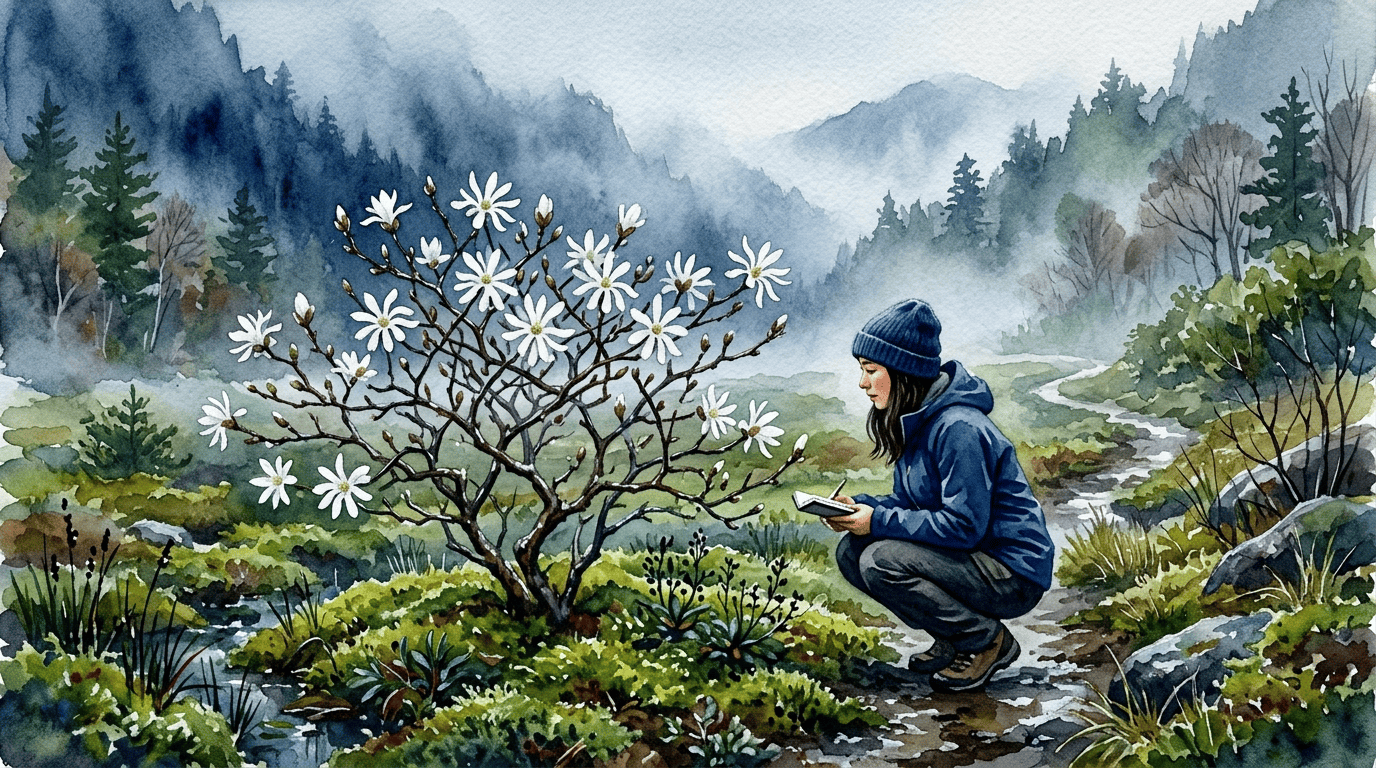
Magnolia stellata is native to central Honshu, Japan, where it grows in moist mountain forests and has been cultivated in Japanese gardens since at least the Edo period (17th-19th centuries) under the name "shidekobushi." Boston physician and collector George Rogers Hall introduced it to Western horticulture in 1862, shipping cuttings to his Boston partner Francis Parkman — the same Hall who also introduced Japanese maple, Japanese wisteria, and many other now-common garden plants. Its early-spring white "star" flowers, with many narrow tepals (12-33 per flower, far more than other magnolias), open in late winter to early spring before the leaves emerge, providing one of the earliest reliable ornamental tree blooms in temperate gardens. The pink-flowered "Royal Star" and "Centennial" cultivars were introduced later.
Unlike the evergreen southern magnolia, star magnolia is a small deciduous tree or large shrub, making it suitable for smaller gardens and as an early-spring focal point. It crosses readily with Magnolia kobus (Japanese kobushi magnolia) to produce the Loebner magnolia hybrids developed by Max Löbner in Germany around 1910. Discovered growing wild in the bogs of the Ise Peninsula in Japan, star magnolia was first described by Western science in 1862.
Its compact size and cold hardiness made it instantly popular in European and American gardens. It is now considered endangered in the wild in Japan due to habitat loss, while being one of the most widely planted ornamental magnolias worldwide.
Symbolism & meaning
What It Symbolizes
Star Magnolia expresses purity, its white star-shaped blooms opening on bare winter branches as a small symbol of innocence and new life emerging from dormancy. It also carries hope — among the earliest spring flowers, it marks the promise that winter must end. A small tree that, every March, quietly insists better weather is on its way.
- Purity — The white, star-shaped blooms on bare winter branches symbolize innocence and new life emerging from dormancy
- Hope — Among the earliest spring flowers, star magnolia represents the promise that winter will end
Where the Name Comes From
Magnolia for Pierre Magnol; 'stellata' from Latin 'stella' (star), describing the star-shaped flowers.
Uses & Fun Facts
- Star-shaped white blooms carry a soft sweet magnolia scent
- Compact early-blooming magnolia as small-garden focal tree
- Slow-growing form suits large patio and courtyard pots
- Profuse white spring stars on bare branches before leafout
Related plants
More Magnolia plants
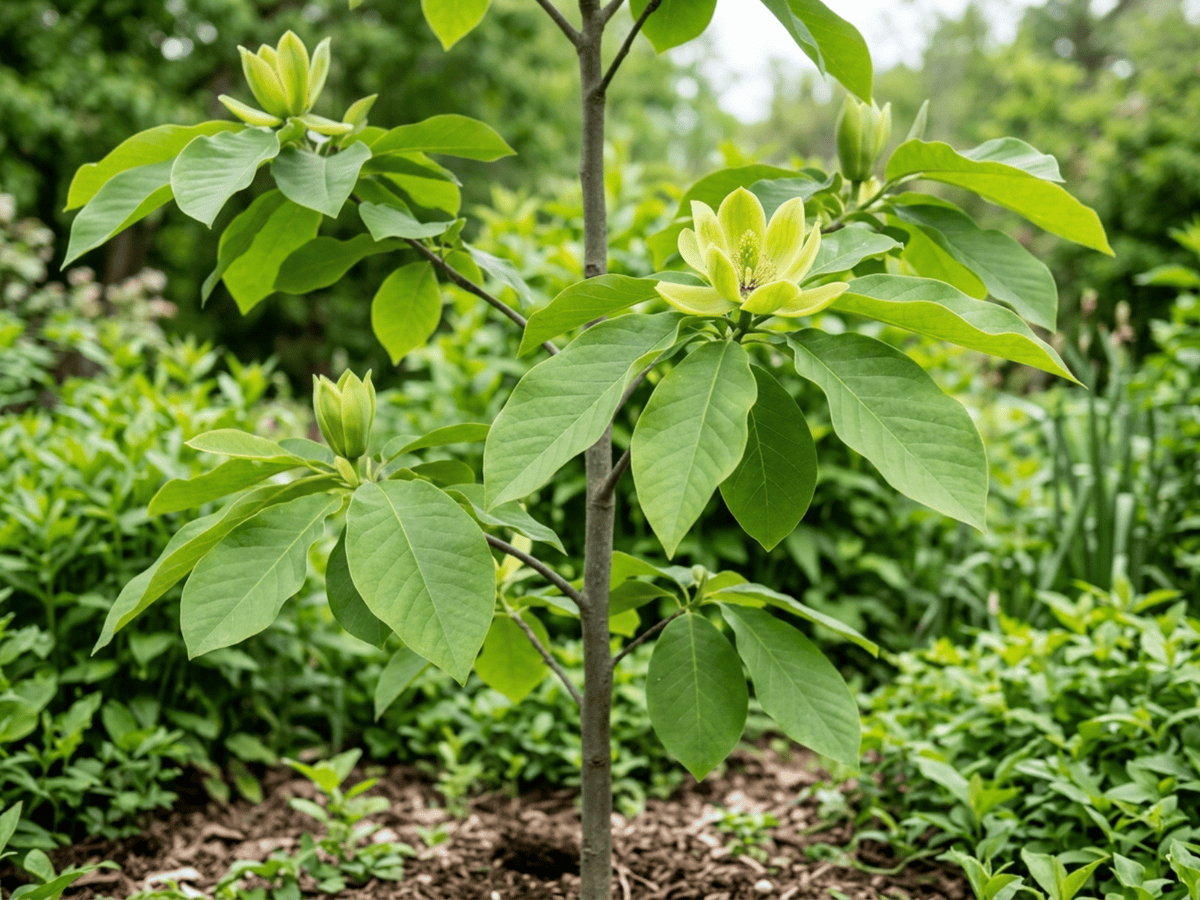 Cucumber-TreeMagnolia acuminata
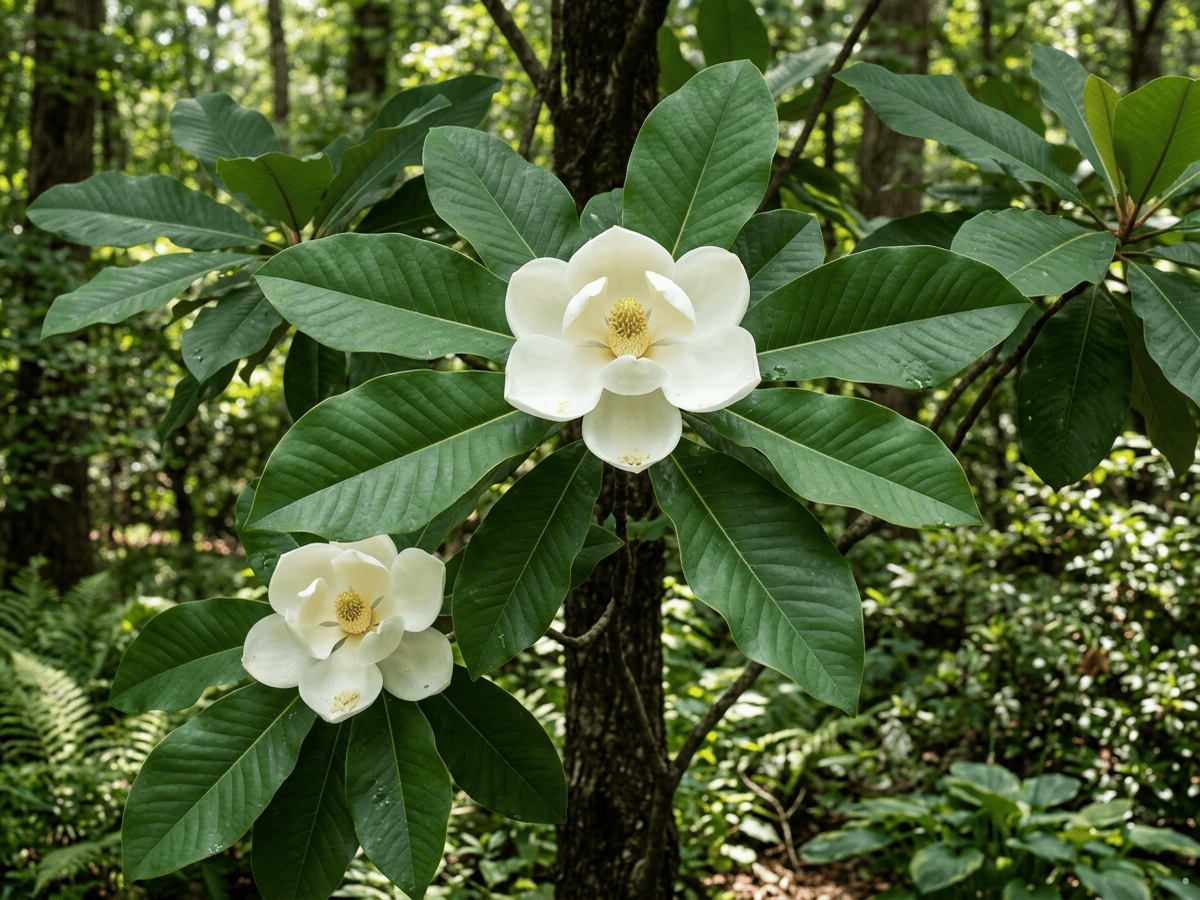 Ashe's MagnoliaMagnolia ashei
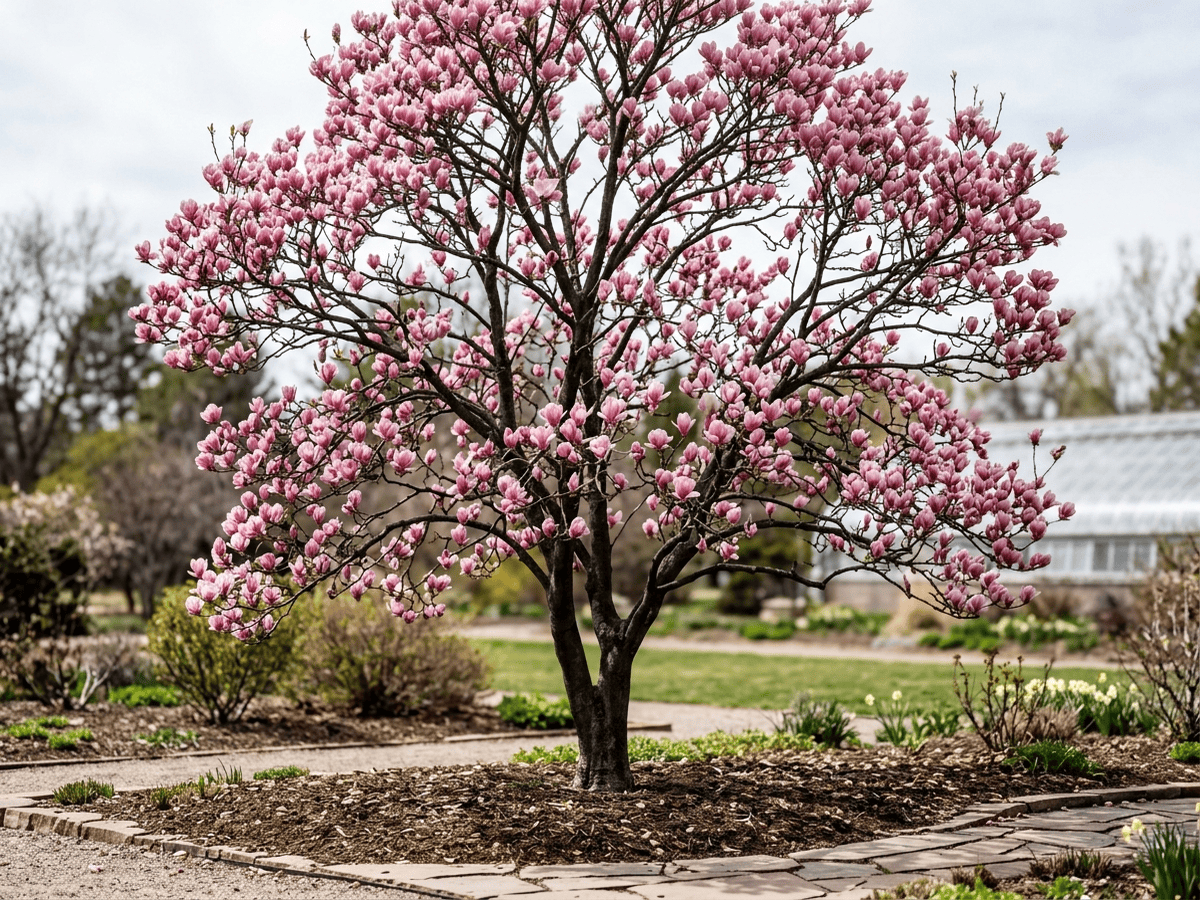 Pink Tulip TreeMagnolia campbellii
 Yulan MagnoliaMagnolia denudata
Plants with similar care
 Chinese AbeliaAbelia chinensis
 Fragrant AbeliaAbelia mosanensis
 Large-Flowered AbeliaAbelia uniflora
 Glossy AbeliaAbelia x grandiflora
Frequently asked questions
How often should I water Star Magnolia?
In summer, water about every 4 days; in winter, about every 21 days. Adjust for heat, pot size and drainage.
How much light does Star Magnolia need?
Full sun: 6+ hrs direct. Watch the leaves — scorching or stretching means the light needs adjusting.
Is Star Magnolia toxic to cats or dogs?
Pets Safe (Dogs Safe · Cats Safe) Educational information, not medical or veterinary advice. If exposure is suspected, contact a doctor or veterinarian.
Is Star Magnolia easy to grow?
Yes — it is considered an easy, beginner-friendly plant.
Can Star Magnolia be grown indoors?
Yes, it adapts well to indoor growing given the right light.
When does Star Magnolia bloom?
It typically blooms Mar–May in the Northern Hemisphere.
YardMate
Identify any plant in seconds
Snap a photo — YardMate names the plant, diagnoses problems, and reminds you when to water.
Download on the App Store