 YardMate


Jonquil
Narcissus jonquilla
Easy · Beginner friendlyAbout Jonquil
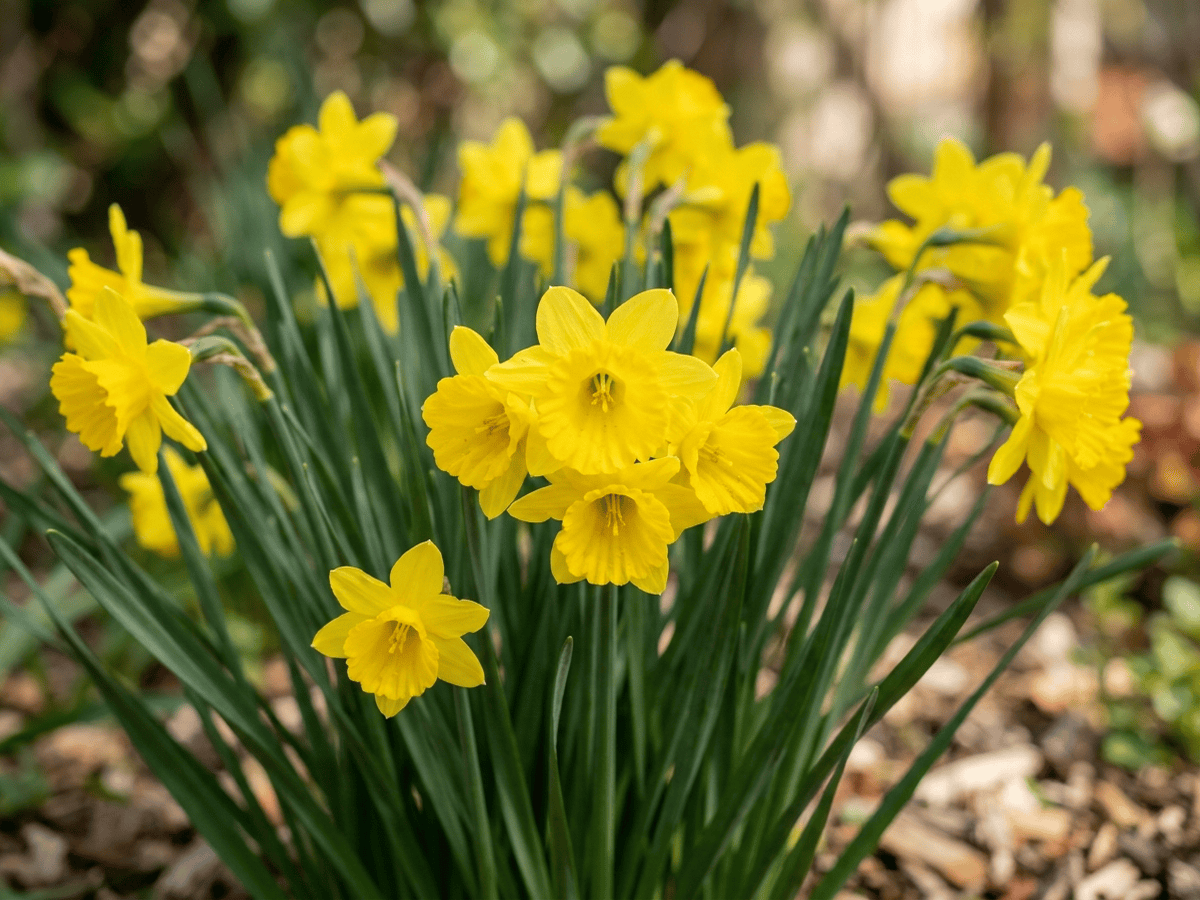
Narcissus jonquilla, the jonquil, produces clusters of small, intensely fragrant golden-yellow flowers with shallow cups on slender rush-like leaves. Native to Spain and Portugal, it is distinguished from daffodils by its rounded (not flat) leaves, multi-flowered stems, and exceptionally sweet fragrance. It naturalizes well in warmer climates and is more heat-tolerant than many daffodils, making it the preferred Narcissus for the American South. Modern jonquil hybrids retain the legendary fragrance while offering larger flowers and more color variety.
- Fragrant
How to care for Jonquil
Watering
- Springevery 7 days
- Summerevery 30 days
- Fallevery 14 days
- Winterevery 30 days
Soil · Well-draining
- Main mixLoam + coarse sand 3:175%
- DrainageGravel25%
Sharp drainage matters most — bulbs rot in wet soil while dormant.
FERTILIZER
Bulb Feed 3-5-3
With bulbs, when matters more than what. One dose goes in the hole at planting, the second when shoots break ground.
- Nitrogen · Leaves
- Phosphorus · Roots + Blooms
- Potassium · Strength
- Springevery 30 days
- Fallevery 60 days
At a Glance
- NativeMediterranean
- Height1–1.5 ft (0.3–0.5 m)
- Spread0.25–0.5 ft (0.1–0.2 m)
- Flower colorYellow
- Foliage colorGreen
- SoilLoamy, Well-drained, Neutral
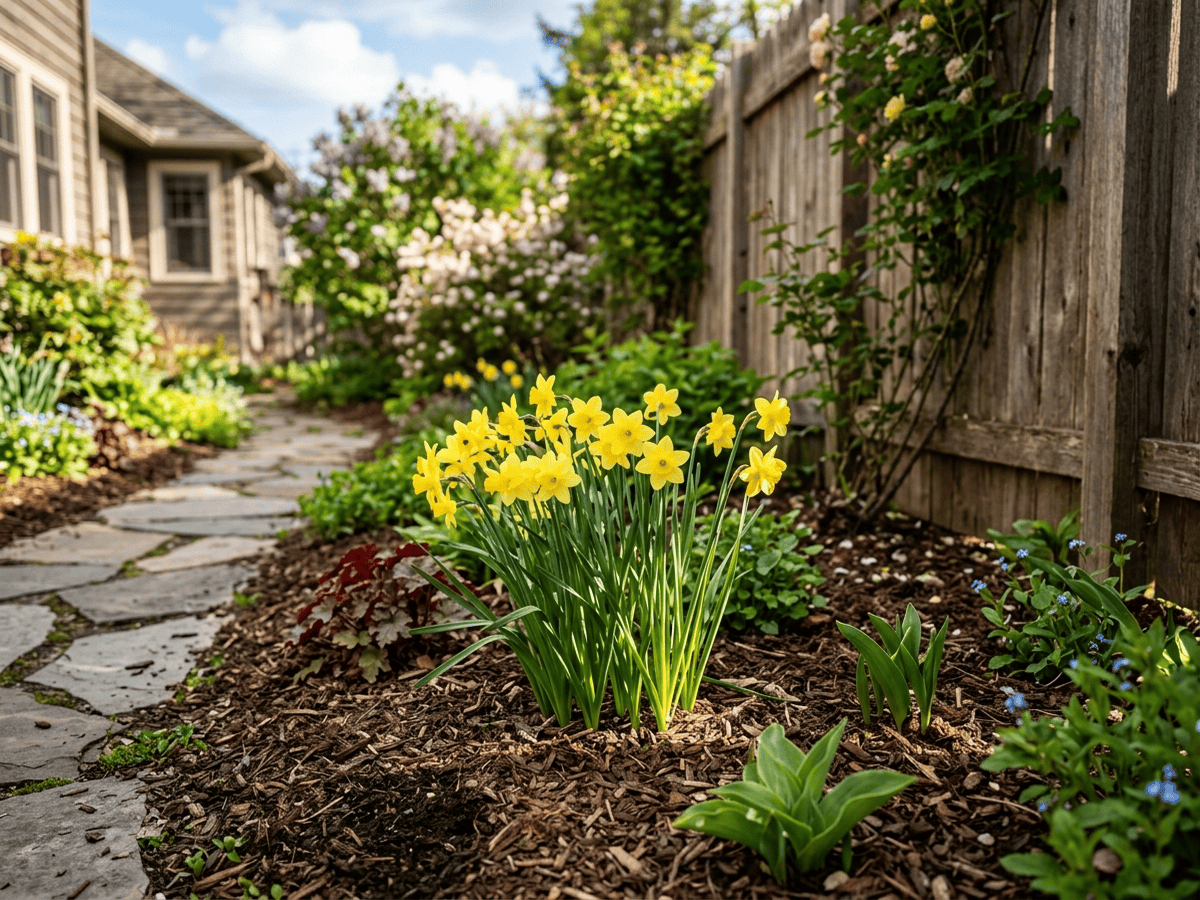
- LocationsYard
Bloom time
BLOOM CYCLE
Peak bloom
Jun–Aug
Multi-flowered clusters; intensely fragrant; good for warm climates
Fragrance
STRONG FRAGRANCE
Exceptionally powerful sweet fragrance — the benchmark of the name 'jonquil' in classical perfumery.
Toxicity
Humans Moderate · Pets Moderate
lycorine, narciclasine, and galantamine
Moderate
- Root
- Leaf
- Flower
- Ingestion
EXPOSURE Eating roots, leaves, and flowers.
EFFECT Nausea, vomiting, abdominal pain and bulb most toxic.
NOTE Same alkaloid profile as other Narcissus.
Moderate
- Root
- Leaf
- Flower
- Ingestion
EXPOSURE Eating roots, leaves, and flowers.
EFFECT Vomiting, salivation, diarrhea, convulsions, cardiac arrhythmia and per ASPCA.
NOTE Same alkaloid profile as other Narcissus.
Moderate
- Root
- Leaf
- Flower
- Ingestion
EXPOSURE Eating roots, leaves, and flowers.
EFFECT Vomiting, salivation, diarrhea, convulsions, cardiac arrhythmia and per ASPCA.
NOTE Same alkaloid profile as other Narcissus.
Educational information, not medical or veterinary advice. If exposure is suspected, contact a doctor or veterinarian.
DISTRIBUTION

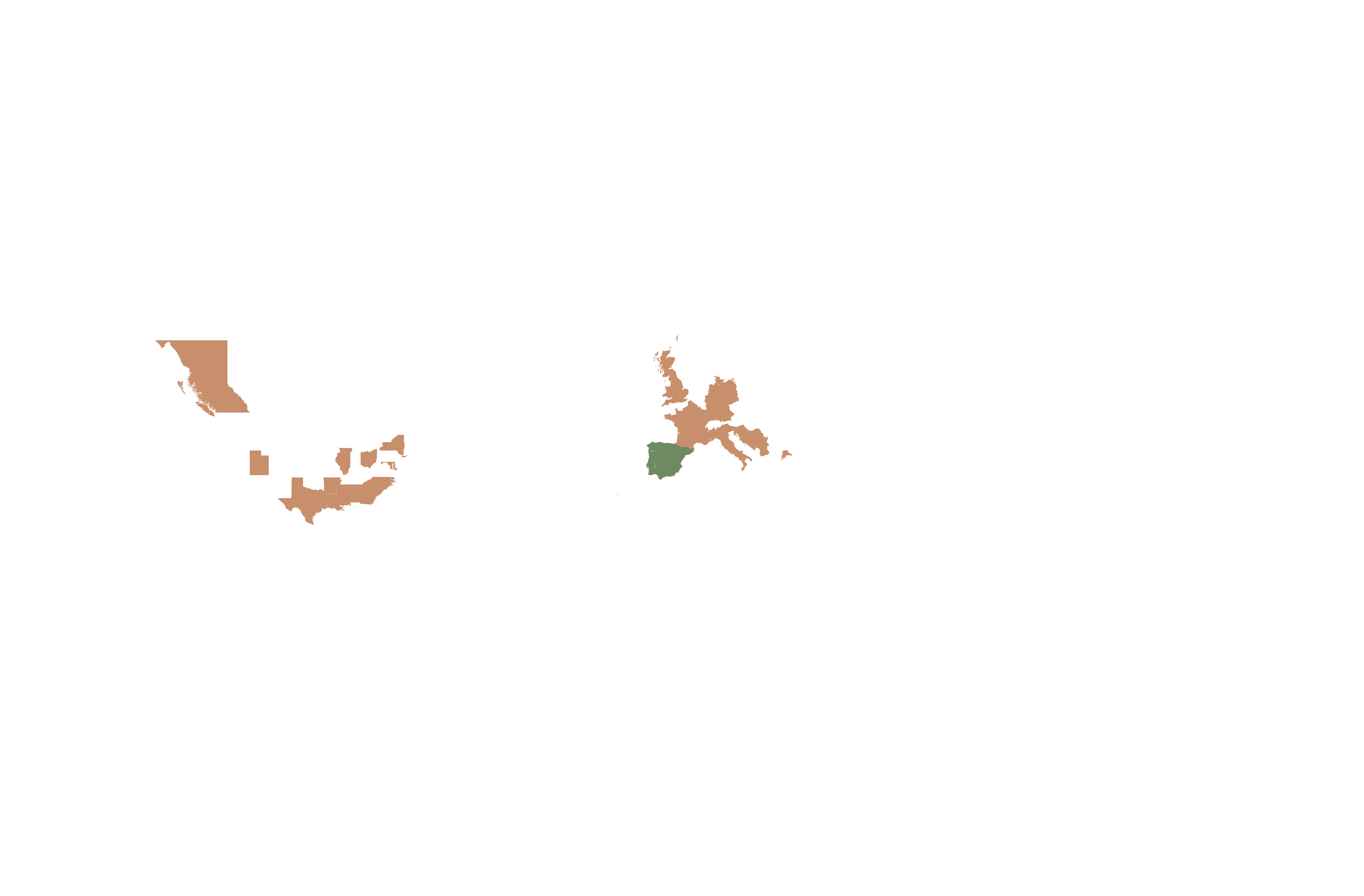
- Native
- Introduced
- Mediterranean
History
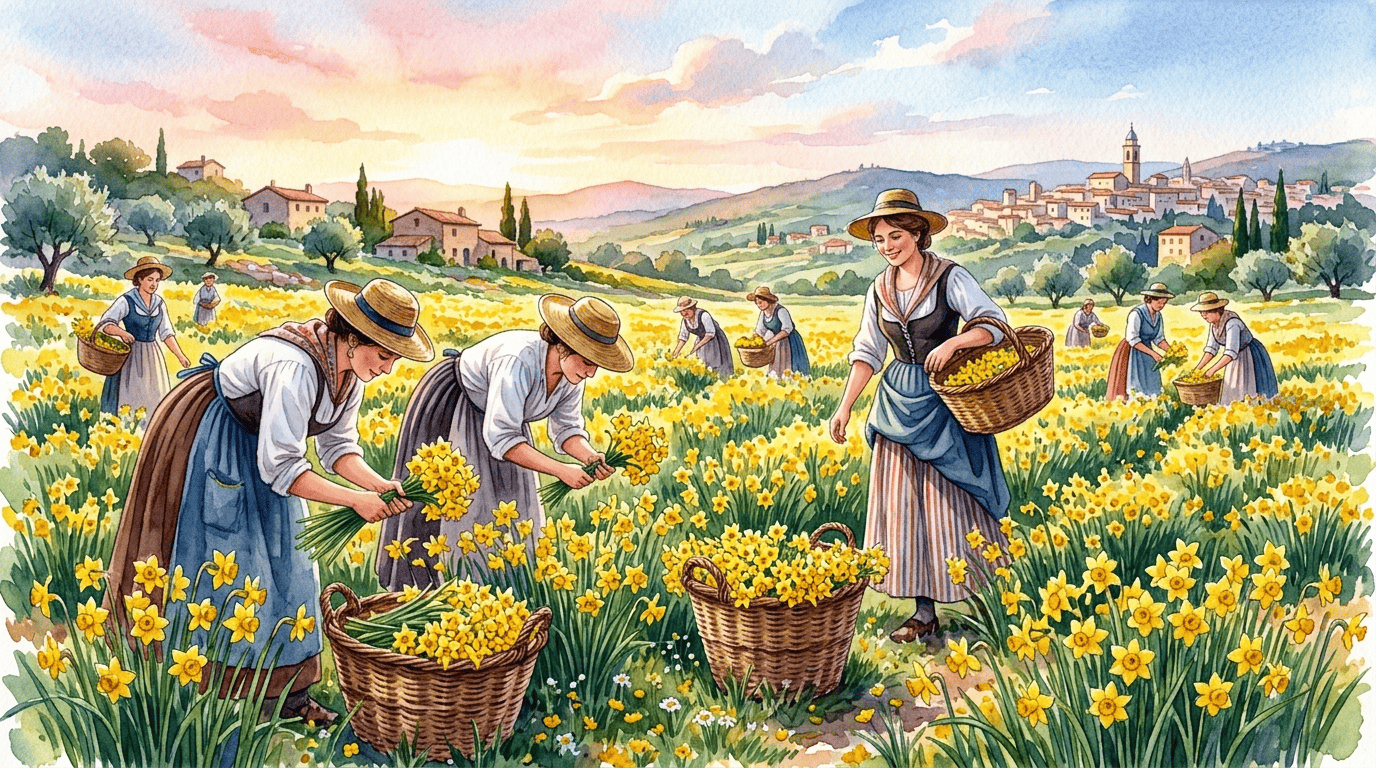
Narcissus jonquilla is native to the Iberian Peninsula, particularly Spain and Portugal, where it grows in damp meadows and open woodland. Unlike the single-flowered daffodil, each stem bears up to six smaller flowers with a powerful sweet fragrance — the feature that gave it commercial importance in the 19th-century French perfumery industry centered on Grasse. 'Jonquil absolute', a solvent-extracted aromatic concentrate, was a benchmark fragrance note until synthetic chemistry and the high labor cost of flower-picking led most modern 'jonquil' perfumes to use synthetic reconstructions rather than natural absolute.
As a garden plant it is particularly valued for its strong scent, and is parent to many multi-flowered daffodil cultivars. Same serious pet toxicity as other Narcissus. Jonquils have been cultivated on the Iberian Peninsula since the Moorish period, when Arab gardeners prized them for perfume.
The name 'jonquilla' comes from Spanish 'junquillo' (little rush), describing the tubular, rush-like leaves. In the American South, old homesteads can be identified by clusters of jonquils that persist decades after houses have disappeared — the bulbs outlast the buildings. A field of blooming jonquils can perfume the air for hundreds of meters.
Symbolism & meaning
What It Symbolizes
The Jonquil suggests desire, its intoxicating fragrance associated with longing and affection across centuries of Mediterranean and Spanish poetry. To send its was to confess feeling held back, the heady scent doing what words could not. It is often read as a flower of admitted yearning, a small golden narcissus whose meaning leans not on shape or color but on a perfume strong enough to give a hidden heart away.
- Desire — Its intoxicating fragrance has been associated with longing and affection for centuries
Where the Name Comes From
Narcissus from Greek mythology. Jonquilla from Spanish 'junquillo' (little rush), for the cylindrical, rush-like leaves.
Uses & Fun Facts
- Intensely sweet golden clusters used in classical perfumery
- Multi-flowered stems for naturalized spring drifts
Related plants
More Narcissus plants
 Cyclamen-Flowered DaffodilNarcissus cyclamineus
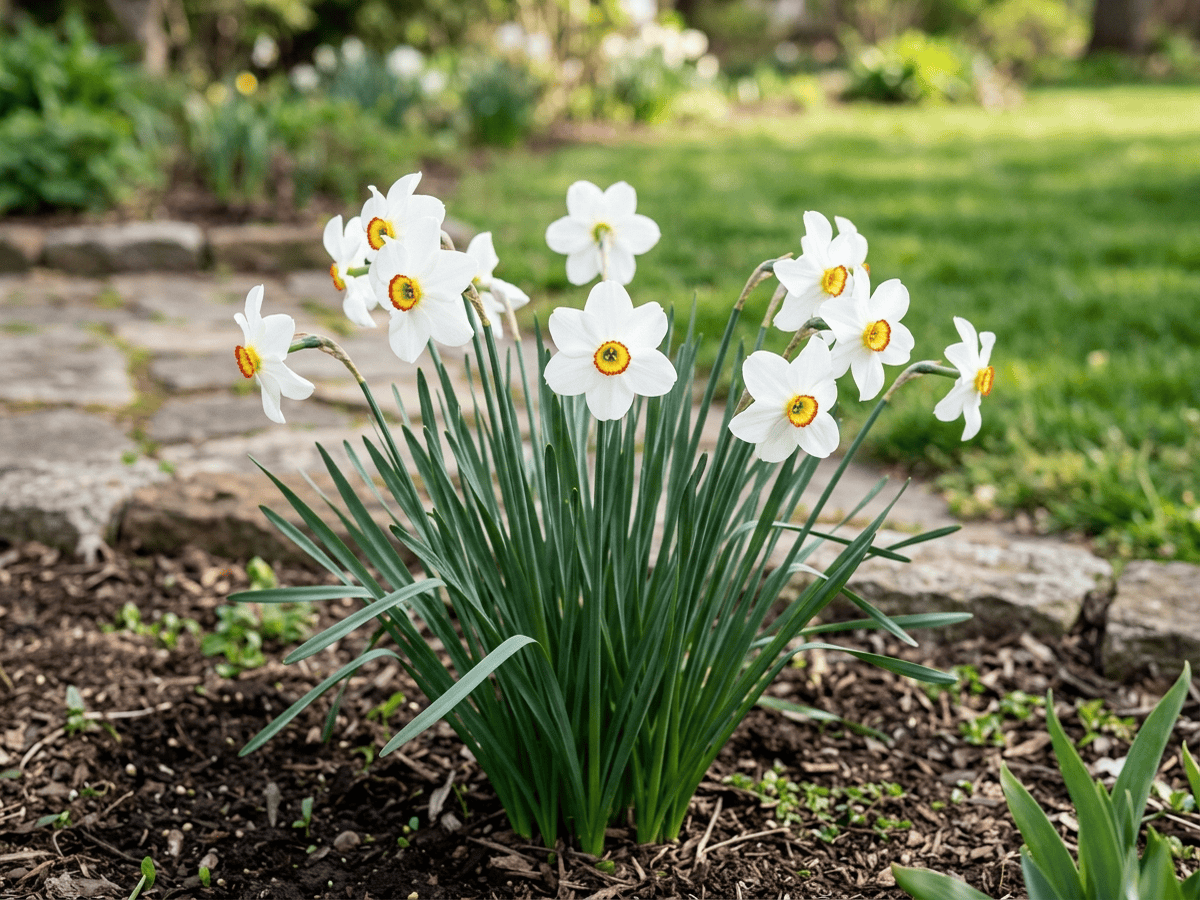 Poet's DaffodilNarcissus poeticus
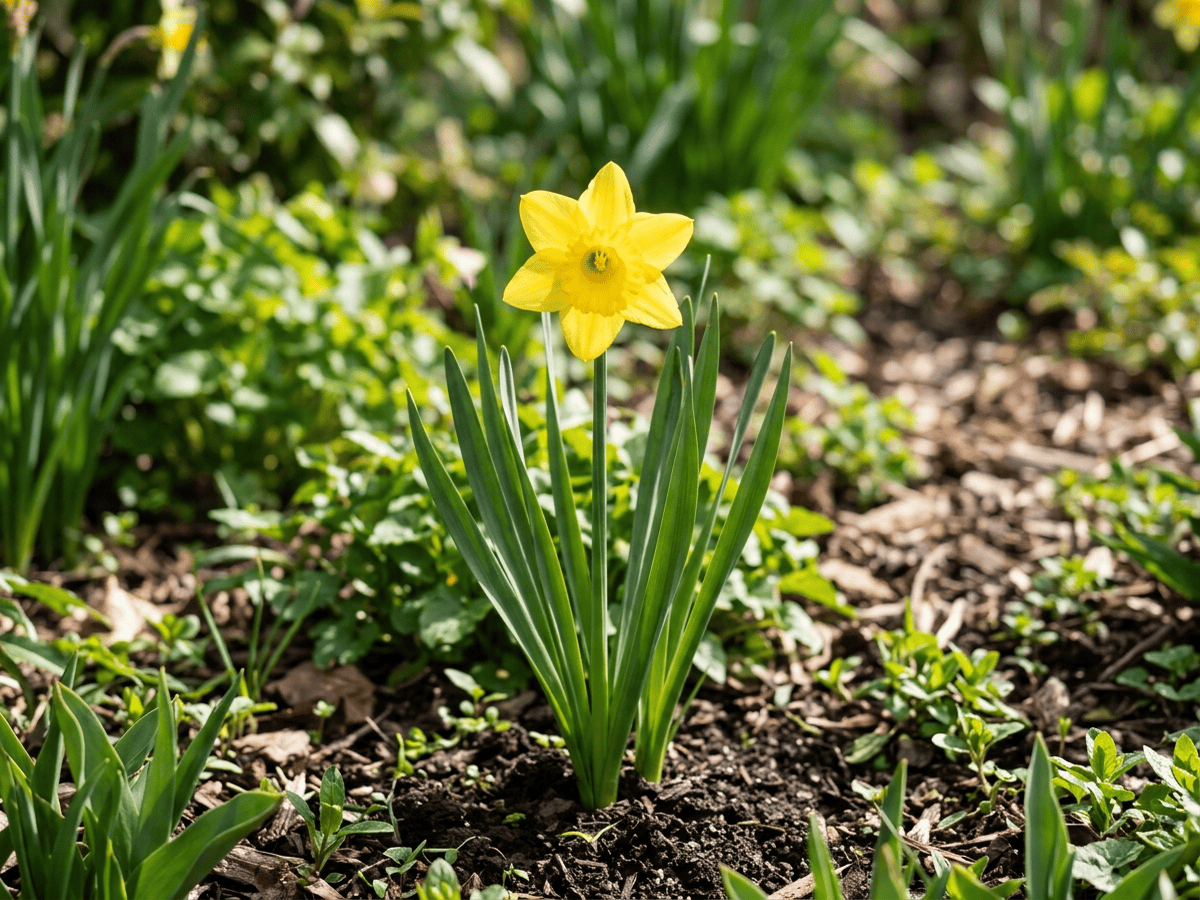 Wild DaffodilNarcissus pseudonarcissus
 Bunch-Flowered DaffodilNarcissus tazetta
Plants with similar care
 Chinese AbeliaAbelia chinensis
 Fragrant AbeliaAbelia mosanensis
 Large-Flowered AbeliaAbelia uniflora
 Glossy AbeliaAbelia x grandiflora
Frequently asked questions
How often should I water Jonquil?
In summer, water about every 30 days; in winter, about every 30 days. Adjust for heat, pot size and drainage.
How much light does Jonquil need?
Full sun: 6+ hrs direct. Watch the leaves — scorching or stretching means the light needs adjusting.
Is Jonquil toxic to cats or dogs?
Pets Moderate (Dogs Moderate · Cats Moderate) Educational information, not medical or veterinary advice. If exposure is suspected, contact a doctor or veterinarian.
Is Jonquil easy to grow?
Yes — it is considered an easy, beginner-friendly plant.
When does Jonquil bloom?
It typically blooms Jun–Aug in the Northern Hemisphere.
YardMate
Identify any plant in seconds
Snap a photo — YardMate names the plant, diagnoses problems, and reminds you when to water.
Download on the App Store