 YardMate


Bunch-Flowered Daffodil
Narcissus tazetta
Easy · Beginner friendlyAbout Bunch-Flowered Daffodil
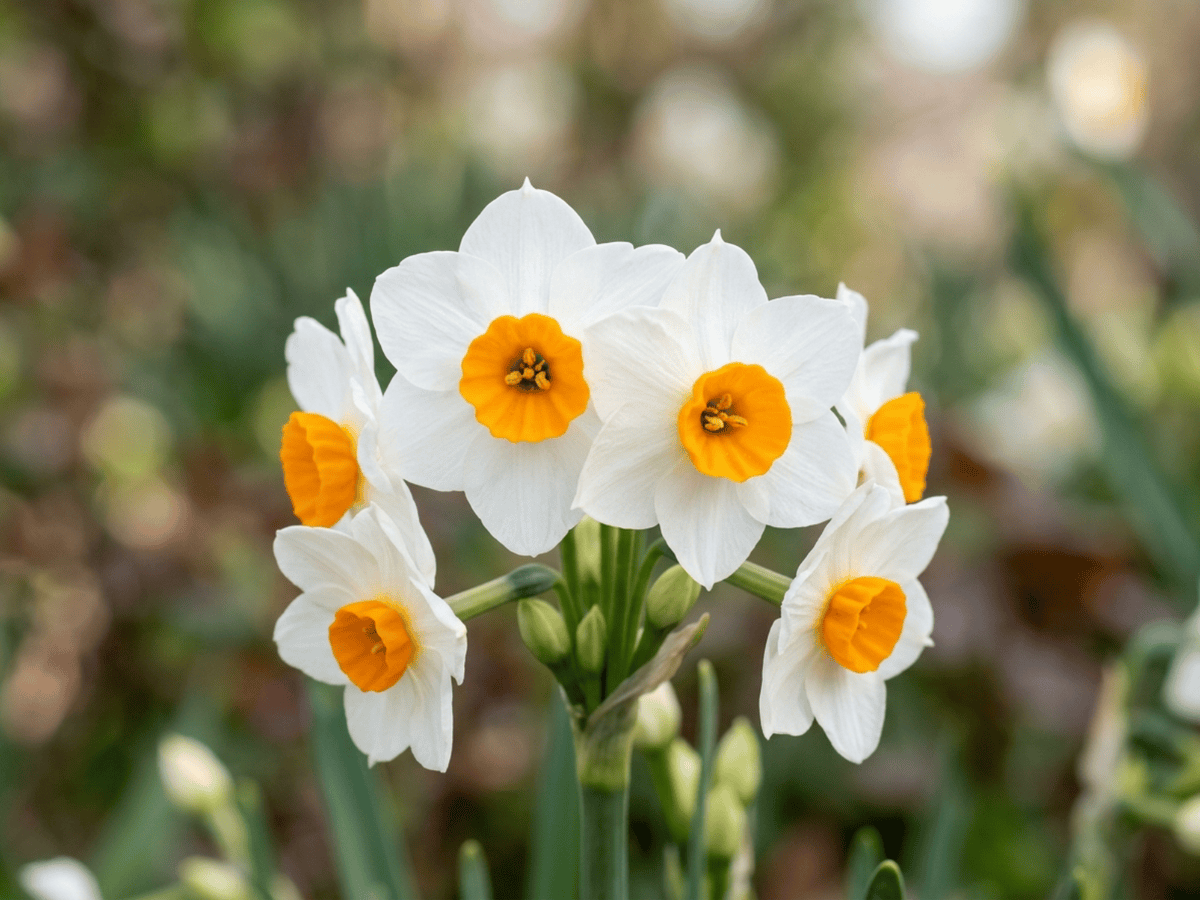
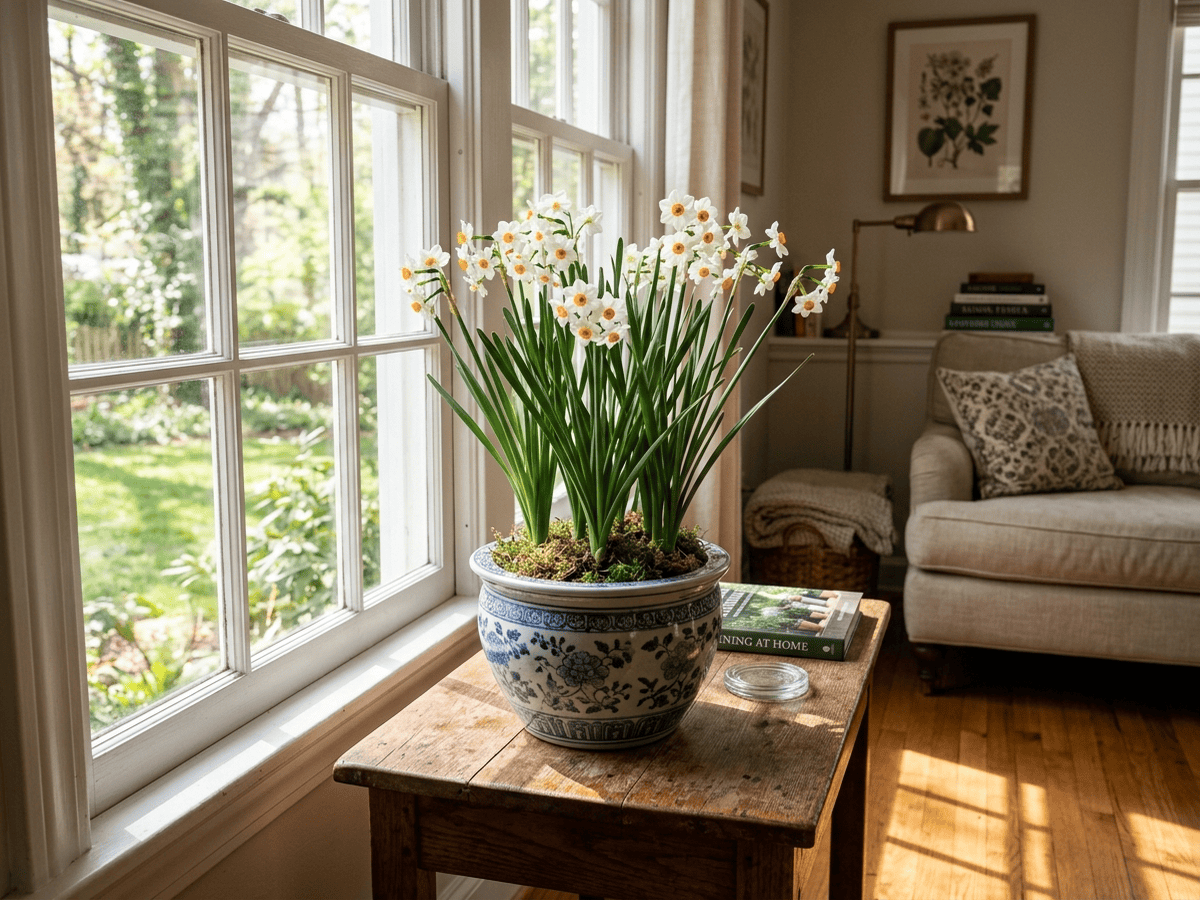
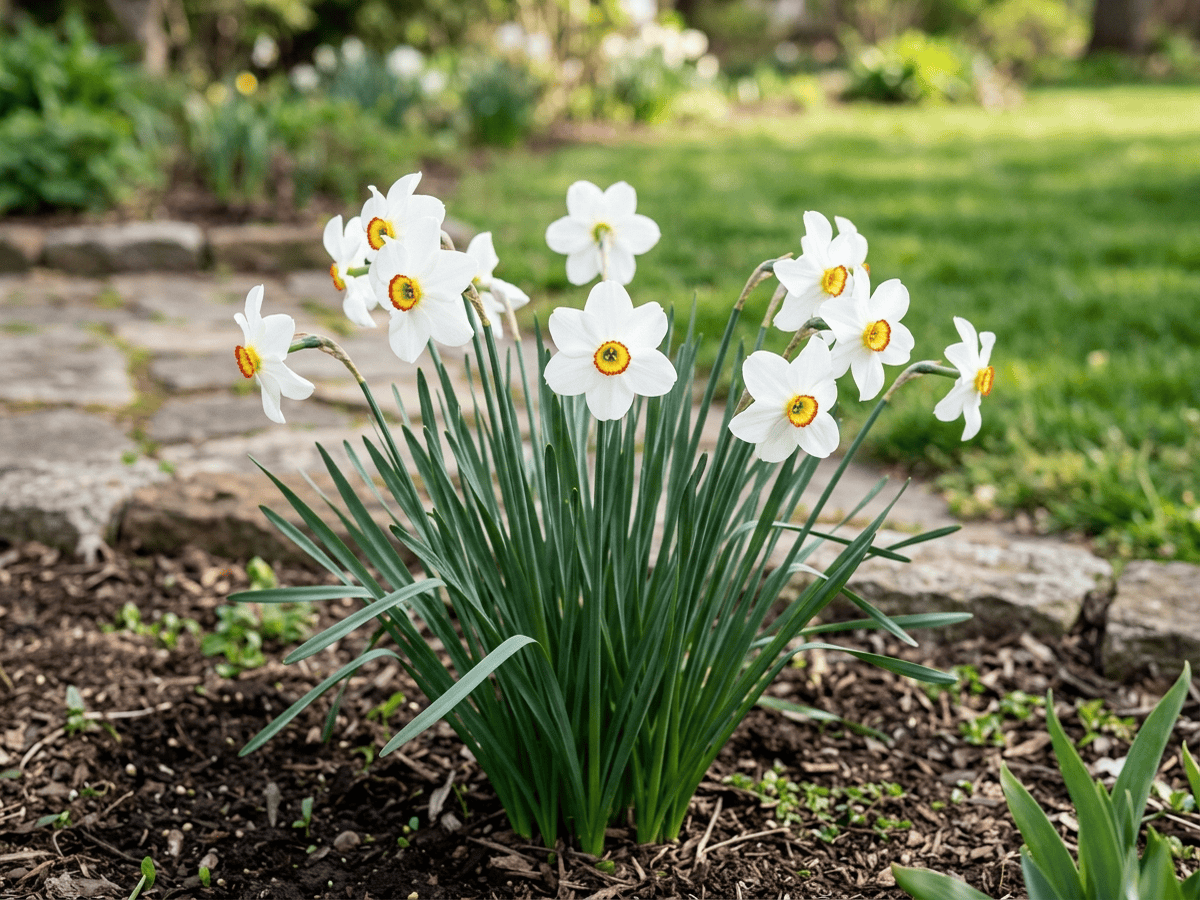
Bunch-flowered Daffodil or Paperwhite is a Mediterranean species daffodil producing clusters of small fragrant flowers—typically white with yellow cups—with up to 20 blooms per stem. Growing 12-18 inches tall, it is beloved for its intensely sweet perfume. Hardy in USDA zones 8-10 (excellent for Southern and California gardens) and widely forced indoors in winter as the classic 'paperwhite narcissus' across all of America.
- Fragrant
- Deer-resistant
How to care for Bunch-Flowered Daffodil
Watering
- Springevery 4 days
- Summerpause watering
- Fallevery 10 days
- Winterevery 7 days
Soil · Well-draining
- Main mixLoam + coarse sand 3:175%
- DrainageGravel25%
Sharp drainage matters most — bulbs rot in wet soil while dormant.
FERTILIZER
Bulb Feed 3-5-3
With bulbs, when matters more than what. One dose goes in the hole at planting, the second when shoots break ground.
- Nitrogen · Leaves
- Phosphorus · Roots + Blooms
- Potassium · Strength
- Springevery 30 days
- Fallevery 60 days
At a Glance
- NativeMediterranean, East Asia
- Height1–1.5 ft (0.3–0.5 m)
- Spread0.3–0.5 ft (0.1–0.2 m)
- Flower colorWhite, Yellow
- Foliage colorGreen
- SoilLoamy, Well-drained
- LocationsYard · Balcony
Bloom time
BLOOM CYCLE
Peak bloom
Nov–Mar
White-and-yellow clusters November to March (varies by region)
Fragrance
STRONG FRAGRANCE
The flowers have a sweet, musky, intense scent.
Toxicity
Humans Moderate · Pets Moderate
lycorine, galantamine, and narcissine
Moderate
- Bulb
- Ingestion
EXPOSURE Eating bulbs.
EFFECT Severe nausea, vomiting, and diarrhea.
NOTE Documented concern for humans: Severe nausea, vomiting, and diarrhea.
Moderate
- Bulb
- Ingestion
EXPOSURE Eating bulbs.
EFFECT Vomiting, diarrhea, and cardiac arrhythmia.
NOTE ASPCA lists Narcissus as toxic; galantamine used pharmaceutically for Alzheimer's.
Moderate
- Bulb
- Ingestion
EXPOSURE Eating bulbs.
EFFECT Vomiting, diarrhea, and cardiac arrhythmia.
NOTE ASPCA lists Narcissus as toxic; galantamine used pharmaceutically for Alzheimer's.
Educational information, not medical or veterinary advice. If exposure is suspected, contact a doctor or veterinarian.
DISTRIBUTION

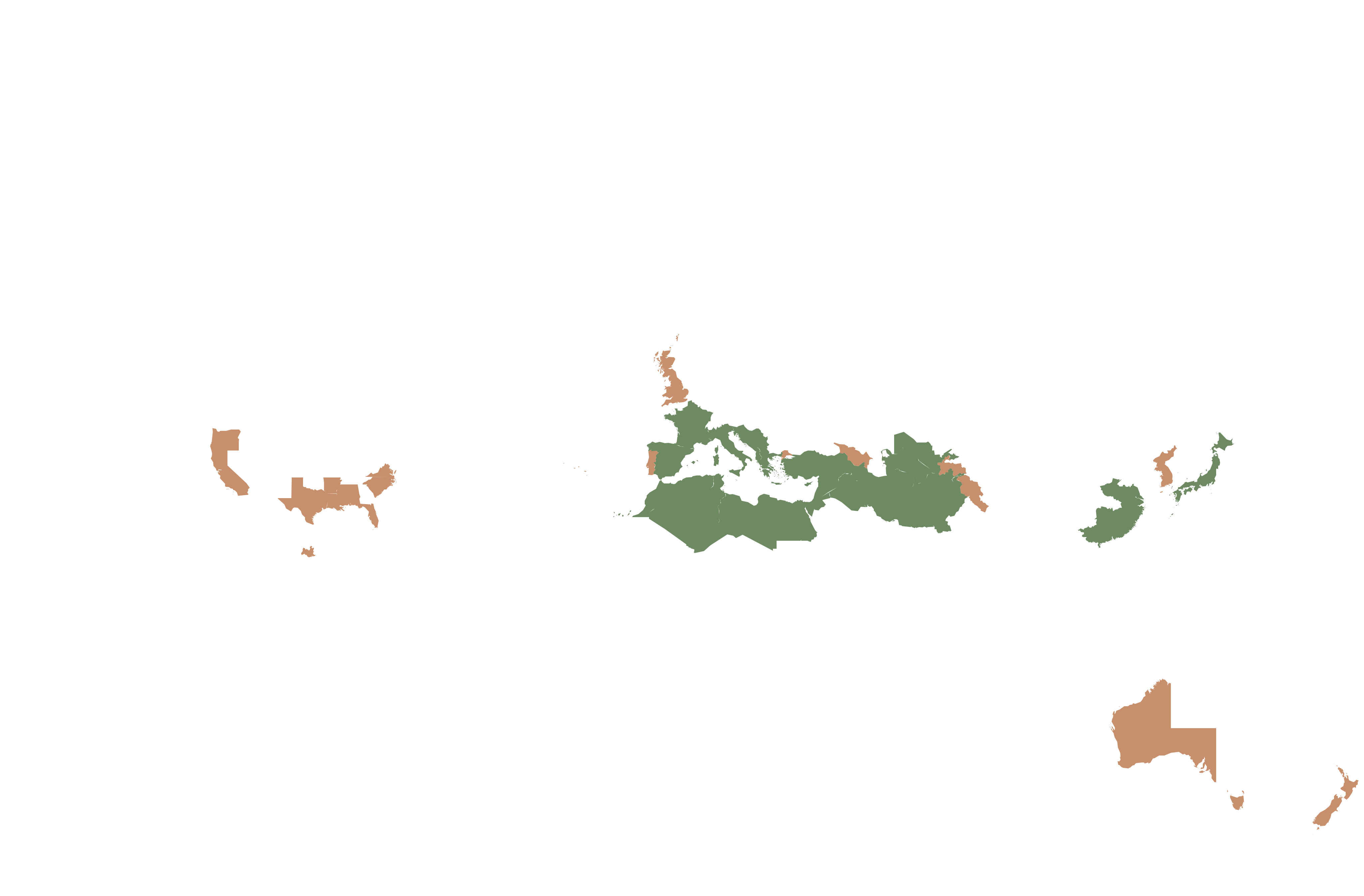
- Native
- Introduced
- Mediterranean
- East Asia
History
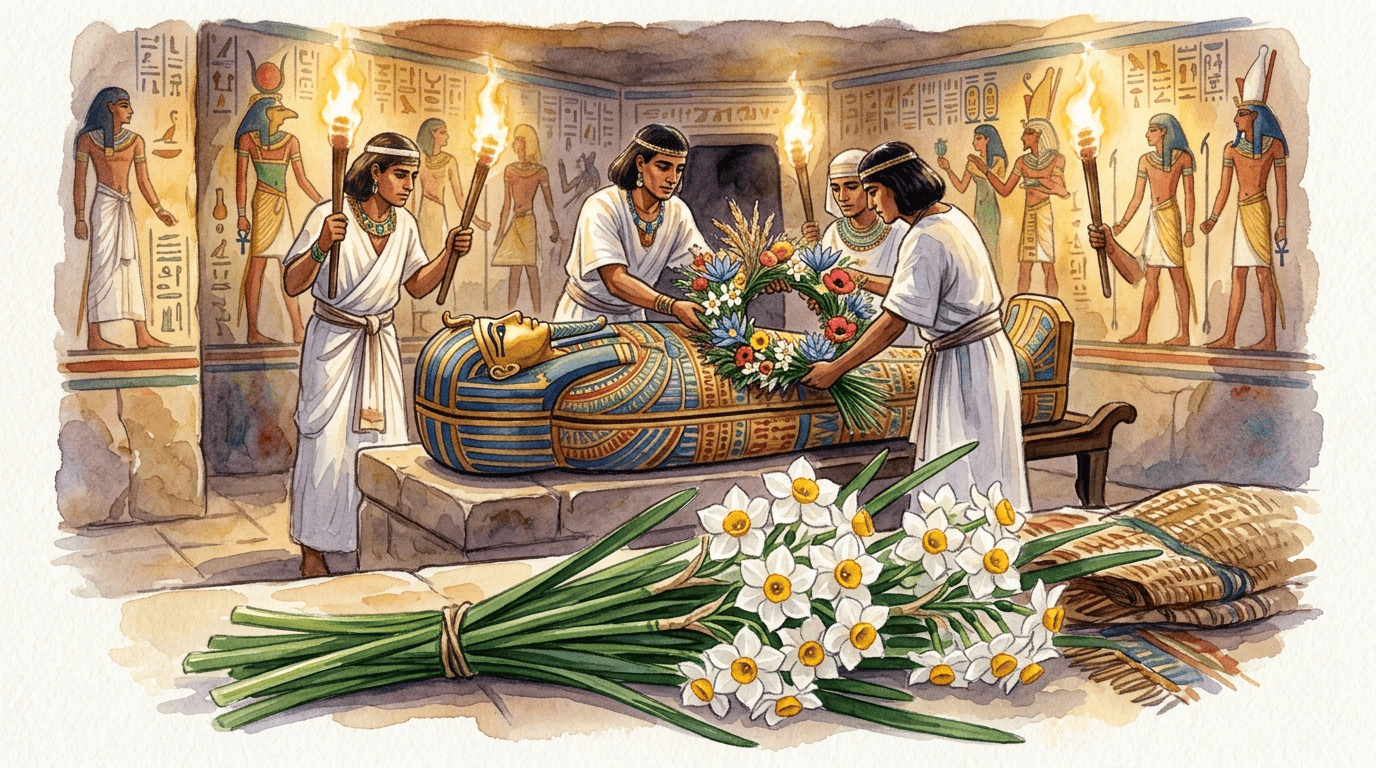
Narcissus tazetta has the broadest range of any Narcissus species, native from the western Mediterranean east through Iran to China and Kashmir. Archaeological evidence shows ancient Egyptian cultivation—bulbs and wreaths were placed in Ramesses II's tomb (13th century BCE). The Qur'an, Hebrew Bible, and Greek authors including Theophrastus reference the plant.
Linnaeus described the species in 1753. Its Chinese form, carried along the Silk Road and cultivated for centuries, is the traditional Lunar New Year water-forced bulb (shui xian). The paperwhite narcissus sold commercially for winter forcing in Western homes is N. tazetta var. papyraceus.
Historical cultivars 'Paperwhite' and 'Grand Soleil d'Or' remain ubiquitous. The species is also the source of the alkaloid galantamine used in Alzheimer's treatment. One of the most ancient cultivated bulbs, grown in Mediterranean gardens for over 2,500 years. The cultivar 'Ziva' is the standard paperwhite for forcing in America, providing winter bloom on a bowl of stones and water. Naturalized extensively in the American South where it has escaped from old homesteads.
Symbolism & meaning
What It Symbolizes
Bunch-Flowered Daffodil carries purity in clusters of clean white blossoms with tiny golden cups, its clarity matched only by its famous citrus scent. In China it blooms during Lunar New Year as a symbol of renewal and good fortune, lavishly forced in shallow bowls of water and pebbles. It is the daffodil that turns a winter holiday into a small spring.
- Purity — white cluster flowers symbolize clarity
- Renewal — blooms during winter holidays
Where the Name Comes From
The common name highlights its red coloring. 'Tazetta' means 'little cup' in Italian, referring to the cup-shaped corona.
Uses & Fun Facts
- Intensely sweet paperwhites force easily for indoor winter scent
- Bowls of bulbs forced on pebbles brighten winter interiors
- Cluster-flowered daffodil for warm-climate Southern gardens
Related plants
More Narcissus plants
 Cyclamen-Flowered DaffodilNarcissus cyclamineus
 JonquilNarcissus jonquilla
 Poet's DaffodilNarcissus poeticus
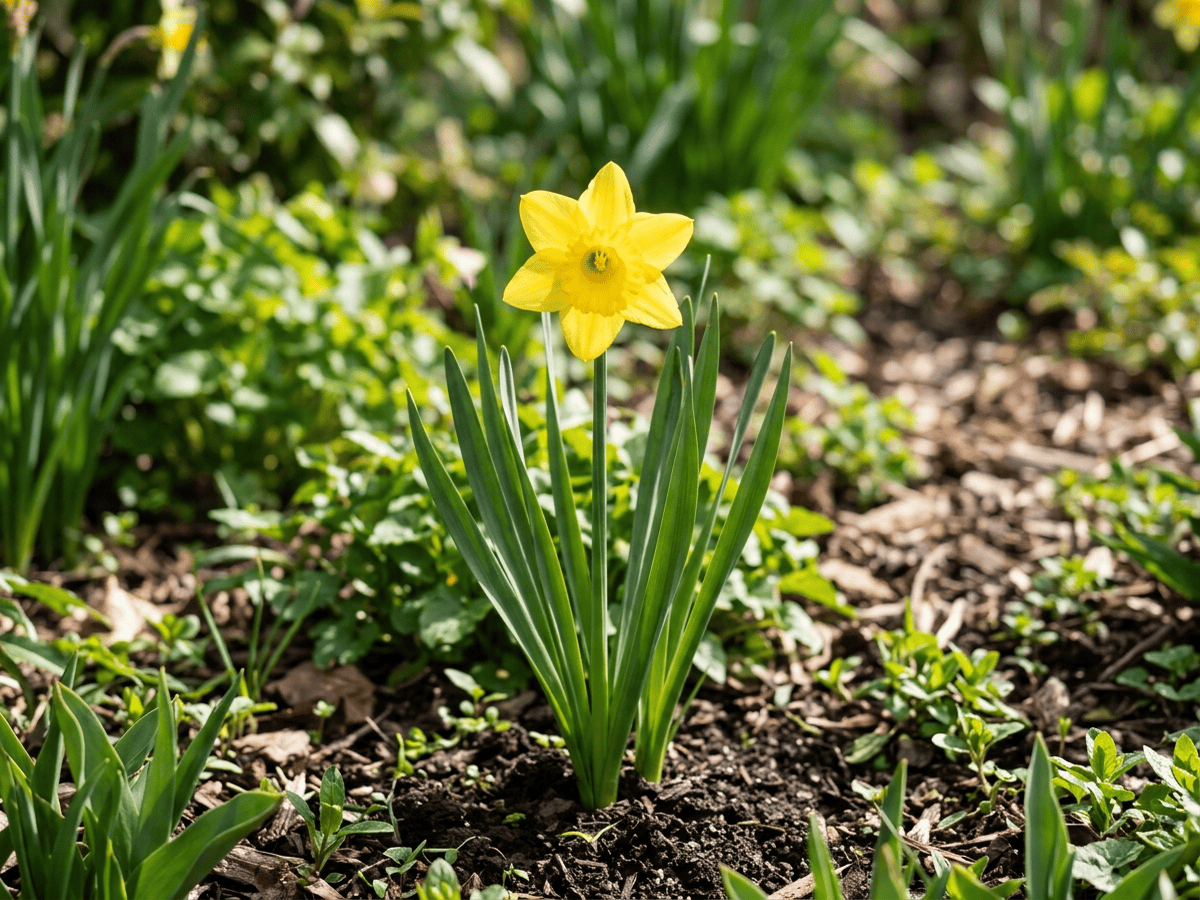 Wild DaffodilNarcissus pseudonarcissus
Plants with similar care
 Chinese AbeliaAbelia chinensis
 Fragrant AbeliaAbelia mosanensis
 Large-Flowered AbeliaAbelia uniflora
 Glossy AbeliaAbelia x grandiflora
Frequently asked questions
How often should I water Bunch-Flowered Daffodil?
Water about every 4 days during the growing season, and always let excess water drain away.
How much light does Bunch-Flowered Daffodil need?
Full sun: 6+ hrs direct. Watch the leaves — scorching or stretching means the light needs adjusting.
Is Bunch-Flowered Daffodil toxic to cats or dogs?
Pets Moderate (Dogs Moderate · Cats Moderate) Educational information, not medical or veterinary advice. If exposure is suspected, contact a doctor or veterinarian.
Is Bunch-Flowered Daffodil easy to grow?
Yes — it is considered an easy, beginner-friendly plant.
When does Bunch-Flowered Daffodil bloom?
It typically blooms Nov–Mar in the Northern Hemisphere.
YardMate
Identify any plant in seconds
Snap a photo — YardMate names the plant, diagnoses problems, and reminds you when to water.
Download on the App Store