 YardMate


Poet's Daffodil
Narcissus poeticus
Easy · Beginner friendlyAbout Poet's Daffodil
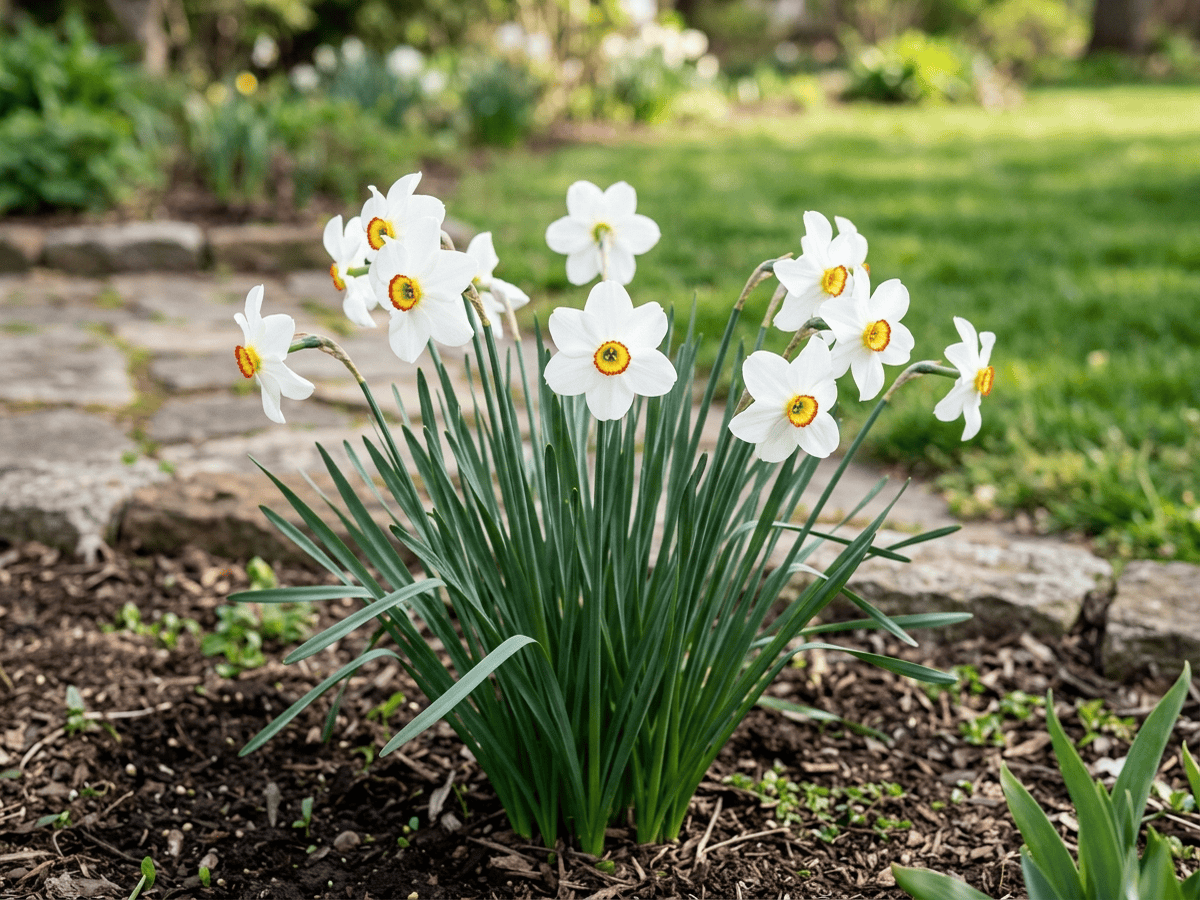
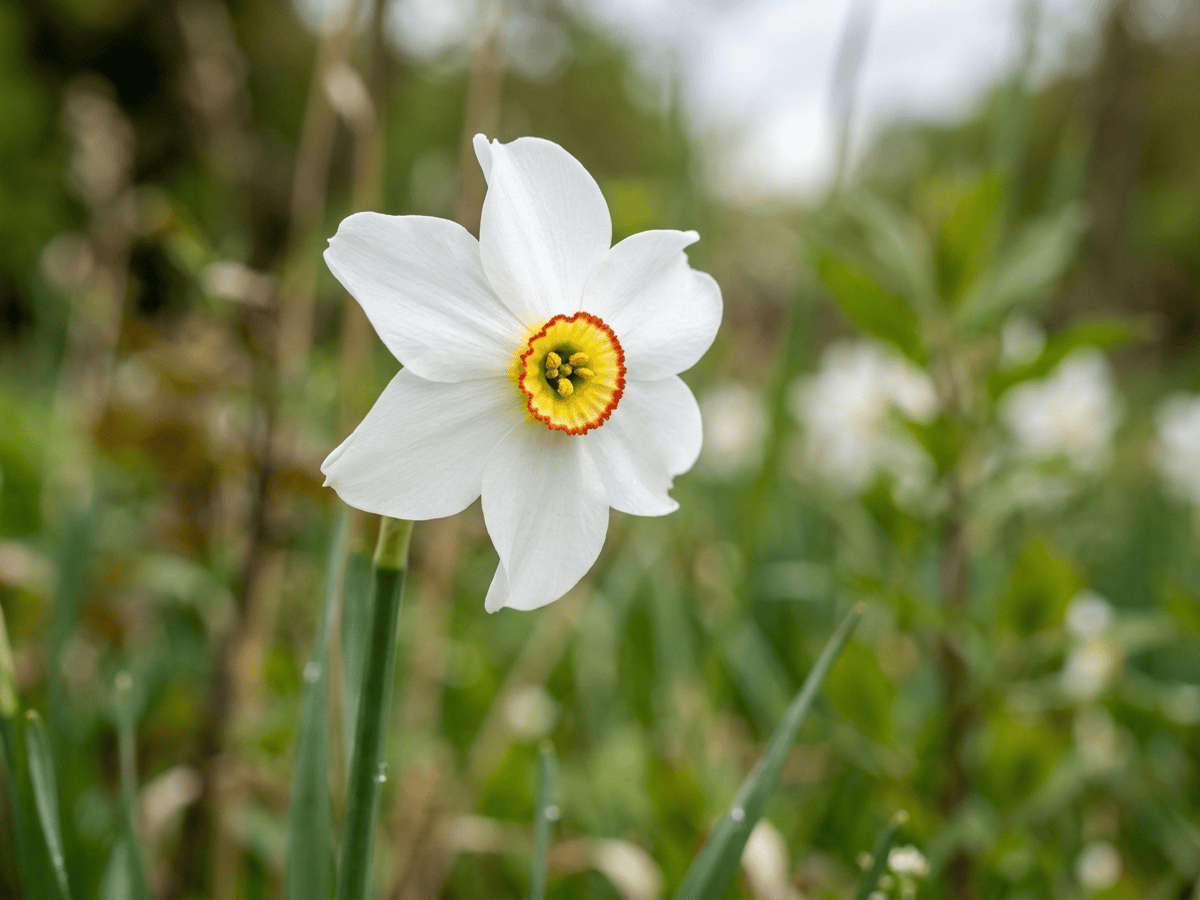
Narcissus poeticus, the poet's daffodil or pheasant's eye, is the classic narcissus of Greek and Roman poetry. Native to southern Europe from Spain through the Alps to Greece, it produces single pure-white flowers with a short yellow-and-red cup in late spring — the latest-blooming wild narcissus, often appearing after most other daffodils have finished.
The flowers emit a powerful sweet scent. This species is believed to be the 'narcissus' of ancient Greek mythology — the flower into which the self-obsessed youth Narcissus was transformed at the water's edge, as recorded by Ovid in the Metamorphoses.
Extensively planted in meadows and orchards across Europe, often naturalizing into vast drifts. One of the oldest cultivated flowers — recorded in Greek and Roman texts, later celebrated by Wordsworth and other poets. Commercial cultivation in the French Grasse perfume industry distills the flowers for narcissus absolute, a key jasmine-tobacco note in fine perfumery.
- Fragrant
How to care for Poet's Daffodil
Watering
- Springevery 7 days
- Summerevery 21 days
- Fallevery 14 days
- Winterevery 14 days
Soil · Well-draining
- Main mixLoam + coarse sand 3:175%
- DrainageGravel25%
Sharp drainage matters most — bulbs rot in wet soil while dormant.
FERTILIZER
Bulb Feed 3-5-3
With bulbs, when matters more than what. One dose goes in the hole at planting, the second when shoots break ground.
- Nitrogen · Leaves
- Phosphorus · Roots + Blooms
- Potassium · Strength
- Springevery 21 days
- Fallevery 30 days
At a Glance
- NativeMediterranean, Europe
- Height1–1.5 ft (0.3–0.5 m)
- Spread0.3–0.5 ft (0.1–0.2 m)
- Flower colorWhite, Yellow, Red
- Foliage colorGreen, Blue-green
- SoilLoamy, Well-drained
- LocationsYard
Bloom time
BLOOM CYCLE
Peak bloom
Mar–May
White petals with yellow-red eye, intensely fragrant; late-spring bloom.
Fragrance
STRONG FRAGRANCE
Powerful sweet floral scent used in perfumery.
Toxicity
Humans Moderate · Pets Moderate
lycorine and narcissine
Moderate
- Bulb
- Leaf
- Ingestion
EXPOSURE Eating bulbs and leaves.
EFFECT Lycorine causes vomiting, diarrhea, cardiac irregularities.
NOTE Documented concern for humans: Lycorine causes vomiting, diarrhea, cardiac irregularities.
Moderate
- Bulb
- Ingestion
EXPOSURE Eating bulbs.
EFFECT Vomiting, diarrhea, tremors, cardiac arrhythmia.
NOTE ASPCA lists all Narcissus as toxic to pets. Bulbs are mistaken for onions — dangerous.
Moderate
- Bulb
- Ingestion
EXPOSURE Eating bulbs.
EFFECT Vomiting, diarrhea, tremors, cardiac arrhythmia.
NOTE ASPCA lists all Narcissus as toxic to pets. Bulbs are mistaken for onions — dangerous.
Educational information, not medical or veterinary advice. If exposure is suspected, contact a doctor or veterinarian.
DISTRIBUTION


- Native
- Introduced
- Mediterranean
- Europe
History
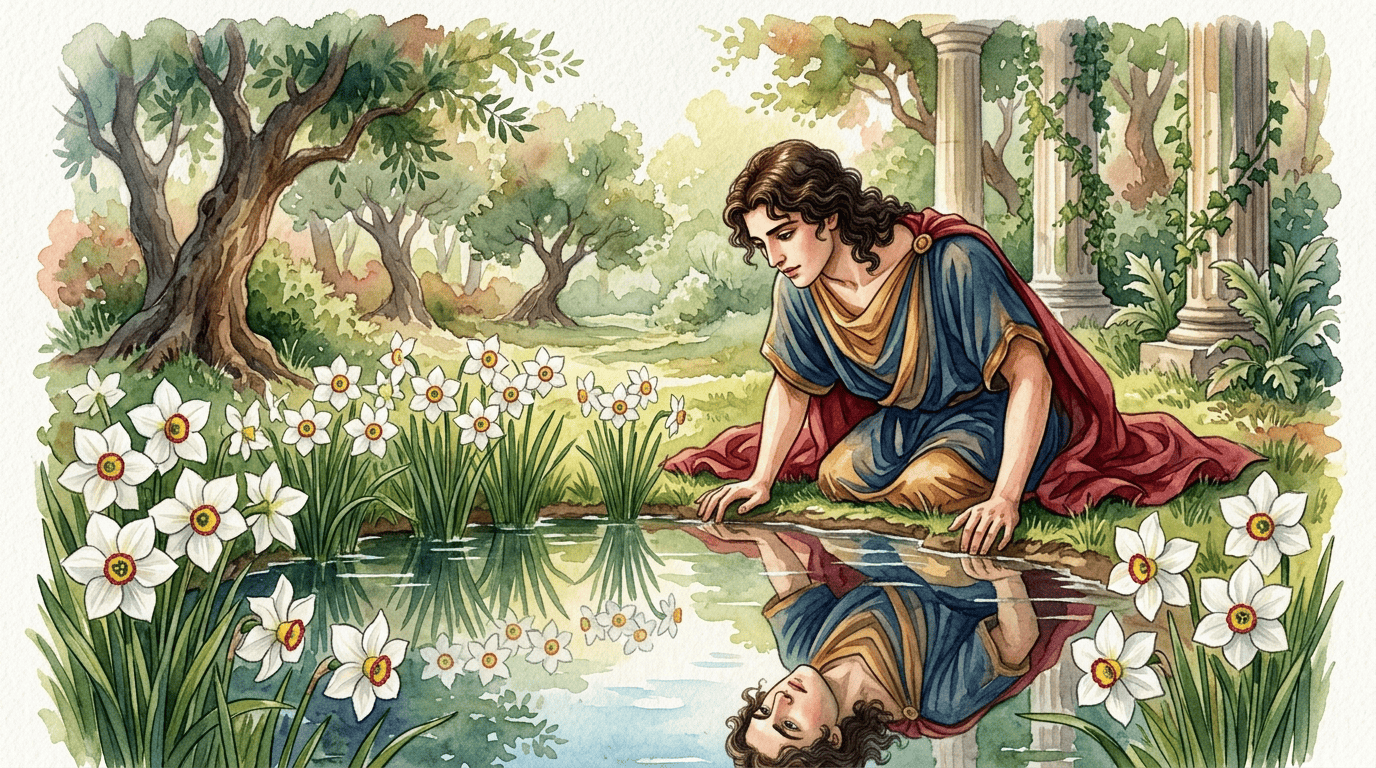
Narcissus poeticus is native to southern Europe from the Pyrenees through the Alps to Greece and the eastern Mediterranean, at elevations up to 2000 m in alpine meadows. It is the flower most likely meant by the 'narcissus' of Greek and Roman literature. Ovid's Metamorphoses (8 CE) recounts how the beautiful youth Narcissus, punished by the gods for spurning all who loved him, fell in love with his own reflection in a pool and wasted away to be transformed into the flower. The species was cultivated in monastery and peasant gardens through the Middle Ages and naturalized across much of northern Europe in orchards and churchyards.
William Wordsworth's 1804 poem 'I Wandered Lonely as a Cloud' (originally about a wild population, likely of a different species, but often associated with N. poeticus in popular memory) cemented the flower in English literary tradition. The perfume industry of Grasse, France, cultivates N. poeticus for enfleurage extraction of its flower oil — narcissus absolute — which contributes jasmine-tobacco notes to classical chypres and floral perfumes like Chanel No. 19. The flowers contain alkaloids (lycorine, narcissine) and are toxic if eaten; the 1881 New Zealand 'Bollinger-Macquarie' incident recounts boys poisoned by mistaking bulbs for onions.
The 'narcissus' of Greek mythology — Narcissus transformed at the water's edge. Wordsworth's 'I wandered lonely as a cloud' (1807) celebrates the host of golden daffodils. Grasse perfume industry distills its flowers.
Symbolism & meaning
What It Symbolizes
Poet's Daffodil carries rebirth, blooming late in spring as a herald of the season's peak rather than its first stirrings. It is also the flower of self-reflection — tied to the myth of Narcissus, who gazed too long into his own reflection and became this very bloom. A narcissus whose meaning is woven into the original Greek word for itself.
- Rebirth — Late-spring bloomer heralding the peak of the season
- Self-Reflection — The mythological flower of Narcissus gazing into his reflection
Where the Name Comes From
Narcissus from Greek mythology; 'poeticus' means 'of the poets,' referring to classical literary references.
Uses & Fun Facts
- White petals and crimson-rimmed cup carry classic narcissus perfume
- Heritage Poet's Daffodil naturalizes in meadows and orchards
- Subject of the Greek Narcissus myth and centuries of poetry
Related plants
More Narcissus plants
 Cyclamen-Flowered DaffodilNarcissus cyclamineus
 JonquilNarcissus jonquilla
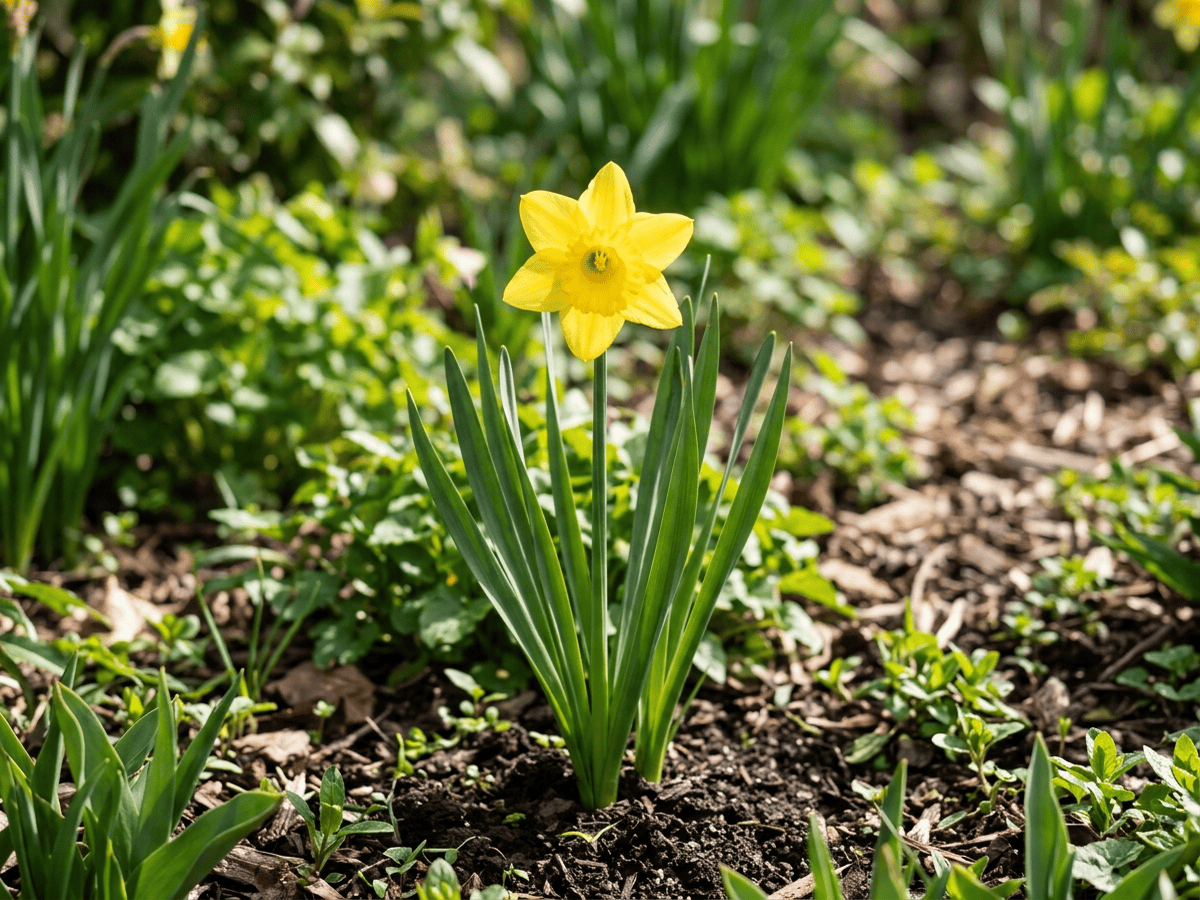 Wild DaffodilNarcissus pseudonarcissus
 Bunch-Flowered DaffodilNarcissus tazetta
Plants with similar care
 Chinese AbeliaAbelia chinensis
 Fragrant AbeliaAbelia mosanensis
 Large-Flowered AbeliaAbelia uniflora
 Glossy AbeliaAbelia x grandiflora
Frequently asked questions
How often should I water Poet's Daffodil?
In summer, water about every 21 days; in winter, about every 14 days. Adjust for heat, pot size and drainage.
How much light does Poet's Daffodil need?
Full sun: 6+ hrs direct. Watch the leaves — scorching or stretching means the light needs adjusting.
Is Poet's Daffodil toxic to cats or dogs?
Pets Moderate (Dogs Moderate · Cats Moderate) Educational information, not medical or veterinary advice. If exposure is suspected, contact a doctor or veterinarian.
Is Poet's Daffodil easy to grow?
Yes — it is considered an easy, beginner-friendly plant.
When does Poet's Daffodil bloom?
It typically blooms Mar–May in the Northern Hemisphere.
YardMate
Identify any plant in seconds
Snap a photo — YardMate names the plant, diagnoses problems, and reminds you when to water.
Download on the App Store