 YardMate


Oregano
Origanum vulgare
Easy · Beginner friendlyAbout Oregano
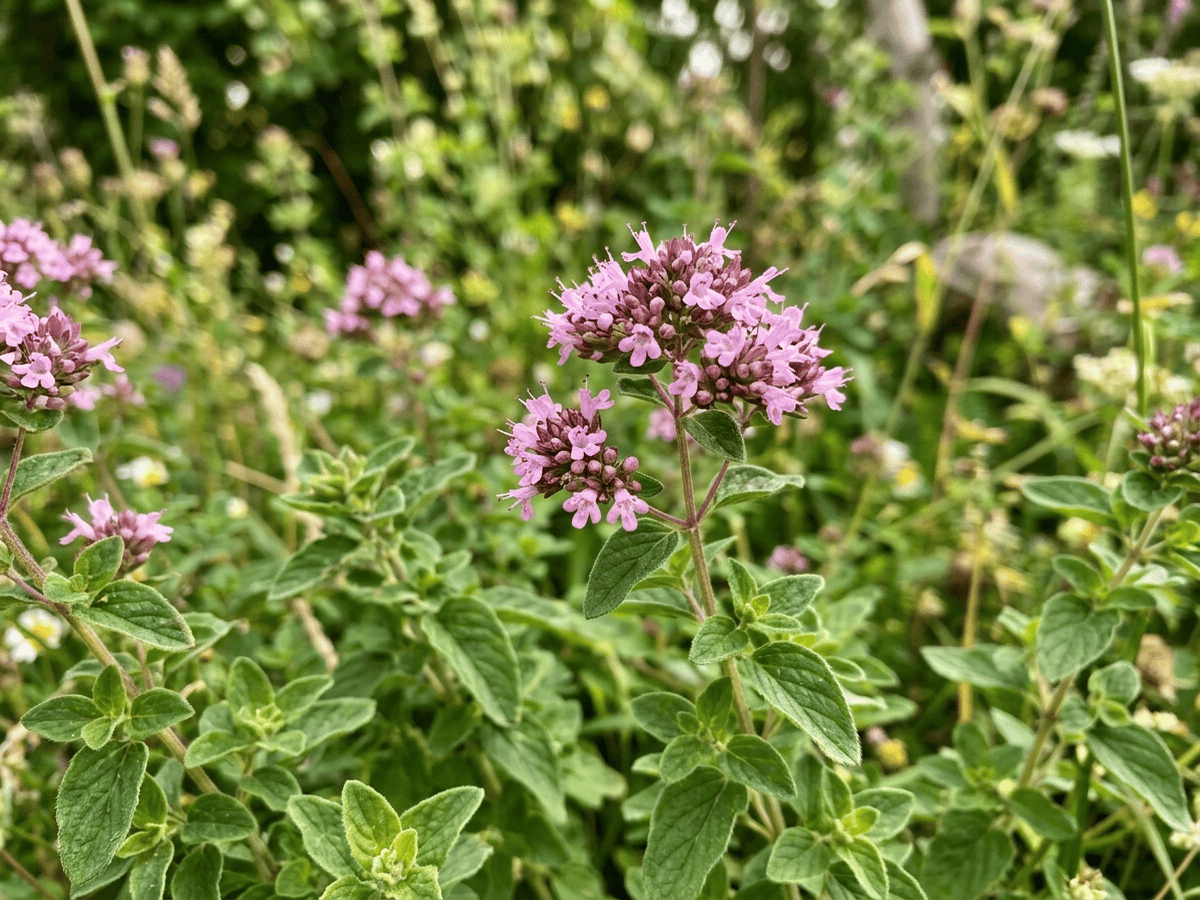
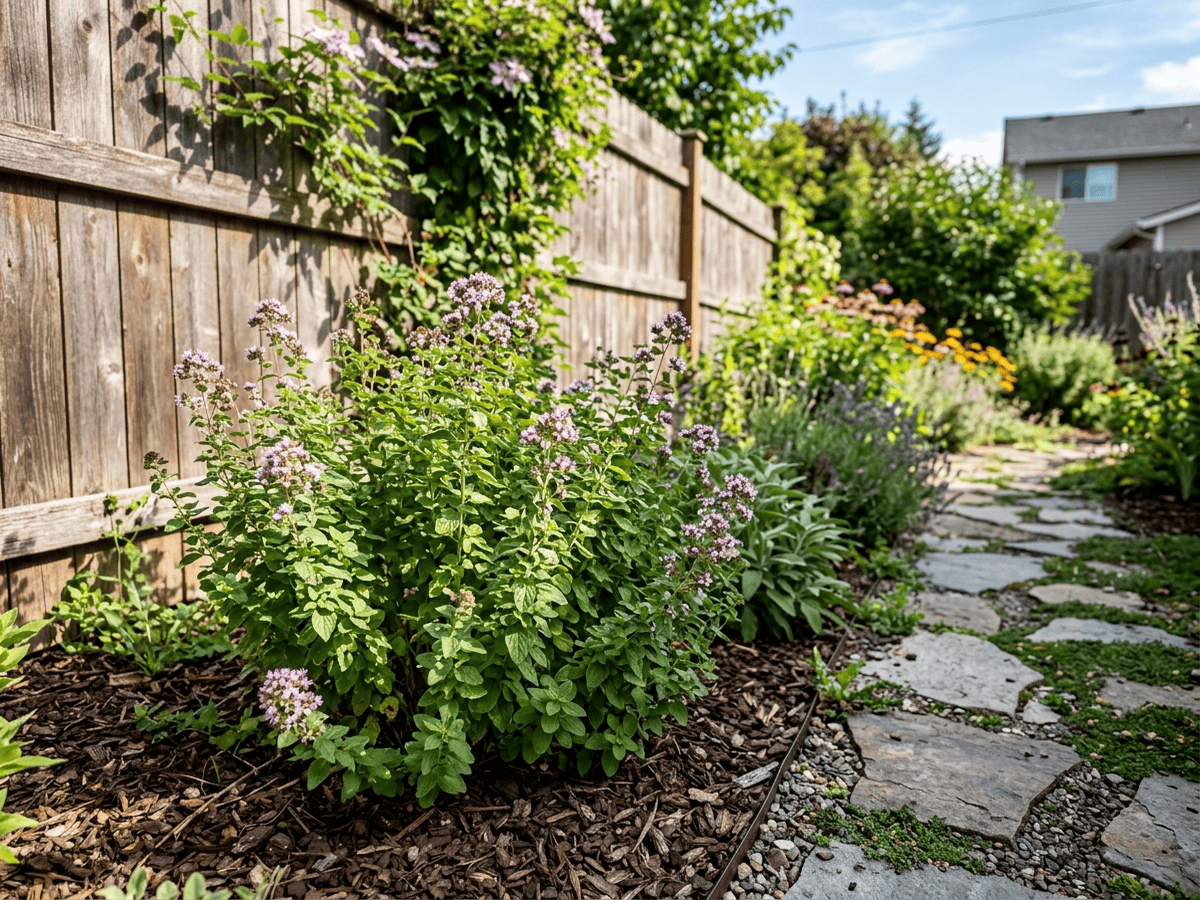
Origanum vulgare, oregano, is an essential Mediterranean herb with a warm, pungent flavor that defines Italian, Greek, and Mexican cuisines. The small, rounded leaves on wiry stems grow 30–60 cm tall, topped with clusters of tiny pink-purple flowers that attract bees and butterflies. Native to the Mediterranean and western Asia, it thrives in hot, dry, poor soil. There is significant confusion between oregano varieties — Greek oregano (subsp. hirtum) has the strongest flavor, while the ornamental common form is milder. Dried oregano is often more flavorful than fresh.
- Edible
- Fragrant
- Drought-tolerant
- Pollinator-friendly
How to care for Oregano
Watering
- Springevery 4 days
- Summerevery 3 days
- Fallevery 6 days
- Winterevery 10 days
Soil · Rich & well-draining
- Top dressingCompost10%
- Main mixPotting soil + compost 3:180%
- DrainageGravel10%
Top up the compost layer each season.
FERTILIZER
- Springevery 30 days
- Summerevery 30 days
- Fallevery 45 days
At a Glance
- NativeMediterranean, Western Asia
- Height1–2 ft (0.3–0.6 m)
- Spread1–2 ft (0.3–0.6 m)
- Flower colorPink, Purple, White
- Foliage colorGreen, Yellow, Variegated
- SoilSandy, Well-drained, Alkaline
- LocationsYard · Balcony
Bloom time
BLOOM CYCLE
Peak bloom
Jun–Aug
Pink-purple flower clusters loved by bees; harvest before flowering for best flavor
Fragrance
STRONG FRAGRANCE
Pungent warm aroma of carvacrol and thymol.
Toxicity
Pets Slight
carvacrol and thymol
Not reported
EXPOSURE No exposure route is reported.
EFFECT Culinary herb and no significant toxicity.
NOTE No human toxicity is reported in this catalog; avoid eating ornamental plants unless confirmed edible.
Slight
- All
- Ingestion
EXPOSURE Eating any part of the plant.
EFFECT Large amounts may cause mild GI upset and essential oil more hazardous (per ASPCA).
NOTE ASPCA notes mild toxicity from large ingestion; dietary amounts safe.
Slight
- All
- Ingestion
EXPOSURE Eating any part of the plant.
EFFECT Large amounts may cause mild GI upset and essential oil hazardous.
NOTE ASPCA notes mild toxicity from large ingestion; dietary amounts safe.
Educational information, not medical or veterinary advice. If exposure is suspected, contact a doctor or veterinarian.
DISTRIBUTION

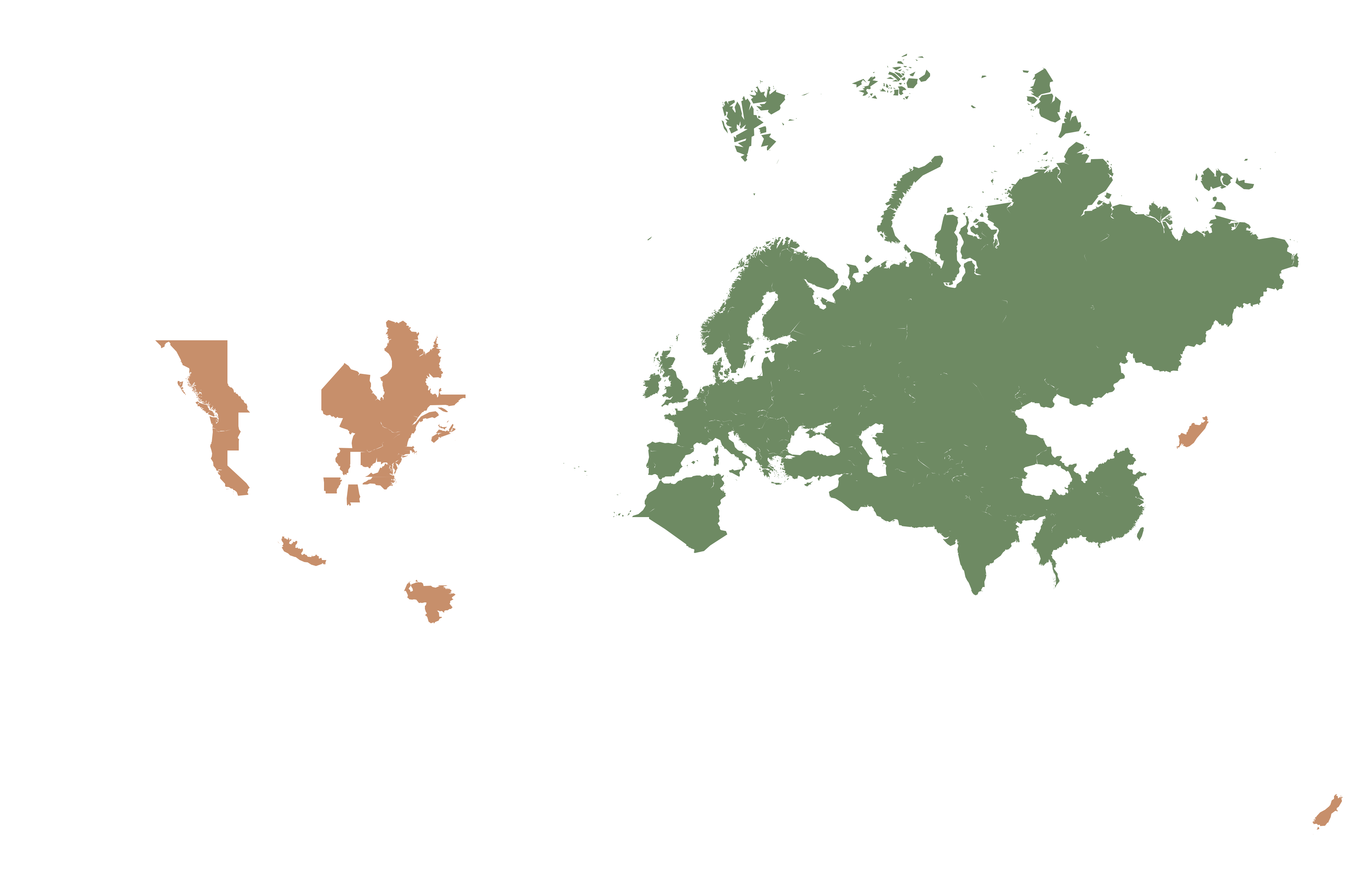
- Native
- Introduced
- Mediterranean
- Western Asia
History
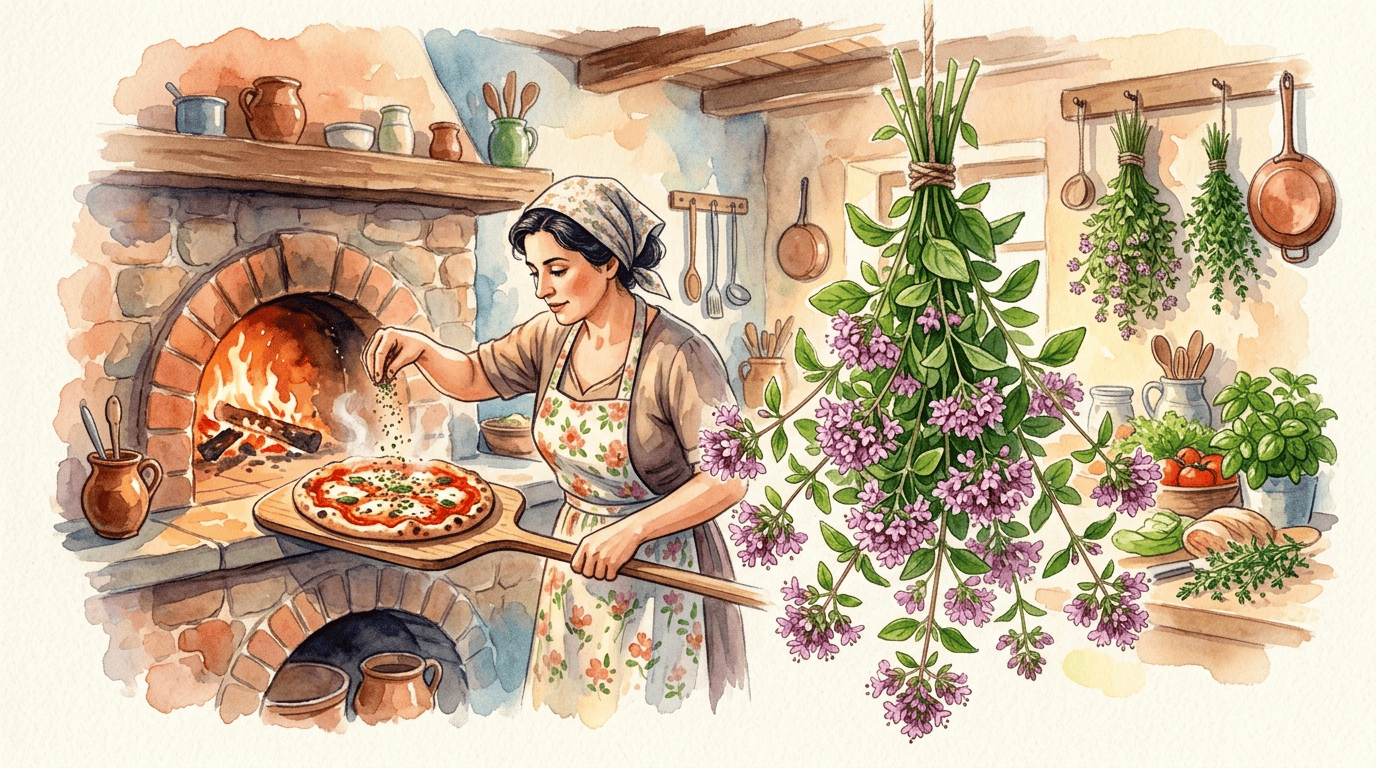
Origanum vulgare is native to the Mediterranean Basin and western Asia, and the name derives from Greek "oros" (mountain) + "ganos" (joy, beauty), meaning "joy of the mountain." Greek myth attributed its creation to Aphrodite, who grew it on Mount Olympus to symbolize happiness; brides wore oregano crowns, and the plant was placed on graves as a blessing. Though long used in Mediterranean cuisine, oregano was virtually unknown in American cooking until after World War II, when returning US soldiers who had tasted oregano-rich Italian food in the Mediterranean theater (particularly in Sicily and southern Italy) created a massive domestic demand.
Combined with the postwar pizza boom led by Italian-American restaurants, American oregano imports increased more than 5,000% between 1948 and 1956 — one of the fastest-growing spice markets in history. Greek oregano (subsp. hirtum) is the preferred culinary subspecies.
Mexican oregano (Lippia graveolens) is a different genus with similar flavor. Oregano's name comes from Greek 'oros' (mountain) and 'ganos' (joy) — 'joy of the mountain,' as Greek hillsides covered in blooming oregano were considered blessed by Aphrodite. Today, oregano oil (carvacrol) is one of the most studied natural antimicrobials, with demonstrated activity against bacteria, fungi, and even some viruses.
Symbolism & meaning
What It Symbolizes
Oregano's Greek name literally means joy of the mountain, making it the herb of happiness and the good life lived close to sun, stone, and shared meals. Its warm fragrance has woven it into the kitchens of the Mediterranean for thousands of years, a small bright addition to almost everything. It is often read as a flower of simple pleasure, a hillside herb whose every leaf carries the cheerful idea that ordinary food is reason enough for celebration.
- Joy — Literally 'joy of the mountain' — representing happiness and the good life
Where the Name Comes From
Origanum from Greek 'oros' (mountain) and 'ganos' (joy). Vulgare means 'common.'
Uses & Fun Facts
- Defining herb of Italian, Greek, and Mexican cooking
- Oil of Oregano used as antimicrobial herbal remedy
- Crushed leaves release warm pungent Mediterranean aroma
- Summer umbels draw bees and beneficial insects to herb beds
Related plants
Plants with similar care
 Chinese AbeliaAbelia chinensis
 Fragrant AbeliaAbelia mosanensis
 Large-Flowered AbeliaAbelia uniflora
 Glossy AbeliaAbelia x grandiflora
Frequently asked questions
How often should I water Oregano?
In summer, water about every 3 days; in winter, about every 10 days. Adjust for heat, pot size and drainage.
How much light does Oregano need?
Full sun: 6+ hrs direct. Watch the leaves — scorching or stretching means the light needs adjusting.
Is Oregano toxic to cats or dogs?
Pets Slight (Dogs Slight · Cats Slight) Educational information, not medical or veterinary advice. If exposure is suspected, contact a doctor or veterinarian.
Is Oregano easy to grow?
Yes — it is considered an easy, beginner-friendly plant.
When does Oregano bloom?
It typically blooms Jun–Aug in the Northern Hemisphere.
YardMate
Identify any plant in seconds
Snap a photo — YardMate names the plant, diagnoses problems, and reminds you when to water.
Download on the App Store