 YardMate
Spanish Poppy
Papaver rupifragum
Hard · Experienced growersAbout Spanish Poppy
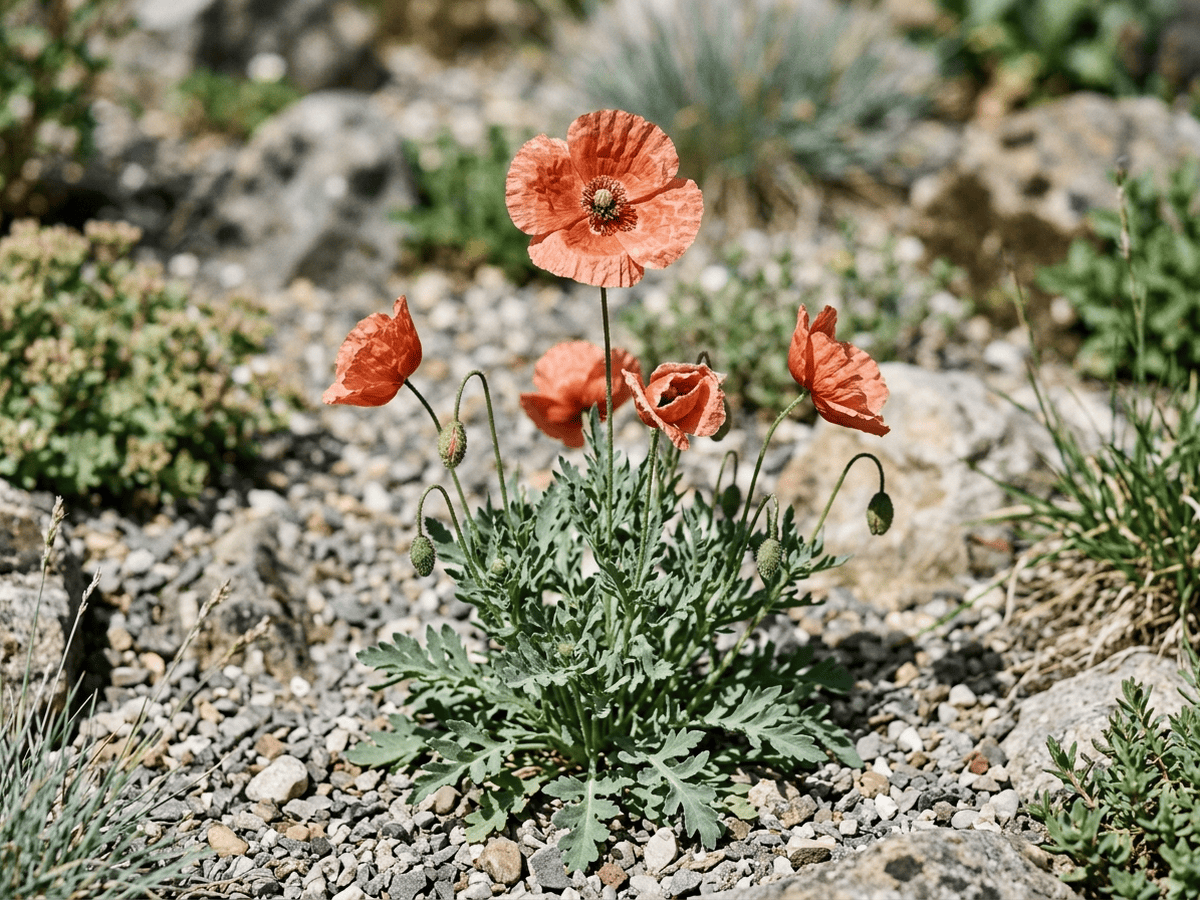
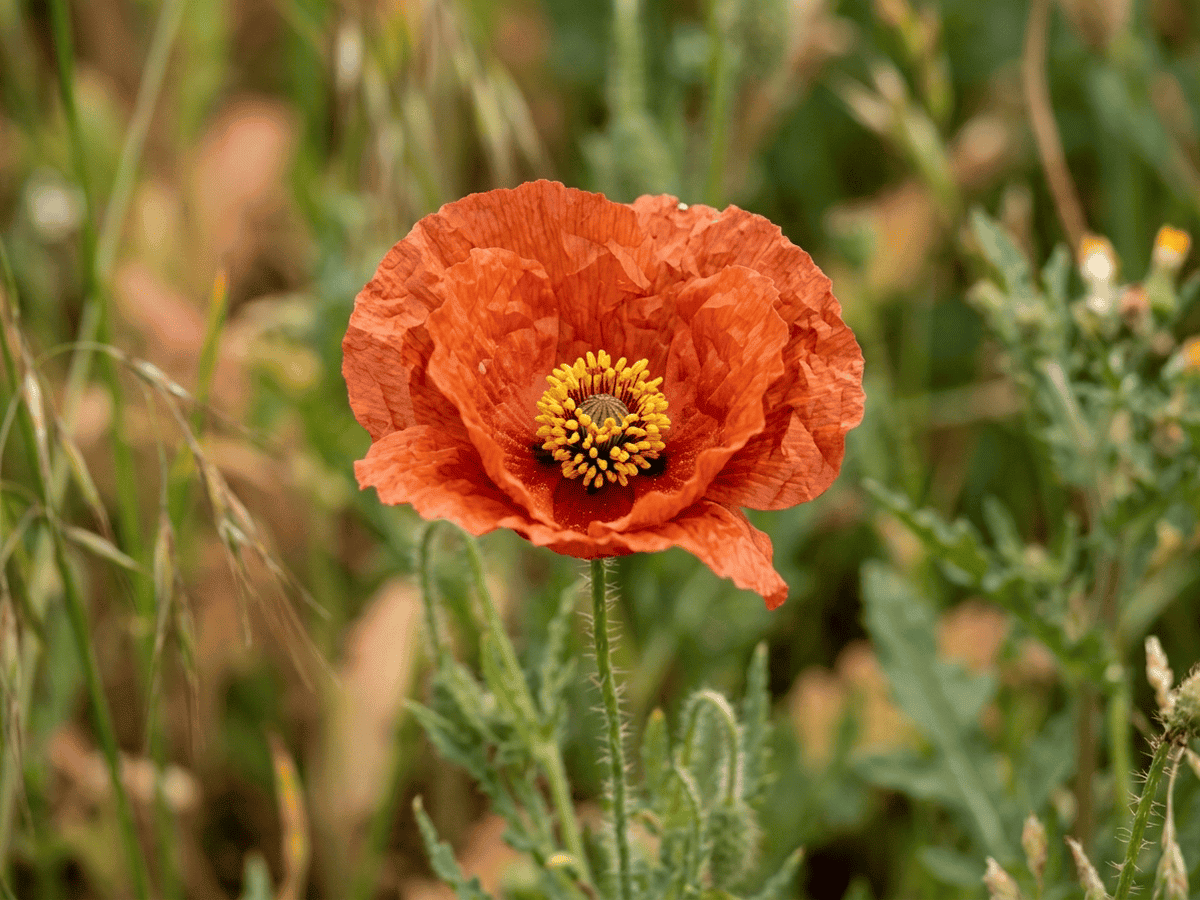
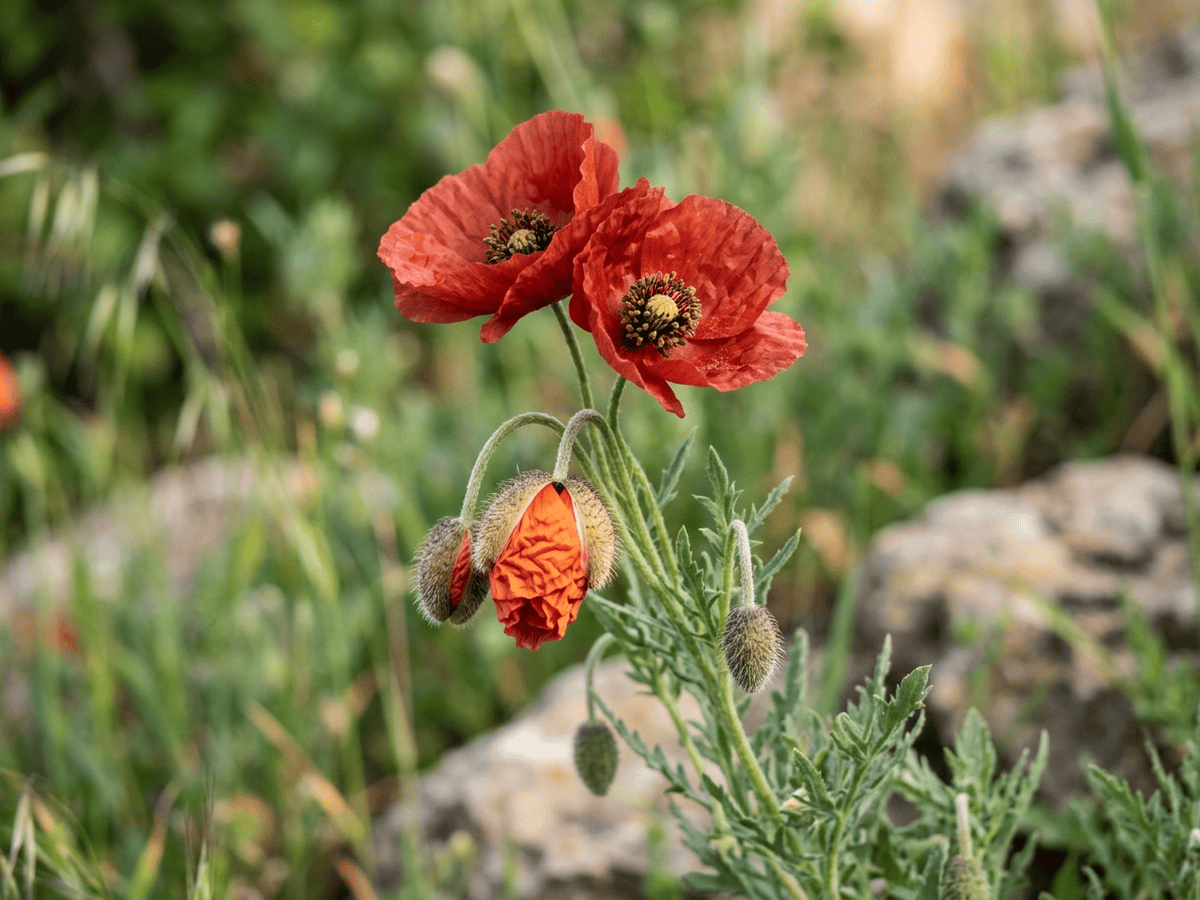
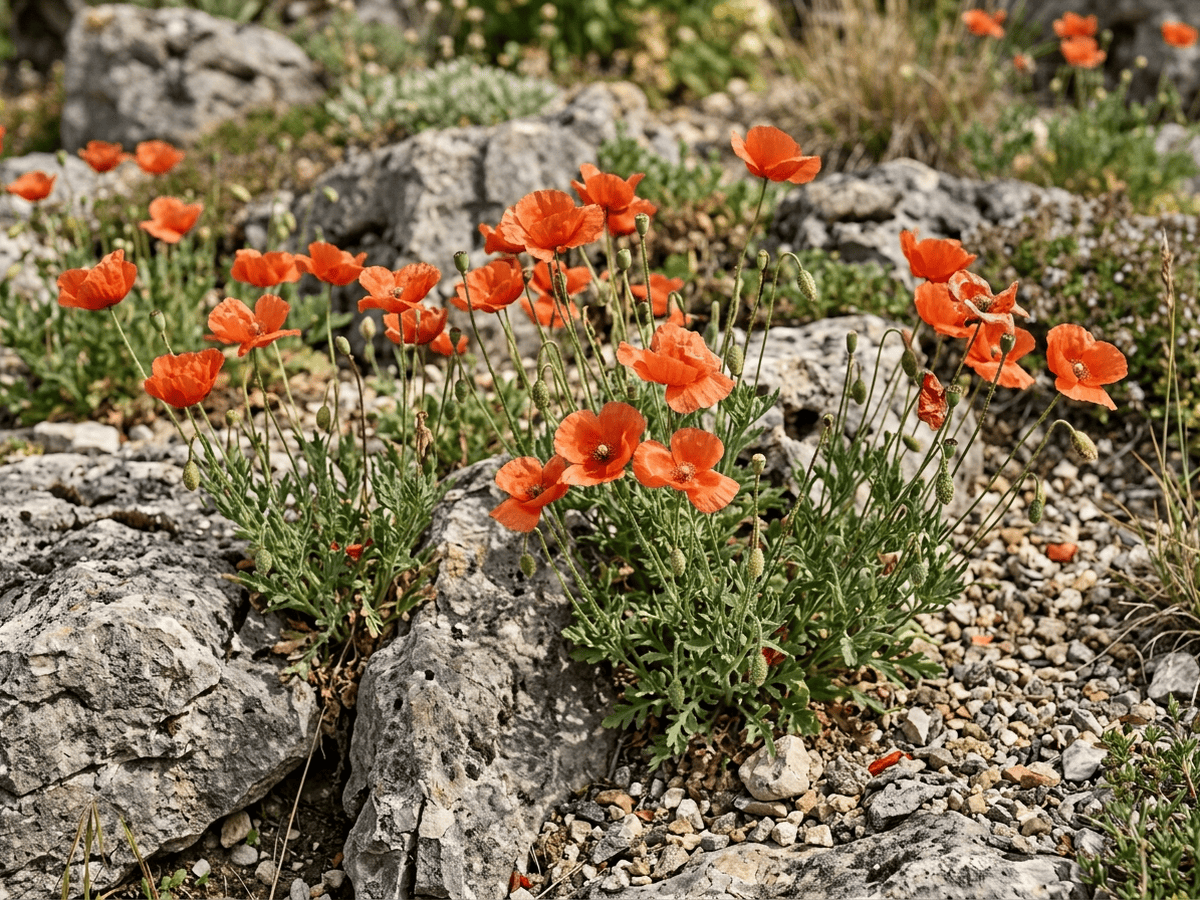
Spanish Poppy is a short-lived perennial poppy native to the rocky mountain slopes of southern Spain and Morocco, where it wedges its roots into crevices of limestone cliffs at 700-1600 meters elevation. Papery, crinkled flowers in shades of brick-red to soft orange, 3-4.5 cm across with golden-yellow anthers, open above a low rosette of hairy, deeply lobed grey-green leaves from late spring into summer. Plants form loose, branching clumps 15-45 cm tall and self-seed readily once settled. Give it full sun and sharp, lean, well-drained soil - a gravel bed, rock garden crevice, or dry wall - and it will return year after year from its own scattered seed, needing almost no care beyond good drainage.
- Drought-tolerant
- Fast-growing
How to care for Spanish Poppy
Watering
- Springevery 14 days
- Summerevery 14 days
- Fallpause watering
- Winterpause watering
Soil · Well-draining
- Top dressingPine bark mulch10%
- Main mixPotting soil + perlite 2:170%
- DrainageLECA / gravel20%
Never skip the drainage layer — standing water is the top cause of root rot.
FERTILIZER
- Springevery 30 days
At a Glance
- NativeMediterranean, Africa
- Height0.5–1.5 ft (0.2–0.5 m)
- Spread0.5–1 ft (0.2–0.3 m)
- Flower colorOrange
- Foliage colorGreen
- SoilSandy, Well-drained
- LocationsYard · Patio
Bloom time
BLOOM CYCLE
Peak bloom
Apr–Jun
This plant blooms in spring, with a short and beautiful flowering period.
Toxicity
Toxicity unknown
None reported
Unknown
EXPOSURE No exposure route is reported.
EFFECT No toxic effect is reported.
NOTE Toxicity for humans is not well documented; use caution until verified.
Unknown
EXPOSURE No exposure route is reported.
EFFECT No toxic effect is reported.
NOTE Toxicity for dogs is not well documented; use caution until verified.
Unknown
EXPOSURE No exposure route is reported.
EFFECT No toxic effect is reported.
NOTE Toxicity for cats is not well documented; use caution until verified.
Educational information, not medical or veterinary advice. If exposure is suspected, contact a doctor or veterinarian.
DISTRIBUTION


- Native
- Mediterranean
- Africa
History
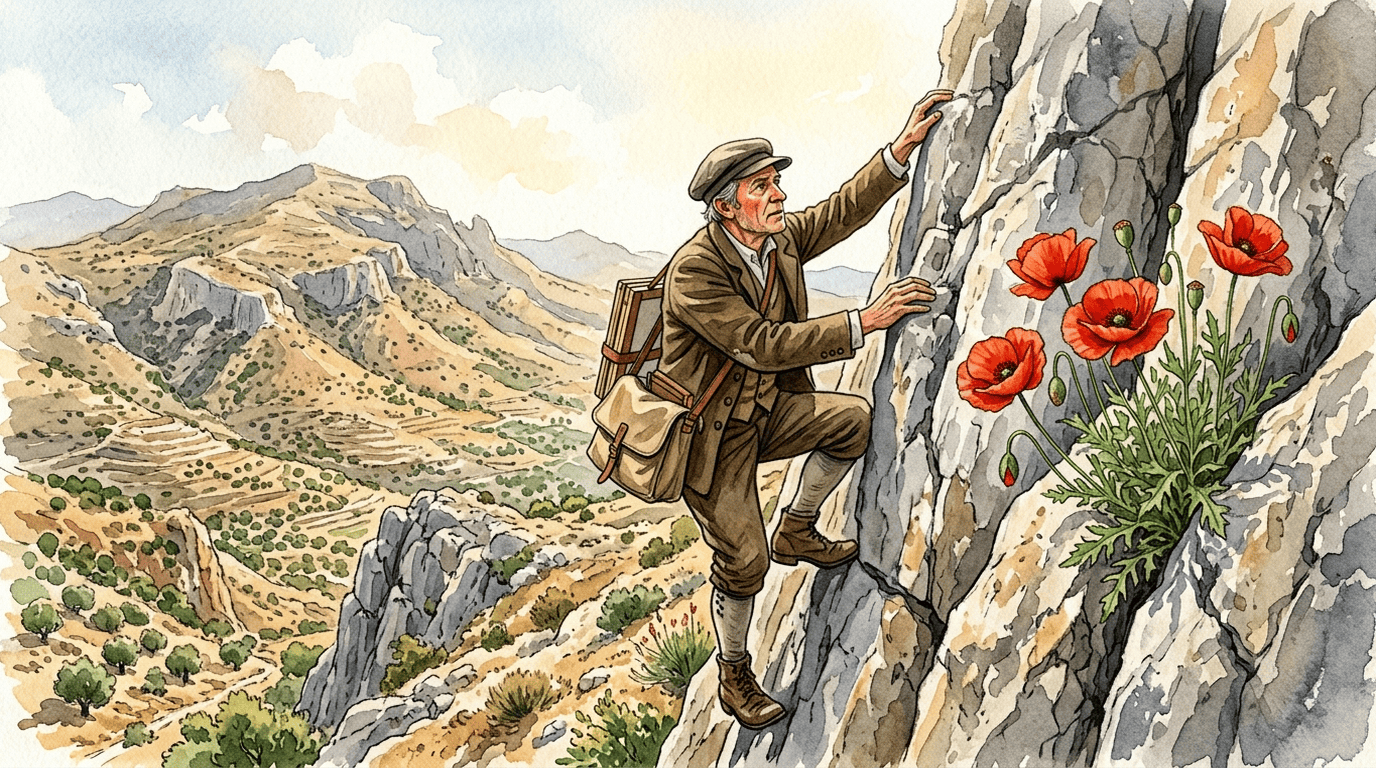
Spanish Poppy takes its scientific name, rupifragum, from the Latin rupes (rock) and frangere (to break) - 'rock-breaker' - for the way it seeds into narrow cracks in bare limestone cliffs. It was formally described in 1852 by the Swiss botanist Edmond Boissier and his collaborator Georges Reuter, who had spent 1849 travelling through the mountains of southern Spain and Morocco on one of several self-funded botanical expeditions Boissier made into the Iberian Peninsula and North Africa. Their type specimen came from the Serrania de Ronda, a limestone range in Andalusia, and the species was published among dozens of newly recognized plants in their Pugillus Plantarum Novarum Africae Borealis Hispaniaeque Australis, a Latin survey of previously undescribed North African and southern Spanish flora. Boissier's expeditions, undertaken at his own expense and later distilled into his monumental Voyage botanique dans le midi de l'Espagne, opened the mountain flora of Andalusia to European botany for the first time, and Spanish Poppy remains one of the rock-crevice specialists his surveys brought to light. In its native cliffs it survives on almost nothing: a handful of soil lodged in a crack, full baking sun, and whatever rain the rock face sheds toward its roots. Introduced to gardens as a rock-garden and gravel-bed poppy for exactly that toughness, it has since escaped mild cultivation in a few areas outside its native range, still seeking out the same lean, stony ground it first colonized in the Sierra de Ronda.
Symbolism & meaning
What It Symbolizes
Spanish Poppy makes its home in the one place other plants avoid: a bare crack in a cliff face, baked all day by the sun. It asks for nothing but that narrow foothold, then bursts into brick-red bloom each spring - a short, vivid display from a plant that survives on almost no soil at all.
- Tenacity — Roots into bare cracks in sun-baked limestone cliffs where almost nothing else can hold on, needing only a pinch of soil and full sun.
- Fleeting beauty — Like most poppies, each papery bloom lasts only a few days, opening crumpled from bud and shattering soon after.
Where the Name Comes From
From Latin rupes, 'rock,' and frangere, 'to break/split' - 'rock-breaker,' for the way it seeds into bare cracks in limestone cliffs; described in 1852 by Edmond Boissier and Georges Reuter from a specimen collected in Spain's Serrania de Ronda.
Uses & Fun Facts
- Papery brick-red to orange blooms for rock gardens, gravel beds, and dry walls
- Open, pollen-rich flowers draw bees to sunny, dry plantings
- Cut stems make short-lived but vivid additions to informal arrangements
Related plants
More Papaver plants
 Welsh PoppyPapaver cambricum
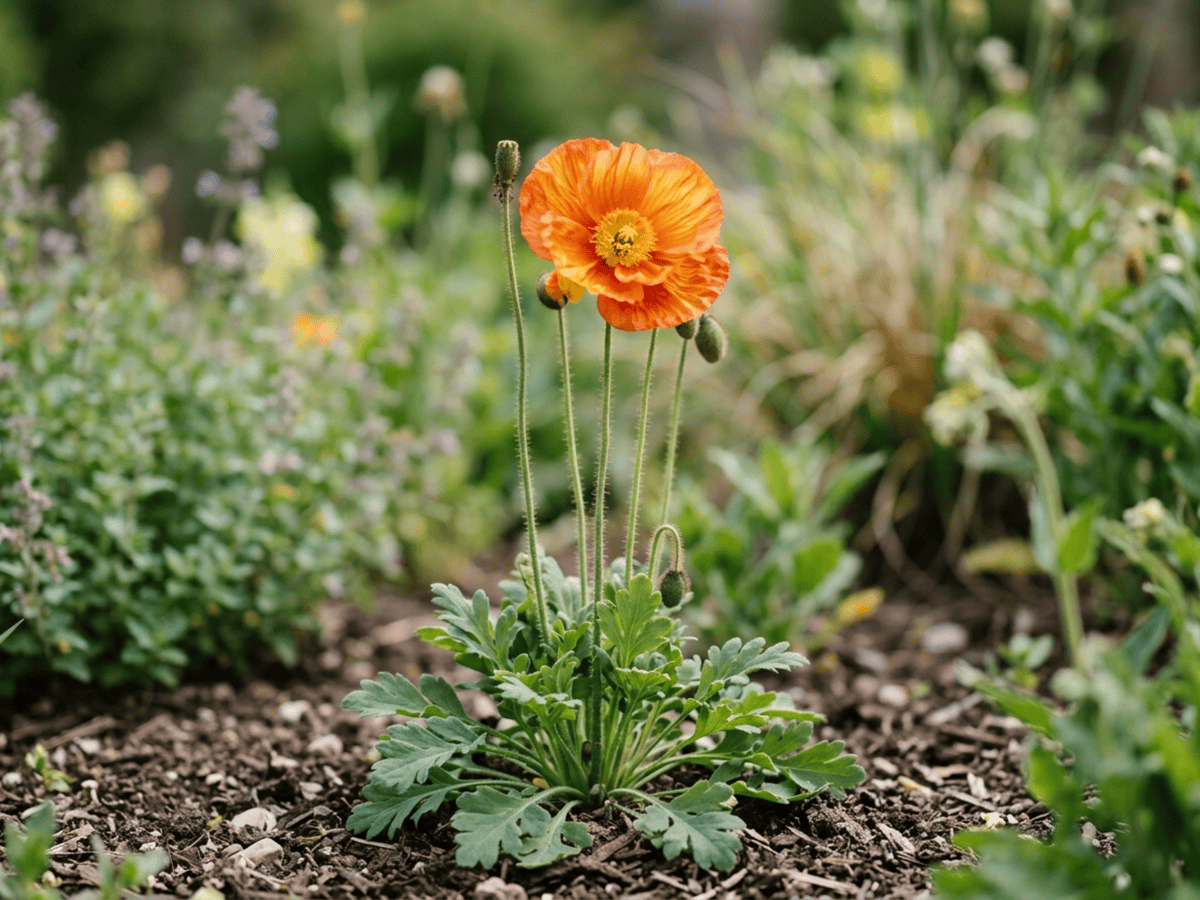 Iceland PoppyPapaver nudicaule
 Oriental PoppyPapaver orientale
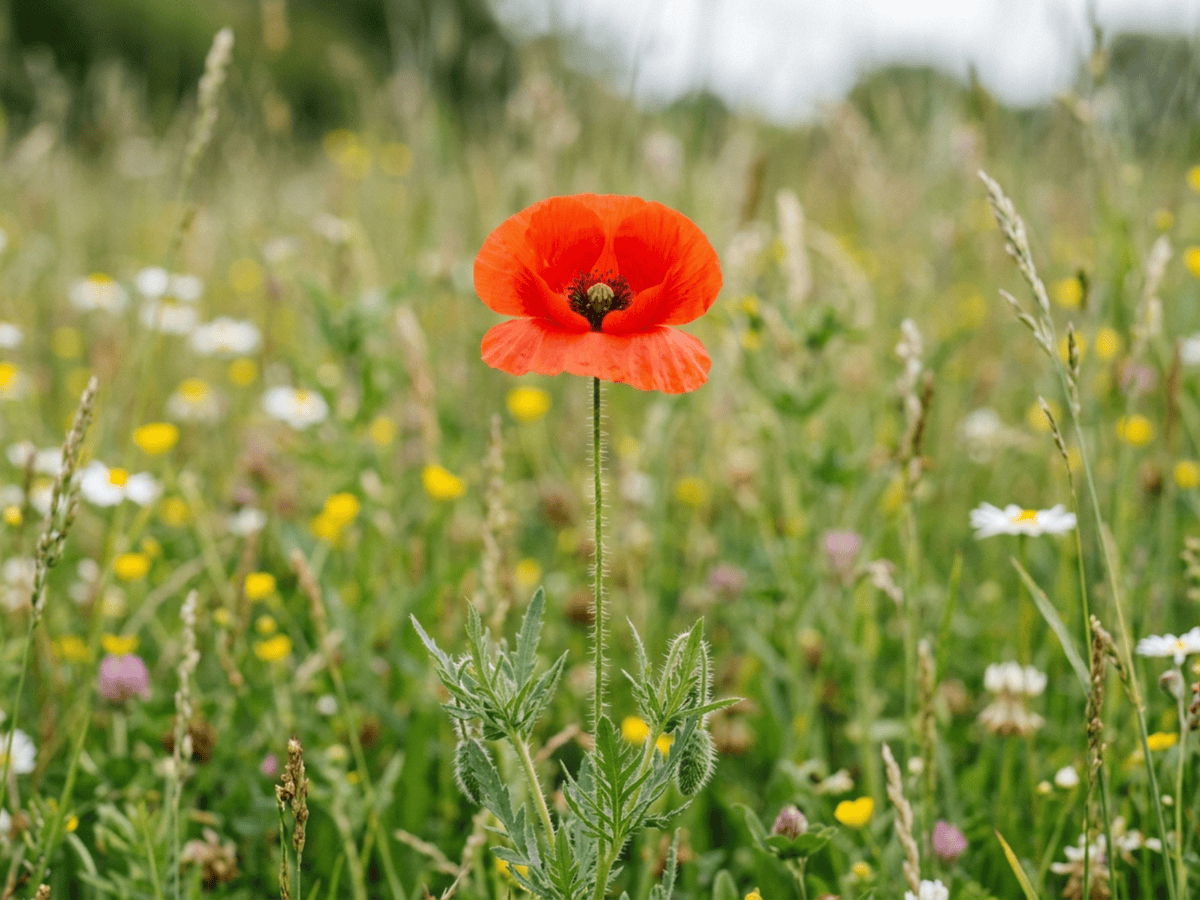 Common PoppyPapaver rhoeas
Plants with similar care
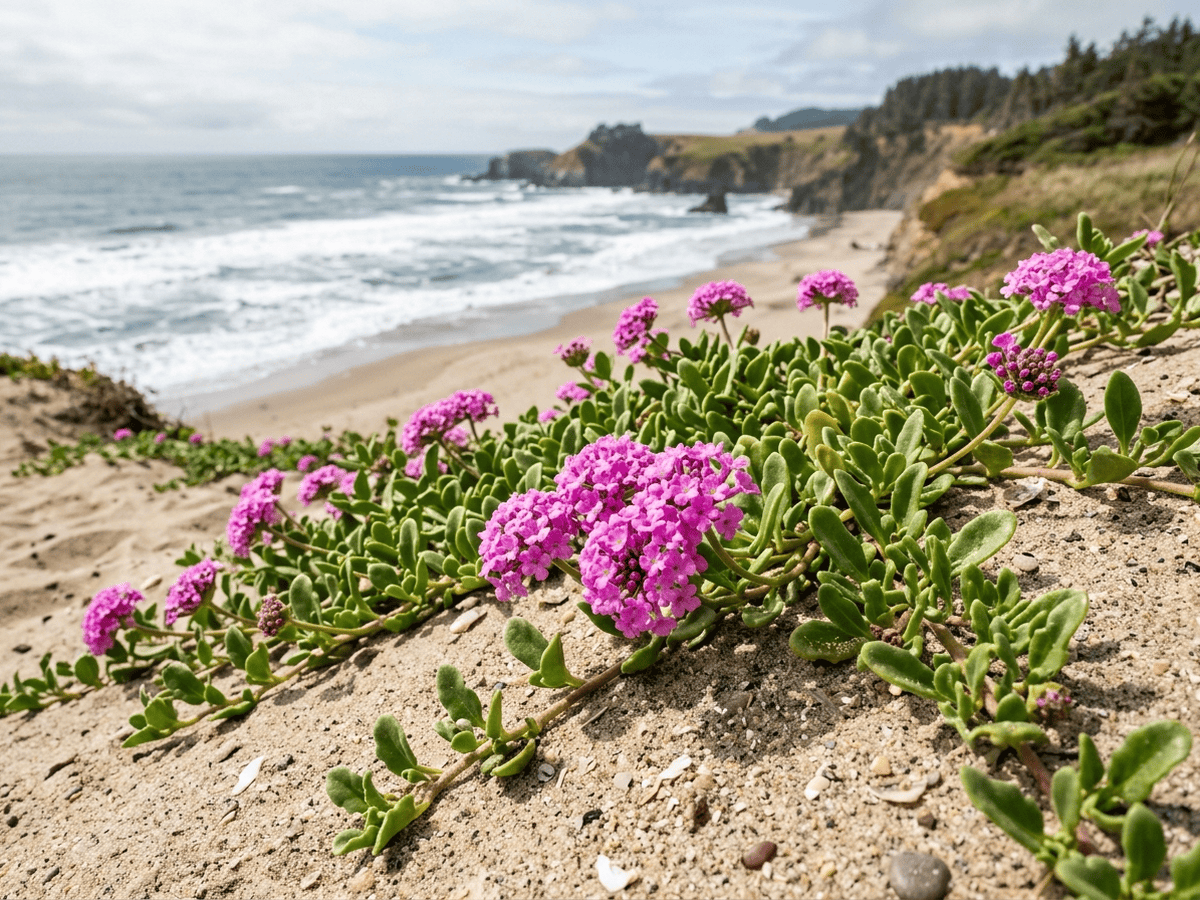 Pink Sand VerbenaAbronia umbellata
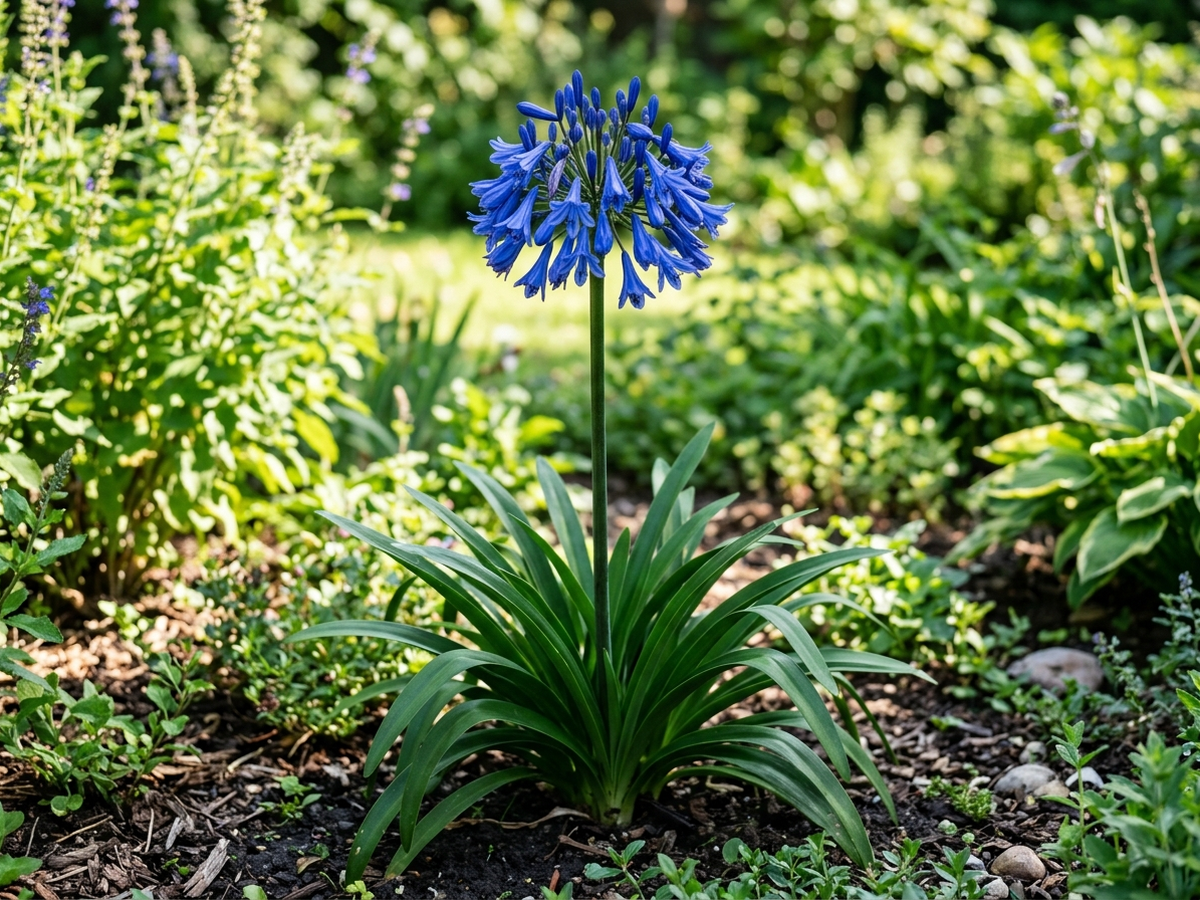 Drooping AgapanthusAgapanthus inapertus
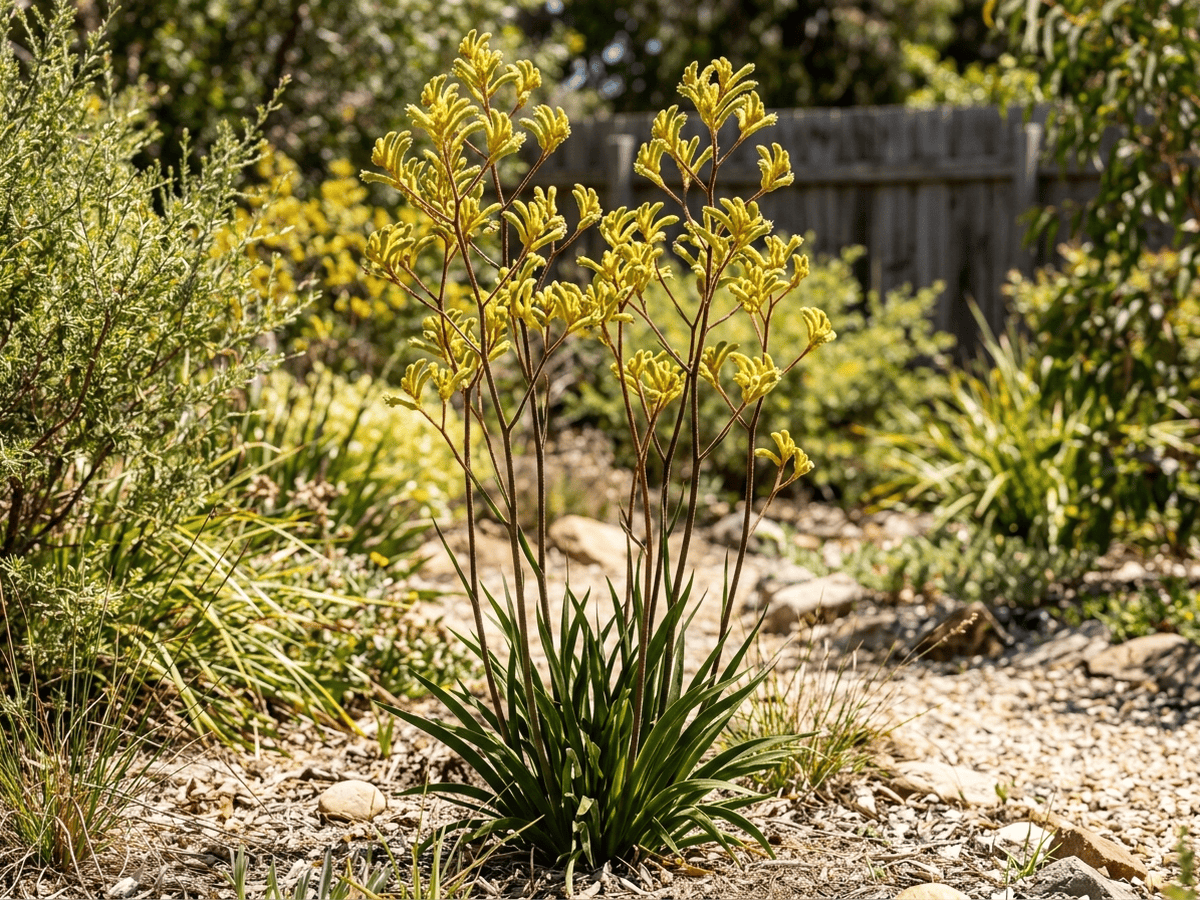 Tall Kangaroo PawAnigozanthos flavidus
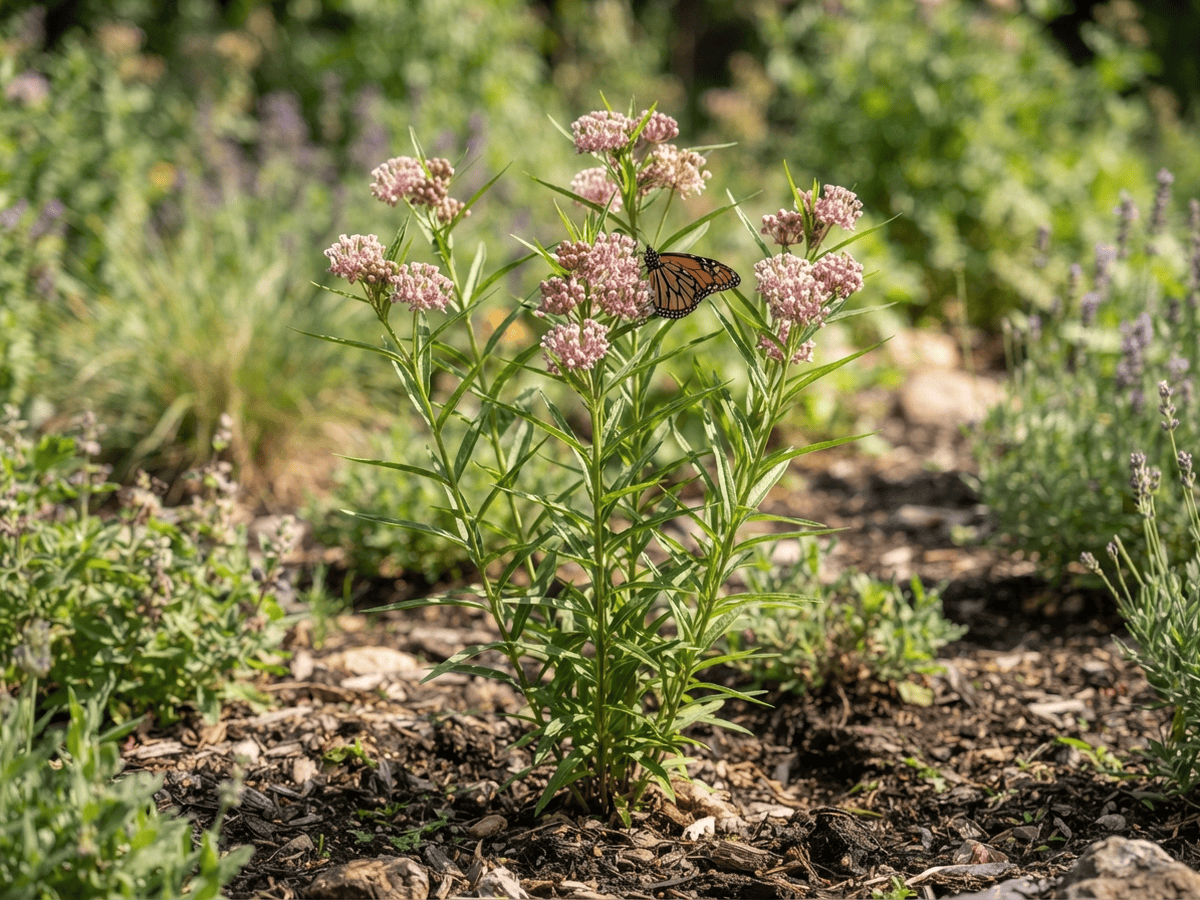 Narrowleaf MilkweedAsclepias fascicularis
Frequently asked questions
How often should I water Spanish Poppy?
Water about every 14 days during the growing season, and always let excess water drain away.
How much light does Spanish Poppy need?
Full sun: 6+ hrs direct. Watch the leaves — scorching or stretching means the light needs adjusting.
Is Spanish Poppy toxic to cats or dogs?
Pets Unknown (Dogs Unknown · Cats Unknown) Educational information, not medical or veterinary advice. If exposure is suspected, contact a doctor or veterinarian.
Is Spanish Poppy easy to grow?
It is considered challenging and rewards experienced growers.
When does Spanish Poppy bloom?
It typically blooms Apr–Jun in the Northern Hemisphere.
YardMate
Identify any plant in seconds
Snap a photo — YardMate names the plant, diagnoses problems, and reminds you when to water.
Download on the App Store