 YardMate


Avocado
Persea americana
Medium · Some experienceAbout Avocado
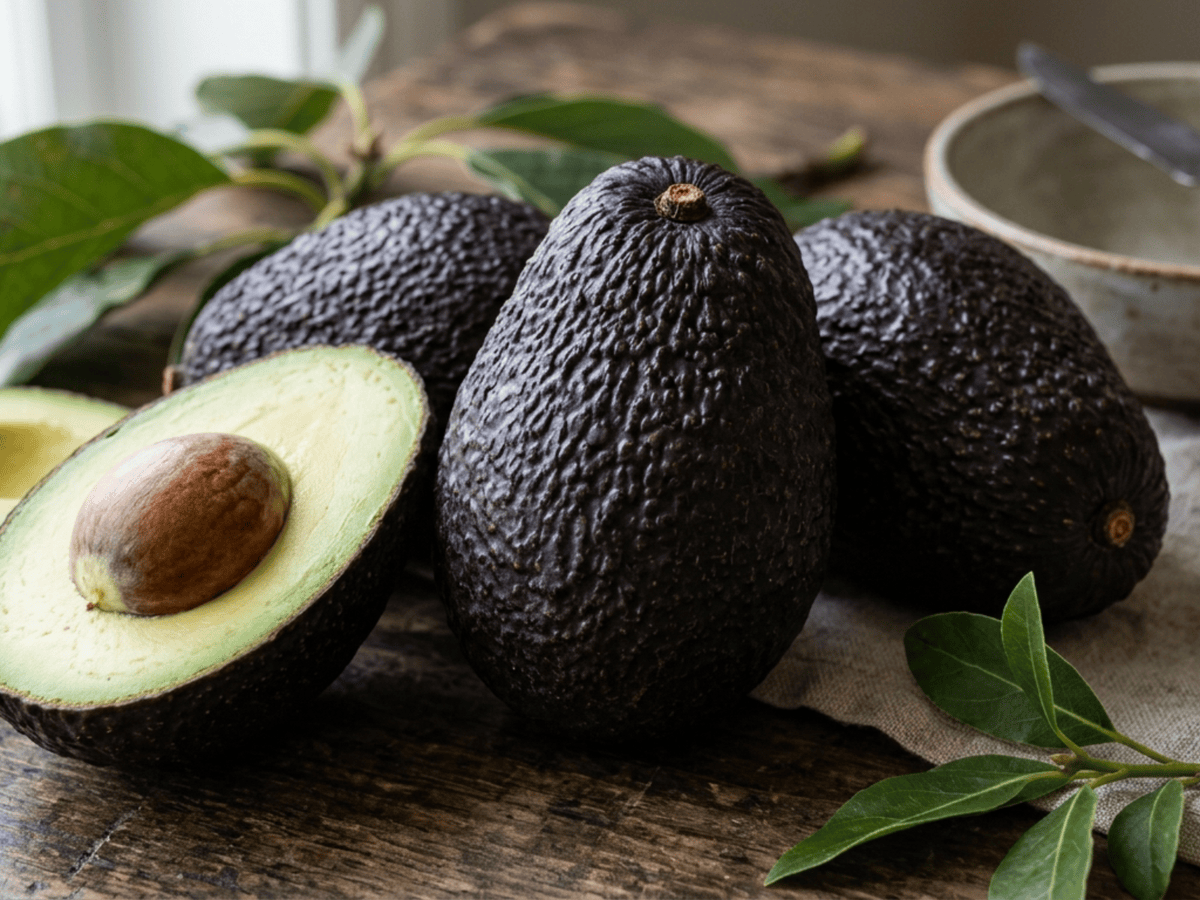
Persea americana, the avocado, is an evergreen tree in the Lauraceae family native to Mexico and Central America. Growing 10–20 m in the wild (kept smaller by pruning), it produces leathery dark green leaves and the familiar pear-shaped fruit with buttery, oil-rich green flesh. Three horticultural races exist: Mexican (cold-tolerant, thin-skinned), Guatemalan (thick, bumpy skin), and West Indian (tropical, smooth-skinned). Hass, a Guatemalan-Mexican hybrid, dominates world trade.
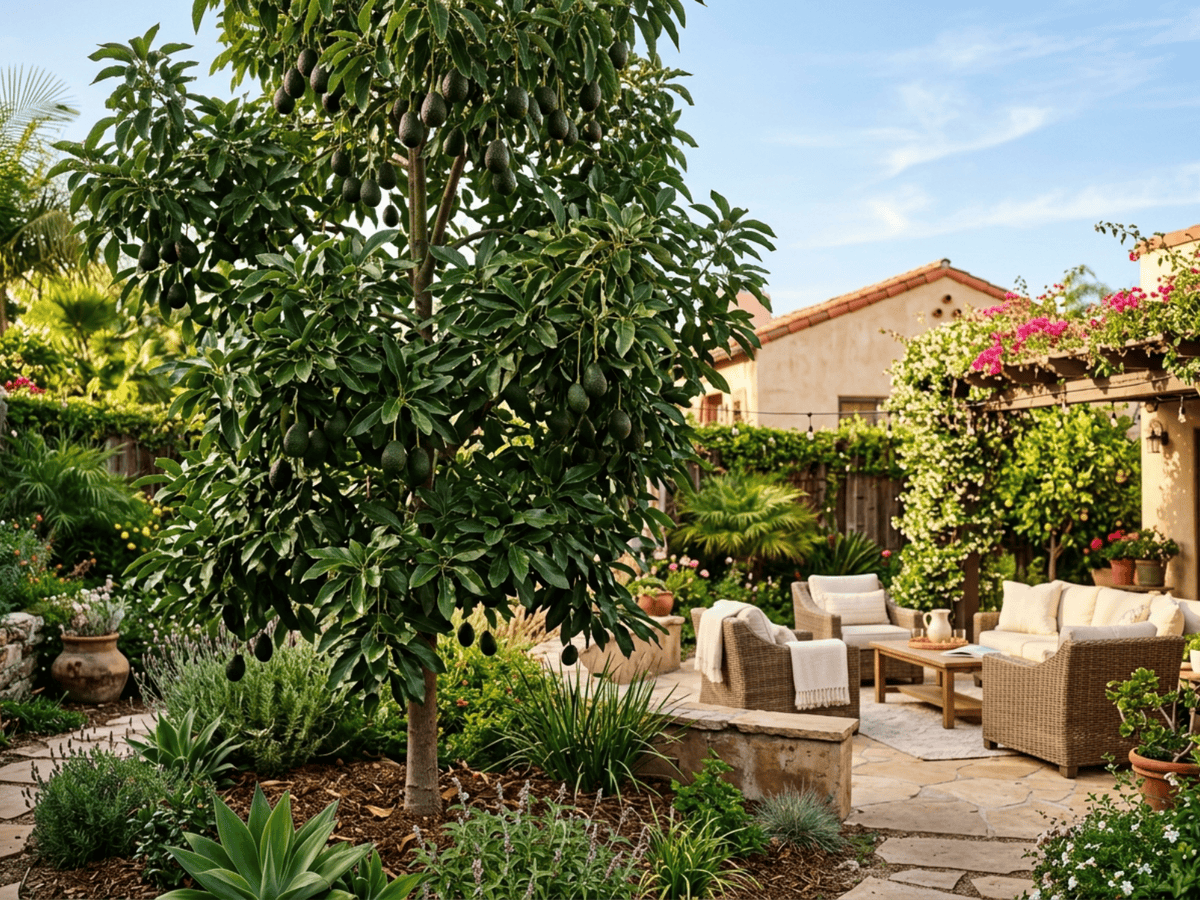
Avocados thrive in USDA zones 9–11 and are very frost-sensitive. They need full sun, excellent drainage (root rot is the number-one killer), and some humidity. Unusual among fruit trees, avocados have 'Type A' and 'Type B' flowering behaviour, where male and female flower phases alternate at different times of day—planting both types improves pollination.
The avocado has experienced perhaps the most dramatic demand explosion of any food in the 21st century. Global production tripled between 2000 and 2020, driven by health awareness of monounsaturated 'good fats,' social media food trends, and the ubiquity of avocado toast and guacamole. The fruit is rich in potassium (more than bananas), healthy fats, fibre, and vitamins K, C, and E. Archaeobotanical evidence dates avocado consumption to 10,000 BC in Mexico.
- Edible
- Evergreen
How to care for Avocado
Watering
- Springevery 5 days
- Summerevery 3 days
- Fallevery 7 days
- Winterevery 14 days
Soil · Well-draining
- Main mixLoam + bark + perlite 2:1:175%
- DrainageLECA25%
Bark keeps the mix from compacting under a heavy root ball.
FERTILIZER
Balanced Feed 14-14-14
An even feed covers all three needs at once, keeping leaves, roots and blooms moving together with nothing pushed out of balance.
- Nitrogen · Leaves
- Phosphorus · Roots + Blooms
- Potassium · Strength
- Springevery 30 days
- Summerevery 30 days
- Fallevery 45 days
At a Glance
- NativeNorth America
- Height30–60 ft (9.1–18.3 m)
- Spread20–40 ft (6.1–12.2 m)
- Flower colorYellow, Green
- Foliage colorGreen
- Fruit colorGreen
- SoilLoamy, Well-drained
- LocationsYard · Indoor · Balcony
Bloom time
BLOOM CYCLE
Peak bloom
Jun–Aug
Small yellowish flowers; plant Type A and Type B varieties together for better fruit set.
Fragrance
NO FRAGRANCE
No notable fragrance.
Toxicity
Pets Slight
persin
Not reported
EXPOSURE No exposure route is reported.
EFFECT Widely consumed and seed and leaf contain persin — theoretical rather than practical risk for humans.
NOTE No human toxicity is reported in this catalog; avoid eating ornamental plants unless confirmed edible.
Slight
- Leaf
- Pit
- Skin
- Ingestion
EXPOSURE Eating leaves, pit, and skin.
EFFECT Persin causes GI upset and whole pit is choking/obstruction hazard.
NOTE Flesh widely considered safe for dogs and cats in small amounts; birds, rabbits, horses, and livestock are much more vulnerable to persin. ASPCA lists avocado as toxic, primarily from this broader perspective.
Slight
- Leaf
- Pit
- Skin
- Ingestion
EXPOSURE Eating leaves, pit, and skin.
EFFECT Persin causes GI upset.
NOTE Flesh widely considered safe for dogs and cats in small amounts; birds, rabbits, horses, and livestock are much more vulnerable to persin. ASPCA lists avocado as toxic, primarily from this broader perspective.
Educational information, not medical or veterinary advice. If exposure is suspected, contact a doctor or veterinarian.
DISTRIBUTION

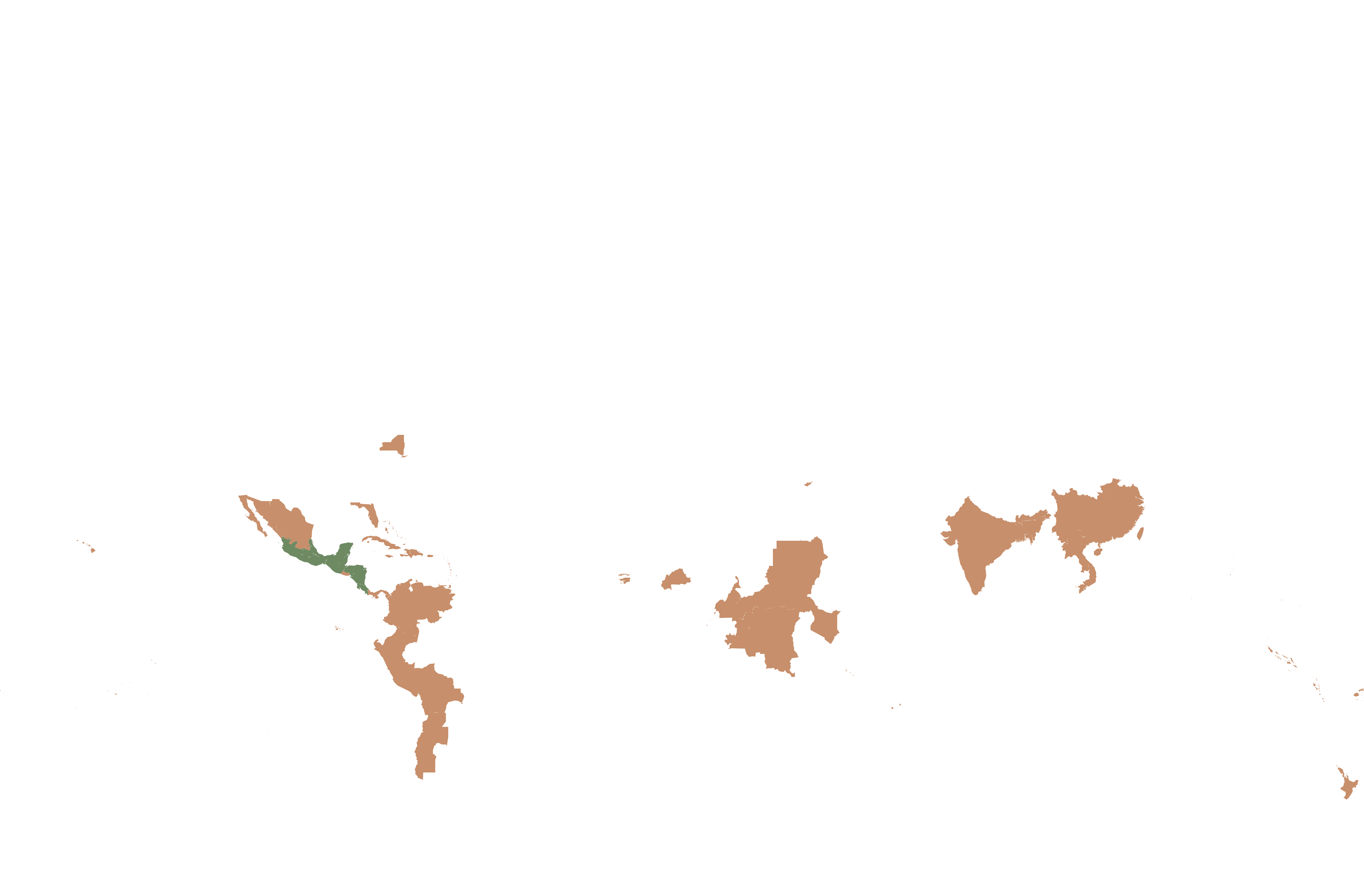
- Native
- Introduced
- North America
History
Persea americana was domesticated in central Mexico at least 7,000 years ago. Archaeological evidence from the Tehuacán Valley places domestication at approximately 5,000 BCE. The Nahuatl Aztec name "ahuacatl" (often translated as "testicle," though scholars debate this — it may simply have referred to the hanging shape of the fruit on the tree) became Spanish "aguacate" and then English "avocado." The fruit was central to Mesoamerican cuisine and remains so today (guacamole derives from Nahuatl "ahuacamolli").
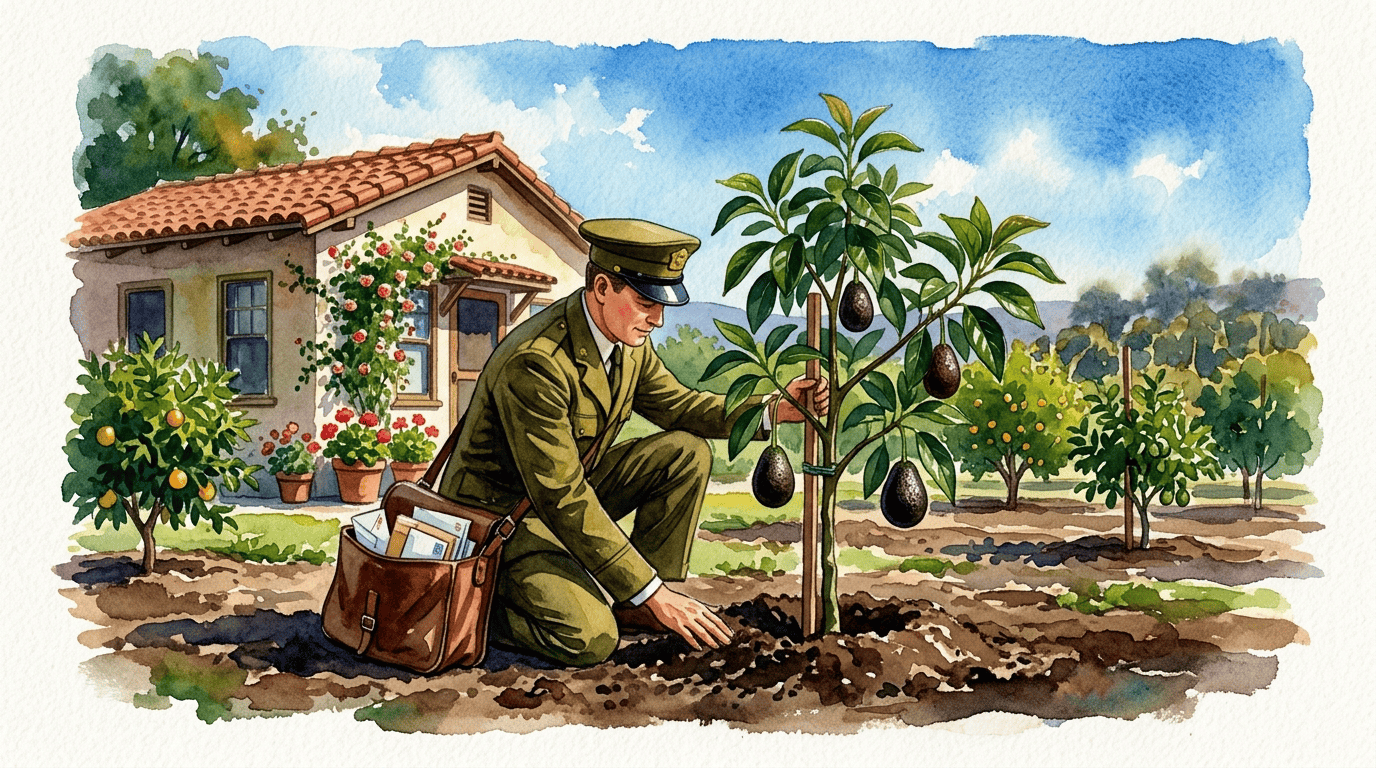
The globally dominant "Hass" cultivar originated from a single chance-mutation seedling grown by Rudolph Hass, a postman in La Habra, California. He planted the seedling around 1926 and patented the tree in 1935. All modern Hass avocados — roughly 80% of global production — are grafted clones descended from that single original tree, which stood in La Habra until 2002 when it died of root disease.
Mexico remains the largest producer (approximately 30% of world supply); the US, Peru, Colombia, and Kenya follow. The 21st-century avocado toast phenomenon and the sharp rise in global per-capita consumption have created a booming cultivation industry but also environmental concerns over water use and deforestation in Mexico's Michoacán producing region. Consumed in Mexico since at least 10,000 BC. The Aztec word 'ahuacatl' (from which 'avocado' derives) also meant 'testicle,' referencing the fruit's shape. Spanish conquistadors brought it to Europe. The Hass avocado is descended from a single tree grown by postman Rudolph Hass in his La Habra, California, backyard (patented 1935). The 'avocado toast' phenomenon of the 2010s drove a global demand surge.
Symbolism & meaning
What It Symbolizes
Avocado expresses vitality, rich in healthy fats and nutrients and now a centerpiece of modern wellness culture and wholesome nourishment. It also stands for abundance — a single mature tree can produce hundreds of fruits annually, an extraordinarily generous output. A Mesoamerican cultivar that, after thousands of years of quiet feeding, has become a symbol of contemporary good living.
- Vitality — Rich in healthy fats and nutrients, the avocado symbolizes wholesome nourishment and modern wellness culture
- Abundance — A single tree can produce hundreds of fruits annually, representing generous output
Where the Name Comes From
Persea from the Greek name for an Egyptian tree; 'americana' marks its New World origin. 'Avocado' from Spanish 'aguacate,' from Nahuatl 'ahuacatl.'
Uses & Fun Facts
- Buttery fruits eaten fresh, in guacamole, and salads
- Evergreen tree casts dense shade in subtropical gardens
- Dwarf forms grown in large patio pots in cooler climates
- Domesticated in Mesoamerica and central to Mexican cuisine
Related plants
Plants with similar care
 Mexican AbeliaAbelia floribunda
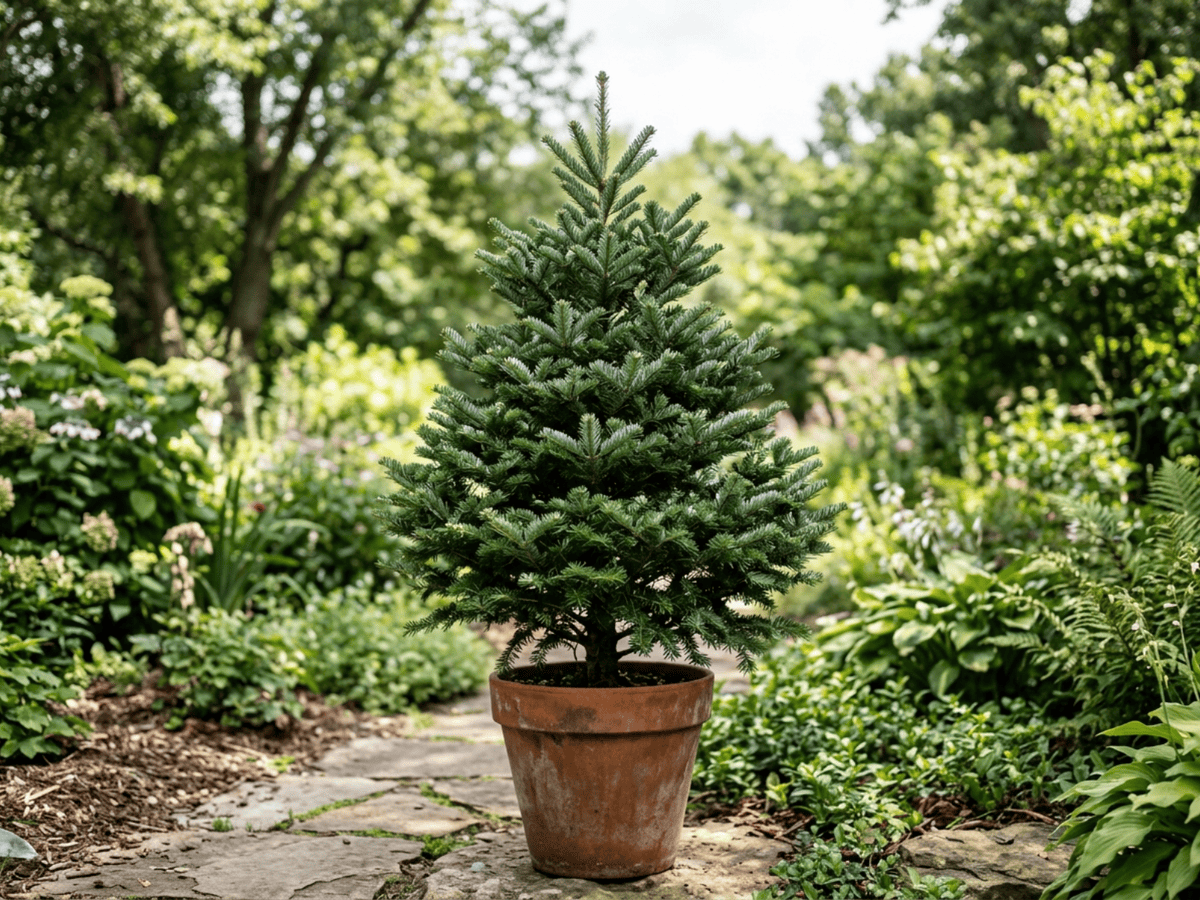 Fraser FirAbies fraseri
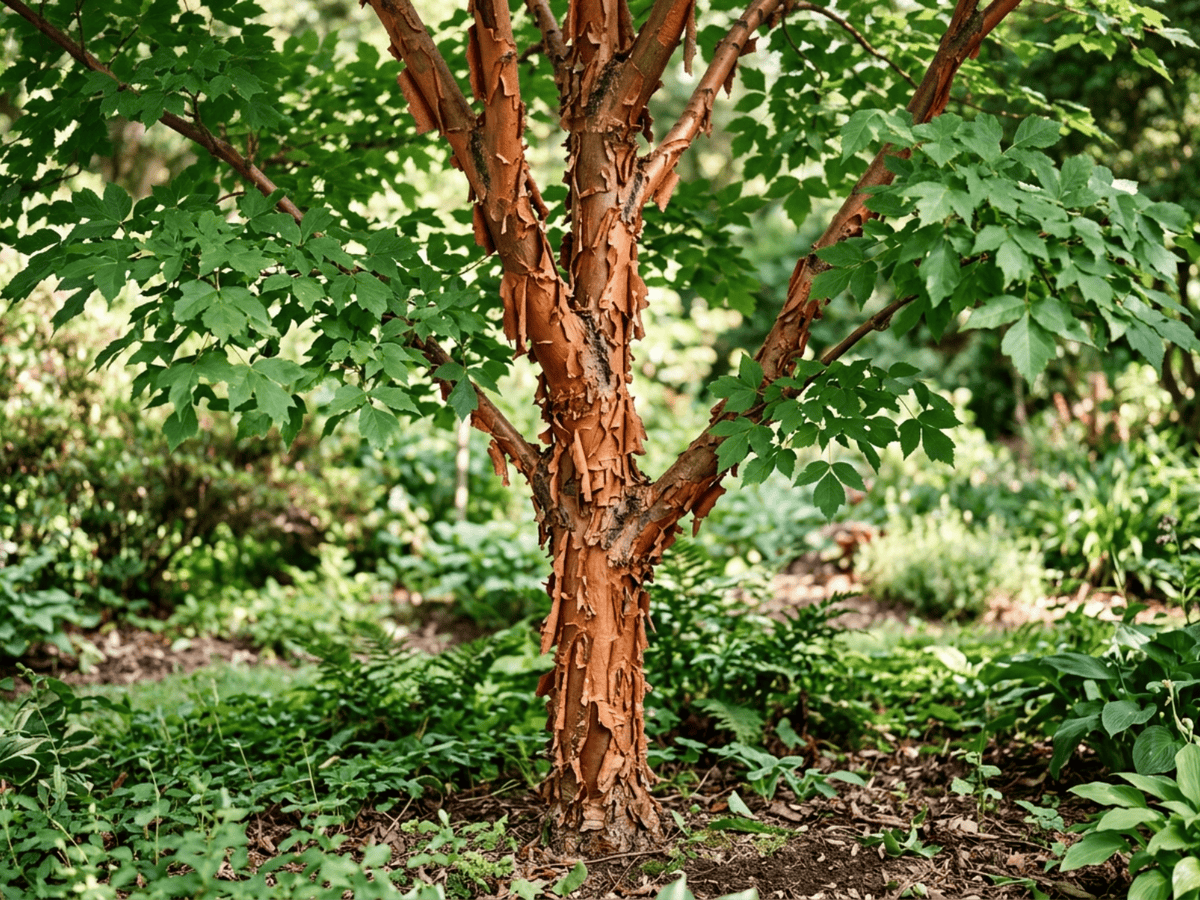 Paperbark MapleAcer griseum
 Sugar MapleAcer saccharum
Frequently asked questions
How often should I water Avocado?
In summer, water about every 3 days; in winter, about every 14 days. Adjust for heat, pot size and drainage.
How much light does Avocado need?
Full sun: 6+ hrs direct. Watch the leaves — scorching or stretching means the light needs adjusting.
Is Avocado toxic to cats or dogs?
Pets Slight (Dogs Slight · Cats Slight) Educational information, not medical or veterinary advice. If exposure is suspected, contact a doctor or veterinarian.
Is Avocado easy to grow?
It is moderately demanding: a good choice once you have a little experience.
Can Avocado be grown indoors?
Yes, it adapts well to indoor growing given the right light.
When does Avocado bloom?
It typically blooms Jun–Aug in the Northern Hemisphere.
YardMate
Identify any plant in seconds
Snap a photo — YardMate names the plant, diagnoses problems, and reminds you when to water.
Download on the App Store