 YardMate


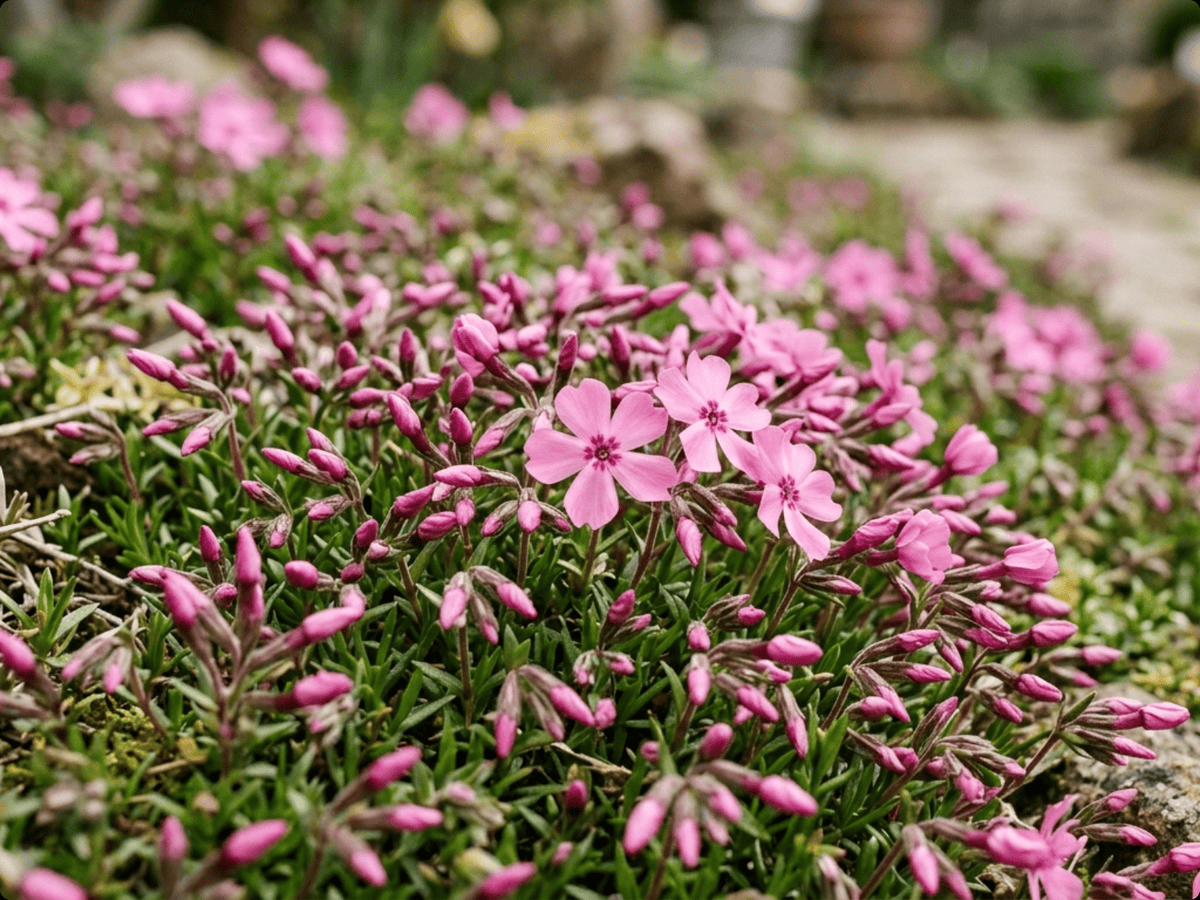

Moss Phlox
Phlox subulata
Easy · Beginner friendlyAbout Moss Phlox
Phlox subulata, creeping phlox or moss phlox, is a low, mat-forming evergreen perennial that erupts in a carpet of vivid flowers in early spring. Colors include pink, purple, blue, white, and bicolors. Growing only 10–15 cm tall but spreading 60+ cm wide, it cascades over rock walls and fills crevices. Native to eastern North America, it is extremely cold-hardy and drought-tolerant once established. The needle-like evergreen foliage provides year-round ground cover. It is one of the most spectacular rock garden plants and is widely used for slope stabilization.
- Drought-tolerant
- Groundcover
- Evergreen
How to care for Moss Phlox
Watering
- Springevery 10 days
- Summerevery 7 days
- Fallevery 14 days
- Winterevery 21 days
Soil · Well-draining
- Top dressingPine bark mulch10%
- Main mixPotting soil + perlite 2:170%
- DrainageLECA / gravel20%
Never skip the drainage layer — standing water is the top cause of root rot.
FERTILIZER
- Springevery 30 days
- Summerevery 30 days
At a Glance
- NativeNorth America
- Height0.5 ft (0.2 m)
- Spread1.5–2 ft (0.5–0.6 m)
- Flower colorPink, White, Purple, Red
- Foliage colorGreen
- SoilSandy, Well-drained
- LocationsYard
Bloom time
BLOOM CYCLE
Peak bloom
Mar–May
Carpet of spring color; shear after blooming for tidier growth; cascades over walls
Fragrance
LIGHT FRAGRANCE
The flowers have a mild sweet scent.
Toxicity
Pets Safe
None reported
Not reported
EXPOSURE No exposure route is reported.
EFFECT No significant toxicity.
NOTE No human toxicity is reported in this catalog; avoid eating ornamental plants unless confirmed edible.
Safe
EXPOSURE No exposure route is reported.
EFFECT Not listed as toxic by ASPCA.
NOTE Listed as non-toxic for dogs; avoid eating ornamental plants unless confirmed edible.
Safe
EXPOSURE No exposure route is reported.
EFFECT Not listed as toxic by ASPCA.
NOTE Listed as non-toxic for cats; avoid eating ornamental plants unless confirmed edible.
Educational information, not medical or veterinary advice. If exposure is suspected, contact a doctor or veterinarian.
DISTRIBUTION


- Native
- Introduced
- North America
History
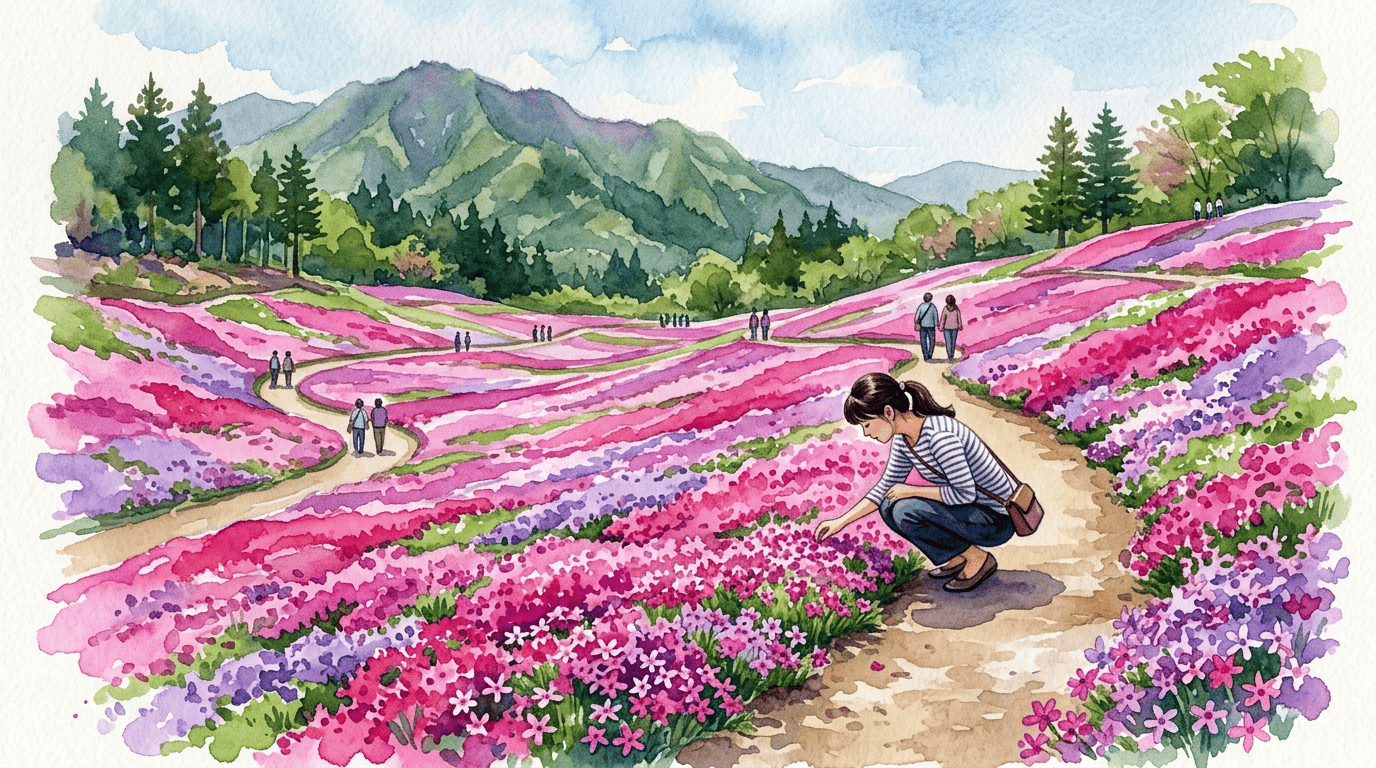
Phlox subulata grows wild on sandy and rocky slopes from New York to North Carolina. William Bartram and other early American plant collectors sent material to Europe in the late 18th century; by the early 19th century it was an established feature of British alpine and rock gardens. Victorian and Edwardian rockery tradition, codified by Reginald Farrer in 1919's The English Rock Garden, cemented its status.
In 20th-century suburban America it became the signature plant of sloped front yards, cascading over retaining walls in May. Japan famously cultivates it as "shibazakura," planting vast hillside carpets — such as the million-plant display at Hitsujiyama Park in Chichibu and Mount Fuji's Shibazakura Festival — that draw hundreds of thousands of spring visitors annually. Creeping phlox is one of the most photographed spring flowers in Appalachia, where it blankets rocky hillsides in vivid pink and purple.
The Shibazakura Festival in Japan celebrates moss phlox planted on the slopes near Mount Fuji — 800,000 plants create a surreal pink carpet against the snow-capped mountain backdrop. It is one of the most visited flower events in Japan, drawing over 500,000 visitors each April-May. In American gardens, it was a favorite of Thomas Jefferson, who planted it at Monticello. The species is exceptionally long-lived, with individual plants persisting for decades.
Symbolism & meaning
What It Symbolizes
Moss Phlox makes visible unity through its dense interconnected mat of flowers, individual blooms blending so completely that the planting reads as a single sheet of color. Carpeting rocky banks and walls each spring, it offers a botanical lesson in solidarity — beauty that emerges from countless small flowers all working in concert. Few perennials demonstrate so vividly that collective brilliance can outshine any solitary star.
- Unity — Its dense, interconnected mat of flowers represents solidarity and collective beauty
Where the Name Comes From
Phlox from Greek 'flame.' Subulata means 'awl-shaped,' for the narrow, pointed leaves.
Uses & Fun Facts
- Moss Phlox spreads as low groundcover on banks and slopes
Related plants
More Phlox plants
 Thickleaf PhloxPhlox carolina
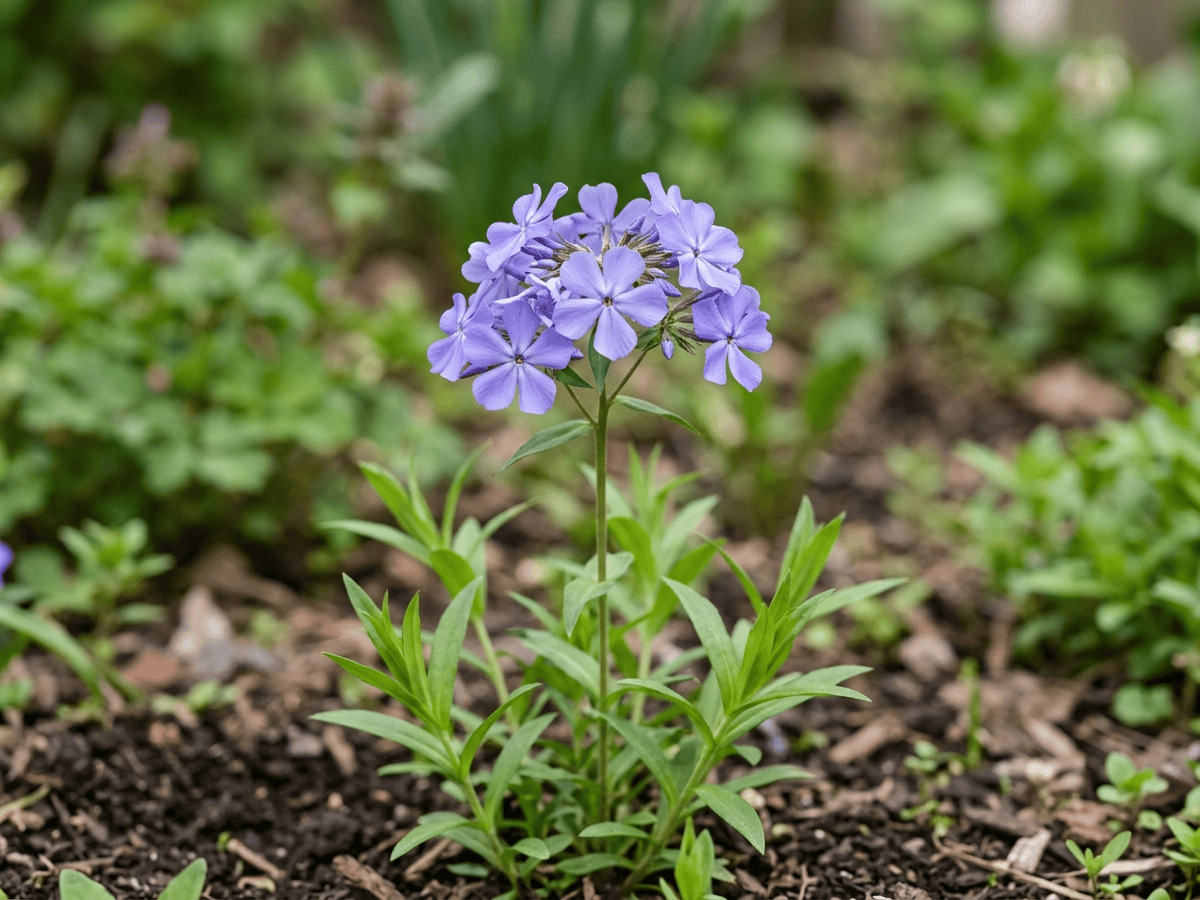 Blue PhloxPhlox divaricata
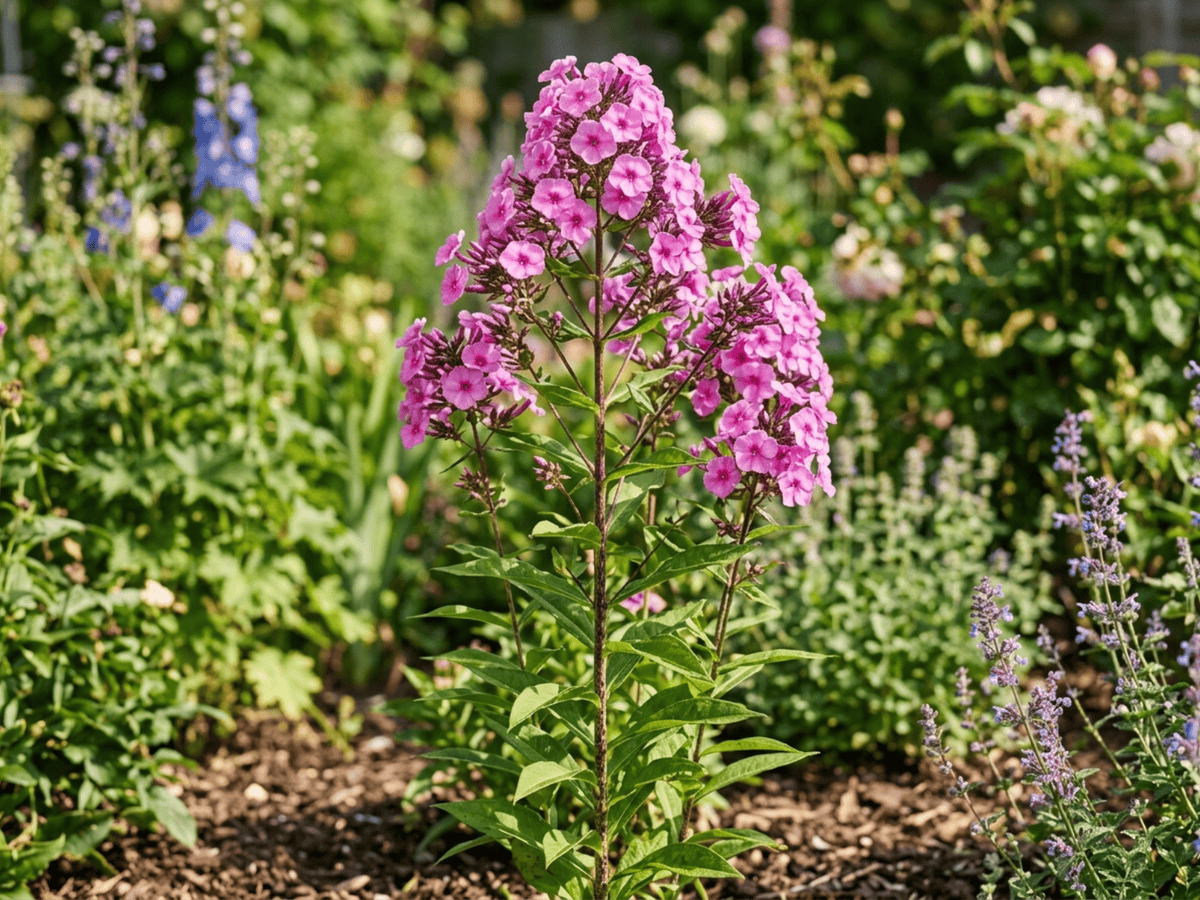 Wild SweetwilliamPhlox maculata
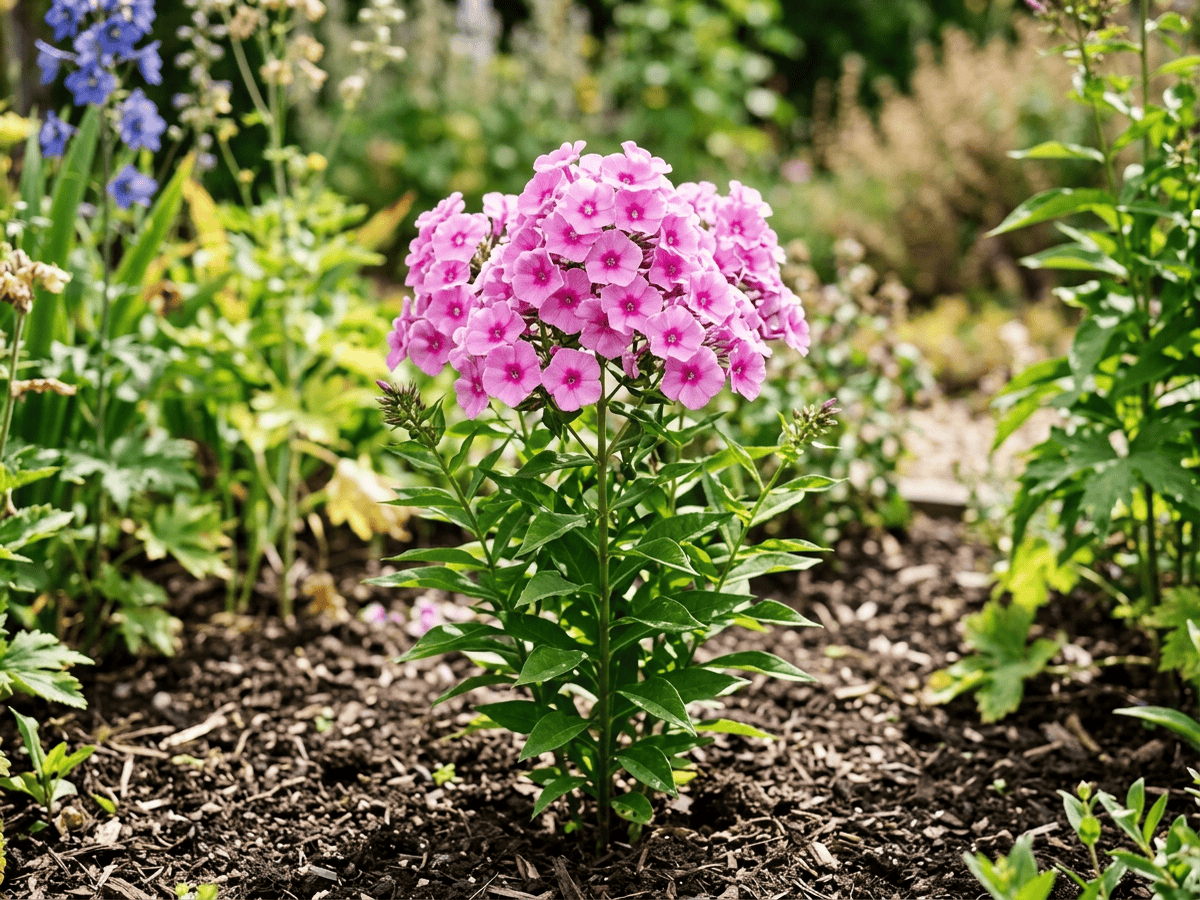 Fall PhloxPhlox paniculata
Plants with similar care
 Chinese AbeliaAbelia chinensis
 Fragrant AbeliaAbelia mosanensis
 Large-Flowered AbeliaAbelia uniflora
 Glossy AbeliaAbelia x grandiflora
Frequently asked questions
How often should I water Moss Phlox?
In summer, water about every 7 days; in winter, about every 21 days. Adjust for heat, pot size and drainage.
How much light does Moss Phlox need?
Full sun: 6+ hrs direct. Watch the leaves — scorching or stretching means the light needs adjusting.
Is Moss Phlox toxic to cats or dogs?
Pets Safe (Dogs Safe · Cats Safe) Educational information, not medical or veterinary advice. If exposure is suspected, contact a doctor or veterinarian.
Is Moss Phlox easy to grow?
Yes — it is considered an easy, beginner-friendly plant.
When does Moss Phlox bloom?
It typically blooms Mar–May in the Northern Hemisphere.
YardMate
Identify any plant in seconds
Snap a photo — YardMate names the plant, diagnoses problems, and reminds you when to water.
Download on the App Store