 YardMate
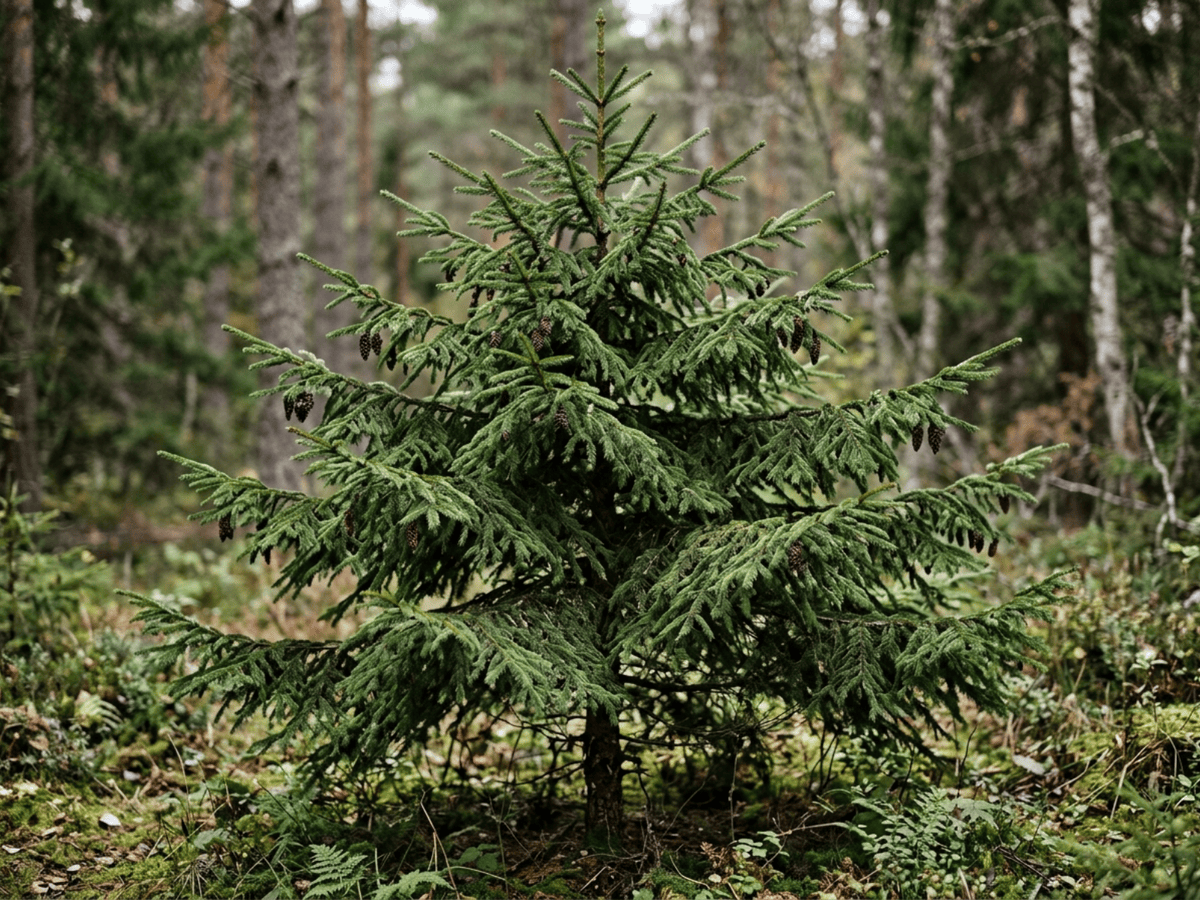



Norway Spruce
Picea abies
Easy · Beginner friendlyAbout Norway Spruce
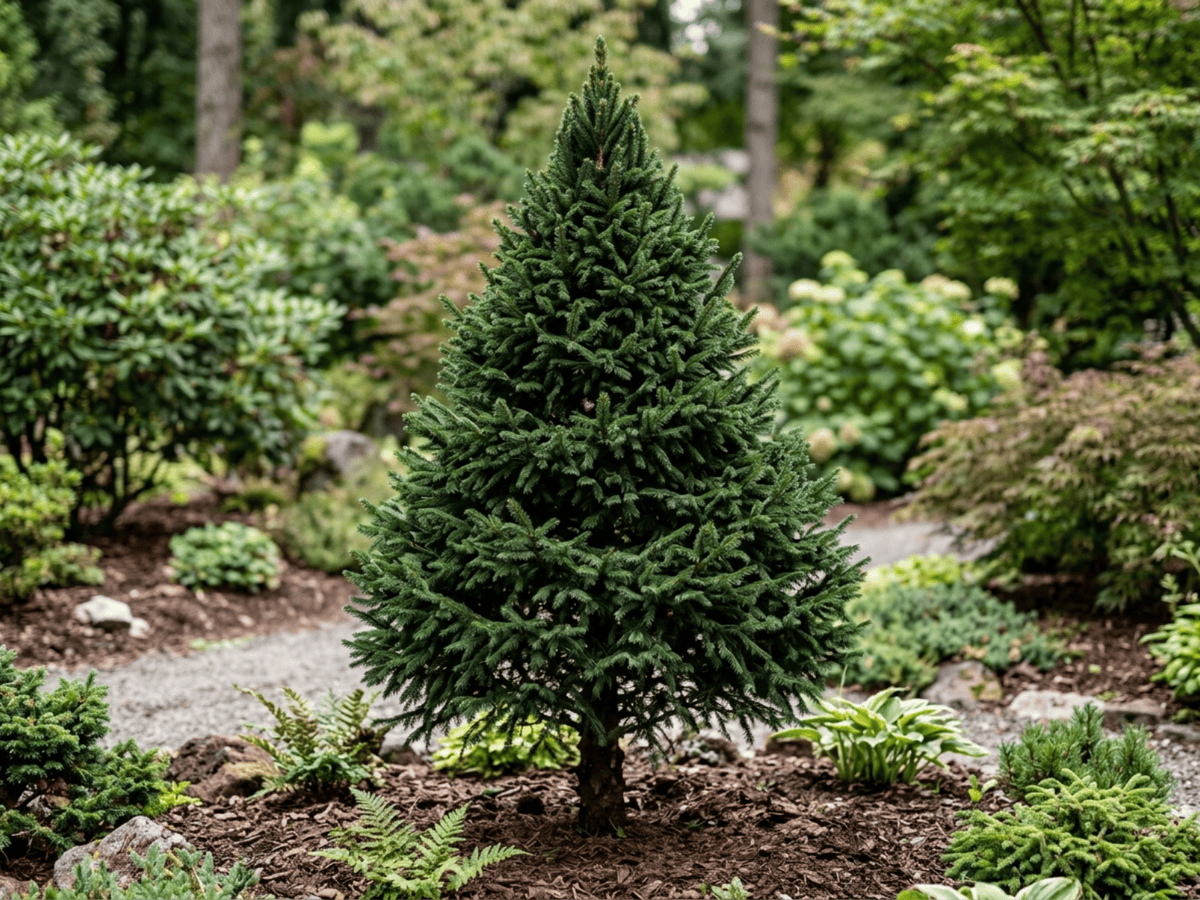
Picea abies, the Norway spruce, is one of Europe's most important and widespread conifers, native from Scandinavia to the Balkans. It grows into a tall, elegant conical tree reaching 35 to 55 meters with distinctive drooping branchlets that give it a graceful, weeping appearance. The tree produces Europe's longest conifer cones, hanging pendulously at 10 to 18 centimeters. Norway spruce is the traditional Christmas tree in most of northern Europe — each year since 1947, the city of Oslo has gifted a Norway spruce to London's Trafalgar Square as thanks for British support during World War II. The wood is the gold standard for violin, guitar, and piano soundboards: Stradivarius violins were crafted from Alpine spruce. It is also a major timber tree for construction, paper pulp, and woodworking. Norway spruce thrives in cool, moist climates with acidic, well-drained soil and full sun to light shade. It is fast-growing in youth, adding up to 1 meter per year, making it popular for windbreaks and screens.
- Cold-hardy
- Evergreen
- Fast-growing
How to care for Norway Spruce
Watering
- Springevery 7 days
- Summerevery 5 days
- Fallevery 14 days
- Winterevery 30 days
Soil · Well-draining
- Top dressingPine bark mulch10%
- Main mixPotting soil + perlite 2:170%
- DrainageLECA / gravel20%
Never skip the drainage layer — standing water is the top cause of root rot.
FERTILIZER
Acid-Loving Feed 4-3-4
One bag does both jobs. An acid feed carries the usual nitrogen, phosphorus and potassium, plus the sulfur and iron that keep the soil sour enough for the roots to take them up at all.
- Nitrogen · Leaves
- Phosphorus · Roots + Blooms
- Potassium · Strength
- Springevery 60 days
At a Glance
- NativeEurope
- Height60–100 ft (18.3–30.5 m)
- Spread25–40 ft (7.6–12.2 m)
- Flower colorRed, Yellow
- Foliage colorGreen, Blue-green
- SoilLoamy, Well-drained, Acidic
- LocationsYard
Bloom time
BLOOM CYCLE
Pendulous cones up to 18 cm appear on mature trees; wind-pollinated and ornamental in their own right
Fragrance
MODERATE FRAGRANCE
The foliage has a fresh resinous Christmas-tree scent.
Toxicity
Pets Slight
Unknown toxic principle
Not reported
EXPOSURE No exposure route is reported.
EFFECT No significant toxicity and young shoots traditionally used for spruce tip syrup.
NOTE No human toxicity is reported in this catalog; avoid eating ornamental plants unless confirmed edible.
Slight
- Leaf
- Ingestion
EXPOSURE Eating leaves.
EFFECT Needles mildly irritating to GI tract and sharp needles cause mechanical irritation.
NOTE Not listed by ASPCA. Generally low concern; veterinary warnings around holiday Christmas trees relate to oils and sharp needles rather than severe toxicity.
Slight
- Leaf
- Ingestion
EXPOSURE Eating leaves.
EFFECT Mild GI upset from needles.
NOTE Not listed by ASPCA. Generally low concern; veterinary warnings around holiday Christmas trees relate to oils and sharp needles rather than severe toxicity.
Educational information, not medical or veterinary advice. If exposure is suspected, contact a doctor or veterinarian.
DISTRIBUTION

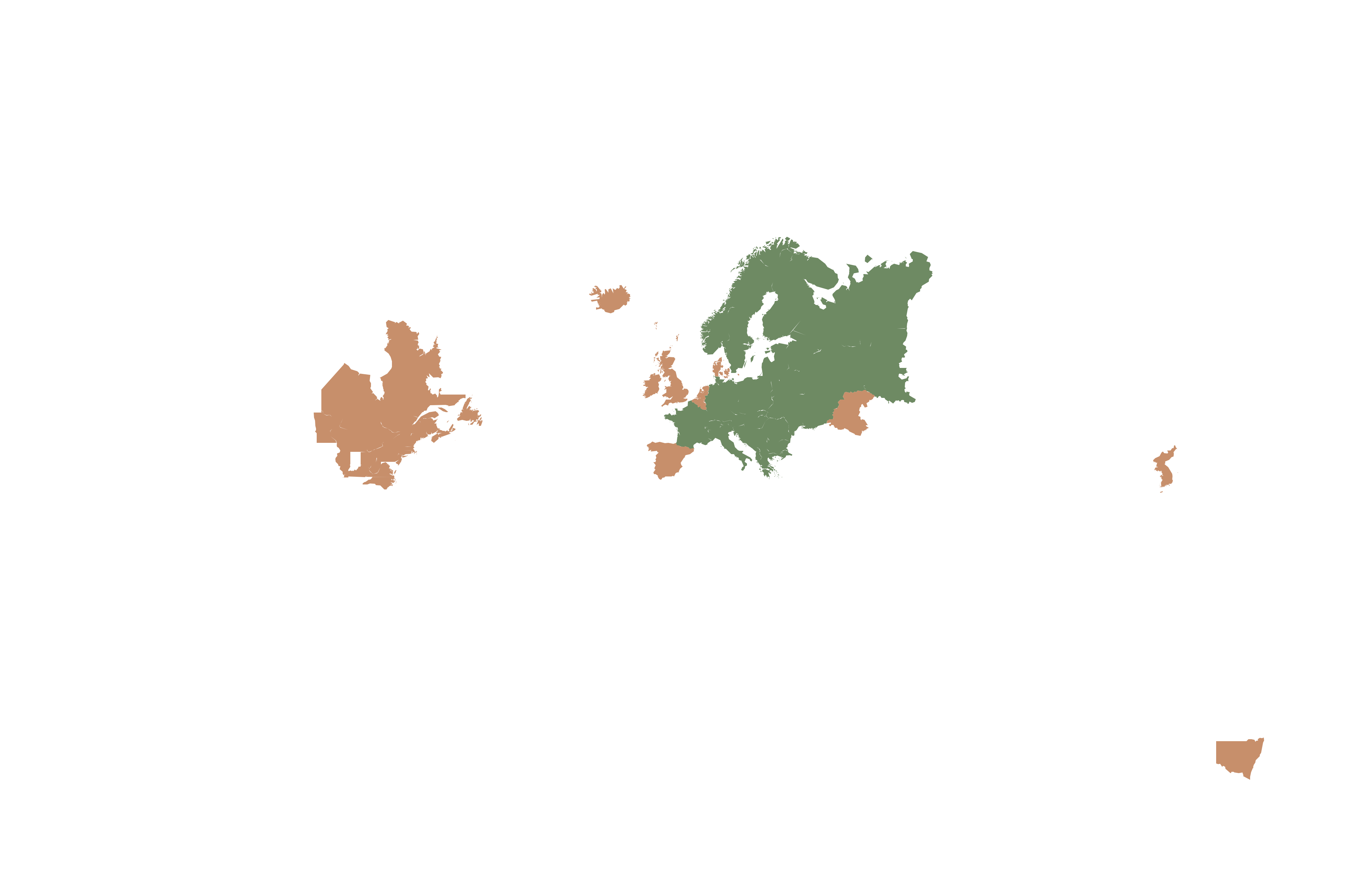
- Native
- Introduced
- Europe
History
Picea abies is native across northern and central Europe — from the Alps, Carpathians, and Balkans north through the Baltic, Scandinavia, and into European Russia. It is one of the most important European timber trees and is the classic European Christmas tree tradition — the 16th-17th century German custom of bringing a decorated evergreen indoors at the winter solstice used spruce, which spread through Germanic Europe, reached the English court via Queen Charlotte and then Prince Albert (who popularized it in mid-19th-century Britain), and became the dominant Christmas tree in much of Europe. (In North America, Fraser fir and Douglas fir dominate Christmas tree production instead.)
Since 1947, the city of Oslo has sent an annual Norway spruce Christmas tree to London's Trafalgar Square as a token of thanks for British support of Norway during World War II — a tradition that continues each December. Old Tjikko, a clonal Norway spruce in Sweden's Fulufjället National Park, has a radiocarbon-dated root system of approximately 9,550 years, making it one of the oldest known clonal organisms.
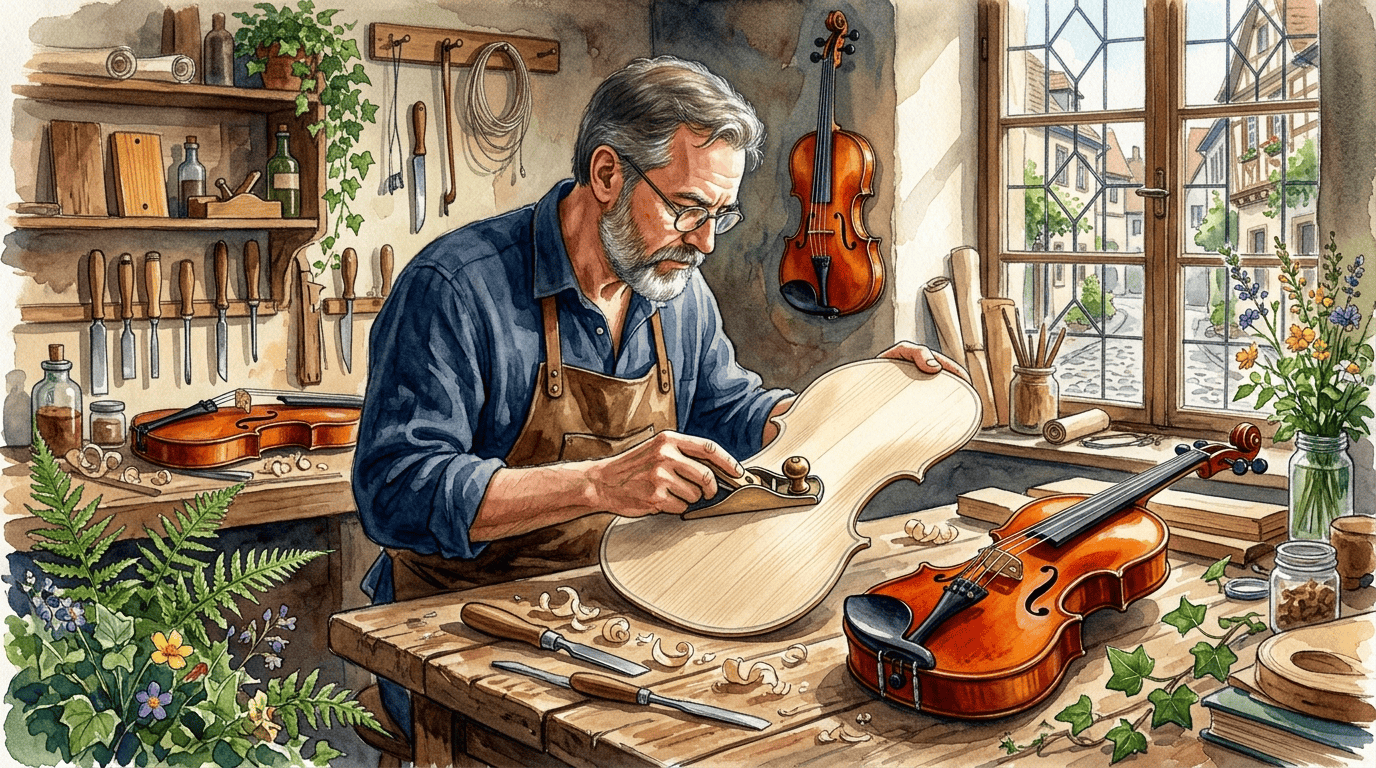
The wood is used for construction, paper pulp, and instrument sounding-boards — the top plates of many European violins and pianos are Norway spruce. The Stradivarius violins, considered the finest ever made, used Alpine Norway spruce for their soundboards — the wood's unique resonance properties remain unmatched.
Symbolism & meaning
What It Symbolizes
The Norway Spruce can symbolize hope, its dark evergreen silhouette holding firm through bleak northern winters when nothing else seems to. Another layer is celebration, for it is the traditional Christmas tree of much of Europe and the chosen tree of countless public squares, hung with lights against the long darkness. To plant picea abies is to keep both meanings at hand: a tree of private endurance and of communal festivity, the same green steady through every December.
- Hope — The evergreen spruce amid winter landscapes has long symbolized hope and resilience
- Celebration — As the traditional Christmas tree, it represents festivity, family, and generosity
Where the Name Comes From
Picea derives from Latin 'pix' (pitch), referring to the tree's resinous sap. Abies was the classical Latin name for fir, applied here by early taxonomists who initially confused spruce and fir.
Uses & Fun Facts
- Traditional European Christmas tree across Germany and Scandinavia
- Norway spruce timber used for tonewood and construction
- Towering pyramidal evergreen for large rural lawns
Related plants
More Picea plants
 Engelmann SprucePicea engelmannii
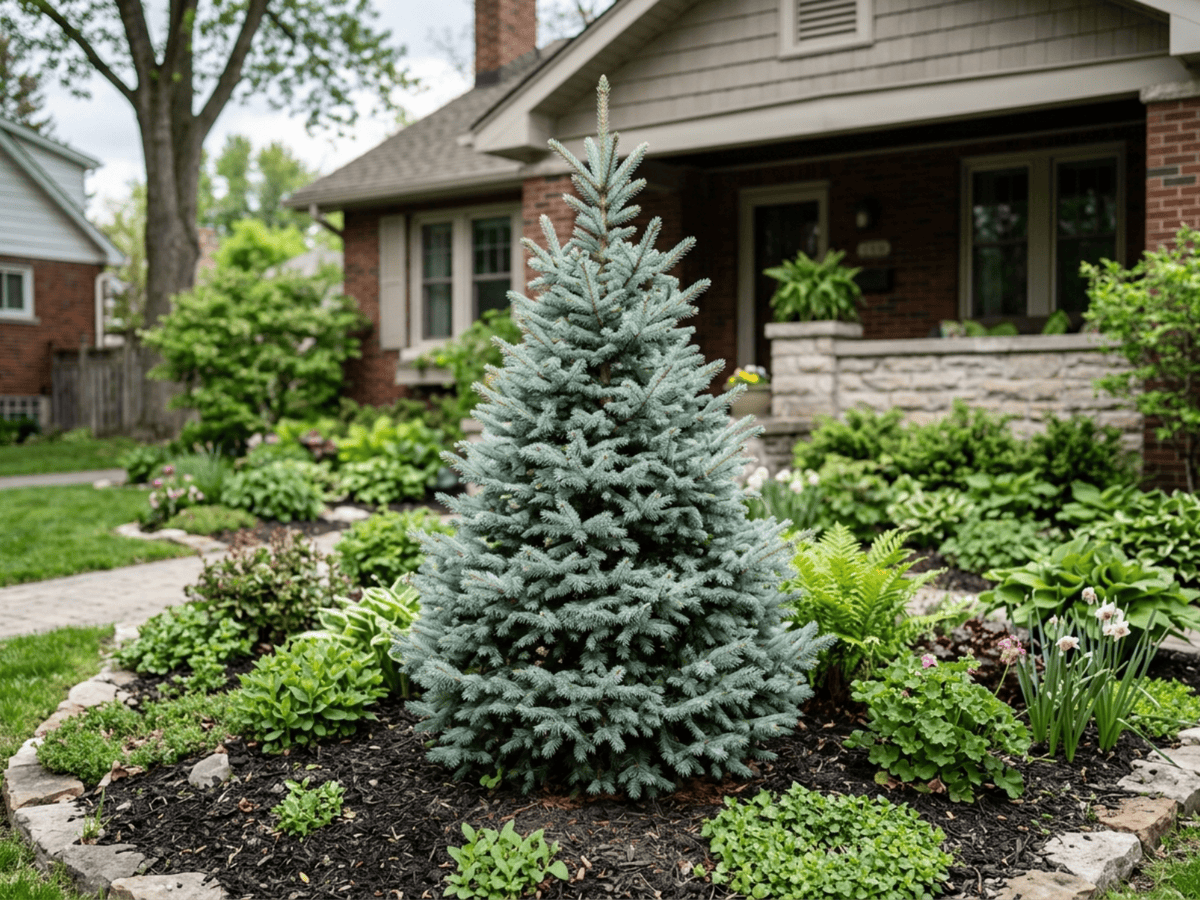 White SprucePicea glauca
 Serbian SprucePicea omorika
 Oriental SprucePicea orientalis
Plants with similar care
 Chinese AbeliaAbelia chinensis
 Fragrant AbeliaAbelia mosanensis
 Large-Flowered AbeliaAbelia uniflora
 Glossy AbeliaAbelia x grandiflora
Frequently asked questions
How often should I water Norway Spruce?
In summer, water about every 5 days; in winter, about every 30 days. Adjust for heat, pot size and drainage.
How much light does Norway Spruce need?
Full sun: 6+ hrs direct. Watch the leaves — scorching or stretching means the light needs adjusting.
Is Norway Spruce toxic to cats or dogs?
Pets Slight (Dogs Slight · Cats Slight) Educational information, not medical or veterinary advice. If exposure is suspected, contact a doctor or veterinarian.
Is Norway Spruce easy to grow?
Yes — it is considered an easy, beginner-friendly plant.
YardMate
Identify any plant in seconds
Snap a photo — YardMate names the plant, diagnoses problems, and reminds you when to water.
Download on the App Store