 YardMate


White Spruce
Picea glauca
Easy · Beginner friendlyAbout White Spruce
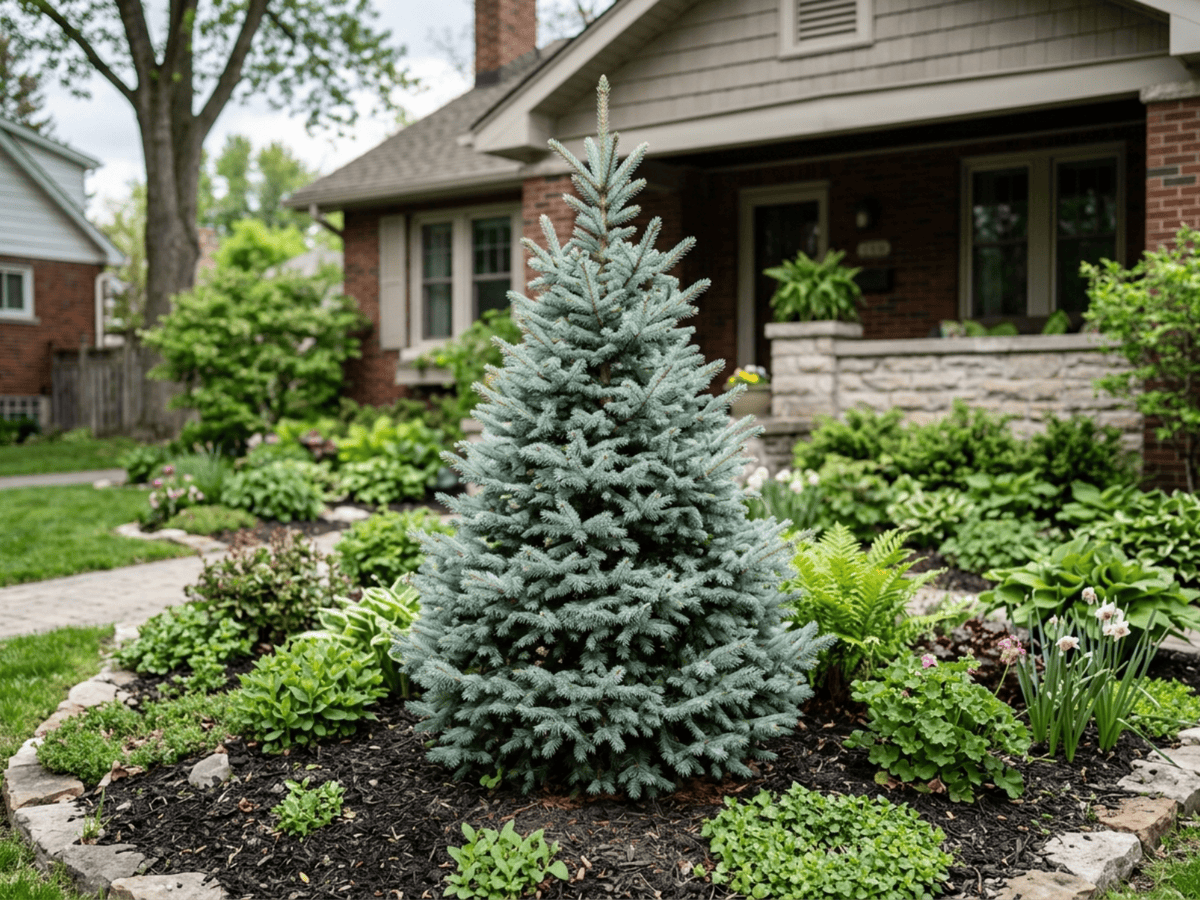
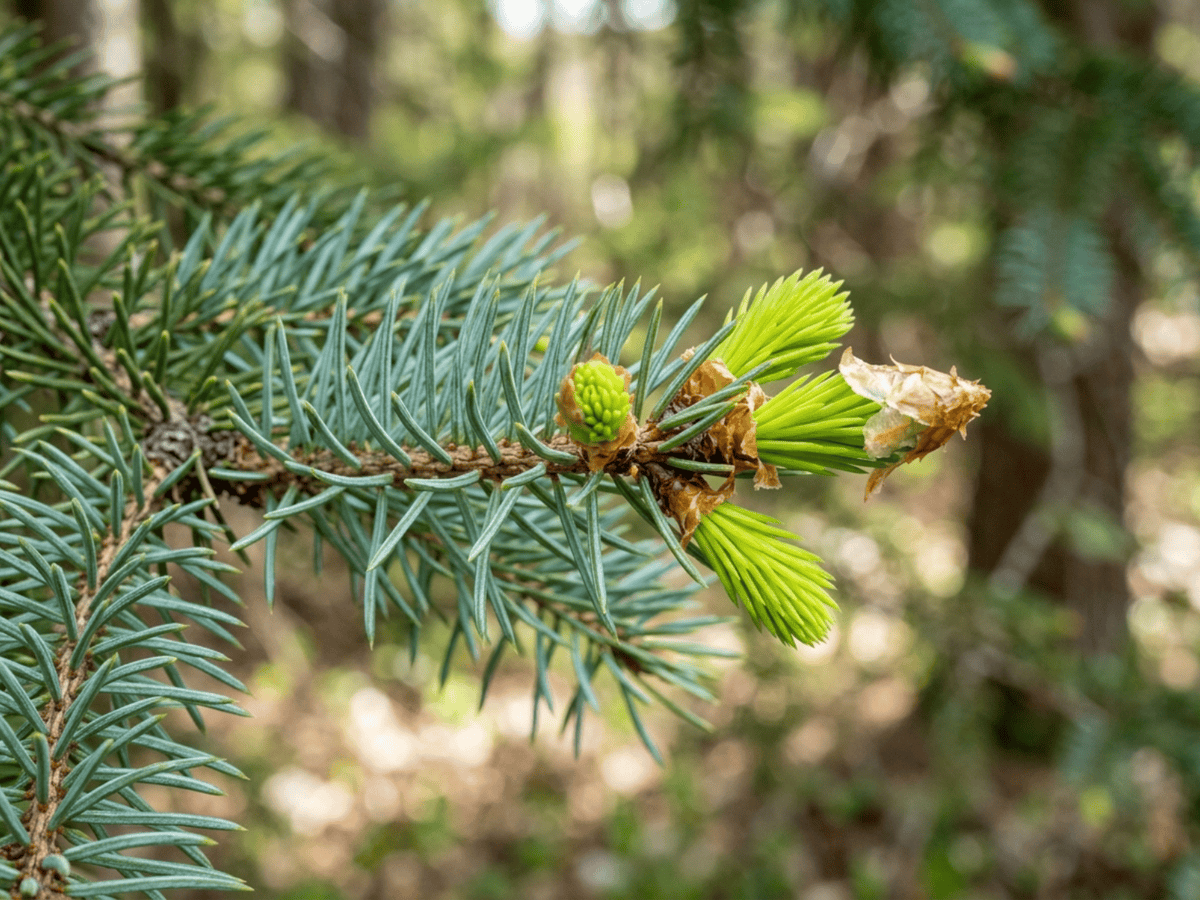
White Spruce is a resilient conifer native across the North American boreal forest from Alaska to Newfoundland, reaching 40-60 feet in cultivation. Dense pyramidal form, blue-green needles, and small hanging cones make it an elegant specimen evergreen. The compact cultivar 'Conica' (Dwarf Alberta Spruce) is ubiquitous in American landscapes. Extremely cold-hardy, it is a defining tree of the northern US and Canada.
- Cold-hardy
- Evergreen
- Native
How to care for White Spruce
Watering
- Springevery 14 days
- Summerevery 10 days
- Fallevery 14 days
- Winterevery 30 days
Soil · Well-draining
- Top dressingPine bark mulch10%
- Main mixPotting soil + perlite 2:170%
- DrainageLECA / gravel20%
Never skip the drainage layer — standing water is the top cause of root rot.
FERTILIZER
Balanced Feed 14-14-14
An even feed covers all three needs at once, keeping leaves, roots and blooms moving together with nothing pushed out of balance.
- Nitrogen · Leaves
- Phosphorus · Roots + Blooms
- Potassium · Strength
- Springevery 60 days
At a Glance
- NativeNorth America
- Height40–60 ft (12.2–18.3 m)
- Spread15–25 ft (4.6–7.6 m)
- Flower colorRed, Yellow
- Foliage colorBlue-green, Green
- Fruit colorBrown
- SoilLoamy, Well-drained, Acidic
- LocationsYard
Bloom time
BLOOM CYCLE
Peak bloom
Mar–May
Reddish male cones in spring
Fragrance
MODERATE FRAGRANCE
Resinous spruce scent when crushed, somewhat acrid.
Toxicity
Humans Safe · Pets Safe
None reported
Safe
EXPOSURE No exposure route is reported.
EFFECT No toxic effect is reported.
NOTE Listed as non-toxic for humans; avoid eating ornamental plants unless confirmed edible.
Safe
EXPOSURE No exposure route is reported.
EFFECT No toxic effect is reported.
NOTE Listed as non-toxic for dogs; avoid eating ornamental plants unless confirmed edible.
Safe
EXPOSURE No exposure route is reported.
EFFECT No toxic effect is reported.
NOTE Listed as non-toxic for cats; avoid eating ornamental plants unless confirmed edible.
Educational information, not medical or veterinary advice. If exposure is suspected, contact a doctor or veterinarian.
DISTRIBUTION


- Native
- Introduced
- North America
History

Picea glauca forms the dominant tree of the North American boreal forest from Labrador and New England across to Alaska and south in the Rocky Mountains. German botanist Conrad Moench described the species in 1785, the name glauca referring to the blue-green needle color caused by a waxy bloom. Indigenous peoples throughout its range made extensive use of white spruce: long flexible roots called watap were split and used to sew birchbark canoes and lace snowshoes; pitch sealed canoe seams and treated wounds; and needle tea provided vitamin C that prevented scurvy—a use adopted by European explorers including Jacques Cartier's crew in 1536.
The compact, neat, slow-growing dwarf cultivar 'Conica' (Alberta spruce) was discovered in 1904 by Alfred Rehder and J.G. Jack near Lake Laggan in Alberta and has since become one of the most widely planted dwarf conifers in the world, though it is prone to spider mite damage in hot climates. White spruce is the state tree of South Dakota and provincial tree of Manitoba.
The wood is the backbone of North American pulp and paper industries. The cultivar 'Conica', discovered in 1904 in Alberta, is one of the most popular landscape conifers worldwide.
Symbolism & meaning
What It Symbolizes
The White Spruce embodies endurance, thriving at the very edge of the arctic tree line where forests give way to tundra. As a signature tree of the boreal forest, it offers shelter to moose, lynx, and uncountable nesting birds across northern latitudes. This is the conifer of cold-country constancy — a green sentinel that stands its ground in the planet's most demanding conditions and shelters life within its needled arms.
- Endurance — thrives at arctic tree line
- Shelter — signature boreal forest tree
Where the Name Comes From
The common name highlights its white coloring. 'Picea' from Latin 'pix' (pitch); 'glauca' means pale blue-gray, for the foliage color.
Uses & Fun Facts
- Cold-hardy conifers build tall rural windbreaks and snow screens
- Pyramidal evergreens give cold gardens structure, shelter, and winter presence
Related plants
More Picea plants
 Norway SprucePicea abies
 Engelmann SprucePicea engelmannii
 Serbian SprucePicea omorika
 Oriental SprucePicea orientalis
Plants with similar care
 Chinese AbeliaAbelia chinensis
 Fragrant AbeliaAbelia mosanensis
 Large-Flowered AbeliaAbelia uniflora
 Glossy AbeliaAbelia x grandiflora
Frequently asked questions
How often should I water White Spruce?
In summer, water about every 10 days; in winter, about every 30 days. Adjust for heat, pot size and drainage.
How much light does White Spruce need?
Full sun: 6+ hrs direct. Watch the leaves — scorching or stretching means the light needs adjusting.
Is White Spruce toxic to cats or dogs?
Pets Safe (Dogs Safe · Cats Safe) Educational information, not medical or veterinary advice. If exposure is suspected, contact a doctor or veterinarian.
Is White Spruce easy to grow?
Yes — it is considered an easy, beginner-friendly plant.
When does White Spruce bloom?
It typically blooms Mar–May in the Northern Hemisphere.
YardMate
Identify any plant in seconds
Snap a photo — YardMate names the plant, diagnoses problems, and reminds you when to water.
Download on the App Store