 YardMate


Water Lettuce
Pistia stratiotes
Easy · Beginner friendlyAbout Water Lettuce
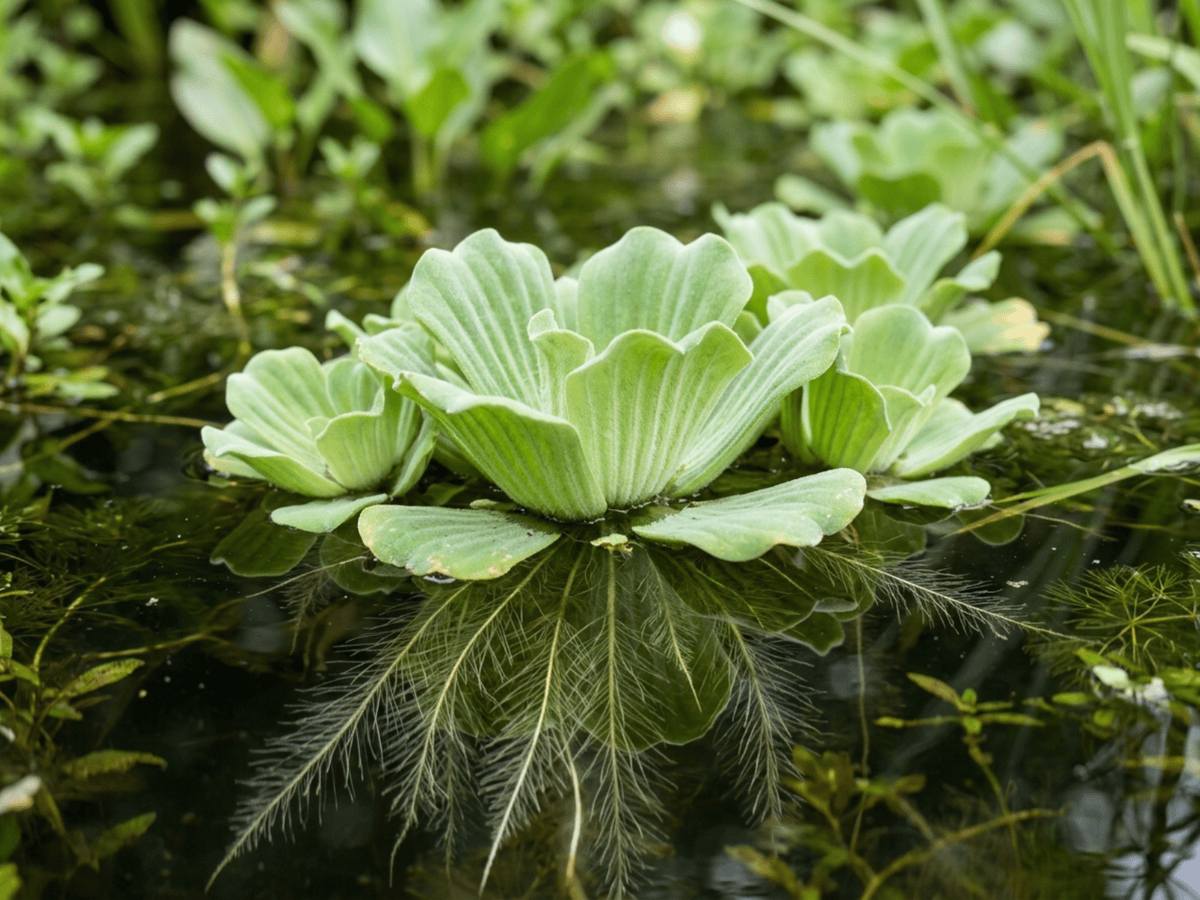
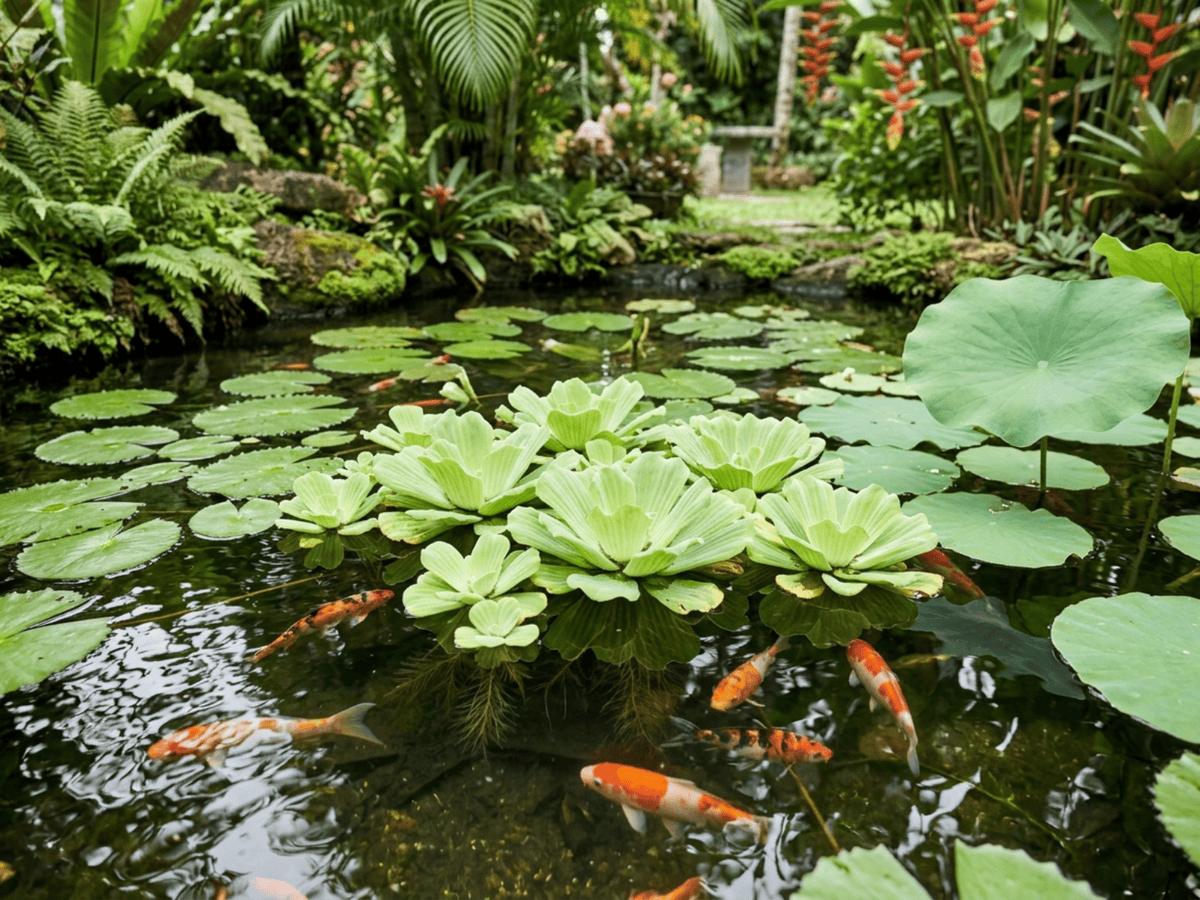
Pistia stratiotes, the water lettuce, is a free-floating aquatic perennial found in tropical and subtropical freshwater across the globe. It forms rosettes of velvety, pale green, wedge-shaped leaves that resemble small floating lettuces, typically 5–15 cm across. Long, feathery roots dangle beneath each rosette, providing excellent shelter for fish fry and aquatic invertebrates. The plant reproduces rapidly by stolons, with daughter rosettes forming chains that can quickly carpet a water surface. In warm, nutrient-rich conditions, it doubles its coverage in as little as two weeks, becoming seriously invasive — it blocks sunlight, depletes dissolved oxygen, and clogs waterways in many tropical regions. Despite its invasive potential, it is valued in contained water gardens for its attractive form and its ability to absorb excess nutrients and clarify water. It is one of the earliest known aquatic plants in human records, depicted in ancient Egyptian carvings.
- Tropical
- Fast-growing
- Low-maintenance
How to care for Water Lettuce
Watering
- Springevery 1 days
- Summerevery 1 days
- Fallevery 1 days
- Winterevery 1 days
Soil · Bog-wet
- WaterStanding water above soil20%
- SoilHeavy pond soil80%
No drainage layer — keep water standing above the soil.
FERTILIZER
This plant needs little to no feeding.
At a Glance
- NativeAfrica
- Height0.5 ft (0.2 m)
- Spread0.5–1 ft (0.2–0.3 m)
- Flower colorWhite, Green
- Foliage colorGreen, Blue-green
- SoilMoisture-retentive
- LocationsYard
Bloom time
BLOOM CYCLE
Peak bloom
Jun–Aug
Tiny, inconspicuous flowers hidden among the leaf bases; not ornamentally significant
Fragrance
NO FRAGRANCE
No notable fragrance.
Toxicity
Humans Moderate · Pets Moderate
insoluble calcium oxalate raphides
Moderate
- All
- Ingestion
EXPOSURE Eating any part of the plant.
EFFECT Calcium oxalate raphides typical of Araceae cause burning mouth, throat swelling, drooling.
NOTE Typical Araceae oxalate toxicity; similar profile to philodendron and other aroids.
Moderate
- All
- Ingestion
EXPOSURE Eating any part of the plant.
EFFECT Oral pain, drooling, swelling, difficulty swallowing.
NOTE Typical Araceae oxalate toxicity; similar profile to philodendron and other aroids.
Moderate
- All
- Ingestion
EXPOSURE Eating any part of the plant.
EFFECT Same as dogs — oxalate crystal injury.
NOTE Typical Araceae oxalate toxicity; similar profile to philodendron and other aroids.
Educational information, not medical or veterinary advice. If exposure is suspected, contact a doctor or veterinarian.
DISTRIBUTION


- Native
- Introduced
- Africa
History
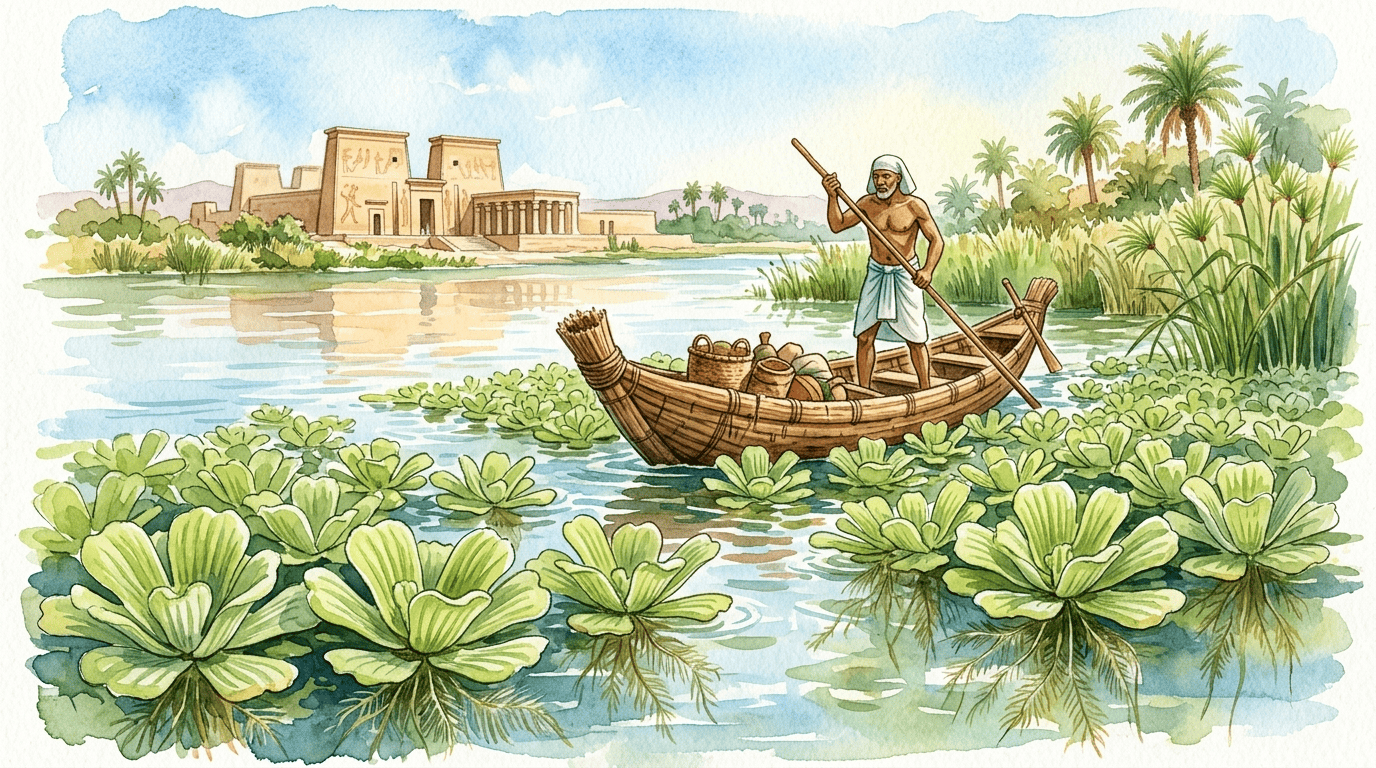
Pistia stratiotes is a free-floating aquatic plant in the arum family (Araceae) — related to philodendrons, calla lilies, and taros despite its very different appearance. Its center of origin is debated: tropical Africa (Nile valley) is the most widely accepted native region, but the species has been distributed, cultivated, and naturalized through tropical freshwater globally for thousands of years, and truly wild populations are difficult to identify with certainty. Ancient Egyptian hieroglyphs appear to depict it in wetland scenes, suggesting Nile presence by at least the pharaonic period. It forms rosettes of velvety light-green spongy leaves 10-20 cm across, floating on the water surface with fine feathery roots dangling below, and reproduces rapidly by vegetative runners producing daughter plants — under warm nutrient-rich conditions a colony can double in a few days.
It is classified as a serious invasive aquatic weed in the southern United States (Florida, Louisiana, Texas), much of Africa, South and Southeast Asia, and Australia, where dense mats impede navigation, block irrigation intakes, reduce fish populations, and support mosquito breeding. Sale is banned or restricted in Florida, Texas, South Africa, Australia, and several other jurisdictions. Pistia stratiotes may be the oldest known aquatic plant in human records — it appears in ancient Egyptian hieroglyphics and was described by the Greek scholar Dioscorides nearly 2,000 years ago.
Its origins are debated; some botanists believe it evolved in South America, while others argue for an African or Asian origin. It is now found on every continent except Antarctica. Biological control using the Pistia weevil (Neohydronomus affinis) has been successfully deployed in several countries to manage invasive populations. Limited ornamental use continues in temperate ponds where winter freezes naturally kill it.
Symbolism & meaning
What It Symbolizes
Water Lettuce embodies abundance through its prolific reproduction — entire ponds can fill with rosettes in weeks, an overflowing fertility on display. Paired with deception, that soft velvety beauty conceals an aggressively invasive nature in many warm waterways around the world. Ecologically, it is a cautionary plant: gentle to the eye, ruinous to the ecosystem it overtakes.
- Abundance — Prolific reproduction represents overflowing fertility and nature's generative power
- Deception — Soft, velvety beauty conceals an aggressively invasive nature
Where the Name Comes From
Pistia from Greek 'pistos' (liquid or water). Stratiotes from Greek 'stratiotes' (soldier), possibly referring to the sword-like leaf arrangement of a related genus.
Related plants
Plants with similar care
 Chinese AbeliaAbelia chinensis
 Fragrant AbeliaAbelia mosanensis
 Large-Flowered AbeliaAbelia uniflora
 Glossy AbeliaAbelia x grandiflora
Frequently asked questions
How often should I water Water Lettuce?
In summer, water about every 1 days; in winter, about every 1 days. Adjust for heat, pot size and drainage.
How much light does Water Lettuce need?
Full sun: 6+ hrs direct. Watch the leaves — scorching or stretching means the light needs adjusting.
Is Water Lettuce toxic to cats or dogs?
Pets Moderate (Dogs Moderate · Cats Moderate) Educational information, not medical or veterinary advice. If exposure is suspected, contact a doctor or veterinarian.
Is Water Lettuce easy to grow?
Yes — it is considered an easy, beginner-friendly plant.
When does Water Lettuce bloom?
It typically blooms Jun–Aug in the Northern Hemisphere.
YardMate
Identify any plant in seconds
Snap a photo — YardMate names the plant, diagnoses problems, and reminds you when to water.
Download on the App Store