 YardMate


Taiwan Cherry
Prunus campanulata
Easy · Beginner friendlyAbout Taiwan Cherry
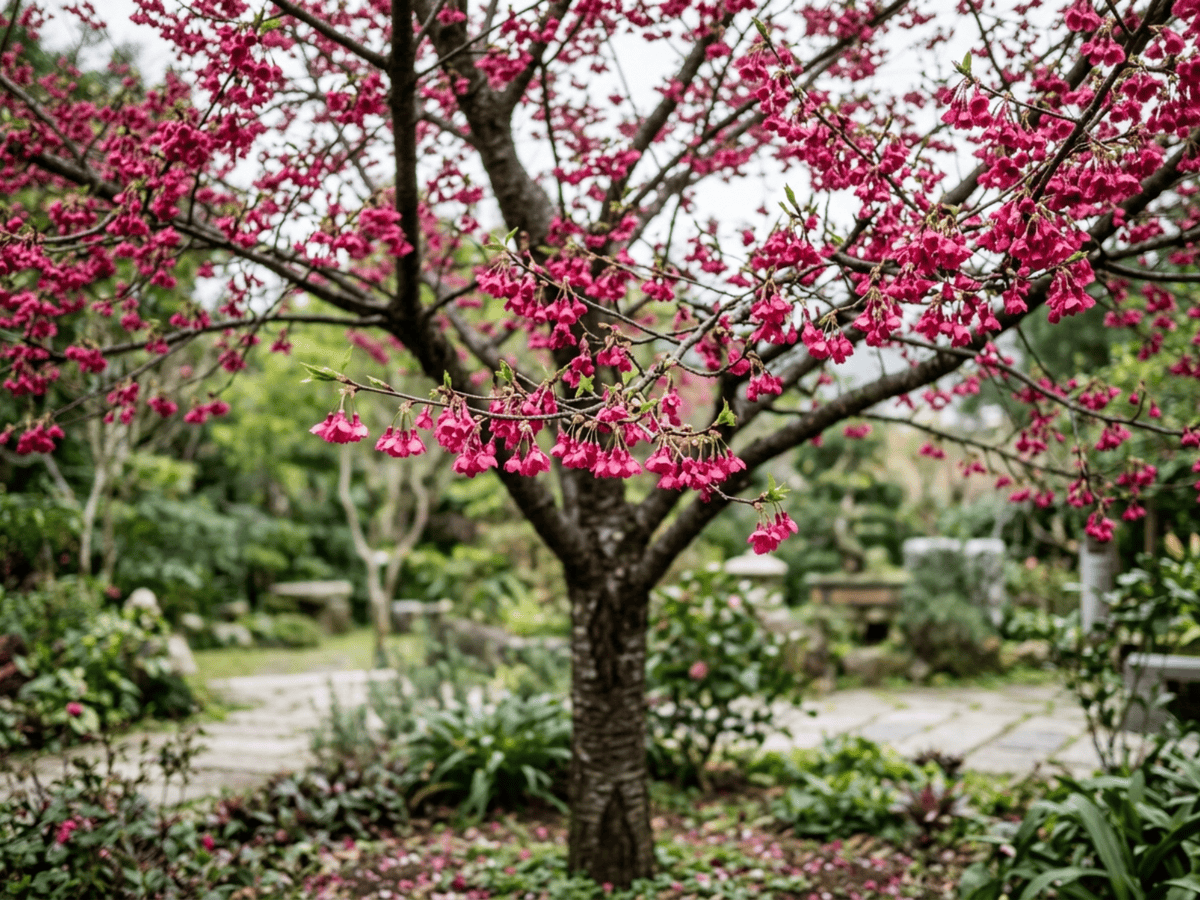
Taiwan Cherry is a semi-evergreen flowering cherry from Taiwan and southern Japan, producing masses of deep rose-red bell-shaped flowers in very early spring, often in late winter. Growing 20-25 feet tall, it brings the most vivid red color of any flowering cherry to American landscapes. Hardy in USDA zones 7-9, it is especially popular in California and the Southern United States where its heat tolerance shines.
- Heat-tolerant
- Pollinator-friendly
- Wildlife-friendly
How to care for Taiwan Cherry
Watering
- Springevery 5 days
- Summerevery 4 days
- Fallevery 7 days
- Winterpause watering
Soil · Well-draining
- Top dressingPine bark mulch10%
- Main mixPotting soil + perlite 2:170%
- DrainageLECA / gravel20%
Never skip the drainage layer — standing water is the top cause of root rot.
FERTILIZER
Balanced Feed 14-14-14
An even feed covers all three needs at once, keeping leaves, roots and blooms moving together with nothing pushed out of balance.
- Nitrogen · Leaves
- Phosphorus · Roots + Blooms
- Potassium · Strength
- Springevery 60 days
- Summerevery 60 days
At a Glance
- NativeEast Asia
- Height20–30 ft (6.1–9.1 m)
- Spread15–20 ft (4.6–6.1 m)
- Flower colorPink, Burgundy
- Foliage colorGreen, Bronze
- Fruit colorRed, Black
- SoilWell-drained, Loamy, Neutral
- LocationsYard
Bloom time
BLOOM CYCLE
Peak bloom
Jan–Mar
Rose-red bell flowers January to March
Fragrance
LIGHT FRAGRANCE
The flowers have a mild scent.
Toxicity
Humans Moderate · Pets Moderate
amygdalin and cyanogenic glycosides
Moderate
- Seed
- Leaf
- Ingestion
EXPOSURE Eating seeds and leaves.
EFFECT Cyanide poisoning if seeds eaten.
NOTE Documented concern for humans: Cyanide poisoning if seeds eaten.
Moderate
- Seed
- Leaf
- Ingestion
EXPOSURE Eating seeds and leaves.
EFFECT Cyanide poisoning and respiratory distress.
NOTE ASPCA lists all Prunus as toxic to pets; seeds and wilting leaves most dangerous.
Moderate
- Seed
- Leaf
- Ingestion
EXPOSURE Eating seeds and leaves.
EFFECT Cyanide poisoning and respiratory distress.
NOTE ASPCA lists all Prunus as toxic to pets; seeds and wilting leaves most dangerous.
Educational information, not medical or veterinary advice. If exposure is suspected, contact a doctor or veterinarian.
DISTRIBUTION


- Native
- Introduced
- East Asia
History
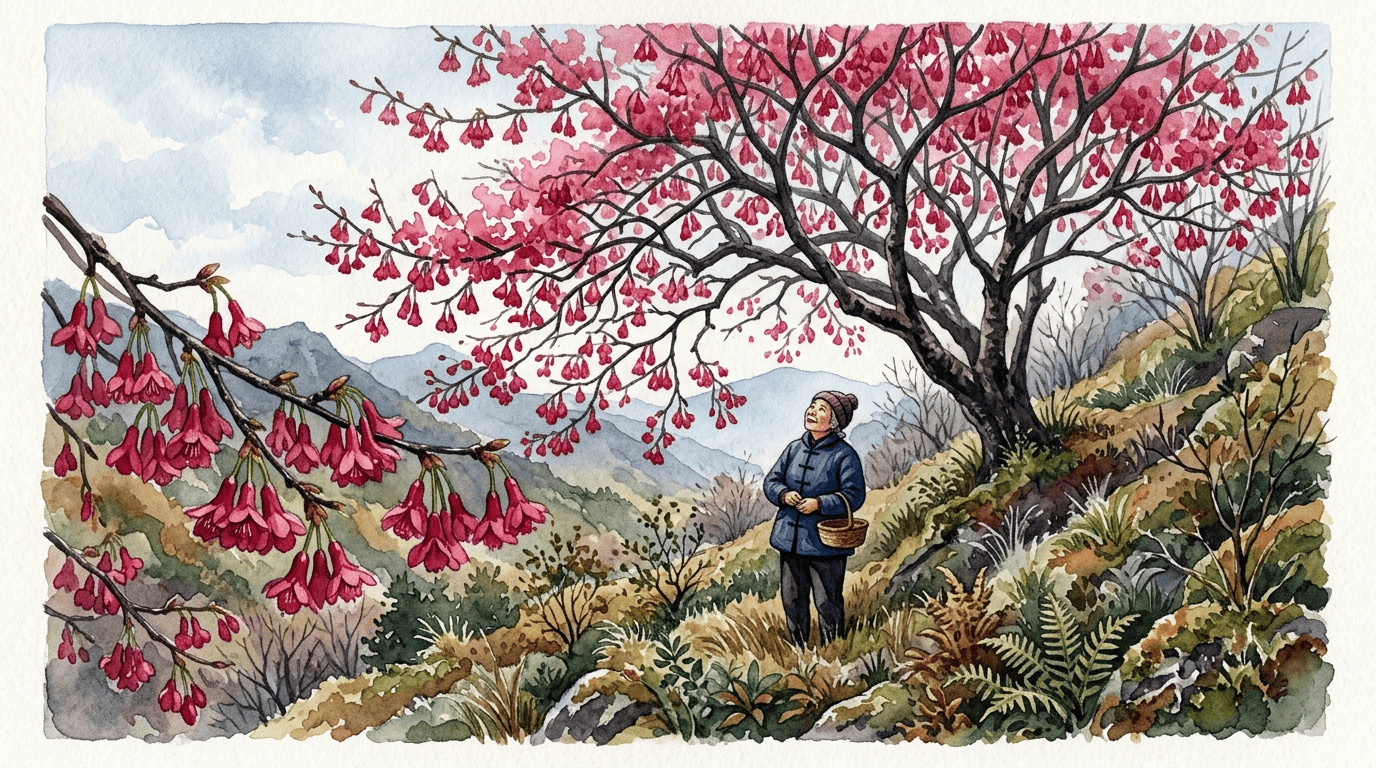
Prunus campanulata grows wild across Taiwan, the Ryukyu Islands, and southern China. German-Russian botanist Carl Johann Maximowicz formally described it in 1883. The epithet campanulata means bell-shaped, referring to the distinctive dangling bellflower-shaped blooms unlike the saucer-shaped flowers of most Japanese cherries.
Deep rose-pink to crimson in color, they open in January-February in mild climates—well before any other flowering cherry. This early bloom and tolerance of low winter chilling made it the ornamental cherry of choice for Florida, coastal California, the US Gulf Coast, and subtropical regions where Japanese cherries fail. Hybrids with other species produced significant cultivars including 'Okame' (with P. incisa) bred by Collingwood Ingram in England and 'Kursar' (with P. sargentii), extending the reach of flowering cherries.
The national flower of Nantou County, Taiwan. Introduced to the United States in the early 20th century. Used in breeding with P. serrulata and others to create early-blooming hardy hybrids like 'Okame' (P. incisa x campanulata), one of the earliest and most popular pink cherries in American gardens.
Symbolism & meaning
What It Symbolizes
The Taiwan Cherry burns with Passion — the most vivid red of any flowering cherry, lighting late winter with deep magenta blossoms. Its heritage is woven into Taiwanese identity, where it serves as the official flower of Nantou and lines mountain roads each February. A cherry that exchanges Japan's pale pink restraint for unapologetic color.
- Passion — most vivid red of any cherry
- Heritage — national symbol in Nantou, Taiwan
Where the Name Comes From
The name Taiwan Cherry points to Taiwan. 'Campanulata' means 'bell-shaped', referring to the pendulous bell-like flowers.
Uses & Fun Facts
- Bell-shaped magenta flowers cover bare branches in late winter
- Early blooms feed emerging bees and nectar birds
- Striking small flowering tree for entryway focal points
Related plants
More Prunus plants
 Wild CherryPrunus avium
 Sour CherryPrunus cerasus
 PlumPrunus domestica
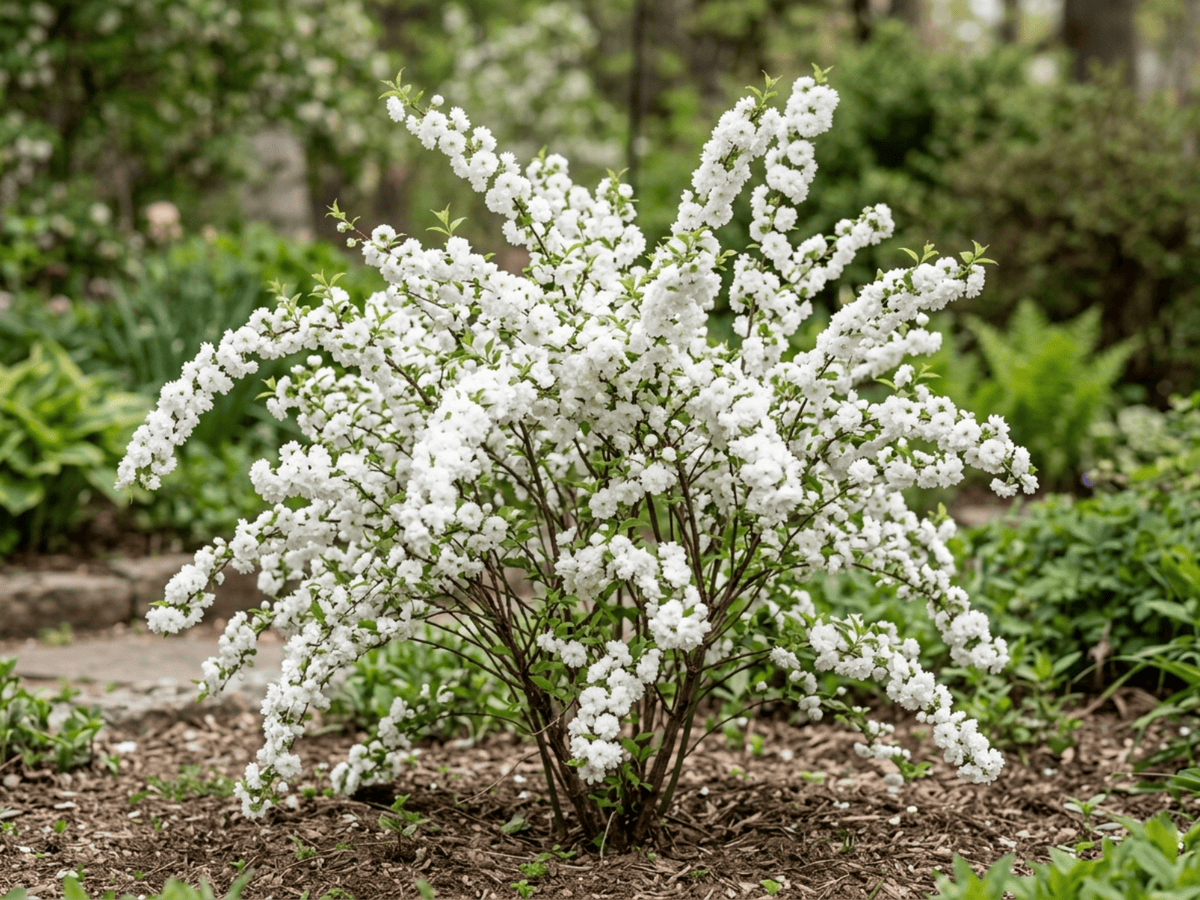 Flowering AlmondPrunus glandulosa
Plants with similar care
 Chinese AbeliaAbelia chinensis
 Fragrant AbeliaAbelia mosanensis
 Large-Flowered AbeliaAbelia uniflora
 Glossy AbeliaAbelia x grandiflora
Frequently asked questions
How often should I water Taiwan Cherry?
Water about every 5 days during the growing season, and always let excess water drain away.
How much light does Taiwan Cherry need?
Full sun: 6+ hrs direct. Watch the leaves — scorching or stretching means the light needs adjusting.
Is Taiwan Cherry toxic to cats or dogs?
Pets Moderate (Dogs Moderate · Cats Moderate) Educational information, not medical or veterinary advice. If exposure is suspected, contact a doctor or veterinarian.
Is Taiwan Cherry easy to grow?
Yes — it is considered an easy, beginner-friendly plant.
When does Taiwan Cherry bloom?
It typically blooms Jan–Mar in the Northern Hemisphere.
YardMate
Identify any plant in seconds
Snap a photo — YardMate names the plant, diagnoses problems, and reminds you when to water.
Download on the App Store