 YardMate


Sour Cherry
Prunus cerasus
Easy · Beginner friendlyAbout Sour Cherry
Prunus cerasus, the sour cherry (or tart cherry), is a deciduous tree in the Rosaceae family native to Europe and southwest Asia. Growing 4–8 m tall, it is smaller and hardier than the sweet cherry (P. avium), with a more spreading habit. The bright red fruit is too tart to eat fresh but transforms beautifully in cooking, making it the baker's cherry of choice.
Sour cherries are self-fertile and cold-hardy (USDA zones 3–7), requiring 800–1200 chill hours. They tolerate a wider range of conditions than sweet cherries, making them more reliable for home orchards. 'Montmorency' (bright red) is the standard American variety; 'Morello' (dark red) dominates European cooking.
Where sweet cherries are eaten fresh, sour cherries are the workhorses of the kitchen: cherry pie, strudel, clafoutis, preserves, and sauces for roast duck and game all depend on the tart cherry's intense flavour. In recent years, tart cherry juice has gained attention for its high melatonin and anti-inflammatory anthocyanin content—studies show it may improve sleep quality and reduce post-exercise muscle soreness. Maraschino cherries were originally made from Marasca sour cherries in Croatia, soaked in maraschino liqueur.
- Edible
- Cold-hardy
How to care for Sour Cherry
Watering
- Springevery 5 days
- Summerevery 4 days
- Fallevery 7 days
- Winterevery 14 days
Soil · Well-draining
- Top dressingPine bark mulch10%
- Main mixPotting soil + perlite 2:170%
- DrainageLECA / gravel20%
Never skip the drainage layer — standing water is the top cause of root rot.
FERTILIZER
Balanced Feed 14-14-14
An even feed covers all three needs at once, keeping leaves, roots and blooms moving together with nothing pushed out of balance.
- Nitrogen · Leaves
- Phosphorus · Roots + Blooms
- Potassium · Strength
- Springevery 30 days
- Summerevery 30 days
- Fallevery 45 days
At a Glance
- NativeEurope, Western Asia
- Height15–25 ft (4.6–7.6 m)
- Spread15–20 ft (4.6–6.1 m)
- Flower colorWhite, Pink
- Foliage colorGreen
- Fruit colorRed
- SoilLoamy, Well-drained
- LocationsYard
Bloom time
BLOOM CYCLE
Peak bloom
Mar–May
White flowers in spring on a self-fertile tree — no second tree needed. Earlier blooming than sweet cherry.
Fragrance
MODERATE FRAGRANCE
The flowers have a sweet blossom scent.
Toxicity
Humans Slight · Pets Moderate
amygdalin
Slight
- Seed
- Leaf
- Ingestion
EXPOSURE Eating seeds and leaves.
EFFECT Seeds cyanogenic and flesh safe.
NOTE Documented concern for humans: Seeds cyanogenic and flesh safe.
Moderate
- Seed
- Leaf
- Stem
- Ingestion
EXPOSURE Eating seeds, leaves, and stems.
EFFECT Cyanogenic glycosides.
NOTE ASPCA lists Prunus as toxic to pets.
Moderate
- Seed
- Leaf
- Stem
- Ingestion
EXPOSURE Eating seeds, leaves, and stems.
EFFECT Cyanogenic glycosides.
NOTE ASPCA lists Prunus as toxic to pets.
Educational information, not medical or veterinary advice. If exposure is suspected, contact a doctor or veterinarian.
DISTRIBUTION


- Native
- Introduced
- Europe
- Western Asia
History

Prunus cerasus is a tetraploid species native to Europe and southwest Asia, believed to be a natural hybrid between Prunus avium (sweet cherry) and Prunus fruticosa (dwarf cherry). Unlike sweet cherry, sour or "tart" cherry has higher acidity and is primarily used for cooking, baking, preserves, and alcohols rather than fresh eating. The Montmorency cultivar, originating in the Montmorency Valley north of Paris, has become the dominant commercial sour cherry in the US and Canada.
Michigan produces roughly 75% of US tart cherries. In Europe, the Morello cherry is a traditional sour cherry of British and German cuisine. Croatian Marasca cherries from the Dalmatian coast are the original source of maraschino cherry liqueur, produced since the 16th century.
Hungarian sour-cherry tradition includes meggyleves (cold cherry soup), and Polish wiśniówka is a traditional cherry liqueur. The word "cherry" itself, via Latin "cerasus," derives from the Turkish town Cerasus (modern Giresun) on the Black Sea, famed for cherries in Roman antiquity. Sour cherries spread through the Roman Empire and were cultivated in medieval monastery gardens. 'Montmorency' cherries are named after a valley north of Paris. The cherry strudel tradition is central to Austrian and Hungarian cuisine. In 2010s, tart cherry juice emerged as a sports recovery drink after research showed it reduced muscle soreness and improved sleep.
Symbolism & meaning
What It Symbolizes
Sour Cherry is memory with a sharp edge. Its bright fruit belongs to pies, preserves, brandy, and old orchard ladders, carrying summer into jars for darker months. The symbolism is bittersweet devotion: love that does not pretend life is all sugar, and is better for the tartness.
- Dedication — The sour cherry's value comes through the effort of cooking — symbolizing the rewards of dedicated work
- Recovery — Modern research on tart cherry's anti-inflammatory properties connects it to healing and renewal
Where the Name Comes From
Prunus from Latin for plum tree; 'cerasus' from the ancient city of Cerasus (modern Giresun, Turkey), a historic cherry-exporting port on the Black Sea.
Uses & Fun Facts
- Tart red fruit shines in pies, jams, juice, and clafoutis
- Sour cherries pair with game meats in classic European sauces
- Spring blossoms feed bees and other early pollinators
- Hardy small orchard tree adds white spring blossom display
Related plants
More Prunus plants
 Wild CherryPrunus avium
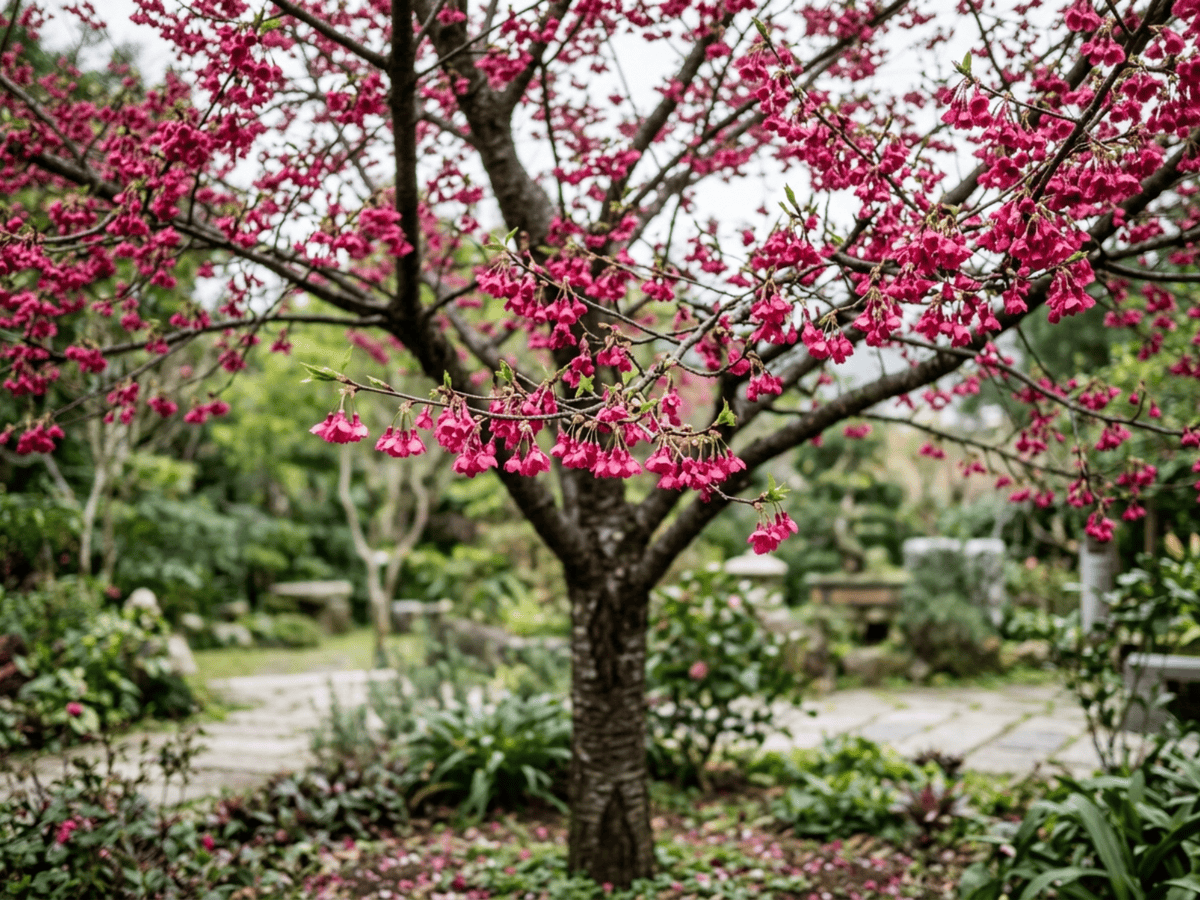 Taiwan CherryPrunus campanulata
 PlumPrunus domestica
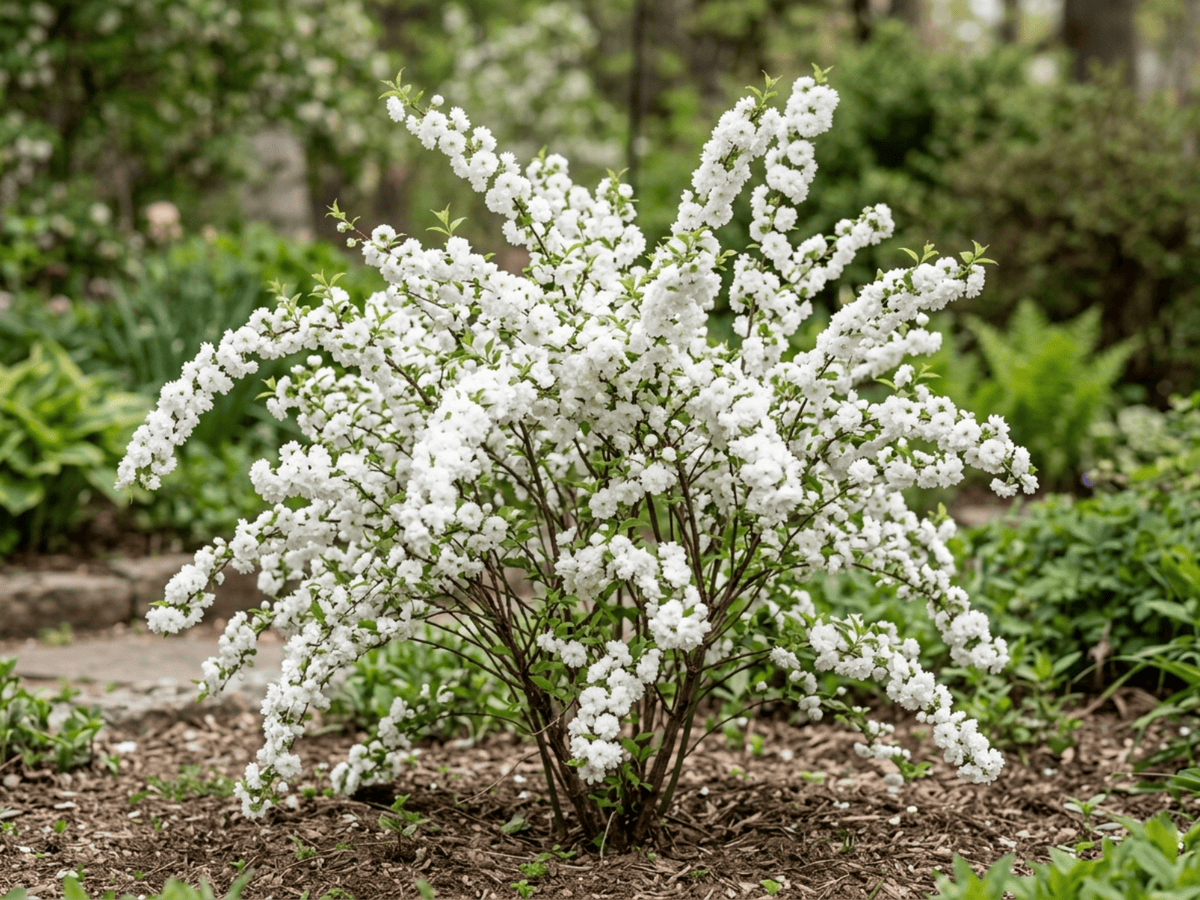 Flowering AlmondPrunus glandulosa
Plants with similar care
 Chinese AbeliaAbelia chinensis
 Fragrant AbeliaAbelia mosanensis
 Large-Flowered AbeliaAbelia uniflora
 Glossy AbeliaAbelia x grandiflora
Frequently asked questions
How often should I water Sour Cherry?
In summer, water about every 4 days; in winter, about every 14 days. Adjust for heat, pot size and drainage.
How much light does Sour Cherry need?
Full sun: 6+ hrs direct. Watch the leaves — scorching or stretching means the light needs adjusting.
Is Sour Cherry toxic to cats or dogs?
Pets Moderate (Dogs Moderate · Cats Moderate) Educational information, not medical or veterinary advice. If exposure is suspected, contact a doctor or veterinarian.
Is Sour Cherry easy to grow?
Yes — it is considered an easy, beginner-friendly plant.
When does Sour Cherry bloom?
It typically blooms Mar–May in the Northern Hemisphere.
YardMate
Identify any plant in seconds
Snap a photo — YardMate names the plant, diagnoses problems, and reminds you when to water.
Download on the App Store