 YardMate


Plum
Prunus domestica
Easy · Beginner friendlyAbout Plum
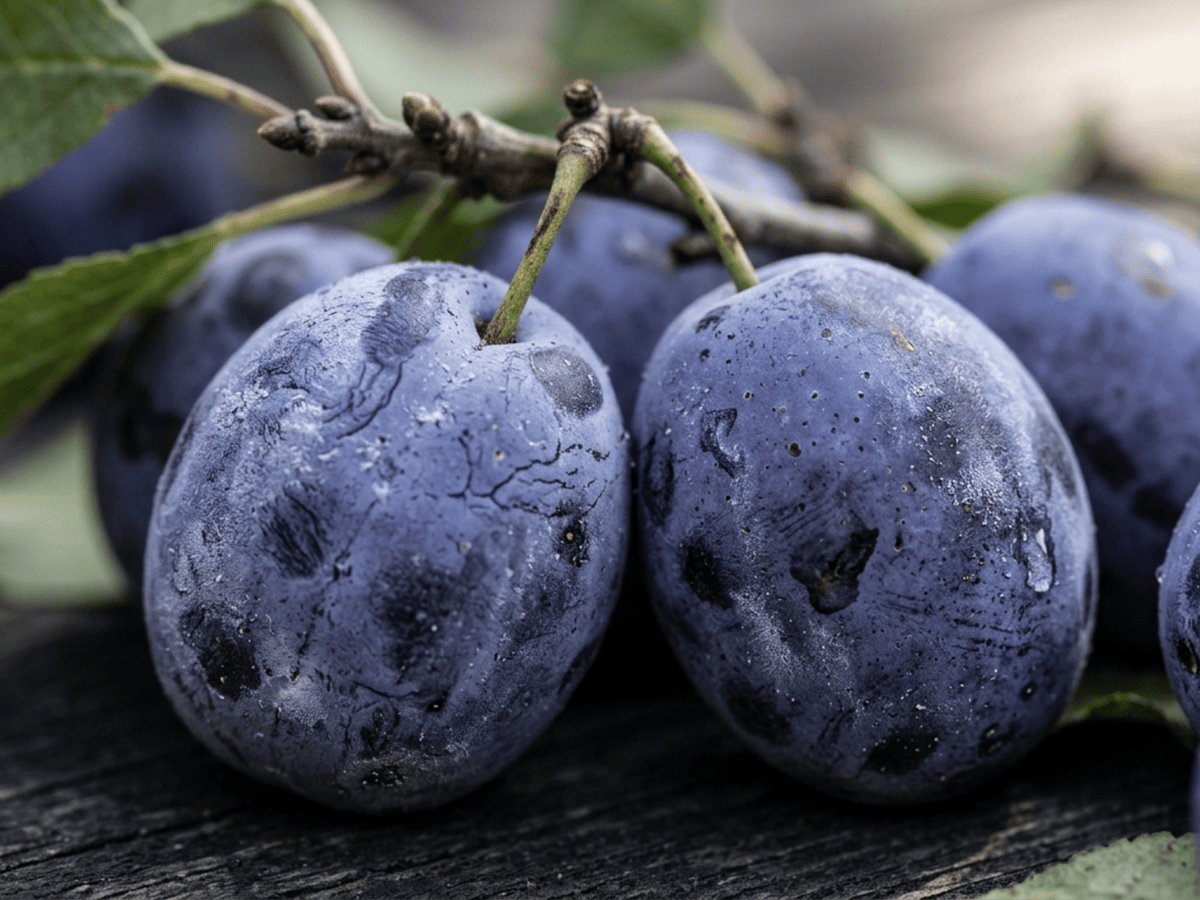
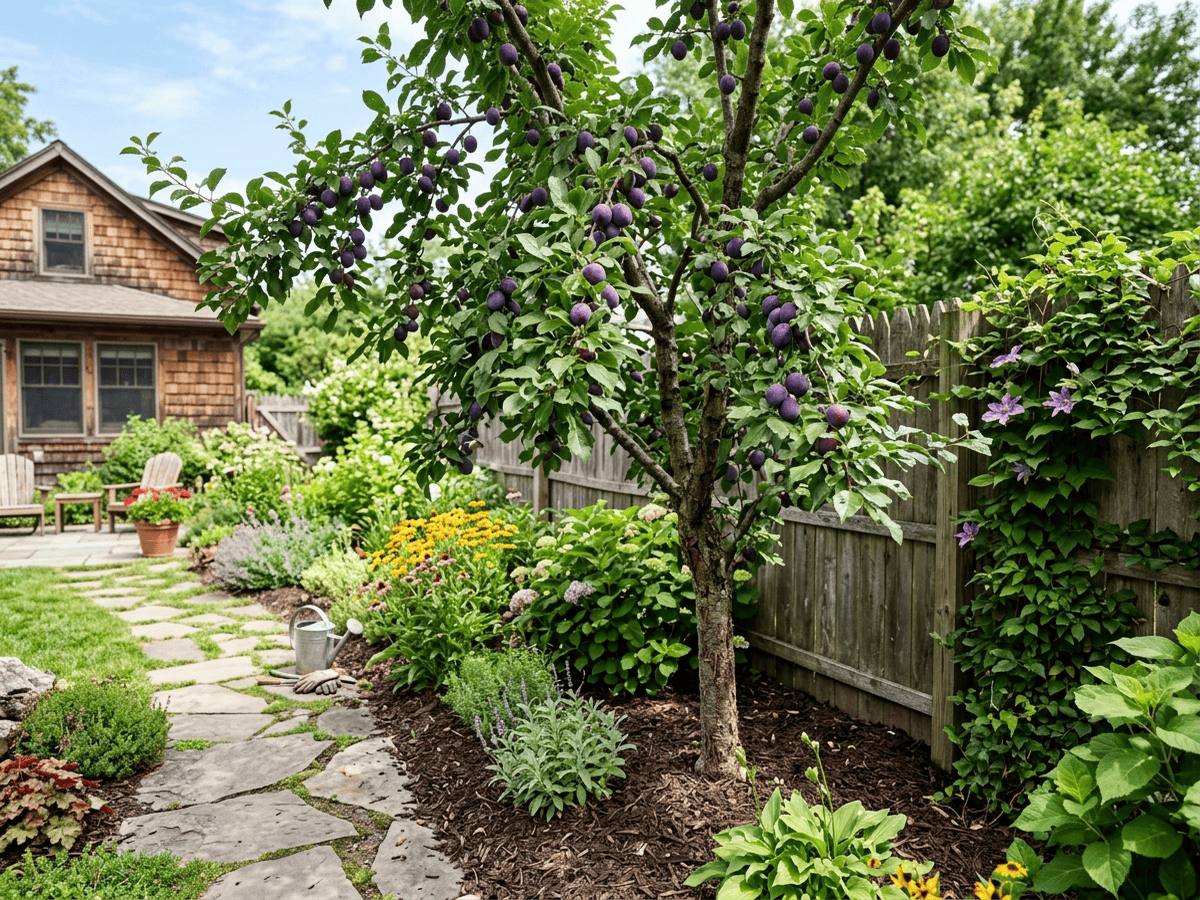
Prunus domestica, the European plum, is a deciduous tree in the Rosaceae family believed to be a hybrid of P. cerasifera and P. spinosa, originating in the Caucasus. Growing 3–8 m tall, it produces white blossoms in early spring and oval, blue-purple, green, yellow, or red fruit with a powdery bloom. The dense, sweet flesh clings to a single pit.
Plums thrive in USDA zones 4–8, requiring moderate chill hours (700–1000), full sun, and well-drained soil. Most European plum varieties are self-fertile, simplifying cultivation. The trees are among the most reliable and least demanding stone fruits—more cold-tolerant and disease-resistant than peaches, requiring less pruning than cherries.
The plum's greatest culinary contribution may be the prune (dried plum)—France's famous pruneaux d'Agen, California prunes, and Eastern European varieties are major dried fruit industries. Fresh plums range from the tart Damson (essential for jam and gin) to sweet dessert types like 'Victoria' (Britain's favourite). Plum brandy (slivovitz/šljivovica) is the national drink of several Balkan countries. Plum wine and plum sauce are important in Chinese and Japanese cuisine.
- Edible
- Cold-hardy
How to care for Plum
Watering
- Springevery 5 days
- Summerevery 4 days
- Fallevery 7 days
- Winterevery 14 days
Soil · Well-draining
- Top dressingPine bark mulch10%
- Main mixPotting soil + perlite 2:170%
- DrainageLECA / gravel20%
Never skip the drainage layer — standing water is the top cause of root rot.
FERTILIZER
Balanced Feed 14-14-14
An even feed covers all three needs at once, keeping leaves, roots and blooms moving together with nothing pushed out of balance.
- Nitrogen · Leaves
- Phosphorus · Roots + Blooms
- Potassium · Strength
- Springevery 30 days
- Summerevery 30 days
- Fallevery 45 days
At a Glance
- NativeWestern Asia
- Height12–25 ft (3.7–7.6 m)
- Spread12–20 ft (3.7–6.1 m)
- Flower colorWhite, Pink
- Foliage colorGreen
- Fruit colorPurple
- SoilLoamy, Well-drained
- LocationsYard
Bloom time
BLOOM CYCLE
Peak bloom
Mar–Apr
White blossoms in spring; most European plums are self-fertile so a single tree can produce fruit.
Fragrance
MODERATE FRAGRANCE
Sweet blossom scent in spring.
Toxicity
Humans Slight · Pets Moderate
amygdalin
Slight
- Seed
- Leaf
- Ingestion
EXPOSURE Eating seeds and leaves.
EFFECT Seeds cyanogenic and flesh safe.
NOTE Documented concern for humans: Seeds cyanogenic and flesh safe.
Moderate
- Seed
- Leaf
- Stem
- Ingestion
EXPOSURE Eating seeds, leaves, and stems.
EFFECT Cyanogenic glycosides and pit intestinal obstruction.
NOTE ASPCA lists Prunus as toxic to pets.
Moderate
- Seed
- Leaf
- Stem
- Ingestion
EXPOSURE Eating seeds, leaves, and stems.
EFFECT Cyanogenic glycosides.
NOTE ASPCA lists Prunus as toxic to pets.
Educational information, not medical or veterinary advice. If exposure is suspected, contact a doctor or veterinarian.
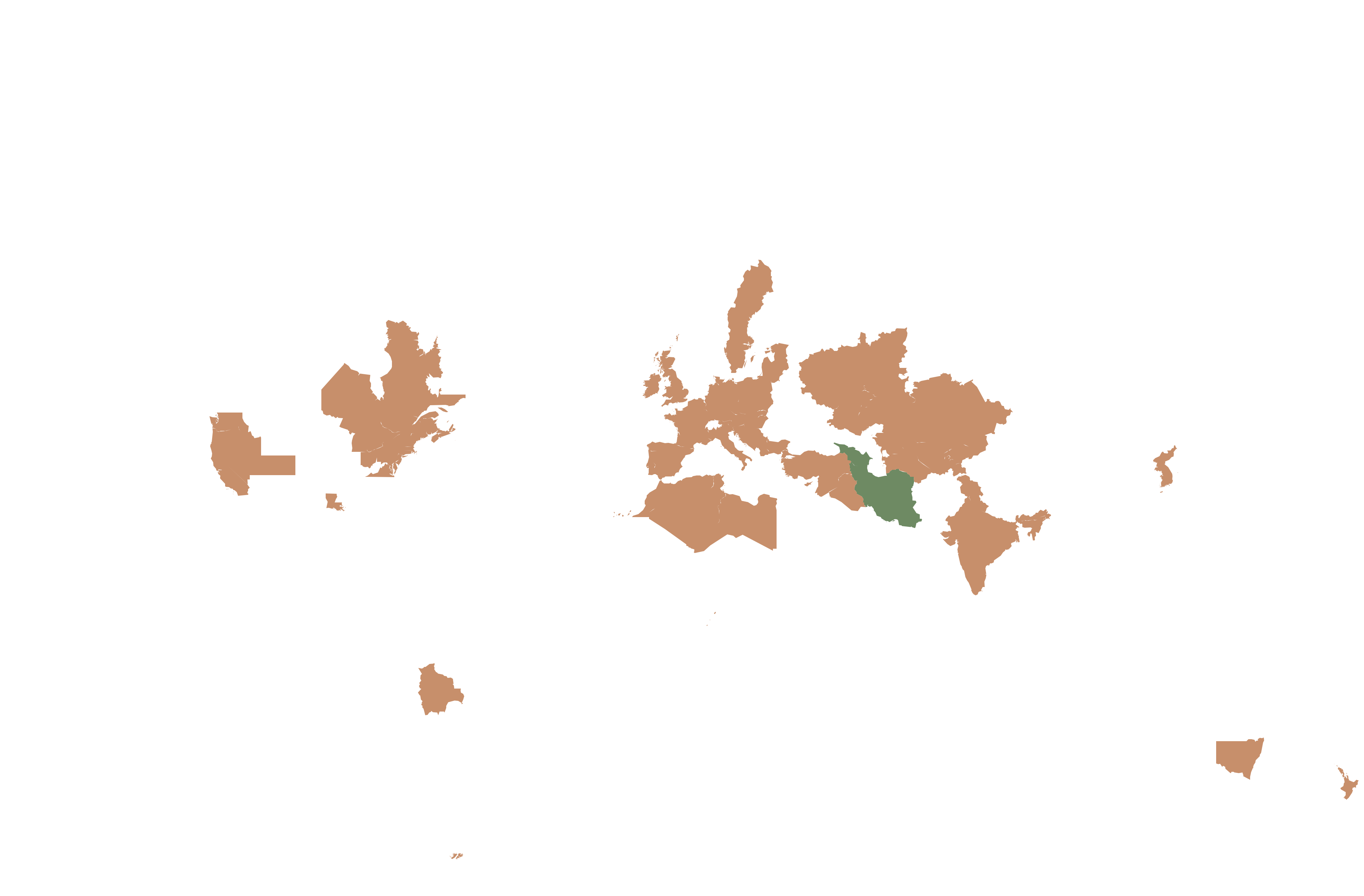
DISTRIBUTION

- Native
- Introduced
- Western Asia
History

Prunus domestica is a hexaploid hybrid species, believed to have arisen from crosses between Prunus cerasifera (cherry plum) and Prunus spinosa (blackthorn or sloe) in the Caucasus region. Cultivation spread to Greece and Rome by antiquity. Roman agronomists recorded multiple cultivars.
European plums diversified into dessert plums, prune plums (high-sugar cultivars suitable for drying without fermentation), and damson plums used for preserves. The California plum industry was founded by French immigrant Louis Pellier in 1856, who smuggled grafts of the famous French Agen prune plum to California; grafted onto American rootstock, these became the "California Prune," dominating global prune production by the early 20th century. The Santa Clara Valley — today Silicon Valley — was called "the Prune Capital of the World" in the early 20th century, with more than a million prune trees.
Urbanization after World War II rapidly converted the orchards into housing and technology companies; only small remnant orchards remain. Global prune production is now led by Chile, France, the US, and Argentina. Plums were among the first fruits domesticated in the Caucasus and were cultivated across the Roman Empire. The Damson plum takes its name from Damascus. Monasteries preserved plum knowledge through the Middle Ages.
Symbolism & meaning
What It Symbolizes
The Plum suggests fidelity in East Asian tradition, where late-winter blossom stands for perseverance and faithfulness through hardship. In the Balkans, offering a glass of slivovitz, plum brandy, is a classic gesture of welcome. From branch to bottle, Prunus domestica braids two cultural meanings together: patient loyalty in flower and hospitality in fruit.
- Fidelity — In East Asian tradition, the plum blossom blooming in late winter symbolizes perseverance and fidelity through hardship
- Hospitality — In the Balkans, offering slivovitz (plum brandy) is the essential gesture of welcome
Where the Name Comes From
Prunus from Latin for plum tree; 'domestica' means cultivated/domestic.
Uses & Fun Facts
- European Plum fruit eaten fresh, dried, or preserved
Related plants
More Prunus plants
 Wild CherryPrunus avium
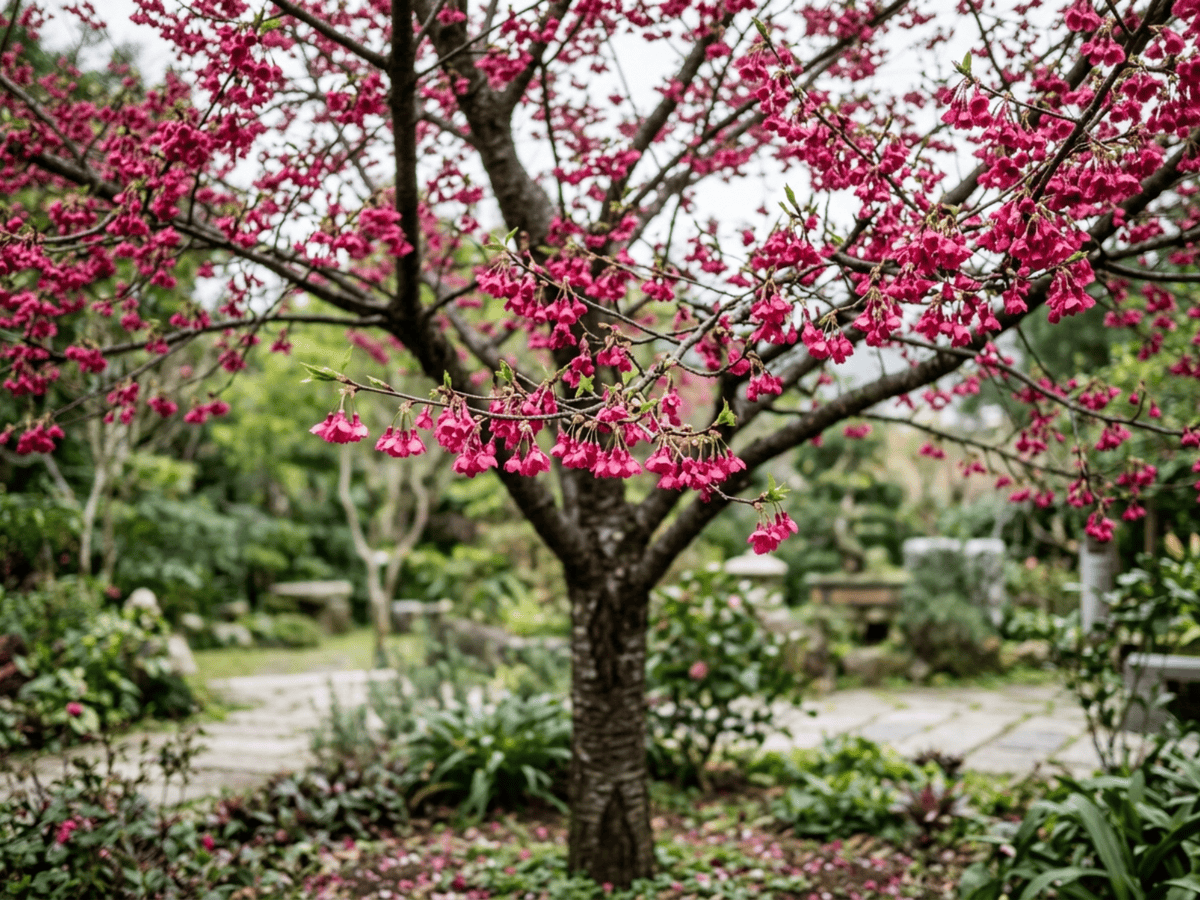 Taiwan CherryPrunus campanulata
 Sour CherryPrunus cerasus
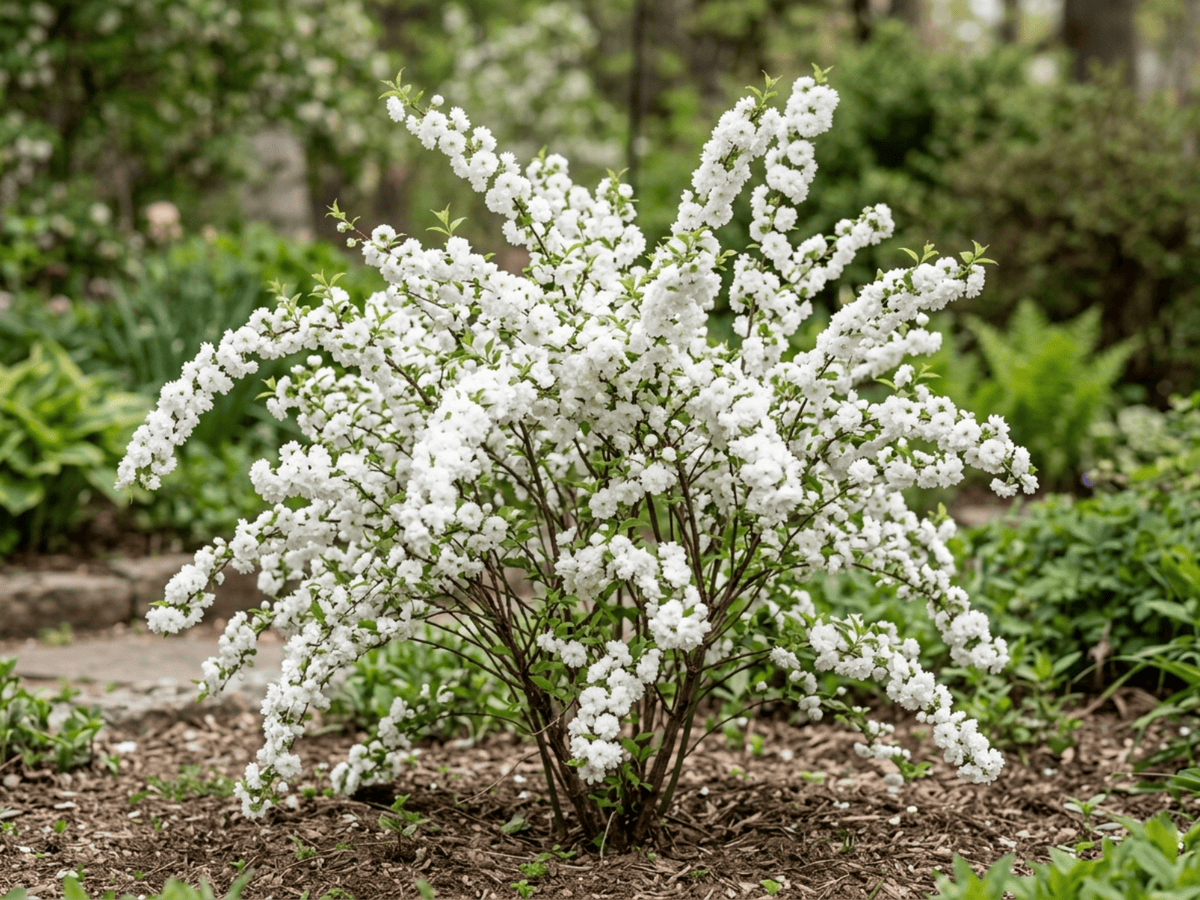 Flowering AlmondPrunus glandulosa
Plants with similar care
 Chinese AbeliaAbelia chinensis
 Fragrant AbeliaAbelia mosanensis
 Large-Flowered AbeliaAbelia uniflora
 Glossy AbeliaAbelia x grandiflora
Frequently asked questions
How often should I water Plum?
In summer, water about every 4 days; in winter, about every 14 days. Adjust for heat, pot size and drainage.
How much light does Plum need?
Full sun: 6+ hrs direct. Watch the leaves — scorching or stretching means the light needs adjusting.
Is Plum toxic to cats or dogs?
Pets Moderate (Dogs Moderate · Cats Moderate) Educational information, not medical or veterinary advice. If exposure is suspected, contact a doctor or veterinarian.
Is Plum easy to grow?
Yes — it is considered an easy, beginner-friendly plant.
When does Plum bloom?
It typically blooms Mar–Apr in the Northern Hemisphere.
YardMate
Identify any plant in seconds
Snap a photo — YardMate names the plant, diagnoses problems, and reminds you when to water.
Download on the App Store