 YardMate


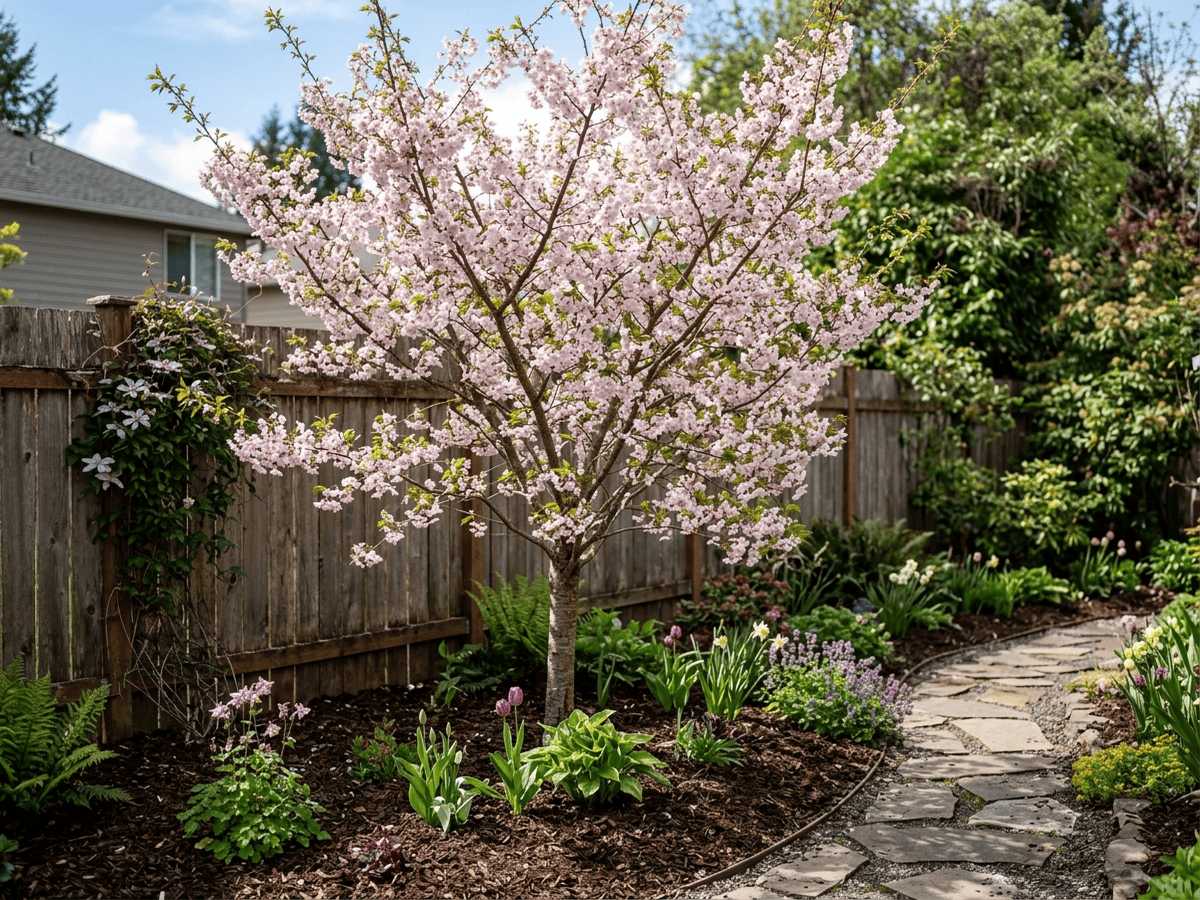
Fuji Cherry
Prunus incisa
Easy · Beginner friendlyAbout Fuji Cherry
Fuji Cherry is a compact Japanese mountain cherry growing 12-20 feet tall, producing early-spring pale pink single flowers that age to white on wiry branches. The foliage turns rich orange-red in fall, offering multi-season interest. An excellent small flowering tree for American residential gardens in USDA zones 5-7, particularly popular in its weeping and dwarf cultivar forms including 'Kojo-no-mai' and 'Oshidori'.
- Compact
- Fall-color
- Pollinator-friendly
How to care for Fuji Cherry
Watering
- Springevery 7 days
- Summerevery 5 days
- Fallevery 10 days
- Winterpause watering
Soil · Well-draining
- Top dressingPine bark mulch10%
- Main mixPotting soil + perlite 2:170%
- DrainageLECA / gravel20%
Never skip the drainage layer — standing water is the top cause of root rot.
FERTILIZER
Balanced Feed 14-14-14
An even feed covers all three needs at once, keeping leaves, roots and blooms moving together with nothing pushed out of balance.
- Nitrogen · Leaves
- Phosphorus · Roots + Blooms
- Potassium · Strength
- Springevery 60 days
- Summerevery 60 days
At a Glance
- NativeEast Asia
- Height15–25 ft (4.6–7.6 m)
- Spread15–25 ft (4.6–7.6 m)
- Flower colorWhite, Pink
- Foliage colorGreen, Bronze
- Fruit colorBlack, Purple
- SoilLoamy, Well-drained, Neutral
- LocationsYard
Bloom time
BLOOM CYCLE
Peak bloom
Mar–Apr
Pale pink flowers March to April
Fragrance
LIGHT FRAGRANCE
The flowers have a mild scent.
Toxicity
Humans Moderate · Pets Moderate
amygdalin and cyanogenic glycosides
Moderate
- Seed
- Leaf
- Ingestion
EXPOSURE Eating seeds and leaves.
EFFECT Cyanide poisoning if seeds eaten.
NOTE Documented concern for humans: Cyanide poisoning if seeds eaten.
Moderate
- Seed
- Leaf
- Ingestion
EXPOSURE Eating seeds and leaves.
EFFECT Cyanide poisoning.
NOTE ASPCA lists all Prunus as toxic to pets.
Moderate
- Seed
- Leaf
- Ingestion
EXPOSURE Eating seeds and leaves.
EFFECT Cyanide poisoning.
NOTE ASPCA lists all Prunus as toxic to pets.
Educational information, not medical or veterinary advice. If exposure is suspected, contact a doctor or veterinarian.
DISTRIBUTION


- Native
- Introduced
- East Asia
History
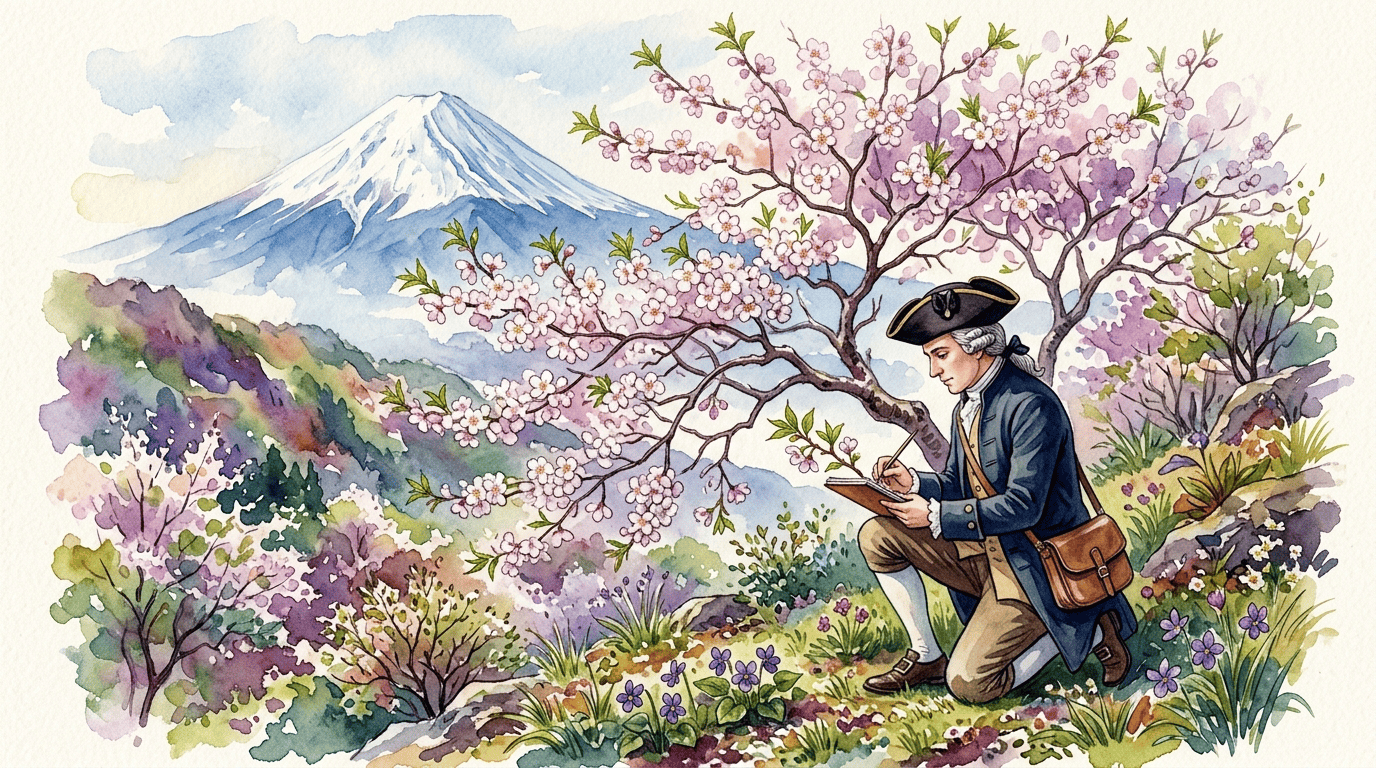
Prunus incisa is native to the slopes of Mt. Fuji and surrounding regions of Honshu, Japan. Swedish botanist Carl Peter Thunberg, working at the Dutch trading post Dejima in Nagasaki, collected specimens during his 1775-76 Japanese residency and formally described the species in 1784 in his Flora Japonica. The epithet incisa refers to the deeply incised leaf margins.
Reaching only 15-25 feet, it is considerably smaller than most flowering cherries and produces masses of delicate single white-to-pale-pink flowers before any other cherry blooms. British plantsman Collingwood Ingram used it extensively in his 1930s-60s cherry breeding at Benenden, producing the celebrated hybrids 'Okame' (with P. campanulata) and 'Kursar' (with P. sargentii). Modern dwarf cultivars like 'Kojo-no-mai' and 'Frilly Frock' derive from the species and remain garden favorites.
Native to the lower slopes of Mount Fuji and other Japanese mountains. incisa x P. The dwarf cultivar 'Kojo-no-mai' with zigzag branches is prized for small American gardens and bonsai. Introduced to the West in the early 20th century via Ernest Wilson's Japanese expeditions.
Symbolism & meaning
What It Symbolizes
The Fuji Cherry makes visible grace, its delicate flowers and small stature offering a more intimate cherry experience than its towering Japanese cousins. As a true native of Mount Fuji's lower slopes, it carries the heritage of one of the world's most revered mountains in every spring bloom. To plant this cherry is to bring a small piece of sacred Japanese landscape into the garden, scaled down to a personal embrace.
- Grace — delicate flowers and small stature
- Heritage — Mount Fuji native cherry
Where the Name Comes From
'Incisa' means 'deeply cut', referring to the serrated leaf margins.
Uses & Fun Facts
- Early pink-white blossom suits small gardens, courtyards, and bonsai training
- Fuji Cherry flowers nourish foraging bees and pollinators
Related plants
More Prunus plants



Plants with similar care
 Chinese AbeliaAbelia chinensis
 Fragrant AbeliaAbelia mosanensis
 Large-Flowered AbeliaAbelia uniflora
 Glossy AbeliaAbelia x grandiflora
Frequently asked questions
How often should I water Fuji Cherry?
Water about every 7 days during the growing season, and always let excess water drain away.
How much light does Fuji Cherry need?
Full sun: 6+ hrs direct. Watch the leaves — scorching or stretching means the light needs adjusting.
Is Fuji Cherry toxic to cats or dogs?
Pets Moderate (Dogs Moderate · Cats Moderate) Educational information, not medical or veterinary advice. If exposure is suspected, contact a doctor or veterinarian.
Is Fuji Cherry easy to grow?
Yes — it is considered an easy, beginner-friendly plant.
When does Fuji Cherry bloom?
It typically blooms Mar–Apr in the Northern Hemisphere.
YardMate
Identify any plant in seconds
Snap a photo — YardMate names the plant, diagnoses problems, and reminds you when to water.
Download on the App Store