 YardMate

Flowering Almond
Prunus triloba
Easy · Beginner friendlyAbout Flowering Almond
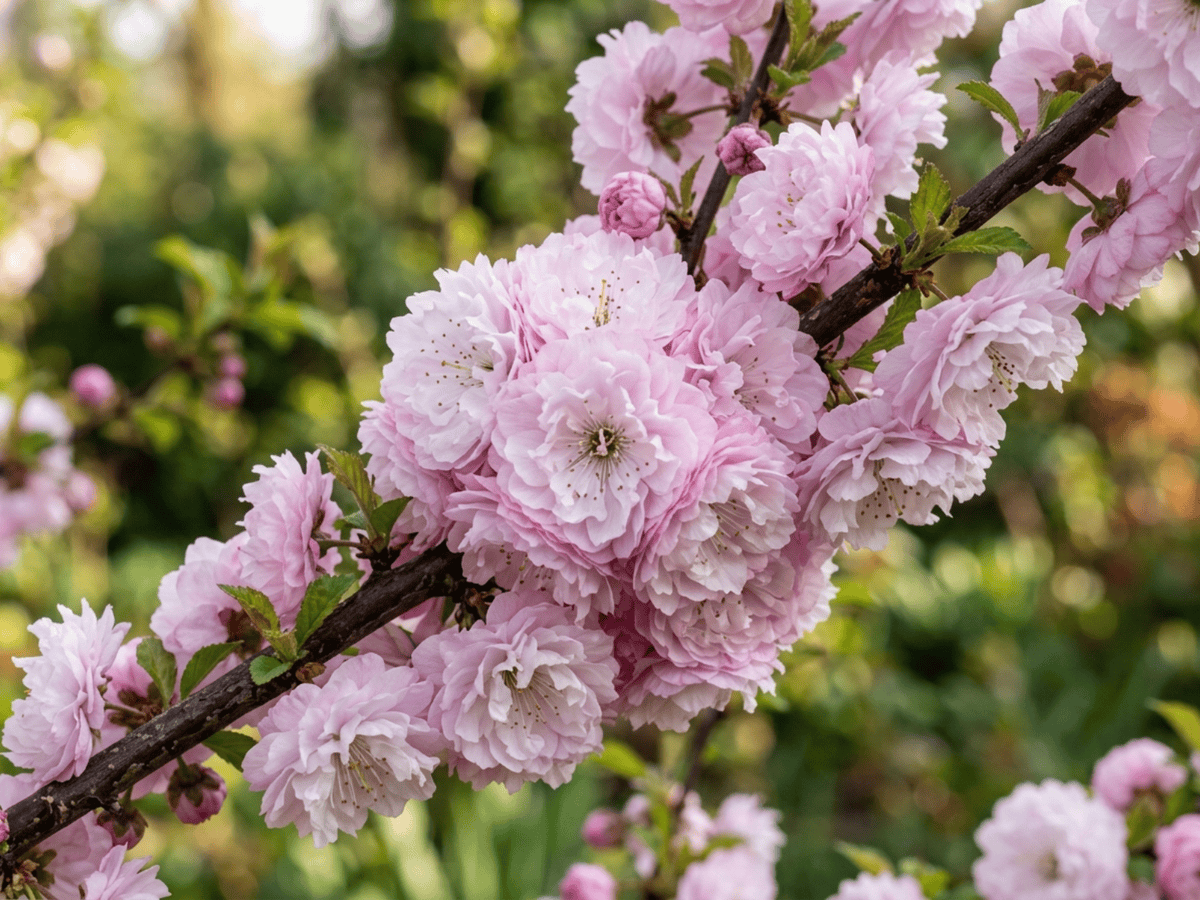
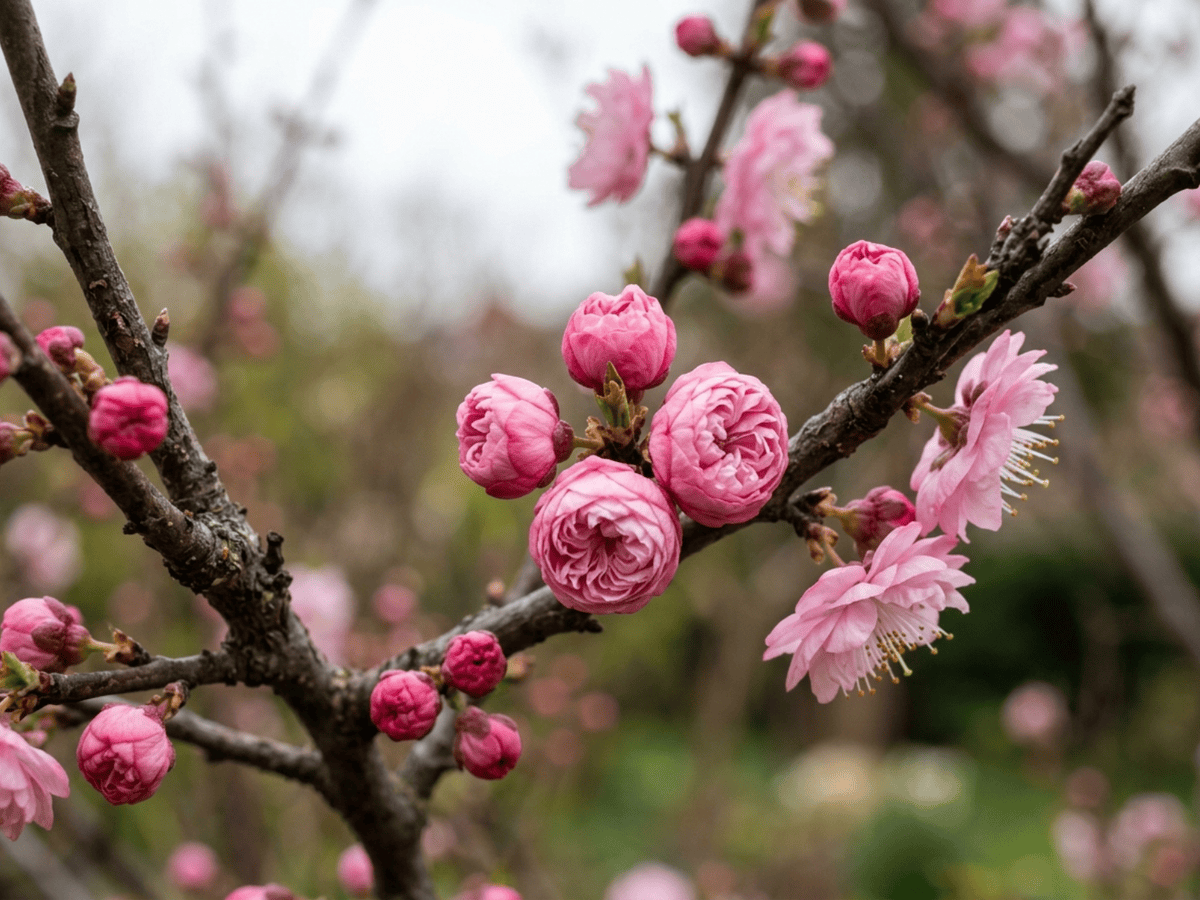
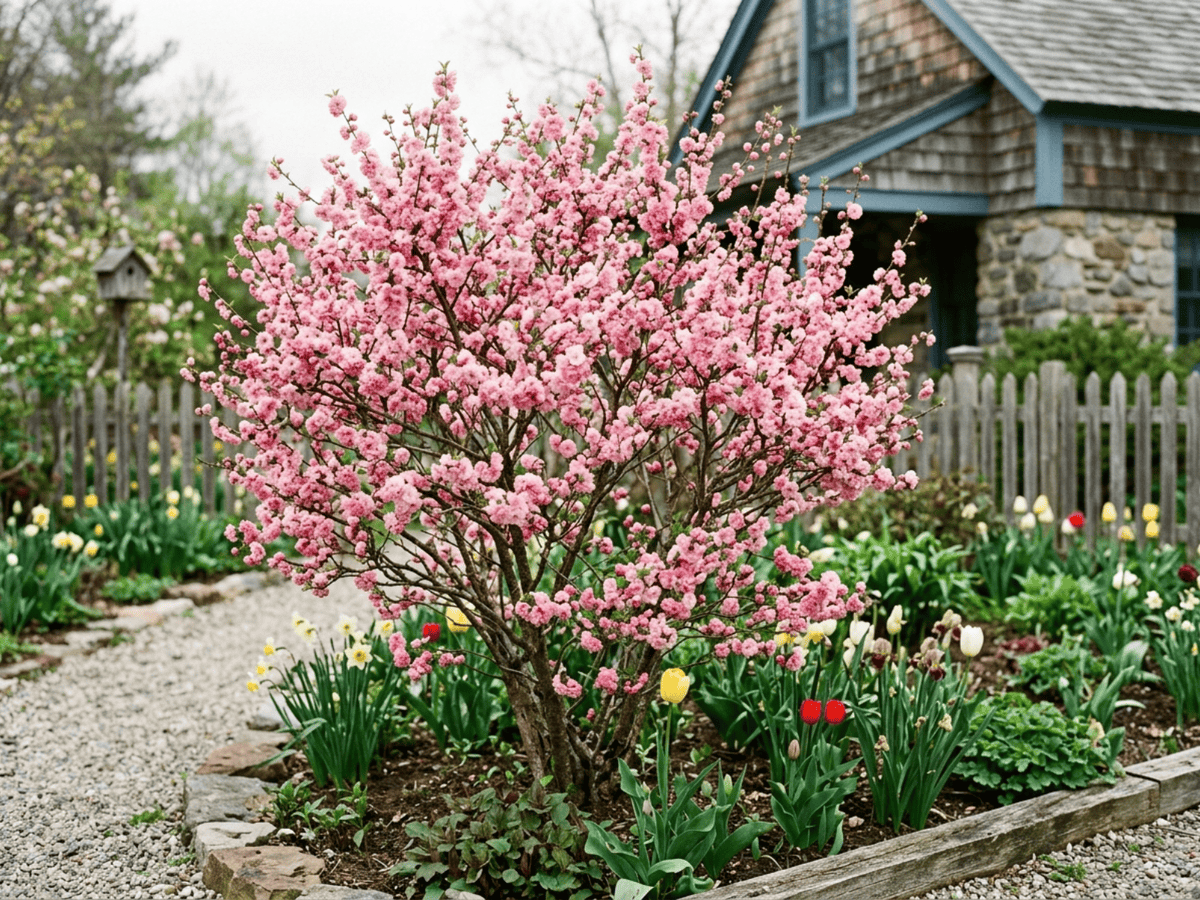
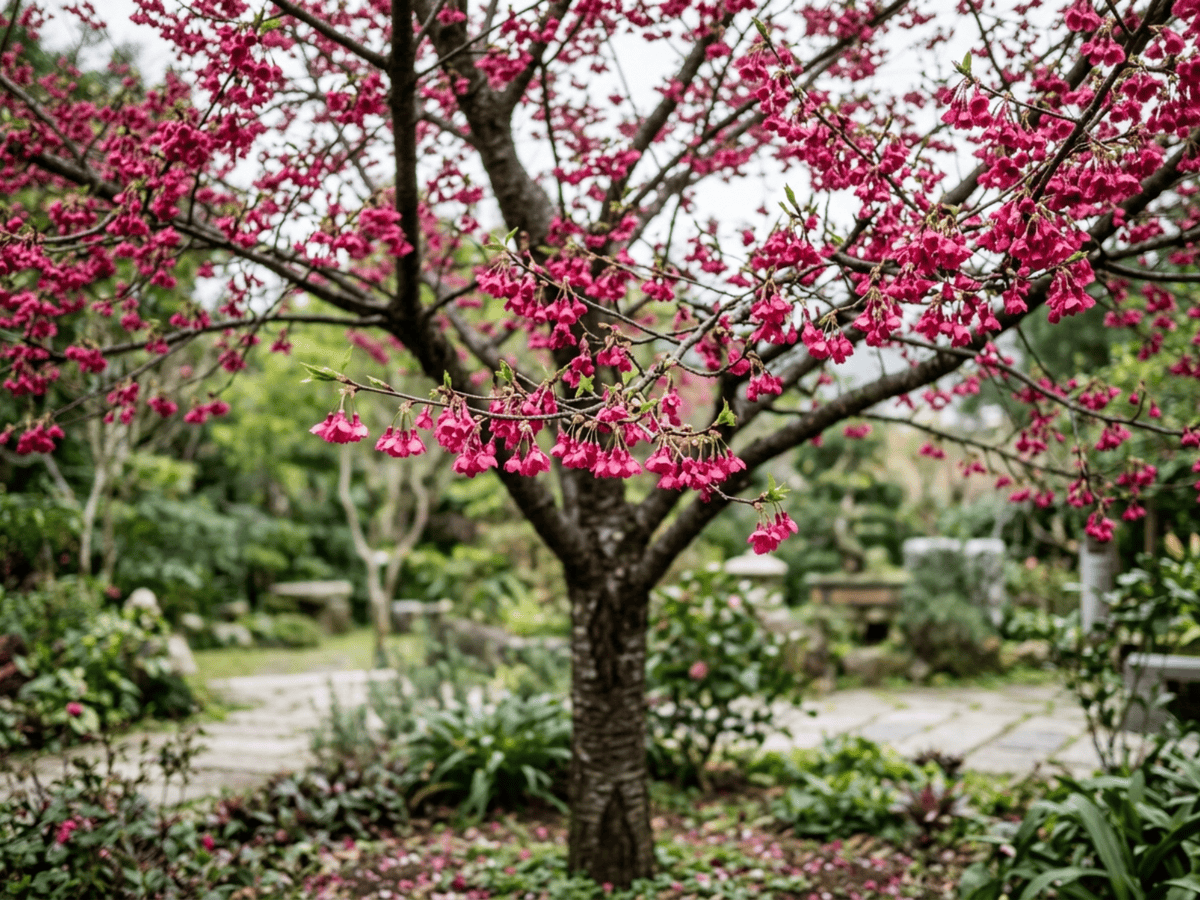
Flowering Almond is a charming small shrub or tree from China bearing dense clusters of fully double rose-pink flowers resembling tiny carnations along the bare branches in early spring. Growing 8-15 feet tall, it has been a cottage garden favorite in America for over a century. Hardy in USDA zones 3-7, it provides nostalgic old-fashioned spring charm and pairs beautifully with spring-flowering bulbs.
- Cold-hardy
- Compact
How to care for Flowering Almond
Watering
- Springevery 7 days
- Summerevery 5 days
- Fallevery 10 days
- Winterpause watering
Soil · Well-draining
- Top dressingPine bark mulch10%
- Main mixPotting soil + perlite 2:170%
- DrainageLECA / gravel20%
Never skip the drainage layer — standing water is the top cause of root rot.
FERTILIZER
Balanced Feed 14-14-14
An even feed covers all three needs at once, keeping leaves, roots and blooms moving together with nothing pushed out of balance.
- Nitrogen · Leaves
- Phosphorus · Roots + Blooms
- Potassium · Strength
- Springevery 60 days
- Summerevery 60 days
At a Glance
- NativeEast Asia
- Height8–15 ft (2.4–4.6 m)
- Spread8–12 ft (2.4–3.7 m)
- Flower colorPink
- Foliage colorGreen
- Fruit colorRed, Pink
- SoilLoamy, Well-drained
- LocationsYard
Bloom time
BLOOM CYCLE
Peak bloom
Apr–May
Double rose-pink flowers April to May
Fragrance
LIGHT FRAGRANCE
The flowers have a mild almond scent.
Toxicity
Humans Moderate · Pets Moderate
amygdalin and cyanogenic glycosides
Moderate
- Seed
- Leaf
- Ingestion
EXPOSURE Eating seeds and leaves.
EFFECT Cyanide poisoning if seeds eaten.
NOTE Documented concern for humans: Cyanide poisoning if seeds eaten.
Moderate
- Seed
- Leaf
- Ingestion
EXPOSURE Eating seeds and leaves.
EFFECT Cyanide poisoning.
NOTE ASPCA lists all Prunus as toxic to pets.
Moderate
- Seed
- Leaf
- Ingestion
EXPOSURE Eating seeds and leaves.
EFFECT Cyanide poisoning.
NOTE ASPCA lists all Prunus as toxic to pets.
Educational information, not medical or veterinary advice. If exposure is suspected, contact a doctor or veterinarian.
DISTRIBUTION


- Native
- Introduced
- East Asia
History
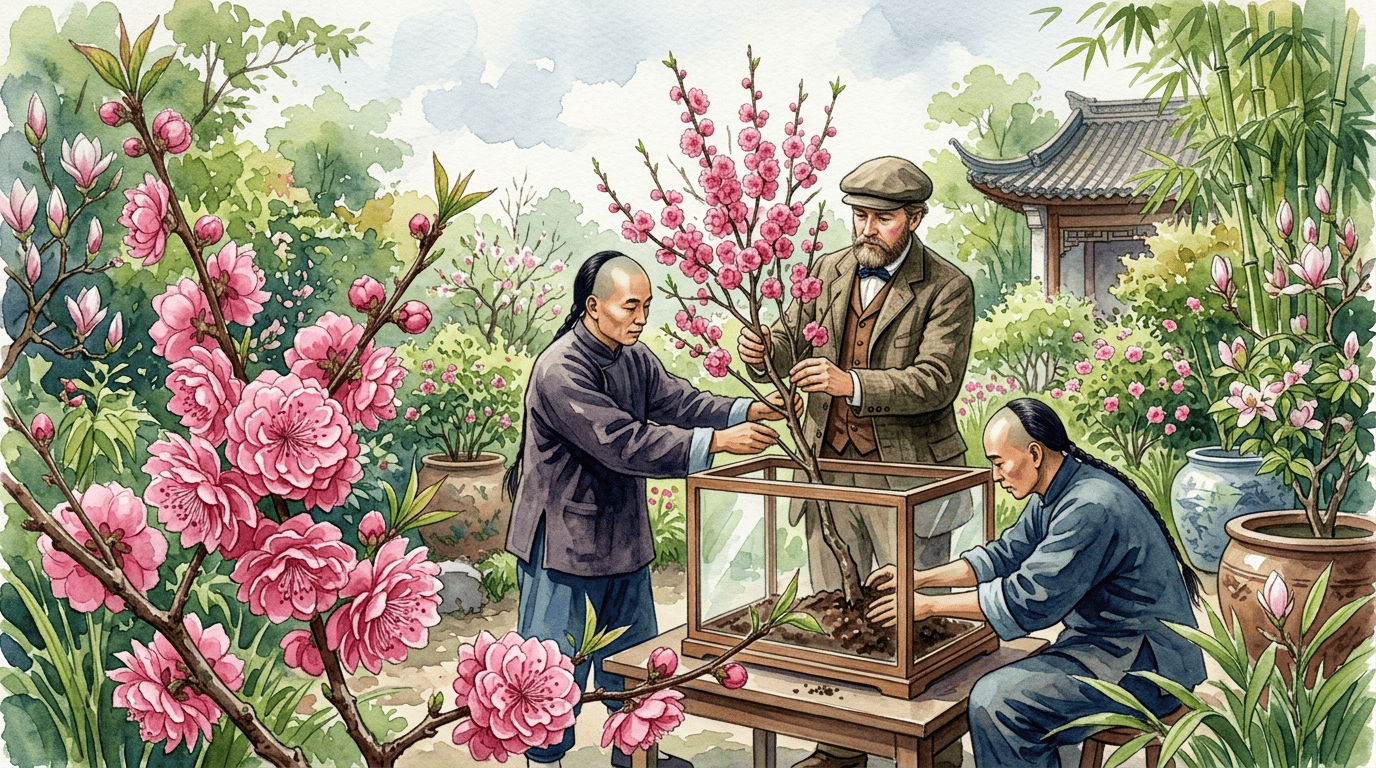
Prunus triloba is native to northern and central China, where it has been cultivated in gardens for centuries under the name yu ye mei (elm leaf plum). Scottish plant collector Robert Fortune introduced living plants to Europe in 1855 from gardens near Shanghai. French botanist André Lindley formally described it in 1857.
The species produces spectacular masses of densely double rose-pink 1.5-inch flowers covering bare branches in early spring before leaves emerge. The specific epithet triloba refers to the three-lobed shallow lobing at the leaf tips. It typically forms a multi-stemmed shrub 10-15 feet tall and is better treated as a shrub than tree.
Spring-to-fall the plant is unremarkable, but its 2-3 weeks of spring bloom justify its inclusion. It is prone to brown rot and requires careful siting for good air circulation. Native to China, introduced to Europe in 1855 and to America shortly after. The double-flowered form 'Multiplex' is the most common in cultivation.
Symbolism & meaning
What It Symbolizes
The Flowering Plum can symbolize hope, its early spring branches covered in soft pink rosette blooms long before most ornamentals have begun. Another layer is heritage, for it became a Victorian American cottage garden classic, planted along porches and side yards across the country. In old neighbourhoods today, a sudden cloud of pink against gray siding in March is often a flowering plum still keeping its quiet promise to a household that may have moved on.
- Hope — earliest spring bloomer
- Heritage — Victorian American cottage garden classic
Where the Name Comes From
'Triloba' means 'three-lobed', referring to the shallowly lobed leaves.
Uses & Fun Facts
- Early double-pink blooms feed emerging spring bees
- Branches forced indoors for early flowering display
Related plants
More Prunus plants



Plants with similar care
 Chinese AbeliaAbelia chinensis
 Fragrant AbeliaAbelia mosanensis
 Large-Flowered AbeliaAbelia uniflora
 Glossy AbeliaAbelia x grandiflora
Frequently asked questions
How often should I water Flowering Almond?
Water about every 7 days during the growing season, and always let excess water drain away.
How much light does Flowering Almond need?
Full sun: 6+ hrs direct. Watch the leaves — scorching or stretching means the light needs adjusting.
Is Flowering Almond toxic to cats or dogs?
Pets Moderate (Dogs Moderate · Cats Moderate) Educational information, not medical or veterinary advice. If exposure is suspected, contact a doctor or veterinarian.
Is Flowering Almond easy to grow?
Yes — it is considered an easy, beginner-friendly plant.
When does Flowering Almond bloom?
It typically blooms Apr–May in the Northern Hemisphere.
YardMate
Identify any plant in seconds
Snap a photo — YardMate names the plant, diagnoses problems, and reminds you when to water.
Download on the App Store