 YardMate


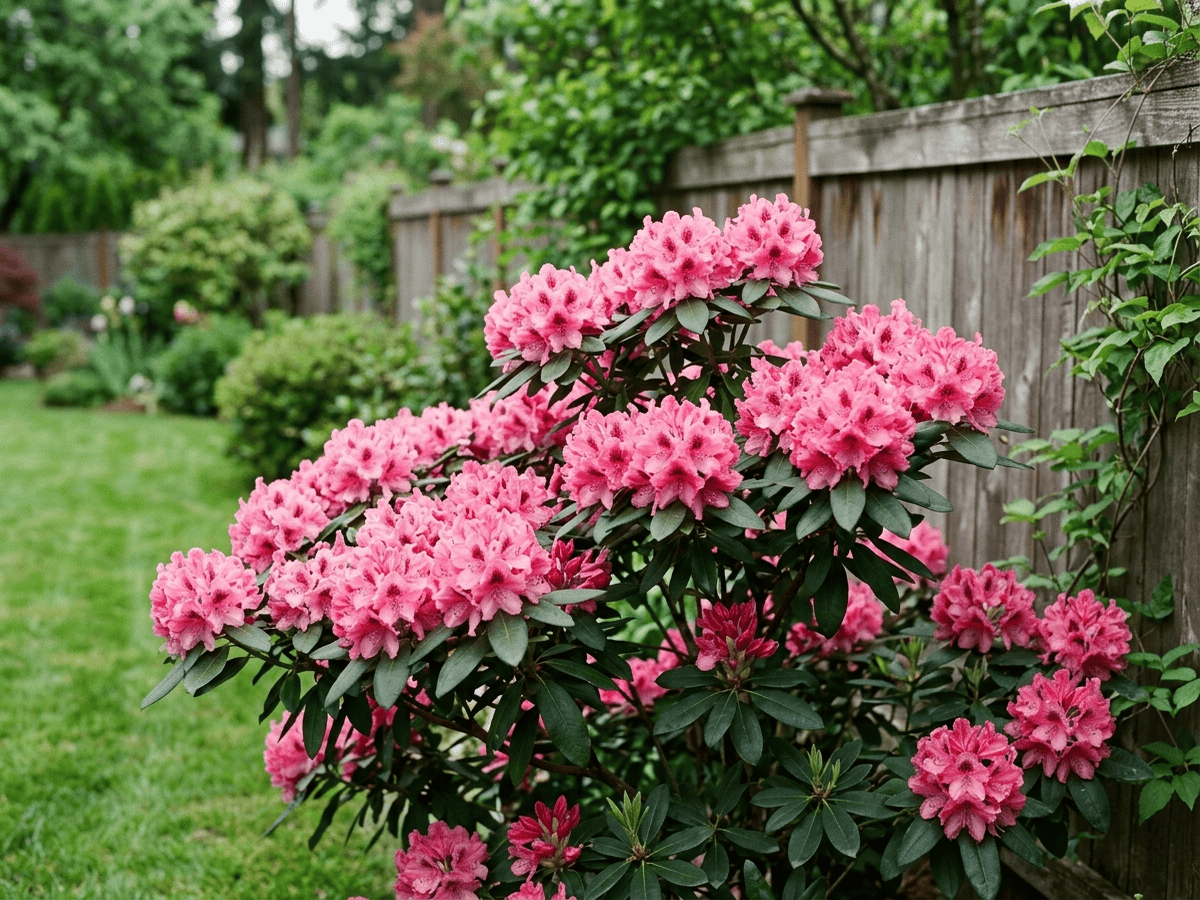
Pacific Rhododendron
Rhododendron macrophyllum
Medium · Some experienceAbout Pacific Rhododendron
Pacific Rhododendron is the state flower of Washington and a signature evergreen shrub of Pacific Northwest forests, growing from British Columbia south through coastal northern California. Reaching 8 to 25 feet tall, it bears spectacular trusses of pink to rose-purple bell-shaped flowers in late spring. Forming the lush understory of redwood, fir, and hemlock forests, its leathery dark-green leaves and dramatic spring blooms make it one of the most beloved native flowering shrubs of the West Coast.
- Deer-resistant
- Evergreen
- Native
How to care for Pacific Rhododendron
Watering
- Springevery 5 days
- Summerevery 4 days
- Fallevery 10 days
- Winterevery 14 days
Soil · Acidic · pH 4.5–6
- Top dressingPine needle mulch10%
- Main mixAcid-lover mix + peat 3:175%
- DrainageGravel15%
Never add lime or wood ash — it cancels out the acidity.
FERTILIZER
Acid-Loving Feed 4-3-4
One bag does both jobs. An acid feed carries the usual nitrogen, phosphorus and potassium, plus the sulfur and iron that keep the soil sour enough for the roots to take them up at all.
- Nitrogen · Leaves
- Phosphorus · Roots + Blooms
- Potassium · Strength
- Springevery 60 days
- Summerevery 90 days
At a Glance
- NativeNorth America
- Height8–15 ft (2.4–4.6 m)
- Spread6–12 ft (1.8–3.7 m)
- Flower colorPink, Purple, White
- Foliage colorGreen
- SoilLoamy, Moisture-retentive, Acidic
- LocationsYard
Bloom time
BLOOM CYCLE
Peak bloom
May–Jun
Pink to rose-purple flower trusses May to June
Fragrance
LIGHT FRAGRANCE
Flowers may have a light sweet scent.
Toxicity
Humans Toxic · Pets Toxic
grayanotoxins
Toxic
- Leaf
- Flower
- Seed
- Ingestion
EXPOSURE Eating leaves, flowers, and seeds.
EFFECT Grayanotoxins cause salivation, vomiting, bradycardia, hypotension, seizures.
NOTE Documented concern for humans: Grayanotoxins cause salivation, vomiting, bradycardia, hypotension, seizures.
Toxic
- Leaf
- Flower
- Seed
- Ingestion
EXPOSURE Eating leaves, flowers, and seeds.
EFFECT ASPCA: vomiting, diarrhea, weakness, cardiac arrhythmia, potentially fatal.
NOTE ASPCA-listed Rhododendron; all parts toxic including nectar and honey.
Toxic
- Leaf
- Flower
- Seed
- Ingestion
EXPOSURE Eating leaves, flowers, and seeds.
EFFECT ASPCA: vomiting, diarrhea, weakness, cardiac arrhythmia, potentially fatal.
NOTE ASPCA-listed Rhododendron; all parts toxic including nectar and honey.
Educational information, not medical or veterinary advice. If exposure is suspected, contact a doctor or veterinarian.
DISTRIBUTION


- Native
- North America
History

Rhododendron macrophyllum, the Pacific rhododendron or California rosebay, is a broadleaf evergreen shrub native to the Pacific coast of North America from southwest British Columbia through the Cascades and Coast Ranges to central California. Scottish surgeon-naturalist Archibald Menzies collected specimens during the 1792 Vancouver Expedition, and David Douglas later observed it during his Columbia River botanizing in the 1820s. In 1892 Washington State women, voting via a nonbinding referendum in preparation for the 1893 Chicago World's Fair, selected the species as the state flower; the legislature formally confirmed this in 1959.
The pink bell-shaped flowers cluster spectacularly in late spring along roadsides in Olympic National Park and coastal redwood forests, and the plant remains a conservation priority in Pacific forest ecosystems. Designated Washington state flower in 1892 by women voters, predating the state legislature's official confirmation in 1959.
First scientifically described from specimens collected by Scottish botanist Archibald Menzies on the 1792 Vancouver Expedition along the Pacific coast.
Symbolism & meaning
What It Symbolizes
Pacific Rhododendron is Pacific pride embodied, the official state flower of Washington since 1892, blooming in great rosy clouds beneath old-growth Douglas-fir. Its forest grandeur defines the understory of the rain-soaked Northwest, signaling deep, settled woods. To meet it in spring is to be welcomed into the soft, mossy heart of the Pacific forest.
- Pacific pride — Washington state flower since 1892
- Forest grandeur — signature understory of Pacific old-growth forests
Where the Name Comes From
'Rhododendron' is Greek for 'rose tree'; 'macrophyllum' means large-leaved.
Uses & Fun Facts
- Pacific Northwest evergreen shrub bears spectacular pink flower trusses
- Washington state flower as signature woodland garden focal point
- Dense evergreen cover shelters birds in shaded native landscapes
Related plants
More Rhododendron plants
 Smooth AzaleaRhododendron arborescens
 Augustine's RhododendronRhododendron augustinii
 Orange AzaleaRhododendron austrinum
 Mountain AzaleaRhododendron canescens
Plants with similar care
 Japanese MapleAcer palmatum
 Azure MonkshoodAconitum carmichaelii
 Florida HobblebushAgarista populifolia
 Shell GingerAlpinia zerumbet
Frequently asked questions
How often should I water Pacific Rhododendron?
In summer, water about every 4 days; in winter, about every 14 days. Adjust for heat, pot size and drainage.
How much light does Pacific Rhododendron need?
Part shade: 2–4 hrs direct. Watch the leaves — scorching or stretching means the light needs adjusting.
Is Pacific Rhododendron toxic to cats or dogs?
Pets Toxic (Dogs Toxic · Cats Toxic) Educational information, not medical or veterinary advice. If exposure is suspected, contact a doctor or veterinarian.
Is Pacific Rhododendron easy to grow?
It is moderately demanding: a good choice once you have a little experience.
When does Pacific Rhododendron bloom?
It typically blooms May–Jun in the Northern Hemisphere.
YardMate
Identify any plant in seconds
Snap a photo — YardMate names the plant, diagnoses problems, and reminds you when to water.
Download on the App Store