 YardMate

Giant Blue Sage
Salvia azurea
Easy · Beginner friendlyAbout Giant Blue Sage
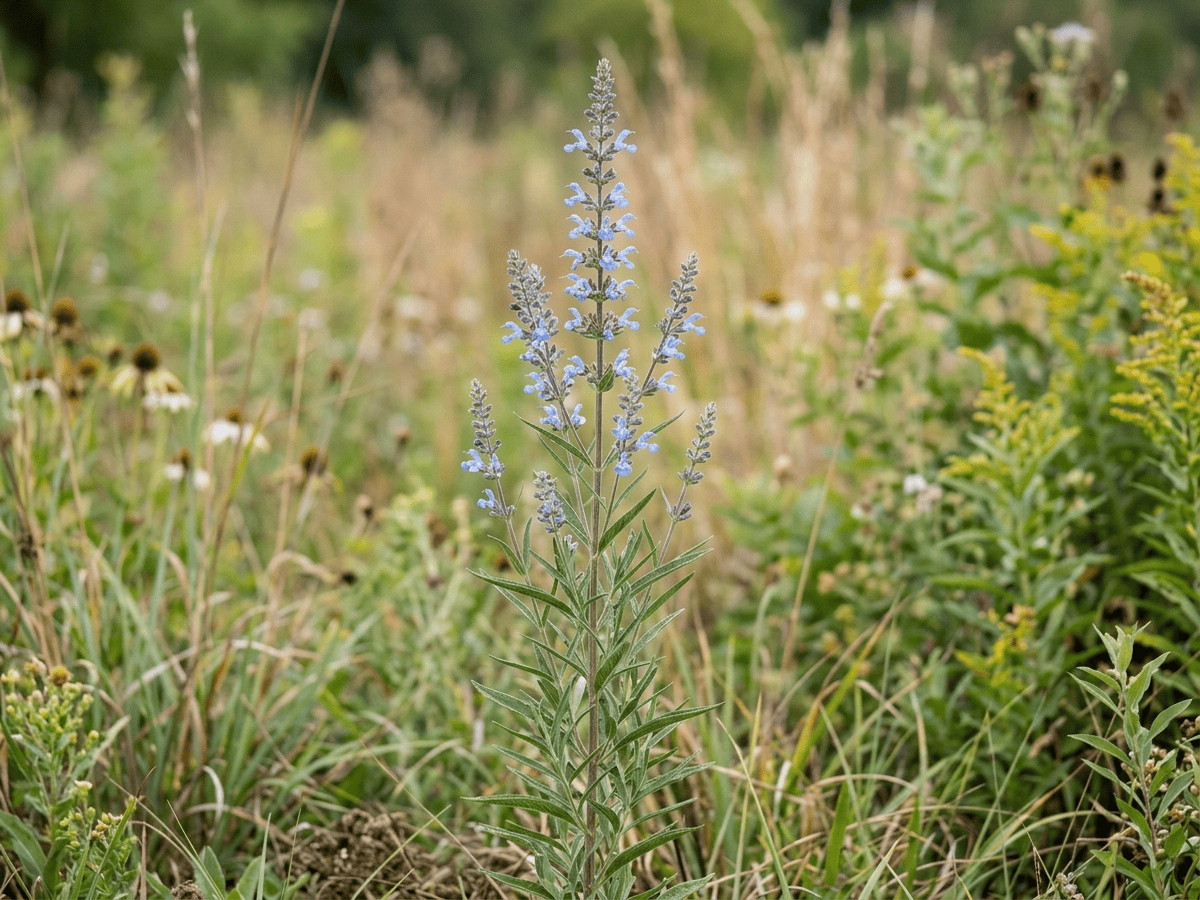
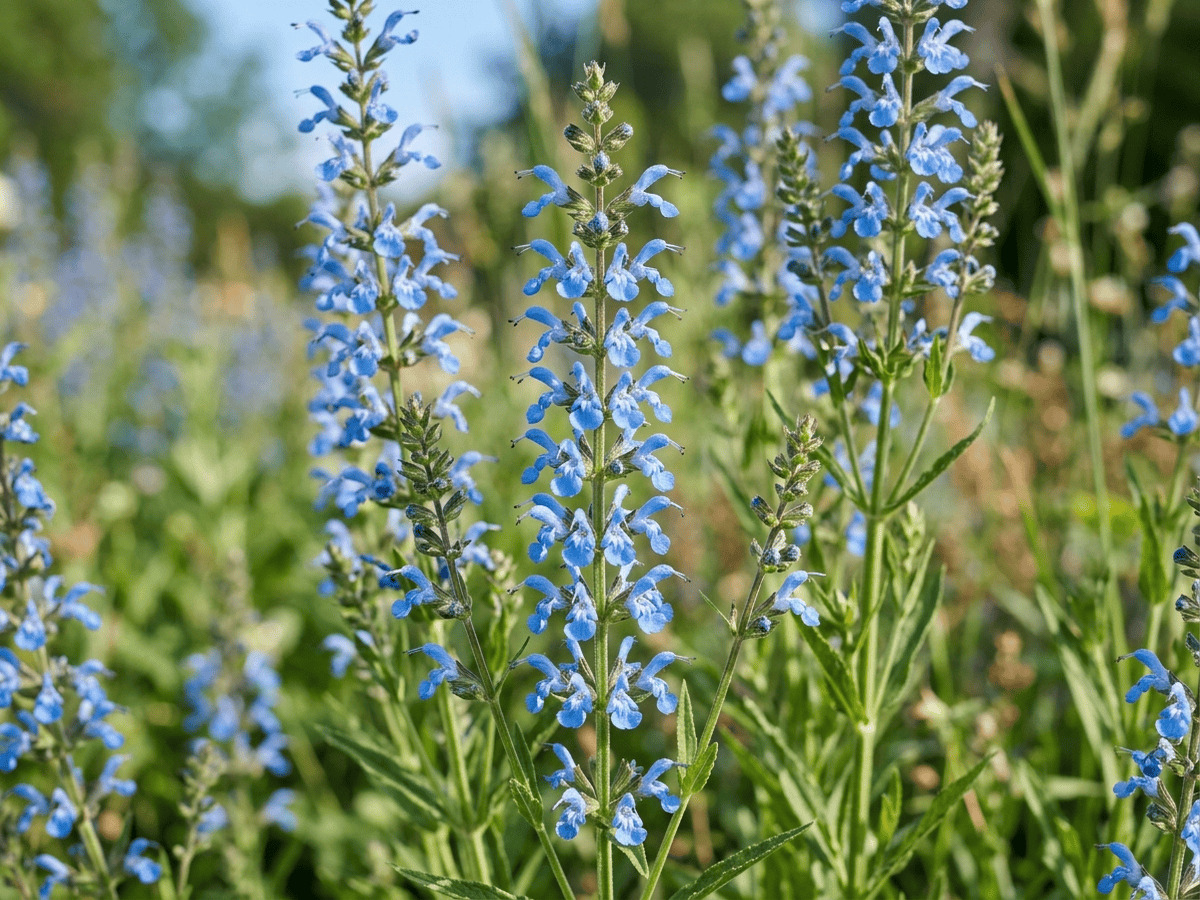
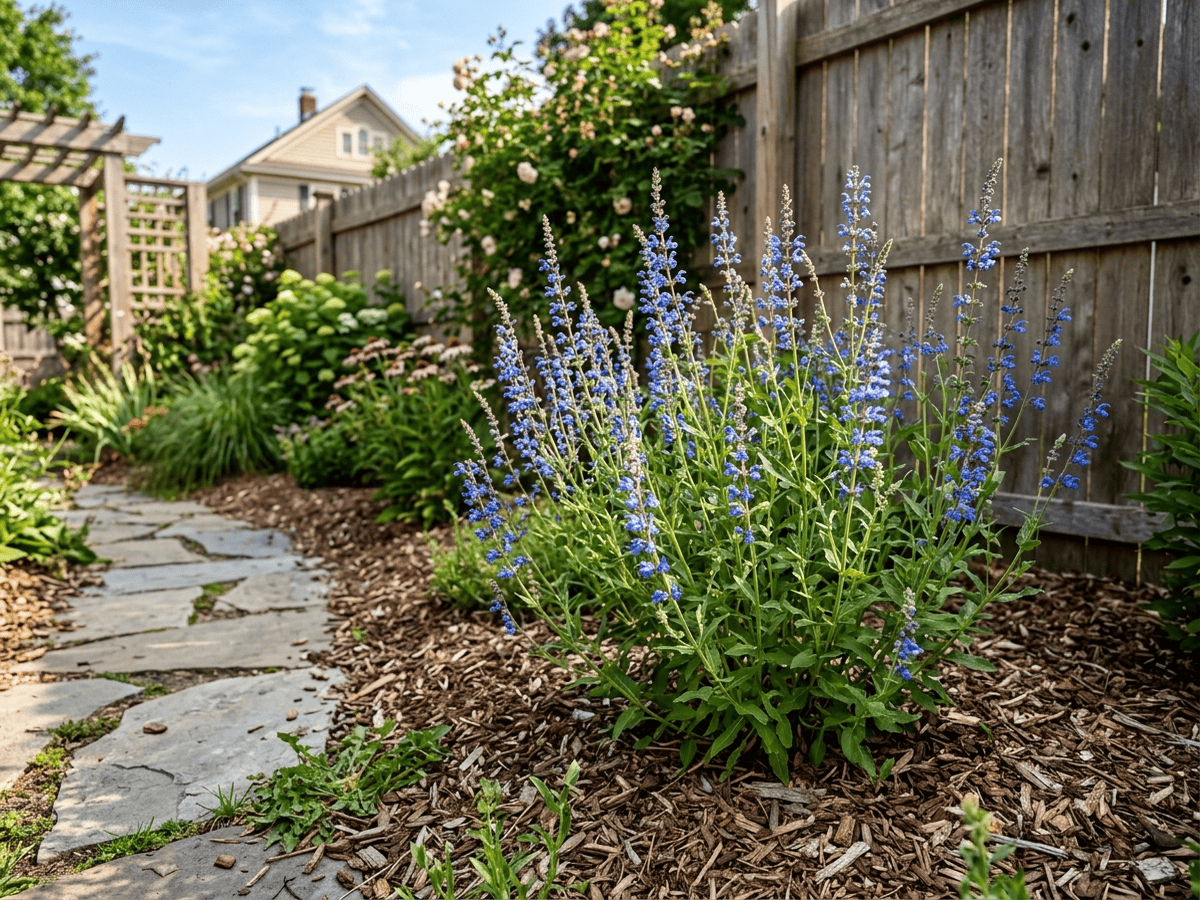
Pitcher Sage, also called Azure Blue Sage or Prairie Sage, is a tall perennial native to the central and southern Great Plains from Nebraska south through Texas. Growing 3 to 5 feet tall on slender stems with narrow gray-green leaves, it produces spires of true sky-blue flowers in late summer and fall, providing rare pure blue color when most other natives have faded. Among the most striking blue-flowered wildflowers of North American prairies.
- Drought-tolerant
- Deer-resistant
- Native
- Pollinator-friendly
How to care for Giant Blue Sage
Watering
- Springevery 10 days
- Summerevery 7 days
- Fallevery 14 days
- Winterpause watering
Soil · Well-draining
- Top dressingPine bark mulch10%
- Main mixPotting soil + perlite 2:170%
- DrainageLECA / gravel20%
Never skip the drainage layer — standing water is the top cause of root rot.
FERTILIZER
- Springevery 60 days
At a Glance
- NativeNorth America
- Height3–5 ft (0.9–1.5 m)
- Spread2–3 ft (0.6–0.9 m)
- Flower colorBlue
- Foliage colorGreen
- SoilLoamy, Well-drained
- LocationsYard
Bloom time
BLOOM CYCLE
Peak bloom
Aug–Oct
True sky-blue flower spires August to October
Fragrance
MODERATE FRAGRANCE
The foliage has a sage-like aromatic foliage scent.
Toxicity
No toxicity has been reported for this plant. Still, it is wise to keep pets from chewing on any houseplant.
Educational information, not medical or veterinary advice. If exposure is suspected, contact a doctor or veterinarian.
DISTRIBUTION


- Native
- Introduced
- North America
History
Salvia azurea, commonly called prairie sage, azure blue sage, or pitcher sage, is a tall herbaceous perennial native to the central and southern US Great Plains from Minnesota and Nebraska through Texas, with varieties extending into the southeastern United States. French botanists Michaux and Lamarck described varieties of the species around 1800. The var. grandiflora, often called pitcher sage, is particularly striking, bearing long spikes of pure sky-blue flowers from late summer into autumn atop stems reaching two meters.
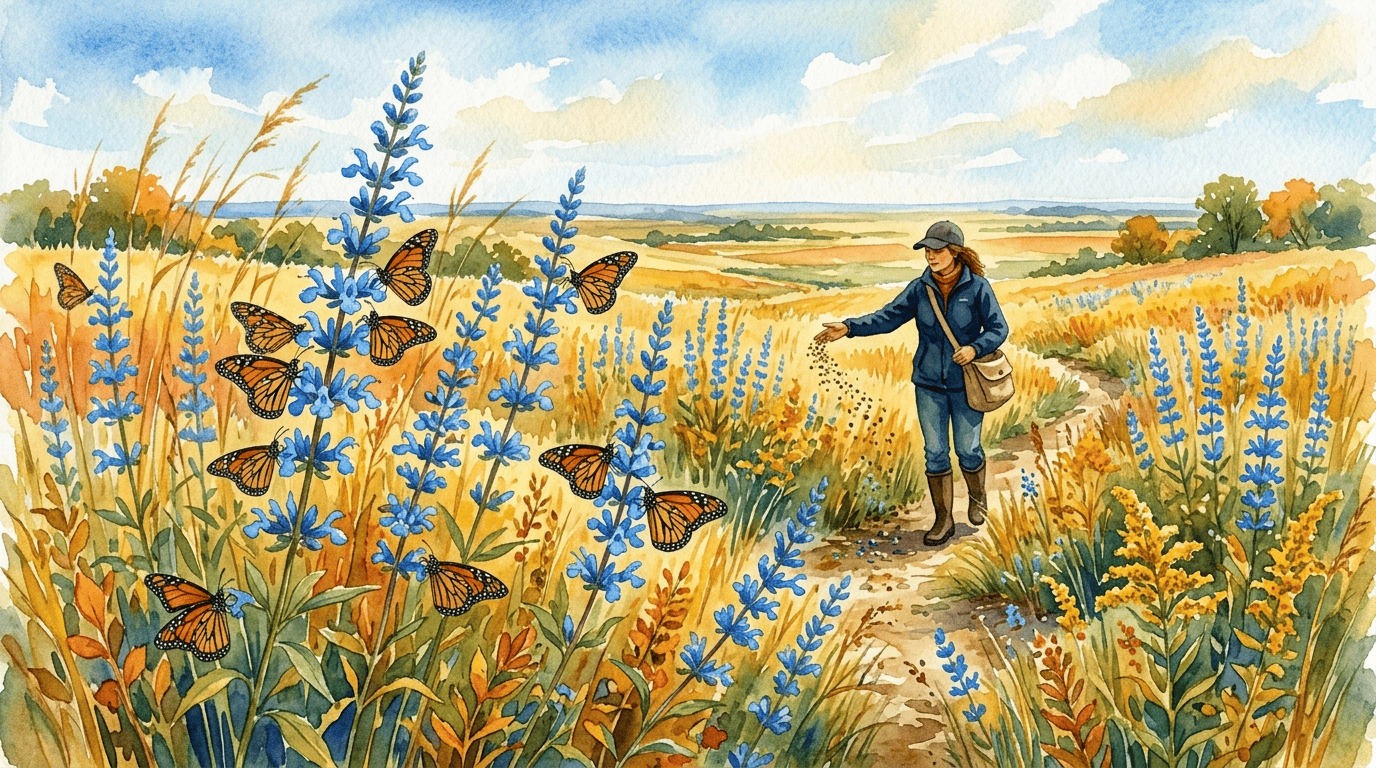
The blooms attract native bees, hummingbirds, and migrating monarchs. Indigenous peoples of the Great Plains used related Salvia species medicinally.
Today prairie sage is a cornerstone of native prairie restoration plantings across the heartland and a favorite autumn perennial in pollinator gardens. A signature plant of Great Plains tallgrass prairies, providing critical late-season nectar for migrating monarch butterflies on their way to Mexico. Famous as one of the few native plants delivering true pure-blue flower color, increasingly used in pollinator-focused garden designs.
Symbolism & meaning
What It Symbolizes
Giant Blue Sage is a ribbon of pure sky drawn across the late prairie, its true-blue flowers a rare and precious shade in the native flora. Each fall it becomes monarch fuel, its nectar carrying butterflies south on their long migration. In its blue spires lies one of the great late-summer collaborations between flower, insect, and continental wind.
- Pure sky — rare true-blue color in native flora
- Monarch fuel — supports monarch fall migration
Where the Name Comes From
'Salvia' comes from Latin 'salvere' meaning to be well or to save; 'azurea' means sky-blue, for the flower color.
Uses & Fun Facts
- Sky-blue late-season flowers feed bees and migrating monarchs
- Tall prairie native adds rare true-blue to autumn borders
- Anchor species for Great Plains restoration and pollinator strips
Related plants
More Salvia plants
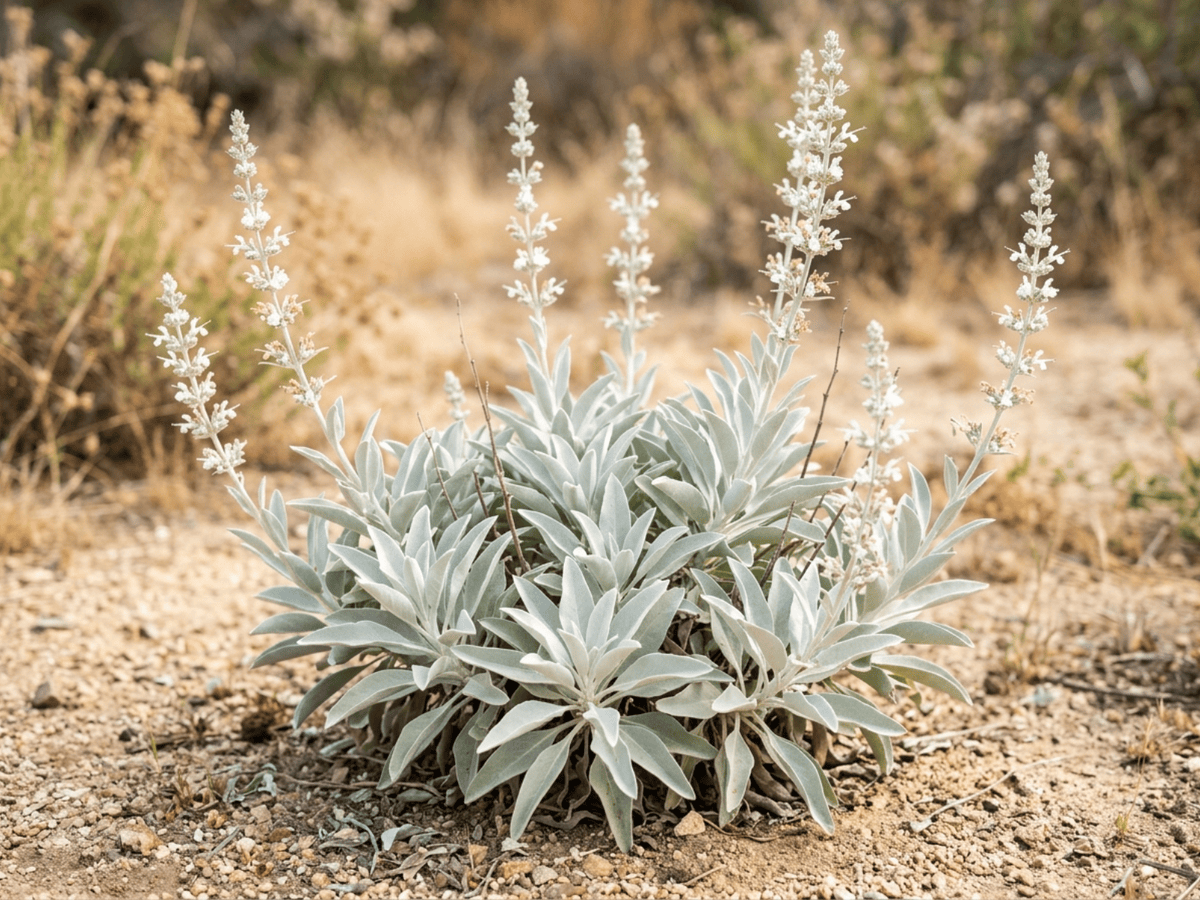 White SageSalvia apiana
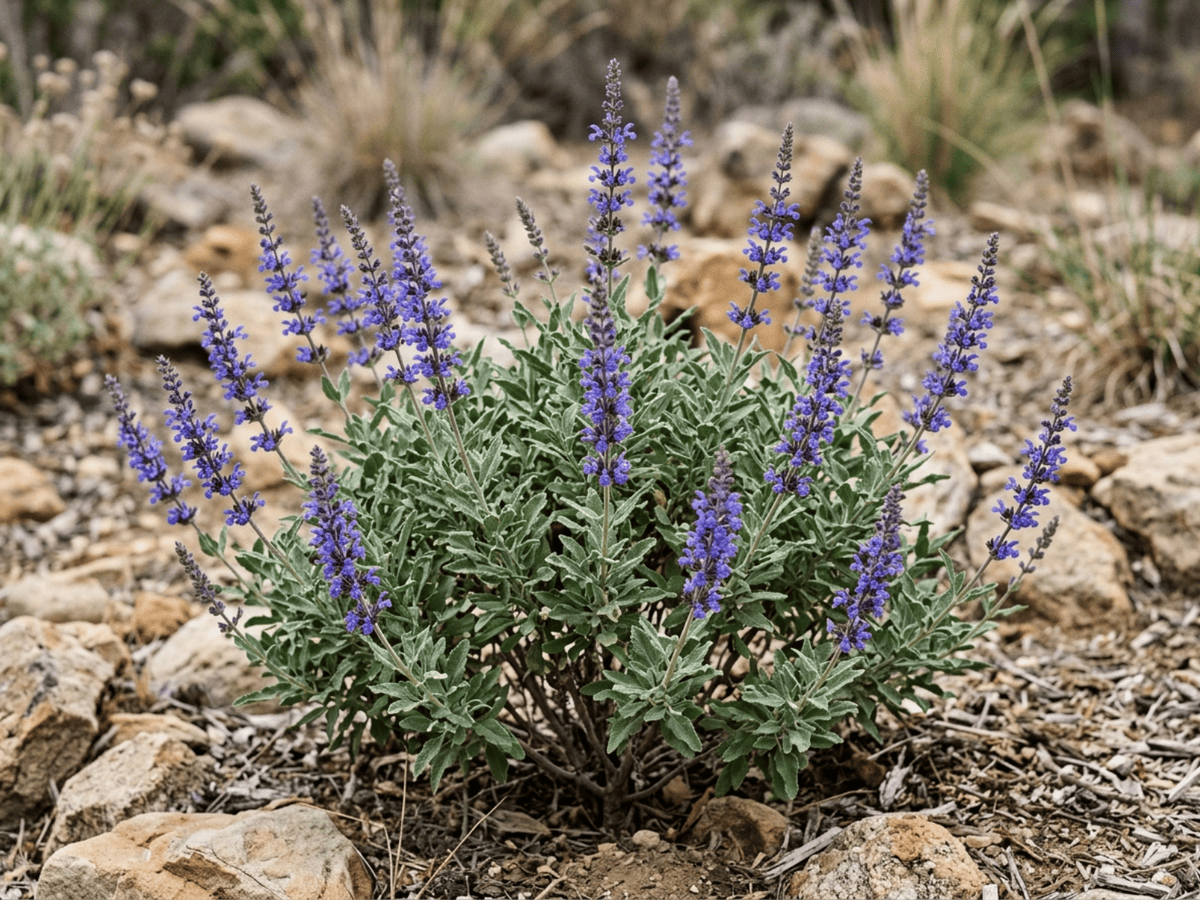 Cleveland SageSalvia clevelandii
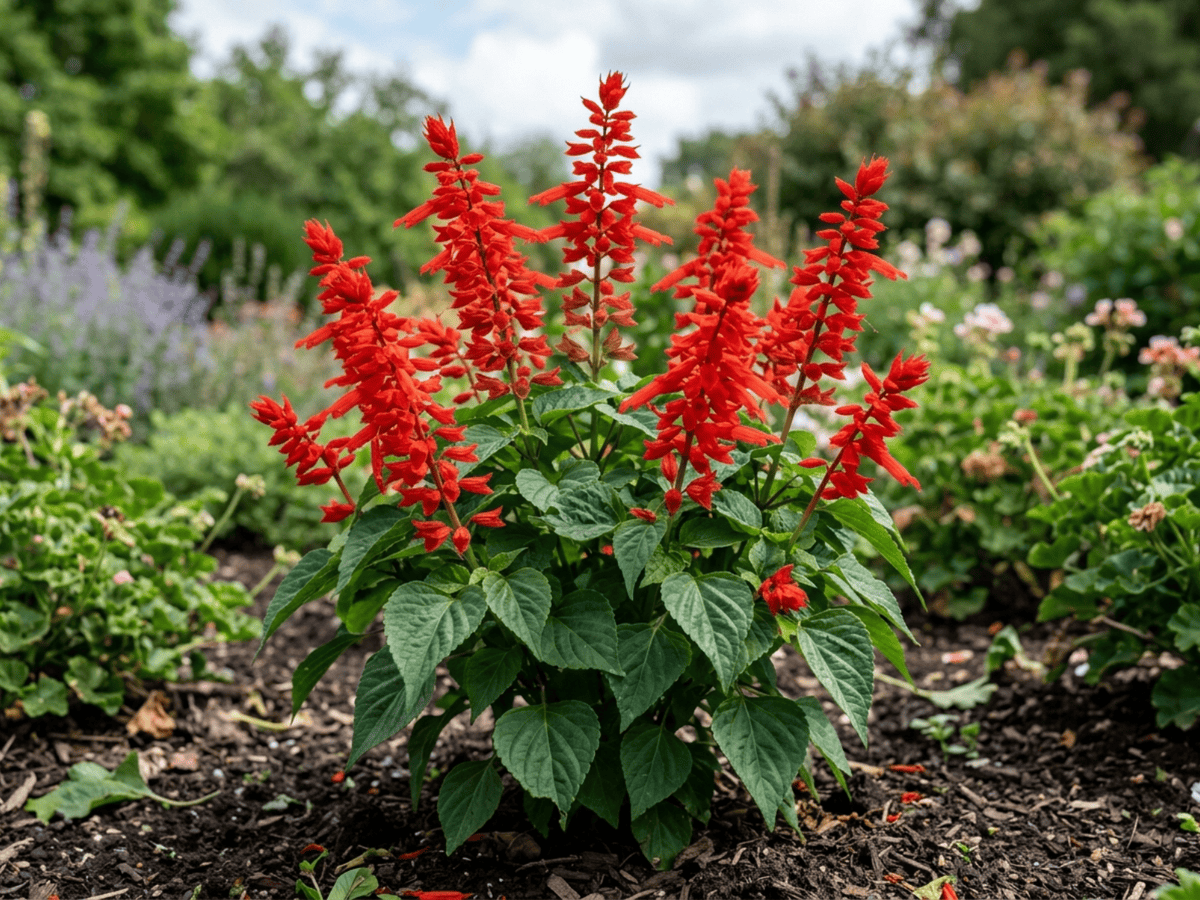 Tropical SageSalvia coccinea
 Pineapple SageSalvia elegans
Plants with similar care
 Chinese AbeliaAbelia chinensis
 Fragrant AbeliaAbelia mosanensis
 Large-Flowered AbeliaAbelia uniflora
 Glossy AbeliaAbelia x grandiflora
Frequently asked questions
How often should I water Giant Blue Sage?
Water about every 10 days during the growing season, and always let excess water drain away.
How much light does Giant Blue Sage need?
Full sun: 6+ hrs direct. Watch the leaves — scorching or stretching means the light needs adjusting.
Is Giant Blue Sage toxic to cats or dogs?
No toxicity has been reported for this plant. Still, it is wise to keep pets from chewing on any houseplant. Educational information, not medical or veterinary advice. If exposure is suspected, contact a doctor or veterinarian.
Is Giant Blue Sage easy to grow?
Yes — it is considered an easy, beginner-friendly plant.
When does Giant Blue Sage bloom?
It typically blooms Aug–Oct in the Northern Hemisphere.
YardMate
Identify any plant in seconds
Snap a photo — YardMate names the plant, diagnoses problems, and reminds you when to water.
Download on the App Store