 YardMate
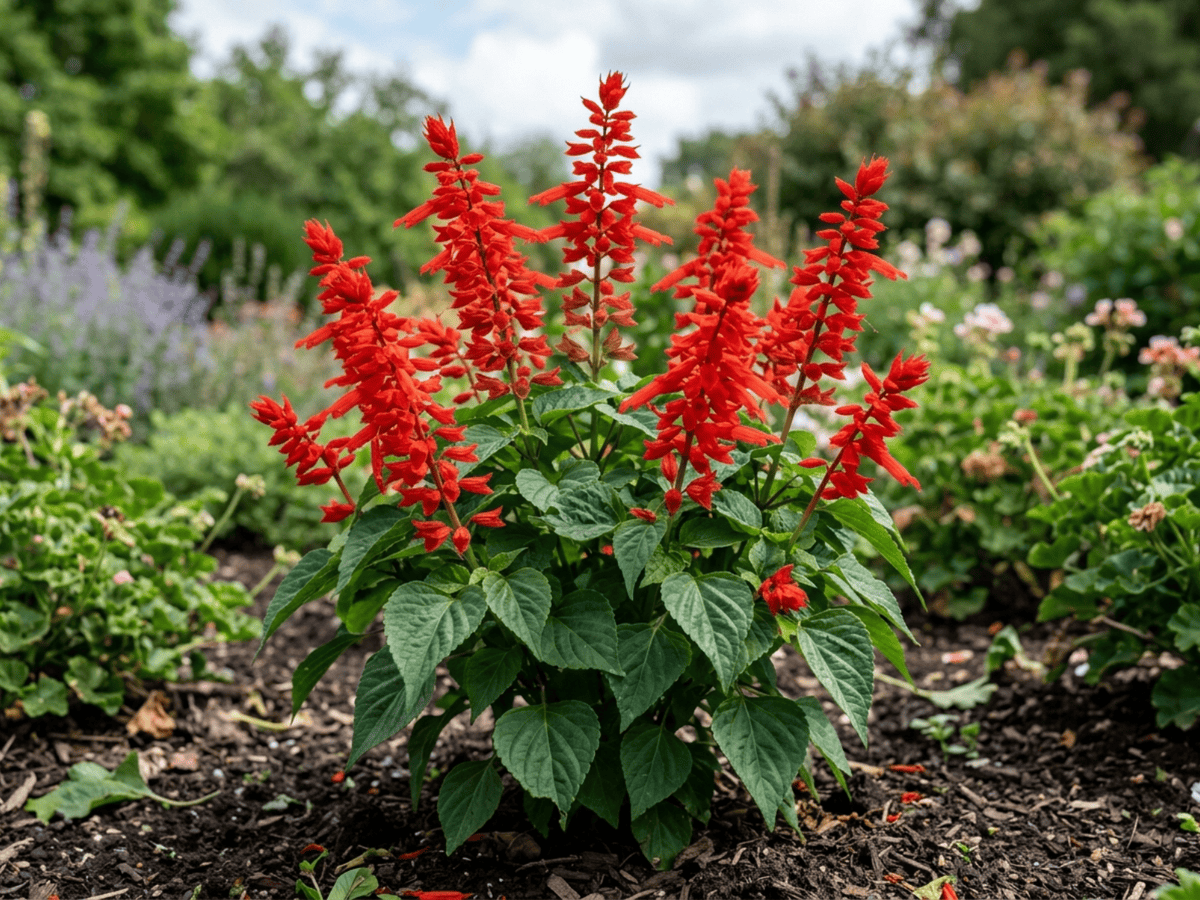


Tropical Sage
Salvia coccinea
Easy · Beginner friendlyAbout Tropical Sage
Scarlet Sage is a warm-season annual (perennial in zones 8–11) native to the southeastern United States, Mexico, and Central America. It forms upright plants 18–36 inches tall with tubular scarlet, pink, or white flowers borne on slender spikes from early summer to frost. A legendary hummingbird magnet, it self-seeds freely in Southern and Gulf Coast gardens. Cultivars such as 'Lady in Red' (an All-America Selection) and 'Summer Jewel' have earned AAS recognition for continuous bloom and heat tolerance.
- Drought-tolerant
- Heat-tolerant
- Native
- Wildlife-friendly
How to care for Tropical Sage
Watering
- Springevery 5 days
- Summerevery 4 days
- Fallevery 7 days
- Winterevery 14 days
Soil · Well-draining
- Top dressingPine bark mulch10%
- Main mixPotting soil + perlite 2:170%
- DrainageLECA / gravel20%
Never skip the drainage layer — standing water is the top cause of root rot.
FERTILIZER
Balanced Feed 14-14-14
An even feed covers all three needs at once, keeping leaves, roots and blooms moving together with nothing pushed out of balance.
- Nitrogen · Leaves
- Phosphorus · Roots + Blooms
- Potassium · Strength
- Springevery 21 days
- Summerevery 21 days
At a Glance
- NativeNorth America, Central America, South America
- Height1–3 ft (0.3–0.9 m)
- Spread1–2 ft (0.3–0.6 m)
- Flower colorRed, Pink, Coral, White
- Foliage colorGreen
- SoilLoamy, Well-drained
- LocationsYard · Balcony
Bloom time
BLOOM CYCLE
Peak bloom
Jun–Nov
Scarlet spikes early summer to frost
Fragrance
LIGHT FRAGRANCE
Mild sage scent from crushed leaves.
Toxicity
No toxicity has been reported for this plant. Still, it is wise to keep pets from chewing on any houseplant.
Educational information, not medical or veterinary advice. If exposure is suspected, contact a doctor or veterinarian.
DISTRIBUTION

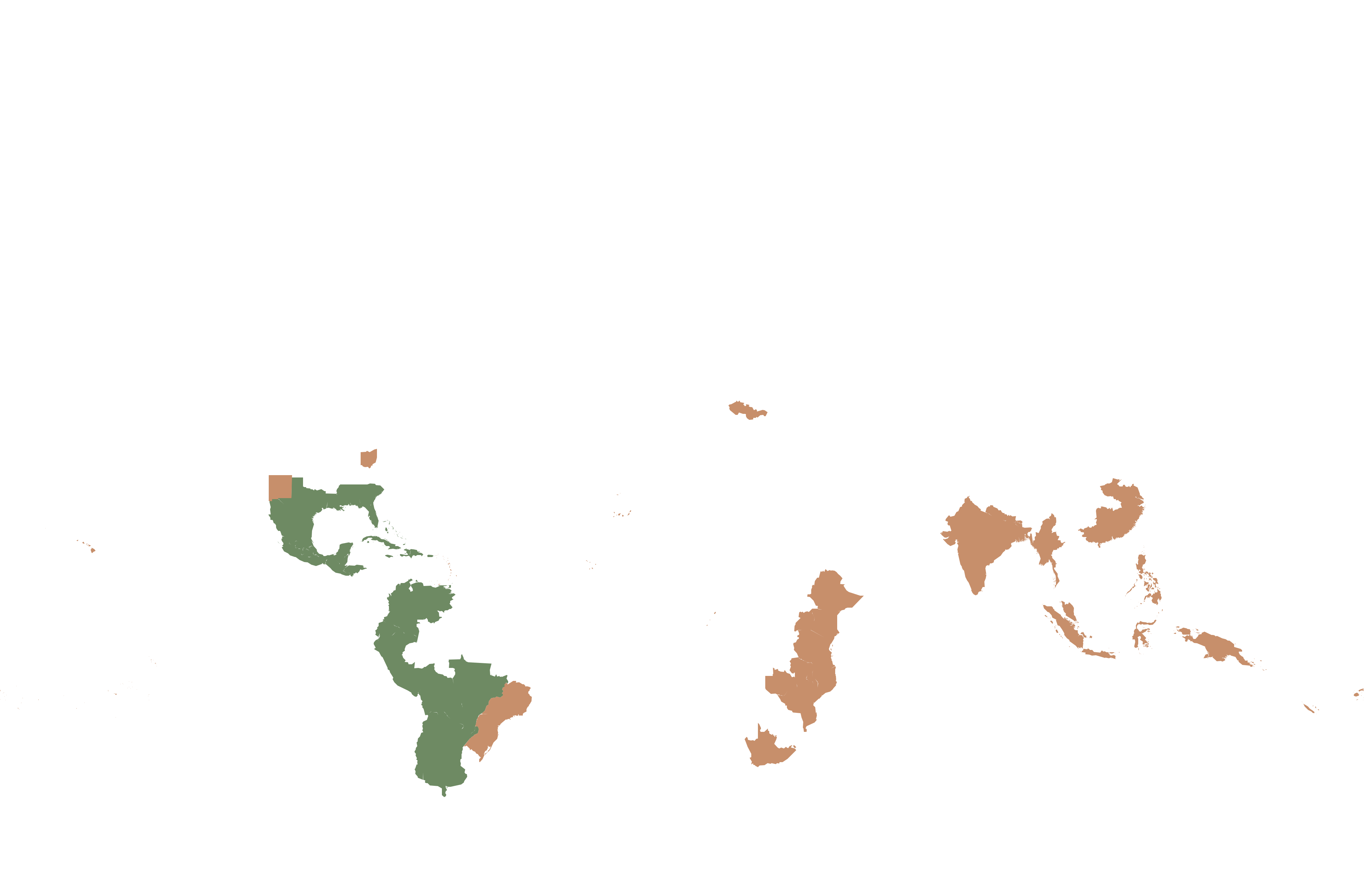
- Native
- Introduced
- North America
- Central America
- South America
History

Salvia coccinea is native to a wide range across the Americas — the American Southeast (from South Carolina south through Florida and west through the Gulf states), Mexico, Central America, and extensively into northern South America as far south as Peru and Brazil. It grows in open woodlands, grassland edges, disturbed ground, and roadside habitats. The species is a short-lived perennial in frost-free climates but grows and flowers rapidly from seed as a summer annual throughout most temperate gardening zones — making it one of the few tropical-origin salvias that functions well in the northern summer garden as a seed-grown annual.
The plant produces upright 40-80 cm stems with ovate medium-green leaves and, from summer through autumn (or year-round in frost-free climates), produces nearly-continuous spires of small tubular two-lipped bright-scarlet flowers 2-3 cm long. The bright-red tubular flowers are particularly attractive to ruby-throated and other hummingbirds, and to butterflies and bees, making the species one of the most valuable hummingbird-garden annuals in eastern North America — widely planted specifically to attract hummingbirds for summer and fall migration support.
Modern cultivars have extended the color range: "Coral Nymph" (two-toned coral-pink and white), "Snow Nymph" (white), "Lady in Red" (extra-vigorous scarlet), and "Summer Jewel" series (All-America Selections winner, introduced in red, pink, white, and lavender).
Symbolism & meaning
What It Symbolizes
Tropical Sage is red invitation. Its small scarlet flowers keep appearing through warmth and rain, drawing hummingbirds with a directness that needs no ornament. The plant's meaning is cheerful persistence: not rare, not difficult, but vivid enough to make a border feel visited.
- Energy — fiery red evokes vitality and passion
- Healing — Salvia genus historically associated with medicine
Where the Name Comes From
'Tropical sage' points to this Salvia's warm-climate habit and bright scarlet flowers. Salvia comes from Latin 'salvere', to be well; coccinea means scarlet.
Uses & Fun Facts
- Tubular scarlet flowers heavily worked by ruby-throated hummingbirds
- Long-blooming Texas native sage for hot sunny borders
Related plants
More Salvia plants
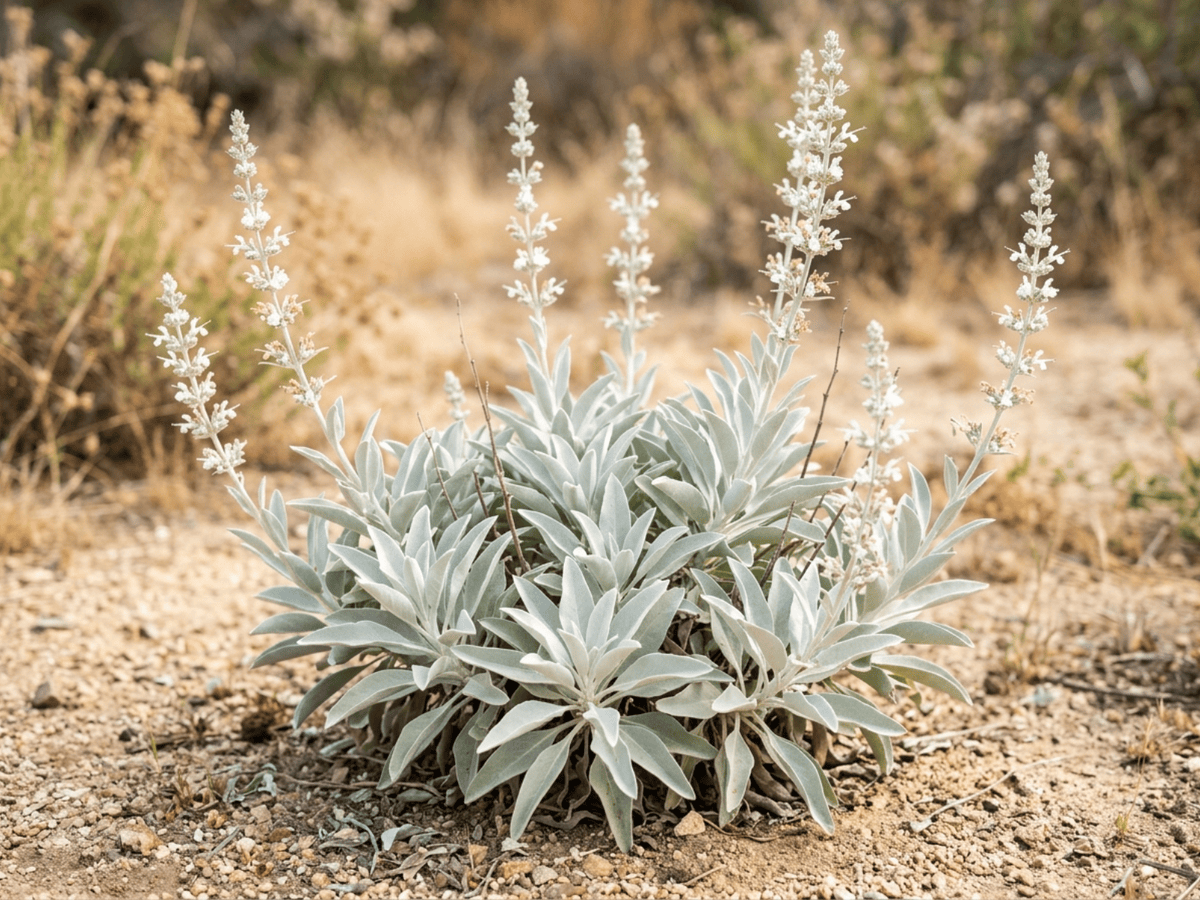 White SageSalvia apiana
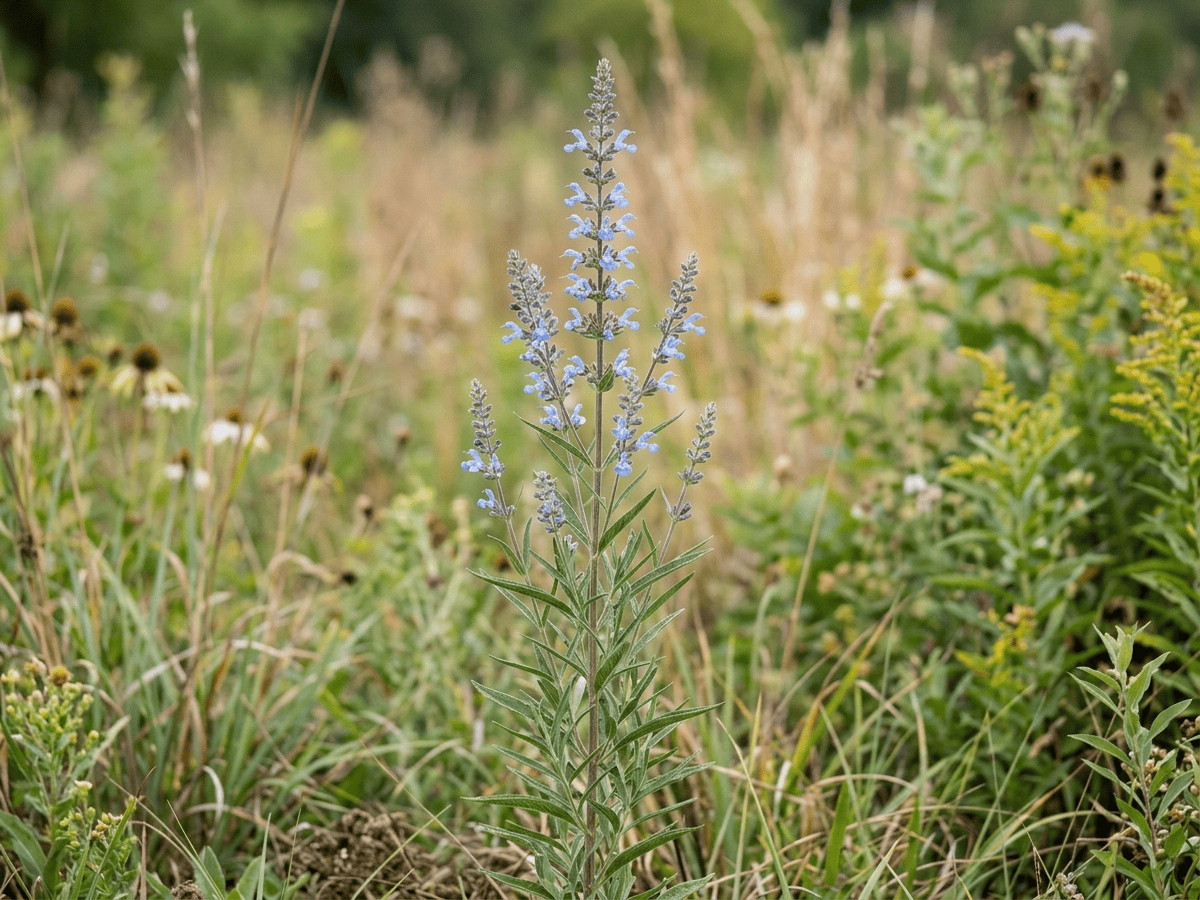 Giant Blue SageSalvia azurea
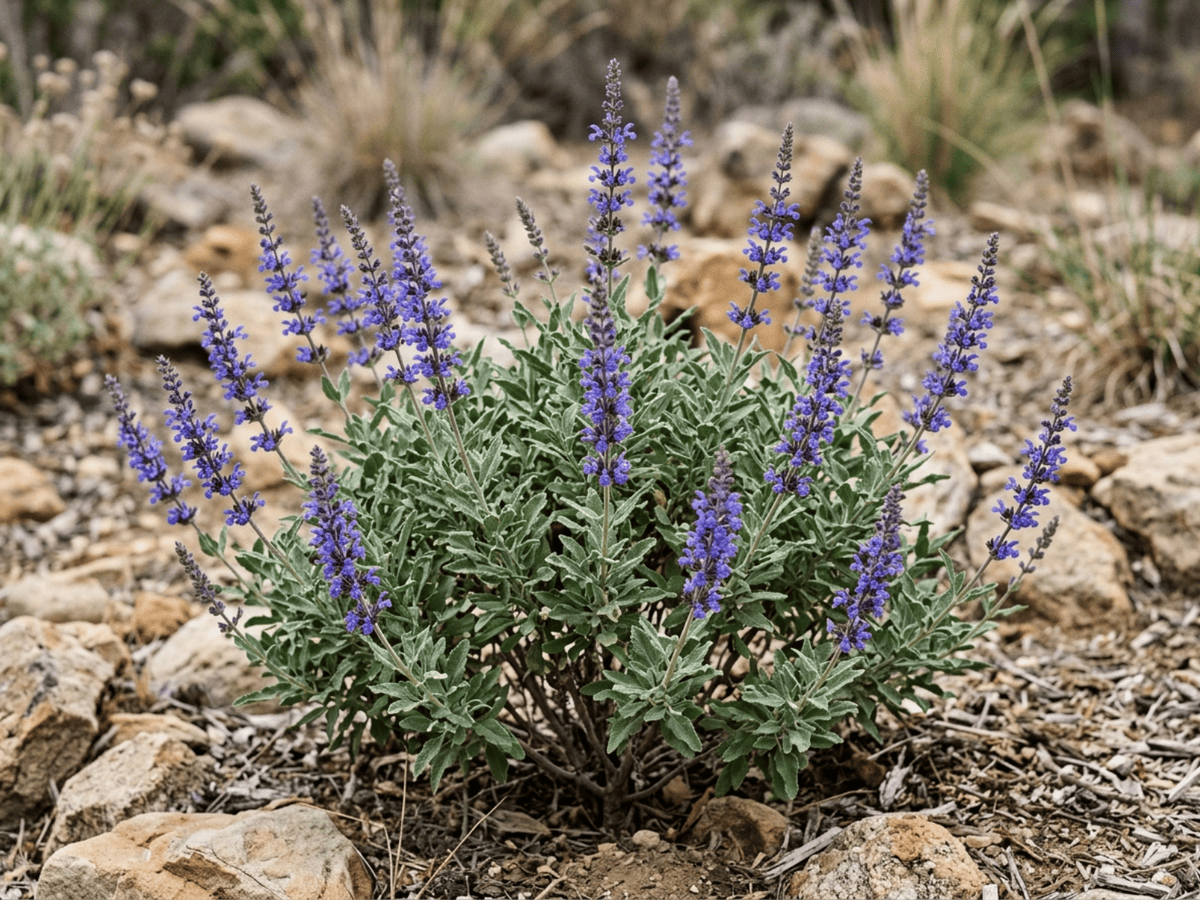 Cleveland SageSalvia clevelandii
 Pineapple SageSalvia elegans
Plants with similar care
 Chinese AbeliaAbelia chinensis
 Fragrant AbeliaAbelia mosanensis
 Large-Flowered AbeliaAbelia uniflora
 Glossy AbeliaAbelia x grandiflora
Frequently asked questions
How often should I water Tropical Sage?
In summer, water about every 4 days; in winter, about every 14 days. Adjust for heat, pot size and drainage.
How much light does Tropical Sage need?
Full sun: 6+ hrs direct. Watch the leaves — scorching or stretching means the light needs adjusting.
Is Tropical Sage toxic to cats or dogs?
No toxicity has been reported for this plant. Still, it is wise to keep pets from chewing on any houseplant. Educational information, not medical or veterinary advice. If exposure is suspected, contact a doctor or veterinarian.
Is Tropical Sage easy to grow?
Yes — it is considered an easy, beginner-friendly plant.
When does Tropical Sage bloom?
It typically blooms Jun–Nov in the Northern Hemisphere.
YardMate
Identify any plant in seconds
Snap a photo — YardMate names the plant, diagnoses problems, and reminds you when to water.
Download on the App Store