 YardMate

Cleveland Sage
Salvia clevelandii
Easy · Beginner friendlyAbout Cleveland Sage
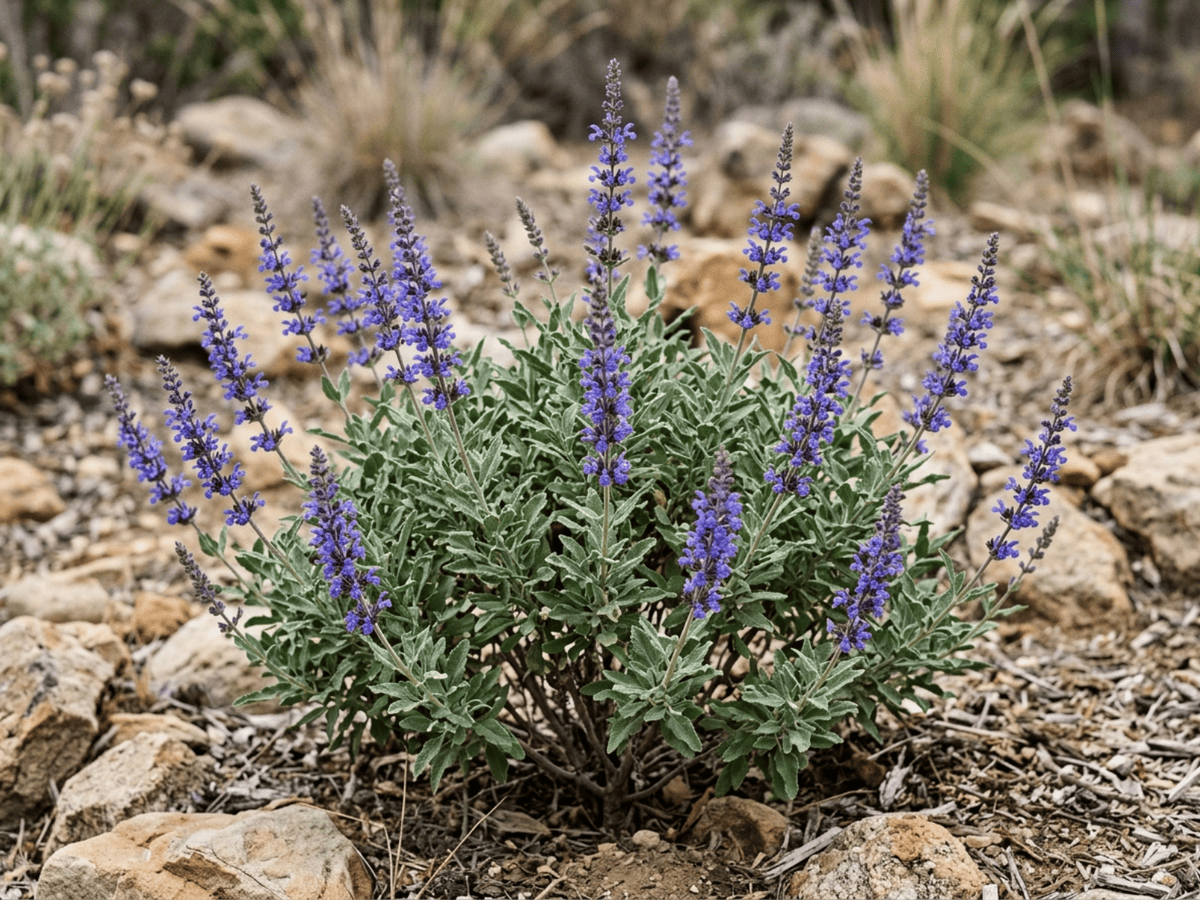
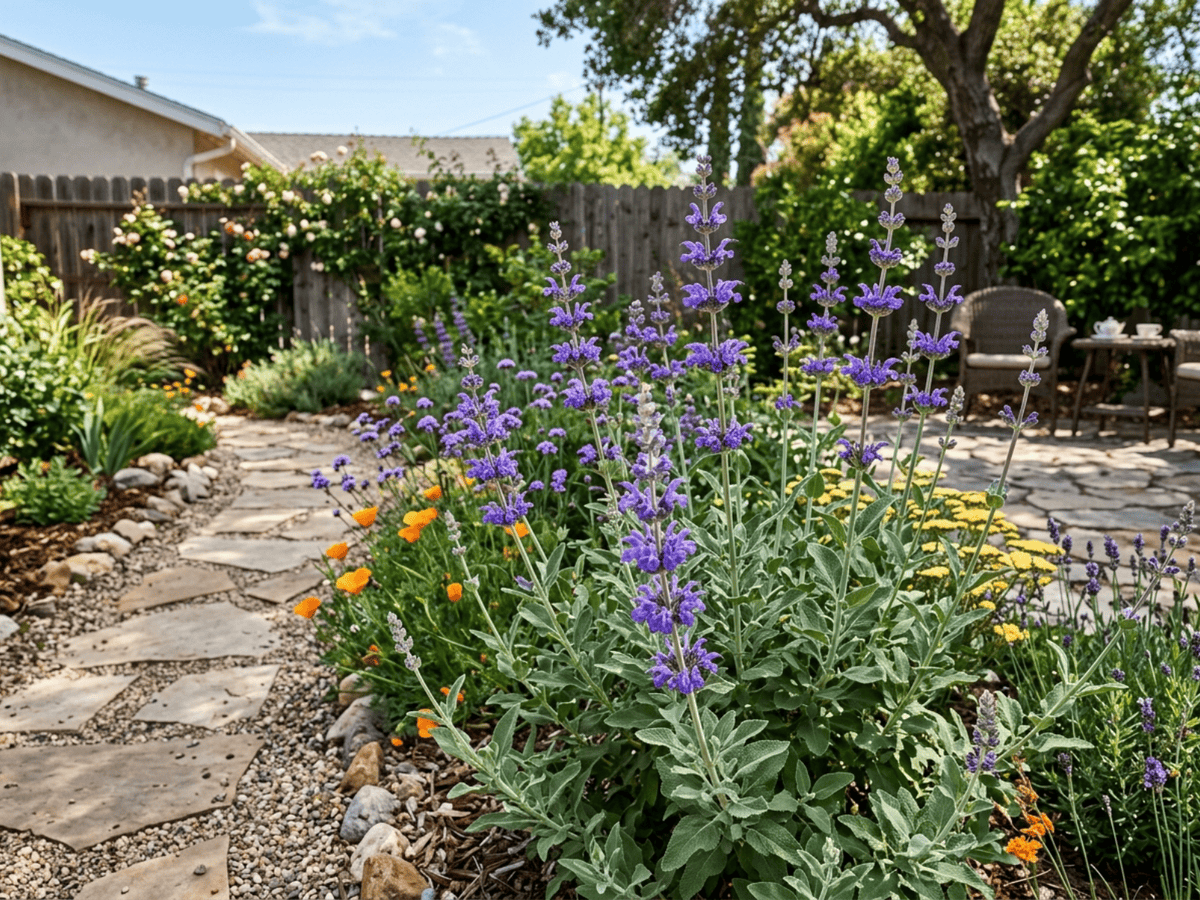
Cleveland Sage is a fragrant evergreen California native shrub from San Diego County and Baja California, prized for its intensely aromatic gray-green foliage and whorled violet-blue flower spikes. Growing 3-5 feet tall and wide, its scent fills the air on warm days. A staple of Southern California native gardens, it attracts hummingbirds, bees, and butterflies while remaining highly drought-tolerant. The dried leaves are used as a substitute for culinary sage.
- Fragrant
- Drought-tolerant
- Deer-resistant
- Evergreen
How to care for Cleveland Sage
Watering
- Springevery 10 days
- Summerevery 14 days
- Fallevery 21 days
- Winterevery 30 days
Soil · Rich & well-draining
- Top dressingCompost10%
- Main mixPotting soil + compost 3:180%
- DrainageGravel10%
Top up the compost layer each season.
FERTILIZER
This plant needs little to no feeding.
At a Glance
- NativeNorth America
- Height3–5 ft (0.9–1.5 m)
- Spread3–5 ft (0.9–1.5 m)
- Flower colorPurple, Blue
- Foliage colorGreen, Silver
- SoilSandy, Well-drained
- LocationsYard
Bloom time
BLOOM CYCLE
Peak bloom
Apr–Jul
Violet-blue whorls April to July
Fragrance
STRONG FRAGRANCE
Extraordinarily powerful resinous-herbal sage fragrance on warm days — one of the most distinctive scents of California chaparral.
Toxicity
No toxicity has been reported for this plant. Still, it is wise to keep pets from chewing on any houseplant.
Educational information, not medical or veterinary advice. If exposure is suspected, contact a doctor or veterinarian.
DISTRIBUTION


- Native
- North America
History
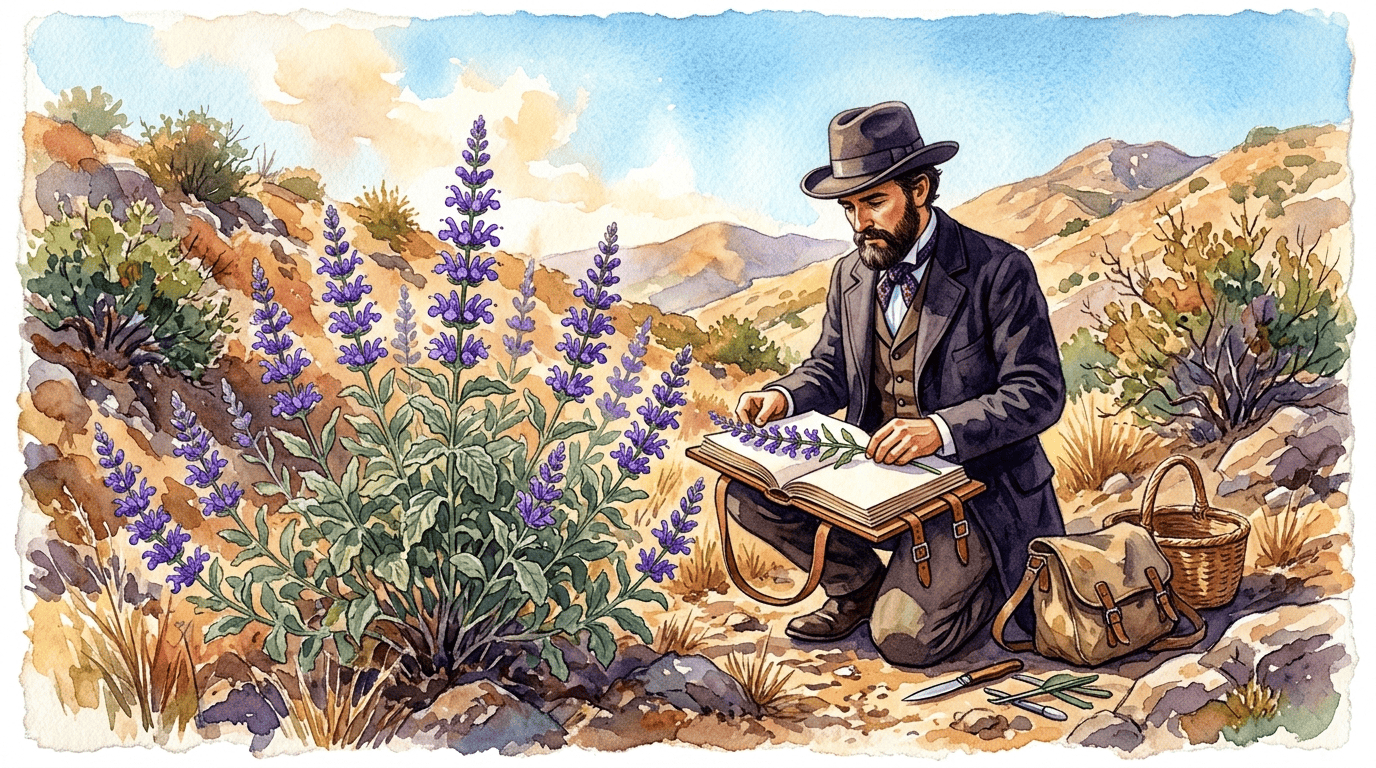
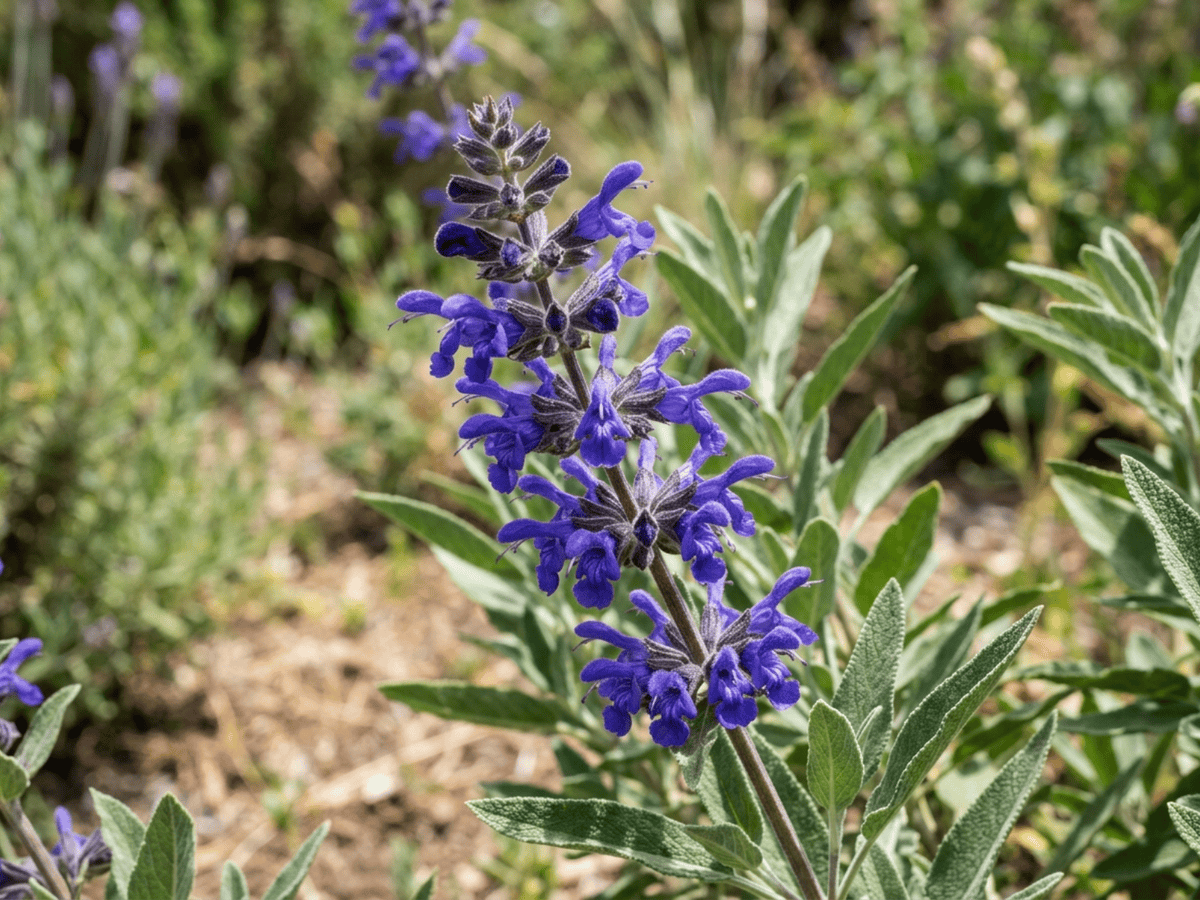
Salvia clevelandii is native to the chaparral and coastal sage scrub of San Diego County, California and adjacent northern Baja California, Mexico, growing on dry rocky slopes at 100-1500 meters elevation. It was named for Daniel Cleveland (1838-1929), a San Diego attorney and co-founder of the San Diego Society of Natural History who collected the type specimen in the 1870s. The plant is a small sprawling evergreen shrub 60-120 cm tall with characteristic gray-green wrinkled sage foliage that releases an extraordinarily powerful herbal-resinous fragrance on warm afternoons — among experienced California-native gardeners the scent of Cleveland sage on a hot summer day is frequently cited as the single most distinctive olfactory signature of the California chaparral. From late spring through early summer the plant produces striking purple-blue flowers arranged in whorled verticils (tiered rings) up the stem, with each whorl set above shorter foliage — giving the flower stalk a distinctive "staggered-candlestick" architecture.
Important garden hybrid cultivars include "Allen Chickering" (S. clevelandii x S. leucophylla, widely planted), "Winnifred Gilman" (more compact), and "Pozo Blue" (larger growing). Culinary use is possible — the flavor is pleasant though stronger and more resinous than Mediterranean garden sage (S. officinalis). The flowers are important bumblebee and hummingbird nectar sources.
Named after Daniel Cleveland, a San Diego lawyer and botanical collector who discovered it in 1874. The Kumeyaay people used Cleveland sage leaves as a food seasoning and smudge for ceremonial cleansing.
Symbolism & meaning
What It Symbolizes
Cleveland Sage is California wisdom in aromatic form. Silver-gray leaves release a powerful resinous scent, and blue-purple flower whorls draw hummingbirds and bees through dry summer air. Its symbolism is protection by fragrance: a plant that turns heat, drought, and volatile oils into presence.
- Wisdom — associated with healing and contemplation
- Protection — used in cleansing and purification rituals
Where the Name Comes From
'Salvia' comes from Latin 'salvare' meaning to save; 'clevelandii' honors Daniel Cleveland (1838-1929).
Uses & Fun Facts
- Cleveland sage leaves used for tea and seasoning
- Foliage releases intense sweet sage perfume
- Whorled lavender flowers feed hummingbirds and bees
Related plants
More Salvia plants
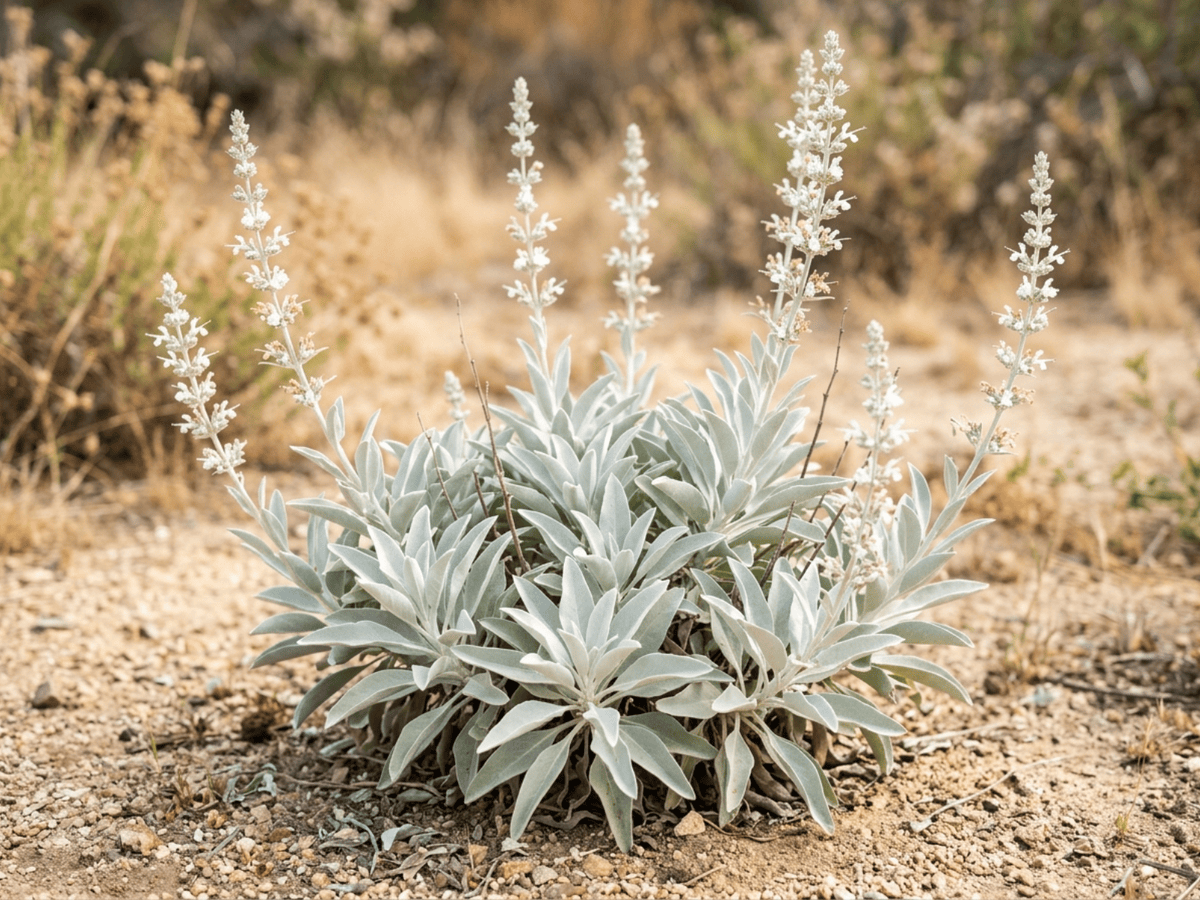 White SageSalvia apiana
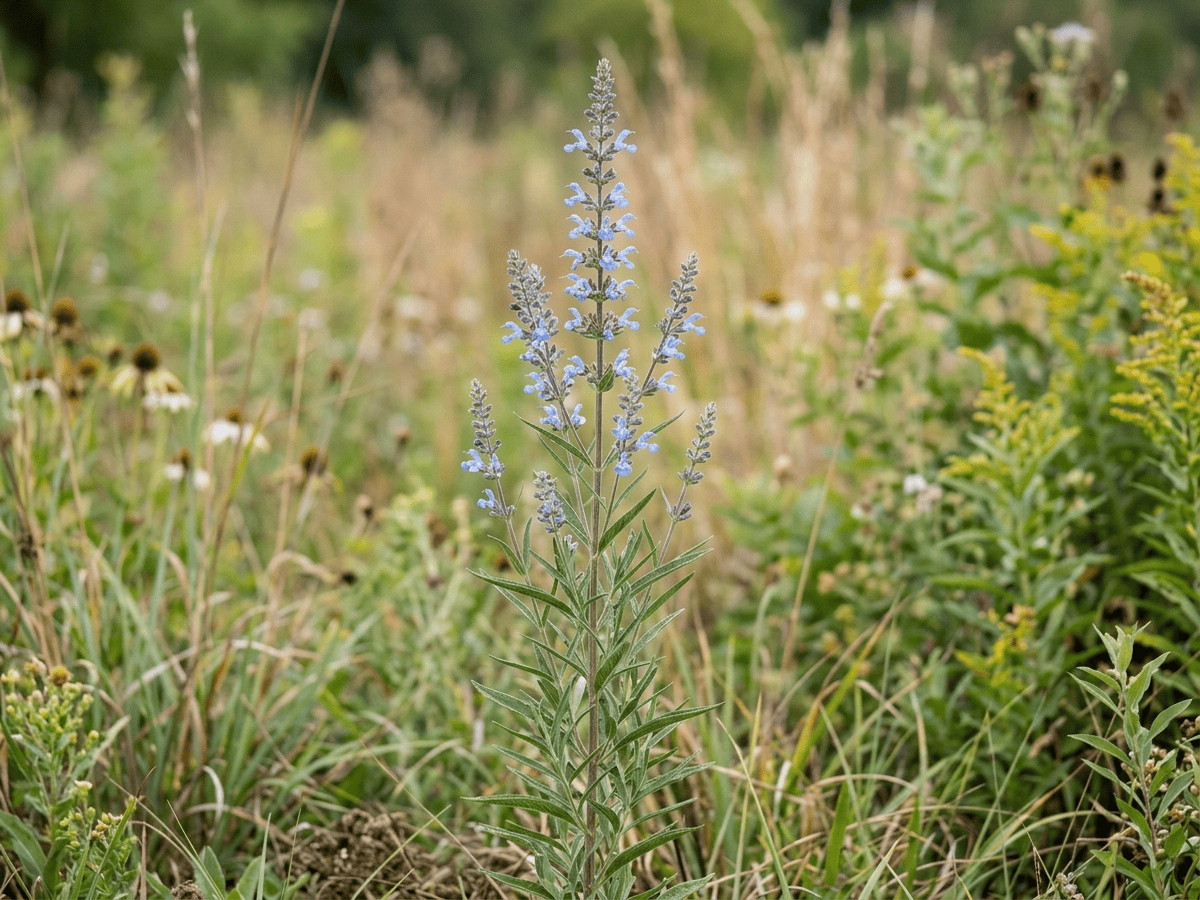 Giant Blue SageSalvia azurea
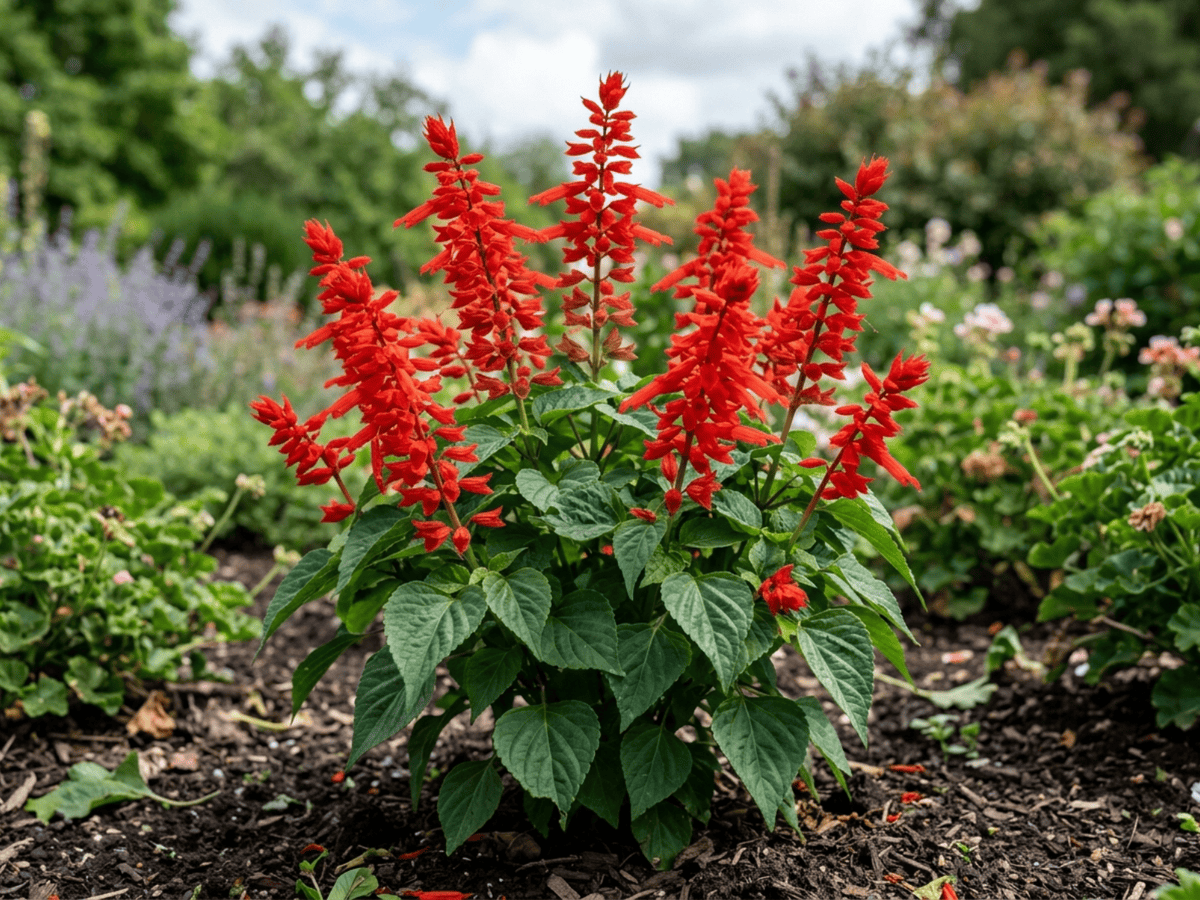 Tropical SageSalvia coccinea
 Pineapple SageSalvia elegans
Plants with similar care
 Chinese AbeliaAbelia chinensis
 Fragrant AbeliaAbelia mosanensis
 Large-Flowered AbeliaAbelia uniflora
 Glossy AbeliaAbelia x grandiflora
Frequently asked questions
How often should I water Cleveland Sage?
In summer, water about every 14 days; in winter, about every 30 days. Adjust for heat, pot size and drainage.
How much light does Cleveland Sage need?
Full sun: 6+ hrs direct. Watch the leaves — scorching or stretching means the light needs adjusting.
Is Cleveland Sage toxic to cats or dogs?
No toxicity has been reported for this plant. Still, it is wise to keep pets from chewing on any houseplant. Educational information, not medical or veterinary advice. If exposure is suspected, contact a doctor or veterinarian.
Is Cleveland Sage easy to grow?
Yes — it is considered an easy, beginner-friendly plant.
When does Cleveland Sage bloom?
It typically blooms Apr–Jul in the Northern Hemisphere.
YardMate
Identify any plant in seconds
Snap a photo — YardMate names the plant, diagnoses problems, and reminds you when to water.
Download on the App Store