 YardMate


Mealy Blue Sage
Salvia farinacea
Easy · Beginner friendlyAbout Mealy Blue Sage
Mealy Cup Sage is a Texas and Mexico native perennial sage grown as an annual in colder regions, producing dense spikes of blue-violet or white flowers on upright 18 to 36 inch plants from spring through frost. The 'mealy' name refers to white-powdered calyces; 'Victoria Blue' is the iconic cultivar that defines American summer blue bedding. A signature cut-flower and pollinator plant across US gardens.
- Cut-flower
- Drought-tolerant
- Heat-tolerant
- Native
How to care for Mealy Blue Sage
Watering
- Springevery 7 days
- Summerevery 5 days
- Fallevery 10 days
- Winterevery 21 days
Soil · Well-draining
- Top dressingPine bark mulch10%
- Main mixPotting soil + perlite 2:170%
- DrainageLECA / gravel20%
Never skip the drainage layer — standing water is the top cause of root rot.
FERTILIZER
Balanced Feed 14-14-14
An even feed covers all three needs at once, keeping leaves, roots and blooms moving together with nothing pushed out of balance.
- Nitrogen · Leaves
- Phosphorus · Roots + Blooms
- Potassium · Strength
- Springevery 30 days
- Summerevery 30 days
At a Glance
- NativeNorth America
- Height1.5–3 ft (0.5–0.9 m)
- Spread1–2 ft (0.3–0.6 m)
- Flower colorBlue, Purple, White
- Foliage colorGreen
- SoilLoamy, Well-drained
- LocationsYard
Bloom time
BLOOM CYCLE
Peak bloom
May–Nov
Dense blue flower spikes May to frost
Fragrance
MODERATE FRAGRANCE
The foliage has a sage-like aromatic foliage scent.
Toxicity
No toxicity has been reported for this plant. Still, it is wise to keep pets from chewing on any houseplant.
Educational information, not medical or veterinary advice. If exposure is suspected, contact a doctor or veterinarian.
DISTRIBUTION


- Native
- Introduced
- North America
History
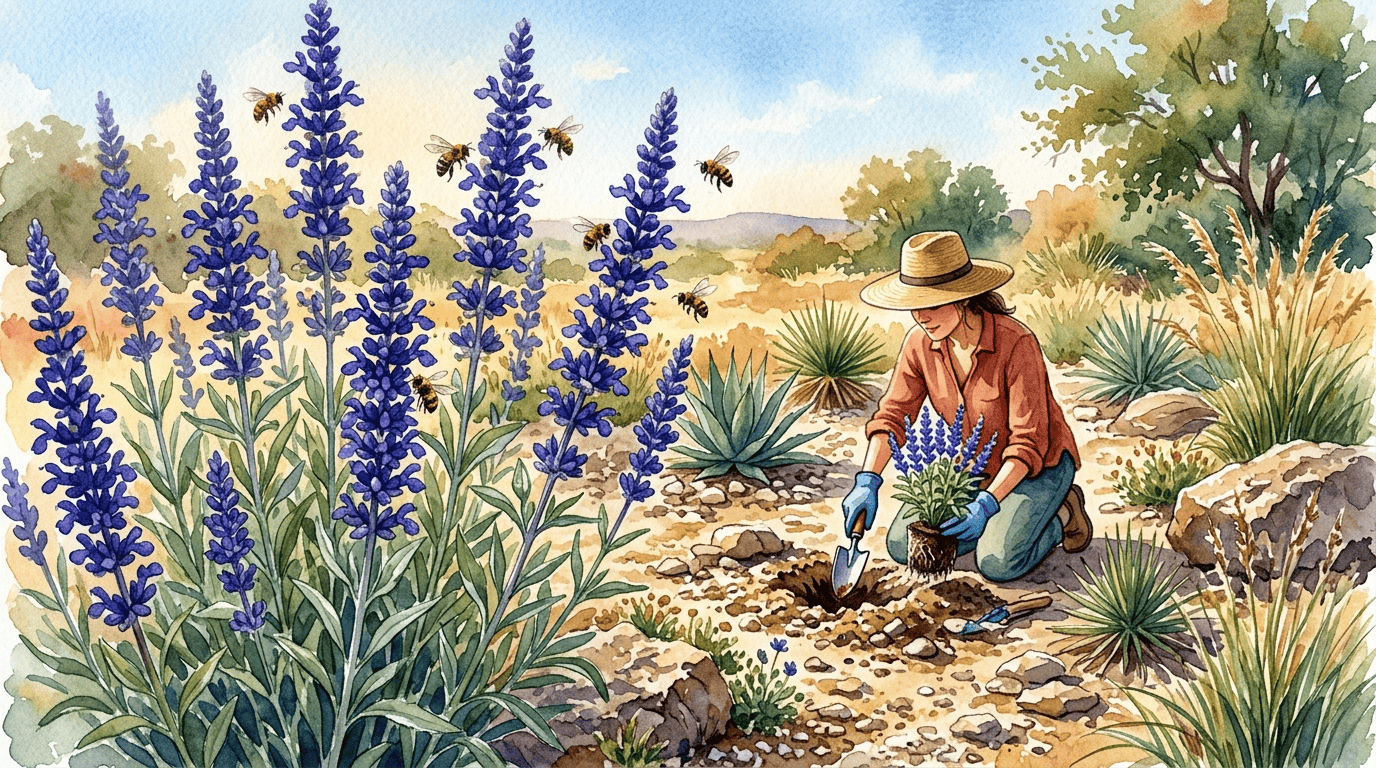
Salvia farinacea, the mealycup sage or mealy blue sage, is a clump-forming perennial native to limestone prairies of central and west Texas, New Mexico, and adjacent northern Mexico. English botanist George Bentham described the species in 1833, the epithet farinacea referring to the floury-looking bracts and stems. The plant produces tall spikes of deep violet-blue two-lipped flowers from late spring through frost, topping narrow gray-green foliage.
German and American breeders released Victoria Blue in the 1980s, an All-America Selections winner that became one of the top-selling blue annuals worldwide. Subsequent series including Cathedral, Evolution, Fairy Queen, and Sallyfun extended the color range to silver, white, and bicolor. Remains one of the top-selling blue salvias at US garden centers each spring. Drought tolerance and pollinator appeal keep the species central to Texas xeriscape and prairie gardens.
Symbolism & meaning
What It Symbolizes
Mealy Blue Sage carries the traditional Salvia meaning of wisdom, paired with the signature prairie blue that defines Texas summer gardens. Its dusty spires hum with bees from May through frost, a steadfast presence in the heat. It is a salvia of sage advice, given freely and without fuss — both botanical wisdom and regional emblem in a single plant.
- Prairie blue — signature color of Texas summer gardens
- Wisdom — traditional Salvia flower meaning
Where the Name Comes From
'farinacea' from Latin means mealy or powdery, for the white-powdered flower calyces.
Uses & Fun Facts
- Mealy-cup blue spikes long-lasting fresh or dried
- Blue flower spikes attract bees and ruby-throated hummingbirds
- Heat-tolerant blue salvia thrives in sunny patio pots
Related plants
More Salvia plants
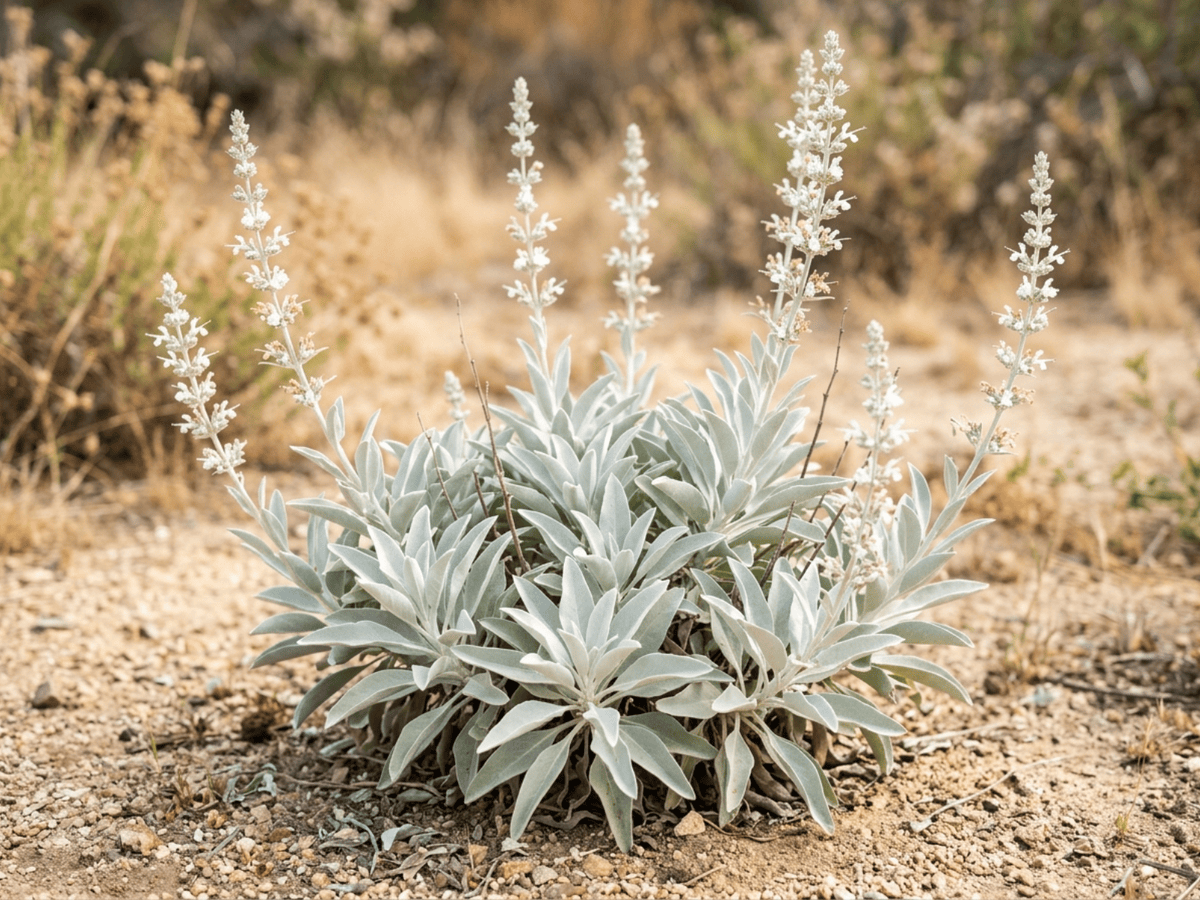 White SageSalvia apiana
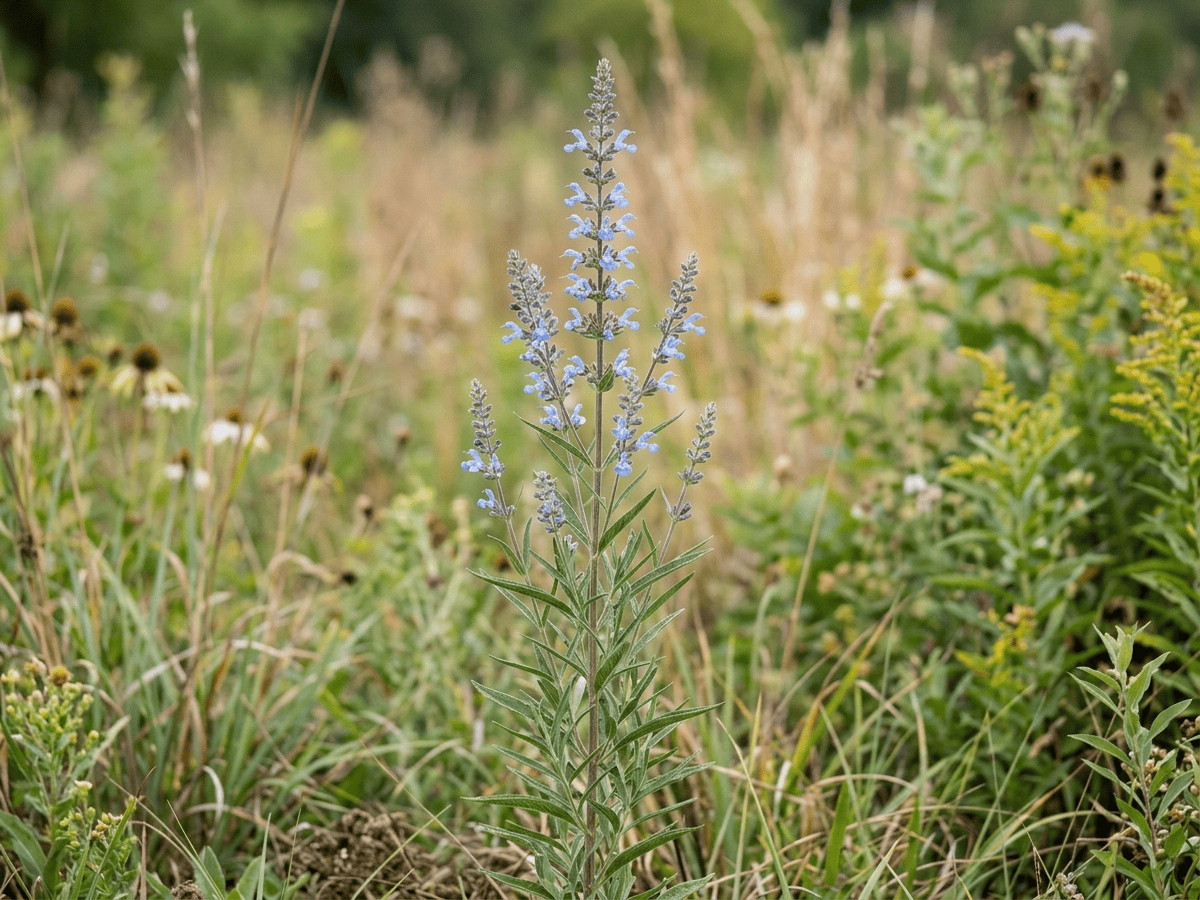 Giant Blue SageSalvia azurea
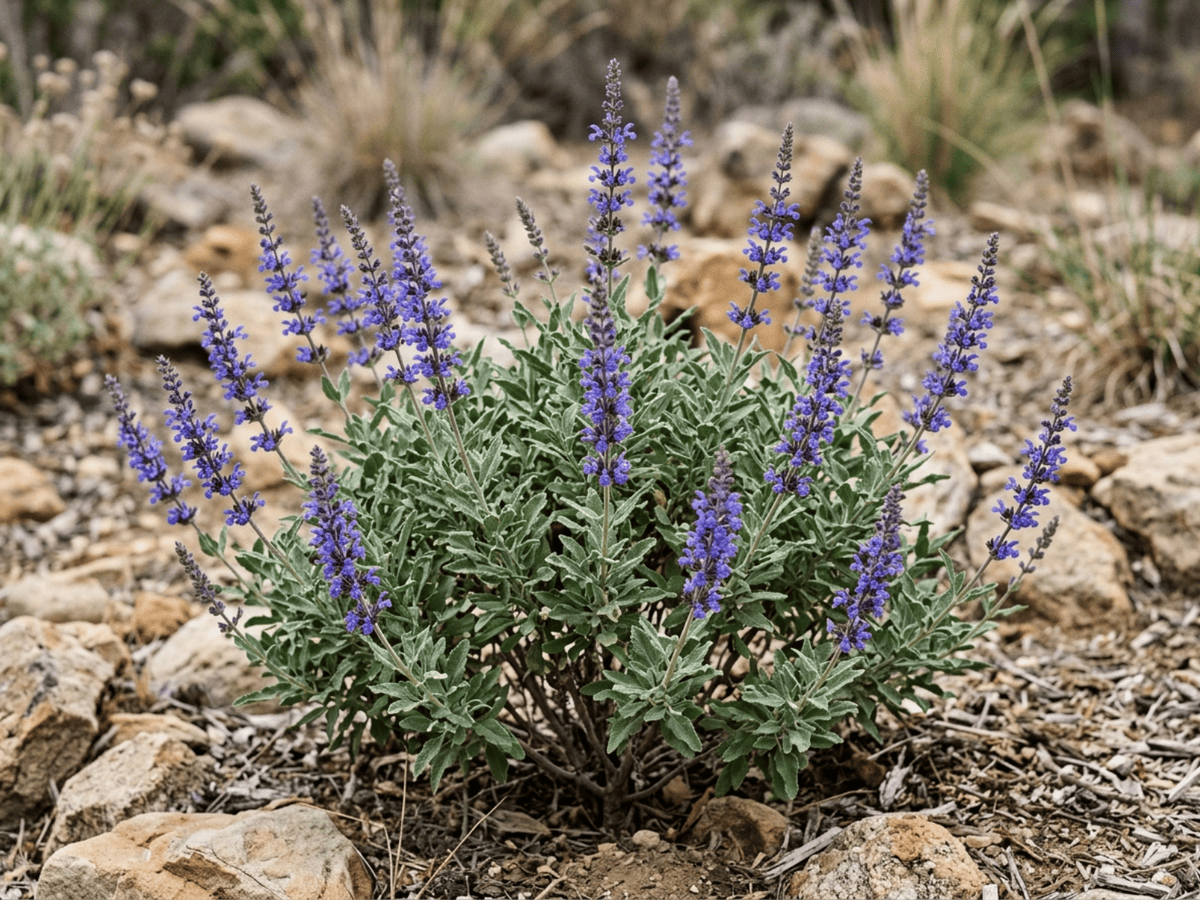 Cleveland SageSalvia clevelandii
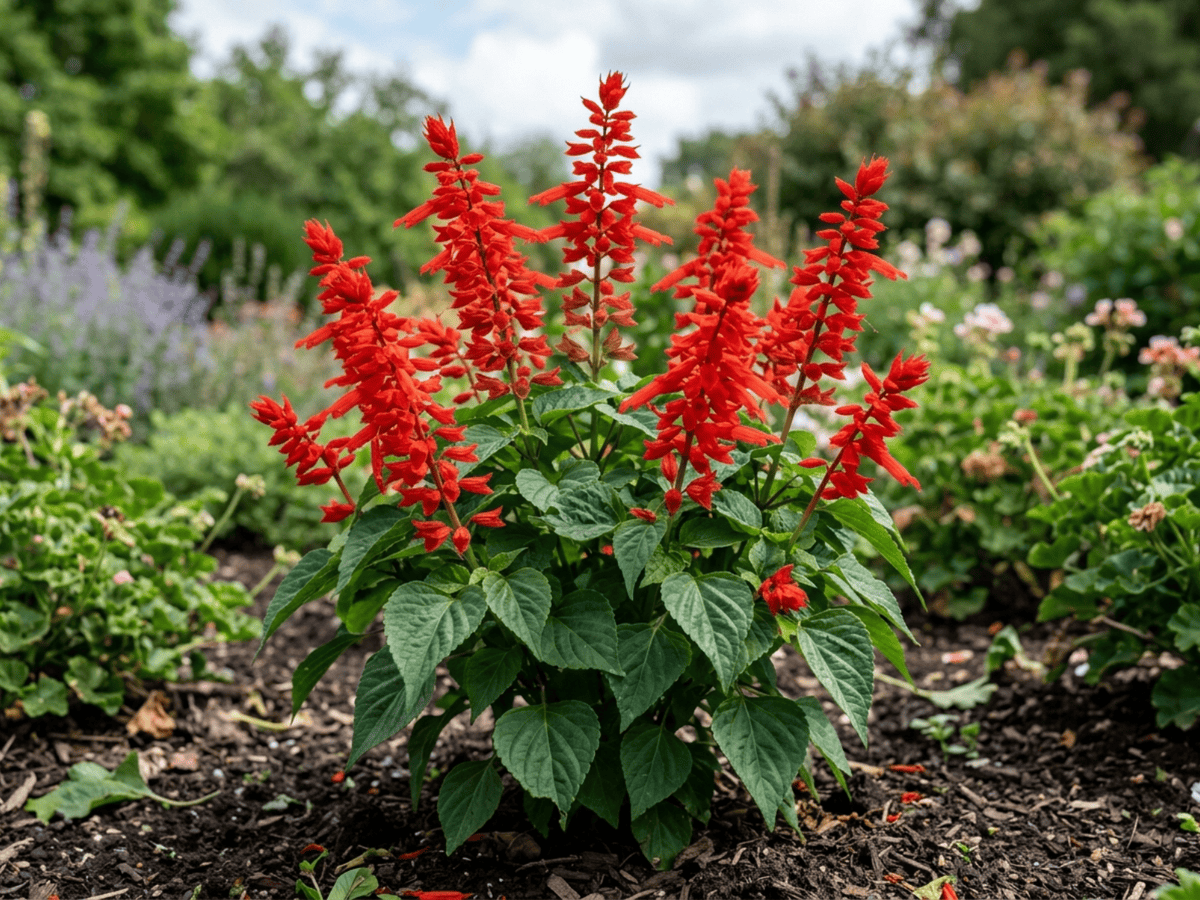 Tropical SageSalvia coccinea
Plants with similar care
 Chinese AbeliaAbelia chinensis
 Fragrant AbeliaAbelia mosanensis
 Large-Flowered AbeliaAbelia uniflora
 Glossy AbeliaAbelia x grandiflora
Frequently asked questions
How often should I water Mealy Blue Sage?
In summer, water about every 5 days; in winter, about every 21 days. Adjust for heat, pot size and drainage.
How much light does Mealy Blue Sage need?
Full sun: 6+ hrs direct. Watch the leaves — scorching or stretching means the light needs adjusting.
Is Mealy Blue Sage toxic to cats or dogs?
No toxicity has been reported for this plant. Still, it is wise to keep pets from chewing on any houseplant. Educational information, not medical or veterinary advice. If exposure is suspected, contact a doctor or veterinarian.
Is Mealy Blue Sage easy to grow?
Yes — it is considered an easy, beginner-friendly plant.
When does Mealy Blue Sage bloom?
It typically blooms May–Nov in the Northern Hemisphere.
YardMate
Identify any plant in seconds
Snap a photo — YardMate names the plant, diagnoses problems, and reminds you when to water.
Download on the App Store