 YardMate


Mexican Bush Sage
Salvia leucantha
Easy · Beginner friendlyAbout Mexican Bush Sage
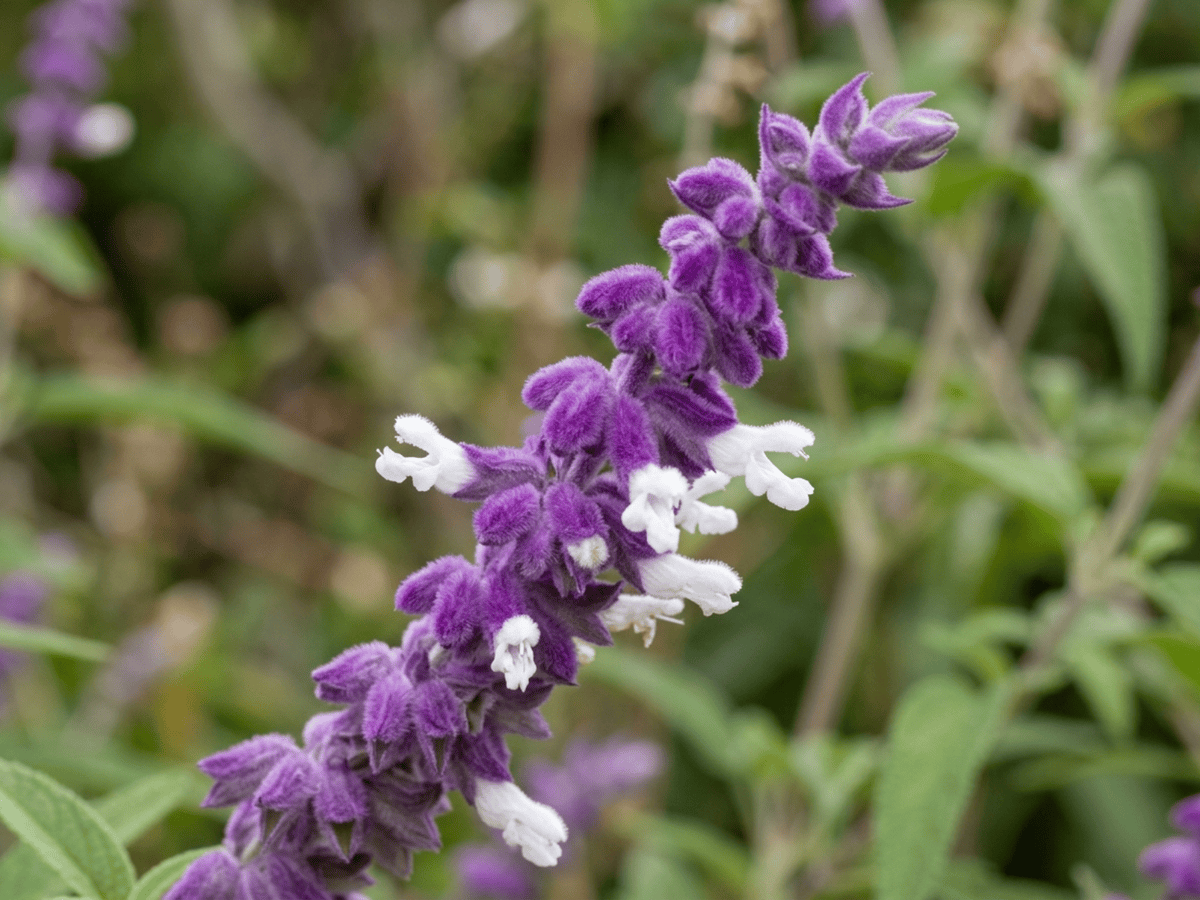
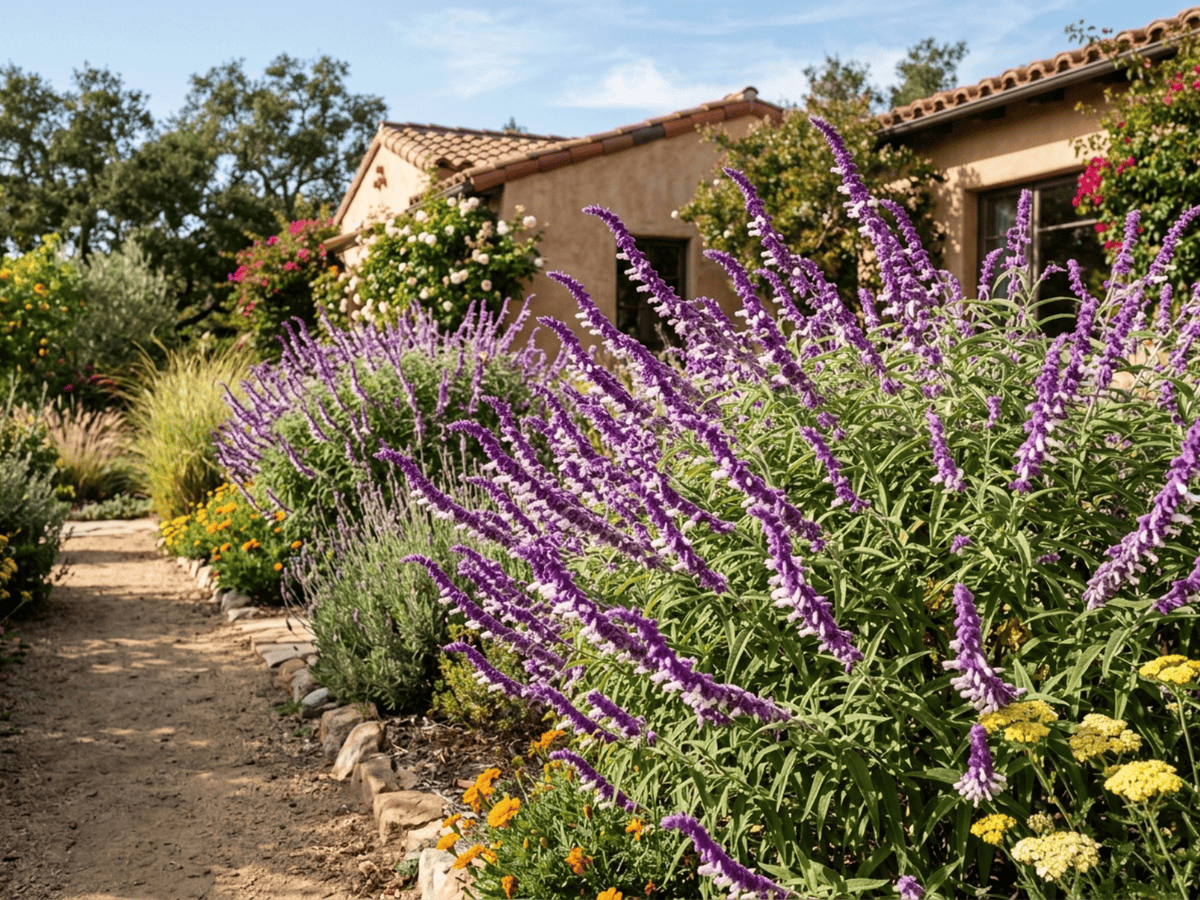
Mexican Bush Sage is a tender perennial native to central and eastern Mexico, forming a billowing 3–5 foot shrub with silvery-white lanceolate leaves and long arching spikes of fuzzy purple calyces with white or purple flowers in late summer and fall. A signature fall-bloomer in California, Texas, and the Southwest, it handles drought once established and becomes a hummingbird magnet during fall migration. Cut back hard after frost or in early spring.
- Drought-tolerant
- Deer-resistant
- Wildlife-friendly
How to care for Mexican Bush Sage
Watering
- Springevery 7 days
- Summerevery 5 days
- Fallevery 10 days
- Winterevery 21 days
Soil · Well-draining
- Top dressingPine bark mulch10%
- Main mixPotting soil + perlite 2:170%
- DrainageLECA / gravel20%
Never skip the drainage layer — standing water is the top cause of root rot.
FERTILIZER
Balanced Feed 14-14-14
An even feed covers all three needs at once, keeping leaves, roots and blooms moving together with nothing pushed out of balance.
- Nitrogen · Leaves
- Phosphorus · Roots + Blooms
- Potassium · Strength
- Springevery 30 days
- Summerevery 30 days
At a Glance
- NativeNorth America
- Height3–4 ft (0.9–1.2 m)
- Spread3–6 ft (0.9–1.8 m)
- Flower colorPurple, White
- Foliage colorGreen, Silver
- SoilSandy, Well-drained
- LocationsYard · Balcony
Bloom time
BLOOM CYCLE
Peak bloom
Jun–Nov
Fuzzy purple spikes late summer to frost
Fragrance
LIGHT FRAGRANCE
The foliage has a mild herbaceous sage scent.
Toxicity
No toxicity has been reported for this plant. Still, it is wise to keep pets from chewing on any houseplant.
Educational information, not medical or veterinary advice. If exposure is suspected, contact a doctor or veterinarian.
DISTRIBUTION

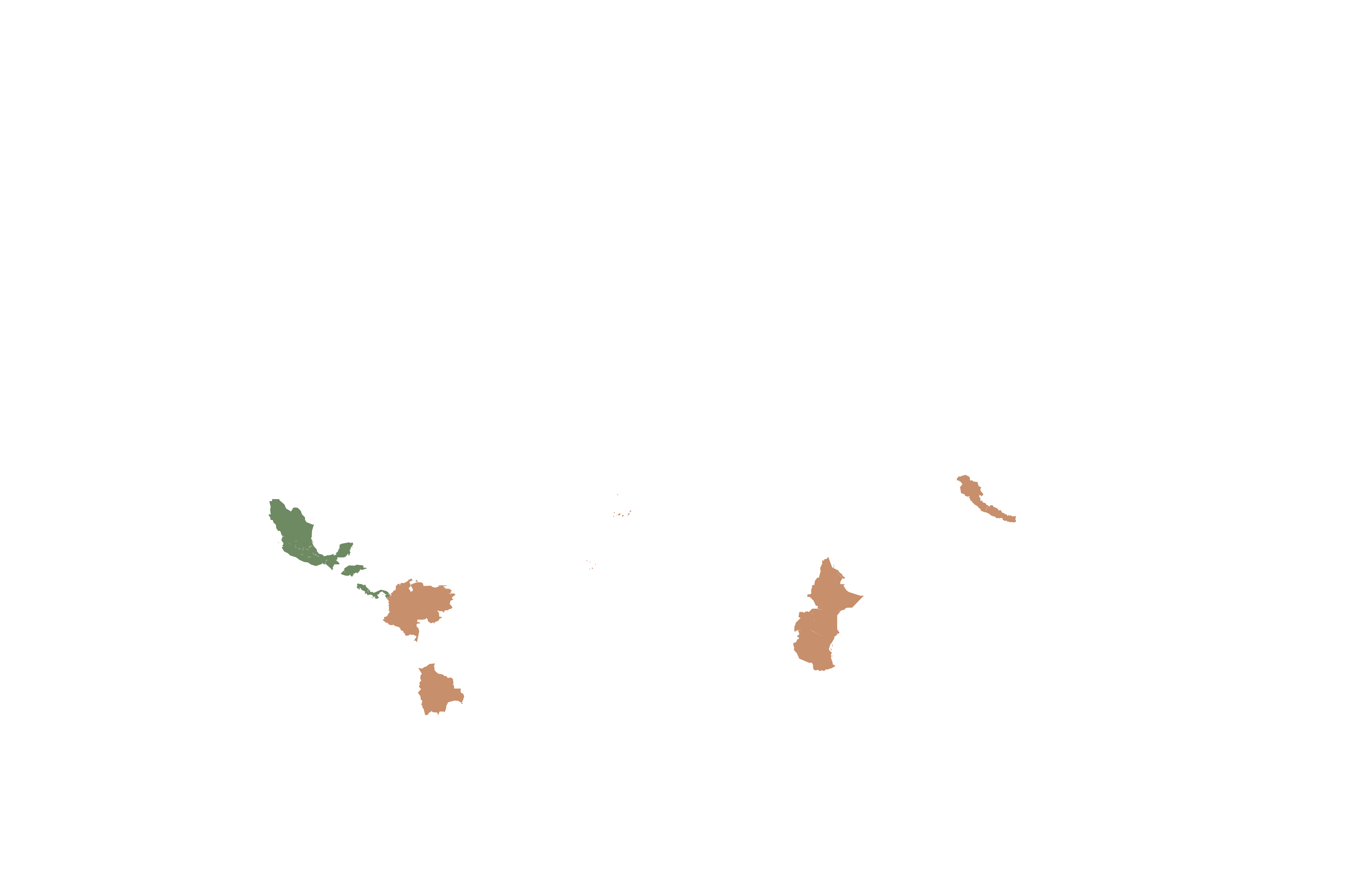
- Native
- Introduced
- North America
History
Salvia leucantha is native to the central and eastern highlands of Mexico — particularly the Sierra Madre Oriental and volcanic belt — growing at 900-2500 meters elevation in pine-oak forest edges, meadows, and disturbed slopes. The species epithet "leucantha" means "white-flowered" but the common cultivated form has two-toned flowers that are more complex than the name suggests: the tubular flower itself (corolla) is typically white or pale lavender, but each flower sits within a densely-hairy bright purple-violet calyx (the tube-like structure surrounding the corolla base), and the entire inflorescence is covered in fine soft velvety white-to-purple hairs that give the plant its distinctive tactile and visual appearance. In cultivation it grows as a large spreading subshrub 1.2-1.8 meters tall and similarly wide, with narrow gray-green lance-shaped leaves and, from late August through hard frost, produces spectacular tall arching spires 30-45 cm long of densely-packed velvety two-toned flowers in purple-violet-and-white (wild type), pure-purple-and-purple ("All Purple" cultivar), or entirely white ("White Velour" and "Danielle's Dream" cultivars).
The late summer and autumn flowering timing — when many other salvias have finished — makes S. leucantha a particularly valuable late-season garden plant, and it is among the most widely-planted ornamental salvias in California, Florida, Texas, and Mediterranean Europe. Hummingbirds are the primary pollinators.
Hardy to approximately USDA zone 8. Introduced to American gardens from Mexico in the 1840s, it became ubiquitous in California landscaping in the late 20th century as drought awareness grew. The purple velvet bloom spikes are a signature element of fall gardens from the San Francisco Bay Area through San Diego and across the Southwest.
Symbolism & meaning
What It Symbolizes
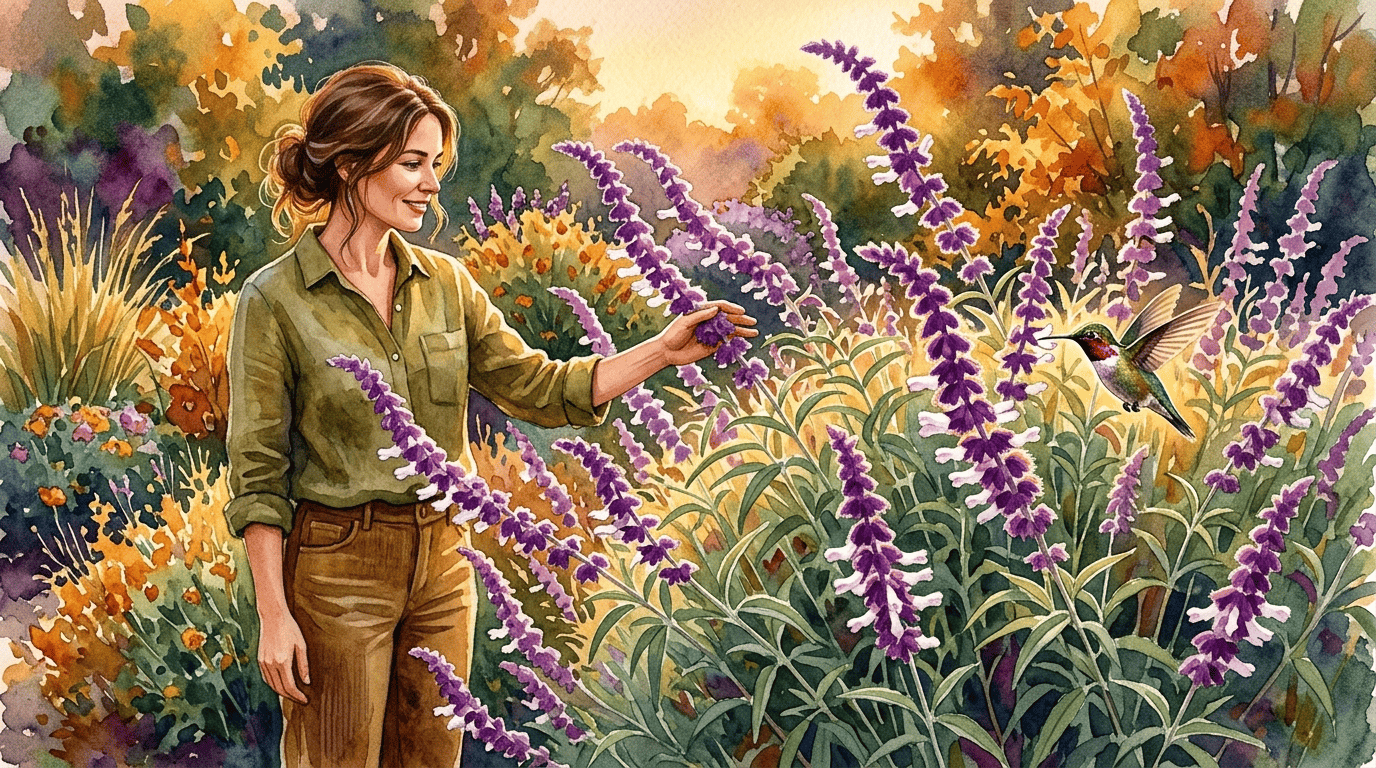
Mexican Bush Sage is velvet in motion. Purple calyces and white flowers gather along arching stems, softening late-season gardens when many perennials have stiffened or faded. It symbolizes generosity at the end of the season: color, texture, and hummingbird traffic offered when autumn is near.
- Healing — Salvia genus linked to medicinal tradition
- Autumn — signature fall bloom color for western gardens
Where the Name Comes From
'Mexican bush sage' describes its shrubby habit and Mexican origin. Salvia comes from Latin 'salvere', to be well; leucantha joins Greek 'leukos' and 'anthos', meaning white flower.
Uses & Fun Facts
- Velvety purple spikes feed hummingbirds and bumblebees
- Late-summer bloomer fills warm-climate borders with color
- Long stems prized in autumn floral arrangements
Related plants
More Salvia plants
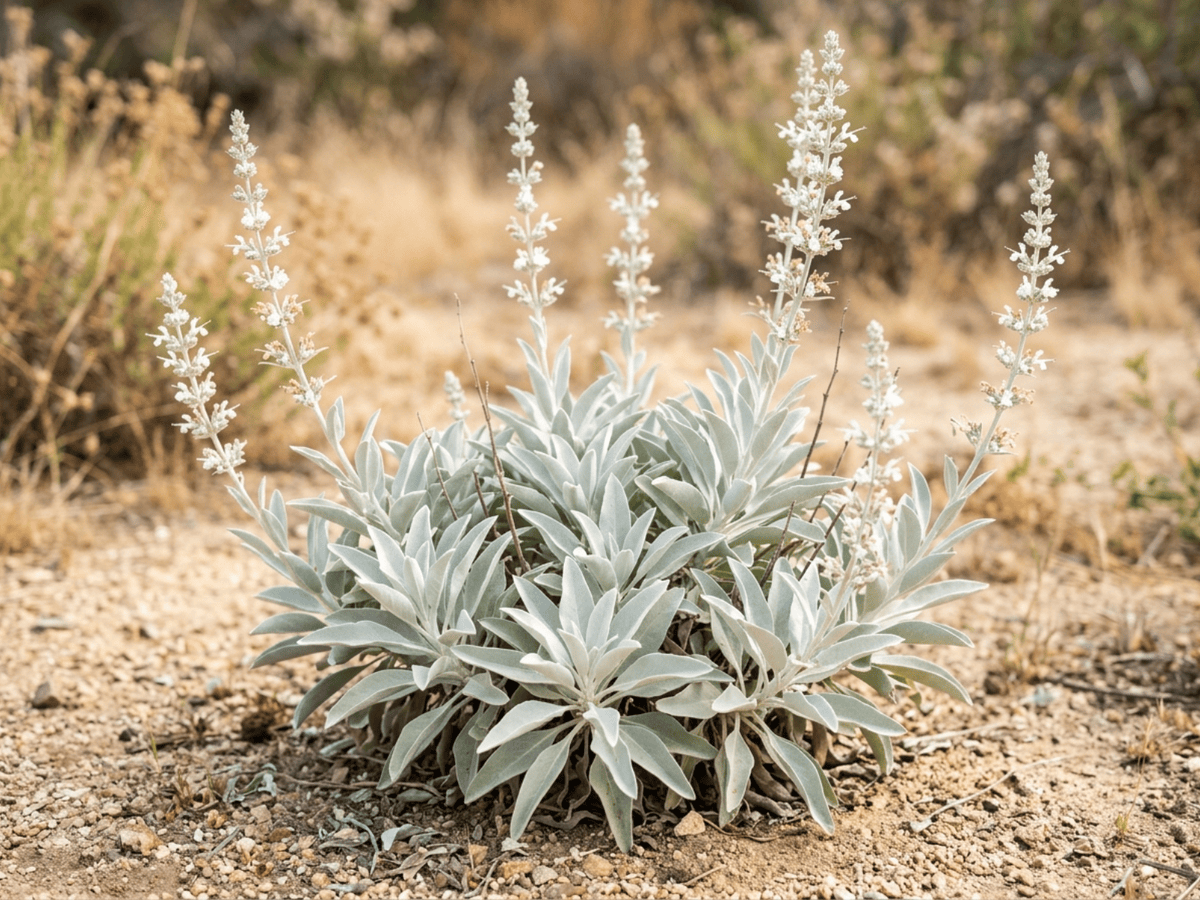 White SageSalvia apiana
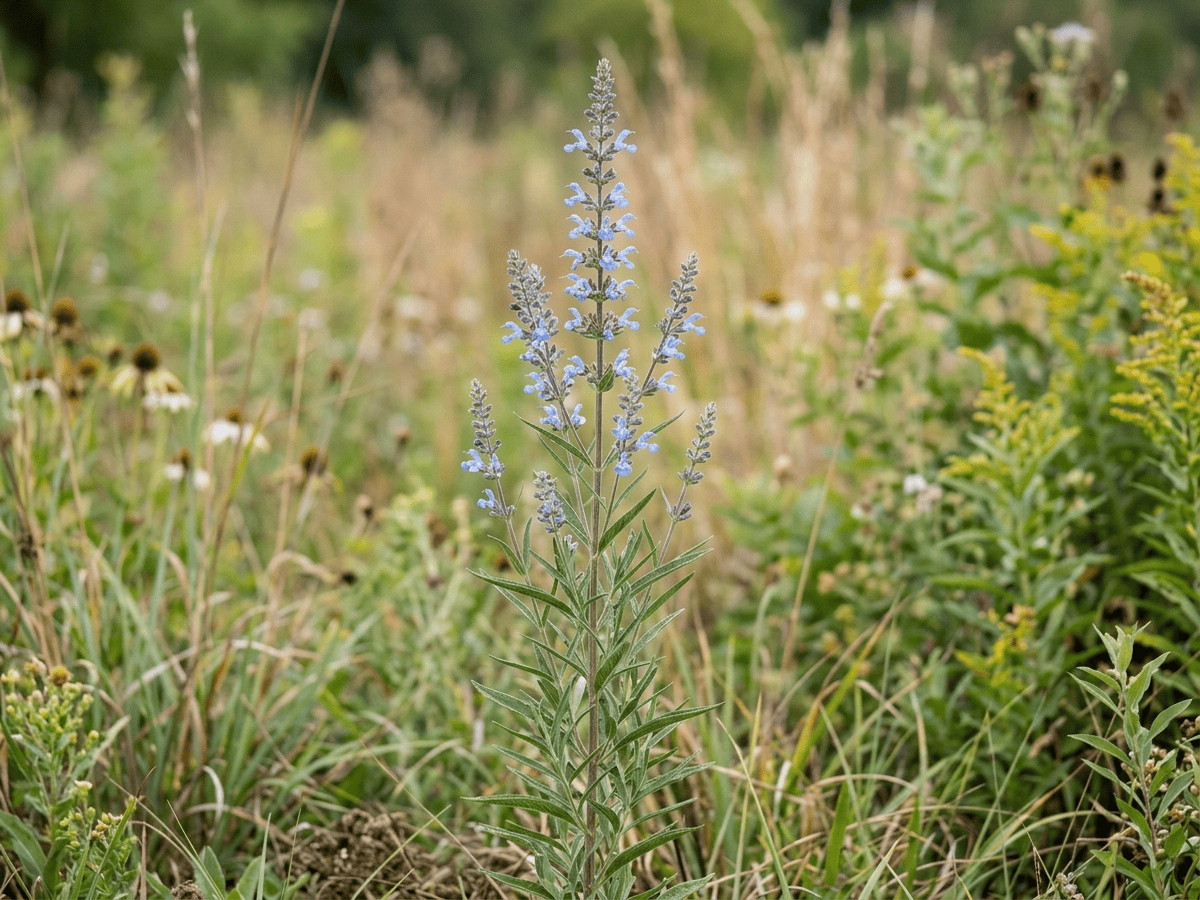 Giant Blue SageSalvia azurea
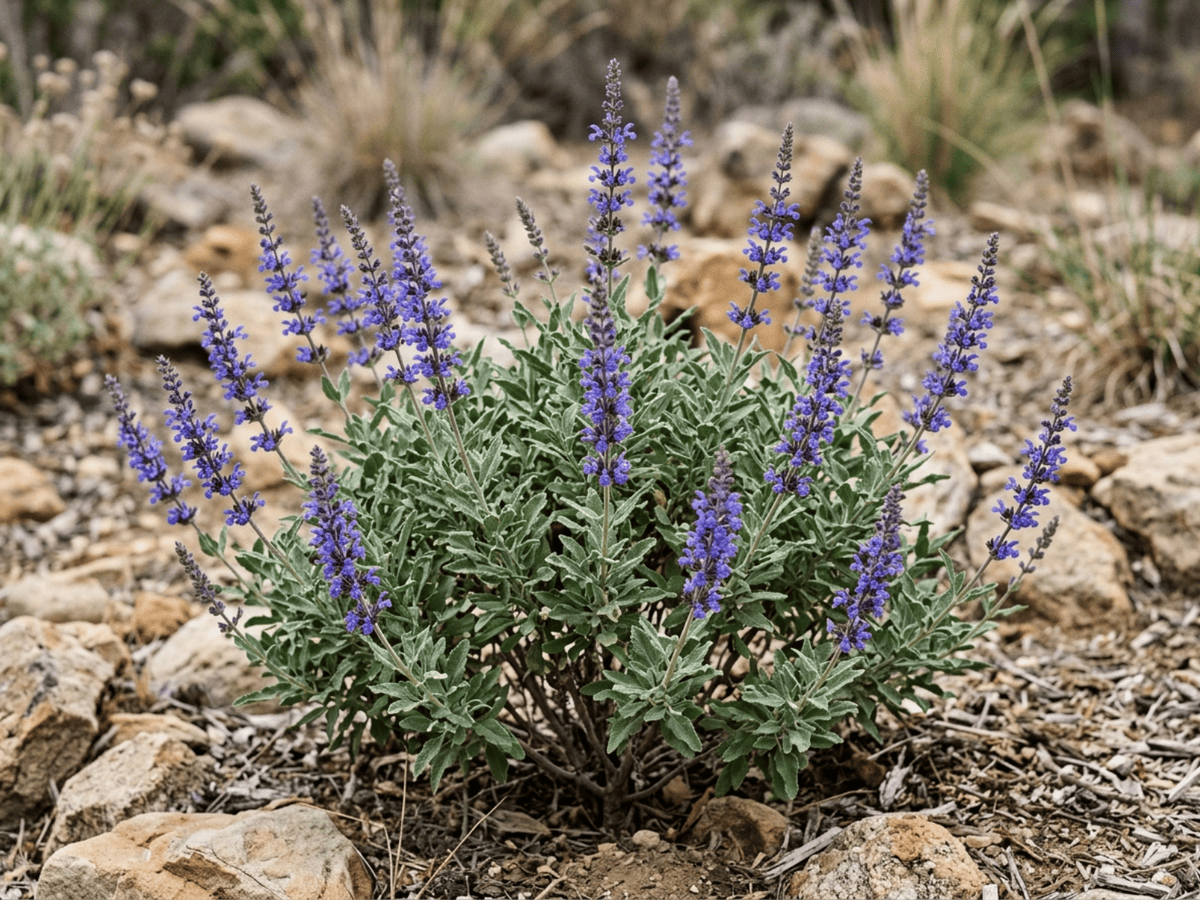 Cleveland SageSalvia clevelandii
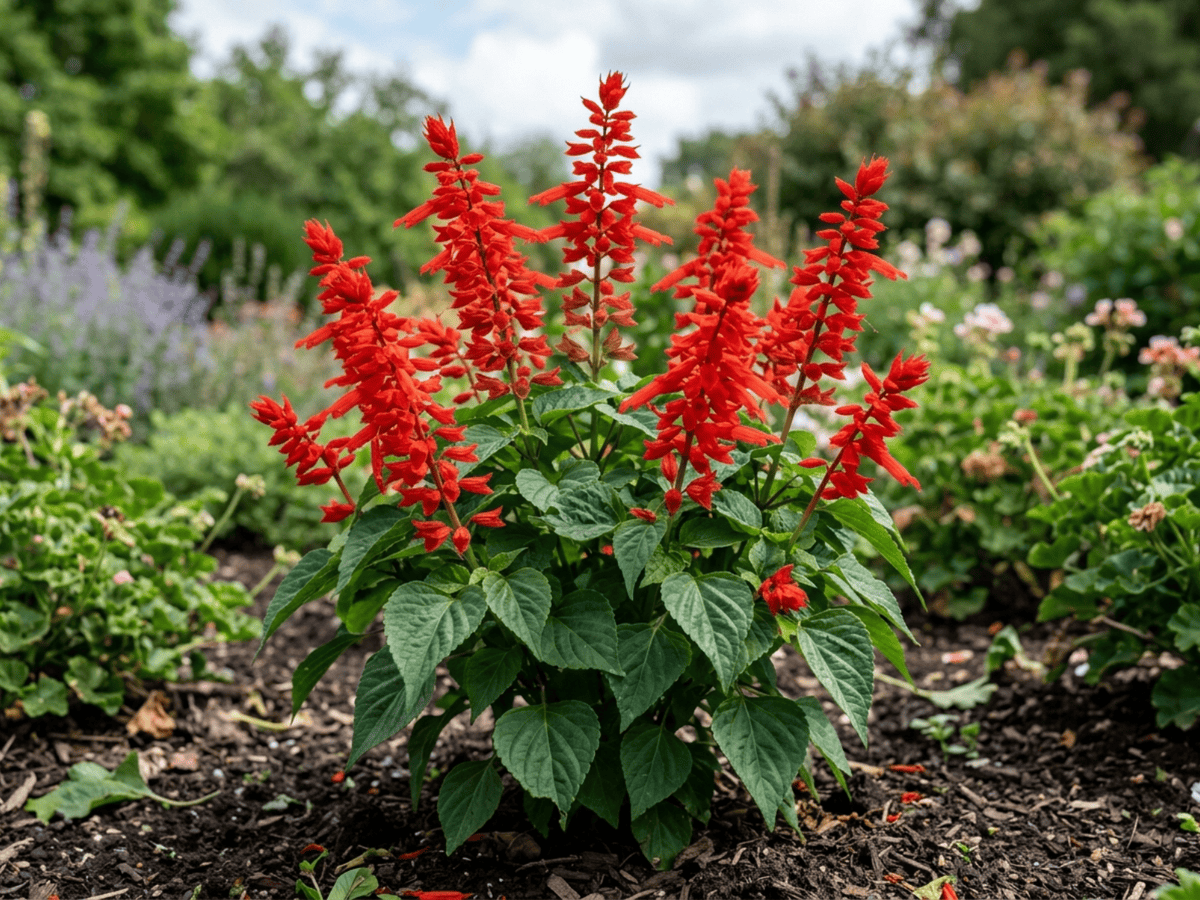 Tropical SageSalvia coccinea
Plants with similar care
 Chinese AbeliaAbelia chinensis
 Fragrant AbeliaAbelia mosanensis
 Large-Flowered AbeliaAbelia uniflora
 Glossy AbeliaAbelia x grandiflora
Frequently asked questions
How often should I water Mexican Bush Sage?
In summer, water about every 5 days; in winter, about every 21 days. Adjust for heat, pot size and drainage.
How much light does Mexican Bush Sage need?
Full sun: 6+ hrs direct. Watch the leaves — scorching or stretching means the light needs adjusting.
Is Mexican Bush Sage toxic to cats or dogs?
No toxicity has been reported for this plant. Still, it is wise to keep pets from chewing on any houseplant. Educational information, not medical or veterinary advice. If exposure is suspected, contact a doctor or veterinarian.
Is Mexican Bush Sage easy to grow?
Yes — it is considered an easy, beginner-friendly plant.
When does Mexican Bush Sage bloom?
It typically blooms Jun–Nov in the Northern Hemisphere.
YardMate
Identify any plant in seconds
Snap a photo — YardMate names the plant, diagnoses problems, and reminds you when to water.
Download on the App Store