 YardMate


Canyon Sage
Salvia lycioides
Easy · Beginner friendlyAbout Canyon Sage
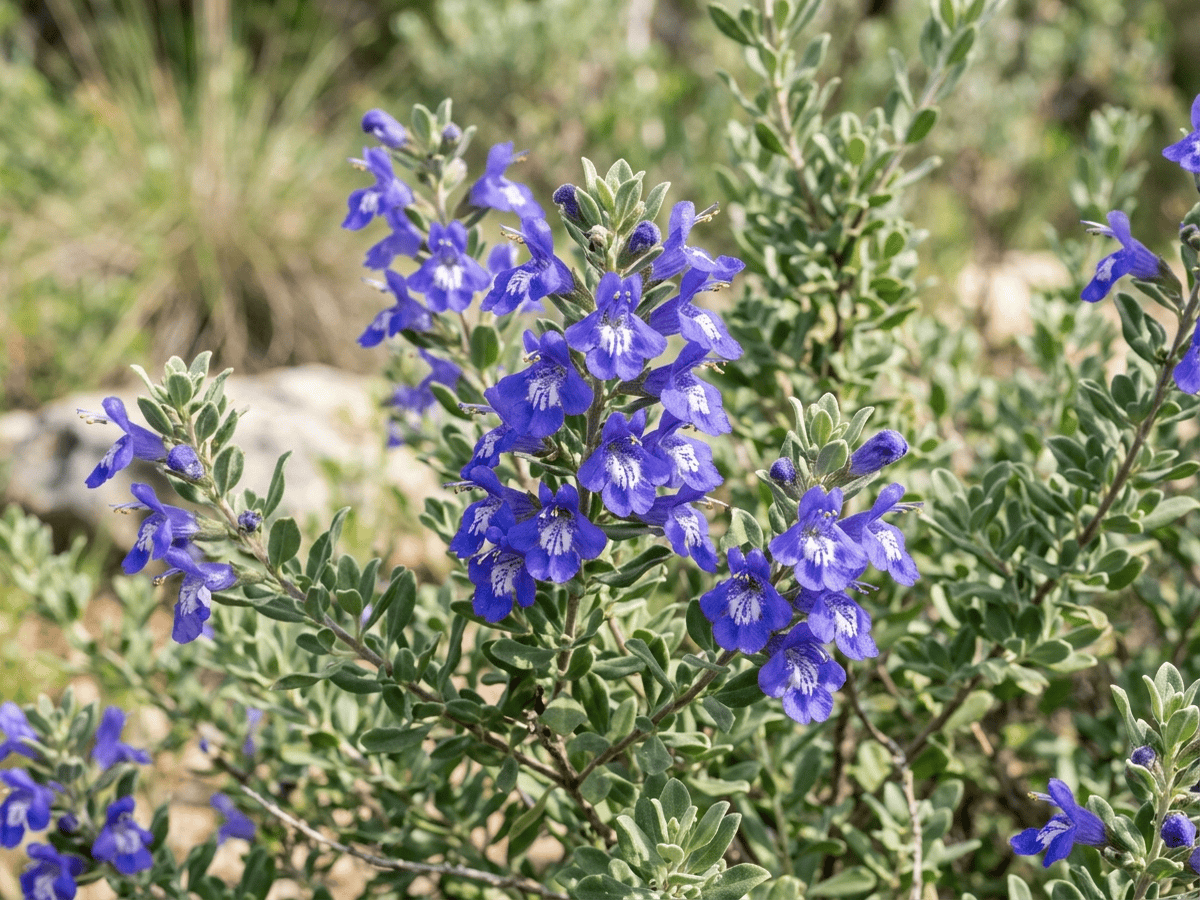
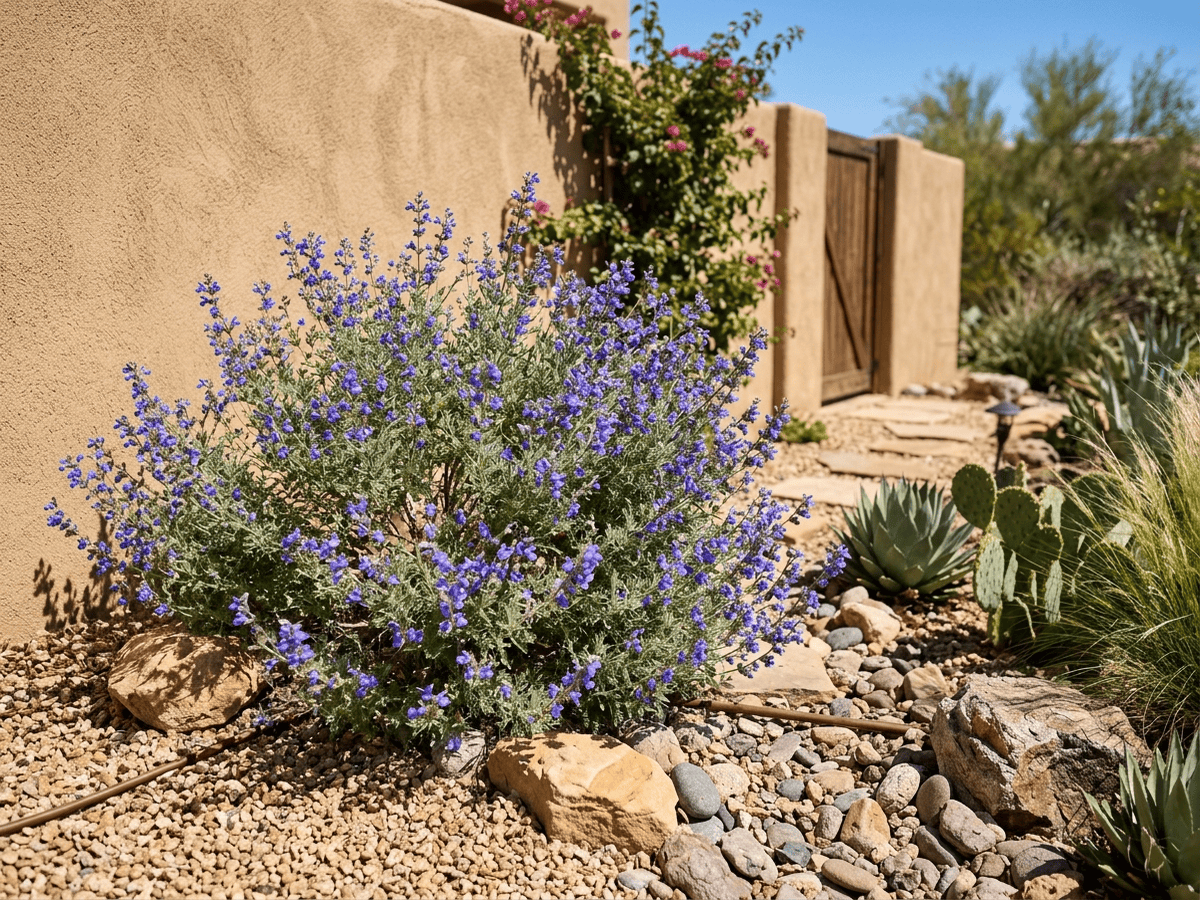
Canyon Sage is a compact woody-stemmed sage native to the limestone canyons and mountains of the Trans-Pecos region of west Texas, New Mexico, and northern Mexico. Growing 1 to 3 feet tall and wide, it forms a low mound covered for months with intense violet-blue tubular flowers from spring through fall. A drought-hardy heat-loving native that attracts hummingbirds and native bees while requiring almost no care once established.
- Drought-tolerant
- Evergreen
- Long-blooming
- Native
How to care for Canyon Sage
Watering
- Springevery 10 days
- Summerevery 7 days
- Fallevery 14 days
- Winterevery 21 days
Soil · Well-draining
- Top dressingPine bark mulch10%
- Main mixPotting soil + perlite 2:170%
- DrainageLECA / gravel20%
Never skip the drainage layer — standing water is the top cause of root rot.
FERTILIZER
- Springevery 60 days
At a Glance
- NativeNorth America
- Height1.5–3 ft (0.5–0.9 m)
- Spread2–3 ft (0.6–0.9 m)
- Flower colorBlue, Purple
- Foliage colorGreen
- SoilSandy, Well-drained
- LocationsYard · Balcony
Bloom time
BLOOM CYCLE
Peak bloom
Mar–Nov
Violet-blue tubular flowers spring through fall
Fragrance
MODERATE FRAGRANCE
The foliage has an aromatic sage-like foliage scent.
Toxicity
No toxicity has been reported for this plant. Still, it is wise to keep pets from chewing on any houseplant.
Educational information, not medical or veterinary advice. If exposure is suspected, contact a doctor or veterinarian.
DISTRIBUTION


- Native
- North America
History
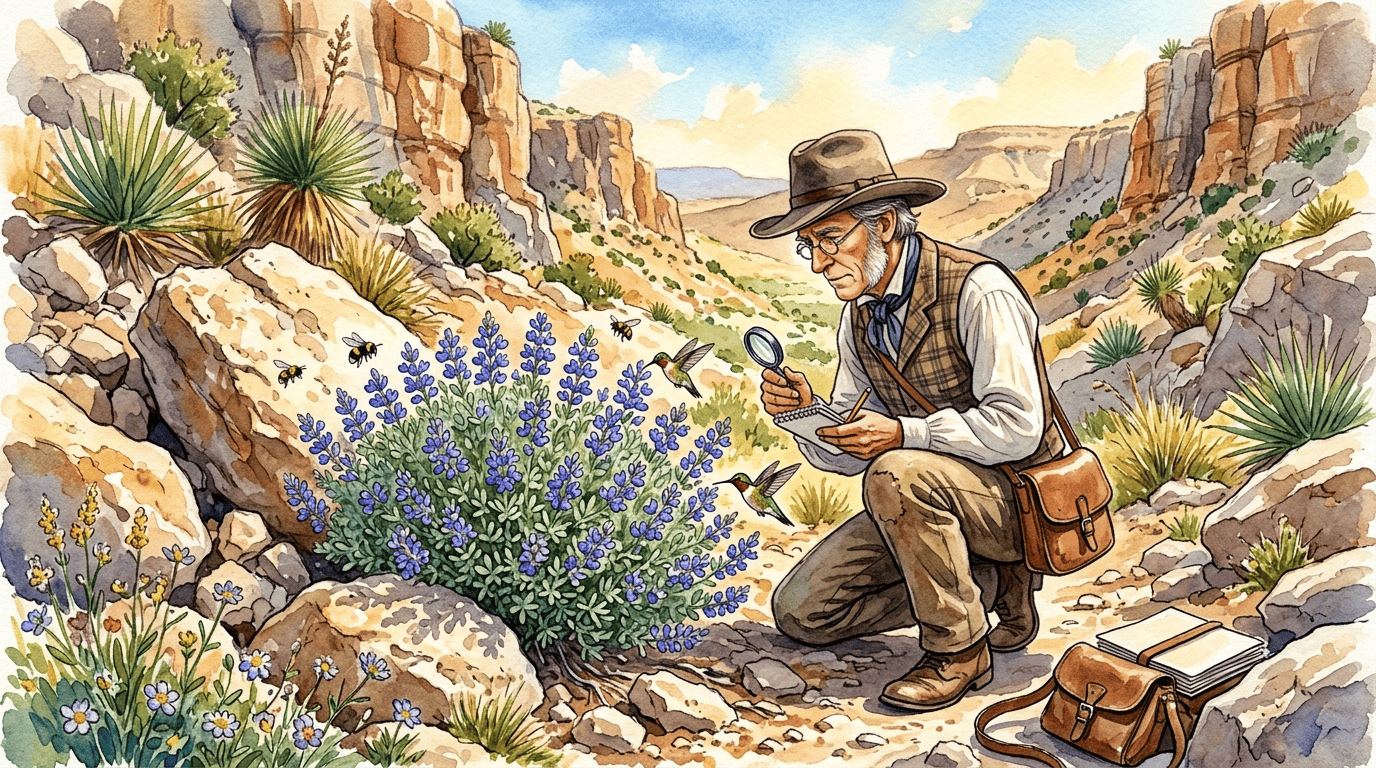
Salvia lycioides, the canyon sage or desert sage, is a small aromatic subshrub native to rocky canyons and slopes of west Texas, southern New Mexico, and adjacent northern Mexico. American botanist Asa Gray described the species in 1849, the epithet lycioides referencing its superficial resemblance to Lycium or wolfberry shrubs. The plant forms a compact mound of tiny gray-green leaves and produces bright blue to deep violet flowers nearly year-round in mild climates, peaking in spring and autumn.
Its extraordinary drought tolerance and long bloom season led horticulturists including those at the Arboretum at Flagstaff to promote it as a xeriscape staple. It is widely used in Plant Select and Chihuahuan Desert restoration plantings across the US Southwest, offering steady bee and hummingbird forage.
A Trans-Pecos limestone specialist increasingly cultivated across the Southwest for its remarkably long bloom season and minimal water needs. Popularized through native plant programs in Texas and the Southwest including Texas A&M and the Lady Bird Johnson Wildflower Center.
Symbolism & meaning
What It Symbolizes
Canyon Sage makes visible Constancy — blooming steadily through the long Southwestern growing season when many companions take a midsummer pause. Its Canyon spirit is rooted in the limestone walls of the Trans-Pecos region, where it perfumes hot dry air with sage scent. A small shrub that is utterly at home in a difficult landscape.
- Constancy — blooms steadily through long Southwest growing season
- Canyon spirit — icon of Trans-Pecos limestone canyons
Where the Name Comes From
'Canyon sage' points to its dry canyon and desert-scrub habitats. Salvia comes from Latin 'salvere', to be well; lycioides means resembling Lycium, the boxthorns, for its woody habit.
Uses & Fun Facts
- Tubular blue flowers feed hummingbirds in arid Southwest
- Wiry shrub adds desert-garden texture and color
- Crushed foliage releases warm mint-sage aroma
Related plants
More Salvia plants
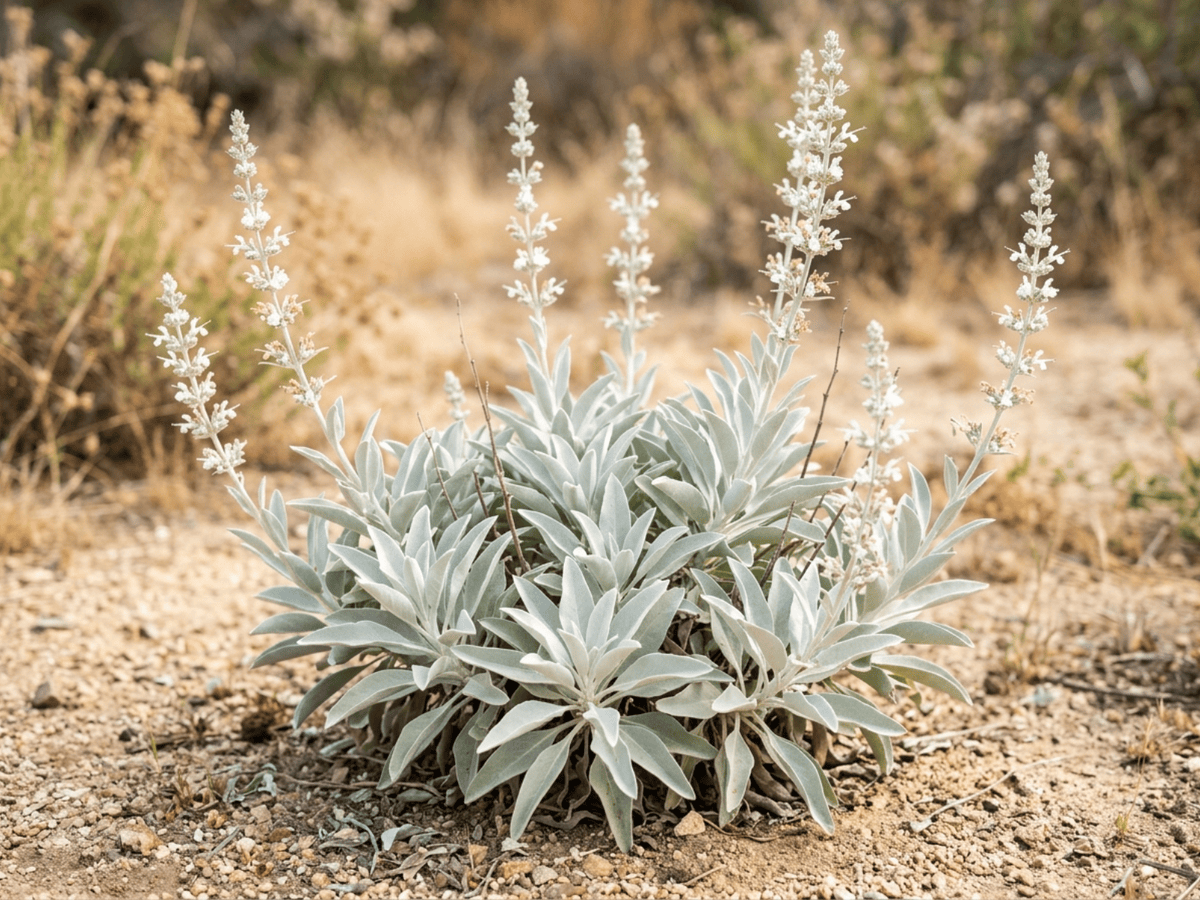 White SageSalvia apiana
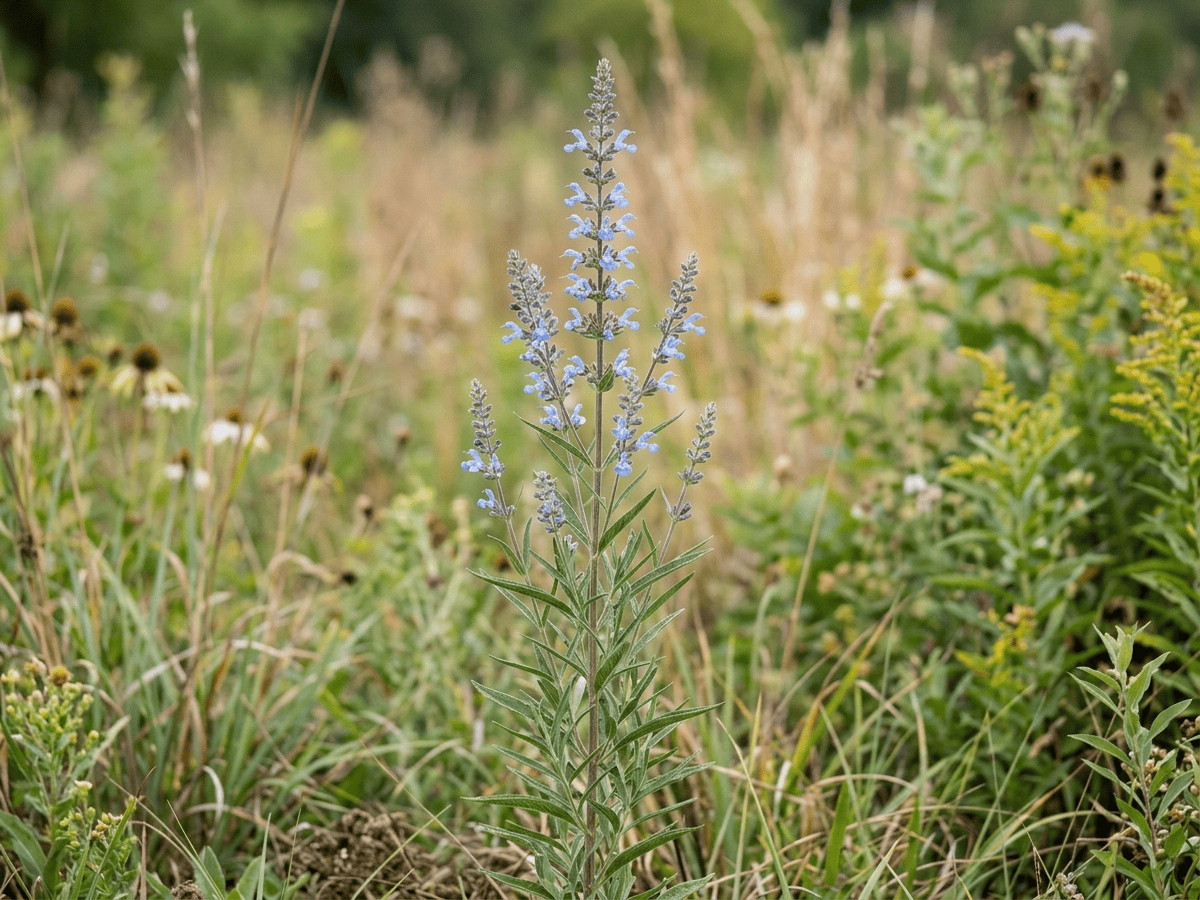 Giant Blue SageSalvia azurea
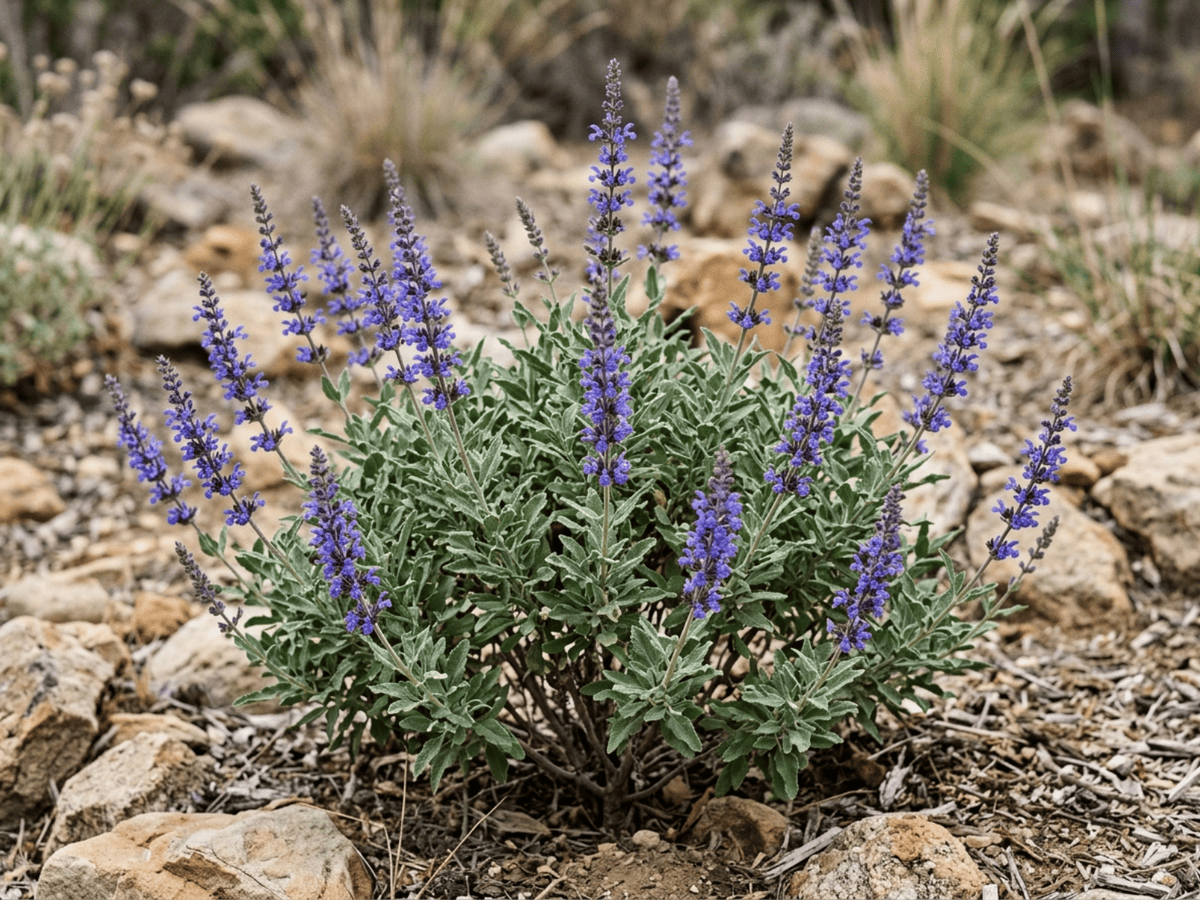 Cleveland SageSalvia clevelandii
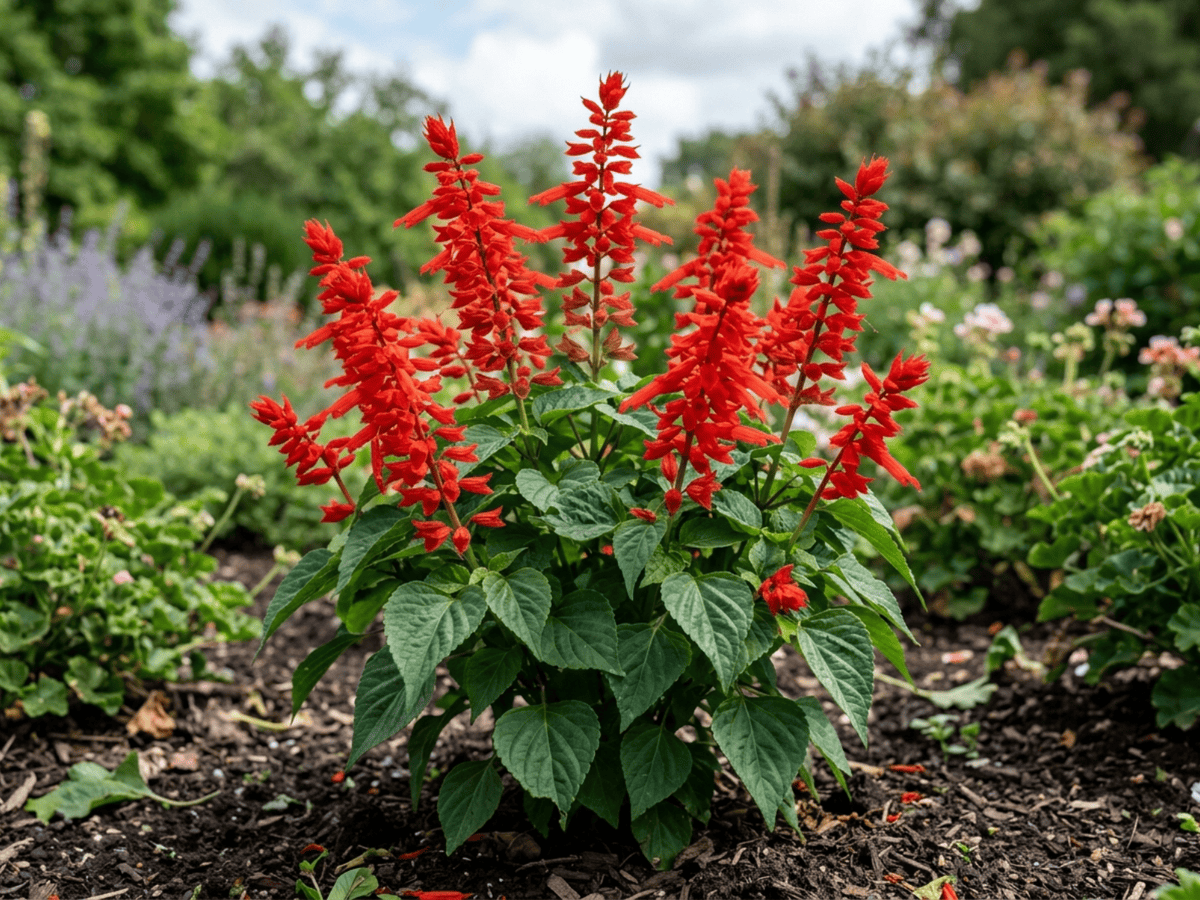 Tropical SageSalvia coccinea
Plants with similar care
 Chinese AbeliaAbelia chinensis
 Fragrant AbeliaAbelia mosanensis
 Large-Flowered AbeliaAbelia uniflora
 Glossy AbeliaAbelia x grandiflora
Frequently asked questions
How often should I water Canyon Sage?
In summer, water about every 7 days; in winter, about every 21 days. Adjust for heat, pot size and drainage.
How much light does Canyon Sage need?
Full sun: 6+ hrs direct. Watch the leaves — scorching or stretching means the light needs adjusting.
Is Canyon Sage toxic to cats or dogs?
No toxicity has been reported for this plant. Still, it is wise to keep pets from chewing on any houseplant. Educational information, not medical or veterinary advice. If exposure is suspected, contact a doctor or veterinarian.
Is Canyon Sage easy to grow?
Yes — it is considered an easy, beginner-friendly plant.
When does Canyon Sage bloom?
It typically blooms Mar–Nov in the Northern Hemisphere.
YardMate
Identify any plant in seconds
Snap a photo — YardMate names the plant, diagnoses problems, and reminds you when to water.
Download on the App Store